Modified Bitumen Roofing in Prescott Valley, AZ
SBS and APP modified bitumen roofing in Prescott Valley, AZ: granule loss, hail bruises, cold-weather laps and torch-free options for occupied buildings.
Look at the gravel-like granules on a cap sheet. Check the low spots and the drain screens. If the granules have washed into the screens, the roof is losing its sun shield. On a modified bitumen roof in Prescott Valley, AZ, that is where the first finding usually sits. The granules protect the asphalt from sunlight. Once the asphalt is bare, it dries, cracks and lets water in. Monsoon rain moves granules fast. Hail knocks more loose. So we start with the screens, then walk the field, then probe the laps.
What modified bitumen is
Modified bitumen is asphalt blended with a polymer, laid in rolls over a base sheet or insulation. Two polymers are common. SBS is a rubber that stretches and recovers. APP is a plastic that resists heat. Most roofs have two plies, a base and a cap. The cap carries the granules.
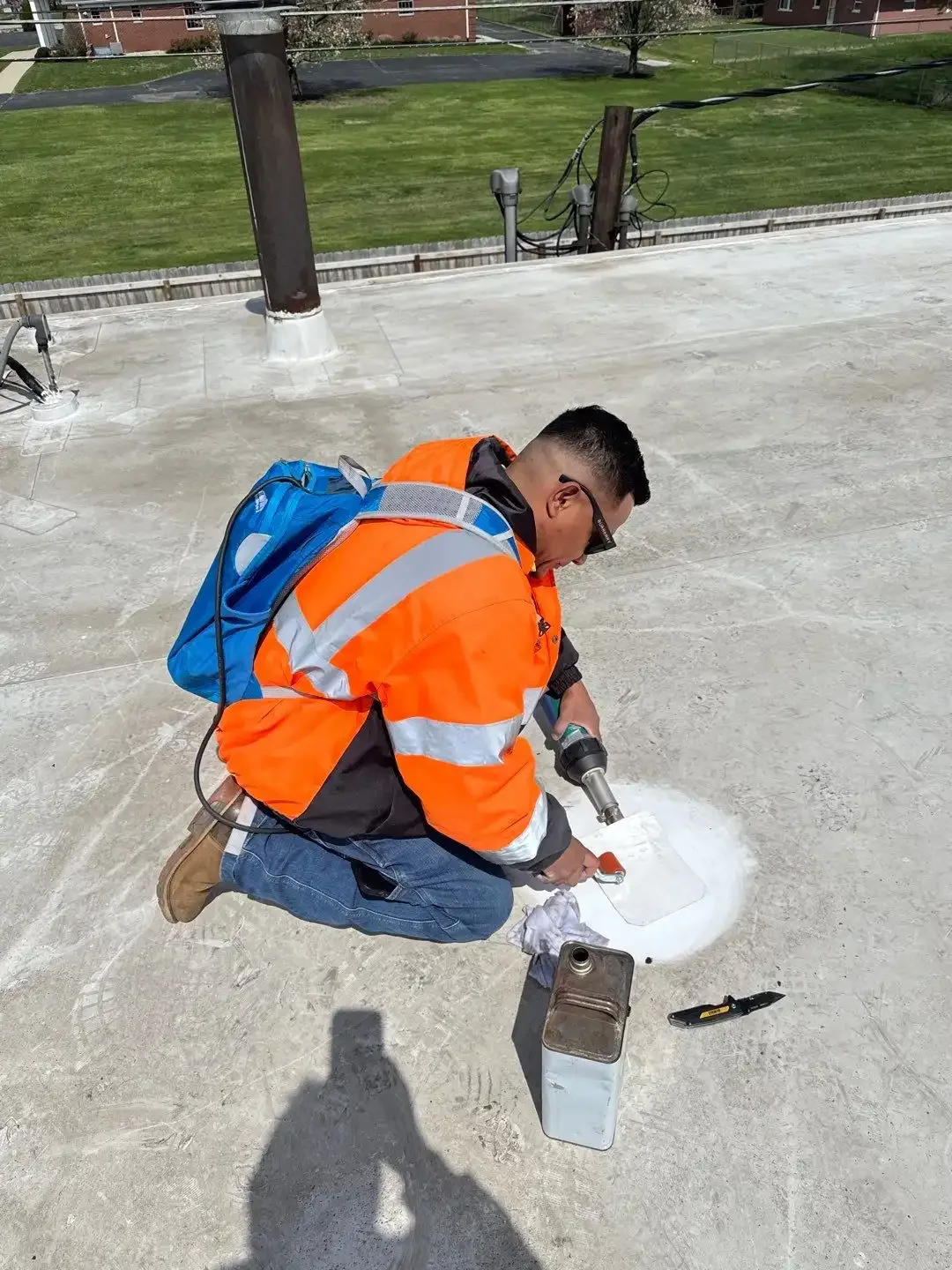
Rolls are joined by torch, hot asphalt, cold adhesive or a self-adhered backing. Each method has trade-offs. A torch is fast and leaves a strong lap. It also puts an open flame on a roof. We choose the method by building, not by habit.
Two plies give redundancy. If the cap is damaged, the base still sheds water for a while. That buys time, but not forever. Water that gets between plies travels sideways before it shows inside. So a stain on a ceiling can be many feet from the true entry point. We trace it with a moisture scan and cores, not by guessing from the stain.
What cold and thermal swing do
Asphalt stiffens in the cold. Between late October and the start of May, mornings near Prescott Valley turn freezing, and the daily swing is near thirty degrees. A stiff cap sheet can crack where it bends at a parapet or a curb. SBS handles the cold better than APP because it stretches. APP resists summer heat better. At 5,100 feet we usually lean toward SBS for the flexibility, and we say why.
Laps matter most. A lap that opens on a cold morning lets water in. We probe every lap and photograph any lift. We mark them on the plan.
Hail, granules and bruises
Hail strikes a cap sheet and knocks granules loose. It can also bruise the mat below. In the July 20, 2026 storm, Prescott Valley saw pea-sized hail with heavy rain and strong wind. Pea-sized stones scuff a cap sheet more than they punch it. Larger stones can crack it.
After a storm we walk the field. We look for bare spots, bright and shiny where asphalt shows. We press each dent. We sweep granules from the screens and photograph the pile. A built-up roof sheds gravel the same way, and the screens tell the same story. A bare patch gets a coat of granule-bearing mastic or a patch. A cluster of bare spots tells us the cap is near the end of its life.
Torch, cold-applied and self-adhered
Open flame is a risk on any occupied building. Near wood framing or in tight spaces it can be a hard stop. We use cold adhesive or self-adhered sheet in those places. They cost more in time. They avoid the flame and most of the odor.
At a hospital or clinic, such as the buildings near Yavapai Regional Medical Center East Campus, odor near air intakes is its own concern. We coordinate with the building engineer and the infection prevention team before we choose a method. The written plan names the method for each roof.
Snow adds a seasonal check. Prescott averages about ten inches of snow a season. Melt refreezes at night and can form ice at drains. Ice backs water onto the roof and presses on the laps. We clear drain screens before the first freeze. We check scuppers in spring. A clear outlet is the cheapest protection a modified roof has.
Where it fits in town
Modified bitumen suits roofs that take foot traffic, such as mechanical rooms, school roofs and equipment pads. Humboldt Unified School District is one of the largest employers in town, and school roofs get walked by maintenance staff. Smaller commercial buildings off SR 69 and older roofs around the SR 69 corridor may also carry it. On large retail roofs, welded single-ply sheets are more common today. We read the roof and report what it is. Neither the age of a building nor its address names its roof, so we do not quote from a street address alone. A Fain Road distributor and a small office on the same road may each get a different answer after the cores come back.
What to repair now and what can wait
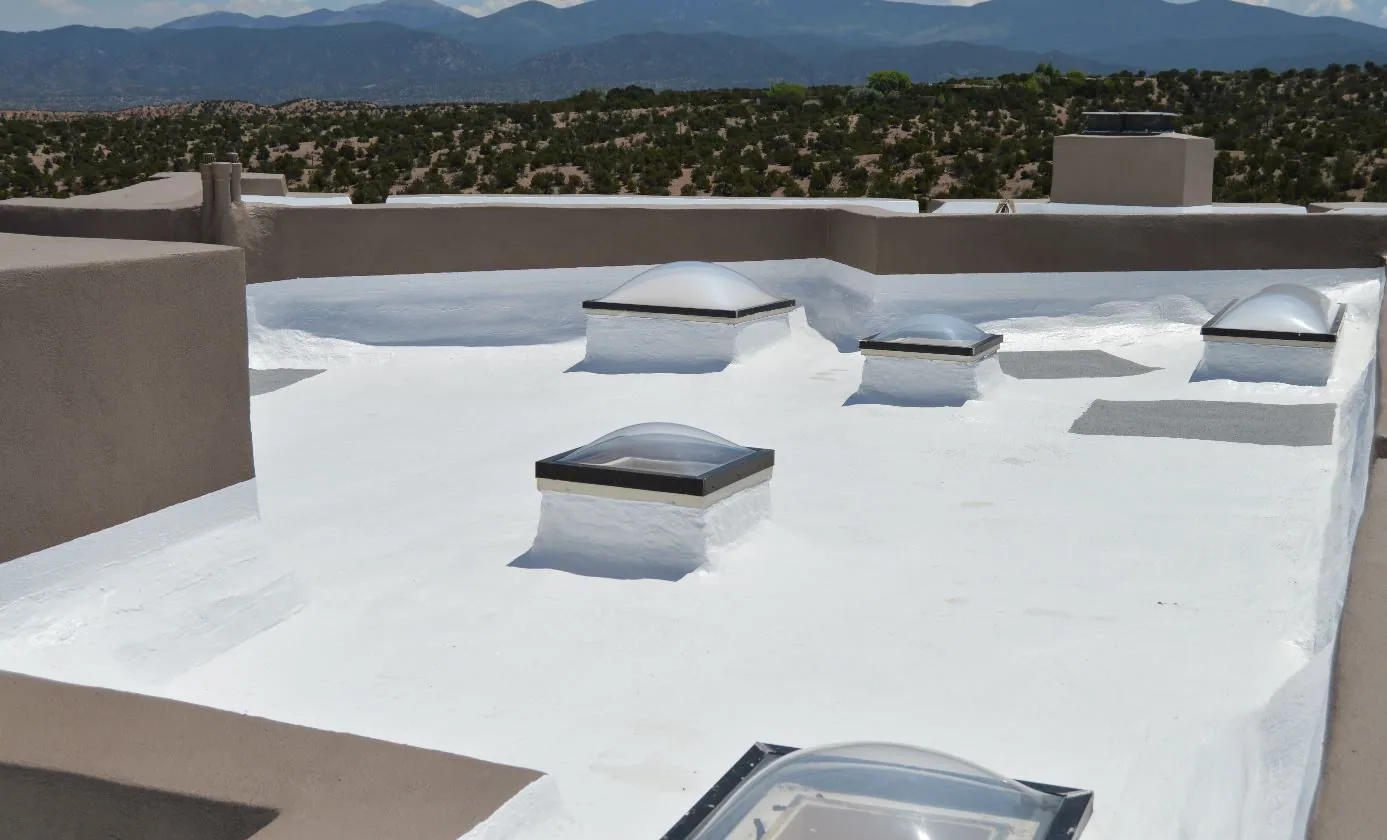
Repair now: open laps, split flashings, blisters that have broken, bare asphalt at drains. Repair soon: granule loss on exposed slopes, hardened sealant. Watch: minor scuffing, small intact blisters. The sheet lists them in those tiers, each with its own price. A sound roof with fading granules can take a reflective coating restoration. A roof with wet insulation needs a replacement, and a TPO or built-up system may replace it.
What to ask for in writing
Get the polymer type, the number of plies, the installation method and the warranty terms on paper. Get the fire-safety plan if a torch is used. We put these on the findings sheet beside the photos. If the roof is a candidate for a maintenance program, the sheet includes a visit schedule, usually one after the monsoon and one before the first freeze. A commercial roof inspection done this way gives a facility director a clear list of what to fix now and what can wait.
Commercial Roofing Questions
Is SBS or APP better near Prescott Valley?
SBS usually suits the cold mornings and wide swings better because it stretches. APP resists summer heat better. We recommend SBS for most roofs here, and APP where a roof sees strong sun and little movement, such as a small mechanical room roof with a sheltered, sunny exposure. The findings sheet states the choice and the reason.
Can a torch be used on my building?
It depends on the building and the framing. Near wood, tight spaces or occupied areas, we recommend cold-applied or self-adhered sheet. Where a torch is allowed, we plan fire watches and a post-work check, and we log them. The plan goes in writing before work starts.
What are blisters, and are they a problem?
A blister is trapped air or moisture between plies that swells in the sun. Small intact ones can be watched. Broken ones need repair. A field of blisters points to wet insulation. We cut cores to check and photograph the result so you can see the cause.
Can a bare cap sheet be saved?
Sometimes. If the plies are bonded and the insulation is dry, a reflective coating can protect the bare asphalt. We recommend cores and seam probes first. A coating over wet insulation fails, and we show you the photos that decide it.
How do you handle laps in winter?
We install in warmer months when possible, and we repair small laps on dry days. Cold-applied adhesive needs mild temperatures to bond, so we watch the overnight low. We recommend a lap probe after the first freeze each year, and we log the results on the same roof plan, so a lap that opens twice in the same place gets a closer look at the structure below it.
Request a walk-through
Ask us to walk the roof. You receive a written findings sheet with lap probes, granule checks and photos before any modified bitumen repair or replacement is priced.
Request a Roof Assessment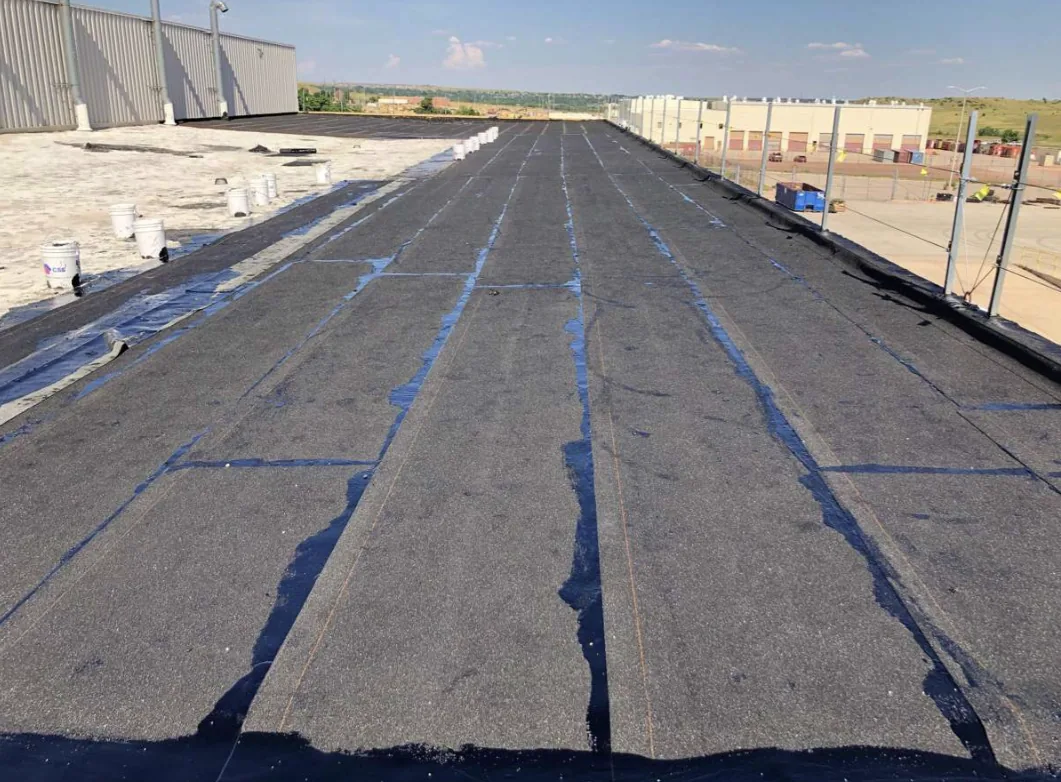
Commercial Roofing Questions
SBS usually suits the cold mornings and wide swings better because it stretches. APP resists summer heat better. We recommend SBS for most roofs here, and APP where a roof sees strong sun and little movement, such as a small mechanical room roof with a sheltered, sunny exposure. The findings sheet states the choice and the reason.
It depends on the building and the framing. Near wood, tight spaces or occupied areas, we recommend cold-applied or self-adhered sheet. Where a torch is allowed, we plan fire watches and a post-work check, and we log them. The plan goes in writing before work starts.
A blister is trapped air or moisture between plies that swells in the sun. Small intact ones can be watched. Broken ones need repair. A field of blisters points to wet insulation. We cut cores to check and photograph the result so you can see the cause.
Sometimes. If the plies are bonded and the insulation is dry, a reflective coating can protect the bare asphalt. We recommend cores and seam probes first. A coating over wet insulation fails, and we show you the photos that decide it.
We install in warmer months when possible, and we repair small laps on dry days. Cold-applied adhesive needs mild temperatures to bond, so we watch the overnight low. We recommend a lap probe after the first freeze each year, and we log the results on the same roof plan, so a lap that opens twice in the same place gets a closer look at the structure below it.