Commercial Roofing in the Glassford Hill Road Corridor, Prescott Valley, AZ
Roof inspection, flashing repair and ridge-wind checks for retail power center and inline shop roofs along Glassford Hill Road in Prescott Valley, AZ.
Check the flashing on the newest tenant. Along the Glassford Hill Road corridor in Prescott Valley, AZ, the newest unit on the roof can be the first to leak. Two retail power centers set the pattern. Glassford Hill Marketplace now has an auto-parts store, a bank branch and a veterinarian in its low-slope retail buildings, while The Crossroads fills a row of inline shops and newer pads with national restaurant and apparel brands.
Inspection, repair and replacement on roofs of this kind begin with a walk that probes each flashing and photographs the findings, and a written sheet reaches you ahead of any price. The sheet names each tenant space, lists what we found there and ranks the work. A property manager can send the relevant page to the right tenant.
Low-slope retail, row by row
Inline shops share a roof line. One roof may cover several tenants. A freestanding bank or auto-parts store has its own small roof. Each type has its own leak pattern. A shared roof leaks where the work of several trades meets. A small roof leaks where one detail gives out. Knowing which kind we face saves a day of searching and shortens the repair.
Shared roofs leak at the party walls and at units added for new tenants. Small freestanding roofs leak at the edge metal and the few penetrations they carry. We record the sheet, the slope, the drains and every penetration, then map them by tenant space. When a lease says who pays for which part, the map settles the question fast. We also record the drains for each roof section. In a row of inline shops, a drain at one end often serves several tenants. If it clogs, the water backs up across all of them. The map shows who is downstream of which drain.
What ridge-top wind does
Glassford Hill is a 6,177-foot former volcano. It stands over the town's skyline and exposes nearby buildings to ridge-top wind. Wind that curls over a ridge and drops onto a flat roof lifts at the edges first.
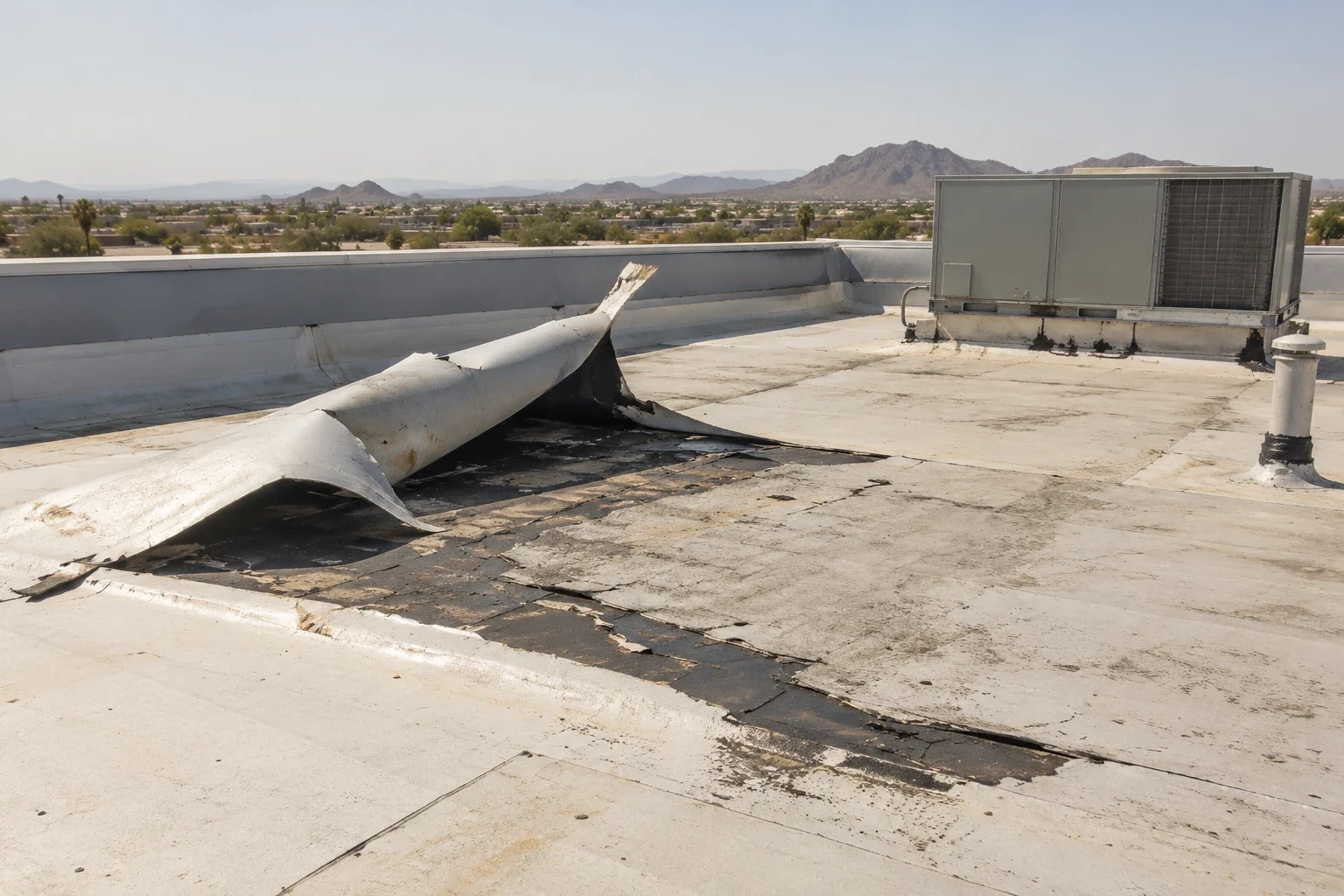
We check the edge metal, the cleats and the sealant. We press along the termination bar at each wall. We look at fastener rows near the perimeter. On a fastened sheet, a sample row of plates gets pressed, and any plate that spins or sits proud has started backing out. A tight edge in spring is cheap, and it takes a short visit with a drill, a bead of sealant and a few cleats. A lifted edge after a gust front is not. The wind damage repair scope starts with the edge for that reason. Parapets matter as well. A parapet that is too short or poorly capped lets wind and rain get behind the flashing. We check the cap, the joints and the base, and we photograph any gap with a scale reference.
Tenant changes and rooftop work
Retail turns over, sometimes fast, and the roof outlasts every lease. A new tenant often brings a new unit, a new vent or a new curb. Each change is a cut in the roof. A cut done well is sealed and flashed. A cut done in a hurry is a leak waiting for a monsoon cell.
We suggest a rooftop log. Anyone who goes up signs in and notes what they did. We suggest walk pads along service routes. We photograph the curb and flashing before and after any new equipment. Then a later leak traces back to a dated condition, and the manager can show a tenant, a lender or an insurer exactly what the roof looked like on the day the work finished. Property managers on the State Route 69 corridor use the same log. It costs little and saves arguments. The log also shows who has a key and who needs notice before a crew arrives. When a tenant must be warned about noise, the manager has the contact in one place. When a technician leaves a panel off, the next visitor sees the note. Small habits like these keep a roof out of trouble between our walks.
What monsoon and thermal swing do
Most of the corridor's 15 inches of yearly precipitation comes in July and August. The July 20, 2026 storm dropped pea-sized hail across the corridor's side of town while signals and trees fell. Hail that small rarely harms a sound sheet. Worn surfaces can show marks, and we log each one with a photo and a location so a later comparison is easy.
The cold season adds its own work. Around Prescott, frost holds from late October into May, and day-to-night swings average almost 30 degrees. Sealant dries. Seams tug. We cut out failed sealant, reset loose metal and probe laps in fall. After a storm we cut a small core where a mark looks deep. A core reveals if the insulation took the hit. Gravel from nearby lots and leaves from planted areas end up in drains too. We clear them and record the date. A dated photo of a drain cleared in June is worth having if a claim ever follows.
What to repair now
Repair now covers open seams, failed flashings, blocked drains and loose edge metal. Repair this season covers aging sealant, worn pads and small punctures. Watch is for items holding steady. The sheet puts each in a group with a cost range.
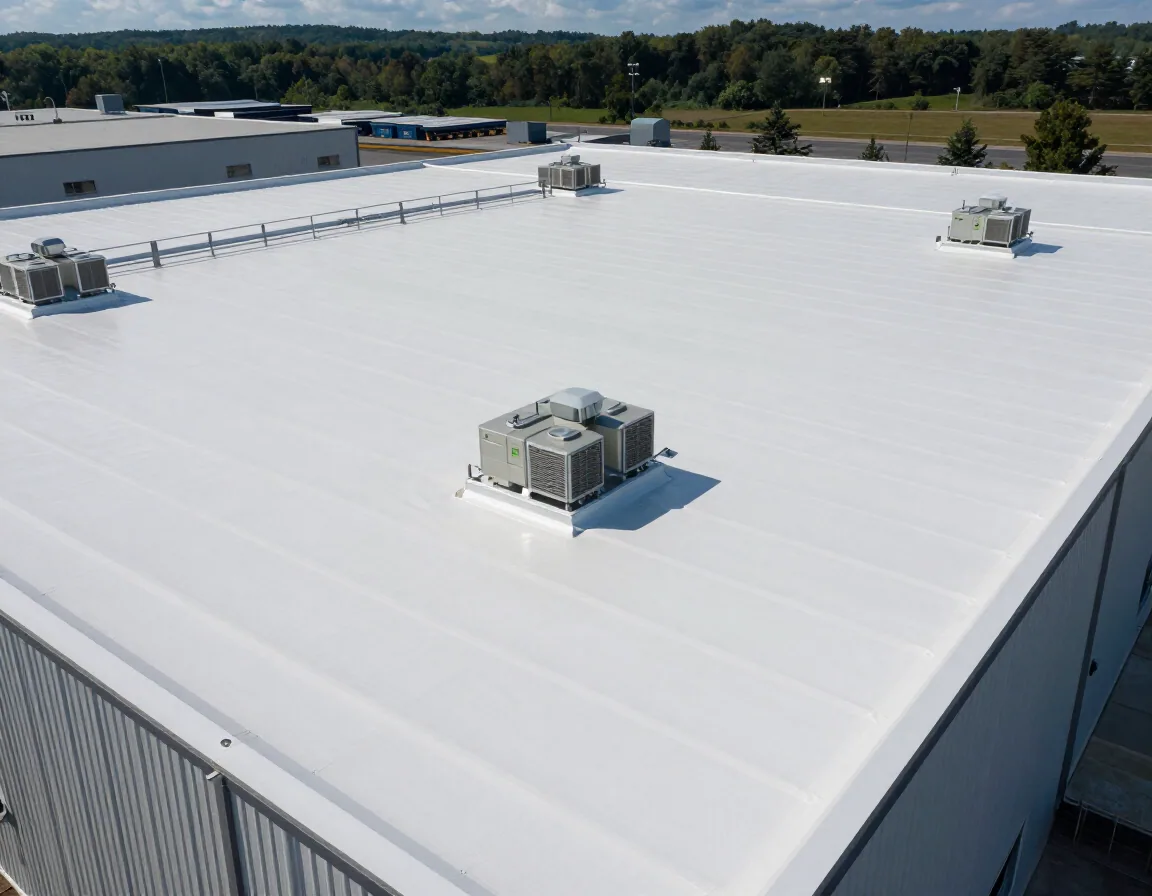
A spot that fails twice gets no third patch. We look under the sheet. An infrared moisture survey outlines wet insulation while the roof stays shut, so the owner sees where a section repair stops and a replacement begins. Rooftop units on retail roofs also deserve a look at the curbs and supports, because a settled curb opens a gap at the base. A restaurant tenant on a roof adds exhaust, and exhaust adds grease. We look at the sheet near each fan for swelling or soft spots, and we tell the tenant what to change. A catch pan and a cleaning schedule are cheap compared with a membrane repair. Owners can see a similar pattern in the Entertainment District, where restaurants share a roof line with theaters and retail.
Commercial Roofing Questions
Why do retail roofs leak after a tenant moves in?
New equipment means new cuts in the sheet. If the curb or flashing was poorly sealed, water finds it. We photograph the work before and after so the cause is clear.
Does ridge-top wind matter on a flat roof?
Yes. Wind lifts at edges and corners first. We check the metal, the cleats and the fastener rows, and we reset what has moved.
Who pays when a tenant's contractor damages the roof?
The lease decides. A rooftop log and dated photos show who was on the roof and what condition it was in. We keep both with the file.
What is the cheapest way to prepare for the monsoon?
Open the drain screens and scuppers, tighten the edge metal and probe seams beside walls. A short June walk costs far less than a July leak.
What should a property manager have on hand?
The roof plan, the tenant and equipment list, past reports and warranty papers are the starting set. Photos and a written sheet arrive before any repair has a price. A note on which tenants hold the keys to the roof hatch saves a phone call on the day.
Request a walk-through
Ask for a roof walk and send the tenant list. We will deliver a written findings sheet with photos before any repair is priced.
Request a Roof Assessment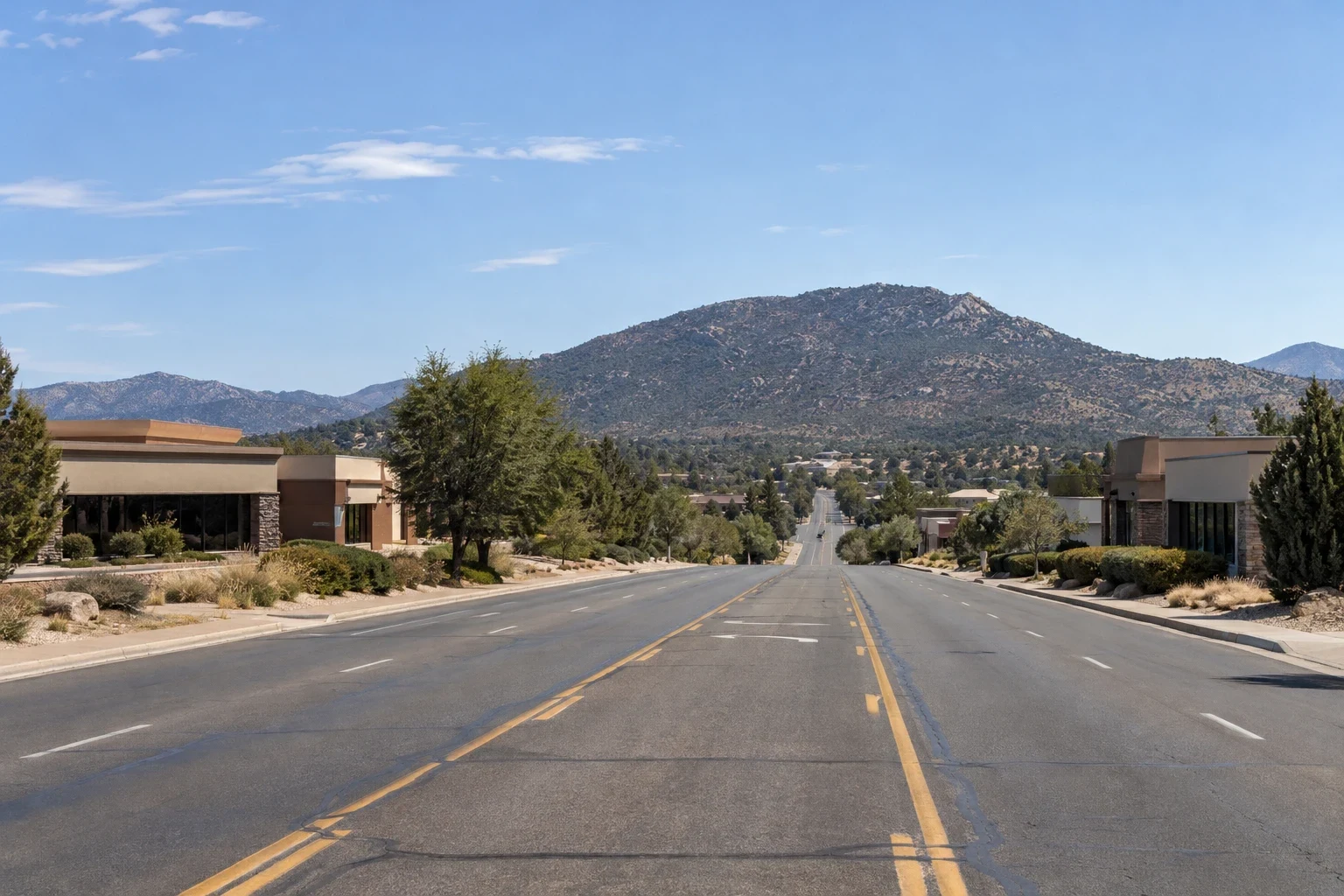
Commercial Roofing Questions
New equipment means new cuts in the sheet. If the curb or flashing was poorly sealed, water finds it. We photograph the work before and after so the cause is clear.
Yes. Wind lifts at edges and corners first. We check the metal, the cleats and the fastener rows, and we reset what has moved.
The lease decides. A rooftop log and dated photos show who was on the roof and what condition it was in. We keep both with the file.
Open the drain screens and scuppers, tighten the edge metal and probe seams beside walls. A short June walk costs far less than a July leak.
The roof plan, the tenant and equipment list, past reports and warranty papers are the starting set. Photos and a written sheet arrive before any repair has a price. A note on which tenants hold the keys to the roof hatch saves a phone call on the day.