Built-Up Roofing in Prescott Valley, AZ
Built-up (BUR) roofing in Prescott Valley, AZ: gravel and cap-sheet surfaces, hail and freeze performance, cores, ponding lines and repair-or-replace calls.
Kneel at a drain and look at the gravel. On a built-up roof, the stone tells you a lot. Is it spread evenly or piled in the low spots? Is it clean or crusted with silt? Does it sit in the screen? In Prescott Valley, AZ monsoon cells push stone around and hail knocks it loose. Where the stone leaves, the asphalt below is bare. Bare asphalt dries, cracks and lets water in. The change is slow, and that is why it gets missed. So we start with the gravel, then we cut a core and count the plies.
What built-up roofing is
A built-up roof is made on site from layers. Felt or fabric plies are set in hot asphalt, usually three or four deep. A surface goes on top. It may be gravel, a mineral cap sheet or a coating. Each ply is a barrier. If one is damaged, the others still shed water for a time.
That layered build is its strength. It is also why a core cut is the best test. A core shows the number of plies, the condition of the asphalt between them and whether the insulation below is dry. A photo of the core goes into the findings.
The count matters for a plain reason. A four-ply roof with one bad ply is in a different state from a two-ply roof with one bad ply. Redundancy buys time, and the core tells you how much time. We also look at the bond between plies. Plies that peel apart by hand have lost their asphalt. A roof like that cannot be saved by surface work.
What gravel does and hides
Gravel shields the asphalt from sun and helps against hail. It also adds weight and hides the surface. Leaks under gravel are hard to find, because you must sweep the stone aside to see the membrane. We probe blisters and soft spots by feel, then sweep selected areas to look.
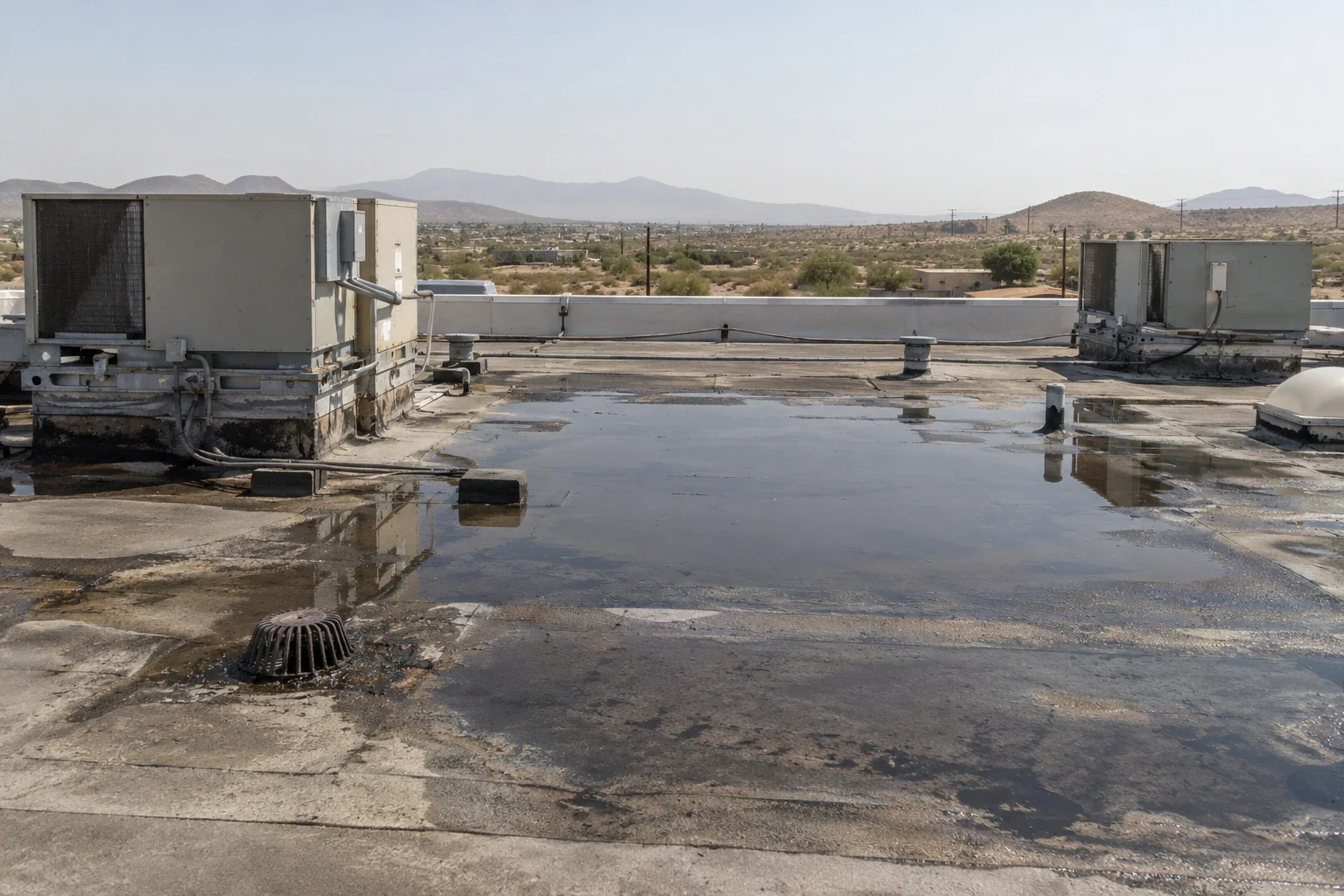
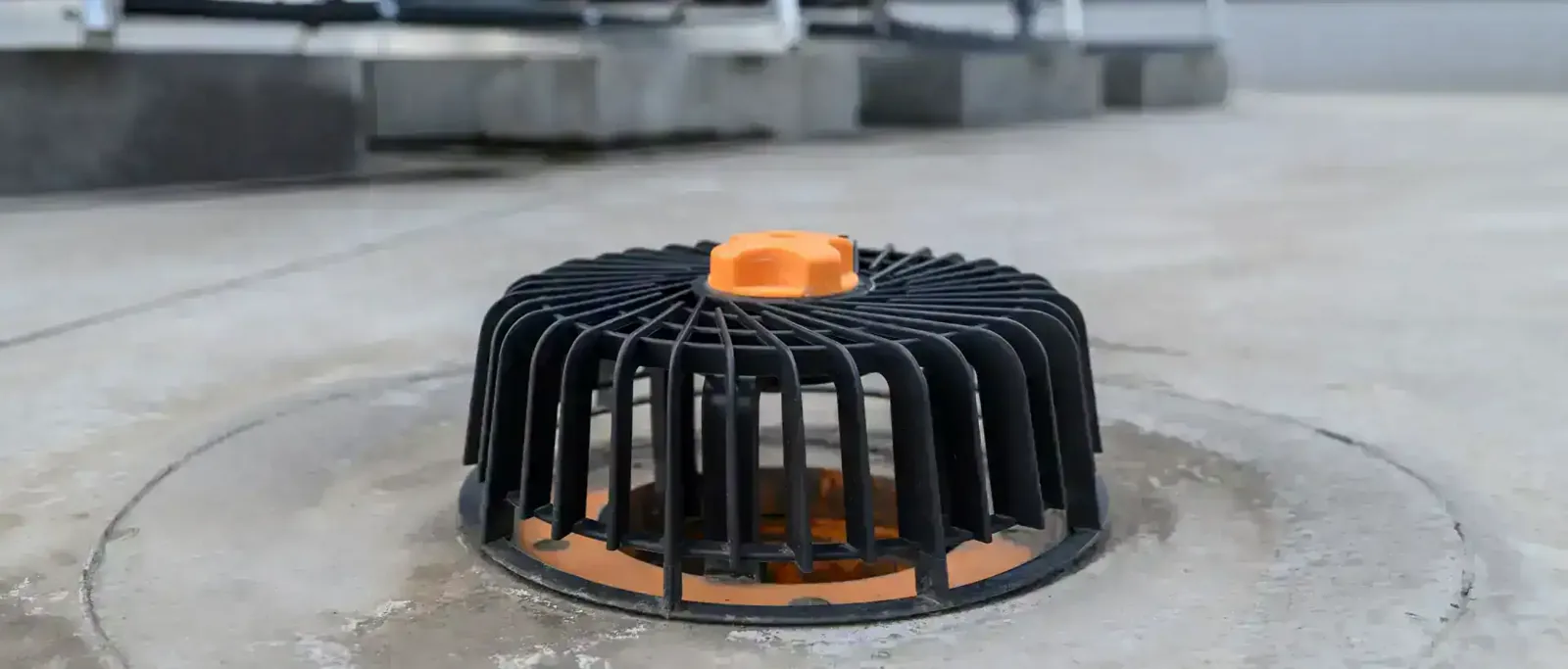
Stone also clogs drains. After a monsoon cell, gravel packs into drain screens, mixed with leaves and pea-sized hail. That is the cheapest finding to fix and one of the costliest to ignore. A blocked drain turns a rain into a pond.
Stone moves in wind. Along the Glassford Hill Road corridor, ridge-top wind off the hill and gusts from monsoon cells can send loose stone toward the edges. We check stone depth near edges and corners, where wind lifts first. A parapet that has lost its stone cap takes more heat than one that has not.
Hail and the ponding line
Gravel absorbs a lot of hail. The July 20, 2026 storm brought pea-sized hail to Prescott Valley, and a graveled roof would take it well. Larger stones can bruise the felt below. After a storm we sweep test squares and check for crushed spots.
Ponding is the other watch item. A ponding line, the stain left where water stood, marks where the deck has sagged. Water that sits on asphalt softens it and feeds algae. We map each ponding line on the roof plan, measure how far it sits from the nearest drain and note whether the line has grown since the last visit. A line that grows tells us the deck is still moving. A ponding repair may need tapered insulation or a new drain.
What freeze and swing do
Asphalt gets brittle in the cold. Near Prescott Valley the freeze season runs from late October to the start of May. The daily swing near thirty degrees moves the roof every day. Over the years, the surface cracks into small blocks, a pattern called alligatoring. Cracks at flashing corners open first.
Snow adds weight and melt. Prescott averages about ten inches a season. Ice at a drain can back water onto the roof. We clear and photograph drain screens before the first freeze. A drain and scupper check is part of every visit, since clear outlets prevent most winter trouble.
Thermal swing also works the seams of old patches. A patch made in summer may lift in winter, because the patch and the roof move at different rates. We probe old patches along with the original laps. Where a patch has lifted, we weld or re-adhere it and add a cover strip.
Where built-up roofs show up
Built-up roofing is a legacy system on older commercial buildings, but age alone never names the roof type. The Mayer Business Block, the older commercial building that holds the historic Mayer General Market Store, could have been re-roofed with a newer system at any point in its life, so a core settles what is on it. The same goes for a Prescott owner with an older flat roof: we confirm the system by core, never by guess, and only then talk about repair, coating or replacement.
What to repair now and what can wait
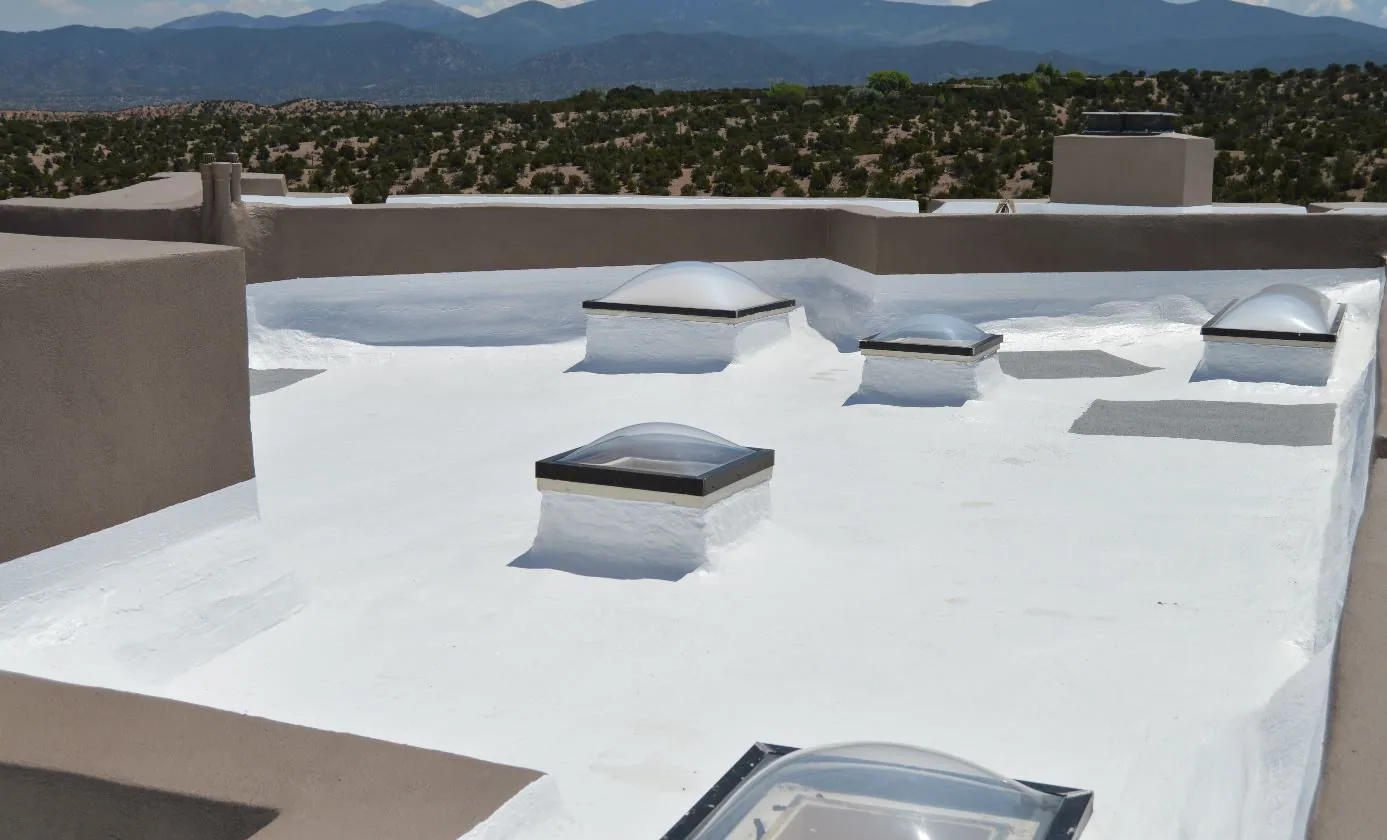
Repair now: open flashings, broken blisters, bare asphalt at drains, wet insulation. Repair soon: alligatored patches, gravel-bare strips, hardened sealant. Watch: small blisters that are intact, minor cracking. Each tier on the sheet carries its own price. A sound roof with a worn surface can take a coating restoration. A roof with widespread wet insulation needs replacement, and the new roof might be modified bitumen, a TPO sheet or another system, chosen by the building's use and the owner's hold period.
What to ask for in writing
Get the core photos, the ply count and the moisture readings on paper. Get the repair list with prices by tier. Get the warranty status if any remains. We put all of it on the findings sheet. A roof condition report keeps the record in one place, so the next manager does not start from zero.
Commercial Roofing Questions
How can I tell if my built-up roof still has life left?
Cut cores and probe the surface. A roof with dry insulation, bonded plies and only surface wear can last years more with repairs or a coating. A roof with wet cores and loose plies cannot. We recommend cores at several points, and we show you the photos that support the call.
Does gravel need to be replaced?
Gravel that has washed away from slopes and drains should be restored or replaced with a coating, because bare asphalt ages fast. We check stone depth across the roof and near the edges. Where it is thin, we recommend refilling or coating. We photograph the bare strips, and we compare them with the photos from last year.
Can a coating go over gravel?
Usually the stone must be removed or embedded first, since a coating needs a clean, bonded surface. That prep adds cost. We recommend comparing the full prep price with the price of a new cap sheet, and we show both on the findings sheet.
Why does my built-up roof leak at the walls?
Flashings take the most movement. Thermal swing near thirty degrees pulls on them, and old asphalt cracks where it bends. We press each corner and check the termination. Many wall leaks come from a single lifted flashing, which a short repair can close.
Is hot asphalt allowed on my occupied building?
It brings fumes and fire risk, so we plan kettle location, air-intake protection and fire watches. Where those cannot be controlled, we recommend a cold-applied or single-ply alternative. The plan goes in writing before work starts. The kettle location goes in writing before work begins, along with the fire watch hours and the intake covers.
Request a walk-through
Ask us to walk the roof. You receive a written findings sheet with core photos, a ponding map and repair tiers before any built-up repair or replacement is priced.
Request a Roof Assessment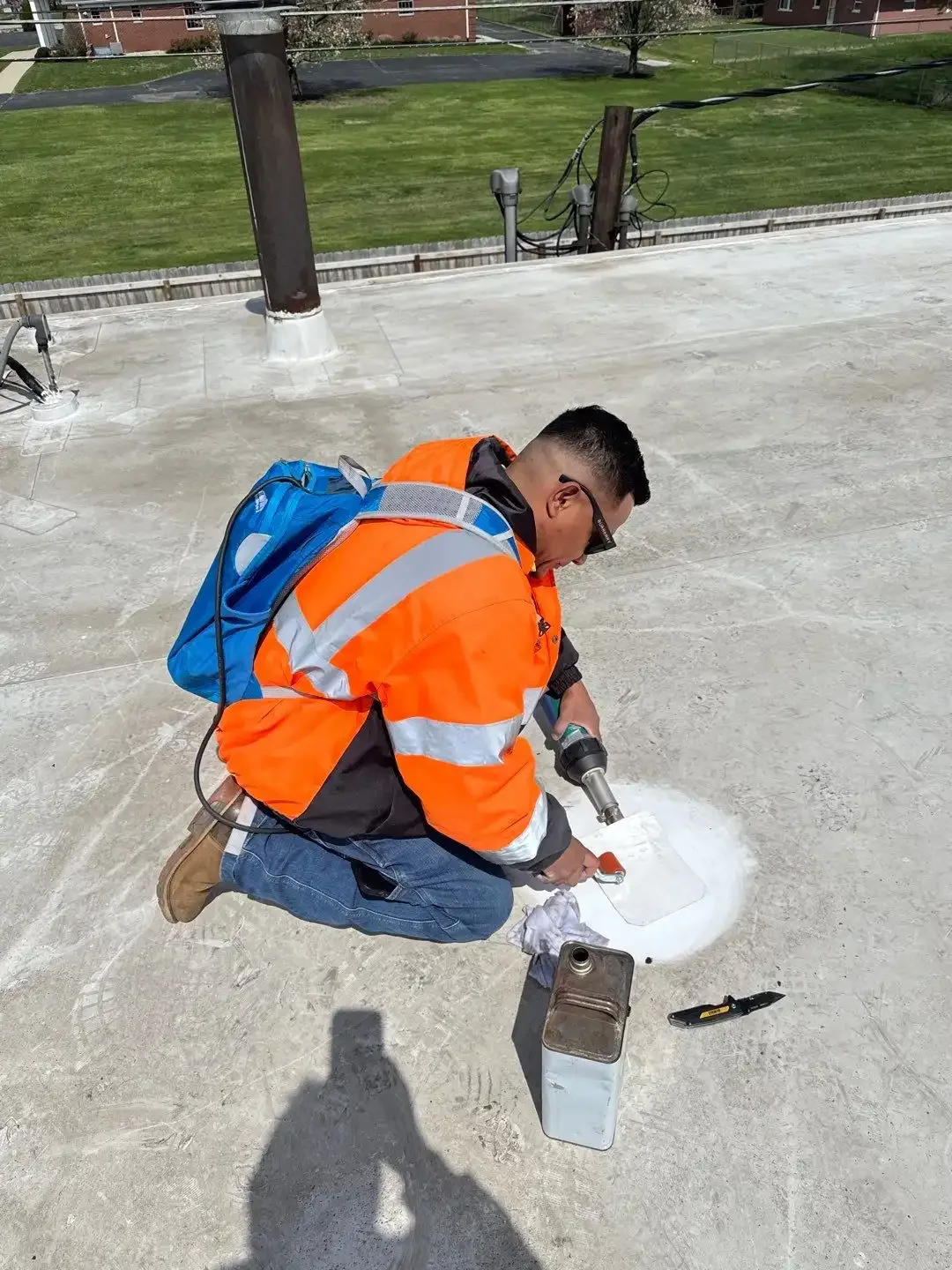
Commercial Roofing Questions
Cut cores and probe the surface. A roof with dry insulation, bonded plies and only surface wear can last years more with repairs or a coating. A roof with wet cores and loose plies cannot. We recommend cores at several points, and we show you the photos that support the call.
Gravel that has washed away from slopes and drains should be restored or replaced with a coating, because bare asphalt ages fast. We check stone depth across the roof and near the edges. Where it is thin, we recommend refilling or coating. We photograph the bare strips, and we compare them with the photos from last year.
Usually the stone must be removed or embedded first, since a coating needs a clean, bonded surface. That prep adds cost. We recommend comparing the full prep price with the price of a new cap sheet, and we show both on the findings sheet.
Flashings take the most movement. Thermal swing near thirty degrees pulls on them, and old asphalt cracks where it bends. We press each corner and check the termination. Many wall leaks come from a single lifted flashing, which a short repair can close.
It brings fumes and fire risk, so we plan kettle location, air-intake protection and fire watches. Where those cannot be controlled, we recommend a cold-applied or single-ply alternative. The plan goes in writing before work starts. The kettle location goes in writing before work begins, along with the fire watch hours and the intake covers.