Storm Damage Roof Repair in Prescott Valley, AZ
Storm damage roof repair in Prescott Valley, AZ: monsoon gust fronts, hail bruises and wind lift found, photographed and repaired in the right order.
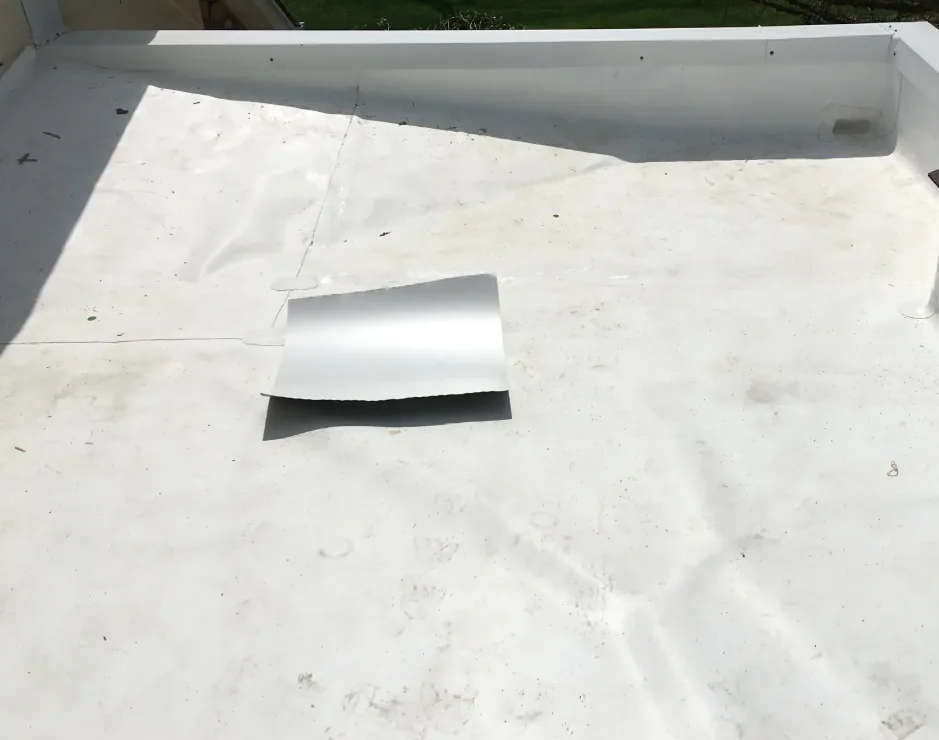
Check the edges first. After a monsoon cell, the first sign of storm damage is often a corner of membrane lifted a few inches, or a coping cap sitting proud of the wall. That lifted corner means wind got under the roof. It will do more damage in the next gust. Commercial Roofing Prescott Valley finds, documents and repairs storm damage on commercial roofs in Prescott Valley, AZ. We start with the findings, because the repair order depends on them.
Short, violent cells hit this town in July and August. Each one leaves a pattern on the roof.
What the Cells Do
A monsoon cell arrives fast. A gust front pushes dust, grit and leaves across the roof. Heavy rain follows. Pea-sized to half-inch hail may ride along. The cell is gone in minutes, and it leaves several kinds of damage at once.
The July 20, 2026 cell over Prescott Valley dropped pea-sized hail with heavy rain and strong wind, and it put traffic signals and trees on the ground and left more than 130 APS customers without power. Roofs that day took the same load: wind at the edges, hail on the surface, water on the drains. A small tornado north of Prescott Valley on May 6, 2025 pulled a few shingles off a roof on video. Those events are different in size, and they show the range.
The timing matters as much as the size. Short cells arrive with little warning, and the roof gets only minutes to shed what falls. A roof with clear screens and sound edges handles the same cell that floods a roof with packed drains. That is why storm repair and drain care belong together.
Four Damage Patterns
We sort storm damage into four patterns. Each has its own clues and its own repair.
- Wind lift: membrane peeled at corners, coping loose, fascia bent outward, fasteners backed out.
- Hail bruise: round dents or soft spots in the surface, granule loss on bituminous roofs, cracks in brittle sheets.
- Debris strike: punctures or gouges from branches, signs, and loose rooftop items thrown by the gust.
- Water entry: soaked insulation, stained ceilings, wet flashing, and drains that backed up under the rain.
The wind damage pattern and the hail damage pattern often appear on the same roof, so we map both. Pea-sized hail rarely does serious harm to a healthy membrane. It does find old, brittle surfaces and thin spots. A bruise, a soft spot you can feel under a thumb, is the sign. We press along the surface and photograph every one.
Document Before You Fix
Photographs come before repair. Every damaged area gets a wide shot, a close shot and a measurement. We mark each one on a roof plan and give it a number. The sheet that comes out of the walk shows where the damage is, what kind it is and what size.
That sheet does two jobs. It guides the repair. It also supports an insurance claim, because an adjuster needs to see what the storm did and what was already there. Our insurance claim documentation follows the same record, and we keep older wear on its own line so a claim stays clean.
Dates matter. A claim has notice windows, and a roof that is photographed the day after the storm is easier to defend than one photographed a month later. We also record the weather on the day of the walk, so the sheet ties each finding to the event it came from.
Repair in This Order
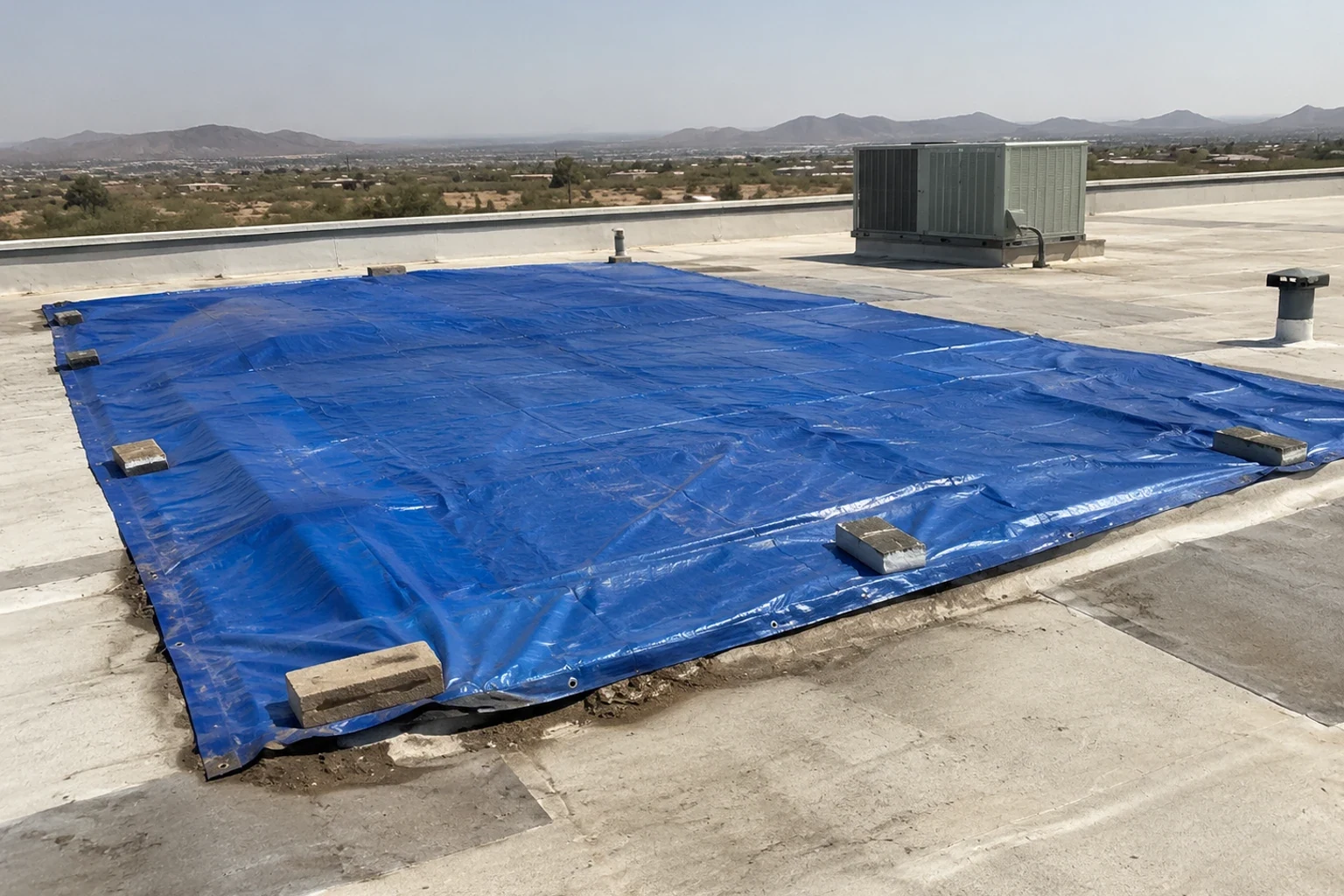
Storm repair has a sequence. Stop the water first. A temporary dry-in over an open area keeps the building dry while the rest is planned, and our emergency response runs around the clock.
Then secure the roof. Reset coping and edge metal, re-bond lifted membrane and add fasteners at corners and perimeters. Then repair the surface: patch punctures, seal split seams, and cut out and replace bruised or soft sections. Then dry the building. If insulation is wet, it comes out and new board goes in, because wet board holds moisture and rots the deck.
Last, clean the drains. A storm leaves gravel and hail in the screens, and the next cell will test them again.
Cost depends on the pattern. Wind lift at a few corners is a short visit. Hail bruising across a large field is a bigger scope. Wet insulation is the item that moves the number most, because it means cutting out and replacing board. We list each cost driver beside its item so the owner sees what moves the price.
Where Wind and Water Hit Hardest
Ridge-top wind is part of the picture in town. Glassford Hill, a 6,177-foot former volcano, defines the skyline and exposes nearby buildings to wind, so retail roofs along the Glassford Hill Road corridor, with low-slope buildings and inline shops, should have their edges checked after every strong cell. The Crossroads, another town retail center, has a row of inline shops, and any long row of low-slope roofs has many edges for wind to start from.
Out east, the Flagstaff weather office warned of 50 mph gusts and half-inch hail in a storm over Dewey-Humboldt. Half-inch hail leaves a clearer mark than pea-sized hail, and a roof in that path gets a closer look at every surface. Prescott, to the west, has also flooded repeatedly, including 14.5 inches of rain in under 48 hours in 1983, and floods in 2004 and 2018. Roofs that must handle water that fast need clear drains and overflows.
What Can Wait
Not all storm damage needs a same-week fix. Marks that leave the surface unbroken can wait. A shallow bruise on a sound membrane can be watched through a season. Loose gutters that do not leak can wait for the planned work window. We rank each item as a patch or a fix, and we say which items can safely be watched.
Anything near an edge, a seam or a drain should be treated as urgent. Those are the places a second storm will find.
The written sheet also lists what we watched and did not repair, so the owner can see what to check after the next cell. Watched items get a date. If they have changed by the next visit, they move to the repair list.
Commercial Roofing Questions
How soon after a storm should the roof be checked?
Within a few days, before the next cell. Look from the ground first for loose coping, bent edge metal and debris. Then request a walk, since lifted corners and bruised surfaces are hard to see from below.
Does pea-sized hail damage a commercial roof?
Rarely on a healthy surface. It does find old, brittle sheets and thin spots. We press the surface, photograph soft spots and compare them with the roof's age before calling anything hail damage.
What do I do about interior water stains after a storm?
Photograph them with a date, protect the contents and call. The stain is rarely under the entry point. We trace the path with a moisture meter before we cut anything open.
Will the repair match the rest of the roof?
We match the system and use compatible materials and methods. A patch that does not bond to the existing sheet fails in the next cycle, so compatibility comes before appearance.
Can a storm repair be done in winter?
A dry-in can go on any day. Permanent repair needs a dry surface and workable temperatures, and freezing weather typically holds from late October into the first of May, which pushes some permanent repairs to a milder week.
Request a Walk-Through
Request a walk-through after the next storm, and we will send a written findings sheet with photos before any repair is priced.
Request a Roof Assessment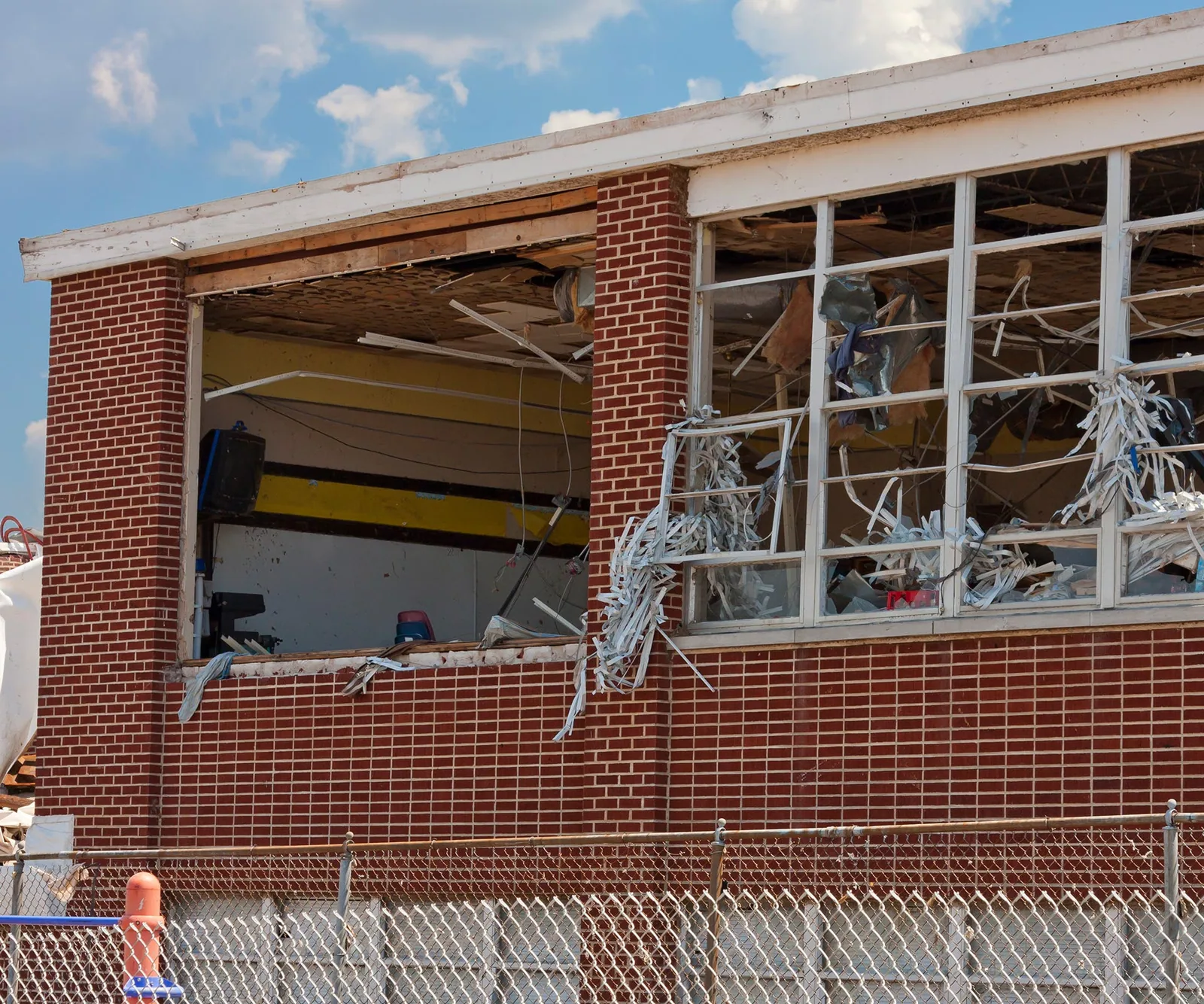
Commercial Roofing Questions
Within a few days, before the next cell. Look from the ground first for loose coping, bent edge metal and debris. Then request a walk, since lifted corners and bruised surfaces are hard to see from below.
Rarely on a healthy surface. It does find old, brittle sheets and thin spots. We press the surface, photograph soft spots and compare them with the roof's age before calling anything hail damage.
Photograph them with a date, protect the contents and call. The stain is rarely under the entry point. We trace the path with a moisture meter before we cut anything open.
We match the system and use compatible materials and methods. A patch that does not bond to the existing sheet fails in the next cycle, so compatibility comes before appearance.
A dry-in can go on any day. Permanent repair needs a dry surface and workable temperatures, and freezing weather typically holds from late October into the first of May, which pushes some permanent repairs to a milder week.