Wind Damage Roof Repair in Prescott Valley, AZ
Wind damage roof repair in Prescott Valley, AZ: edge metal, lifted membrane and loose equipment after gust fronts, with a photo findings sheet first.
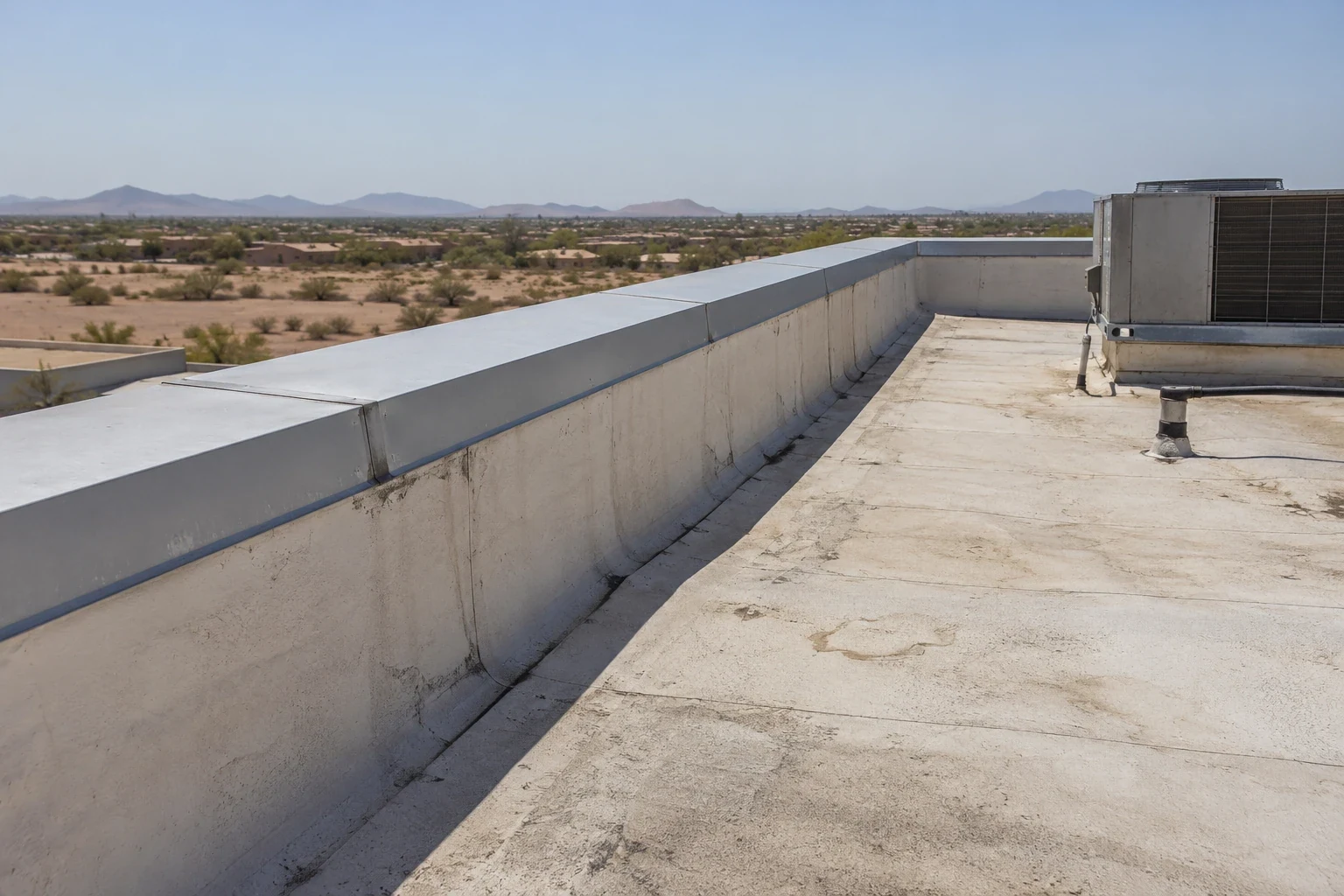
One coping joint open a hand's width tells an inspector a lot. Wind got under the cap and worked it loose. The membrane under that cap is now the next thing to lift. In Prescott Valley, AZ, wind arrives with the monsoon cells of July and August. A gust front can strike in minutes and be gone before the sky clears. The damage it leaves is often small at the edge and large three feet in. Our job is to find the small part first and fix it before the next cell.
The storm that set the pattern
The July 20, 2026 monsoon storm pushed pea-sized hail and heavy rain across Prescott Valley on a strong wind, and traffic signals and trees went down along with power to more than 130 APS customers.
A storm like that does not need a tornado to hurt a roof. A gust front pushes air across the roof at speed. The air slows and rises at the parapet. It pulls on whatever is loose. A small tornado north of town on May 6, 2025 tore a few shingles from a roof, which shows how quickly a local cell can do damage. Commercial roofs have different parts to lose: edge metal, coping, unsecured covers and membrane laps.
Monsoon season repeats each summer. A cell reaches the valley with a gust front. The gust often arrives before the rain. That order matters, because the gust opens the roof and the rain follows it in.
Start at the edge
Wind pulls hardest at corners and perimeters. That is where we walk first. We check each length of fascia and coping for gaps. We pull on cleats to see whether they hold. We look for fasteners that backed out and for sealant that split.
Next we look at the membrane just inside the edge. A lifted sheet leaves a wave. A peeled sheet leaves a crease. A torn termination leaves a dark line where water got in. We photograph each one and mark it on the roof plan. Fixing an edge means resetting the cleat, new fasteners into sound framing and a new termination. A dab of sealant does not hold against the next gust. If the edge detail is edge metal and coping that was never continuous, we say so in the findings sheet.
Gutters and downspouts get the same pull test. A gutter strap that gave way in the gust leaves a sag. A sag holds water. Water sitting against the edge shortens the life of the termination. We reset straps at every hanger and record the spacing.
What wind does in the field
Away from the edge, wind finds loose items. Skylight covers, exhaust caps, light equipment housings and gravel can all move. A moving cover can puncture the sheet it lands on. The hole may sit far from where the cover started.
We trace from each missing item to its landing spot. We look for punctures, scuffs and torn flashings along the path. Small holes need a membrane puncture repair. Lifted laps need a seam repair. A sheet that billowed and pulled its fasteners needs a closer look at the attachment pattern. We test the pull strength in a few places and record the result.
Ballast and gravel need a look too. On a ballasted roof, wind can scatter stone and bare the sheet beneath. Bare membrane ages faster in sun. We note the bare patches and measure them, and we restore ballast to the specified depth.
Where wind finds exposed roofs
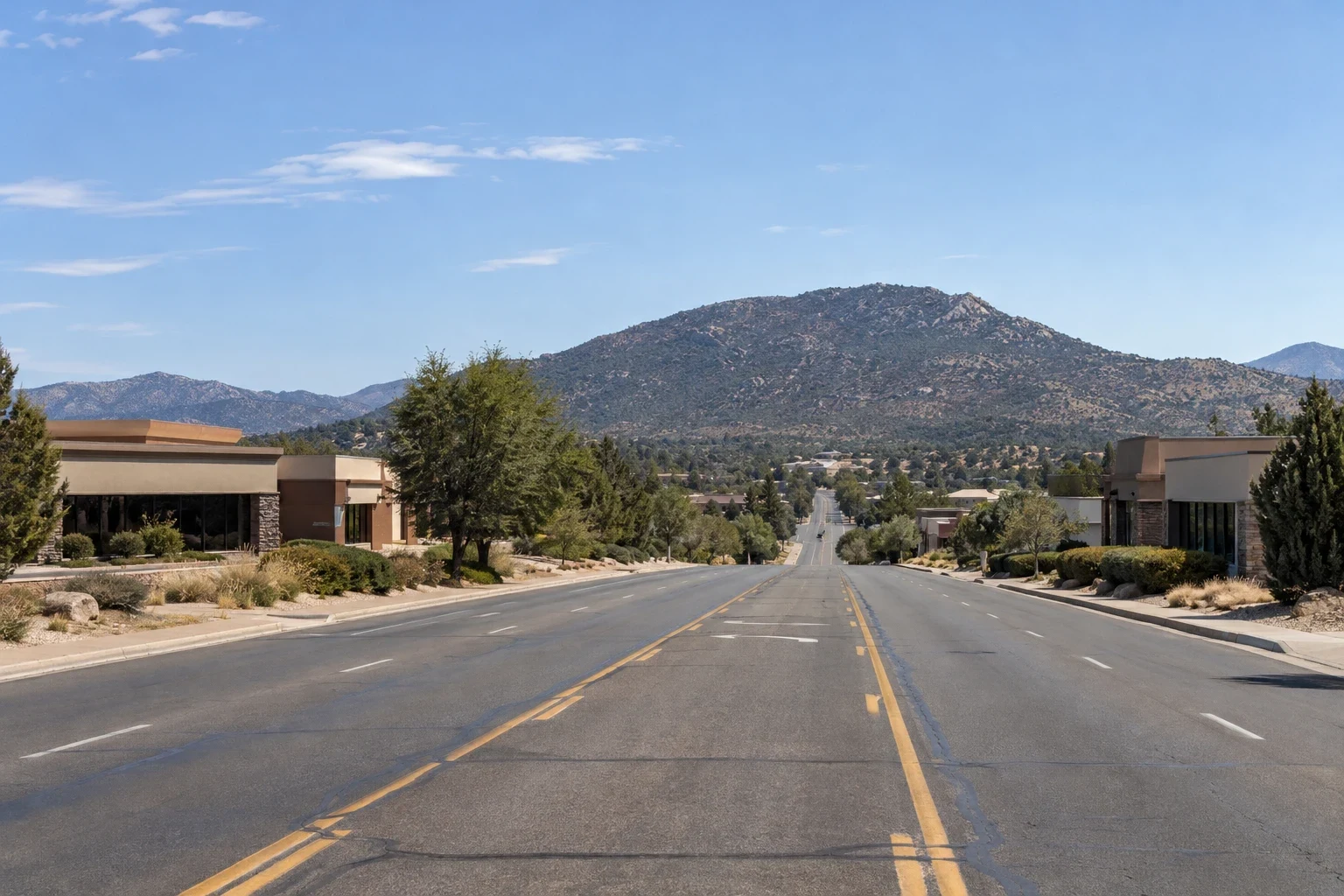
Retail power centers like Glassford Hill Marketplace and The Crossroads carry low-slope buildings with many roof edges. Along the Glassford Hill Road corridor, runs of parapet and coping give wind a lot to push on. Each tenant bay adds rooftop units and a flashing.
On the east side, the Fain Road corridor and Big Sky Business Park are part of the industrial side of town. Among the larger employers there are a window maker and a hardware distribution center. Wherever a roof carries a lot of rooftop equipment, we count the tie-downs and the curbs. A loose unit is a wind finding too.
What to repair now
Repair now what lets water in or gives wind a grip. That list is short. A lifted edge. An open termination. A torn flashing. A missing cover. These go first, and we make them safe before the next monsoon cell.
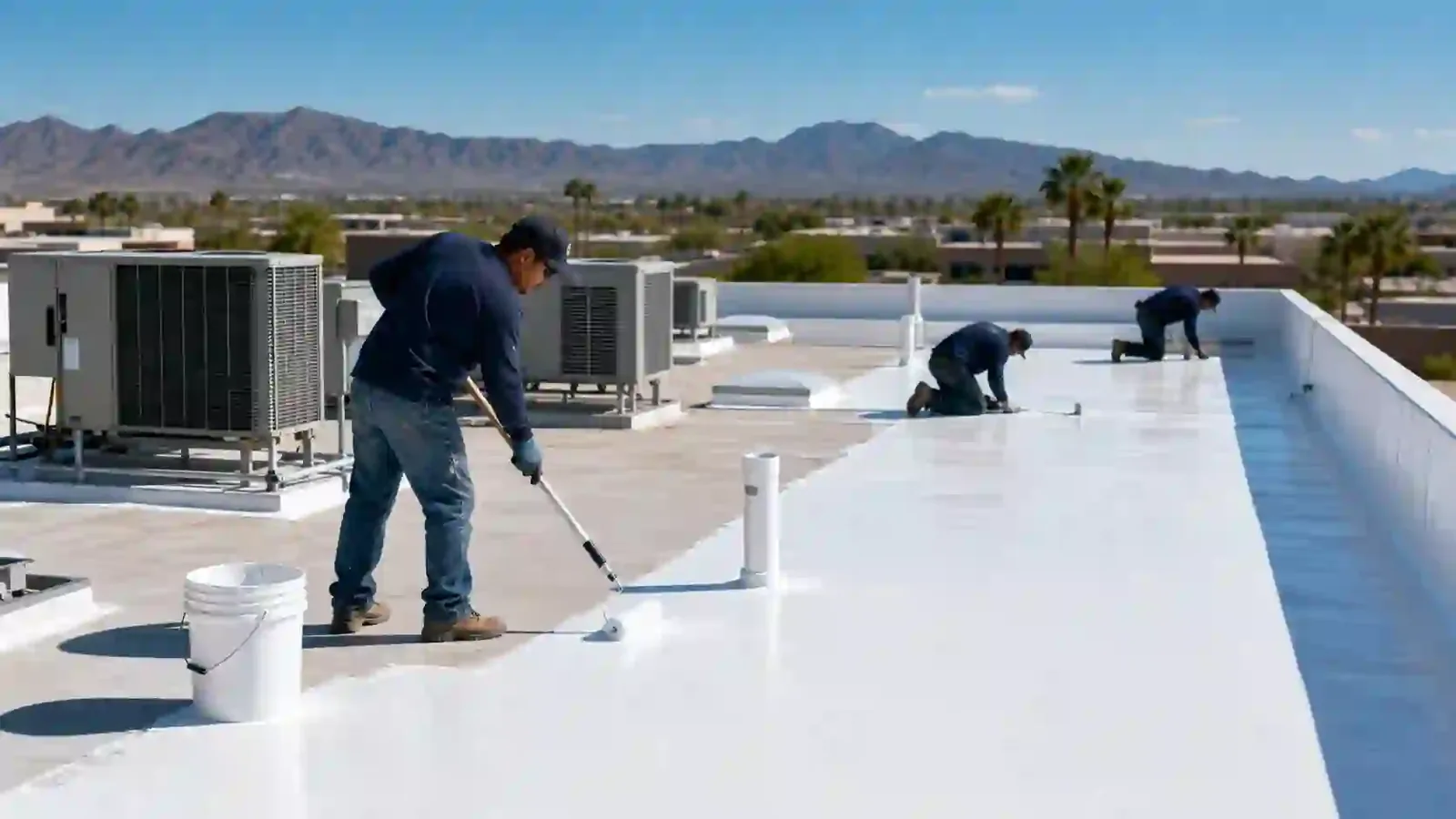
If the roof is leaking, we place temporary protection the same day. Tarps, temporary sealant and sandbags hold the roof until the permanent repair. Then we write the permanent scope with quantities and prices. Where the damage is large, the storm damage repair process starts with a full roof walk and a written sheet.
Order matters. Make safe first. Seal the opening second. Rebuild the edge third. Check the field last. A crew that rebuilds the edge before sealing the opening can trap water in the wall. We follow the sequence and photograph each step.
What can wait
Some findings can wait for the next maintenance visit. Cosmetic scuffs. Faded sealant on a dry detail. A stained seam that is still tight. We list them in a second tier and put a price beside each.
The owner decides. A short list of waiting items keeps surprises small. We check them again after the next storm and record whether they changed.
One more category sits between now and later. Items that are sound today but sit next to something damaged. A good seam beside a lifted edge is one. We flag it and plan to recheck it within a month.
How to check it yourself
You do not need to climb. Walk the lot and look up at the edges. Look for gaps in the coping. Look for metal that sticks out or sags. Look for debris on the ground that came from the roof.
Inside, look at the ceiling near exterior walls. New stains after a gust front point to water at the edge. Take a photo with the date. If you find loose metal, keep people away from that side of the building. Then call for a walk. The written findings sheet comes before any repair is priced.
Do this after every monsoon cell. It takes ten minutes. It catches the small finding before it becomes the large one.
Commercial Roofing Questions
How do I know if wind damaged my roof if nothing leaks?
Look at the edges from the ground, then ask for a walk. Loose coping, wavy membrane near the perimeter and missing equipment covers show wind damage before water does. Early repair costs far less than repair after the leak.
Does wind damage count as storm damage for insurance?
Often it does, but policies differ. We photograph every finding with the date and write a scope that separates wind damage from age. Send the policy to your agent and let them confirm what applies.
Can a repaired edge fail again?
Yes, if the framing behind it is soft or the cleat was never continuous. We pull-test fasteners and check the substrate before repairing. A repair into bad framing holds only until the next gust.
What should the building staff do right after a storm?
Look from the ground for missing covers, loose metal and debris on the roof. Check ceilings for new stains. Take dated photos and send them to us. Do not walk the roof if it is wet or if you see a lifted sheet.
Are standing seam metal roofs safer in wind?
Well-installed standing seam resists wind well, but trim, clips and penetrations still matter. We inspect the ridge, eaves and rake first on a standing seam roof because that is where movement shows.
Request a walk-through after the next gust front
Ask for a roof walk and we will photograph every finding. You get a written findings sheet with photos before any repair is priced.
Request a Roof Assessment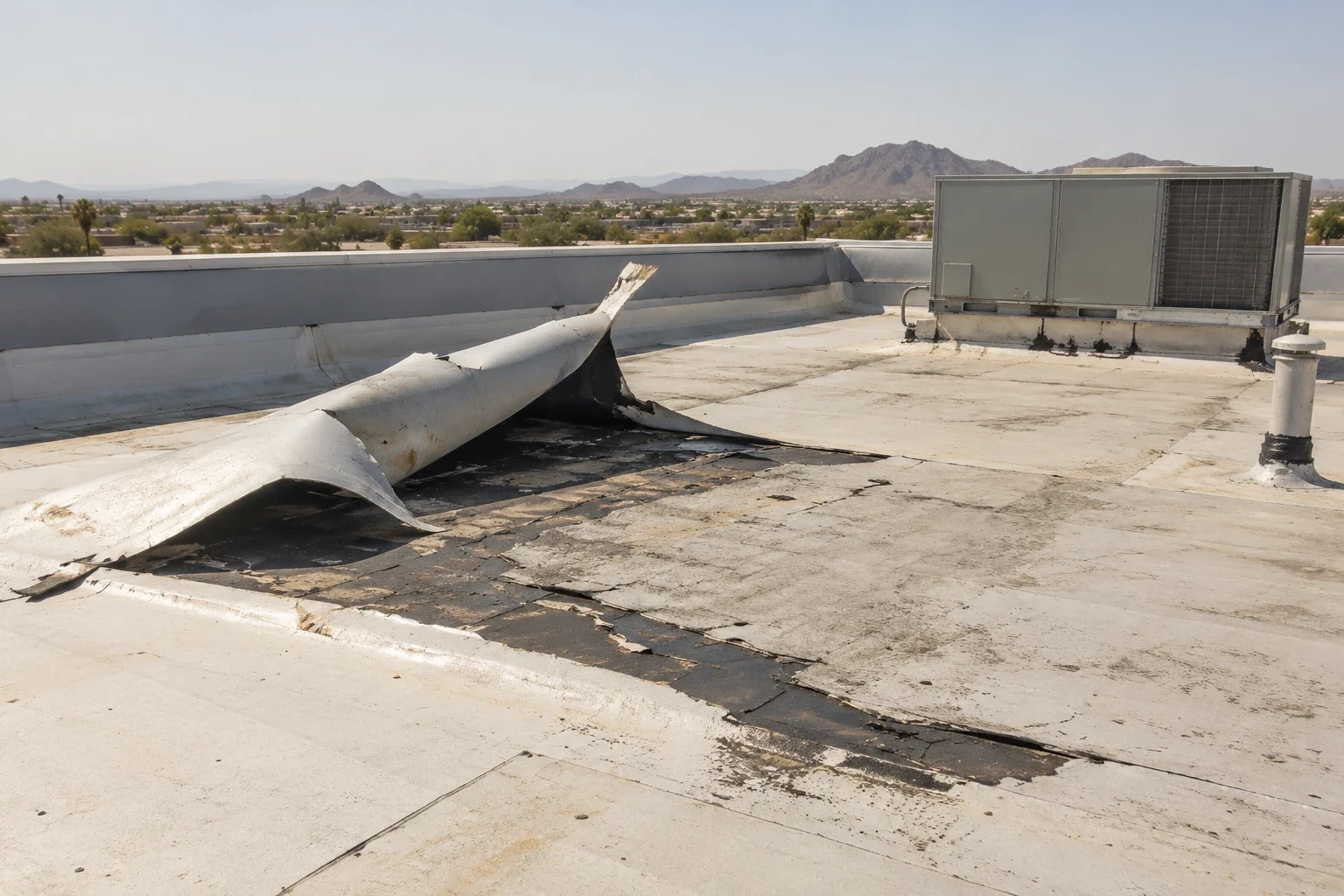
Commercial Roofing Questions
Look at the edges from the ground, then ask for a walk. Loose coping, wavy membrane near the perimeter and missing equipment covers show wind damage before water does. Early repair costs far less than repair after the leak.
Often it does, but policies differ. We photograph every finding with the date and write a scope that separates wind damage from age. Send the policy to your agent and let them confirm what applies.
Yes, if the framing behind it is soft or the cleat was never continuous. We pull-test fasteners and check the substrate before repairing. A repair into bad framing holds only until the next gust.
Look from the ground for missing covers, loose metal and debris on the roof. Check ceilings for new stains. Take dated photos and send them to us. Do not walk the roof if it is wet or if you see a lifted sheet.
Well-installed standing seam resists wind well, but trim, clips and penetrations still matter. We inspect the ridge, eaves and rake first on a standing seam roof because that is where movement shows.