Seam Failure Repair in Prescott Valley, AZ
Seam failure repair in Prescott Valley, AZ: probing, welding and cover strips for split or open laps, timed around freezing mornings and monsoon cells.
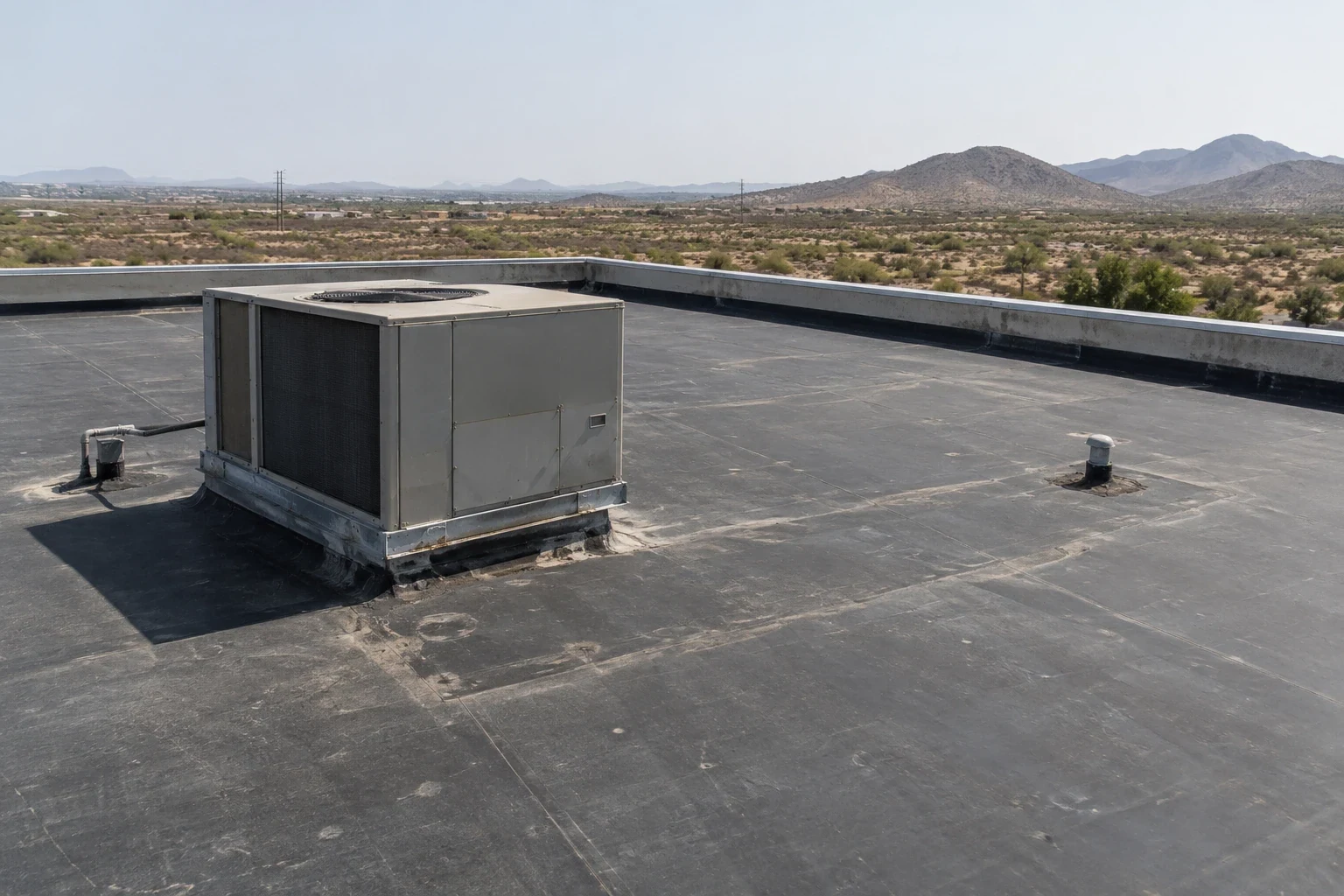
Slide a rounded probe along a seam. If it slips under the edge, the seam is open. It may be open only a finger's width. That is enough. Water follows a seam like a ditch. A roof near 5,100 feet gains and loses almost thirty degrees in a day. Every swing pulls at each lap. Prescott Valley, AZ roofs get that pull most days of the year. A seam that was tight at install can open a hair at a time.
Seams are not all the same
The repair depends on the seam. Heat-welded seams on TPO and PVC fuse two sheets into one. Adhered and taped seams on EPDM rely on glue or tape. Modified bitumen laps are torched or cold-applied. Built-up roofs have lapped plies. Metal roofs have standing seams or exposed-fastener laps.
Each fails in its own way. A weld fails when it was cold or dirty at install. An adhesive seam fails as the glue ages. A bitumen lap fails when the sheet shrinks and pulls it open. We identify the seam type first. How a TPO or EPDM roof is put together decides the repair, so the seam type comes first.
Probe every seam
Seams are probed, not guessed at. The probe is a rounded tool that slides along the edge of the lap. It will not cut a good seam. It will catch a bad one. We walk the roof in lines and probe the edge of every lap.
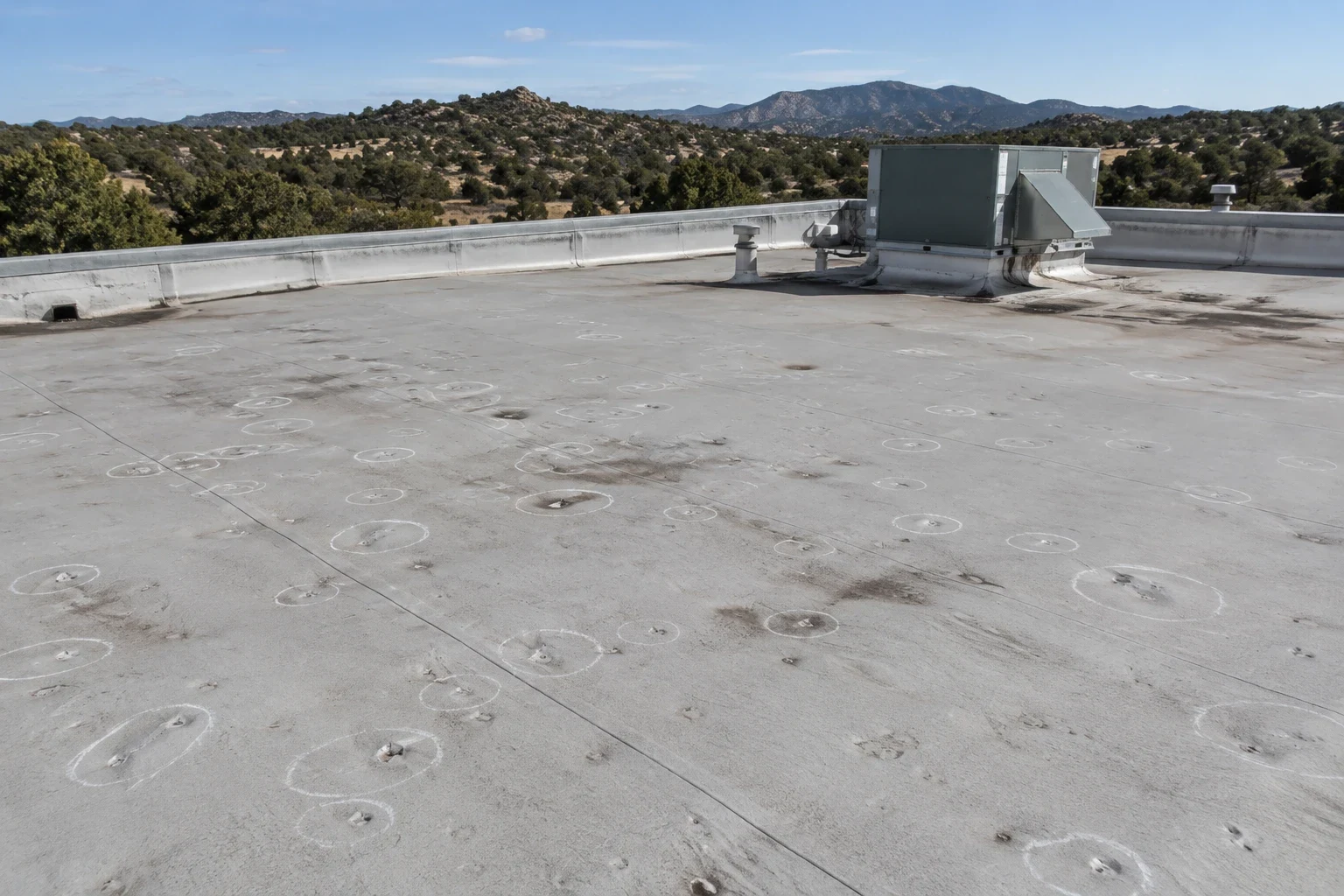
When the probe slips in, we mark the spot with chalk and photograph it. We measure how deep the opening runs and how long it is. We note whether the sheet beneath is wet. A wet sheet means water has already entered. A dry one means we caught it early. The roof plan gets a mark for each finding, so the repair crew can find it again.
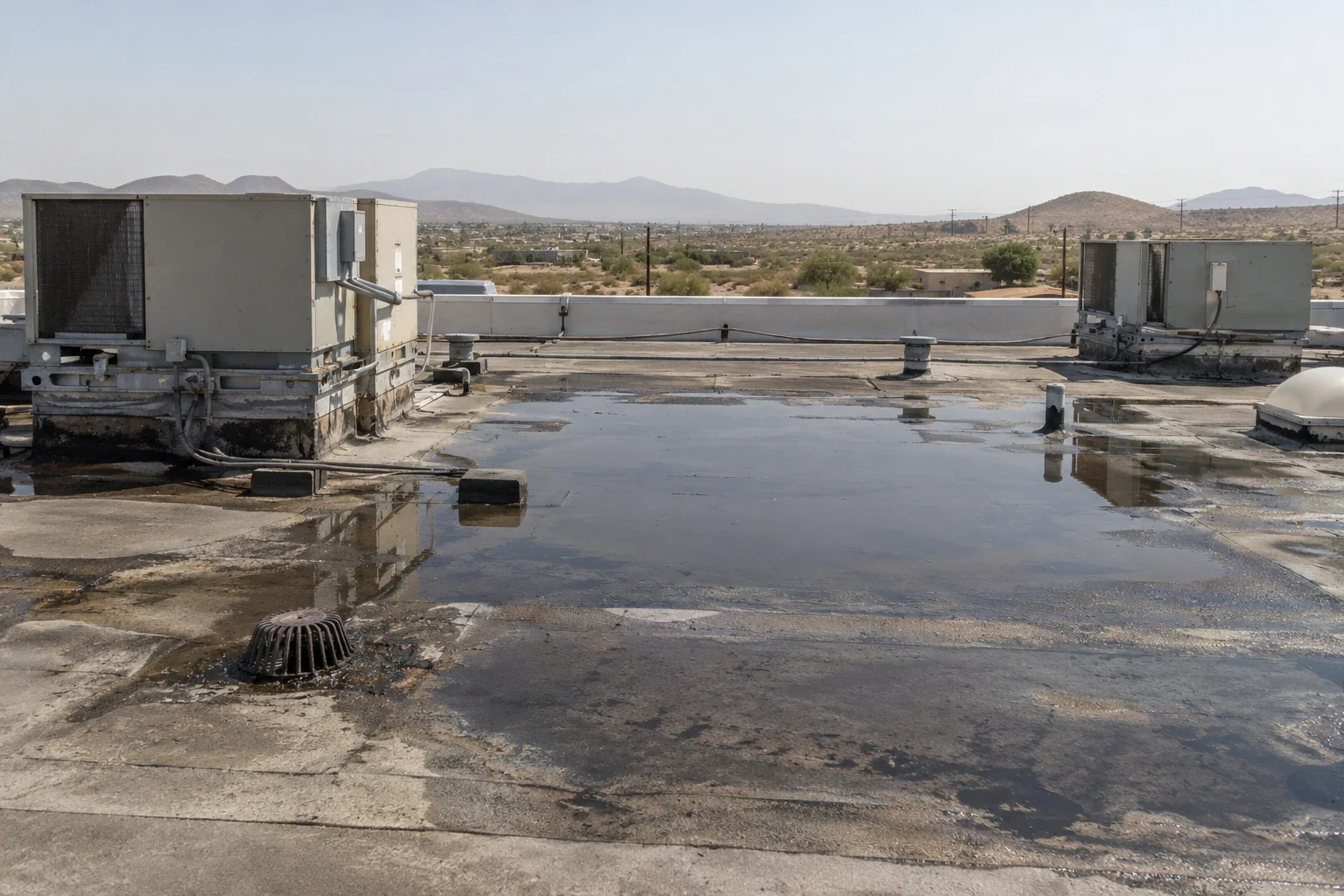
A seam under a puddle is a special case. We check it twice, once dry and once after rain, and we read the ponding line beside it. Water that sits on a seam for days softens adhesive and tests every weak weld.
What freeze and swing do to a lap
From late October to May 1, mornings near Prescott start below freezing. A cold membrane shrinks and stiffens. A lap under tension can pull apart as the sheet contracts. Then the sun warms the roof and the sheet grows. The seam works back and forth.
Daily swings near 30 degrees mean this happens most days in the cold season. A seam with a weak spot opens a bit more each cycle. Water enters and freezes in the gap. Ice pries the gap wider. By spring the opening is long enough to be seen from a few feet away. This is why we prefer to probe in autumn, before the first hard freeze, and again after the thaw.
What monsoon cells add
July through September is monsoon season. Short, violent cells bring rain, wind and hail. Pea-sized to half-inch hail strikes the membrane. It bruises it. A bruise over a seam can crack the weld, and the hail damage findings show where it happened. Wind lifts laps that are already loose and flaps them. A flapping lap tears.
The July 20, 2026 cell was a good example, a downpour with strong wind and pea-sized hail. After a storm like that, we re-probe the seams. We start at the edges, where wind pulls hardest. Then we check seams near drains and low spots, where water collects. A seam under a puddle gets tested twice.
How seams are repaired
The fix depends on the seam and the cause. A small open weld on a thermoplastic sheet gets cleaned and re-welded with a hot-air gun, then probed again. A larger split gets a cover strip welded across it. An open adhesive seam on EPDM is cleaned, re-glued and rolled, or covered with new tape and primer. A bitumen lap is re-heated or covered with a cold-applied strip and mastic.
Where the sheet has shrunk or hardened, a patch may not hold. We cut out the bad section and weld in new membrane. We check the insulation under the opening first. If it is wet, we remove it. A commercial roof repair that covers wet insulation hides the problem. We write the method and the product in the findings sheet.
Where seams work hardest, and what can wait
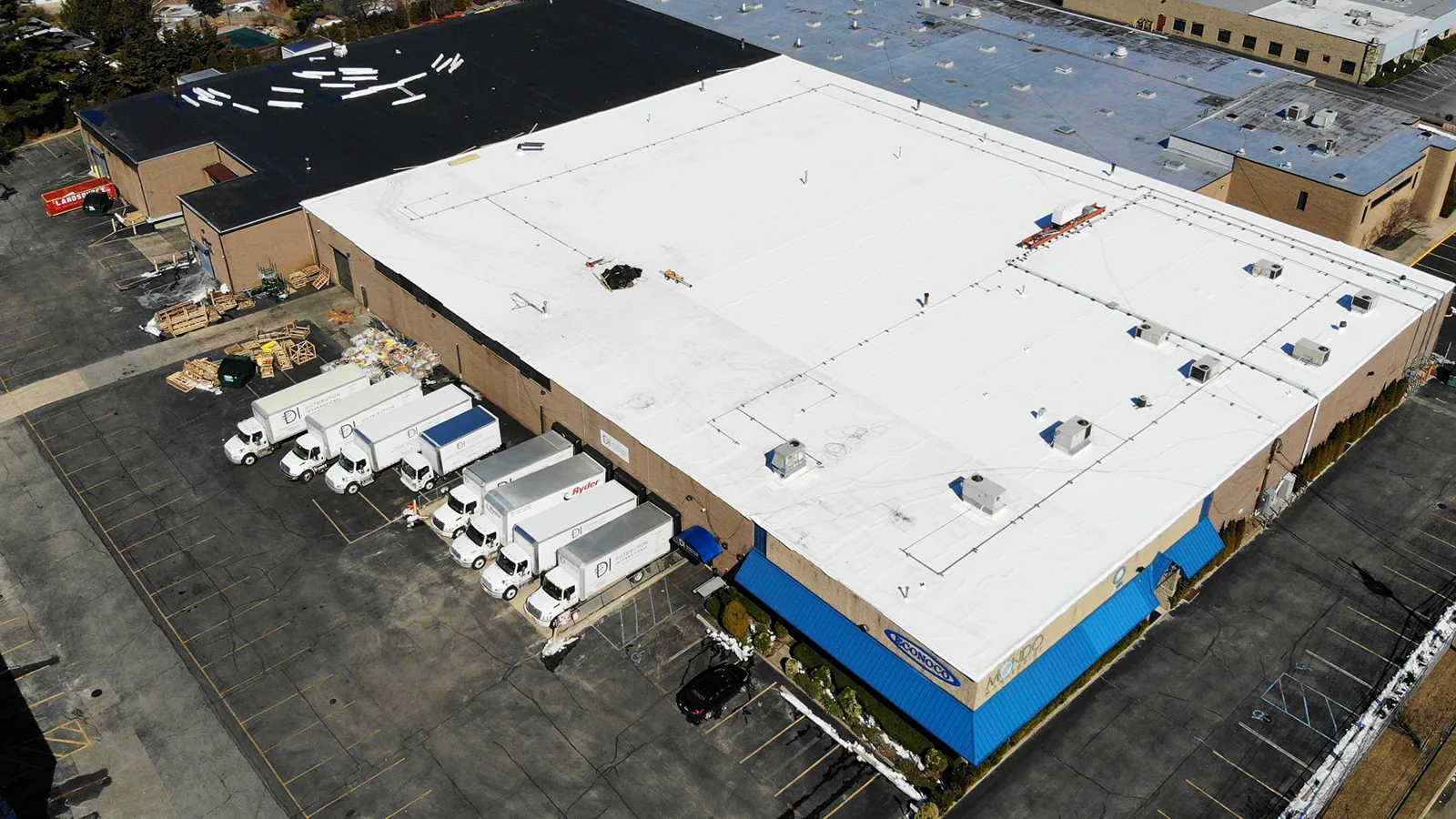
Large flat roofs have miles of seam. Warehouses and distribution buildings, like those in industrial parks such as Big Sky Business Park, are examples of the type. So are the retail roofs along the SR 69 corridor. More seam means more chances to open.
Seams near equipment curbs and walls take extra movement. Seams in low spots take extra water. We spend more time in those places. The findings sheet groups seam repairs by area so a crew can work through them efficiently, and so a facility director can see which parts of the roof are most worn.
Ask about access. A roof with few safe paths takes longer to probe. A roof with heavy equipment takes longer to repair. These facts affect cost and timing, and they belong on the sheet.
A tight seam with a faded surface can wait. A small cosmetic wrinkle in a sound weld can wait. A seam that probes shut and shows no water stain can wait. We note them and price them.
An open seam in a low spot cannot wait. Neither can a seam that has a stain below it. Neither can one that opened again after a repair. Those go first. The findings sheet sorts the list into repair now and repair soon, and you set the order.
What to ask for in writing
Ask for a count of open seams and their total length. Ask for a photo of each. Ask what method fixes each one and what product goes in. Ask whether the sheet near the seam is sound enough to hold the repair. Ask for a recheck date.
Ask about related damage too. A puncture near a seam is a second finding, and the two repairs should be planned together. A single written sheet with all of these items lets you compare bids fairly, and the sheet arrives before any repair is priced.
Commercial Roofing Questions
How can I tell a seam has failed without climbing on the roof?
Look for water stains below the roof near laps, and for membrane that rises or ripples along a line from the ground. Neither is certain. A probe on the roof is the real test. Ask for a seam probe and a photo of each open seam.
Can open seams wait until spring?
Short gaps in a dry roof can wait a few weeks with monitoring. A seam that is open and in a low spot should not wait through a freeze. Water that enters and freezes widens the opening. We sort seams by risk in the findings sheet.
Is a re-welded seam as strong as the original?
A clean re-weld is usually strong, but the sheet near it may be aged. We check the nearby membrane for brittleness before welding. If it is weak, a cover strip over sound material is better than a weld through weak material.
Does the roof warranty cover seam failure?
Some warranties cover workmanship at seams for a stated period. Others exclude damage from storms or ponding. Check your warranty file and send us a copy. We document the seam and the date so you can file if the terms allow.
What does a seam repair record look like?
A roof plan with each seam marked, a photo of each opening before and after, the method used and the product. We add the date and the weather. That record helps with warranty claims and with the next inspection.
Request a seam probe walk-through
Ask for a roof walk and we will probe every seam and photograph what we find. You get a written findings sheet before any repair is priced.
Request a Roof Assessment
Commercial Roofing Questions
Look for water stains below the roof near laps, and for membrane that rises or ripples along a line from the ground. Neither is certain. A probe on the roof is the real test. Ask for a seam probe and a photo of each open seam.
Short gaps in a dry roof can wait a few weeks with monitoring. A seam that is open and in a low spot should not wait through a freeze. Water that enters and freezes widens the opening. We sort seams by risk in the findings sheet.
A clean re-weld is usually strong, but the sheet near it may be aged. We check the nearby membrane for brittleness before welding. If it is weak, a cover strip over sound material is better than a weld through weak material.
Some warranties cover workmanship at seams for a stated period. Others exclude damage from storms or ponding. Check your warranty file and send us a copy. We document the seam and the date so you can file if the terms allow.
A roof plan with each seam marked, a photo of each opening before and after, the method used and the product. We add the date and the weather. That record helps with warranty claims and with the next inspection.