Distribution Center Roofing in Prescott Valley, AZ
Roof inspection, repair and replacement for distribution and fulfillment centers in Prescott Valley, AZ, with photo findings and dock-friendly scheduling.
Check the roof above the dock doors. Dock zones can see foot traffic, dust and mechanical vibration. Scuffed membrane and loose edge metal are what we look for there. That is a finding with a clear cause. Forklifts shake the building, trucks bring grit, and the dock canopy collects water. Across distribution roofs in Prescott Valley, AZ, we press the seams and photograph each defect. The written sheet reaches you first, pricing follows, and you choose what to fix now.
What a fulfillment roof carries
A distribution center has a big roof and a lot of equipment on it. There are rooftop units, exhaust fans, smoke vents and conduit runs. Each one is a hole in the membrane that someone has to flash.
Service crews walk to those units all year. Their boots wear paths through the surface. We look for those paths and mark them on the plan. Walkway pads cost little and save the membrane.
What the local distribution base tells us
Prescott Valley counts the Ace Hardware Retail Support Distribution Center among its largest employers, with 418 people. The Prescott Valley Economic Development Foundation also targets warehouse distribution companies of 10 to 125 employees. Both facts put distribution space in the local picture. An older building with a new tenant needs a different plan than a new building, and we write the plan for the building in front of us.
Roofs on the east side near the Fain Road corridor are easy to reach from SR 89A and SR 69. That helps with scheduling. It does not change the weather. A warehouse roof on the same road faces the same gusts, and a cold storage building adds vapor and condensation to the list.
What drains tell us
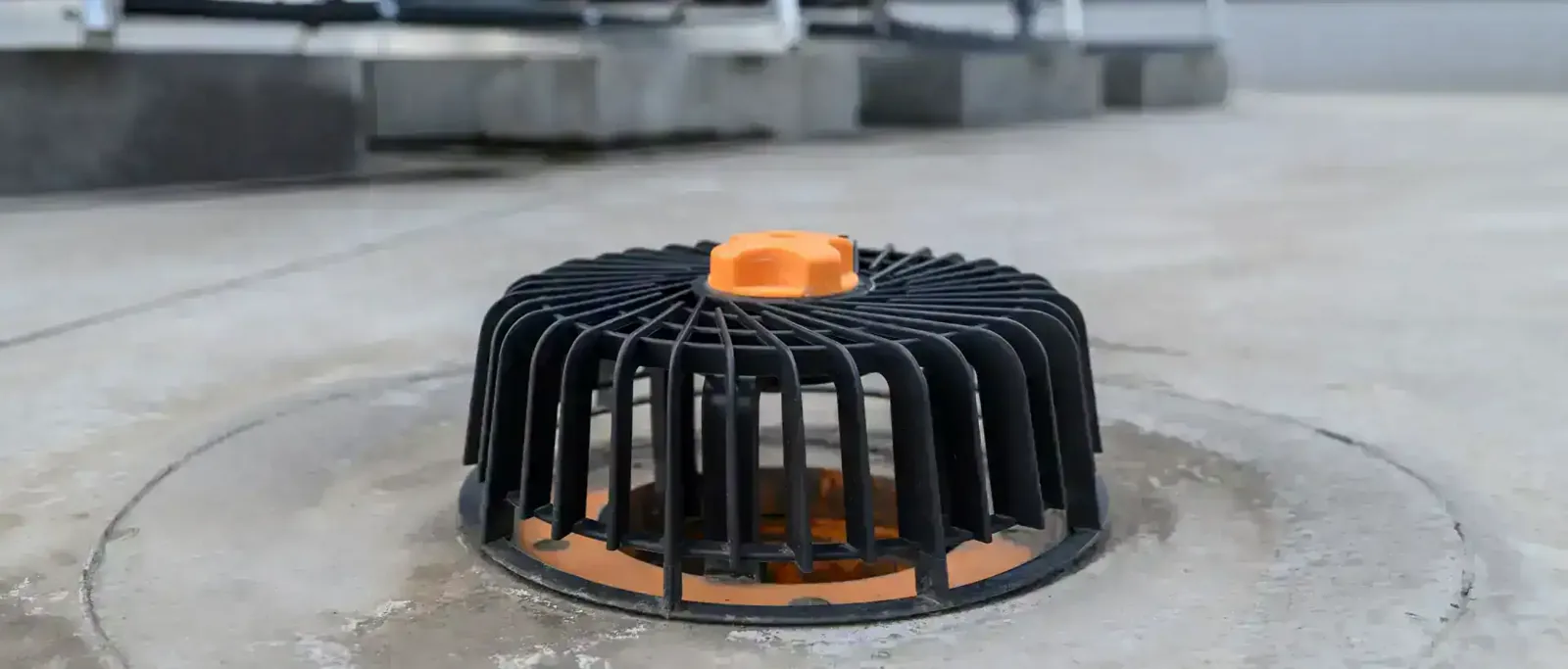
Drains are the first thing we count. A distribution center has long runs of roof and only a few outlets. Each outlet carries a large share of the water.
We clear the screens and pour water to test the flow. Slow drains go on the list. Missing screens go on the list. We also look for scuppers that are blocked by leaves or lined with debris. A blocked outlet means standing water, and standing water means a ponding line. The roof drain and scupper work is cheap compared with a flooded dock.
What trucks and forklifts do to the roof
Trucks do not touch the roof, but they shake the building. Forklifts add vibration through the floor, the walls and the deck. Over years, the vibration loosens fasteners and cracks sealant at wall joints.
We tap along the parapet and the wall flashing. A hollow sound or a loose cap tells us something moved. We tighten what we can, reseal what cracked, and photograph both. A flashing that rattles will leak after the next freeze.
What monsoon cells do to dock roofs
A gust front hits a long building from one side. The windward edge takes the uplift, and loose edge metal is the first thing to go. When the July 20, 2026 cell crossed Prescott Valley, it carried strong wind, pea-sized hail and a downpour.
After a storm like that, we walk the edges first. We check the fasteners, the coping and the sealant. A lifted edge lets wind get under the membrane on the next gust. Re-securing an edge after a gust is a standard wind damage repair, and we price it alone.
Hail comes with the same storms. Pea-sized hail rarely punctures a membrane, but it can bruise a thin one. Bruises show as dark, soft marks. We press on them and mark each one on the plan.
What freeze and thermal swing do
The temperature swing in this area averages nearly 30 degrees in a day. A big membrane field expands and shrinks with it. Seams, curbs and laps take the strain.
From late October into early May, water that gets into a lap freezes and opens it. We probe each seam with a blunt tool and press on the laps. Soft or open laps go on the repair list. We note any seam failure with a photograph and a location.
What to ask for in writing
You can check a few things yourself. Look at ceiling tiles near the dock after rain. Look at downspouts for overflow. If you see a stain, photograph it and write the date. Send it with the aisle number. Water travels along the deck before it drips, so the stain is not always under the hole.
Request a findings sheet with photographs. Request a separate cost for each repair. Find out how a repair touches the warranty, and get the crew dates and staging spots in writing.
We give you all four. For buildings with a long list, a preventive maintenance plan spreads the work over several visits. For buildings with failing insulation, a recover or full replacement may be the cheaper path.
Commercial Roofing Questions
Can a distribution center stay open during a reroof?
Yes. Work moves one section at a time, with each closed up by shift end. Materials stay clear of dock doors and truck lanes stay open. Tell us your peak hours and we plan around them. Fresh-air intakes and exhaust fans get covers, so dust and fumes stay out of the building. For sensitive stock, we add protection below the work zone.
What should we repair first on a large flat roof?
Repair open seams, failed flashings and clogged drains first. These let water in fastest. Next, fix damaged edge metal. Last, treat surface wear and minor ponding. The findings sheet ranks each item by risk, so a facility director can fund the top of the list this quarter and the rest next year. Open items stay on the sheet with their photographs until they are fixed, so nothing drops off between budget cycles.
How long does a roof inspection take?
A walk of a large roof takes a half day to a full day, depending on size and equipment. We then write the findings sheet, usually within a few working days. If the building has wet insulation, we add a moisture scan, which usually runs at dusk, when wet areas hold heat longer than dry ones. The scan adds a marked plan of wet and dry zones to the sheet. We deliver the photographs and the plan together, so the facility director and the finance office read the same sheet. If a tenant owns part of the roof, we mark the boundary on the plan.
Does hail damage a distribution center roof?
Hail from pea-sized to half-inch stones can bruise membrane and strip granules from a cap sheet. Bruises may not leak right away. We press on suspect areas and take cores if needed. If we find damage, we document it with dates and photos, which helps with an insurance claim.
Should we replace or restore the roof?
Restore when the insulation is dry and the membrane is sound. Replace if cores come back wet over a wide area, or if seams fail across the whole field. We give you both prices, and we show the core results beside them. A restoration with a coating costs less up front. A replacement costs more and resets the clock. The right choice depends on what the cores show, how long you plan to hold the building, and what the lease says about roof costs. Where the building has multiple tenants, the report marks each lease boundary on the roof plan, so the repair bill follows the right party.
Request a walk-through
Ask for a walk-through of your distribution center roof. We send a written findings sheet with photos before we price any repair. You choose what to fix now and what can wait.
Request a Roof Assessment
Commercial Roofing Questions
Yes. Work moves one section at a time, with each closed up by shift end. Materials stay clear of dock doors and truck lanes stay open. Tell us your peak hours and we plan around them. Fresh-air intakes and exhaust fans get covers, so dust and fumes stay out of the building. For sensitive stock, we add protection below the work zone.
Repair open seams, failed flashings and clogged drains first. These let water in fastest. Next, fix damaged edge metal. Last, treat surface wear and minor ponding. The findings sheet ranks each item by risk, so a facility director can fund the top of the list this quarter and the rest next year. Open items stay on the sheet with their photographs until they are fixed, so nothing drops off between budget cycles.
A walk of a large roof takes a half day to a full day, depending on size and equipment. We then write the findings sheet, usually within a few working days. If the building has wet insulation, we add a moisture scan, which usually runs at dusk, when wet areas hold heat longer than dry ones. The scan adds a marked plan of wet and dry zones to the sheet. We deliver the photographs and the plan together, so the facility director and the finance office read the same sheet. If a tenant owns part of the roof, we mark the boundary on the plan.
Hail from pea-sized to half-inch stones can bruise membrane and strip granules from a cap sheet. Bruises may not leak right away. We press on suspect areas and take cores if needed. If we find damage, we document it with dates and photos, which helps with an insurance claim.
Restore when the insulation is dry and the membrane is sound. Replace if cores come back wet over a wide area, or if seams fail across the whole field. We give you both prices, and we show the core results beside them. A restoration with a coating costs less up front. A replacement costs more and resets the clock. The right choice depends on what the cores show, how long you plan to hold the building, and what the lease says about roof costs. Where the building has multiple tenants, the report marks each lease boundary on the roof plan, so the repair bill follows the right party.