Roofing for Property Management Companies in Prescott Valley, AZ
Roof walks, findings sheets and repair plans for property managers with several Prescott Valley, AZ buildings, so you can answer owners with photos and prices.
Open your work-order log and sort by roof. Four tenant calls about the same corner of the same building, each handled as a separate patch. That pattern is the first thing to look for. In Prescott Valley, AZ, we match the log to what we see overhead: a drain that never clears, or a curb that was sealed three times. The log tells us where to look, and the roof tells us why.
Property managers answer to owners, tenants and lenders, and a roof problem lands on all three. The findings sheet is built to answer each of them.
What a portfolio turns up
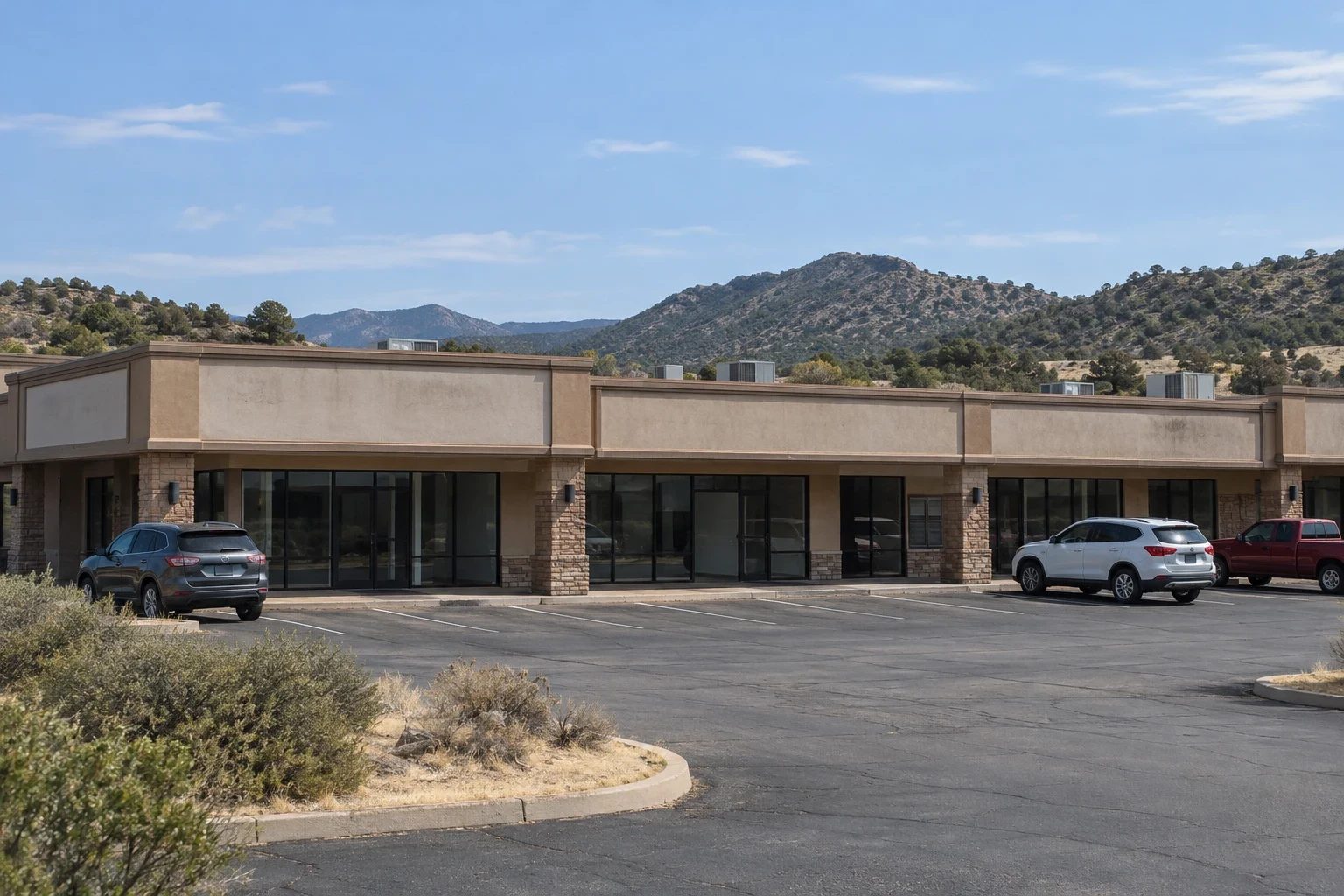
A portfolio rarely holds one kind of roof. A strip center with a single-ply membrane. An office with a built-up roof and a modified cap. A small industrial building with metal panels. An apartment community with pitched sections and flat sections. Each has its own failure points.
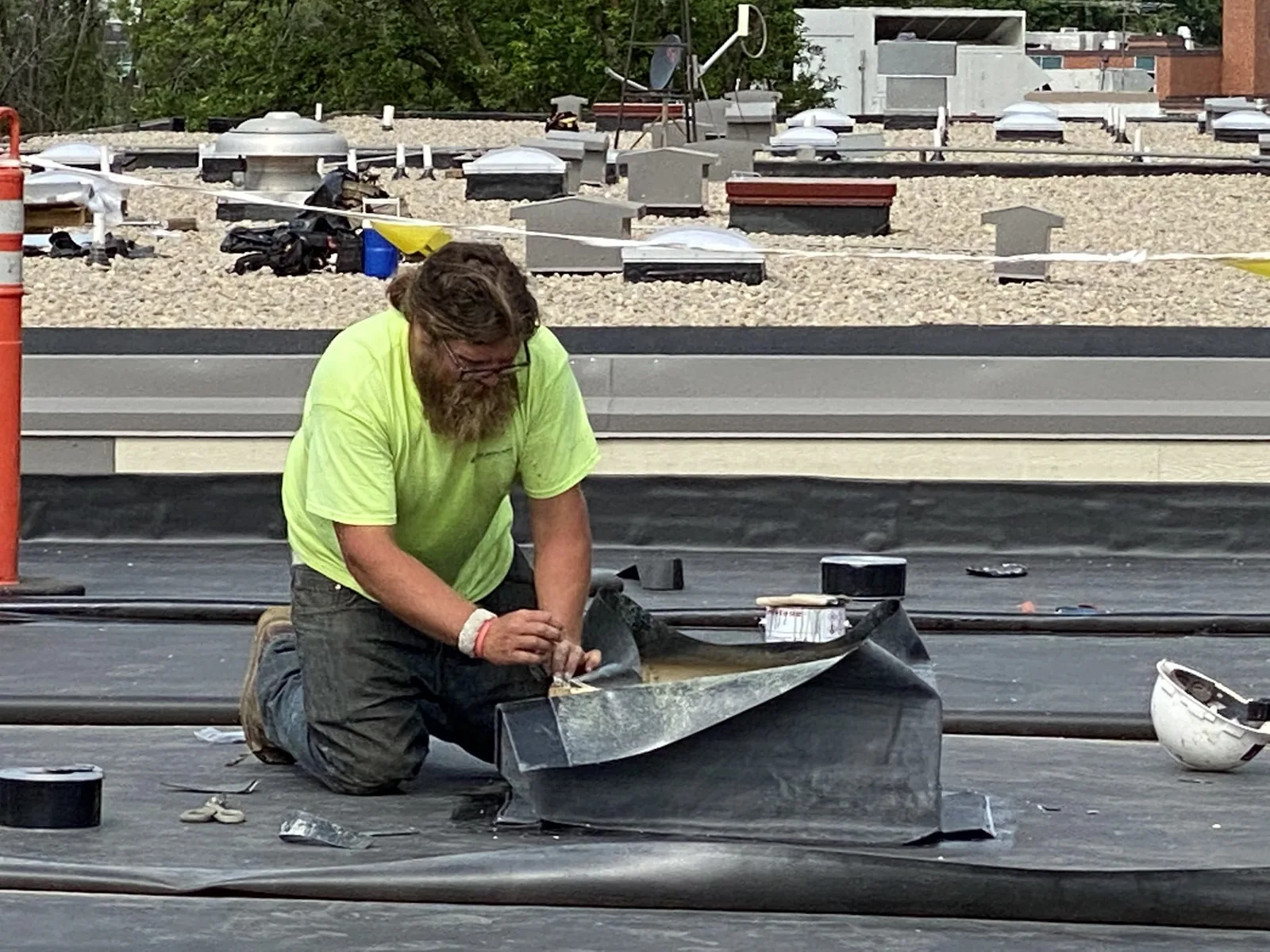
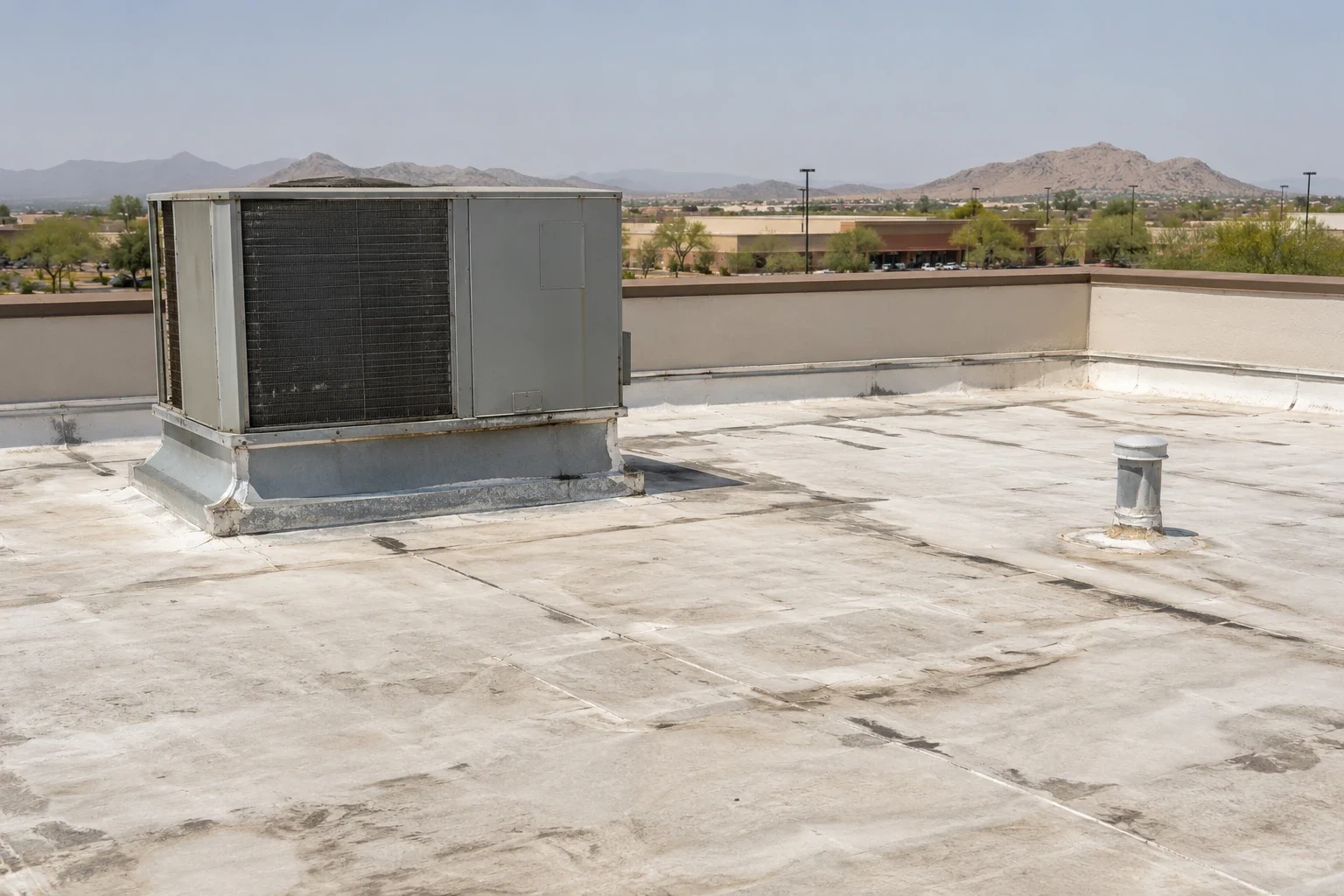
Across all of them the same few items recur: drain screens packed with gravel and leaves, curb seals that have dried, walk routes worn through the surface, flashing pulled from a wall and old patches that stopped holding.
Each one is logged by building and by location. After the first round you hold a record that did not exist before, sortable by building, age, cost or urgency, so you can tell an owner which roof is next and why.
Age is the number owners ask for and the one managers rarely have. The first walk estimates it from the layers in a core and the condition of the seams, and the report states the range plainly, with the evidence behind it. A roof that looks old may have years left. A roof that looks fine may not.
Storm calls and the two-walk year
July and August carry most of Prescott Valley's 15 inches of yearly precipitation, and monsoon cells bring rain, gusts and hail with little warning. When the July 20, 2026 cell hit, power failed for more than 130 APS customers and signals and trees fell, and tenant calls about leaks came within the hour.
Winter works more slowly. Freezing weather runs from late October to early May, and daily swings near thirty degrees keep seams and flashings moving. A manager who walks roofs in September and again in April catches what both seasons did.
We schedule those two walks for you. After each, a fresh sheet and a short list of what changed since the last arrive together. A preventive maintenance plan builds the walks into a calendar your team does not have to remember.
Retail, residential and industrial in one town
Retail power centers like Glassford Hill Marketplace and The Crossroads share the town with a downtown Entertainment District around a 6,000-seat events center, Homestead Talking Glass, a 214-unit apartment complex in the downtown area, and industrial parks on the east side. A manager here can hold all four.
Each type needs a different plan. Retail roofs share drains and edges with neighbors, so lease lines matter, especially in the Glassford Hill Road corridor and in centers like The Crossroads, where national retail and restaurant chains open beside inline shops. A shopping center roof raises those questions in full. Apartment roofs have many penetrations and many residents who call about drips, and an apartment roof plan is organized for those calls. Industrial roofs have equipment and long runs.
We mark which buildings on your list belong to which group and write the plan so one visit covers one group. Crews and equipment stay put, and your costs fall.
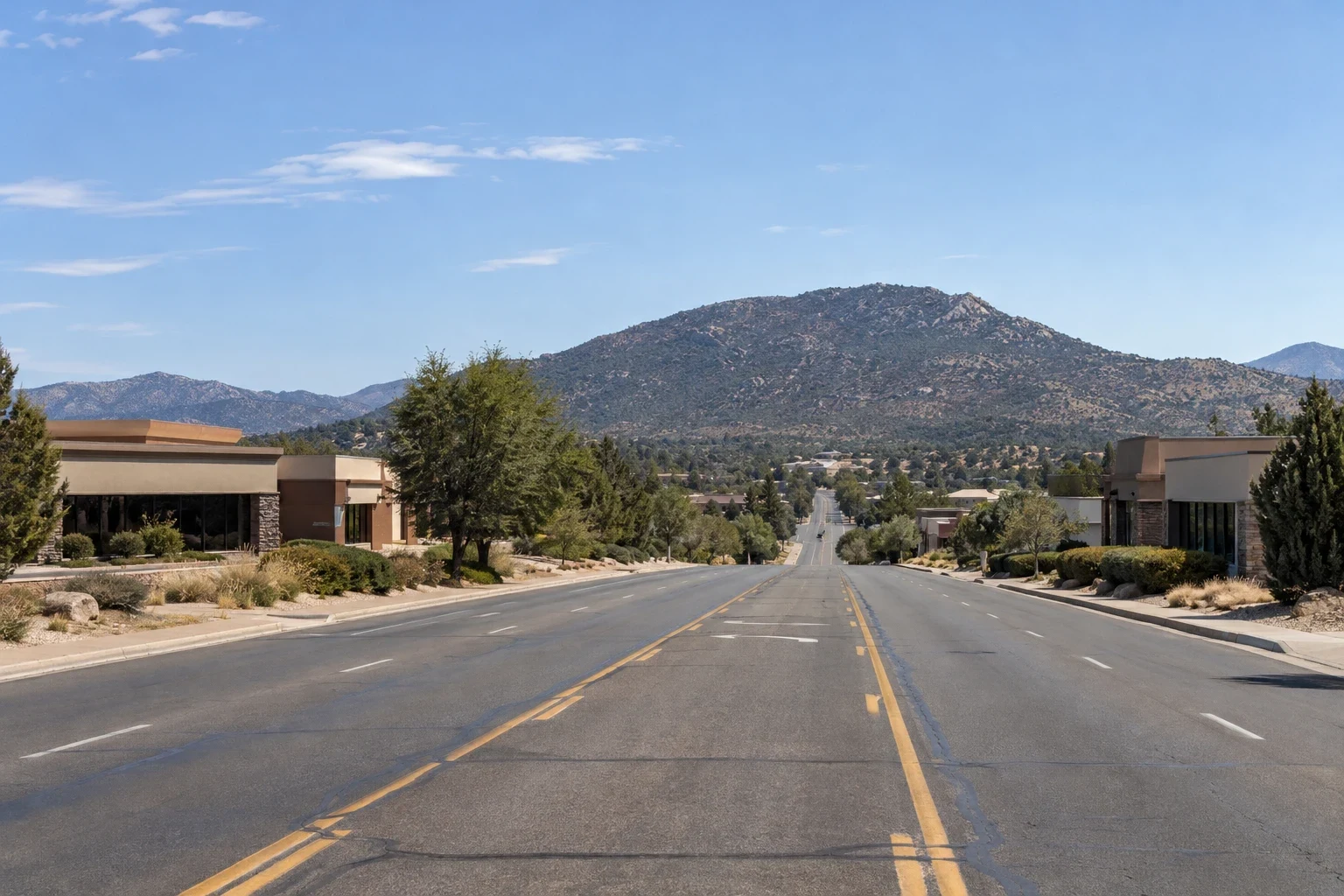
Check where each building sits against Glassford Hill, the 6,177-foot former volcano that exposes nearby buildings to ridge-top wind. Edge metal and caps on exposed buildings get a closer look on every walk.
What to repair now and what can wait
Repair now: active leaks, open seams over occupied space, packed drains before monsoon and failed flashing. Each gets a price and a date.
Repair soon: brittle pipe boots, dried sealant, curbs without a proper seal. What can wait, from light staining to blisters that have not cracked, gets logged with a date to revisit.
The split helps you plan. The first list goes to an owner this month, and the second goes to the next budget meeting. Roof condition reports put each building on one page, so an owner can read the whole portfolio in minutes. When a building nears the end of its life, the report says so and gives a range for replacement.
Tenants, access and noise
A roof visit touches tenants. A crew on the roof is heard inside, a lift in the lot blocks parking and a dumpster takes a space. A notice you can forward lists the building, the dates, the hours and a contact.
Work moves section by section, each closed the same day, with entries kept clear and the lot kept free of debris. Where a tenant has sensitive equipment or odd hours, tell us and the schedule bends around them.
For storm calls you get one number. In many cases a crew can set a temporary dry-in the same day, and the permanent repair is scheduled once the cause is clear. The photos and the plan go to the tenant and the owner. After a repair, the same crew photographs the finished work, so the file shows the roof before and after and a later dispute has a record to settle it.
What to ask for in writing
The sheet for each building should carry photos and a roof plan, a price on each item split between now and later, the effect of each repair on the warranty, and how the work touches tenants and when.
A program view helps. A multi-site roof program sets one inspection method and one report format across all your buildings, which makes them easy to compare and easy to hand to a new manager. Owners who hold through funds may ask the same questions, and the capital side is what investors and REITs care about most.
Commercial Roofing Questions
How many buildings should one roof walk cover?
As many as can be walked and recorded in a day without rushing. Buildings are grouped by area and roof type, so equipment and crew stay efficient. A large portfolio spreads over a few weeks, with one sheet issued per building as each is finished.
What do we send before the first walk?
The building list, addresses, any roof plans, warranty papers and your work-order history for roof leaks. Mark any building facing a sale or refinance, and the order of the walks follows your deadlines.
Can you help with an owner who disputes a repair cost?
Yes. The sheet shows the finding, the photo, the location and the price, so the owner sees what was found and why. If an owner wants a second opinion, the photos and the plan are open to another roofer for review.
What happens when a tenant leak call comes in after hours?
Call the emergency line. A crew can often set a temporary dry-in the same day, photograph the damage, trace the leak and write the cause on the sheet. The permanent repair is scheduled with you and the tenant afterward.
How do we budget for roofs we cannot see yet?
Start with the walk. After one pass you know the condition and rough age of each roof, along with a range for remaining life and replacement cost. Each building then gets a budget line with a reason behind it.
Request a walk-through
Ask for a walk-through of your managed roofs. We will send a written findings sheet with photos for each building before we price any repair, and we will build the plan around your owners and tenants.
Request a Roof Assessment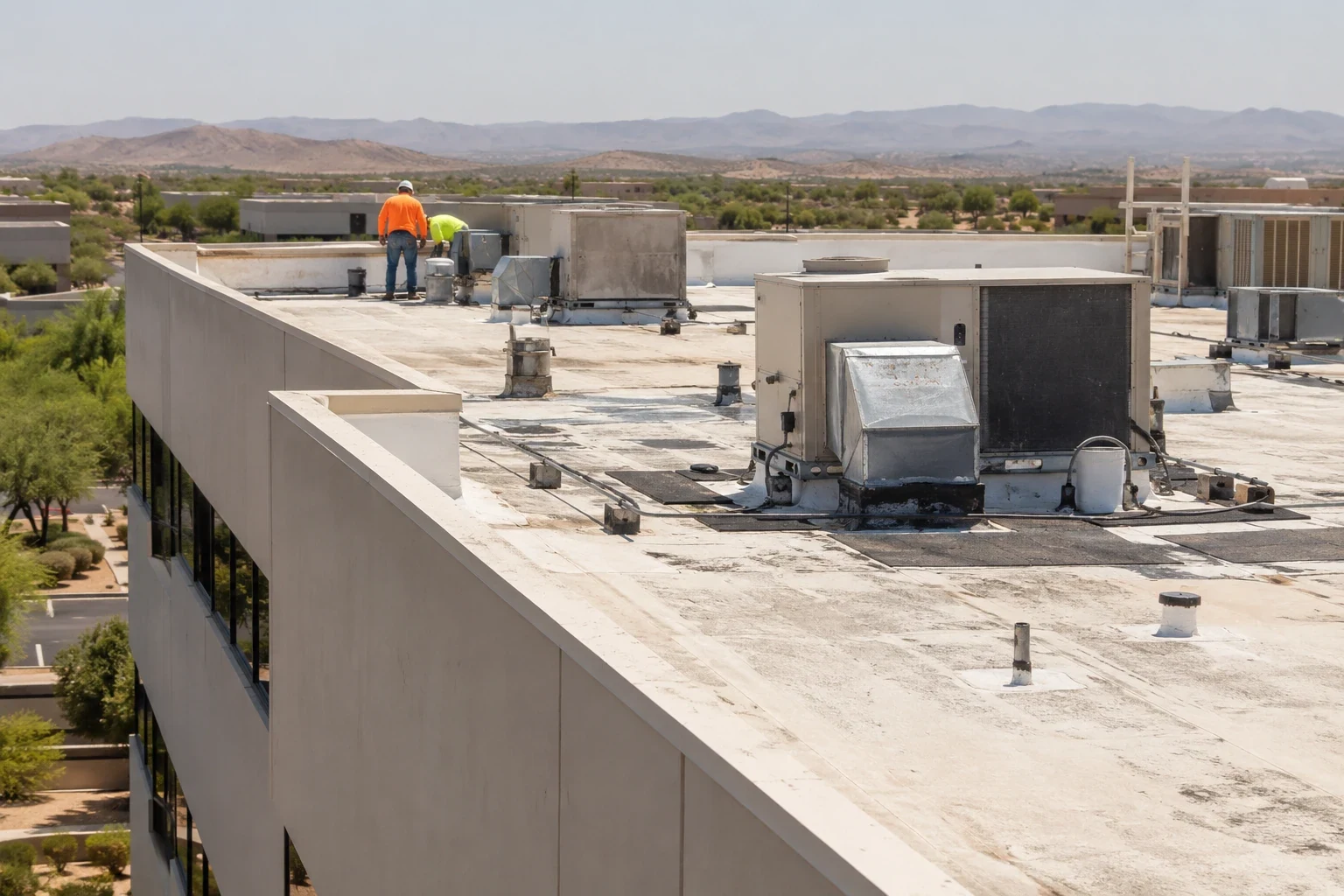
Commercial Roofing Questions
As many as can be walked and recorded in a day without rushing. Buildings are grouped by area and roof type, so equipment and crew stay efficient. A large portfolio spreads over a few weeks, with one sheet issued per building as each is finished.
The building list, addresses, any roof plans, warranty papers and your work-order history for roof leaks. Mark any building facing a sale or refinance, and the order of the walks follows your deadlines.
Yes. The sheet shows the finding, the photo, the location and the price, so the owner sees what was found and why. If an owner wants a second opinion, the photos and the plan are open to another roofer for review.
Call the emergency line. A crew can often set a temporary dry-in the same day, photograph the damage, trace the leak and write the cause on the sheet. The permanent repair is scheduled with you and the tenant afterward.
Start with the walk. After one pass you know the condition and rough age of each roof, along with a range for remaining life and replacement cost. Each building then gets a budget line with a reason behind it.