KEE Roofing in Prescott Valley, AZ
KEE and PVC-alloy roofing in Prescott Valley, AZ: a flexible, welded sheet for cold mornings, chemical exposure and hard-used roofs, with yearly seam checks.
Bend a corner of the sheet on a cold morning. If it cracks, the plasticizer is gone. That is the failure KEE membranes are made to resist. A KEE sheet is a PVC alloy with a ketone ethylene ester modifier that keeps the material soft over time. In Prescott Valley, AZ the roof sees freezing mornings, a thirty-degree daily swing and a summer sun at 5,100 feet. A stiff sheet suffers in all three. We walk the roof, test the flexibility where we can and report what we found.
What KEE is
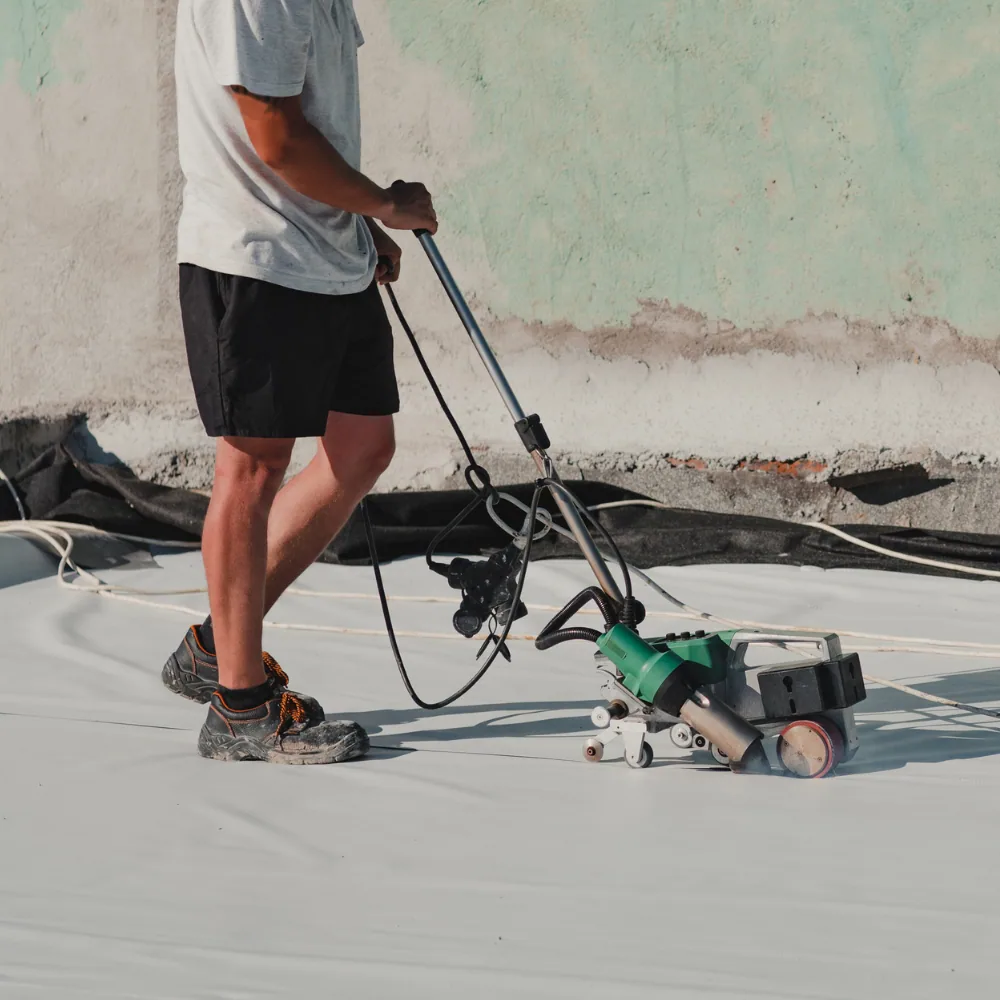
KEE sheets are thermoplastic. Seams are fused with hot air, just as on PVC. The sheet is reinforced with a polyester scrim and made in white or light colors. The modifier holds the plasticizer in place, so the sheet stays pliable for longer than a plain PVC sheet may.
That is the selling point. It costs more than standard PVC or TPO. The price is worth paying where the roof sees chemical exposure, grease, heavy traffic or a long hold period. On a quiet roof with a short horizon, it may not be. We tell you which case you are in.
What cold does to a stiff sheet
Freezing mornings run from about October 21 to May 1. A stiff sheet cracks at corners and folds. It pulls at fasteners as it contracts. A flexible sheet moves with the roof. At day's end the temperature may climb thirty degrees. Each swing tugs at laps and flashings.
We look for three signs of a sheet that has lost flexibility. Cracks at inside corners. Flashing that has pulled off a wall. Seams that lift on cold mornings and relax by noon. We photograph each. A KEE roof should show few of them, and when it does, the finding matters.
Where chemistry reaches the roof
Kitchen hoods vent grease toward a roof, process air from a plant can carry fumes, and clinic air handlers move exhaust through rooftop units. Each of those exposures can attack a roof sheet, and the Entertainment District restaurants, the east-side plants and the medical buildings near Yavapai Regional Medical Center East Campus all raise the question. KEE and PVC alloys resist many of them. We map every discharge point on the roof plan. We check the nearest sheet for staining, swelling or soft spots. A PVC roof shares this logic, and so does a coated one.
Each stain is read, and the facility team is asked what vents there.
The same walk covers walk paths. Technicians reach exhaust fans and air handlers by the same route every month. Foot traffic wears a sheet, and a worn path over an exhaust fan is a double problem. We mark the paths on the plan and add welded walk pads where the wear shows. Pads cost little next to a patch over a stained field.
Hail and monsoon
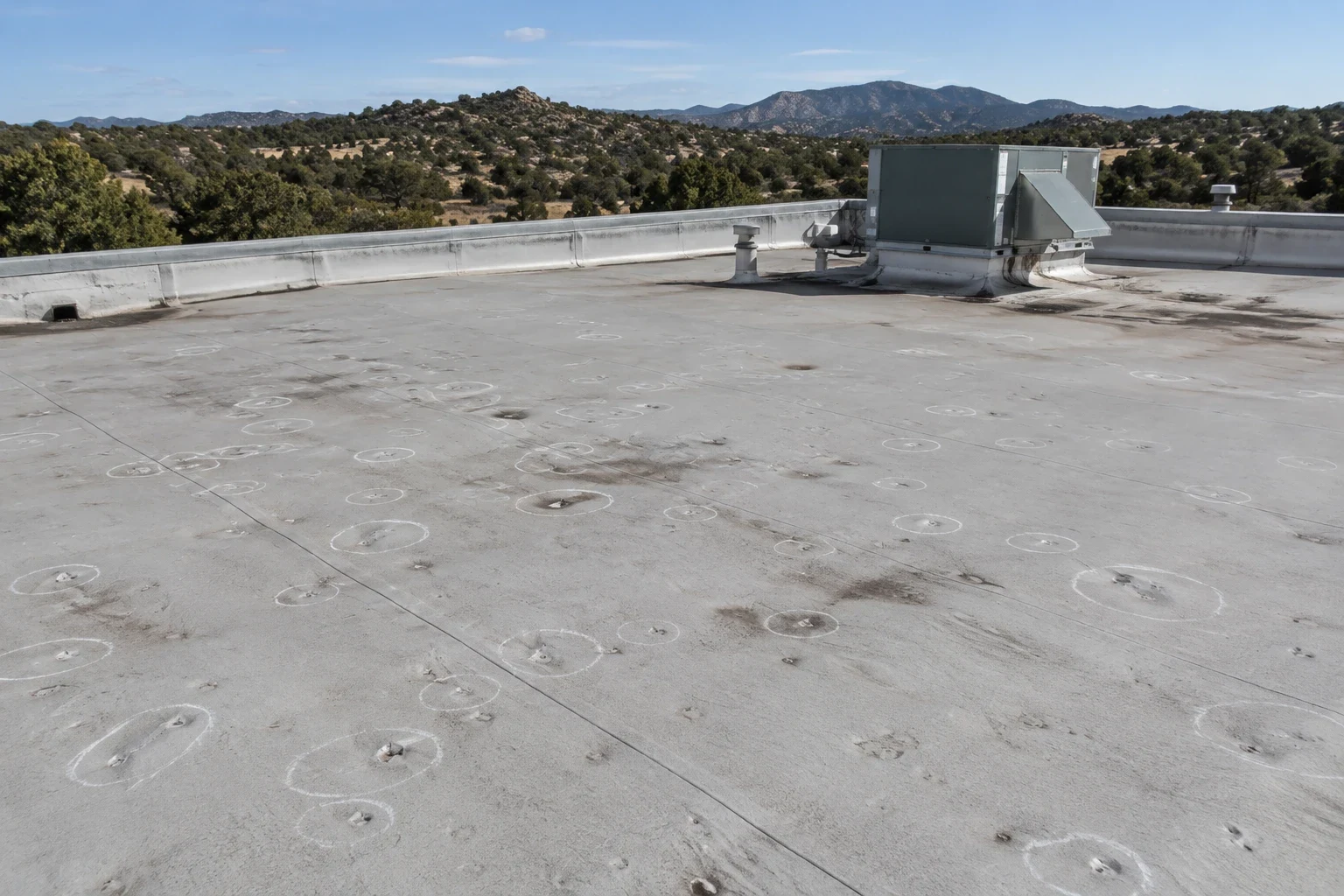
The July 20, 2026 monsoon storm brought heavy rain, strong wind and pea-sized hail to Prescott Valley. A sound KEE sheet usually shrugs that off. Larger stones can leave bruises where insulation is soft. Once a storm passes, we walk the roof and mark every dent on a plan. We press each one. A bruise that has not cracked can wait. A crack gets a patch. A cluster of dents over one spot points to thin or crushed insulation, so we cut a core there. The hail repair may then include a cover board, not just a patch.
Snow comes next. Prescott averages about ten inches a season. Melt runs to the drains and can refreeze at night. We clear and photograph the drain screens before the first freeze, and we check them again in spring. A clear drain keeps ice off the seams.
Gust fronts test the edges. We fasten the perimeter tighter and check the edge metal. Ridge-top wind off Glassford Hill makes that detail matter on the retail roofs nearby.
Where KEE fits in town
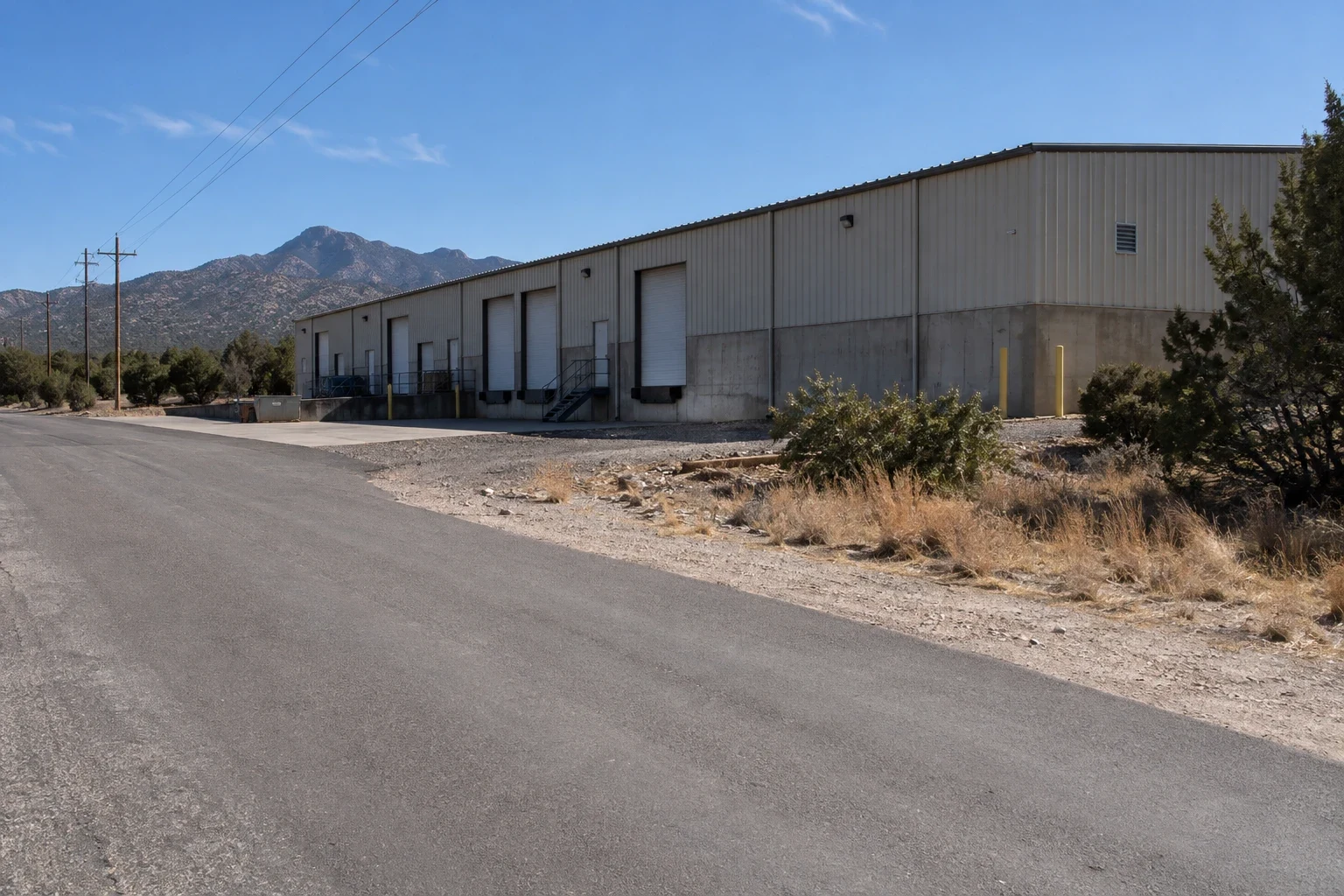
Hard-used roofs are the best fit. A roof over a kitchen, a lab or a plant. A roof with many service visits. A roof that an owner plans to hold for decades. Look at the Entertainment District, where theaters and restaurants sit side by side. Look at Fain Road manufacturers and distributors. Look at hospital and clinic roofs. For a plain warehouse roof, a cheaper sheet may do the job, and we say so.
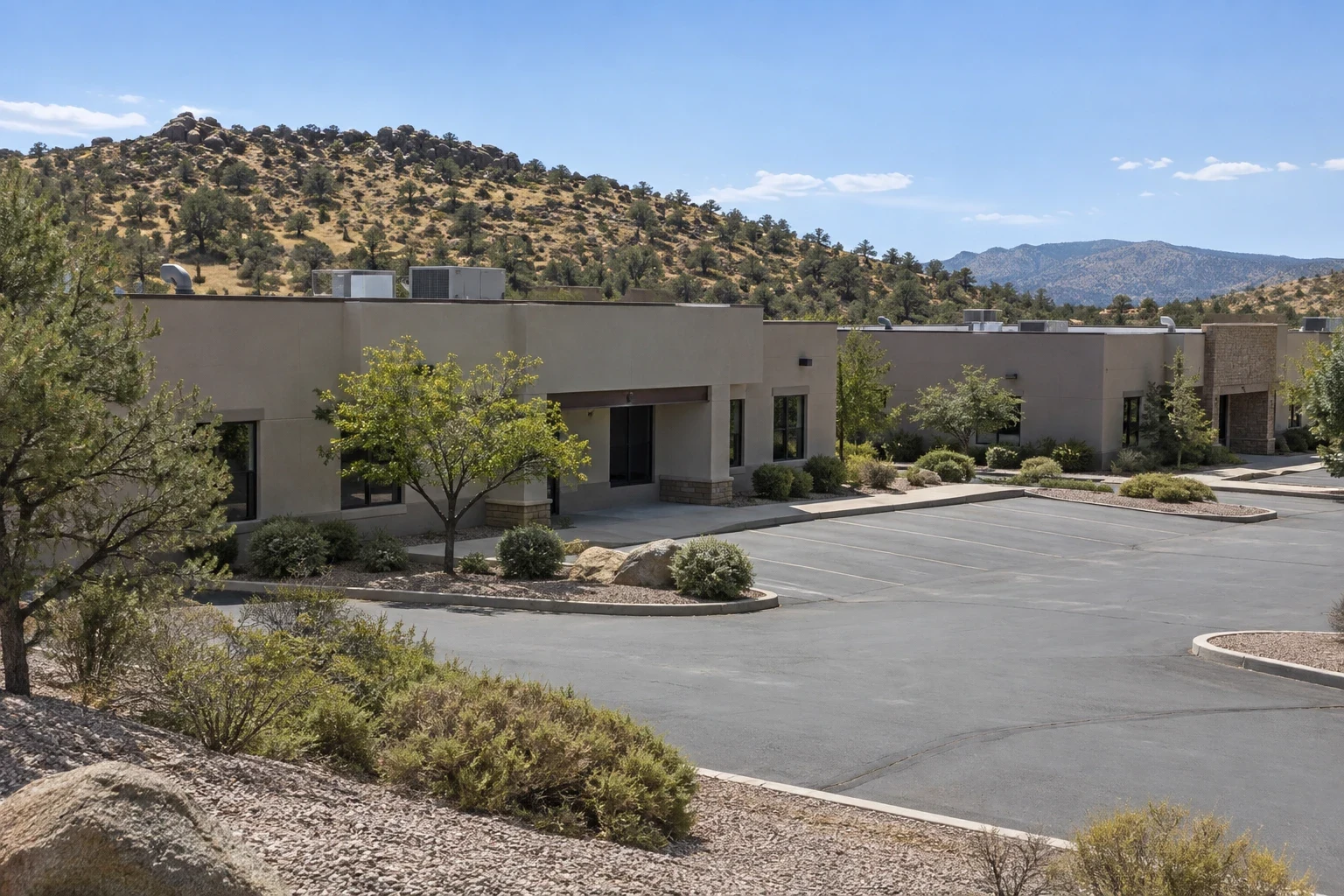
New construction is another case. The Big Sky Business Park on East Florentine Road has a 10.79-acre pad zoned C3 with water, power, sewer and gas available. A building there could specify a flexible sheet from day one, which is cheaper than retrofitting a failed roof later. A Big Sky Business Park owner can ask us for the sheet comparison at design stage.
What to repair now and what can wait
Repair now: open seams, cracked flashings, chemical staining that has softened the sheet, punctures. Repair soon: worn walk paths, hardened sealant. Watch: light chalking and surface dirt. Each tier on the sheet carries its own price. When a KEE roof is sound but aging, a coating restoration can extend it. When the cores show wet insulation, a replacement comes into view.
What to ask for in writing
Get the sheet thickness, the attachment method and the chemical resistance data for the sheet in writing, along with the warranty terms and the exclusions. We write them on the findings sheet beside the photos. A warranty file kept current is worth more than one kept in a drawer. Keep it next to the dated inspection photos. When a claim comes, the two documents tell the same story. A TPO roof or any other single-ply sheet benefits from the same habit.
Commercial Roofing Questions
How does KEE differ from ordinary PVC?
Both are welded thermoplastic sheets. KEE adds a modifier that helps the sheet keep its flexibility. That matters on roofs with cold mornings and wide temperature swings. It usually costs more. We recommend KEE where the roof sees chemicals or a long hold period, and we write the reason in the findings sheet.
Is KEE a good fit for a kitchen roof?
Often yes. Many KEE and PVC alloy sheets resist the fats and oils from exhaust hoods. We recommend mapping each exhaust discharge and checking the sheet near it every year. A full grease trap spills onto the roof, so we also ask the kitchen team to keep traps serviced.
Can KEE be installed over an old roof?
Usually, if cores show dry insulation and a sound deck. Some old materials react with the sheet, so we add a separation layer. We recommend several core cuts across the roof so the findings represent all of it, not one corner.
How do I know if the sheet is still flexible?
Look at inside corners and flashings on a cold morning. Cracks or lifted seams suggest stiffness. We test small areas by hand and photograph the result, always at the same corners, so the year-to-year record means something. If you see cracks, send us a dated photo and we will walk the roof.
What does a seam failure look like on KEE?
A lifted lip, a gap or a darkened line along the weld. We probe each seam with a thin tool. A short weld and a cover strip fix most early failures. We recommend a seam probe after each freeze season and each monsoon season. Keep the probe results with the photos, so a lifted seam in one year can be compared with the same seam the next, and so a trend shows before it becomes a leak.
Request a walk-through
Ask us to walk the roof and the vents. You receive a written findings sheet with seam probes, flexibility checks and photos before any KEE work is priced.
Request a Roof Assessment
Commercial Roofing Questions
Both are welded thermoplastic sheets. KEE adds a modifier that helps the sheet keep its flexibility. That matters on roofs with cold mornings and wide temperature swings. It usually costs more. We recommend KEE where the roof sees chemicals or a long hold period, and we write the reason in the findings sheet.
Often yes. Many KEE and PVC alloy sheets resist the fats and oils from exhaust hoods. We recommend mapping each exhaust discharge and checking the sheet near it every year. A full grease trap spills onto the roof, so we also ask the kitchen team to keep traps serviced.
Usually, if cores show dry insulation and a sound deck. Some old materials react with the sheet, so we add a separation layer. We recommend several core cuts across the roof so the findings represent all of it, not one corner.
Look at inside corners and flashings on a cold morning. Cracks or lifted seams suggest stiffness. We test small areas by hand and photograph the result, always at the same corners, so the year-to-year record means something. If you see cracks, send us a dated photo and we will walk the roof.
A lifted lip, a gap or a darkened line along the weld. We probe each seam with a thin tool. A short weld and a cover strip fix most early failures. We recommend a seam probe after each freeze season and each monsoon season. Keep the probe results with the photos, so a lifted seam in one year can be compared with the same seam the next, and so a trend shows before it becomes a leak.