Commercial Roof Inspection in Prescott Valley, AZ
Hands-on commercial roof inspections in Prescott Valley, AZ, with photographed findings, moisture checks and a written sheet ranking what to fix now and later.
Drain screens tell the story first. Walk onto a Prescott Valley, AZ, roof after a monsoon cell and the drains show what the storm carried: gravel, leaves, pea-sized hail, a plastic bag. That is the first line of the findings sheet, and it is often the cheapest item on it. The rest of the walk goes the same way. We look, we probe, we photograph and we write down what each thing means for the building.
An inspection is a hands-on survey of the whole roof, not a glance from the ladder. We cover the field, the seams, every flashing, each penetration, the edge metal, the drains and the rooftop equipment. Then we deliver a written sheet: a roof plan with numbered locations, a photograph for each finding, a plain description of the problem and a ranked recommendation. For large or hard-to-reach roofs, we add drone imaging. For suspected moisture, we add an infrared survey.
What We Check, in Order
We start at the drains and low points, because water decides how a flat roof ages. We look for ponding lines, debris, cracked bowls and clogged scuppers. Then we walk the field of the membrane. We look for blisters, punctures, splits, surface crazing and soft spots that give underfoot. Every seam is probed with a rounded tool. A seam that lifts is marked and photographed.
Next come the details. Flashing at walls and curbs, termination bars, sealant at penetrations, pipe boots, skylight curbs and expansion joints. These are the places where thermal movement does the most harm. Prescott's daily temperature swing averages nearly thirty degrees, and flashing flexes with every cycle. Last, we check the edges. Coping, gravel stop, fascia and gutters are examined for loose fasteners, open joints and signs of wind lift.
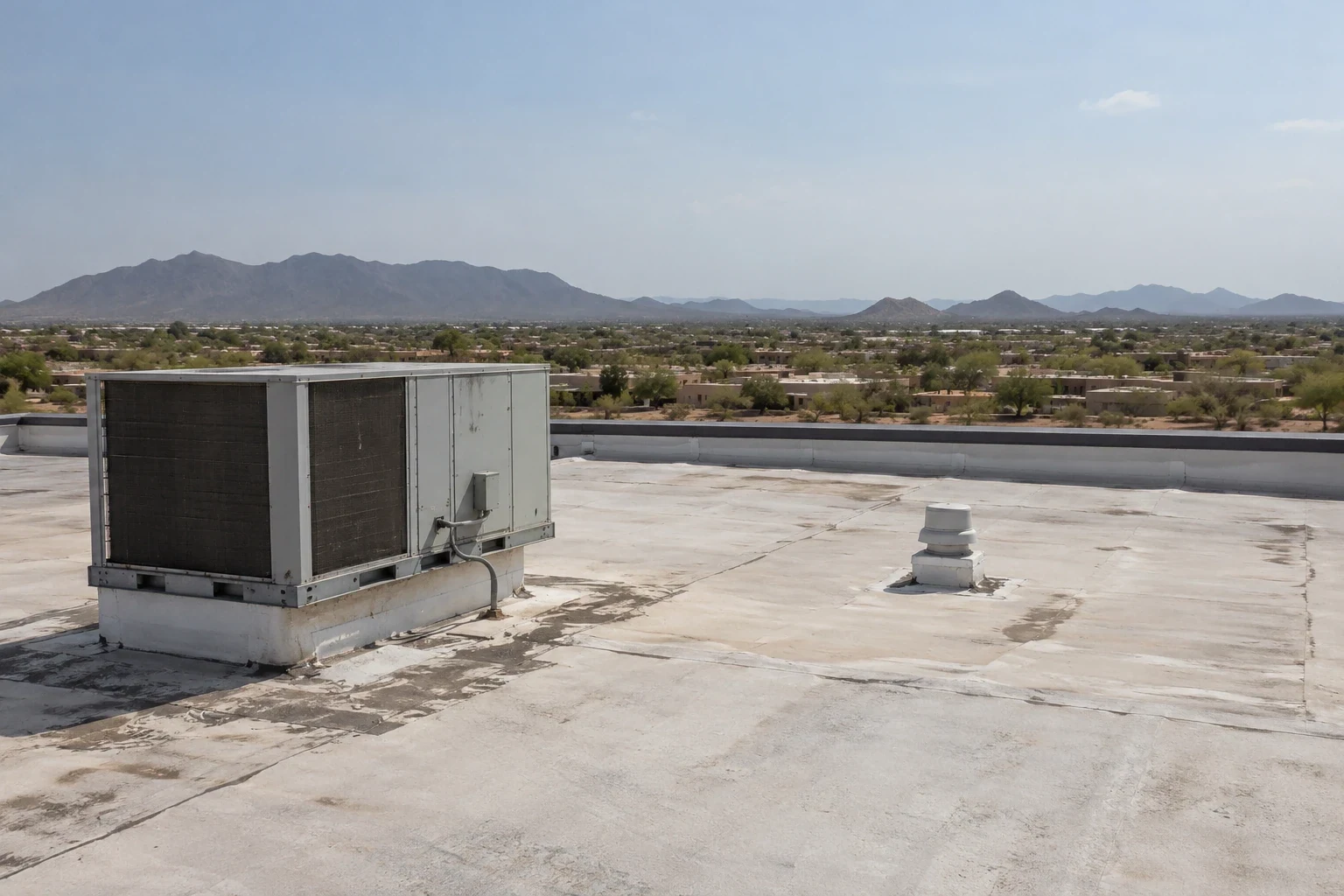
If the roof has rooftop units, we look at curbs, refrigerant line sets, condensate drains and service walk pads. Maintenance traffic wears a membrane more than weather does in some buildings, and the wear shows in predictable lines.
Reading Hail and Wind Marks
The hail on record nearby has been small. A storm statement for a cell over Dewey-Humboldt cited half-inch stones, and the July 20, 2026 storm in Prescott Valley dropped pea-sized hail. Stones that size rarely puncture a membrane, but they can leave bruises, scuff coatings, dent metal and fill drains with debris. We look for those marks and photograph them with a scale so a later storm can be compared with today's condition.
Wind leaves a different signature: a lifted edge, a rippled membrane near the perimeter, fasteners backed out of the deck, a displaced gravel stop. A National Weather Service survey after the September 26, 2019 storm in Spring Valley estimated straight-line winds near 75 mph. Whether wind of that kind reached your building is a question for the roof itself, which is read and recorded as found.
Finding Wet Insulation
Water hides in insulation. A roof can show no stain inside the building while a section of board is wet and heavy. We use moisture meters and, when the roof warrants, infrared scanning to look for it. Where readings are high, we cut a small core, check the board and patch the cut. A core is the proof; the meter is the guide.
Freezing mornings from about late October into spring make wet insulation worse. Water freezes, expands and breaks the board's structure. A wet area found in the fall costs less to fix than the same area after a winter of freeze cycles. If we find moisture, the findings sheet marks the extent and recommends whether to cut it out, dry it or plan a replacement.
Inspections by Building Type
Low-slope retail buildings near Glassford Hill Road carry rooftop equipment, so we pay close attention to equipment curbs and the paths between them. Event and restaurant buildings in the Entertainment District add kitchen exhaust, which can leave grease on a membrane. Industrial and distribution buildings, such as those of the manufacturers and distributors in town, call for a close look at dock areas, skylights and large drains.
In the Verde Valley, Cottonwood runs far hotter in summer than Prescott Valley, with July highs around 101 degrees, so we look harder for heat-related cracking and shrinkage. For a check before purchase or lease, our due diligence roof survey builds on the same walk.
Access, Safety and Timing
A good inspection starts with a safe way onto the roof. We look for fixed ladders, roof hatches and parapet heights, and we bring fall protection where the edge is unguarded. Skylights and old decking get marked as no-step zones before anyone walks the field. If a roof is too fragile or too tall to walk safely, the drone covers it and the report says which areas were seen from the air.
A single building takes about a half day, and a multi-building property takes longer. We coordinate with your facility team so we do not walk beside rooftop units during service, and we avoid hot afternoon hours on dark membranes in summer, when surfaces can burn hands and soften sealant.
The Findings Sheet
The sheet ranks every item as urgent, soon or watch. Urgent items are leaks, open seams and anything that lets water reach the structure. Soon items are defects that will become leaks in a season or two. Watch items are signs of age that need monitoring. Each item has a photograph, a location, an estimate of the effort needed and a suggested fix. We include the roof's apparent age and layers where we can tell, along with a short statement of remaining service life.
The sheet is yours to keep and share with a lender, an insurer or a tenant. You can use it as the basis of a roof condition report and a repair budget.
Commercial Roofing Questions
What does an inspector need from me before arriving?
Roof access, a contact for the building and any drawings or past repair records you hold. Warranty paperwork helps us see what the manufacturer requires. If tenants share the roof, tell us about equipment schedules so we can walk around operating units safely.
Do you walk the entire roof or sample areas?
We walk all accessible areas. Sampling misses the isolated defects that cause most leaks. For roofs with unsafe areas, such as fragile skylights or unfinished decking, we use a drone to see what we cannot walk, and we note the limits in the report.
How is an inspection different after a storm?
A storm walk focuses on edges, penetrations, drains and places where water stood. We compare the roof to any earlier photographs and record bruises, lifted fasteners and displaced material. The result supports an insurance claim if damage is found and a clean record if none is.
Can an inspection tell me how many years are left?
It gives an informed range based on the membrane's condition, the number of repairs, the quality of the seams and the moisture readings. We state the factors behind the range so you can plan the replacement budget instead of guessing at a date.
Should I schedule inspections in a certain season?
Spring, before the monsoon, catches winter damage and clears drains. Early fall, after the monsoon and before the first freeze, catches storm damage while temperatures still allow repairs. Either window works, and an older roof earns both. Choose the window with the monsoon calendar and the building's own busy season in mind, so the walk never competes with a delivery week.
Book a Roof Walk
Request an inspection and we will walk the full roof, photograph every finding and deliver a ranked written sheet. You decide what to repair now and what to schedule later.
Request a Roof Assessment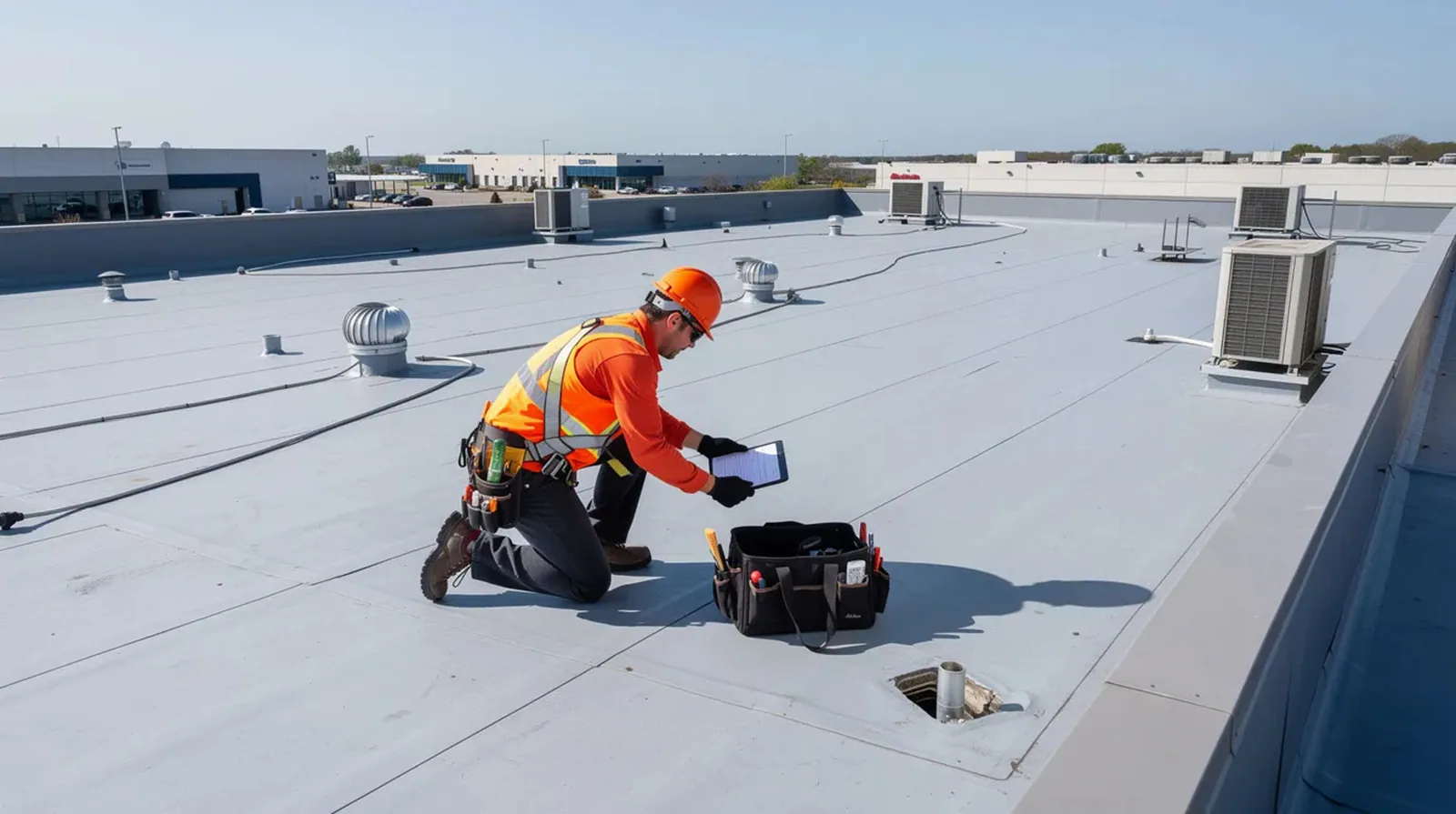
Commercial Roofing Questions
Roof access, a contact for the building and any drawings or past repair records you hold. Warranty paperwork helps us see what the manufacturer requires. If tenants share the roof, tell us about equipment schedules so we can walk around operating units safely.
We walk all accessible areas. Sampling misses the isolated defects that cause most leaks. For roofs with unsafe areas, such as fragile skylights or unfinished decking, we use a drone to see what we cannot walk, and we note the limits in the report.
A storm walk focuses on edges, penetrations, drains and places where water stood. We compare the roof to any earlier photographs and record bruises, lifted fasteners and displaced material. The result supports an insurance claim if damage is found and a clean record if none is.
It gives an informed range based on the membrane's condition, the number of repairs, the quality of the seams and the moisture readings. We state the factors behind the range so you can plan the replacement budget instead of guessing at a date.
Spring, before the monsoon, catches winter damage and clears drains. Early fall, after the monsoon and before the first freeze, catches storm damage while temperatures still allow repairs. Either window works, and an older roof earns both. Choose the window with the monsoon calendar and the building's own busy season in mind, so the walk never competes with a delivery week.