Infrared Moisture Survey in Prescott Valley, AZ
Infrared and core-cut moisture surveys for commercial roofs in Prescott Valley, AZ, mapping wet insulation before a repair, recover or replacement.
Wet insulation holds heat longer than dry insulation. That one fact is why an infrared camera works on a roof. After a clear Prescott Valley, AZ, day, the sun-warmed roof cools through the evening, and damp areas stay warm while dry areas drop. The camera shows the difference as a bright patch against a darker field. We mark those patches on the roof, confirm each one with a meter or a core and draw the wet zones on a plan.
The survey answers the question every roof decision turns on: how much of this roof is wet? A small wet area can be cut out and patched. A large one points toward a full replacement. A roof with only scattered damp spots may qualify for a recover. Without the survey, those choices are guesses made from stains on a ceiling.
The scan does not find leaks. It finds the water that leaks left behind, and that is what decides how much roof comes off.
How We Run the Survey
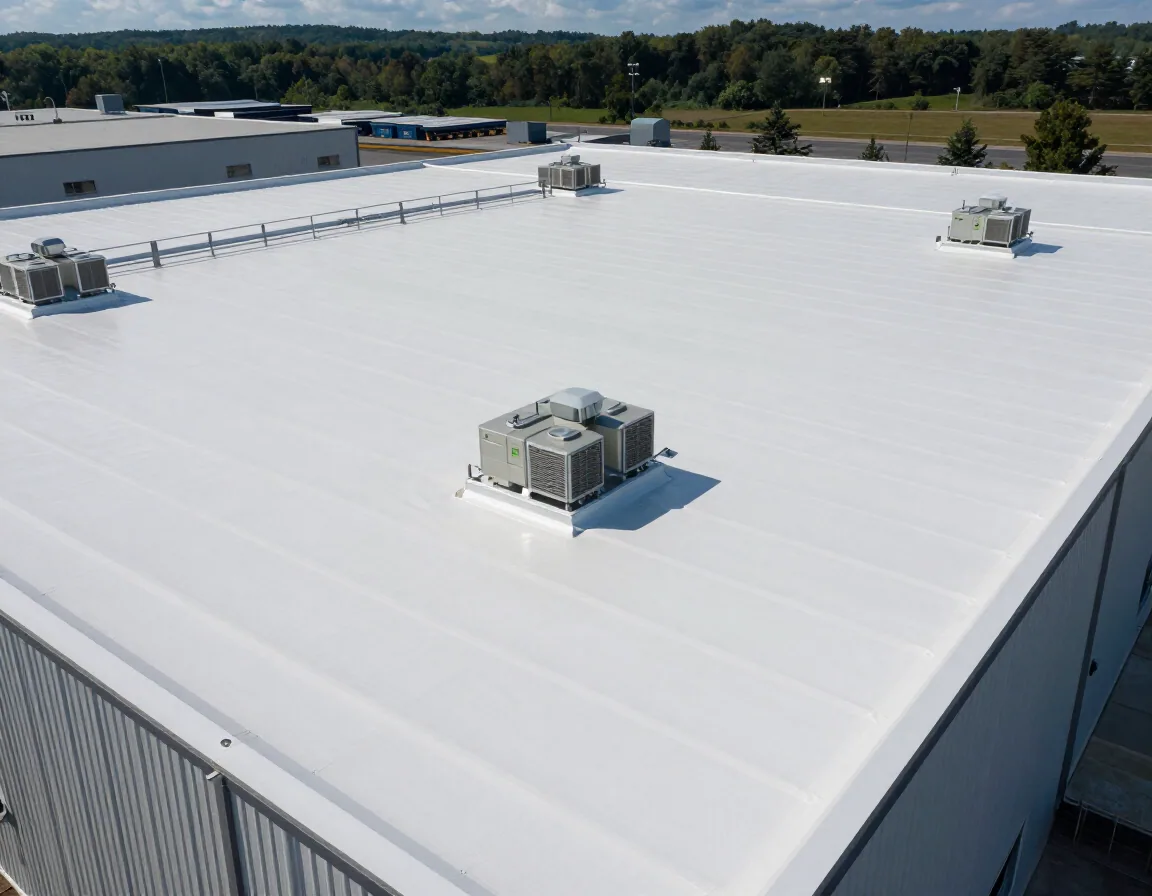
We pick a clear day and scan late in the afternoon and into the evening, when the temperature of the roof is falling and the contrast is strongest. Wind, clouds and rain reduce accuracy, so we reschedule rather than force a poor scan. Before scanning, we walk the roof and note rooftop equipment, patches, ponding and shaded zones, because each can look like moisture on a thermal image.
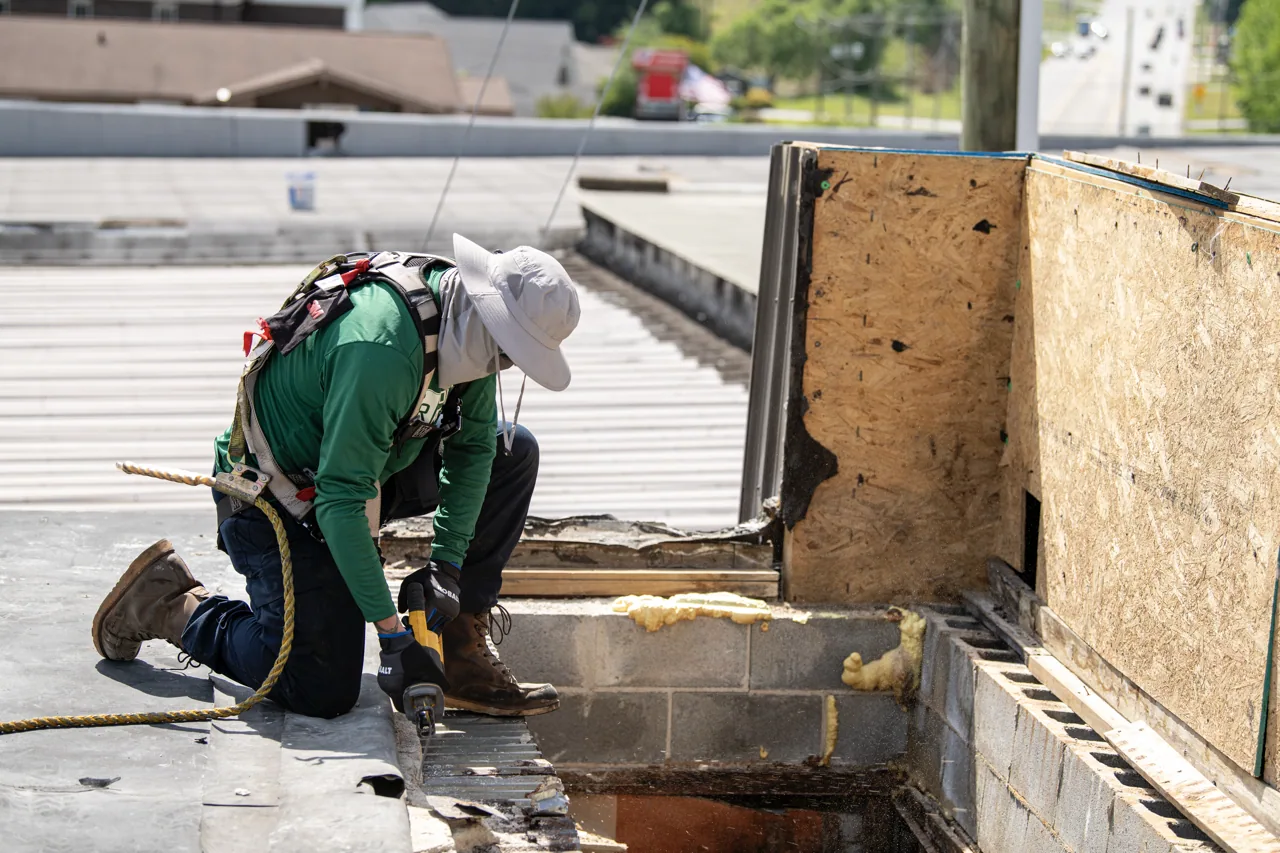
The scan covers the entire roof in overlapping passes. We mark anomalies with paint or flags right on the roof. Then comes the check that matters: a moisture meter reading at each mark and a small core at the strongest ones. A thermal anomaly can come from thicker insulation, a mechanical unit or a metal fastener line, and the core separates those from true water.
Finally, we patch every core hole with matching material and record its location. The finished plan shows each wet zone, each dry reference point and each core, with photographs.
False Signals We Rule Out
Thermal images mislead when nobody checks them. A rooftop unit throws a warm shadow. A patch of thicker insulation holds heat longer. A row of metal fasteners shows up as a bright dotted line. Standing water that dried at noon can leave a cool, dusty ring. Shaded areas near parapets cool earlier than open field. Each of these can look like a wet zone to someone who only reads the picture.
We rule them out in three ways. We walk the roof and note every feature before the scan. We compare any anomaly against a nearby dry reference. We take a reading with the meter, and we cut a core where the reading is high. A zone does not go on the plan as wet unless the meter and the core agree with the image. That discipline keeps you from paying to remove insulation that is dry.
When the evidence is mixed, the plan says so and marks the area as uncertain, with a suggestion for the next test.
Why Moisture Matters at 5,100 Feet
Prescott Valley collects about 15 inches of precipitation in a year, most of it in July and August, and the Prescott area sees freezing temperatures from about late October into spring. Both seasons act on wet insulation. In summer, water in a roof system turns to vapor under the sun and pushes against the membrane, which can blister it. In winter, water in the board freezes and expands, breaking down the insulation and pulling at the membrane and fasteners.
Daily temperature swings in Prescott run near thirty degrees, so the layers of a roof expand and contract against each other all year. Wet board moves differently from dry board, and the difference works seams loose. A roof that took in water during the July 20, 2026 storm, which brought heavy rain, strong gusts and pea-sized hail, can look sound at the surface while its insulation soaks. A survey a few weeks after a storm finds that moisture before the first hard freeze does.
Turning the Map into Decisions
The wet-zone plan feeds three decisions. First, targeted removal: cut out the wet board, replace it and tie the new section into the surrounding roof. This is practical when wet areas are small and the rest of the roof is sound. Second, recover or replace: if the dry area dominates, a recover may be possible; if the wet area spreads, replacement is likely. Third, timing: wet areas under a storm-damaged section may need immediate work, while a wet strip near an old flashing can be scheduled.
The plan is also useful beyond repair. An asset manager can attach it to a roof condition report, a buyer's team can use it in due diligence and a facility director can use it to justify a budget request. Because it shows locations and sizes, it replaces estimates with measurements.
We recommend a follow-up scan after repairs are done, which verifies that the moisture is gone and sets a clean baseline for later surveys.
Buildings That Benefit Most
Large low-slope roofs over occupied space benefit first, such as the retail and grocery buildings along the State Route 69 corridor, where a hidden leak can damage stock before anyone sees a stain. Event and restaurant buildings in the Entertainment District carry exhaust equipment and drains that concentrate water in a few places. Roofs older than their original warranty period are also strong candidates, since the sooner you find wet insulation the less it spreads.
The method carries to Prescott, Chino Valley and Dewey-Humboldt. Elevation and weather differ from one town to the next, so the scan window follows local conditions.
Commercial Roofing Questions
Can infrared find a leak in a metal roof?
Not reliably. Metal panels conduct heat and reflect it, so a thermal image tells us little about moisture beneath. For metal, we rely on visual checks, fastener inspections and water testing. Infrared is strongest on low-slope membranes over insulation, where wet board holds heat after sunset.
What if there is snow or frost on the roof?
We wait. Frost, snow and ice hide thermal patterns and make readings unreliable. Prescott records freezing temperatures from about late October into spring, so winter scans are scheduled for clear, dry days or moved to the shoulder seasons when the surface is clean.
How many core holes will you cut?
Only as many as needed to prove or rule out the anomalies. A small roof may need a handful of cores. A large roof may need more. Each hole is patched the same day with matching material, and we record its location and photograph the layers inside.
Is infrared accurate on a ballasted roof?
Stone ballast insulates the surface and reduces contrast, so the scan is less precise. We may need to move ballast in test areas or rely more on meters and cores. If the contrast is poor, the report explains the limits instead of drawing lines we cannot support.
When is the best time of year to survey?
Early fall is a strong choice. The monsoon is over, any storm water has reached the insulation, and clear evenings are common. Spring works too, after winter freeze and before the next rain. Either way, we need a dry roof and a clear, calm evening.
What do I get when the survey is finished?
A roof plan with the wet zones outlined, numbered core locations, photographs of each core's layers and a short summary of what the pattern suggests. We also list the dry reference points. You can hand the plan to a lender, a buyer or an insurer without further explanation.
Find Out How Wet It Is
Ask for a moisture survey and we will scan the roof, confirm every anomaly with a meter or core and deliver a plan showing exactly where the wet insulation sits.
Request a Roof Assessment
Commercial Roofing Questions
Not reliably. Metal panels conduct heat and reflect it, so a thermal image tells us little about moisture beneath. For metal, we rely on visual checks, fastener inspections and water testing. Infrared is strongest on low-slope membranes over insulation, where wet board holds heat after sunset.
We wait. Frost, snow and ice hide thermal patterns and make readings unreliable. Prescott records freezing temperatures from about late October into spring, so winter scans are scheduled for clear, dry days or moved to the shoulder seasons when the surface is clean.
Only as many as needed to prove or rule out the anomalies. A small roof may need a handful of cores. A large roof may need more. Each hole is patched the same day with matching material, and we record its location and photograph the layers inside.
Stone ballast insulates the surface and reduces contrast, so the scan is less precise. We may need to move ballast in test areas or rely more on meters and cores. If the contrast is poor, the report explains the limits instead of drawing lines we cannot support.
Early fall is a strong choice. The monsoon is over, any storm water has reached the insulation, and clear evenings are common. Spring works too, after winter freeze and before the next rain. Either way, we need a dry roof and a clear, calm evening.
A roof plan with the wet zones outlined, numbered core locations, photographs of each core's layers and a short summary of what the pattern suggests. We also list the dry reference points. You can hand the plan to a lender, a buyer or an insurer without further explanation.