Emergency Roof Repair in Prescott Valley, AZ
Round-the-clock emergency roof repair in Prescott Valley, AZ: tarping, dry-in and storm response when monsoon wind, rain or hail opens a commercial roof.
The first thing we look at after a call is the sky. A monsoon cell over Prescott Valley, AZ, can move across the town in under an hour, and the second one often follows the first. So when your roof is open, the question is not what caused it. The question is how to keep more water out of the building before the next band arrives.
Our emergency line is staffed around the clock, on weekends and on holidays. When you call, we ask where the water is entering, what is under it, and whether anyone is hurt or at risk. Then a crew goes to the roof with tarps, sealant, membrane strips, fasteners and the tools to close the opening. The goal on the first visit is dry-in: stop the water, protect what is inside and photograph everything. Permanent work follows when the weather allows. That work may be a planned repair or a larger scope.
The First Hour on Site
Safety comes before speed. We check for wet decking, loose metal, downed lines and standing water before anyone steps on the roof. Where a gust front has lifted panels or edge metal, we secure the loose material first, because a flapping sheet can injure someone and tear more roof.
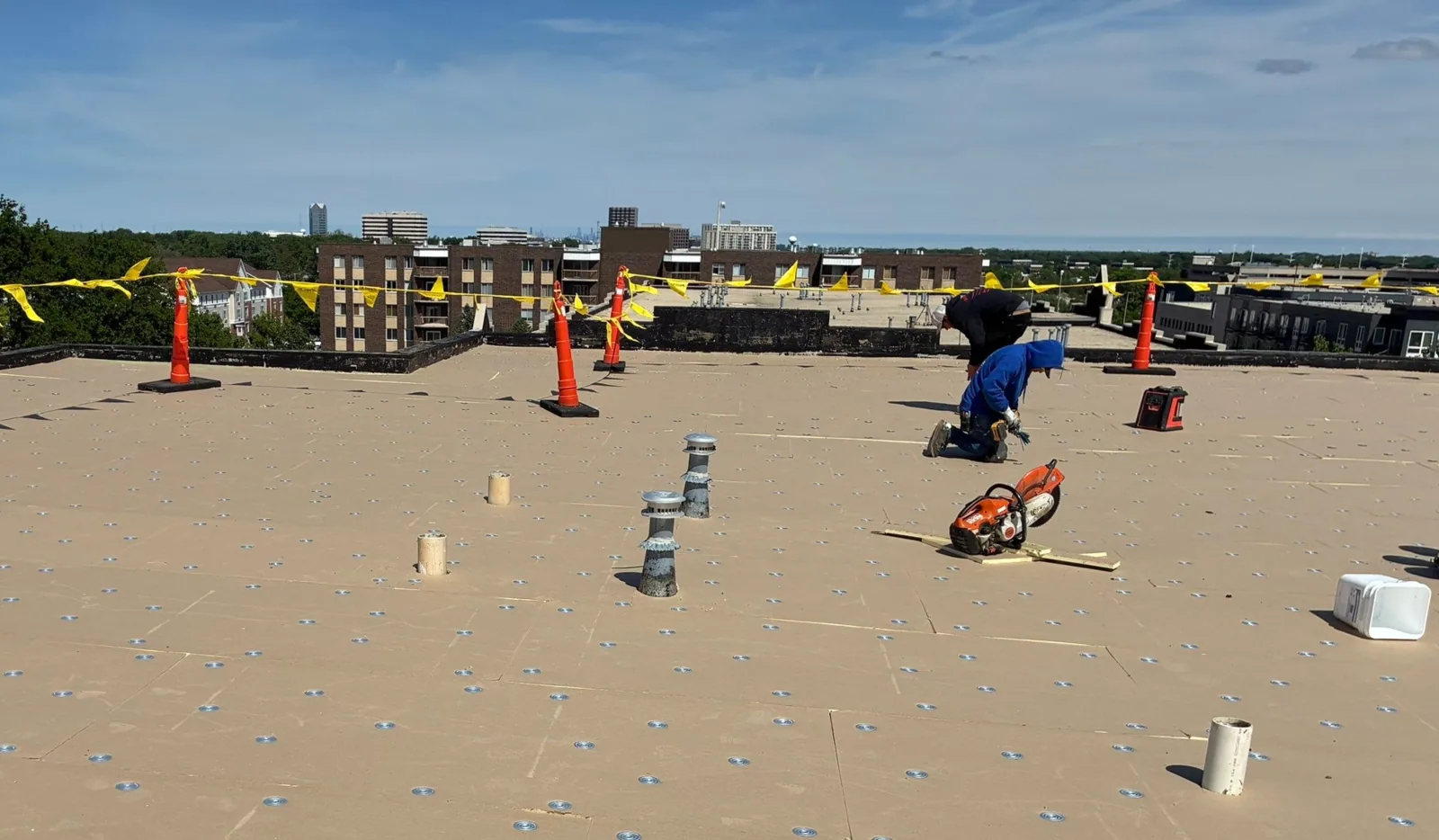
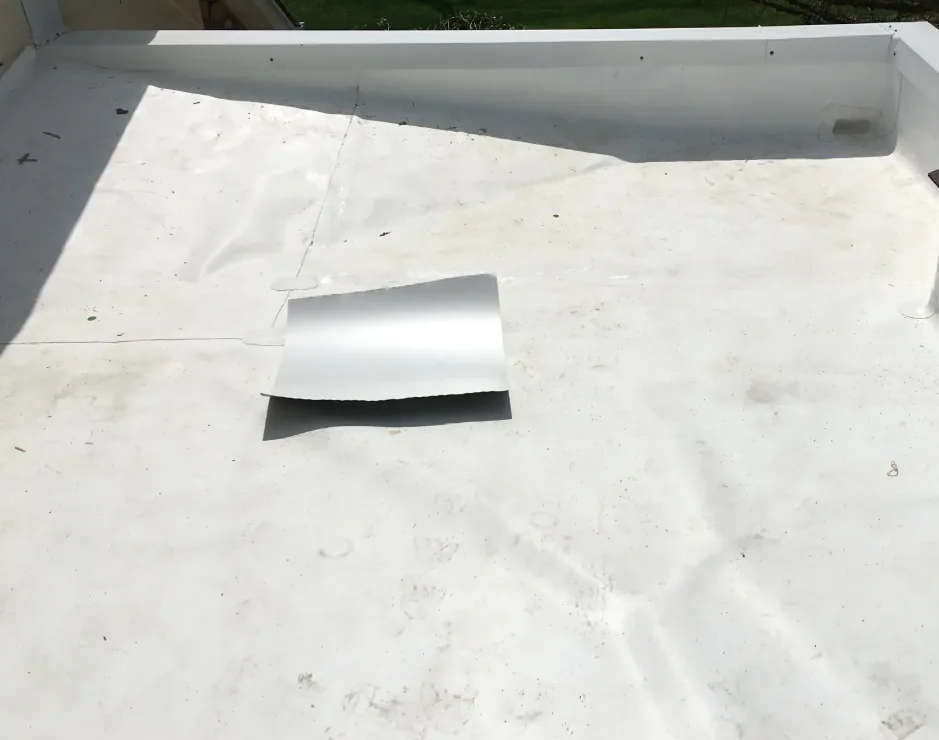
Then we find the opening. Often it is obvious: a membrane torn back at an edge, a skylight cracked, a curb flashing peeled. Other times it is a seam or a drain. We cover the opening with a temporary membrane, a patch, a tarp fastened to the structure or a combination, depending on the roof type and the wind. Tarps alone fail in gusts, so we fasten them to solid backing and seal their edges.
Inside, we recommend moving inventory, covering electrical gear and opening ceiling tiles so trapped water can drain. If the insulation is saturated, we mark it for removal. Every step gets photographed with time stamps, which becomes the first page of your insurance file.
What Local Storms Have Done
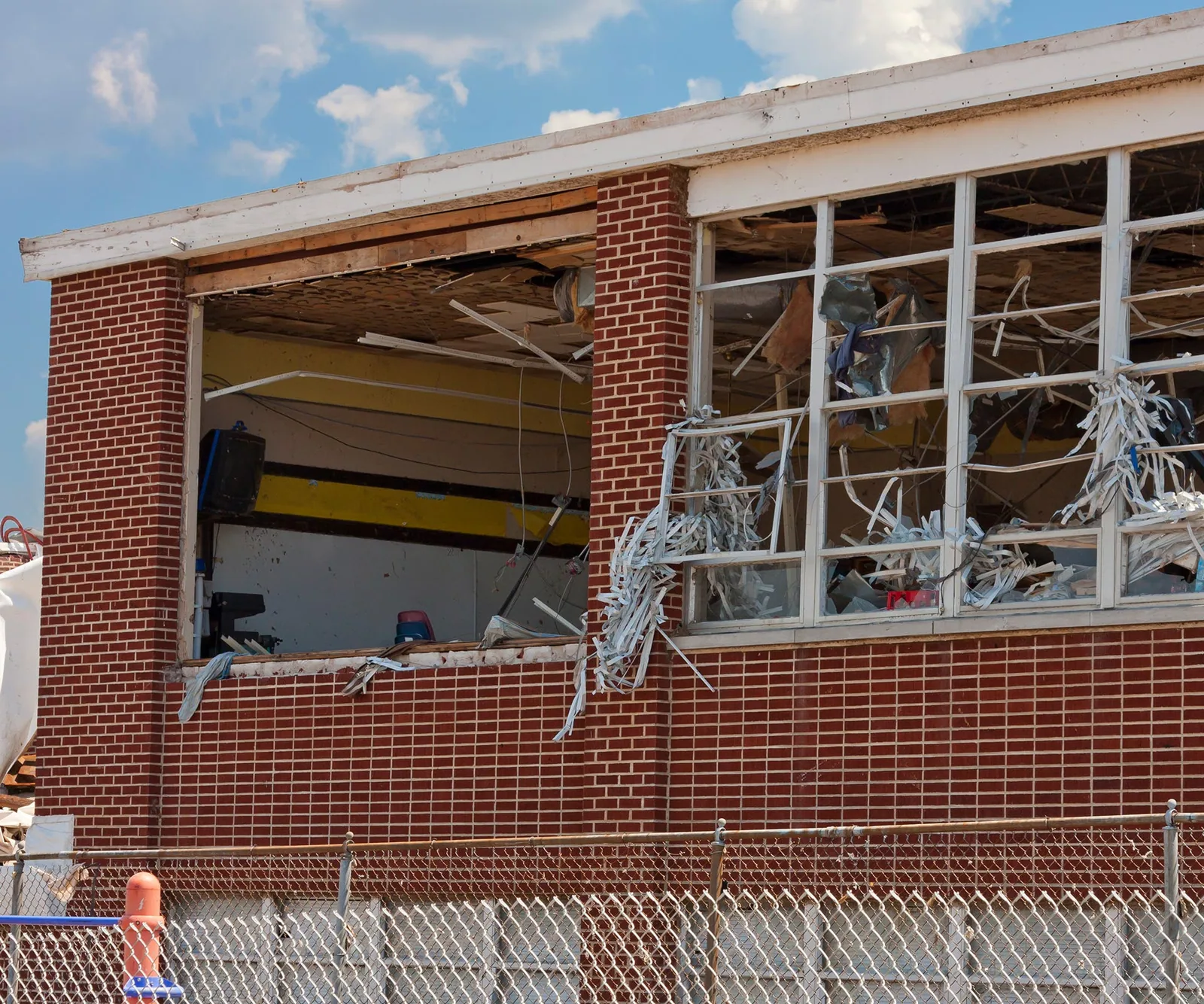
Wind has been the main damage source we plan for. A storm survey by the National Weather Service in Spring Valley on September 26, 2019, estimated straight-line winds near 75 mph, damaging about 20 mobile homes and snapping a power pole. On July 20, 2026, a monsoon storm brought heavy rain, strong gusts and pea-sized hail to Prescott Valley, felled trees and traffic signals and cut power to more than 130 APS customers. A weather service statement for a cell over Dewey-Humboldt cited gusts to 50 mph and half-inch hail.
Small hail does not usually puncture a membrane, but it can bruise it, break weak sealant and drive debris into drains. On May 6, 2025, video caught a small tornado north of Prescott Valley tearing a few shingles off a roof. The common thread is that the damage often begins at an edge, a seam or a loose detail, and a quick dry-in keeps a small opening from becoming a building-wide problem.
Winter calls are different. Freezing mornings run from late October into spring, and ice in drains or around curbs can force water under a membrane. We clear the ice and dry-in carefully.
From Dry-In to Permanent Fix
A temporary repair has a clock on it. Tarps chafe, sealants dry out and patches loosen as the roof heats and cools by close to thirty degrees in a day. We tell you how long the temporary work should last and what conditions will shorten it. Then we schedule a return visit with a proper inspection of the roof around the damage.
That inspection answers the larger questions. Is the insulation under the opening wet? Did the wind lift fasteners elsewhere? Are the seams near the damage still sound? Our roof inspection includes photographs and moisture readings so the permanent scope fits the damage we find, not just the hole we covered.
Sometimes the emergency shows a roof near the end of its life. If so, we say it directly, give you the evidence and help you decide between a larger repair and replacement while the temporary work holds. Spending on a patch that the surrounding roof cannot support wastes money, so we keep the scope matched to the condition of the whole roof.
Paperwork That Follows the Call
If the damage may be insured, evidence matters from the first hour. We photograph the roof before temporary work, during it and after, and we write down the date, the time and the weather. We keep a list of the materials used for dry-in, because insurers often cover reasonable mitigation. Our claim documentation collects those records into a package your adjuster can follow without a second visit.
We separate emergency work from permanent work on the invoice and in the report. Emergency work stops the water. Permanent work restores the roof. When the damage is wide, we also recommend a full storm damage assessment once conditions allow, so hidden damage is not missed.
Buildings Where Minutes Count
Grocery and retail stores along the State Route 69 corridor keep product and shoppers under their roofs all day, so a breach near a sales floor needs quick containment. Event and restaurant buildings in the Entertainment District have large assembly spaces, where a leak over seating or a stage is both a safety and a scheduling problem. Medical and care buildings need a faster response still, since water near equipment or patients is a hazard.
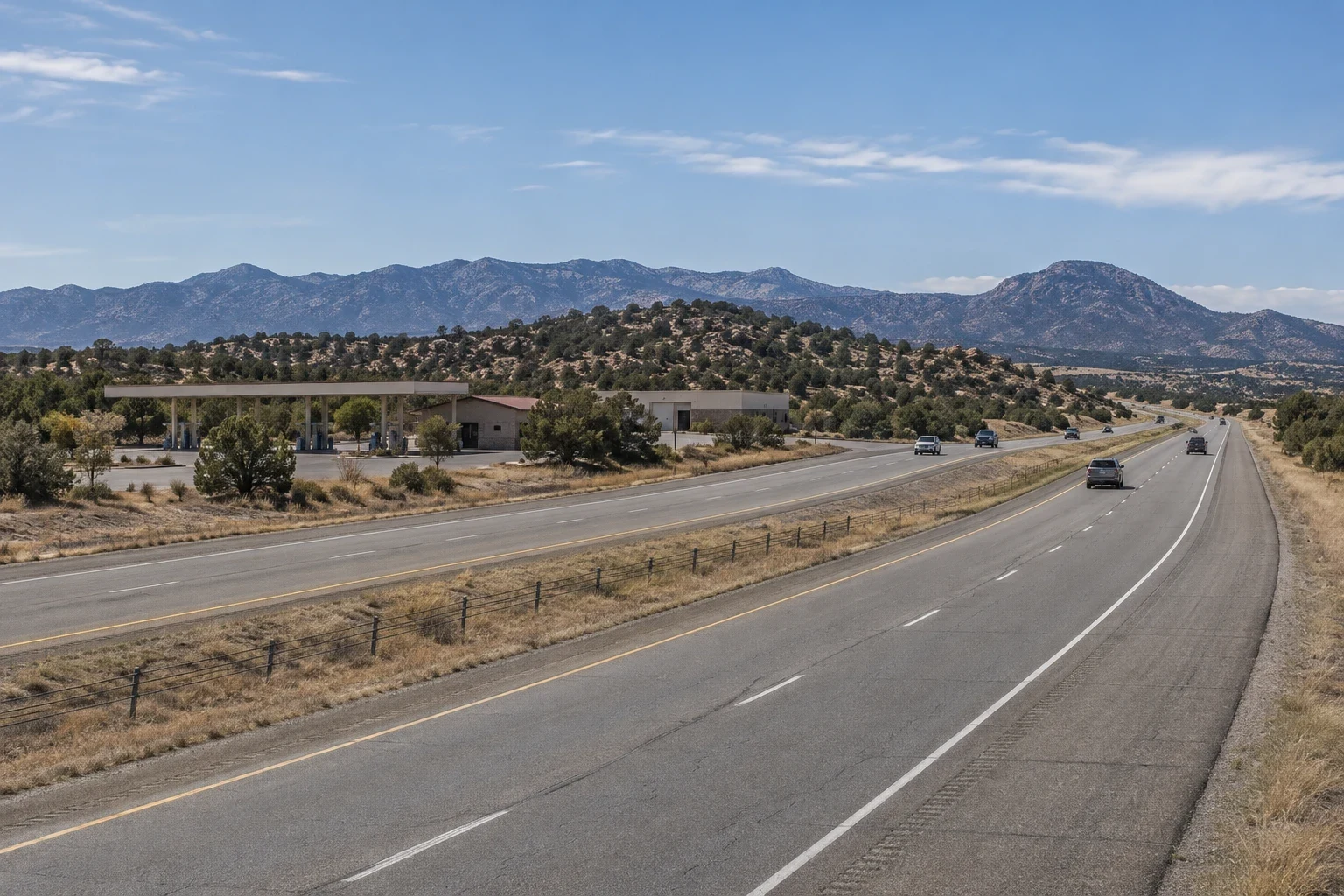
Beyond Prescott Valley, we respond to calls in Prescott, Chino Valley, Mayer and Cordes Lakes. On a day when a wildfire or crash closes a highway, as the 2017 Goodwin Fire did on Highway 69 between Mayer and Dewey-Humboldt, we plan an alternate route and keep you informed about arrival.
Commercial Roofing Questions
What should my staff do in the first ten minutes of a roof leak?
Protect people first, then property. Move inventory and equipment away from the drip, cover electronics with plastic, shut off power to any wet circuit if it is safe, and open ceiling tiles to let trapped water drain. Photograph the damage, then call us with the location of the water.
How fast can a crew reach a building outside Prescott Valley?
Distance and road conditions set the time. We give an arrival estimate when you call and update it if a closure or storm changes the route. Prescott sits closest. Chino Valley, Mayer and Cordes Lakes are farther, and Verde Valley towns take longer still.
Will a tarp hold during a monsoon?
Only if it is fastened to solid backing and sealed at its edges. A loose tarp becomes a sail in a gust front. For larger openings we use a temporary membrane or panel patch and add ballast only where the structure allows.
Can emergency work void my warranty or insurance claim?
Reasonable temporary repairs to limit damage are generally expected by insurers, and we document them for that reason. Warranty terms vary by manufacturer, so we use compatible materials and record what we did, which gives the warranty holder a clear picture of the work.
Do you work in snow or ice?
Yes, when it is safe. We clear drains and curbs, remove ice that is forcing water under a membrane and apply cold-rated sealants. Permanent bonding repairs wait for a day when the surface is dry and above the temperature the adhesive requires.
Who should I notify besides you after roof damage?
Tell your property manager, your insurer and any tenant whose space is affected. Send the insurer our dated photographs and the dry-in record. If the building is leased, check who holds the repair duty so the right party authorizes the permanent work promptly.
Call Any Hour
Our emergency line answers at night, on weekends and on holidays. Tell us where the water is entering and we will send a crew to dry in the roof and photograph the damage.
Request a Roof Assessment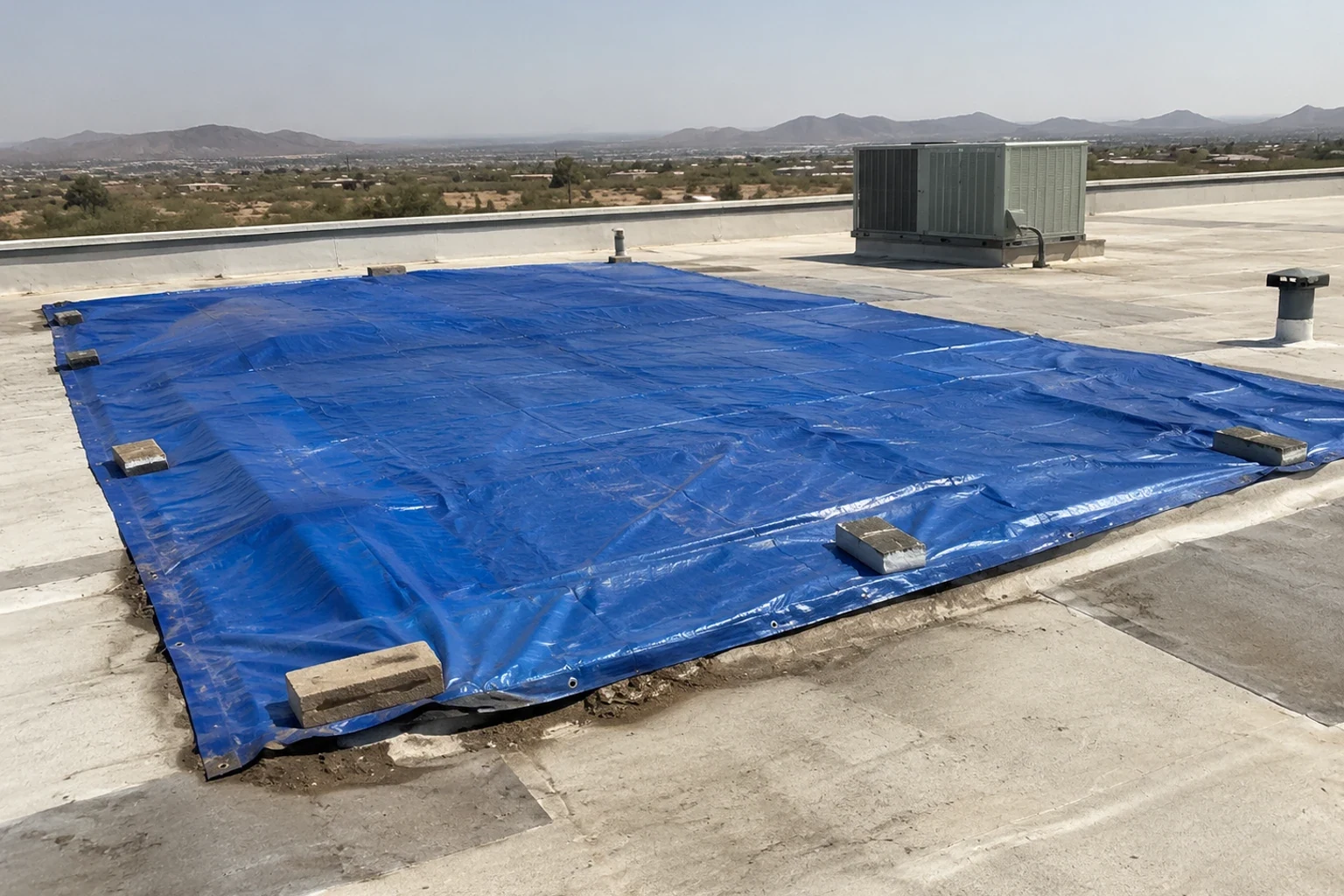
Commercial Roofing Questions
Protect people first, then property. Move inventory and equipment away from the drip, cover electronics with plastic, shut off power to any wet circuit if it is safe, and open ceiling tiles to let trapped water drain. Photograph the damage, then call us with the location of the water.
Distance and road conditions set the time. We give an arrival estimate when you call and update it if a closure or storm changes the route. Prescott sits closest. Chino Valley, Mayer and Cordes Lakes are farther, and Verde Valley towns take longer still.
Only if it is fastened to solid backing and sealed at its edges. A loose tarp becomes a sail in a gust front. For larger openings we use a temporary membrane or panel patch and add ballast only where the structure allows.
Reasonable temporary repairs to limit damage are generally expected by insurers, and we document them for that reason. Warranty terms vary by manufacturer, so we use compatible materials and record what we did, which gives the warranty holder a clear picture of the work.
Yes, when it is safe. We clear drains and curbs, remove ice that is forcing water under a membrane and apply cold-rated sealants. Permanent bonding repairs wait for a day when the surface is dry and above the temperature the adhesive requires.
Tell your property manager, your insurer and any tenant whose space is affected. Send the insurer our dated photographs and the dry-in record. If the building is leased, check who holds the repair duty so the right party authorizes the permanent work promptly.