Commercial Roofing in Mayer, AZ
Commercial roof inspections, fire and ember checks, storm repair and claim documentation for older storefronts and small commercial buildings in Mayer, AZ.
Open any gutter or roof valley and look at what has piled up. Dry leaves, needles and windblown trash burn, and they hold water against the roof when it rains. That pile is the first thing an inspector photographs. Mayer, AZ is a small town of 1,558 residents at about 4,695 feet. Its older commercial buildings include the Mayer General Market Store in the Mayer Business Block on the main street.
Commercial roofs in Mayer get a walk with a probe along every seam and photographs of what turns up, and a written findings sheet arrives before any repair has a price. In a small town, one roof often matters to many people. The sheet makes sure the owner and the tenants see the same facts.
What the Goodwin Fire taught
The 2017 Goodwin Fire destroyed about five structures and closed Highway 69 on the stretch between Mayer and Dewey-Humboldt. A roof is the part of a building that sparks and embers land on first. A fire that stays miles away can still drop embers on a roof, and embers find debris, open vents and loose edges.
We cannot make a roof fireproof. We can make it harder for an ember to start something. We clear debris from valleys, gutters and parapet corners. We check that vent openings are screened. We look at edge metal and penetrations for gaps where embers could slip under the sheet. The result goes on the sheet as a list, with photos, so an owner can fix the gaps one by one.
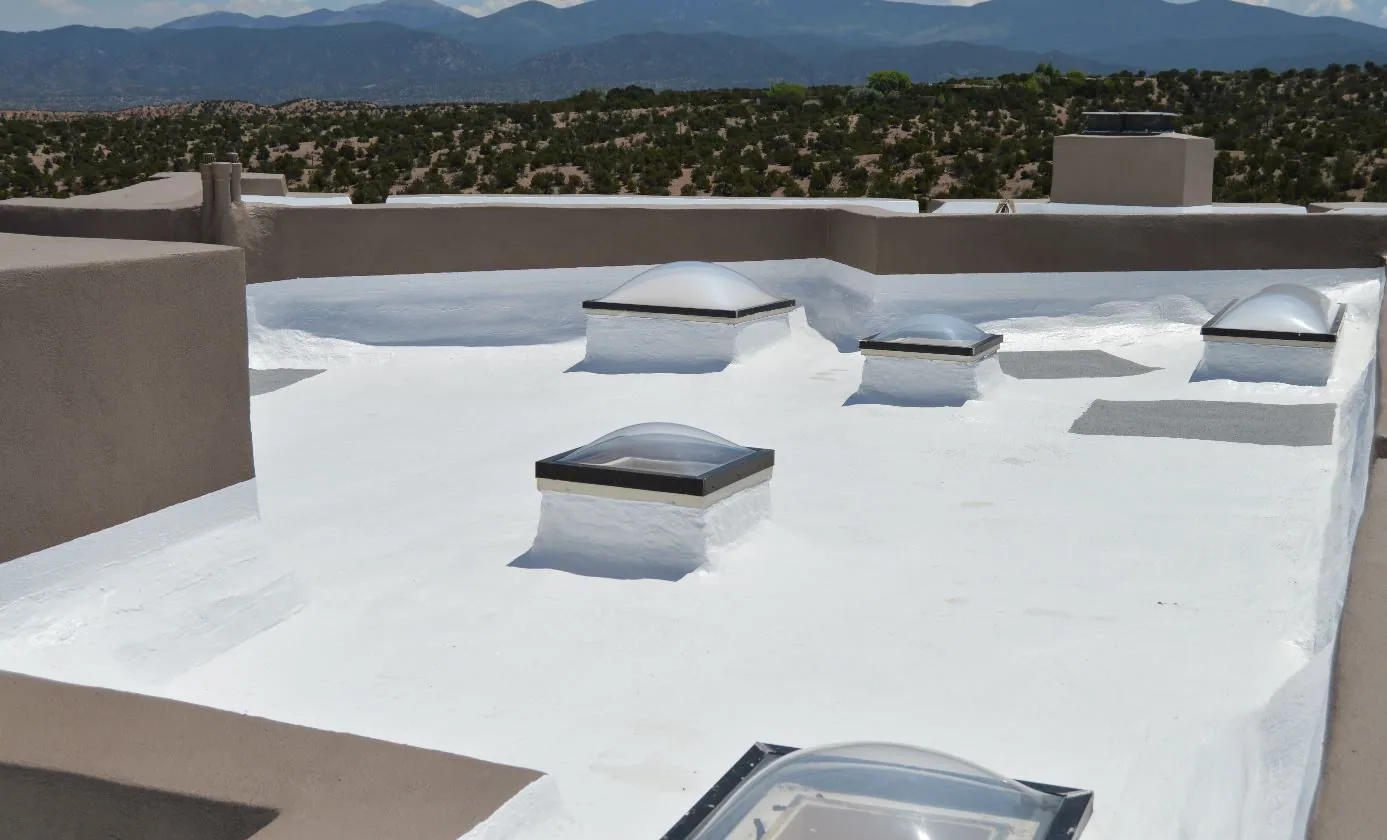
Skylights and rooftop units need a second look. A plastic dome can soften in radiant heat. A unit curb with a cracked seal gives an ember a hole to drop through. We check each curb, each skylight frame and each pipe boot, and we note the material of every one. Where a boot has split, a new one is a small repair. Where a dome is crazed, the owner can plan a swap before fire season rather than after it.
After a fire reaches a building
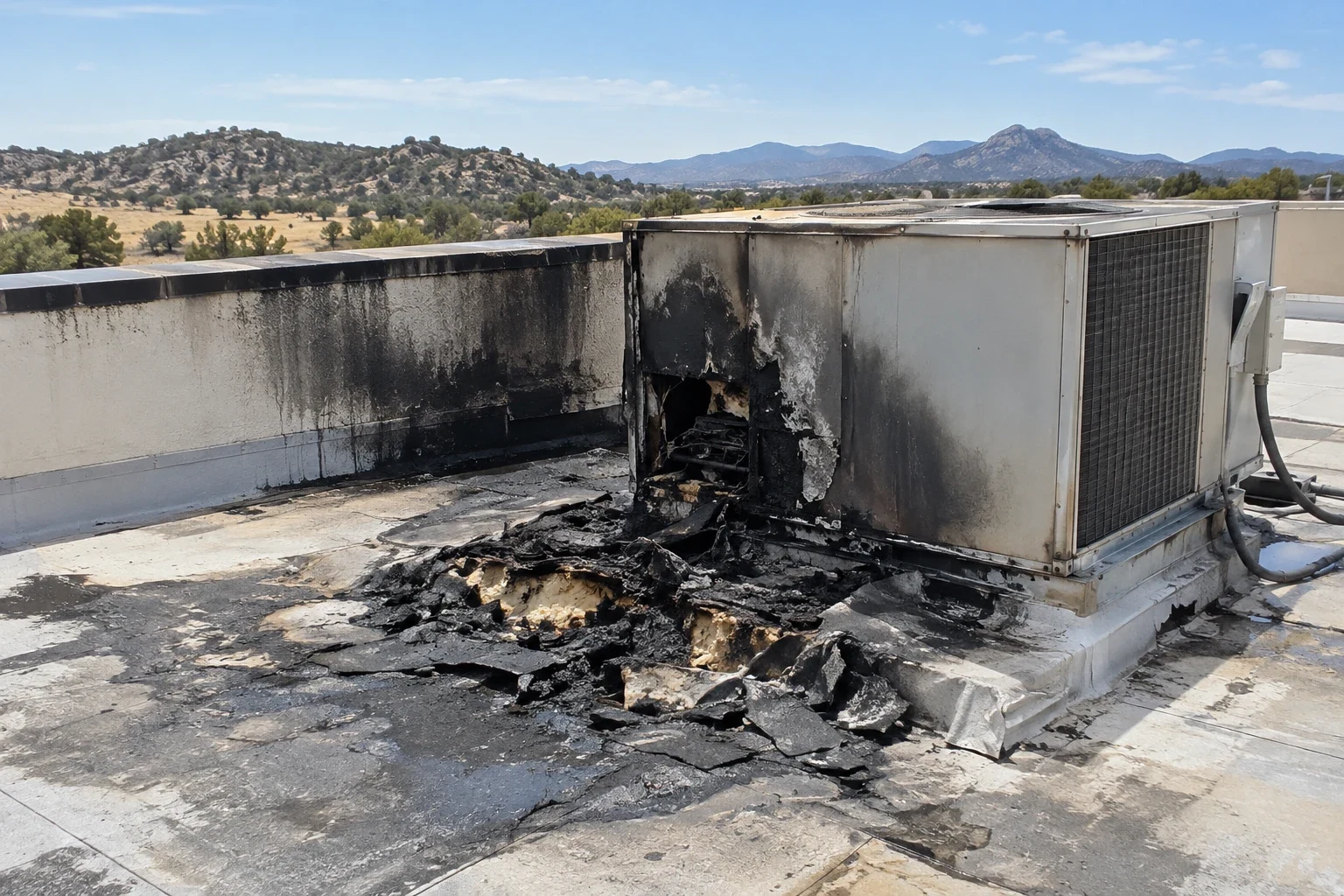
If a fire does reach a building, the roof needs a careful look even when the damage seems small. Heat can soften a membrane and shrink the seams without leaving a visible burn. Water from firefighting can soak insulation. Soot and ash packed into drains can hold water for weeks.
Our fire damage repair begins with a moisture scan and a core cut at the worst points. We mark what is charred, what is melted and what is merely stained. Then we write the repair in sections. A temporary cover goes on first if the building is open to weather. Photographs taken the same day support an insurance file, and our claim documentation lays out each finding by location.
Older storefronts and shared roofs
The Mayer Business Block is an older commercial building on the town's main street. Older storefront rows often share walls and sometimes share a roof deck. If that is the case, a leak in one unit may start in another. We trace water back along the deck to find the true source before anyone pays for a patch.
We also check the old tie-ins, where a newer roof meets an older one. Those joints fail first. A strip of sealant that was meant to last a season has often been asked to last ten. We replace such joints with a proper flashing, and we photograph the old and new work so the record is clear. The sheet lists each item by location, so an owner can see which parts of the roof serve which unit.
Parapets on older fronts deserve a close look as well. A parapet that leans out lets water in behind the cap. A cap with open joints sends water down the inside of the wall, where it stays out of sight for years. We run a hand along the cap, photograph each open joint and note any stain on the wall below. A repair at this stage is a sealant bead and a flashing strip. Left alone, the same joint can lead to rot in framing and mold in the ceiling.
Wind and monsoon in a small valley town
Mayer lies in the same region as Prescott, where the July to September monsoon brings rain, wind, hail and thunderstorms. Prescott's records show the same pattern. Gusts lift edge metal, and rain follows through the gap.
Winter adds freezing mornings from about late October to May 1, and daily swings near Prescott average almost 30 degrees. Those swings open sealant joints in small increments. So the plan has two walks a year. One in late spring, to clear drains and fix what winter loosened. One in early fall, to seal what summer storms loosened. Each walk produces dated photos, and each takes less time than the first.
Repair, restore or replace
A small commercial roof can usually be repaired if the insulation is dry. We run a moisture scan and cut a few cores. If they come back dry, a coating restoration may extend the roof's life by years. If they come back wet, the wet area is outlined and the section that must come out is priced.
The sheet shows both options side by side, with the work, the expected life and the cost. You decide with the numbers in front of you. A small town building often has a tight budget, and the sheet helps an owner spend the money where it matters most.
Some owners ask about replacing only the failed part. That is a fair question. A section tie-in can work if the old roof and the new sheet are compatible, and we check that before we write the scope. Where they are not, the tie-in becomes a weak line, and we say so.
Records that help a small owner
Small-town building owners often manage their own paperwork. That is fine, if the paperwork exists. We hand over a short file after every visit. It holds the findings sheet, the photos, a roof diagram with the repairs marked and the date of the next suggested walk. If an insurer asks what the roof looked like before a storm or a fire, the file answers the question.
If the building changes hands, the file moves with it, and the next owner starts with facts and not a guess.
Getting to Mayer
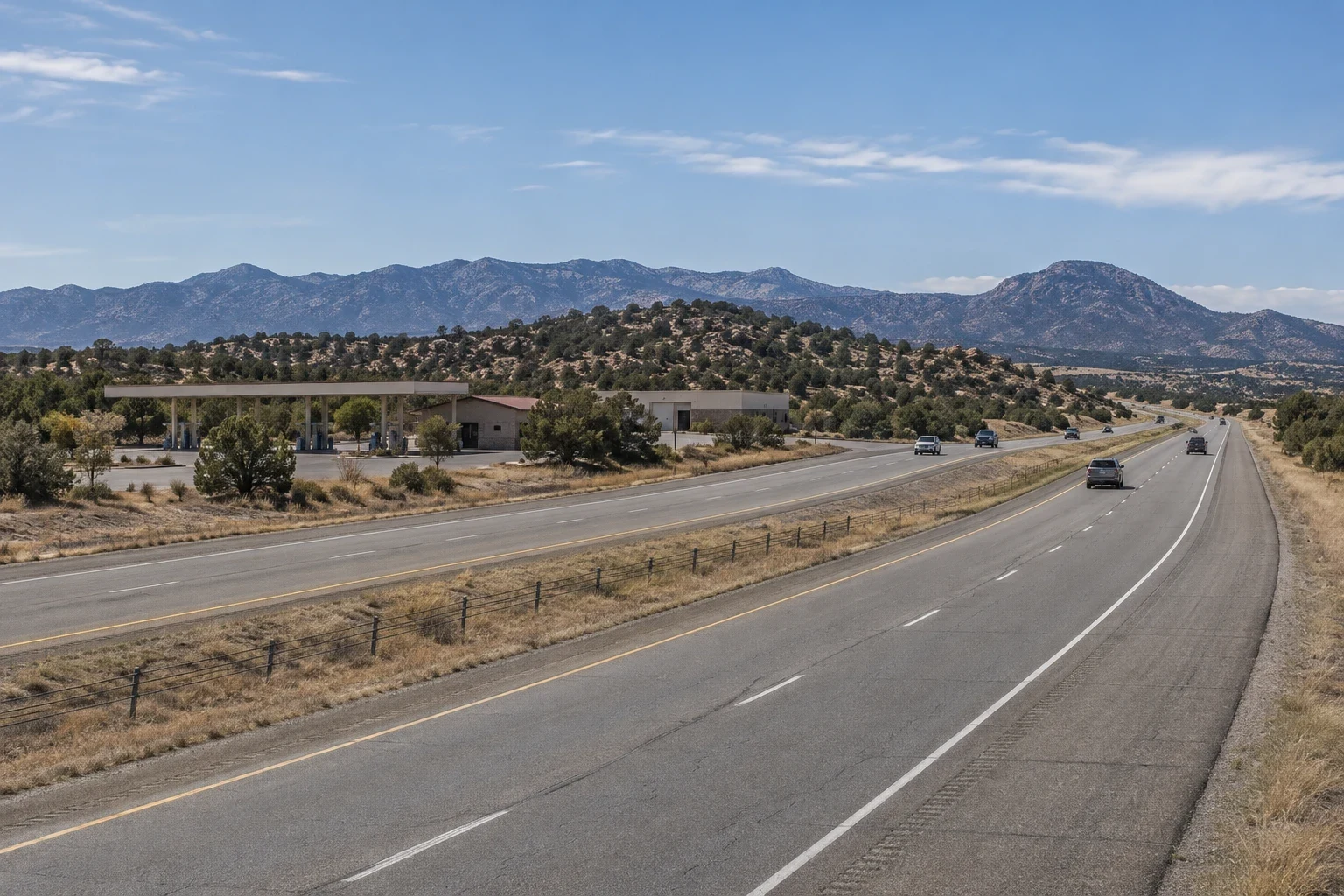
Mayer lies along the State Route 69 corridor, with Dewey-Humboldt on one side and Cordes Lakes, near Interstate 17, on the other. A single trip can cover buildings in all three. After a storm, emergency repair comes first, and the permanent scope follows once the roof is dry.
Commercial Roofing Questions
Can debris on a roof really matter in a fire?
Yes. Dry leaves and trash in valleys and gutters can catch an ember. Clearing them is cheap, and it also keeps drains working. We photograph the cleared areas so the work is on record.
What should be done right after a fire near the building?
Have the roof looked at before the next rain. Heat and firefighting water can leave damage that does not show from the ground. A moisture scan finds wet insulation, and photos taken that day help with a claim.
How do we find which unit a shared-roof leak starts in?
We trace the water along the deck and the wall tie-ins, then test the suspect spot with a controlled water check. The answer goes on the sheet with a photo.
Is a coating enough on a small roof?
It can be, when the membrane is sound and the insulation is dry. A core cut and a moisture scan settle the question before any coating is priced.
How often should drains be cleared?
Before the July to September monsoon and again after leaf fall. Buildings with trees nearby may need a third visit. Each visit gets a photo of the screen, before and after.
What belongs in the file I keep for a roof?
The findings sheet, the dated photos, any warranty papers and a diagram marking each repair. Add the invoice for each visit. That set answers most questions from an insurer, a buyer or a lender.
Request a walk-through
Ask for a roof walk on your Mayer building. We will deliver a written findings sheet with photos before any repair is priced.
Request a Roof Assessment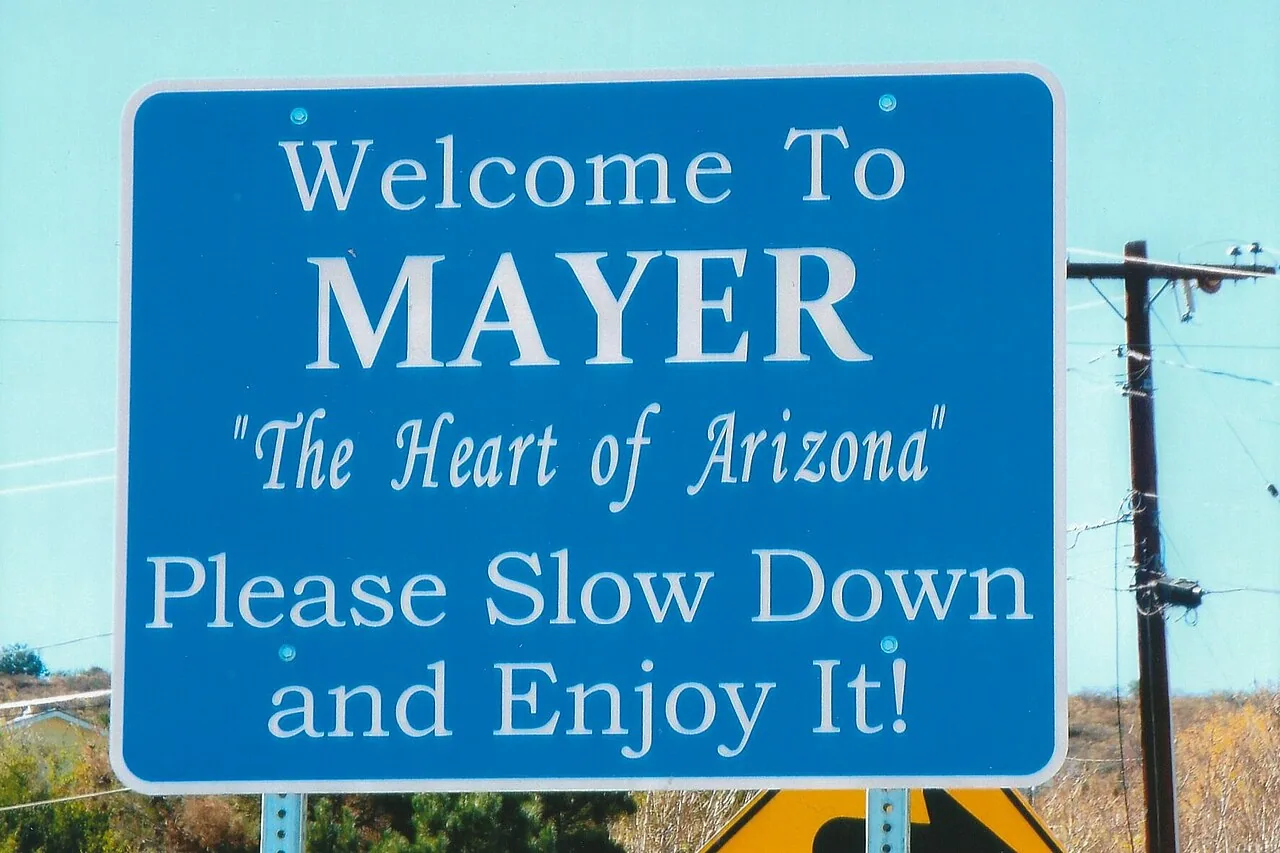
Commercial Roofing Questions
Yes. Dry leaves and trash in valleys and gutters can catch an ember. Clearing them is cheap, and it also keeps drains working. We photograph the cleared areas so the work is on record.
Have the roof looked at before the next rain. Heat and firefighting water can leave damage that does not show from the ground. A moisture scan finds wet insulation, and photos taken that day help with a claim.
We trace the water along the deck and the wall tie-ins, then test the suspect spot with a controlled water check. The answer goes on the sheet with a photo.
It can be, when the membrane is sound and the insulation is dry. A core cut and a moisture scan settle the question before any coating is priced.
Before the July to September monsoon and again after leaf fall. Buildings with trees nearby may need a third visit. Each visit gets a photo of the screen, before and after.
The findings sheet, the dated photos, any warranty papers and a diagram marking each repair. Add the invoice for each visit. That set answers most questions from an insurer, a buyer or a lender.