Roof Insurance Claim Assistance in Prescott Valley, AZ
Roof insurance claim documentation in Prescott Valley, AZ: dated photos, measured damage and a clear line between storm damage and older wear for adjusters.
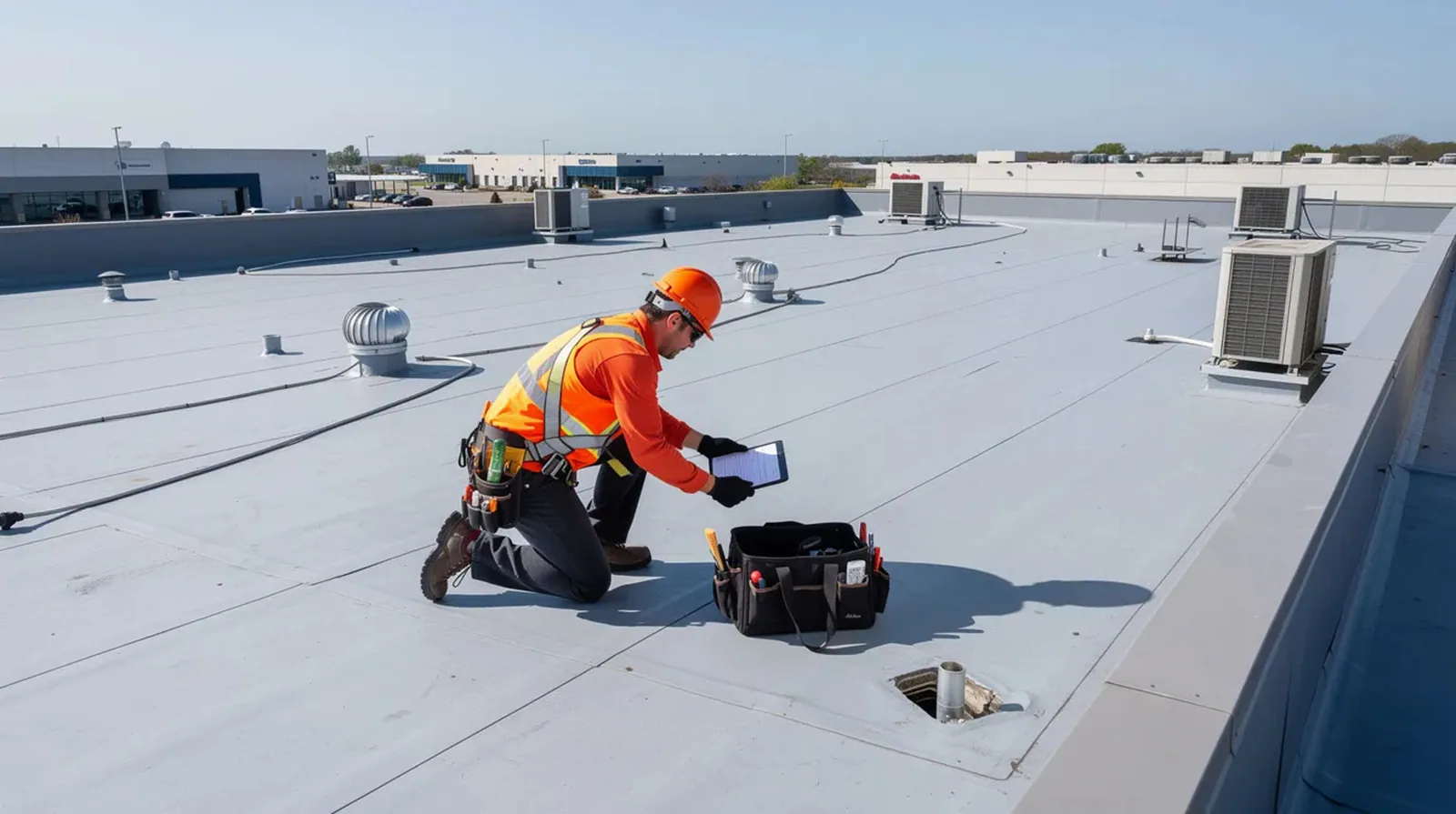
Open the photo set before you open the claim. On a roof in Prescott Valley, AZ, the photographs tell an adjuster what the storm did and what the roof already had. A bruise next to a worn seam looks like one problem until the photos separate them. That separation is the heart of a roof claim. Commercial Roofing Prescott Valley prepares the roof side of the file: findings, measurements, photographs and a repair scope, so that the person reviewing the claim sees the roof as it is.
We document. We do not decide coverage.
What We Record
The record has the same parts on every claim. Each part answers a question an adjuster will ask.
- Date and weather: when the storm hit, and what the sky did on the day of the walk.
- Roof description: system, approximate age, attachment and prior repairs.
- Damage map: every damaged area marked on a roof plan and numbered.
- Photographs: a wide shot and a close shot for each numbered area.
- Measurements: size and depth of each defect, and total area affected.
- Moisture results: infrared or meter findings that show where water got in.
- Older wear: items we saw that the storm did not cause, listed separately.
Anything we cannot confirm is marked unconfirmed, with the test that would confirm it. We do not fill gaps with assumptions.
The record also notes access: where a crew reaches the roof, where a lift can stand and which areas rooftop units or skylights block. Access is a cost driver in the scope, and an adjuster who sees it in the file understands why a figure is what it is.
Storm Damage Versus Wear
This split decides the shape of most claims. Storm damage has a fresh look and a pattern. Wear has a slow look and spreads evenly.
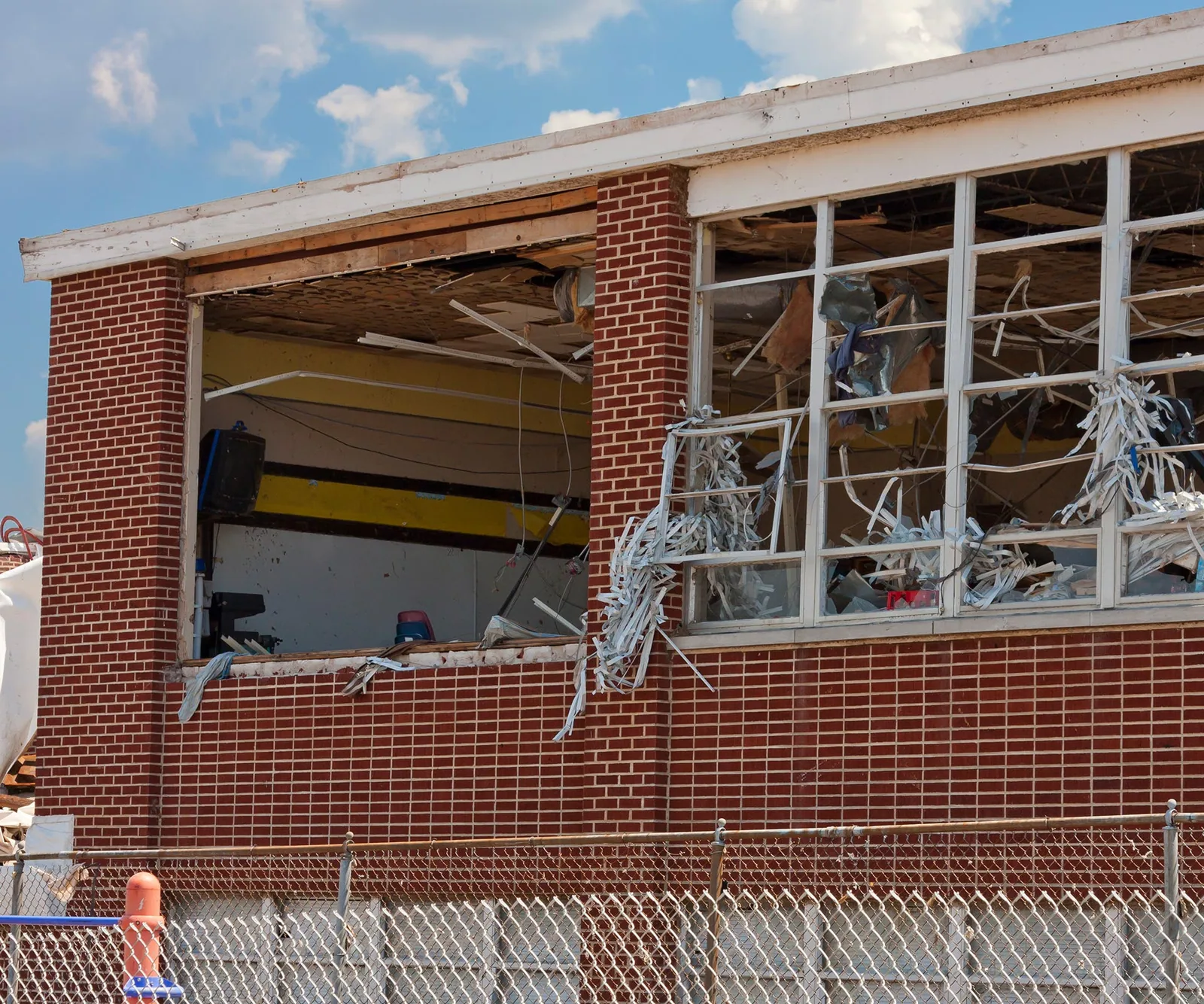
Wind damage clusters at corners, edges and the windward side. You see creases in the membrane, loose coping and metal that has moved. Hail damage shows as round bruises, with soft spots under the thumb, and fresh granule loss on bituminous roofs. Wear shows as crazing across the whole surface, dried sealant at curbs, ponding rings and rust at fasteners.
Pea-sized hail of the kind seen on July 20, 2026 seldom harms a healthy surface. It does find brittle, aged sheets. A roof may have both kinds of marks. We list each separately, so the claim covers the event and the owner knows what the age of the roof contributed.
Why Monsoon Season Needs Fast Photos
Prescott Valley's year of about 15 inches of precipitation is front-loaded into the July to September monsoon. Cells come fast and leave quickly. The July 20, 2026 storm is the local example: pea-sized hail, strong wind, signals and trees down, and a power outage for more than 130 APS customers.
After such a storm, evidence disappears. Debris blows away. Water dries. A second cell can add damage on top of the first. So the first visit comes as soon as the roof is safe to walk. We photograph the roof the day we arrive, record the conditions and mark which damage is new. If a second storm hits before repairs, we repeat the walk and separate the two events.
What Happens in Order
The order protects both the building and the claim.
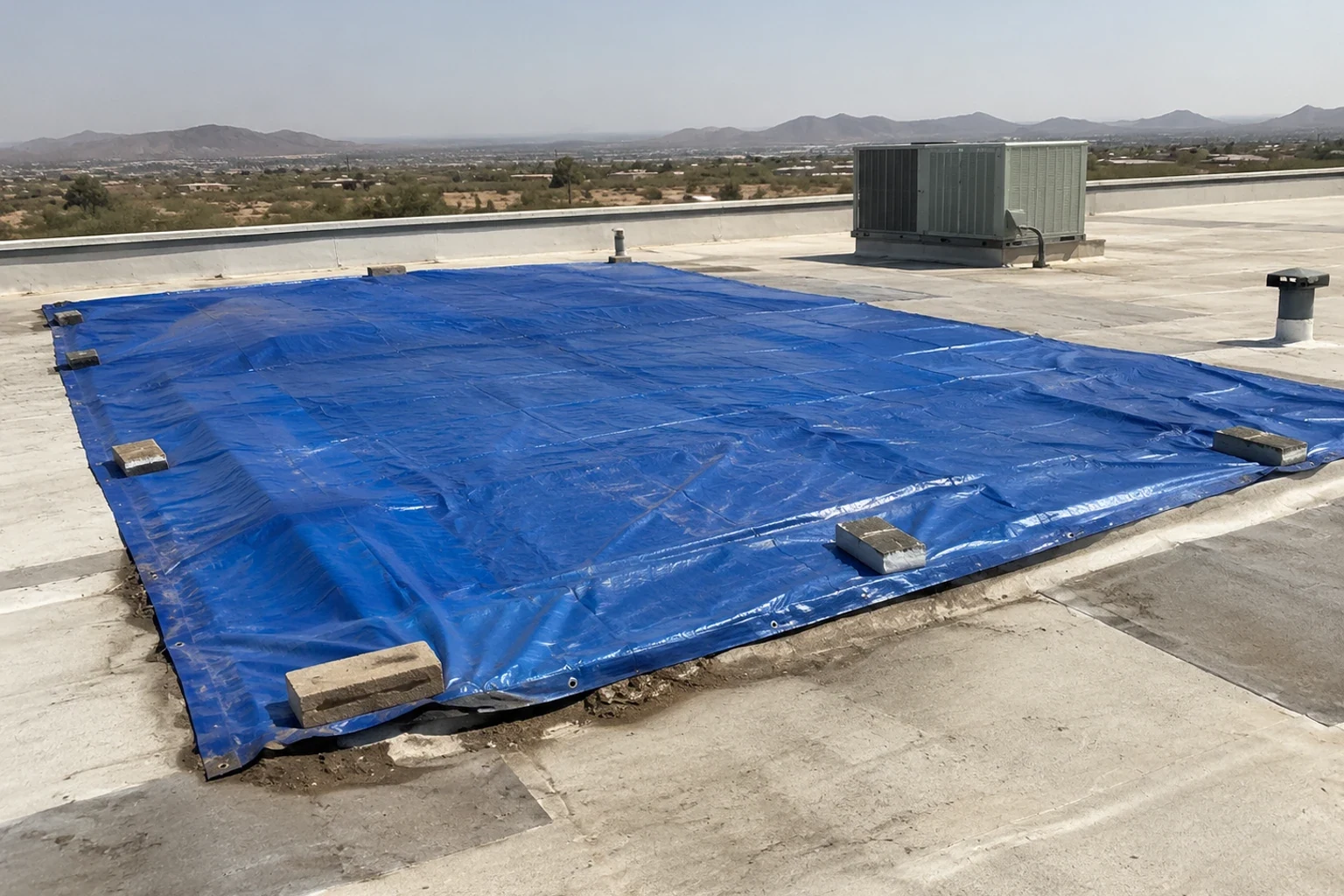
First, the roof is made safe and watertight. A temporary dry-in is placed over any open area, with photos before and after. Our emergency roof repair crews work around the clock. Temporary work is documented as temporary, and receipts and photos are kept.
Second, the full walk. We inspect the roof, map damage and take samples where needed. A commercial roof inspection supplies the baseline, and the findings go into a written sheet.
Third, the scope. We write a repair scope with quantities, materials and methods. The adjuster can compare it with their own. If they disagree on an item, the photos and measurements are there to settle it.
Fourth, the repair. Work follows the approved scope, with progress photos and a final record. The repair itself follows the order a storm damage roof repair uses: edges and water first, surface next, wet insulation last.
Buildings Where Claims Get Complicated
Large assembly and retail roofs in the downtown Entertainment District sit next to each other, and a storm tends to affect several at once. The Event Center draws an estimated 75,000 visitors a year, many from out of town, and the claim file should price lost event dates alongside the repair.
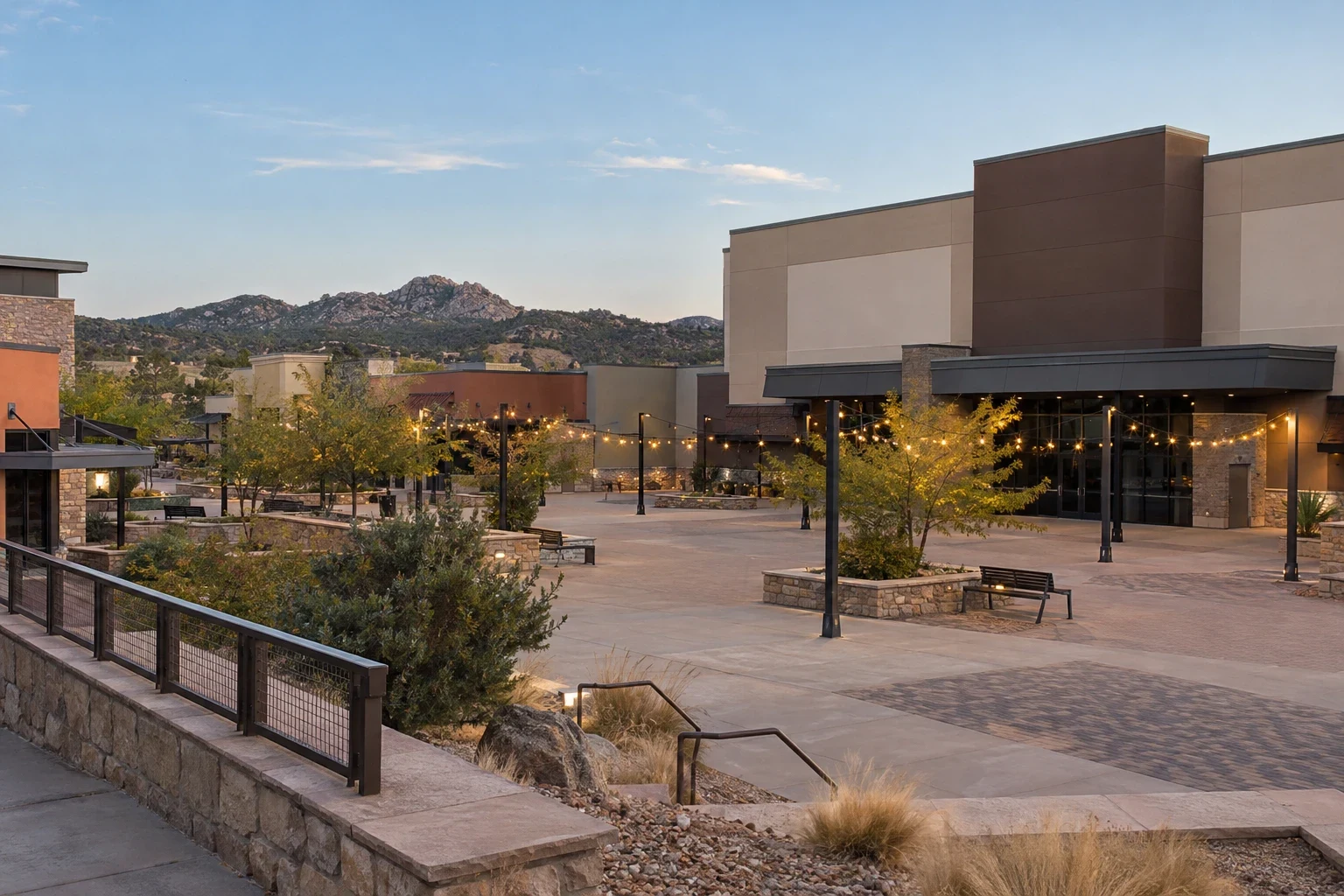
Retail power centers such as Glassford Hill Marketplace and The Crossroads have low-slope buildings with rooftop units, and Glassford Hill itself exposes nearby buildings to ridge-top wind. For shopping center roofs, a claim often covers several tenants, so we map damage by building and by tenant space. Manufacturers and distributors on the east side have buildings with their own drainage, and a claim there often turns on wet insulation, which we locate with moisture mapping.
A hospital campus, a school district and medical offices add another layer. The Prescott Valley area includes Yavapai Regional Medical Center East Campus and Humboldt Unified School District among its largest employers, and a claim on an occupied building must explain how work will proceed without stopping operations. We write that plan into the scope.
What Drives the Scope
A claim scope is only as good as its cost drivers. We list them beside each item so the adjuster and the owner can follow the numbers.
- Area: how many square feet are damaged, measured, not estimated.
- Depth: surface only, or through the membrane to insulation and deck.
- Moisture: wet insulation must be removed, which adds tear-off and disposal.
- Access: lifts, cranes, and rooftop obstructions.
- Occupancy: work around tenants, patrons and operations.
- Season: freezing weather holds from late October to early May, which can push permanent repairs to a milder week.
The written scope marks each item as a patch or a fix. A patch addresses the storm damage. A fix addresses a condition that made the damage worse. Keeping the two apart helps the insurer see what belongs in the claim and helps the owner see what belongs in the capital budget.
Commercial Roofing Questions
Do you decide whether the insurer will pay?
No. The insurer decides coverage. We prepare the roof record: photos, measurements, moisture results and a scope. A complete record helps the adjuster see the roof as it is.
What should an owner do right after a storm?
Photograph interior water with dates, protect contents, and arrange a temporary dry-in. Keep receipts. Then request a walk, so the roof damage is documented before debris and weather change it.
How do you separate storm damage from old wear?
By pattern and appearance. Storm damage clusters at edges and exposed sides and looks fresh. Wear spreads evenly and looks gradual. We map both and list older wear on its own line.
Can we repair before the adjuster visits?
A temporary dry-in is fine and expected, with photos before and after. Permanent repairs should wait until the adjuster has seen the roof, or until the insurer agrees to the scope in writing.
What if the adjuster's scope and ours differ?
We compare line by line. Each item in our scope links to a numbered photo and a measurement. If an item is disputed, the record gives both sides the same facts to work from.
Request a Walk-Through
Request a walk-through after a storm, and we will send a written findings sheet with dated photos before any repair is priced.
Request a Roof Assessment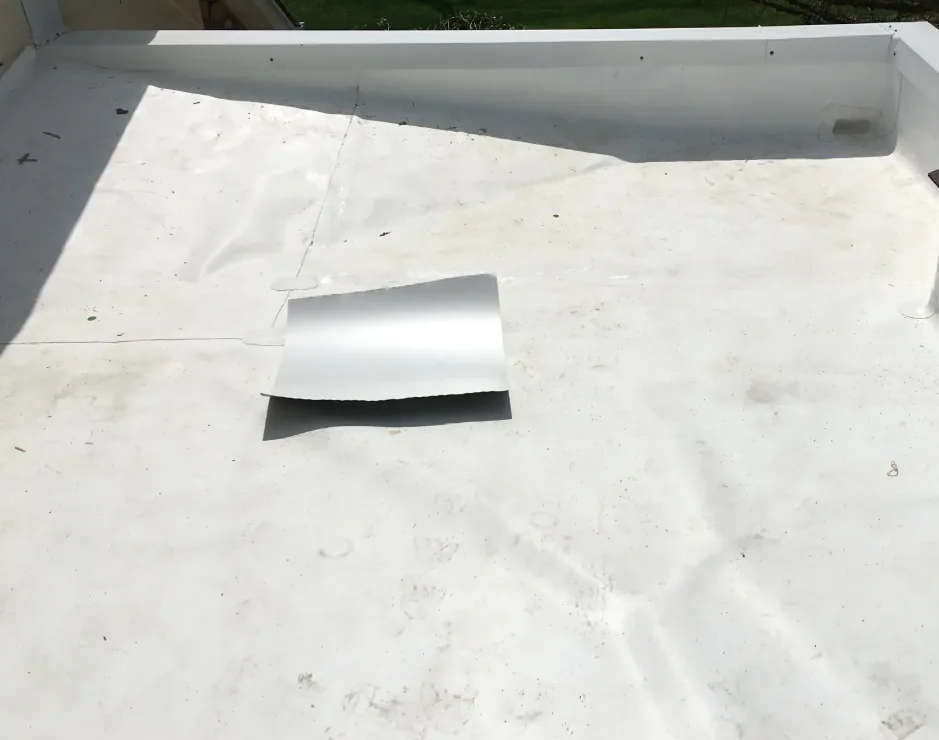
Commercial Roofing Questions
No. The insurer decides coverage. We prepare the roof record: photos, measurements, moisture results and a scope. A complete record helps the adjuster see the roof as it is.
Photograph interior water with dates, protect contents, and arrange a temporary dry-in. Keep receipts. Then request a walk, so the roof damage is documented before debris and weather change it.
By pattern and appearance. Storm damage clusters at edges and exposed sides and looks fresh. Wear spreads evenly and looks gradual. We map both and list older wear on its own line.
A temporary dry-in is fine and expected, with photos before and after. Permanent repairs should wait until the adjuster has seen the roof, or until the insurer agrees to the scope in writing.
We compare line by line. Each item in our scope links to a numbered photo and a measurement. If an item is disputed, the record gives both sides the same facts to work from.