Commercial Roofing in the State Route 69 Corridor, Prescott Valley, AZ
Roof inspection, drain care and repair for big-box, grocery and home-improvement roofs along State Route 69 in Prescott Valley, AZ, with written findings.
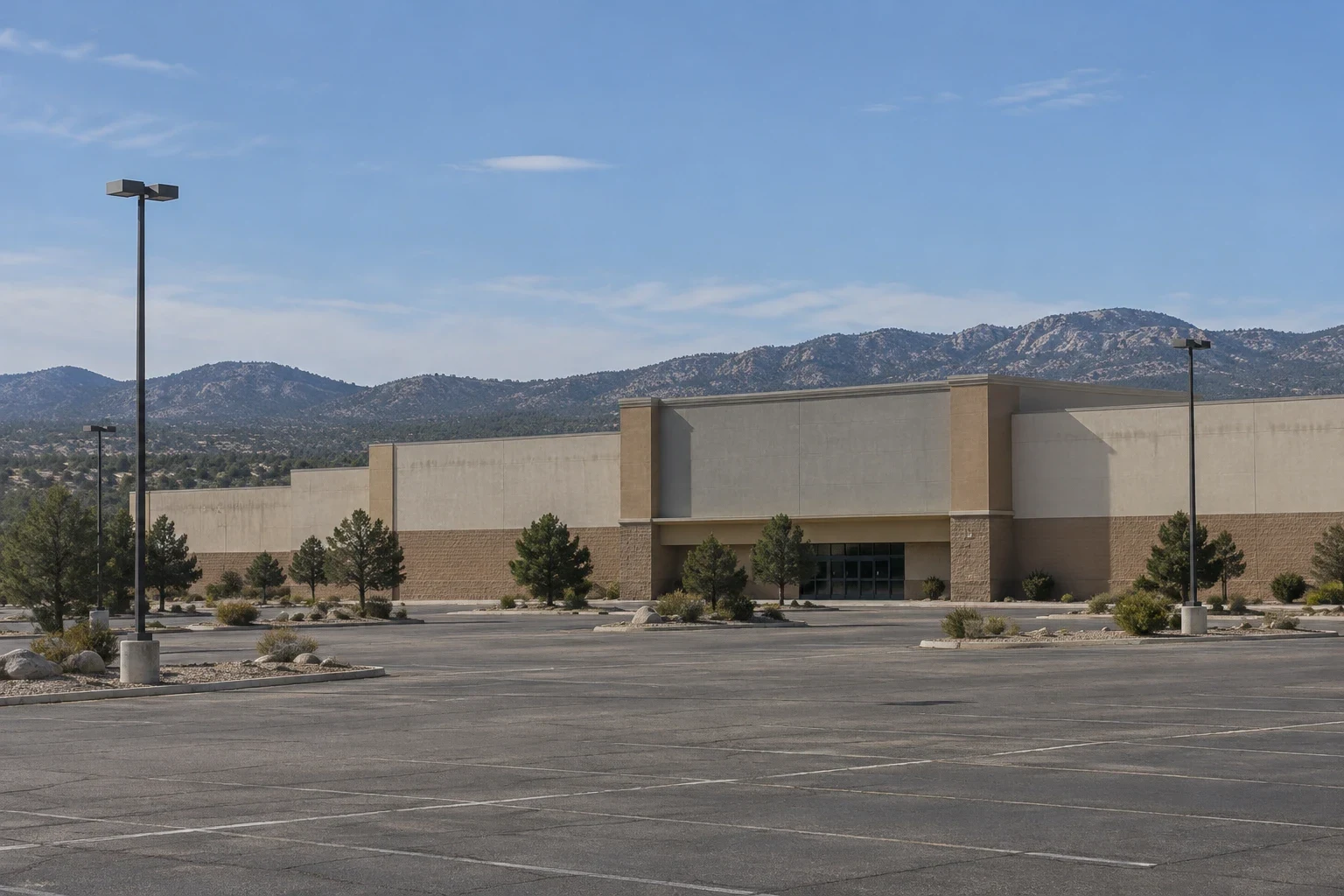
Big roofs need big drain counts. A large retail box may have a dozen drains, and every one has to work. State Route 69 is a six-lane roadway connecting Prescott Valley, AZ to downtown Prescott and Interstate 17. The big-box and grocery employers along the town's retail strip run from Safeway (160 employees) and Home Depot (180) through Fry's Food Store (232) to Walmart (380).
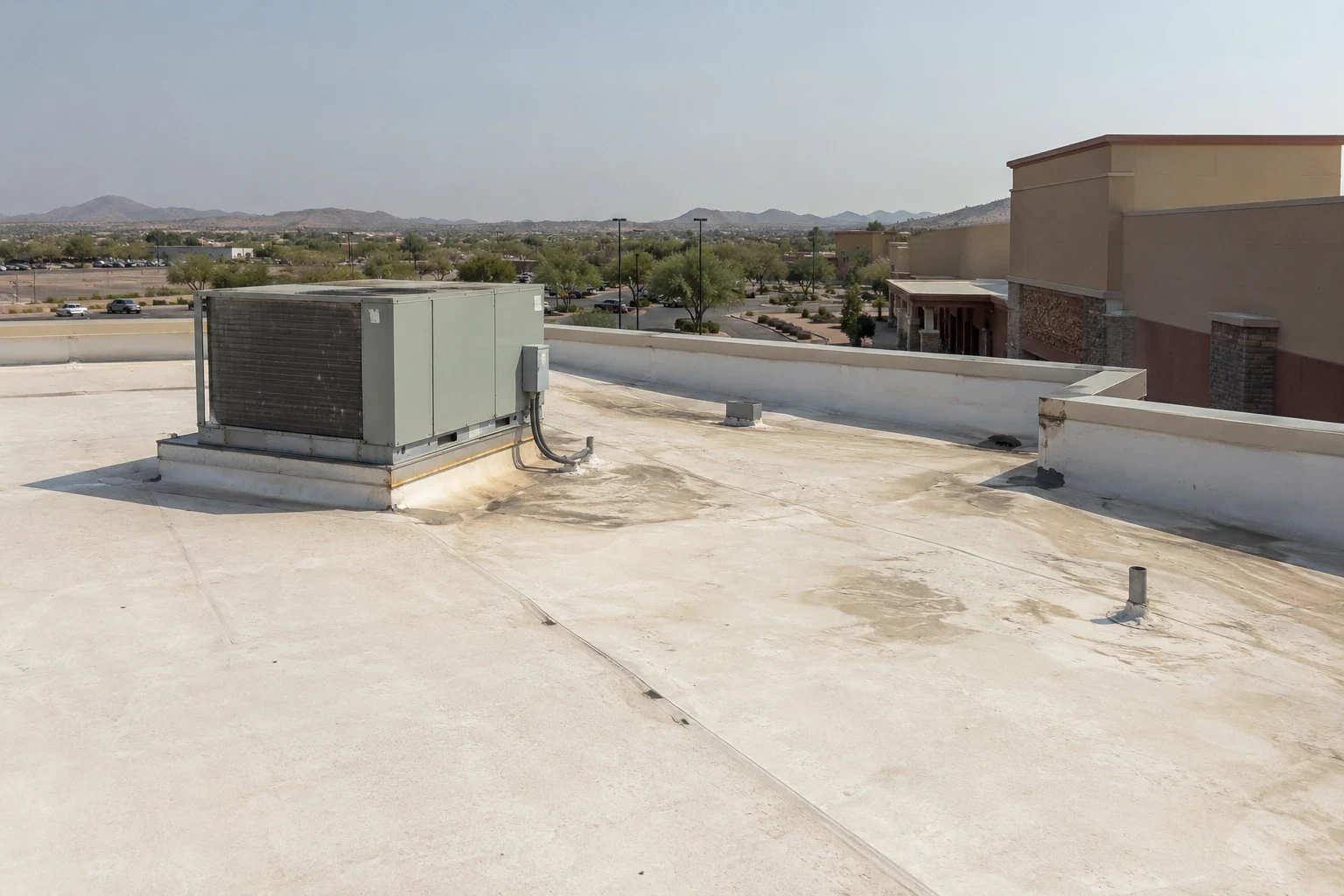
Roofs on stores like these get inspected, repaired and replaced. Each walk covers the seams and the photographs, and the written sheet reaches you before any repair has a price. A single walk covers the field, the perimeter, the penetrations and the drains. We write down the sheet type, the slope and the equipment count. Then we trace the water from the high point to each drain. Drain screens, strainers and overflow scuppers get a photo each. We note which ones hold debris and which have been cleared before. That record shows the owner how the roof has been kept and where the next cleaning should begin.
What a big box roof asks
Large retail and grocery buildings have wide low-slope fields. They carry many rooftop units. Refrigeration adds condenser equipment and line sets. Each piece of equipment needs a curb or a stand, and each curb needs a flashing.
Foot traffic is steady. Technicians service units on a schedule. They walk the same routes each time. We look for wear along those routes: scuffs, soft spots and thin patches. Walk pads protect the sheet. A big-box retail roof without pads often shows a line of damage from the access ladder to the farthest unit. Parapets and roof edges matter on a large box too. Wind curls over the edge and lifts at corners. We check the metal, the cleats and the corner fasteners. A loose corner on a long wall lets wind get under the sheet and work along it. A short fix at the corner stops.
Grocery roofs and refrigeration
A grocery store runs cold air and warm equipment at the same time. Condensate lines, refrigerant lines and exhaust fans all pass through the roof. Condensate can pond near drains. Warm exhaust can soften some sheets.
We trace every line and look at the flashing around it. We look at the sheet near each fan. We check whether a drain line empties onto the roof or into a drain. A grocery store roof with a leaking condensate line can look like a membrane failure. The walk separates the two. That saves a repair that would not have fixed the problem. Refrigeration adds weight too. Condenser units and racks sit on stands, and a stand on a soft spot can sink. We press around each stand and look at the board beneath. If the board gives, the sheet will crack at the stand. A cover board or a new pad spreads the load. We price both and show the owner the difference.
What monsoon and freeze do
Annual precipitation here is 15.02 inches, and the wettest stretch is July and August at roughly 5,100 feet. The July 20, 2026 storm dropped pea-sized hail with heavy rain and wind, and signals and trees fell.
After a cell, we check the drain screens, edge metal and flashings. Wide roofs shed a lot of water to few points, so each drain carries more than its share, and a blocked one turns a rain into standing water fast. In winter, frost near Prescott begins around October 21 and holds until about May 1. Swings between day and night near Prescott average almost 30 degrees. That movement works on laps and flashings across a whole field. We probe them in fall. Home-improvement and grocery roofs carry heavy equipment, so standing water is a bigger worry than on a bare field. A pond adds weight where the deck already carries a load. We measure the depth and the time it takes to drain. A pond that stays a day after rain is a finding. We trace its cause and price a fix, whether a clean-out, a new drain or tapered insulation.
Working around store hours
Stores stay open. Shoppers park near the building. Delivery trucks arrive early. A roof job has to fit those routines.
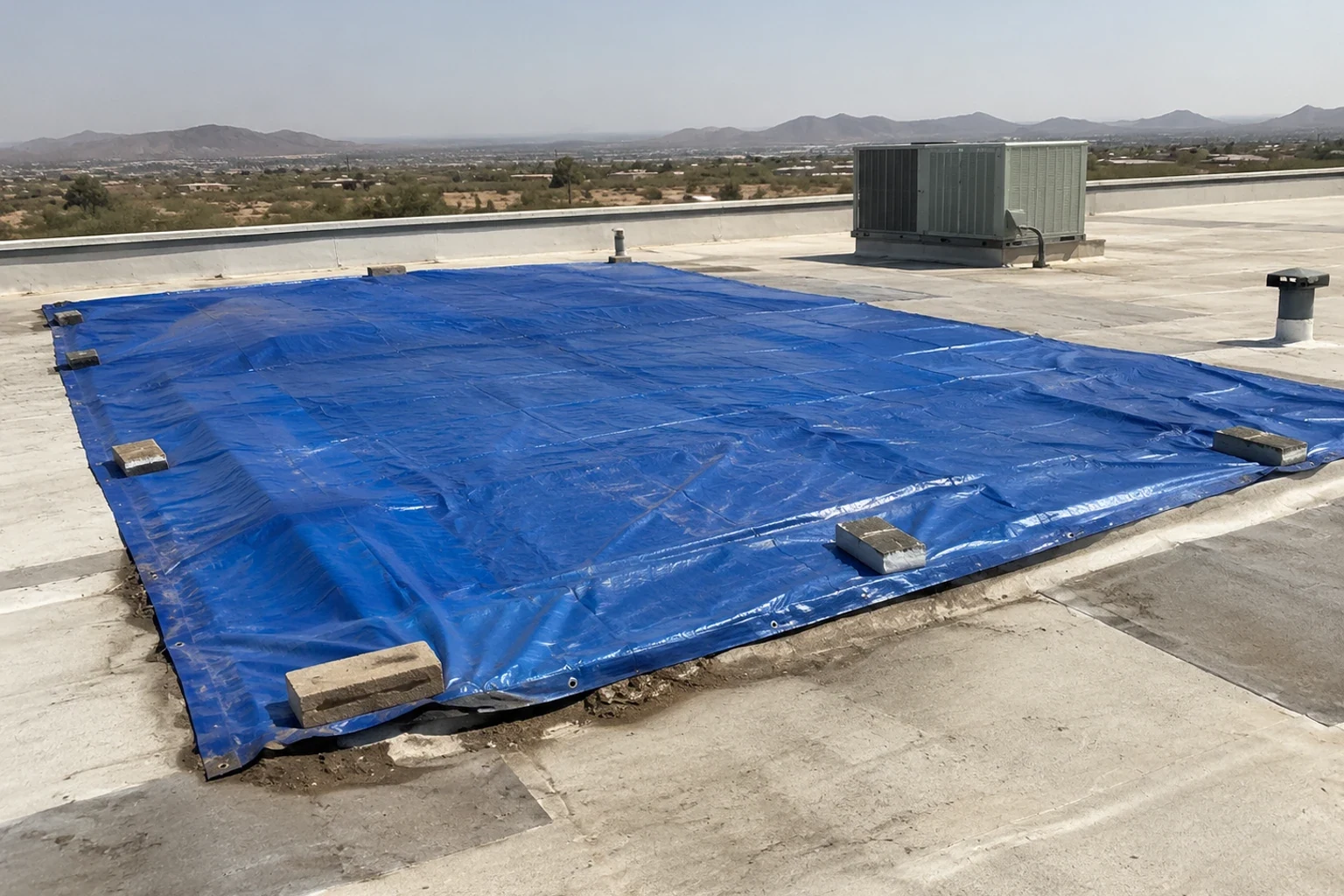
Lifts are planned for early hours and materials stage away from entrances. The roof is cut into sections, and each is closed up before the crew leaves. Noise limits and dust control go in the scope. If a leak is over merchandise or a sales floor, a temporary repair holds the water out first. The permanent work follows once the store agrees on a window. Deliveries and trash pickup set their own times, and the crew works around them. We post a daily note with what moved and what comes next. The store manager reads it in a minute and knows the plan. Small habits like that keep a job calm, and they keep the roof crew out of the way of customers. When the work ends, we walk the roof with the manager, show the finished flashings and drains and hand over the photos. The file then holds a clean baseline for the next walk, and the next review date is set before we leave the site.
What to repair now
The sheet ranks every item. The repair-now tier takes open seams, failed flashings and clogged drains, the repair-this-season tier takes aging sealant, worn routes and small punctures, and a watch tier holds stable items.
Two failures at one spot end the patching. We look under the sheet. An infrared moisture survey finds wet insulation without opening the roof. Then the owner sees where a section repair ends and a replacement begins. For retail on Glassford Hill Road, the same sheet format applies. So does it for stores in the Entertainment District. A chain with stores in several parts of town gets one list. The roof of least remaining service rises to the top, and the budget follows. Roofs near Fain Road sit on the same list when the owner holds both.
Commercial Roofing Questions
Why do big-box roofs need walk pads?
Technicians walk the same routes each month. Without pads, those routes wear thin and puncture. Pads cost little and protect the sheet, and they give a technician a clear route that does not cross a seam or a flashing. Where a route must cross a seam, the pad spans it.
How can you tell a condensate leak from a membrane leak?
We trace the lines and check where each drains. A condensate line that empties onto the roof can look like a failed sheet. The walk separates the two.
Can roof work happen above an open store?
Yes, with early lifts, protected entrances and sectioned dry-in. We agree on a window with the store manager before the first day.
Does pea-sized hail damage a retail roof?
Rarely on a sound sheet. After a storm we check for marks and core any that look deep.
What do you need from a store's facility director?
Store addresses, the equipment list, past reports and warranty papers get the file started. Photos and findings come back before any repair is priced. The store hours and the busiest delivery days help set the lift schedule, so the crew is on the roof when the lot is quietest. A quick note on rooftop refrigeration and exhaust also helps, since those units set the order of the walk.
Request a walk-through
Ask for a roof walk and send your store hours. We will deliver a written findings sheet with photos before any repair is priced.
Request a Roof Assessment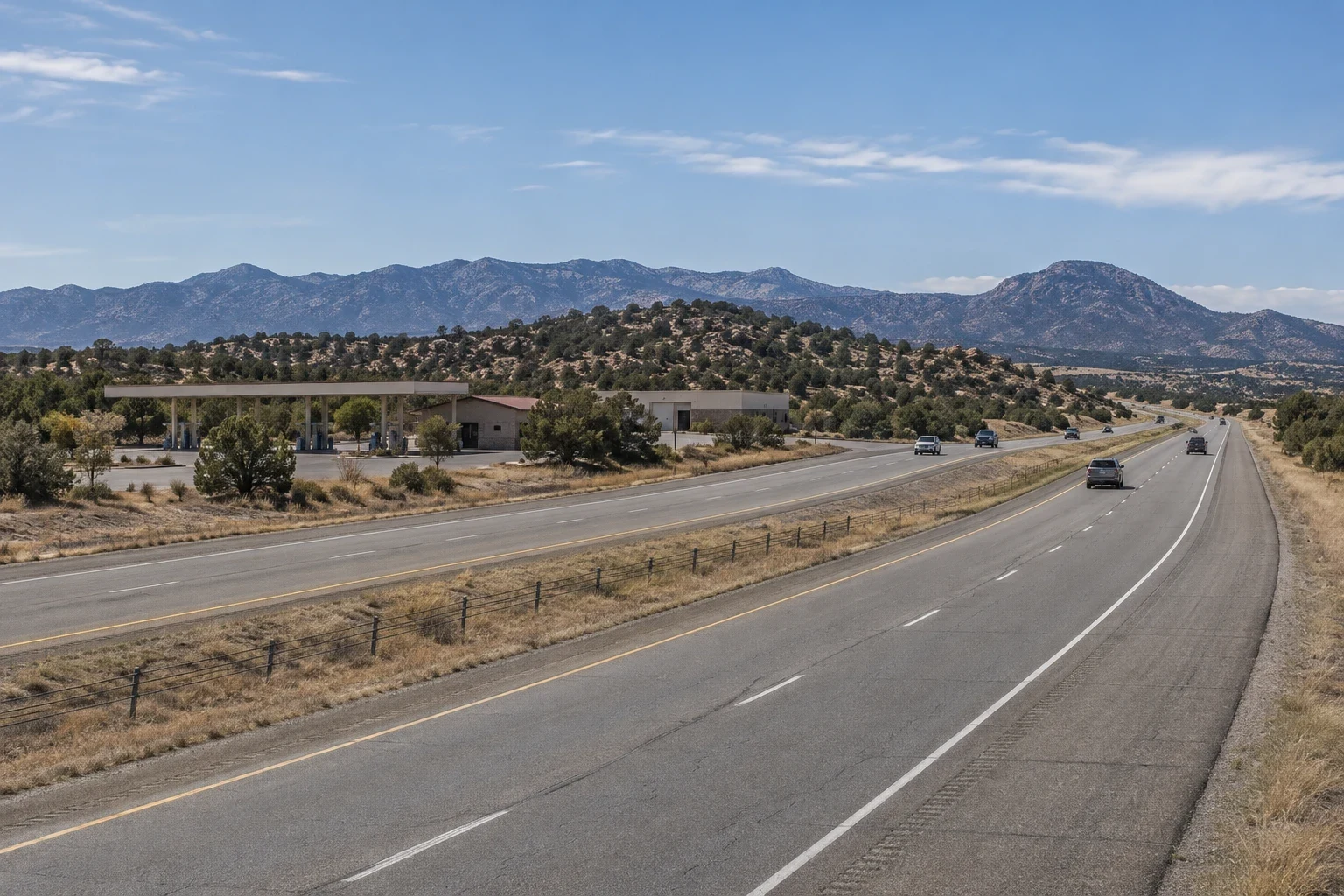
Commercial Roofing Questions
Technicians walk the same routes each month. Without pads, those routes wear thin and puncture. Pads cost little and protect the sheet, and they give a technician a clear route that does not cross a seam or a flashing. Where a route must cross a seam, the pad spans it.
We trace the lines and check where each drains. A condensate line that empties onto the roof can look like a failed sheet. The walk separates the two.
Yes, with early lifts, protected entrances and sectioned dry-in. We agree on a window with the store manager before the first day.
Rarely on a sound sheet. After a storm we check for marks and core any that look deep.
Store addresses, the equipment list, past reports and warranty papers get the file started. Photos and findings come back before any repair is priced. The store hours and the busiest delivery days help set the lift schedule, so the crew is on the roof when the lot is quietest. A quick note on rooftop refrigeration and exhaust also helps, since those units set the order of the walk.