Warehouse Roofing in Prescott Valley, AZ
Warehouse roof inspection, repair, recover and replacement in Prescott Valley, AZ, with written findings and photos before any repair is priced.
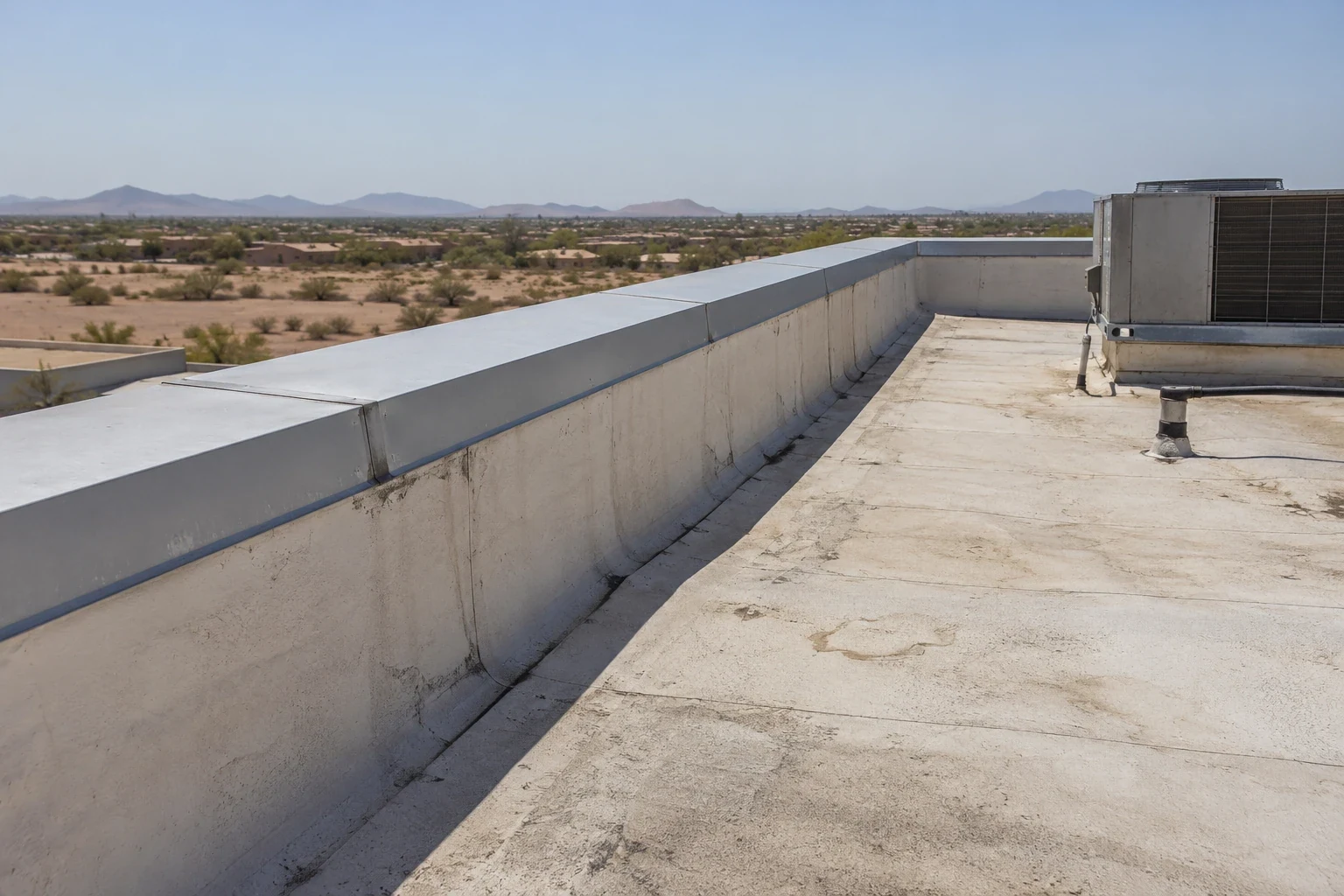
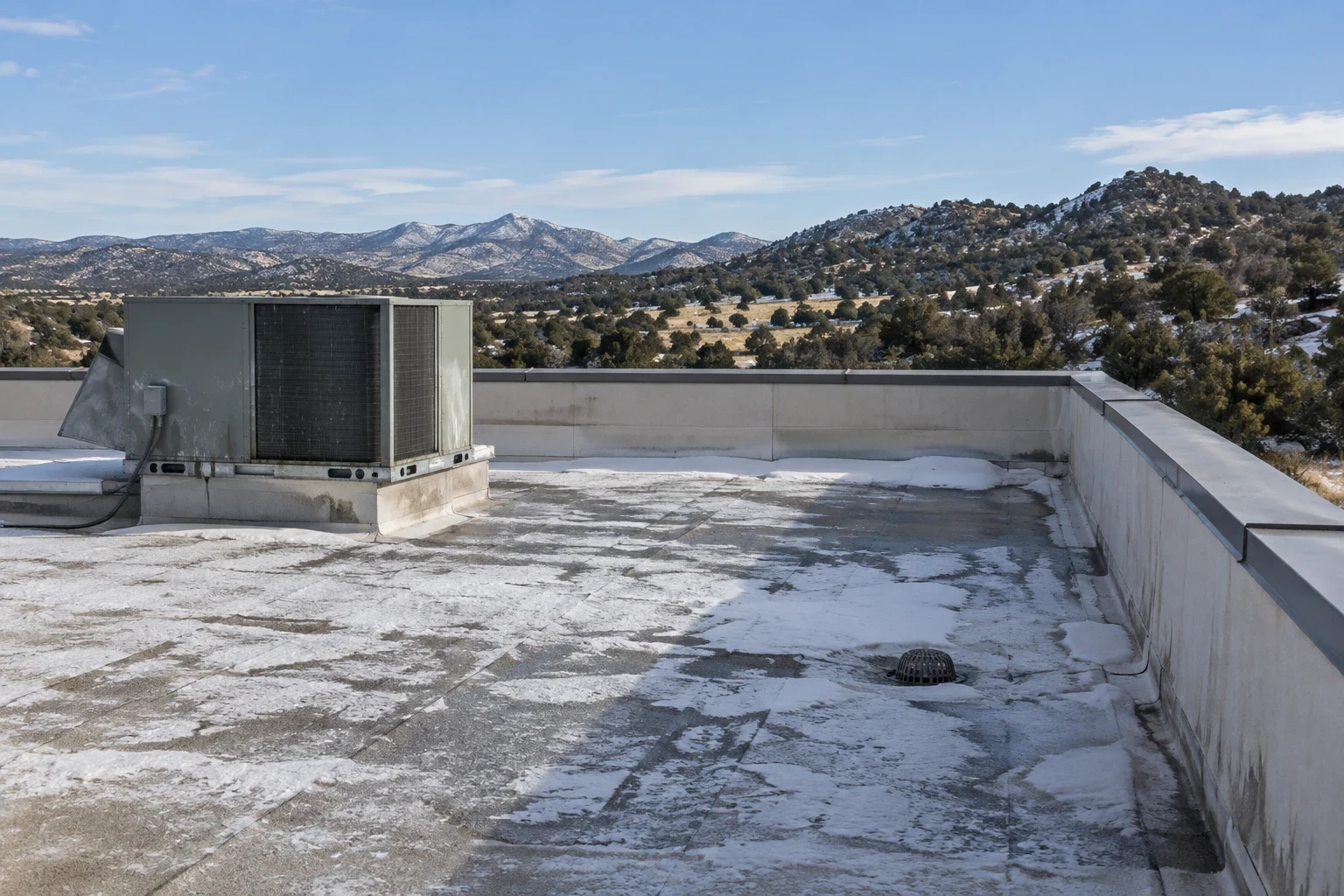
Look at the dock-side drains first. After a monsoon cell they can hold gravel, leaves and pea-sized hail. That is the cheapest finding, and it tells us a lot. Water that cannot leave a big flat roof sits and spreads. Where the water stood, a ponding line forms, and that ring marks a dip in the deck. In Prescott Valley, AZ, we walk the roof, press on the seams and photograph every finding, then hand you a written sheet before a repair gets a price.
What we find on big flat roofs
Warehouse roofs are large and plain. That sounds easy, but size works against the roof. A long membrane field expands and contracts as a single sheet. Prescott swings nearly thirty degrees in a day, and every swing pulls on the seams.
The weak spots are not in the field. They are at the edges, the curbs and the penetrations. A skylight curb, a vent stack or a dock leveler pit each gives water a way in. We mark each one on a plan and photograph it.
Drains get the same treatment. We count them, clear the screens and note which ones drain slowly. A big roof with only a few drains has no margin. One blocked drain can leave water standing across a large part of the roof. Water has weight, and the longer it sits, the more the deck and seams carry. We clear what we can and report what needs a new outlet.
Why monsoon cells hurt
A July or August cell can bring rain, wind and hail in a single pass. The July 20, 2026 storm over Prescott Valley delivered pea-sized hail alongside the heavy rain and strong wind. Hail that small can still bruise a thin membrane.
A bruise does not leak the same day. It shows later, when the next freeze opens it. So we press on the surface and look for soft spots. A core cut tells us if the insulation below stayed dry.
What freeze does to seams
The freeze season stretches from late October to May, a long span for water to enter a seam and expand. Each cycle opens the lap a hair more.
Edges take the worst of it. Cold wind finds the perimeter first, and edge metal works loose through the winter. We check the edge metal and coping and re-fasten what moved. We also note any snow and ice damage before spring.
Where the big buildings sit
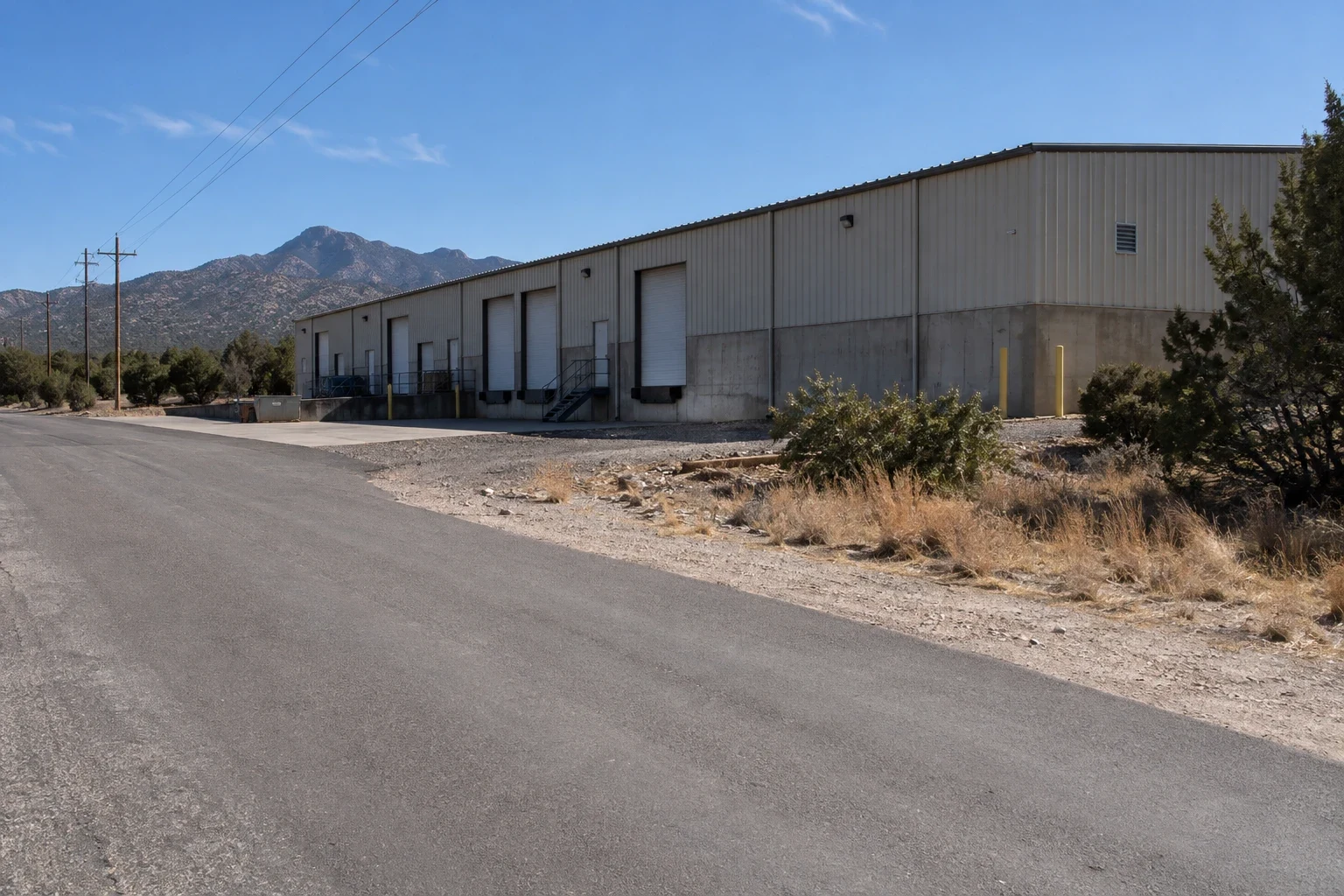
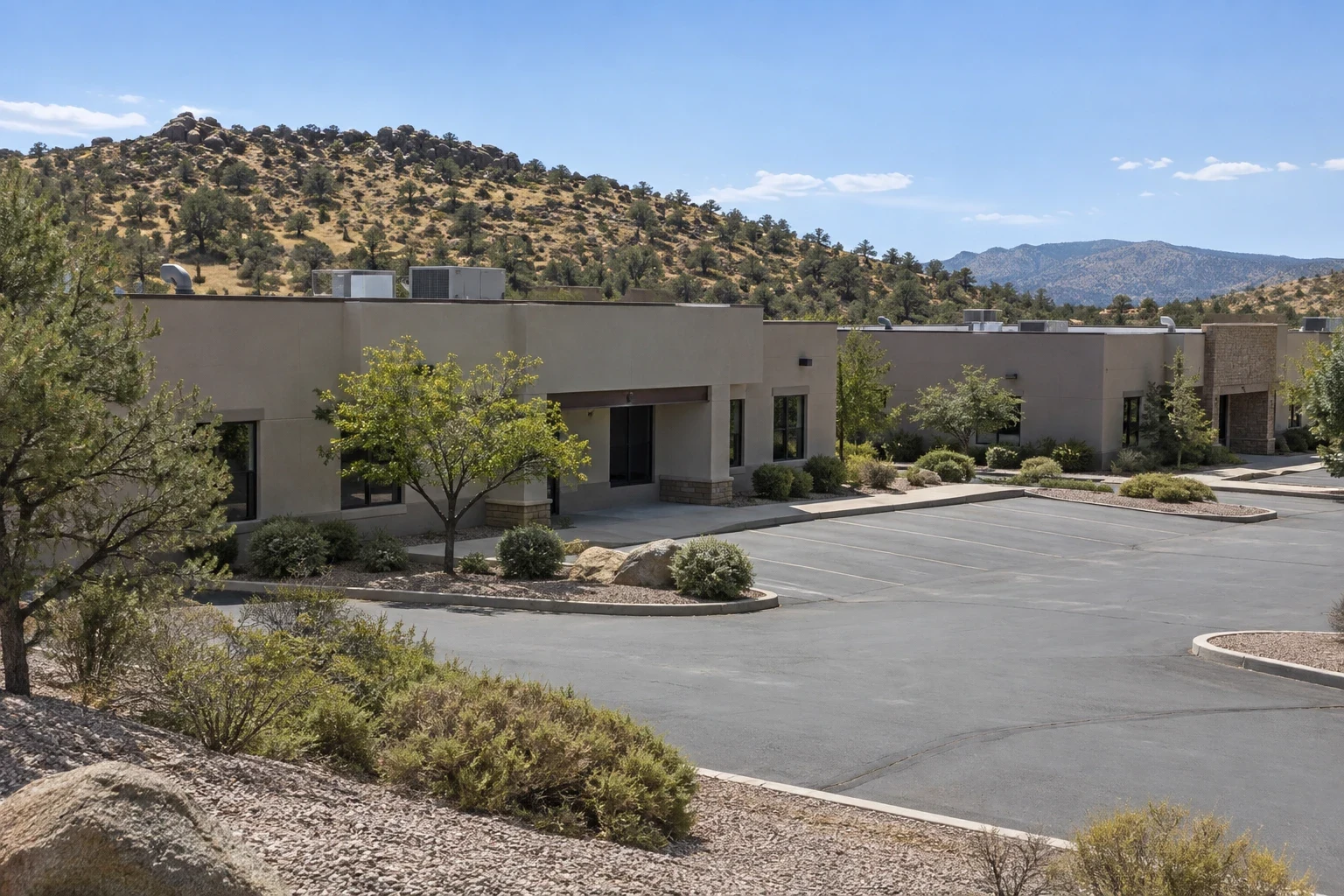
On the east side, the Fain Road corridor is where manufacturers and distributors cluster, among them MI Windows and Doors (440 employees) and the Ace Hardware Retail Support Distribution Center (418). Fain Road itself is a four-lane limited-access freeway tying SR 89A to SR 69. Big Sky Business Park and a distribution center on the same side of town get the same first question from us: how many drains does the roof have, and where do they sit?
Roof work on new Big Sky buildings tends toward metal or single-ply over steel and tilt-up frames, and that changes the repair. A TPO roof needs different tools than a standing seam metal panel. A manufacturing plant may add exhaust curbs and other penetrations to the same list.
What the core cut shows
A core cut is a small round sample through the roof. It shows the layers: membrane, insulation, adhesive and deck. We look at each layer for water, rust and crushed foam.
Dry insulation means the roof can be repaired or restored. Wet insulation means it must be removed. We cut cores at the low spots and under old patches. Each cut is sealed and photographed, and the findings sheet marks every core location on the plan, so a second roofer can find the same spots.
One core tells us about one spot. Several tell us about the roof. We take enough to be sure.
What to repair now and what can wait
Repair now: open seams, failed flashings, clogged drains and torn membrane. Water finds these first. Each one is a small job today and a big job after a freeze.
What can wait: surface staining, minor ponding that dries within two days, and dirt on the membrane. We list them so you can plan. For roofs with wet insulation, an infrared moisture survey shows the wet areas without cutting. Then you choose between a recover and a replacement.
Write the choice down with a date. Next year, the record shows how fast the roof is changing. A roof that held steady through a winter is a candidate for a coating. A roof that lost ground needs a replacement plan. The sheet makes that call easier.
How racking and stock change the plan
A leak does not stay where it enters. Water runs along the deck and drips over racking. The stock sits on that racking. So we ask where the aisles run. We mark the roof so that the leaks over the most valuable stock are fixed first.
We also ask about clearance. Racking that reaches near the deck leaves no room to catch a drip. A small leak there becomes a claim fast. We rank those roof zones first and write the reason beside each one.
Work happens on the roof, not in the aisle. Our crews stage material away from dock doors. We keep the loading lanes open. On a multi-tenant building, every tenant receives the schedule, the same way an occupied building reroofing plan works.
Commercial Roofing Questions
How do I know whether to repair or replace a warehouse roof?
Start with a core cut and a moisture scan. If the insulation is dry and the defects are isolated, repair is the better value and the findings sheet lists each fix. If cores show wet insulation across a wide area, patches only delay replacement. We show both numbers side by side, with photographs, so you can decide with facts.
Should I schedule roof work in winter?
Large work belongs in the warm months, late spring through early fall. Adhesives and welds need dry surfaces and mild temperatures. Emergency repairs happen any day of the year, with temporary tie-ins that hold until spring. We recommend booking replacement bids in late winter so the crew can start when the freeze line passes.
What should I send you before the walk?
Send the roof plan, any leak log and the last inspection or repair invoice, even if the paperwork is incomplete. Also send the lease terms that say who owns roof repair. We use these to focus the walk on the areas that matter. A short call about the racking layout helps us rank leaks by stock value.
Does hail count as storm damage for insurance?
It can, if the damage is documented and recent. We photograph bruises and punctures with a date and a scale, then write a plain description of each. The insurer decides coverage, and a dated record helps. Call us soon after a storm, since weathering makes damage harder to date.
Can a warehouse stay in use during a reroof?
Yes. Sections open in sequence, each sealed with membrane before the crew leaves for the day, and dock lanes stay clear. Tell us which doors and lanes must stay open, and which hours are busiest for trucks. For tenants with sensitive stock, we add protection below the work zone and agree on quiet hours. Forklift routes and racking aisles get marked on the plan before the first section opens, so a drip never lands in a lane or on a pallet.
Request a walk-through
Ask for a walk-through of your warehouse roof. We will send a written findings sheet with photos before we price any repair. Then you decide what to fix now and what can wait.
Request a Roof Assessment
Commercial Roofing Questions
Start with a core cut and a moisture scan. If the insulation is dry and the defects are isolated, repair is the better value and the findings sheet lists each fix. If cores show wet insulation across a wide area, patches only delay replacement. We show both numbers side by side, with photographs, so you can decide with facts.
Large work belongs in the warm months, late spring through early fall. Adhesives and welds need dry surfaces and mild temperatures. Emergency repairs happen any day of the year, with temporary tie-ins that hold until spring. We recommend booking replacement bids in late winter so the crew can start when the freeze line passes.
Send the roof plan, any leak log and the last inspection or repair invoice, even if the paperwork is incomplete. Also send the lease terms that say who owns roof repair. We use these to focus the walk on the areas that matter. A short call about the racking layout helps us rank leaks by stock value.
It can, if the damage is documented and recent. We photograph bruises and punctures with a date and a scale, then write a plain description of each. The insurer decides coverage, and a dated record helps. Call us soon after a storm, since weathering makes damage harder to date.
Yes. Sections open in sequence, each sealed with membrane before the crew leaves for the day, and dock lanes stay clear. Tell us which doors and lanes must stay open, and which hours are busiest for trucks. For tenants with sensitive stock, we add protection below the work zone and agree on quiet hours. Forklift routes and racking aisles get marked on the plan before the first section opens, so a drip never lands in a lane or on a pallet.