Commercial Roofing in the Entertainment District, Prescott Valley, AZ
Roof inspection, leak tracing and repair for assembly, theater, restaurant, retail and apartment roofs in the Entertainment District of Prescott Valley, AZ.
Wide roofs hide long drain runs. Stand on a large-span roof in the Entertainment District and count the drains. Then count the feet of roof each one serves. That ratio tells you how a storm will behave. The downtown district in Prescott Valley, AZ brings a 6,000-seat events hall together with restaurants, a multi-screen theater and retail. Large-span assembly roofs sit beside smaller retail roofs, and each class asks for its own checks, its own schedule and its own kind of care from the person who signs the work order.
We inspect, repair and replace commercial roofs there. We walk each roof, probe the seams and flashings and photograph every finding. A written sheet reaches you before any repair has a price. It is built for a reader who has to explain it to a board or a venue operator: a roof plan, numbered findings, a photo for each and a ranking by urgency.
A district with mixed roofs
Visitors number an estimated 75,000 a year at the Prescott Valley Event Center, many arriving from elsewhere, and a leak over the hall costs event dates. The district also holds restaurants and a theater, and Homestead Talking Glass, a 214-unit complex built downtown, puts multifamily roofs beside the commercial core.
An events hall, a restaurant, a theater and an apartment building each get their own walk. The sheet records the roof type, the slope, the drains and the penetrations for each, along with the age of the sheet when it can be read from stencils or paperwork. Then the owner can compare the cost drivers side by side. Roof area, the number of penetrations, the age of the sheet, the state of the insulation and the access for lifts all move the price. Each is written into the scope as its own line, so the owner sees why a theater costs more per square foot than a small retail unit, or less.
What a large span asks
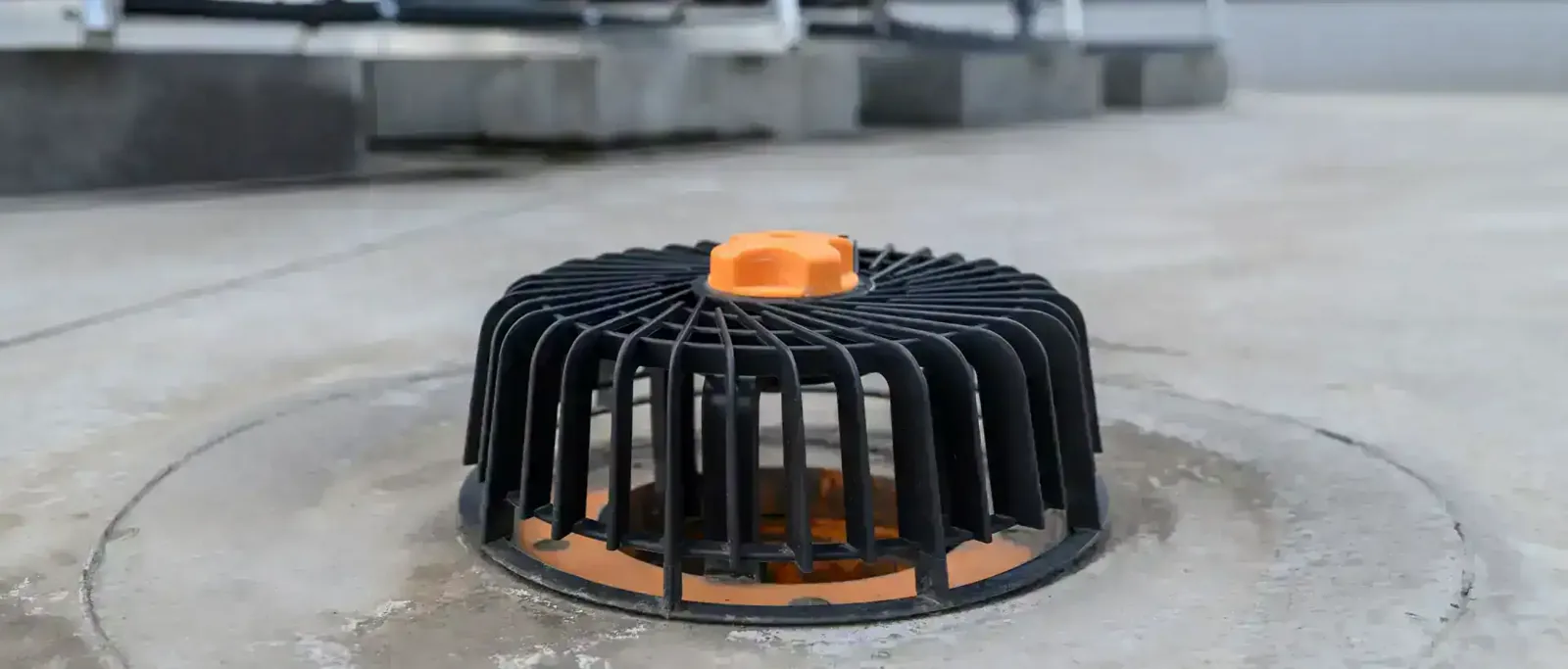
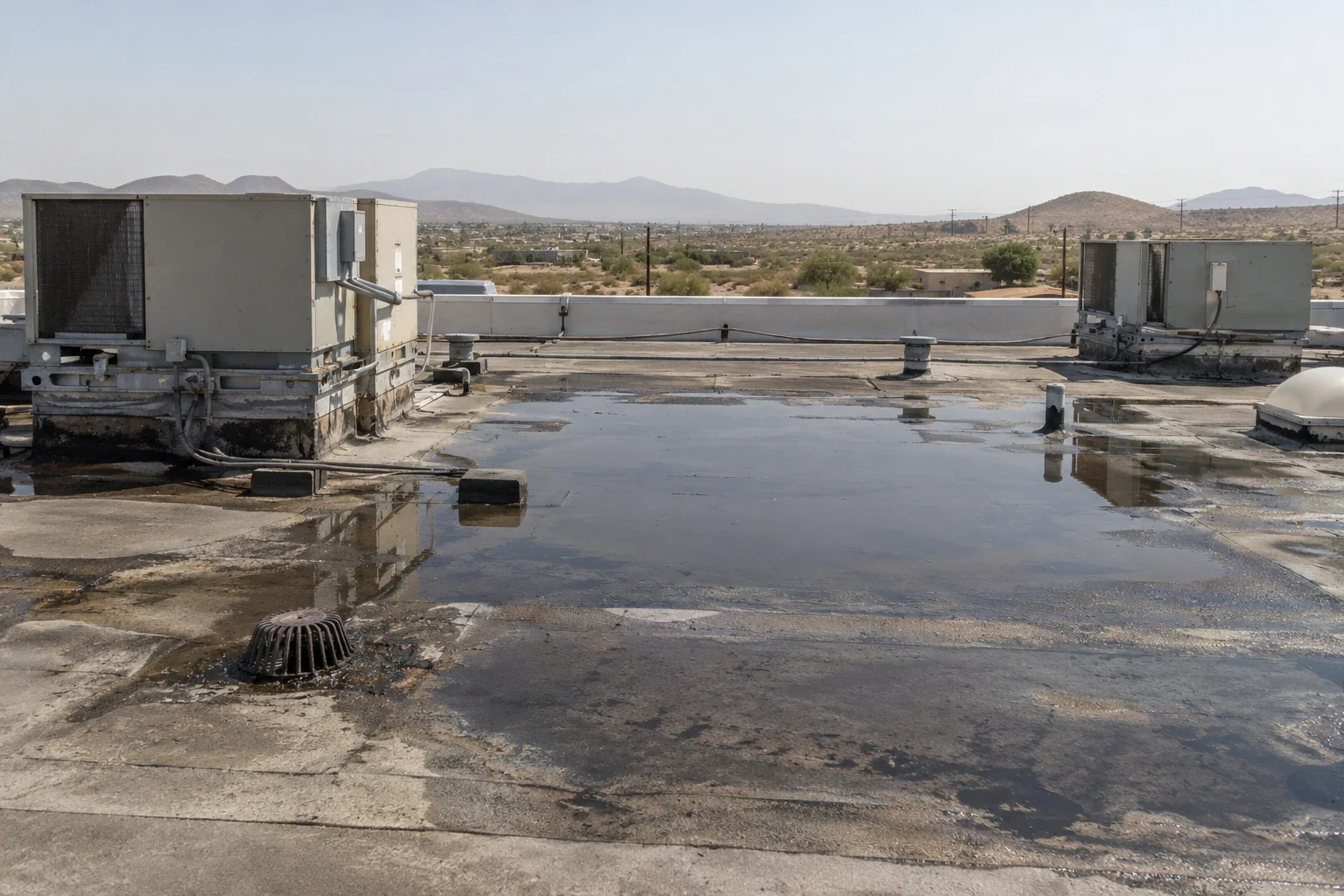
A long, low-slope span collects water far from the edge, which is why a drain and scupper check opens every walk there. Drains and scuppers carry it off. If one clogs, the water spreads across a wide area. The roof then holds weight where the deck is least able to carry it.
We trace each drain from the high point down. We note the screen, the bowl and the pipe below. We check that the slope leads to the drain and not away from it. Ponding lines show where the deck has sagged. A ponding water repair may mean a new drain, tapered insulation or a clean-out. The core cut tells us which. We cut where ponding lines, blisters or soft spots point. We patch each cut the same day and log it. One core describes one spot. A pattern of cores describes the roof, and the pattern lets us draw a boundary around any wet insulation.
Work around crowds and events
Roof work near a public venue needs a plan. Lifts need clear ground. Trucks need a route that does not cross an entrance on event day. Noise and dust have limits.
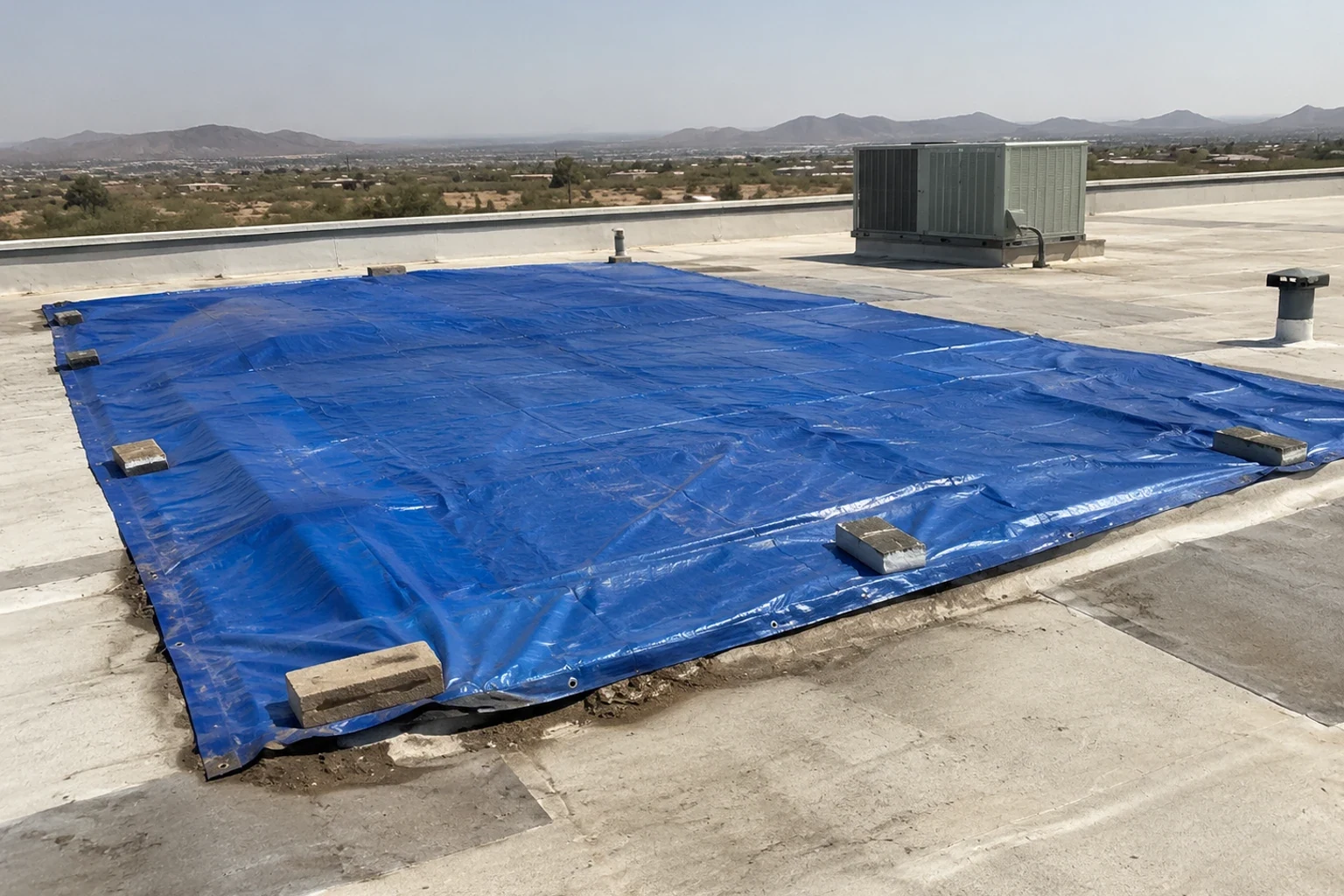
Before a start date, we agree on work windows with the facility director. We ask for the event calendar. We stage materials away from loading areas. We divide the roof into sections and dry in each one before the crew leaves. Where a leak must be stopped fast, a temporary repair holds the water out while the permanent scope is written. Permanent work then goes into the quiet weeks. Public venues also raise a safety question: where the public walks below the roof edge. We ask for barricades, spotters and clear drop zones, and we put them in the scope with a cost. Wind matters here too. A gust front can lift loose material, so we secure everything on the roof at the end of every day.
Kitchens, theaters and exhaust
Restaurants vent through roof fans. Grease settles around them. A theater has tall volumes, large units and many penetrations. Each one is a place where water can enter.
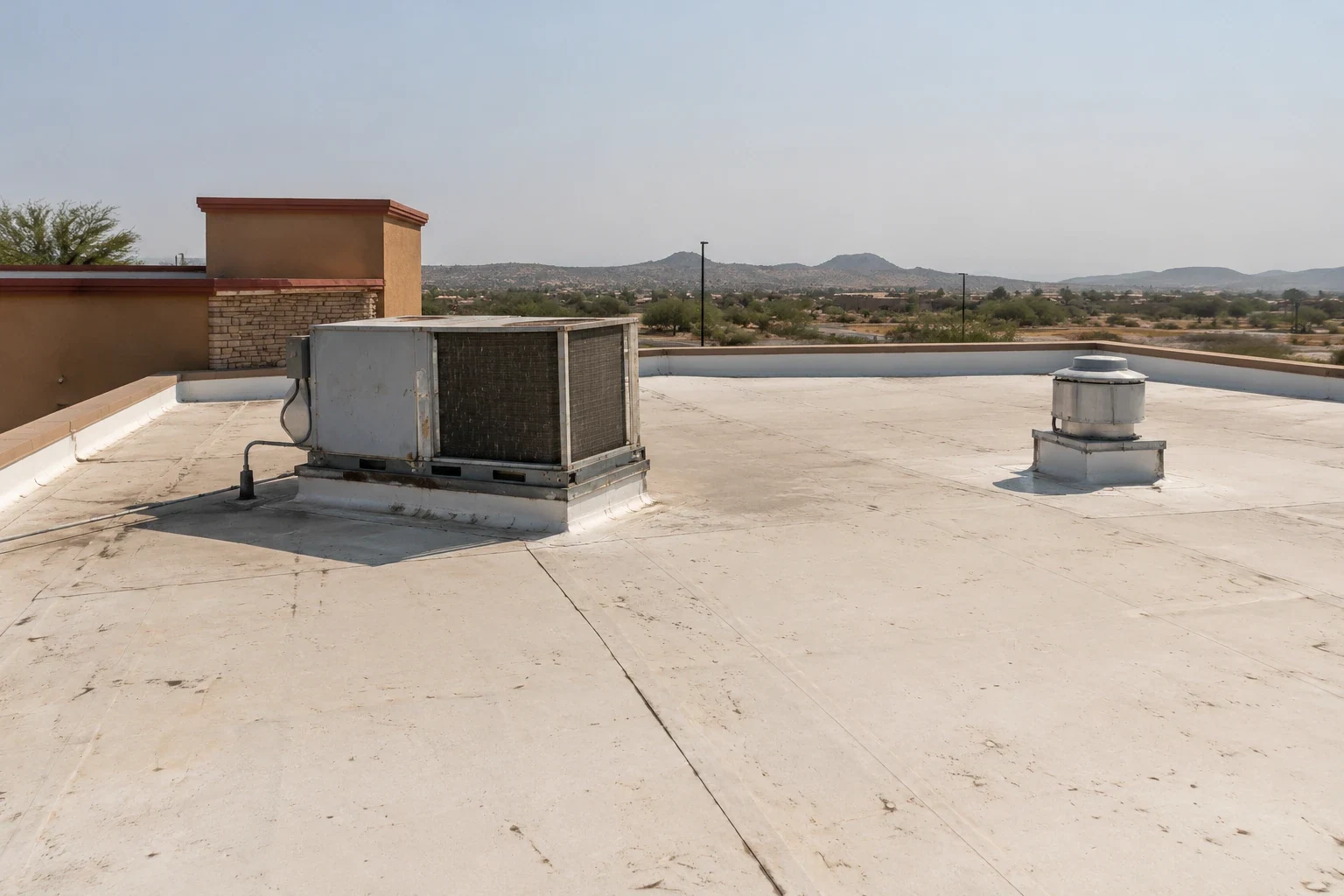
We check the curbs first. We probe the flashing and look at the sealant. We look at the sheet near every fan for swelling or soft spots. Then we look at the drain screens, which grease and debris pack quickly. The findings sheet marks each item with a number, a photo and a short note on why it matters. A restaurant roof in this district may need a cleaning interval for the roof itself, and the sheet says so. Theaters add another detail. Tall volumes and long runs of wall mean long runs of flashing, and each foot is a place where sealant can fail. We probe the full length and photograph any lifted section.
What monsoon and freeze do
July and August are the wet months for a town of about 15 inches of annual precipitation at 5,100 feet. The July 20, 2026 storm was the local proof: heavy rain, strong wind, pea-sized hail and a run of downed signals and trees.
Winter follows. Mornings near Prescott freeze from late October through the first of May, and the daily swing averages nearly 30 degrees. A wide roof expands and contracts a lot over a day. Seams and flashings feel it first. We probe them before the freeze and again after the monsoon. A small gap closed in fall prevents a leak over a full house in winter. Hail needs one line. Pea-sized stones rarely harm a sound sheet. Marks still get a look after a storm, with a core cut wherever one looks deep, because weather news says little about one roof's condition.
What to repair now, and what can wait
The sheet ranks every finding. Repair now covers open seams, failed flashings and blocked drains. Repair this season covers aging sealant and worn walk routes. Watch covers items that are stable. A roof that needs full replacement gets a scope, a phasing plan and a cost range. The same ranking runs on a retail roof along Glassford Hill Road or a business-park roof in Big Sky Business Park. The method does not change. The cost drivers do. An owner with buildings in both places gets one list, and the roof of least remaining service sits at the top.
Commercial Roofing Questions
How fast can a leak over an assembly hall be stopped?
Quickly, with temporary measures: the crew locates the opening, seals it and protects the interior. The permanent repair waits for a clear cause and an open stretch on the event calendar.
How do you schedule roof work near a venue?
We agree on windows with the facility director, stage materials away from entrances and work in sections. Each section is dried in before the crew leaves.
What makes a large flat roof leak?
Most often a blocked drain, an open seam or a failed flashing. Ponding lines point to where water sat. A core cut shows whether it reached the insulation.
Do apartment roofs need a different approach?
They need tenant notice and quiet hours. The walk is the same: seams, flashings, drains and penetrations. The schedule changes.
What does a facility director need to have ready?
The building address, the event calendar, past reports and warranty papers are enough to begin. A findings sheet with photographs comes back before any repair is priced. A list of the nearest loading areas also lets the crew plan staging away from them.
Request a walk-through
Ask for a roof walk and send the event calendar. We will deliver a written findings sheet with photos before any repair is priced.
Request a Roof Assessment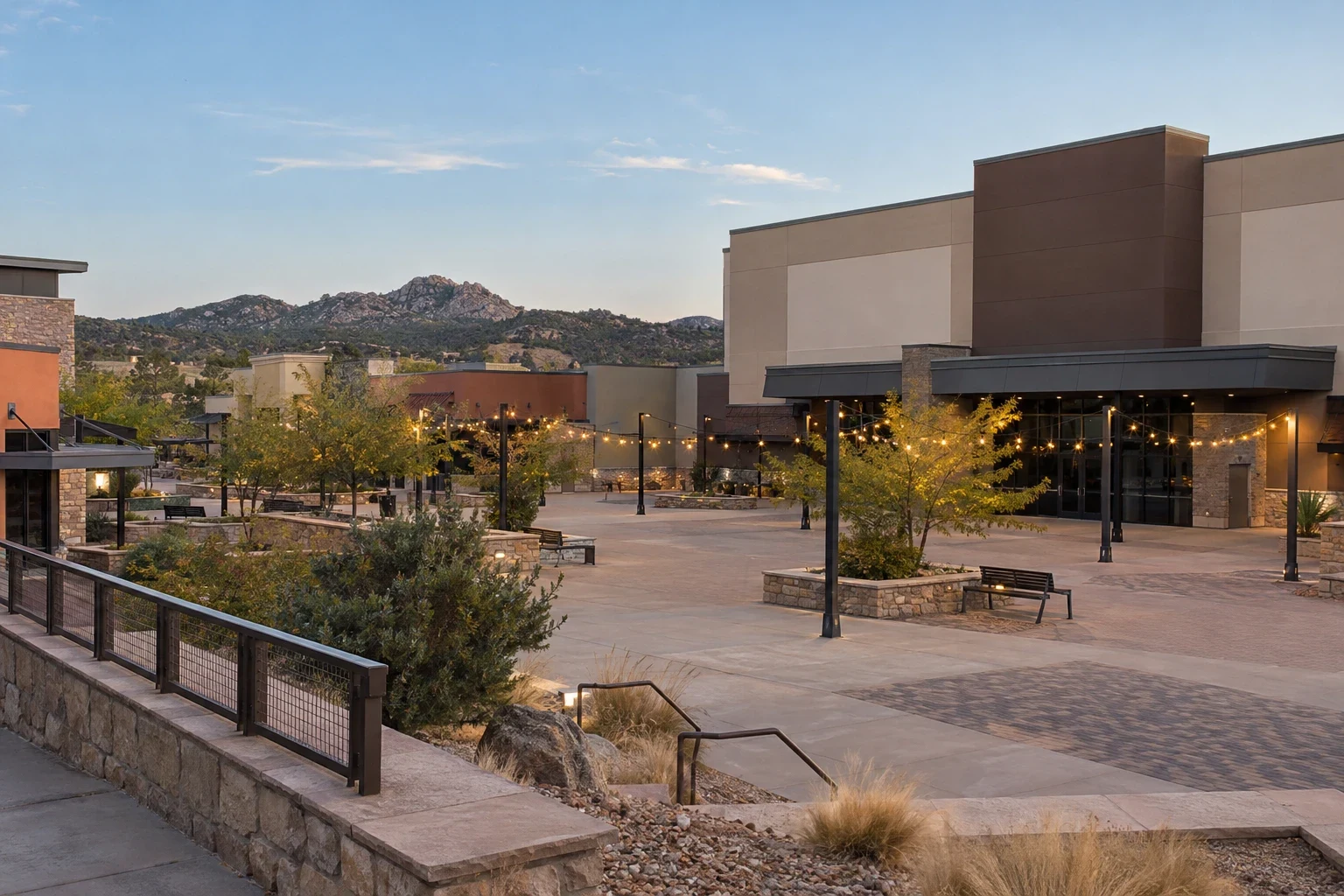
Commercial Roofing Questions
Quickly, with temporary measures: the crew locates the opening, seals it and protects the interior. The permanent repair waits for a clear cause and an open stretch on the event calendar.
We agree on windows with the facility director, stage materials away from entrances and work in sections. Each section is dried in before the crew leaves.
Most often a blocked drain, an open seam or a failed flashing. Ponding lines point to where water sat. A core cut shows whether it reached the insulation.
They need tenant notice and quiet hours. The walk is the same: seams, flashings, drains and penetrations. The schedule changes.
The building address, the event calendar, past reports and warranty papers are enough to begin. A findings sheet with photographs comes back before any repair is priced. A list of the nearest loading areas also lets the crew plan staging away from them.