Restaurant Roofing in Prescott Valley, AZ
Roof inspection, repair and replacement for restaurants in Prescott Valley, AZ, with grease-resistant details and written photo findings first.
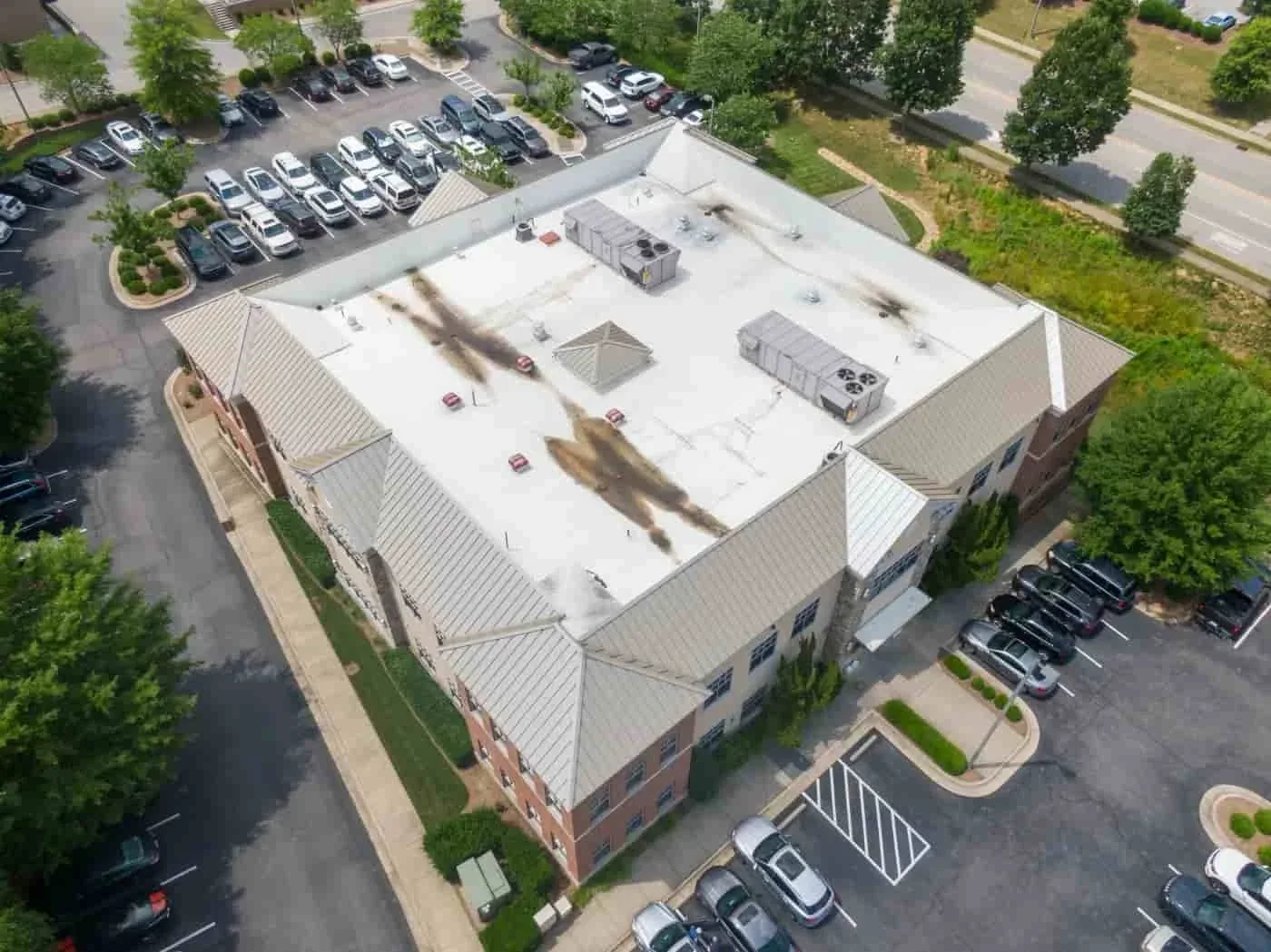
Look at the membrane around the exhaust fan. On a restaurant roof that patch fails first: stained, soft and often cracked where grease has settled. Cooking vapor leaves the hood, rides up the duct and lands on the roof. In Prescott Valley, AZ, we press the surface near each fan and photograph what we find, and the written sheet arrives before any repair is priced.
The rest of the roof may be sound. The fan area is where the trouble tends to start.
Why grease ruins a membrane
Fat and oil soften many roofing membranes. They also hold dust against the surface, and the dust bakes in the sun. Over a few seasons the membrane swells, cracks or pulls away from the curb.
Sealant fails too. A bead around a fan base turns soft and loses its bond, and water gets under it and runs along the deck.
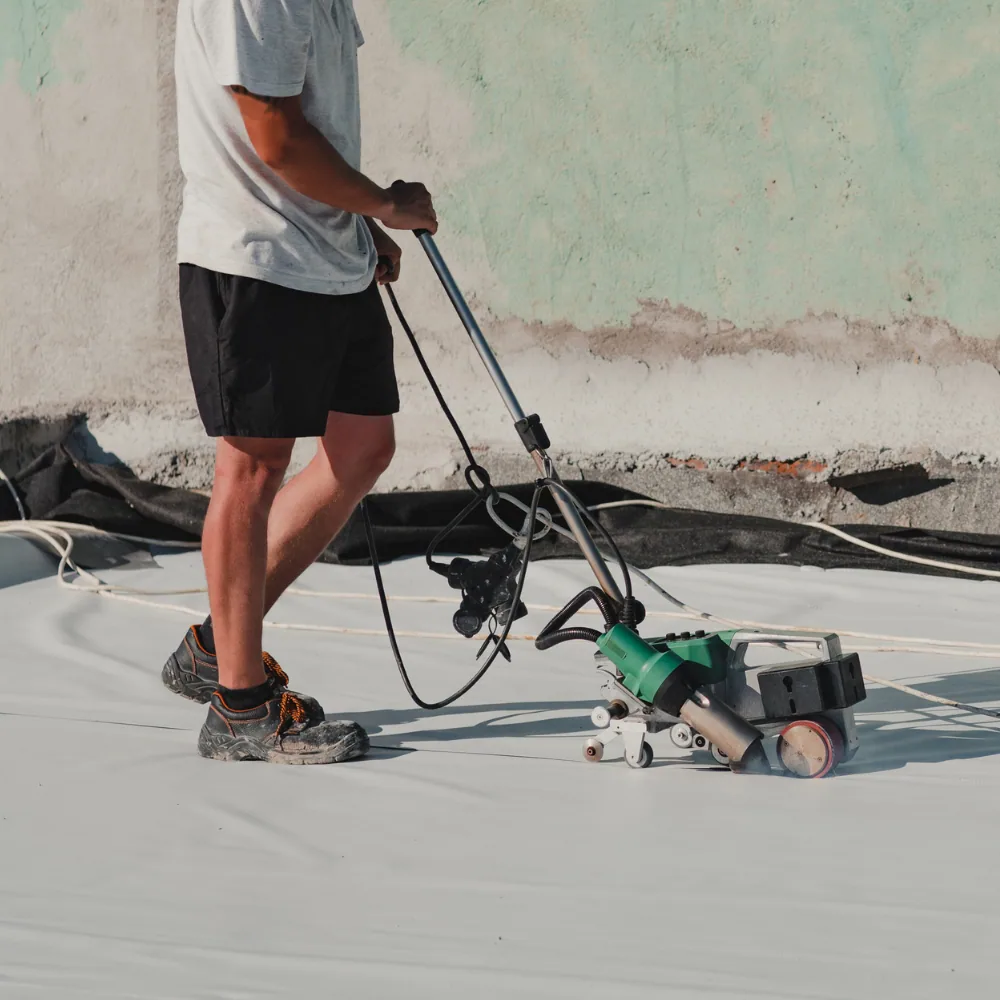
The fix is a chemistry fix. A grease-resistant material around the fan, a drip tray under the discharge and a walkway pad to the vent treat the cause. A PVC roof detail near the fan is a common choice.
Cleaning helps. A fan base degreased on a schedule lasts longer, and so does a grease tray that gets emptied. Those habits go into the sheet with a name beside each one.
A simple test shows the damage. Press a thumb into the membrane a few feet from the fan and again at the fan base. If the sheet near the fan feels soft, tacky or swollen, grease has been working on it for a while, and the sheet should say how far the softness spreads.
Entertainment District and Crossroads kitchens
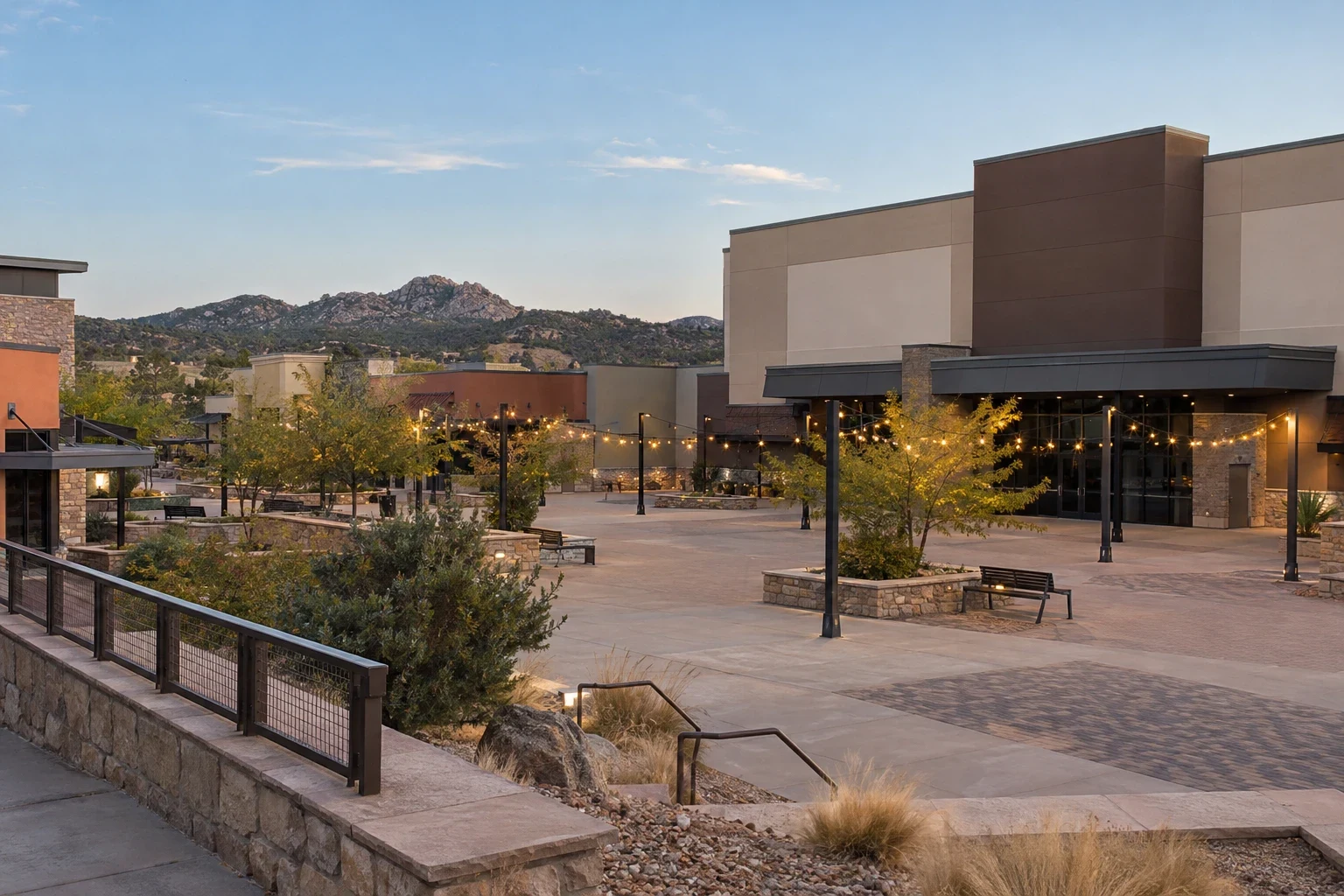
The downtown Entertainment District puts restaurants beside a 6,000-seat events center, a multi-screen theater and retail. A leak over a dining room on an event night costs a full house, and the event calendar tells us which weeks are riskiest for roof work.
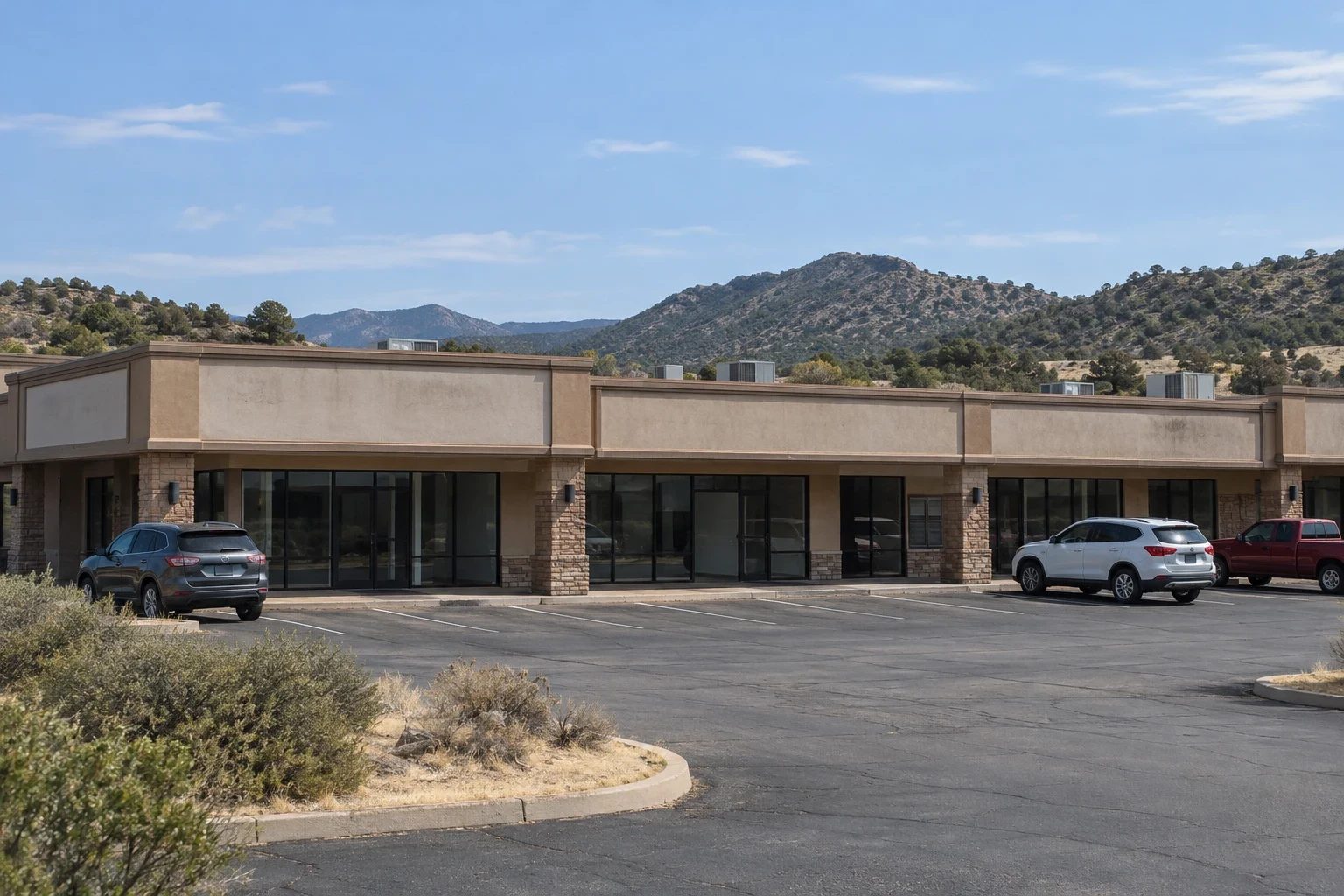
The Crossroads, a retail power center, includes a row of inline shops and recent openings from national restaurant and apparel chains. Inline restaurants share a roof with their neighbors, so a leak can start next door.
Freestanding restaurants take wind on every side. Ridge-top wind off Glassford Hill, which stands 6,177 feet tall, reaches nearby buildings, so coping and edge metal near it need a close look. A restaurant in the Entertainment District also sits near large-span assembly roofs that can shed water onto its flashing.
Hail, freeze and wall flashing
Pea-sized hail, heavy rain and strong wind crossed Prescott Valley on July 20, 2026, and a restaurant roof takes that kind of cell like any other. The hail can bruise a thin membrane and dent a vent cap.
Cold weather arrives near October 21 and stays until May 1, and thirty degrees of daily swing works every curb. Water that enters a seam in October may have it open by December. Autumn is when laps are probed and sealant pressed, and soft sealant goes on the repair list.
Snow in Prescott runs about 10 inches a season, and a blocked drain behind a restaurant holds meltwater against the wall. A flashing failure at the wall is a classic winter leak, so screens are cleared and flow tested before the first freeze.
What owners and landlords should split
Most restaurants lease their space. The lease says who owns the roof. It rarely says who owns the damage from a grease-laden fan.
We mark each curb and each fan on a plan, with the tenant who owns it. Dated photographs show the roof before and after any rooftop work. If a leak starts at the fan, the record shows why. If it starts at an old patch, the record shows that too.
A clear record ends most arguments. It also helps with insurance, because a claim for lost sales or damaged equipment needs proof of cause and date. A shopping center landlord can use the same plan for every tenant.
Working around service
A restaurant keeps serving through a roof job, so we plan around lunch and dinner. The crew works early when it can and keeps the entry and the patio clear.
Air intakes get covered and hot work stays away from vents. Short exhaust shutoffs are agreed with the kitchen manager, and the lot gets swept at the end of every shift. An occupied building reroofing plan carries the method, with more attention to smell, smoke and noise.
Hot work is the real concern. Torches and hot asphalt send fumes into air intakes and dining rooms, so near active kitchens we choose cold-applied or mechanically attached systems. The crew keeps a fire watch and a record of every shutoff.
Patios and drive-through lanes get a protected path. Debris never crosses a customer route. Deliveries get the same respect: the back door stays clear on supplier mornings, and nothing is carried across the kitchen entrance during prep.
What to repair now and what can wait
Repair now: leaks over dining rooms and kitchens, cracked pipe boots, failed fan flashing and blocked drains.
What can wait: light staining and chalking away from the fan. They are logged with photographs and prices. Where wet insulation is suspected, an infrared moisture survey maps it without opening the roof. A hotel with a kitchen wing follows the same list.
Fund the urgent list now and schedule the second one. A preventive maintenance visit each season keeps the fan area clean and the drains clear.
Commercial Roofing Questions
Which membrane is best near a kitchen exhaust?
A grease-resistant membrane such as PVC around the fan, with a standard single-ply for the rest, such as a reflective TPO roof, keeps the cost down. Add a drip tray under the discharge and a walkway pad to the vent. We press the surface near each fan and name the product in the findings sheet. A roof with many fans gets a photograph and a line for each one.
Can a restaurant stay open during a reroof?
Yes. The work moves early and in sections, each closed before the shift ends, so the dining room never sits under an open deck overnight. Air intakes are covered, the patio stays clear and short exhaust shutoffs are agreed. Tell us your peak hours. Deliveries matter too, since a supplier truck at the back door should not meet a ladder or a hose.
How do we stop the same fan from leaking again?
Treat the cause. Replace the soft membrane with a grease-resistant detail, rebuild the curb flashing and add a drip tray, then clean the fan base on a schedule. A patch alone buys a season, and the findings sheet shows the patch price beside the fix price. A repeat patch at the same fan means the cause is still there, and we say so in writing.
What does hail do to a restaurant roof?
Hail on record nearby ranges from pea-sized to half-inch. Both sizes can bruise membrane and dent vent caps and fans. A bruise may leak weeks later, so once a storm passes the field gets pressed and each soft spot photographed with a date.
What if a leak starts during service?
Call at any hour, holidays included. A crew locates the opening, covers it and photographs the damage for you and the insurer. A written summary arrives the same day, and the permanent repair joins the queue. The sheet states how long the temporary fix should hold until weather allows the permanent one.
Request a walk-through
Ask for a walk-through of your restaurant roof. We send a written findings sheet with photos before we price any repair. You decide what to fix now and what can wait.
Request a Roof Assessment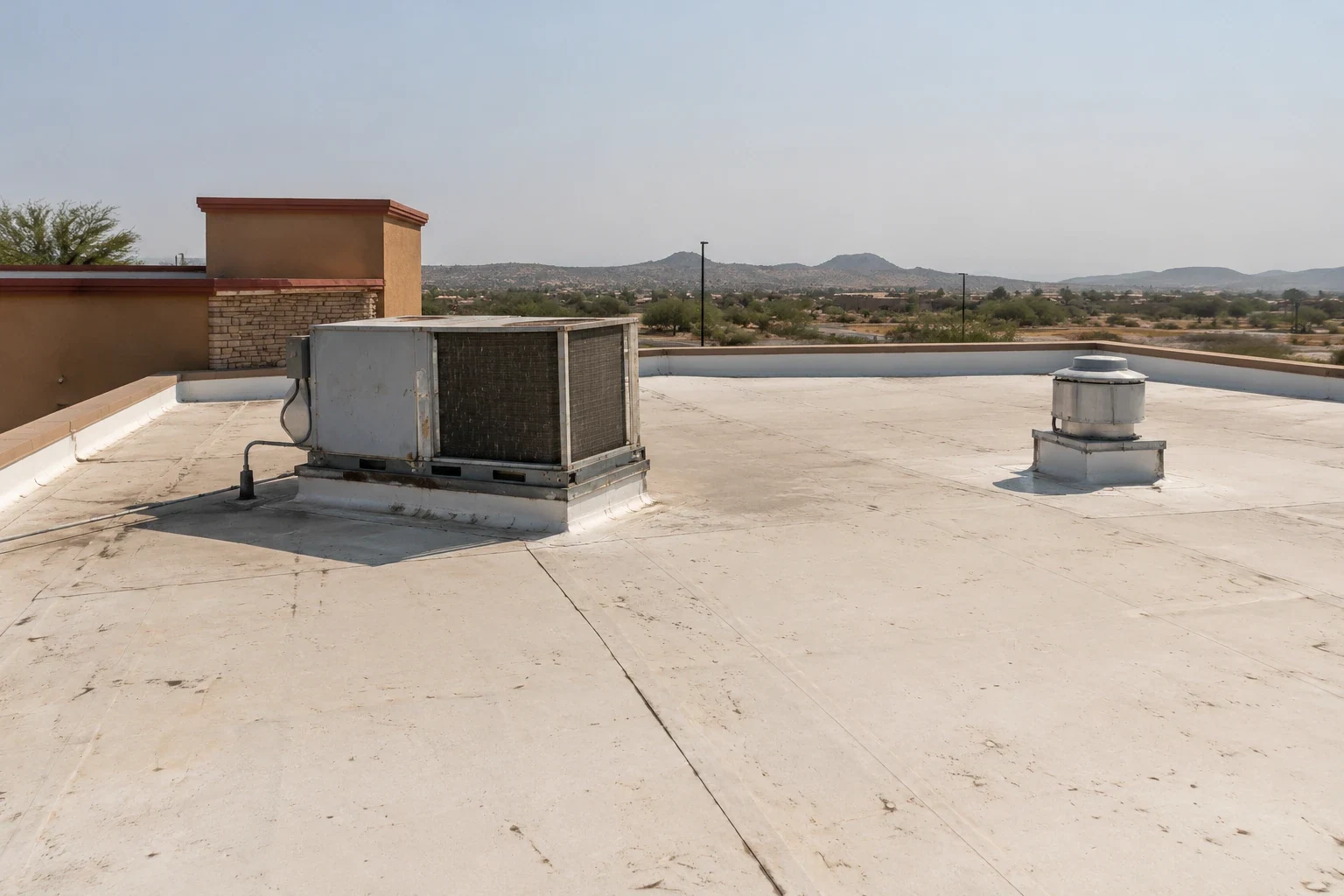
Commercial Roofing Questions
A grease-resistant membrane such as PVC around the fan, with a standard single-ply for the rest, such as a reflective TPO roof, keeps the cost down. Add a drip tray under the discharge and a walkway pad to the vent. We press the surface near each fan and name the product in the findings sheet. A roof with many fans gets a photograph and a line for each one.
Yes. The work moves early and in sections, each closed before the shift ends, so the dining room never sits under an open deck overnight. Air intakes are covered, the patio stays clear and short exhaust shutoffs are agreed. Tell us your peak hours. Deliveries matter too, since a supplier truck at the back door should not meet a ladder or a hose.
Treat the cause. Replace the soft membrane with a grease-resistant detail, rebuild the curb flashing and add a drip tray, then clean the fan base on a schedule. A patch alone buys a season, and the findings sheet shows the patch price beside the fix price. A repeat patch at the same fan means the cause is still there, and we say so in writing.
Hail on record nearby ranges from pea-sized to half-inch. Both sizes can bruise membrane and dent vent caps and fans. A bruise may leak weeks later, so once a storm passes the field gets pressed and each soft spot photographed with a date.
Call at any hour, holidays included. A crew locates the opening, covers it and photographs the damage for you and the insurer. A written summary arrives the same day, and the permanent repair joins the queue. The sheet states how long the temporary fix should hold until weather allows the permanent one.