Flashing Failure Repair in Prescott Valley, AZ
Flashing failure repair in Prescott Valley, AZ: curbs, walls, pipe boots and counterflashing, checked after freeze and monsoon with a photo findings sheet.
Press a thumb on the sealant at the base of a rooftop unit. If it cracks like old paint, the flashing has failed. Sealant is the cheapest part of a flashing. It is also the first to give out. The membrane may be fine and the leak still real. Prescott Valley, AZ roofs swing nearly 30 degrees in a day. Every swing tugs at the joint where roof meets wall or curb. Over a few seasons, that tug opens a gap the width of a pencil line.
What flashing does
Flashing seals the places where the roof stops being flat. Walls. Curbs. Pipes. Drains. Skylights. Expansion joints. Each one is a seam between two surfaces that move at different rates.
Base flashing runs up the vertical surface. Counterflashing laps over its top edge. Together they shed water down and out. When either one loosens, water runs behind it. The roof does not show the problem from above. The ceiling shows it later.
Several materials do this job. Metal flashing is stiff and lasts. Membrane flashing is flexible and welds to the roof sheet. Liquid-applied resin fills odd shapes. Mastic and sealant are the weakest link. A good detail uses the right one for each place and does not rely on sealant alone.
What freeze and monsoon do
Freezing mornings run from about October 21 through May 1 near Prescott. Metal flashing shrinks in the cold and grows in the afternoon sun. The membrane behind it moves differently. The joint between them flexes every day.
Then the monsoon arrives. Rain, wind and hail strike roofs that have been dry for weeks. A pea-sized hailstone can chip brittle sealant. Wind-driven rain finds the gap and pushes in sideways. Heavy rain, strong wind and pea-sized hail all arrived together on July 20, 2026. A flashing with a hairline crack has no defense against a storm like that. Thermal swing plus monsoon is a hard combination for any flashing.
Sun matters too. Prescott Valley sits near 5,100 feet, where ultraviolet light is strong. Sealants dry out and chalk. Rubber pipe boots crack at the base, and a cracked boot gives water a direct path that leak repair has to trace. The cracks start small. A freeze fills them with ice and widens them. That is a slow failure, and it is why a yearly check is cheap.
Walk every edge and opening
We walk the roof along every wall and around every opening. We press the sealant. We pull on counterflashing. We look for rust, loose fasteners, open laps and gaps at corners. We look at the membrane turned up the wall. A flashing that has slid down leaves a bare strip.
We probe the seams in the flashing sheet with a rounded tool. We note any fishmouth, a small pocket where the edge has lifted. We photograph each finding and mark it on the roof plan. Curbs get a count. Pipe boots get a count. A roof with forty small penetrations has forty chances to fail, and the register shows which ones are worn.
We also look inside. A stain on the ceiling near a wall or a unit points to the flashing above. We take a photo and match it to the roof plan. The inside view and the outside view together tell the story. Rust on a steel deck seen from below says water has been entering for a while.
Repair, rebuild or reseal
There are three levels of repair. Reseal. Rebuild. Replace.
Resealing fits a flashing that is sound but dried. We clean the surface, apply compatible sealant and reinforce it with fabric where needed. This is a short job and a short fix. Rebuilding fits a flashing that has cracked, shrunk or slipped. We cut back to sound membrane, install new flashing and terminate it with a bar or counterflashing. Replacing fits a curb or wall that has moved. It means new base flashing and often new metal above it. We state the level in the findings sheet and price it by the item. A dab of sealant over a rebuilt need is a repair that fails by spring.
Corners need care. A square corner on a curb is hard to flash flat. We build a pre-formed corner or a welded patch. A folded corner with sealant on top leaks within a few seasons. The findings sheet notes how each corner was done. On a roof with a TPO membrane, welded flashing is the norm. On older built-up roofs, the flashing may be mopped, and we match the method.
Where flashings are thick on the ground
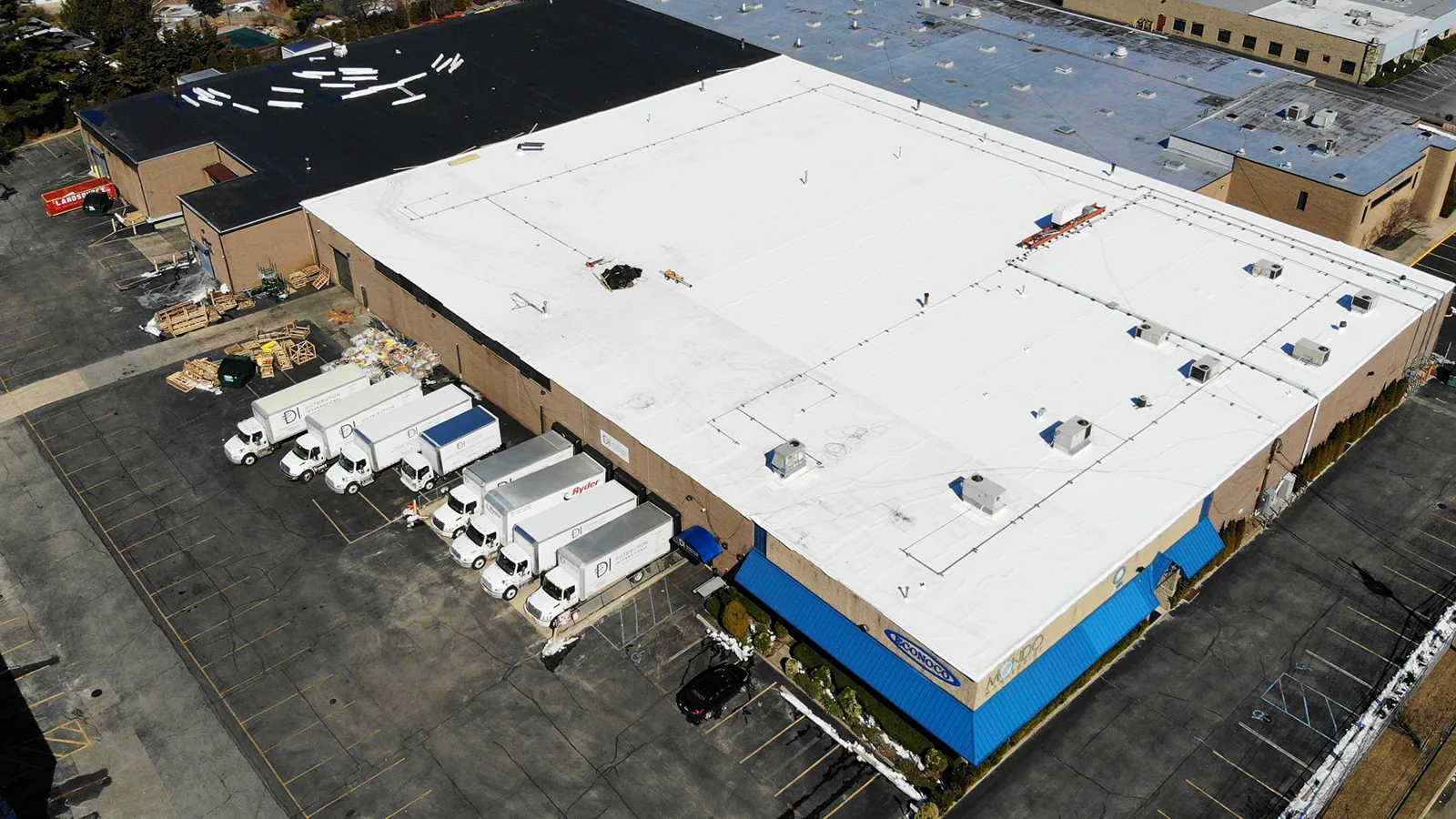
Retail roofs along State Route 69 and Glassford Hill carry many rooftop units. Each unit has a curb. Each curb has four corners. The count adds up fast. Restaurants add exhaust fans. Medical campuses, such as the area around Yavapai Regional Medical Center East Campus, run air handlers and vents, and each one adds flashing to the list.
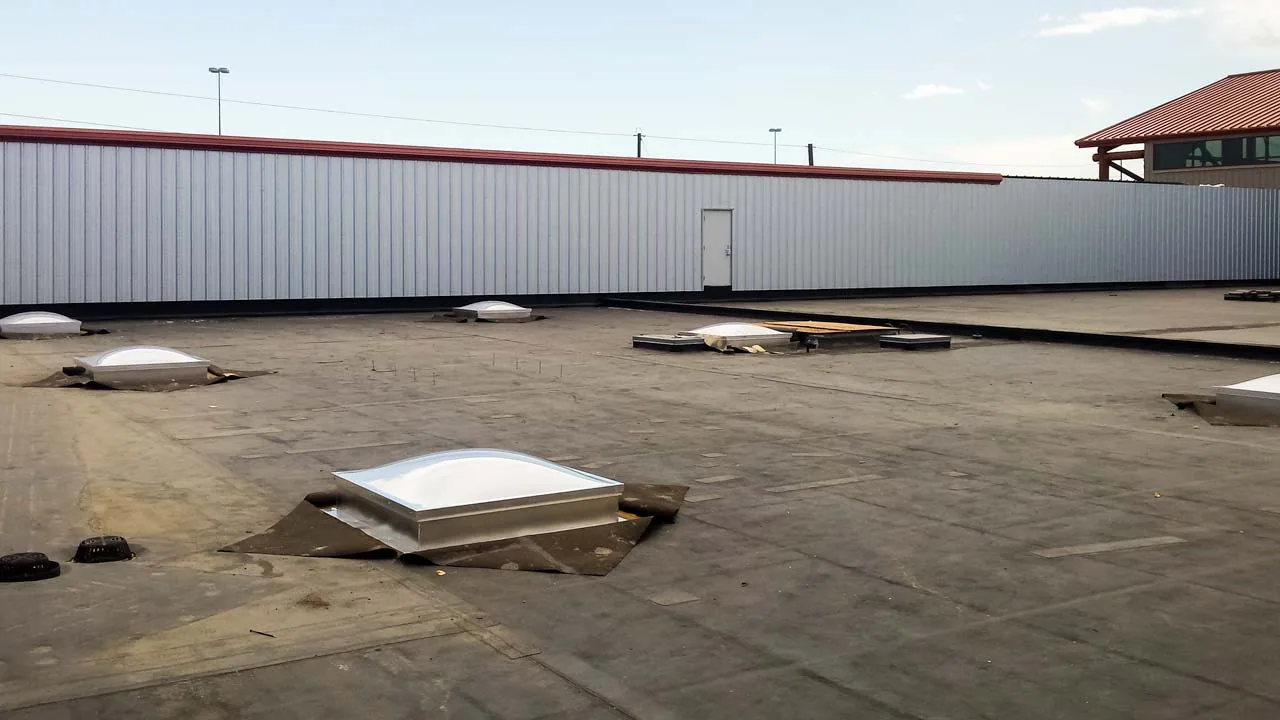
A school roof in the Humboldt Unified School District carries parapets, skylights and mechanical rooms, and each is a flashing detail. Our skylight and penetration flashing work builds a register that shows which details are worn. That register lets a facility director fix the worst ones first.
What can wait
A flashing that is dry, tight and flexible can wait. Faded paint on metal can wait. A sealed pipe boot with a small surface crack can wait one season if it is on the list.
A flashing that is open, loose or leaking cannot wait. Neither can one near a ponding line, where water sits against the joint. We also check nearby seams before we close the work. A good flashing on a bad seam still leaks.
What to ask for in writing
Ask for four things. A count of every flashing on the roof. A photo of each failed one with its location. A repair level for each: reseal, rebuild or replace. A price for each level.
Ask what material goes on each detail and whether it matches the roof system. Ask whether the repair keeps the warranty intact. Ask for a recheck date after the first monsoon cell and again after the first freeze. A written sheet with these items lets you compare bids on equal terms.
You decide what to repair now. You decide what waits. We only price the repairs once the sheet is in your hands.
Commercial Roofing Questions
How long does flashing last on a commercial roof in Prescott Valley?
It varies with the material, the exposure and the maintenance. Sealant and mastic tend to give out first, often well before the membrane. Metal and welded membrane flashing last longer. A yearly check of every detail catches the weak ones before they leak.
Can flashing be repaired without removing the roof?
Often yes. We cut back to sound material, install new flashing and tie it into the existing membrane. The repair is local. If the membrane behind the flashing is wet or brittle, the repair grows, and the findings sheet shows how far.
Why does the same curb keep leaking?
Usually because the repair treated the sealant and not the cause. Look at corners, fasteners, counterflashing and any movement in the curb. A curb that rocks under the unit needs a structural fix first. We record the cause in the findings sheet.
Does flashing repair affect my warranty?
It can. Many manufacturers require approved details and materials at flashings. Check your warranty file before work starts, and keep a copy of the product data and photos of the finished detail.
What should I look at after a monsoon cell?
Look at ceilings near walls and equipment for new stains. From the ground, look for loose or hanging metal at the roof edge. Photograph what you see with the date, and ask for a walk.
Request a flashing walk-through
Ask for a roof walk and we will check every wall, curb and pipe. You get a written findings sheet with photos before any repair is priced.
Request a Roof Assessment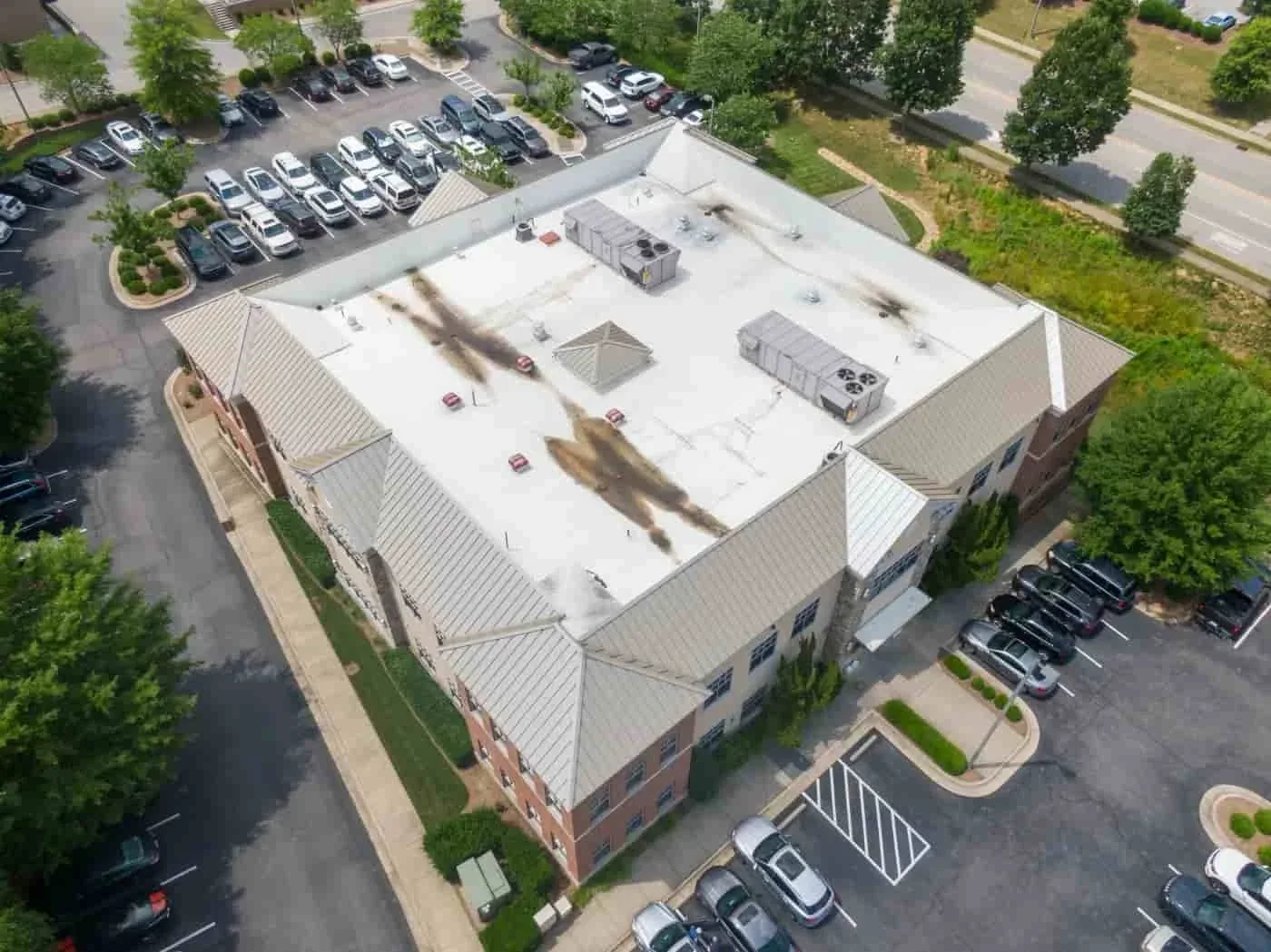
Commercial Roofing Questions
It varies with the material, the exposure and the maintenance. Sealant and mastic tend to give out first, often well before the membrane. Metal and welded membrane flashing last longer. A yearly check of every detail catches the weak ones before they leak.
Often yes. We cut back to sound material, install new flashing and tie it into the existing membrane. The repair is local. If the membrane behind the flashing is wet or brittle, the repair grows, and the findings sheet shows how far.
Usually because the repair treated the sealant and not the cause. Look at corners, fasteners, counterflashing and any movement in the curb. A curb that rocks under the unit needs a structural fix first. We record the cause in the findings sheet.
It can. Many manufacturers require approved details and materials at flashings. Check your warranty file before work starts, and keep a copy of the product data and photos of the finished detail.
Look at ceilings near walls and equipment for new stains. From the ground, look for loose or hanging metal at the roof edge. Photograph what you see with the date, and ask for a walk.