Ponding Water Roof Repair in Prescott Valley, AZ
Ponding water roof repair in Prescott Valley, AZ: drain clearing, slope correction and freeze-season checks, with a written findings sheet before pricing.
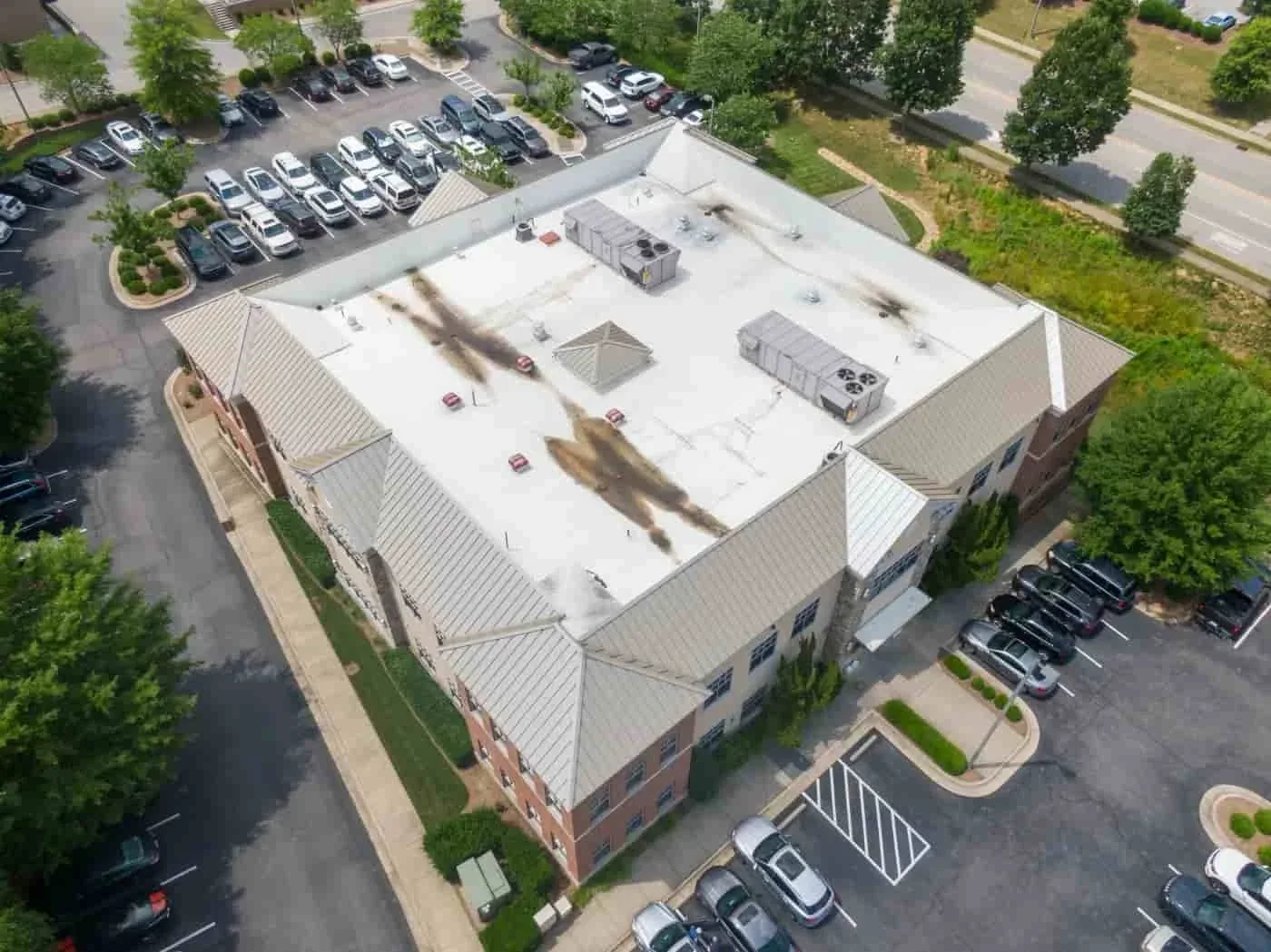
A pale ring on the membrane means water stood there. Inspectors call it a ponding line. It marks the edge of a puddle that stayed long enough to leave dirt behind. The ring tells us the roof does not drain at that spot. It also tells us where to look for a worn seam. In Prescott Valley, AZ the year's 15 inches of precipitation falls mostly from July to September. When that rain has nowhere to go, the roof carries it for days.
Why water stays
Water stays for one of three reasons. The drain is blocked. The deck has sagged. Or the roof was laid too flat from the start.
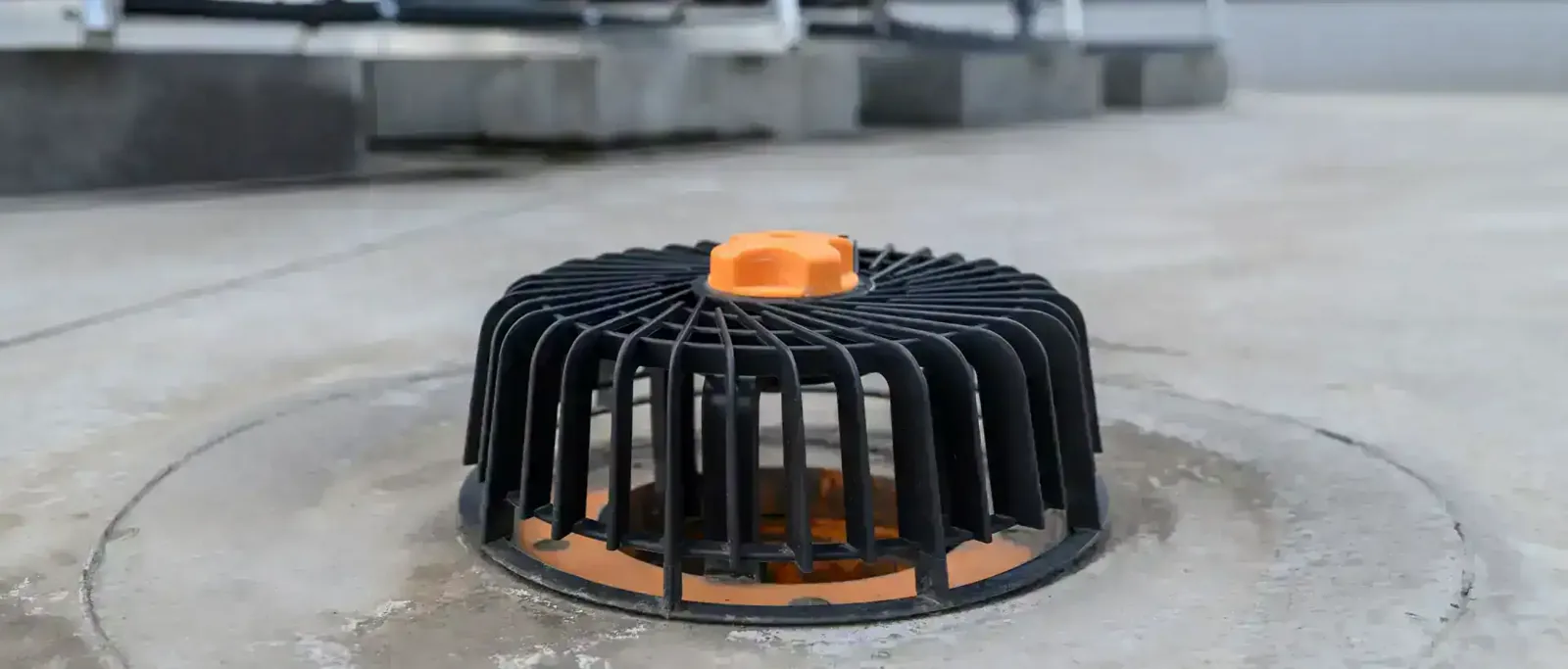
Blocked drains are the common cause after a monsoon cell. Gravel, leaves and pea-sized hail pack the drain screen. The roof cannot shed what falls on it. A blocked drain is the cheapest finding to fix. A sagged deck is harder. The weight of standing water bends the deck a little more each time it rains. The low spot gets deeper. The puddle gets bigger. The third cause, a flat design, shows up as shallow ponding that never quite dries between storms.
Prescott shows how much water can arrive at once. Prescott recorded 14.5 inches in under 48 hours back in 1983 and flooded again in 2004 and 2018. No one designs a roof for a flood like that. But the record explains why drains get tested hard here. A roof with one marginal drain will find out on the wrong day.
Walk the roof after rain
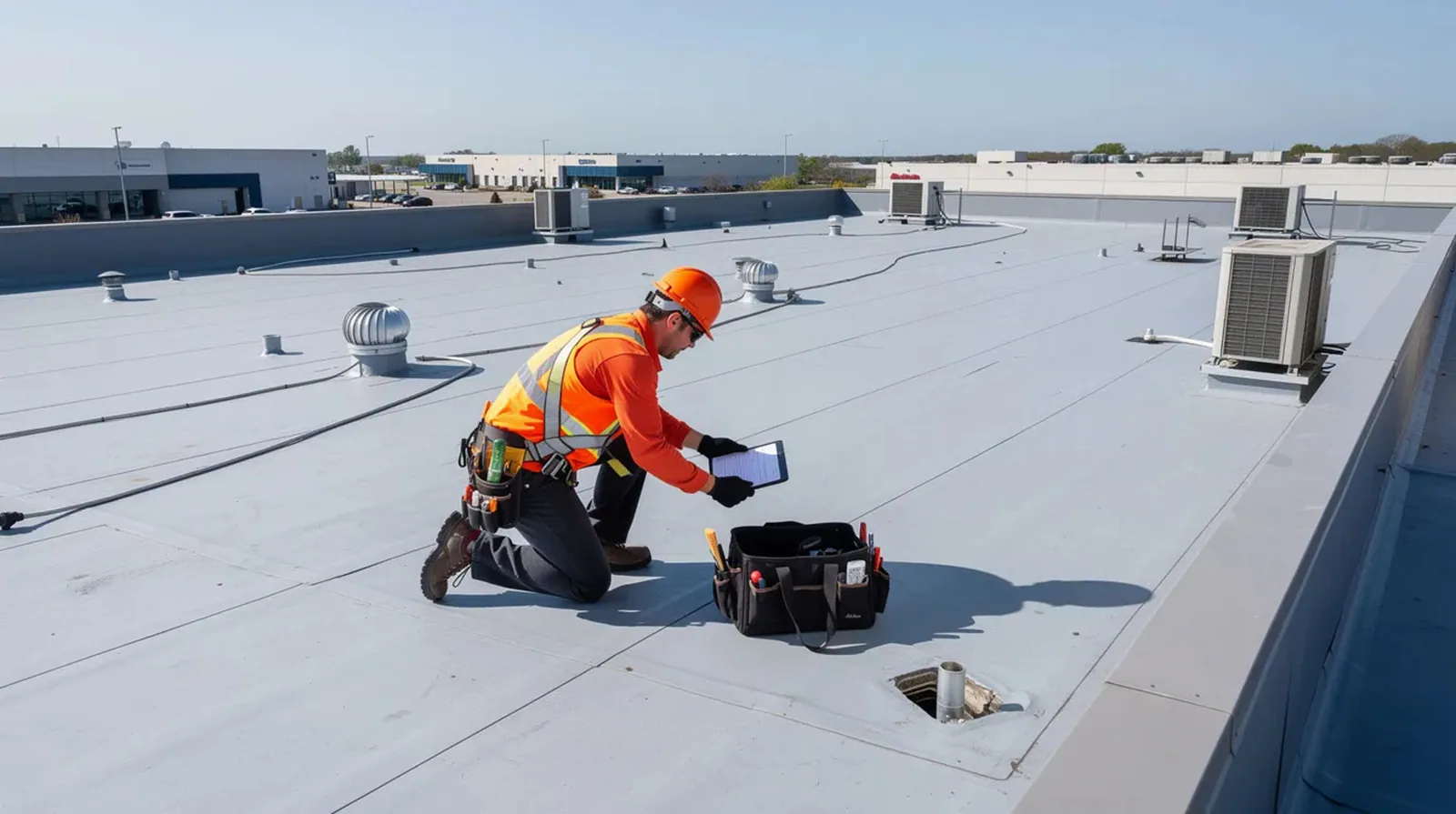
The best time to find ponding is the day after rain. We walk the roof and look for water that is still there. We mark each puddle with chalk and photograph it. We measure its depth and its length. We note which drain is nearest.
If the roof is dry, the ponding line still shows. We look for stained rings, algae, grit collected in low spots and a membrane that looks dull in those places. We take a level and run a line across the roof. The line shows where the deck dips. A commercial roof inspection records all of this in a findings sheet with photos.
Bring a record of the last cleaning if you have one. We compare it to what we find. A drain cleaned in June and packed again in August tells us something about the debris source. Trees, nearby gravel lots and rooftop equipment all feed the screens.
What freeze does to a puddle
Freezing mornings run from about October 21 through May 1 around Prescott. A puddle that sits on the roof overnight can freeze. Ice is rigid. It lifts and presses on seams as it forms. When it melts, the seam moves back.
Daily temperature swings in Prescott average nearly 30 degrees. That swing works at the laps and flashings around the puddle. A seam under standing water gets two kinds of stress at once. It is wet, and it moves. Over a winter it opens a hair more each cycle. This is why ponding that looks harmless in September can become a leak by February. We flag any ponding line near a seam or a flashing for early repair.
Watch the seam first. A failed seam under a pond lets water into the insulation. Watch the flashing second. A flashing failure at a curb that sits in a puddle is a leak waiting for a freeze.
Clear the drain first
Most ponding repairs begin with a drain. We lift the screen. We clear the bowl. We flush the line with water and watch it run. We check the clamping ring for cracks. We look at the scupper opening and check whether it sits too high for the roof's low point.
A clear drain solves some ponds at once. Others remain. Then we know the cause is slope, not blockage. We record the drain condition either way. Our drains and scuppers work covers sumps, extra outlets and crickets behind equipment. Add a drain at the low point and the pond has a place to go.
Slope is the lasting fix
If the deck dips, a drain alone may not be enough. The lasting fix is slope. Tapered insulation builds a gentle fall toward the drains. It is laid under the new membrane during a reroof or a recover. It also lifts the roof's thermal value.
On a roof that is sound but ponds in a few places, we can sometimes fill the low spots with a tapered patch and a new membrane over it. We take a core cut first to see what is under the surface. Wet insulation under a puddle is common. If the insulation is wet, we cut it out. A moisture survey maps the wet area before we price anything.
The insulation and cover board choice matters too. A cover board over tapered insulation protects the foam from foot traffic and gives the membrane a firm base. Skipping it saves a little now and costs more later.
We do not promise that every pond disappears. Some decks have too much sag for any taper to fix. In that case the findings sheet says so and lists the next options, including added drains and a structural review.
What can wait
Not every puddle needs a repair. A shallow pond that dries within a day or two is a note for the next visit. A pond near a drain that clears with cleaning can wait. A pond over a good seam in a dry month can wait.
A pond that stays for days needs action. So does a pond on a seam or near a flashing. So does a pond that is getting deeper. The findings sheet sorts them into those groups so the facility director can budget. Any large flat roof, including those in business parks like Big Sky Business Park, needs the fullest drain tally because water has far to travel.
Commercial Roofing Questions
How long can water sit on a flat roof before it is a problem?
Many manufacturers treat water that remains after about two days as ponding. Check your warranty, since some exclude it. A shallow puddle that dries in a day is a watch item. One that returns after every rain needs a plan.
Can I clear the drains myself?
Staff can clear a drain screen at the roof edge if access is safe and fall protection is in place. Leave bowls, clamping rings and line flushing to a roofer. Photograph the screen before and after so the record shows what was removed.
Does ponding void a roof warranty?
It can. Several membrane warranties exclude damage from standing water beyond a stated time. Keep dated photos of drain cleaning and repairs so you can show you maintained the roof. Read the exclusion in your warranty file.
What does tapered insulation add to a re-roof?
It adds fall toward the drains, so water leaves the roof instead of waiting. It raises the roof edge at high points, so we check parapet heights and door thresholds first. The design drawing shows slope in inches per foot.
Is ponding more serious in winter?
Yes, because freezing turns a puddle into ice that presses on seams as it forms. Freezing mornings run from about October 21 through May 1. We prefer to clear and repair ponding before the first freeze.
Request a walk the day after rain
Ask for a walk-through and we will mark every ponding line and photograph the drains. You get a written findings sheet with photos before any repair is priced.
Request a Roof Assessment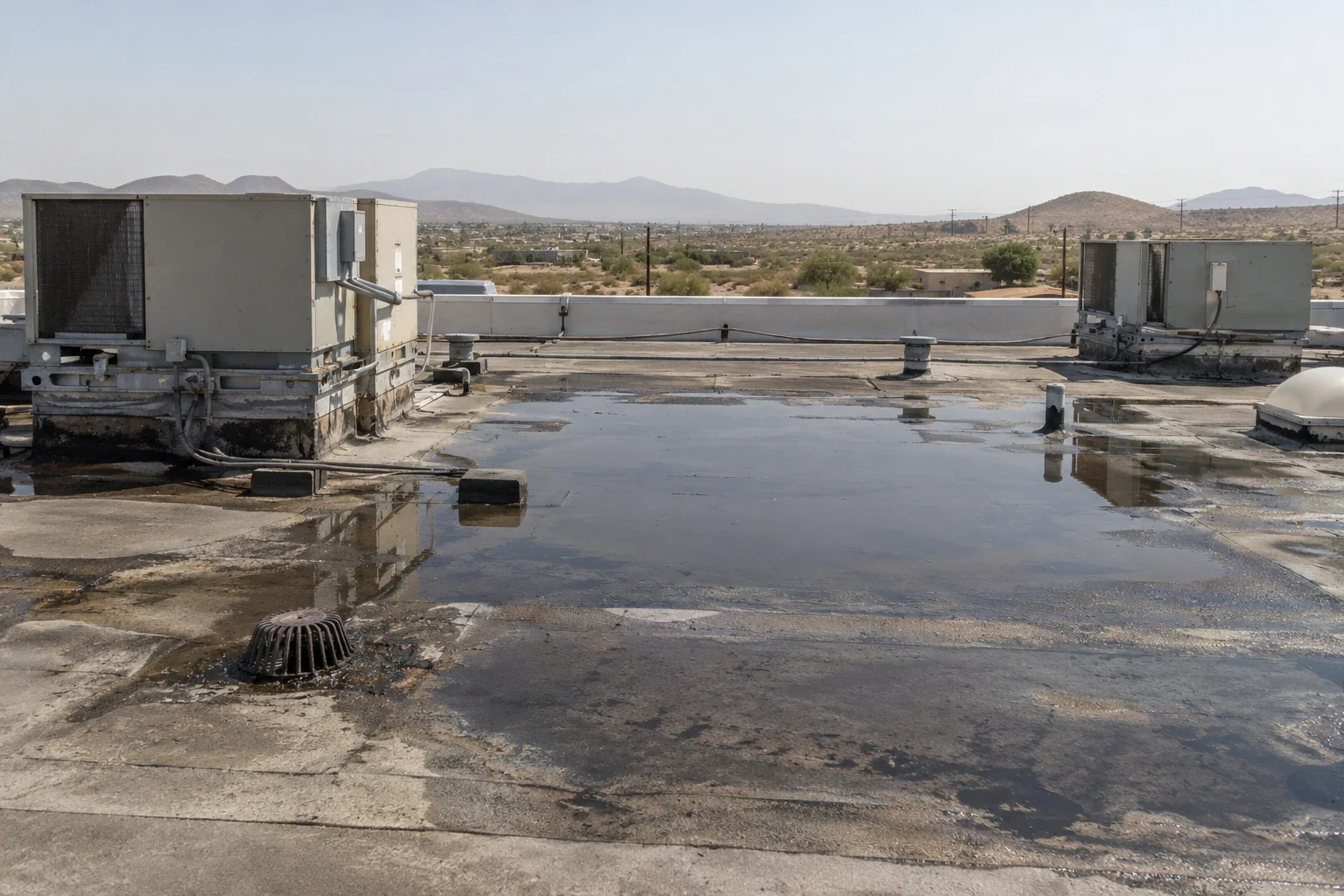
Commercial Roofing Questions
Many manufacturers treat water that remains after about two days as ponding. Check your warranty, since some exclude it. A shallow puddle that dries in a day is a watch item. One that returns after every rain needs a plan.
Staff can clear a drain screen at the roof edge if access is safe and fall protection is in place. Leave bowls, clamping rings and line flushing to a roofer. Photograph the screen before and after so the record shows what was removed.
It can. Several membrane warranties exclude damage from standing water beyond a stated time. Keep dated photos of drain cleaning and repairs so you can show you maintained the roof. Read the exclusion in your warranty file.
It adds fall toward the drains, so water leaves the roof instead of waiting. It raises the roof edge at high points, so we check parapet heights and door thresholds first. The design drawing shows slope in inches per foot.
Yes, because freezing turns a puddle into ice that presses on seams as it forms. Freezing mornings run from about October 21 through May 1. We prefer to clear and repair ponding before the first freeze.