Roof Insulation and Cover Board in Prescott Valley, AZ
Roof insulation, tapered systems and cover board in Prescott Valley, AZ: core cuts, wet board removal and layers chosen for hail, thermal swing and drainage.
Press on the roof with your boot. If the surface gives like a damp sponge, the board under it is wet. In Prescott Valley, AZ, that soft spot is the first sign that insulation has taken on water, and wet insulation changes every decision about the roof. Commercial Roofing Prescott Valley tests, replaces and specifies insulation, tapered systems and cover board for commercial roofs. We start with a core cut, because the layers under the membrane decide what the roof can do next.
The membrane gets the attention. The insulation does much of the work.
What Is Under the Membrane
A low-slope roof is a stack. Each layer has a job.
- Deck: steel, concrete or wood, which carries the load.
- Vapor control: a sheet that keeps interior moisture out of the insulation, where the building calls for one.
- Insulation: boards that slow heat flow and, in tapered form, set the slope toward the drains.
- Cover board: a thin, firm board over the insulation that protects it and gives the membrane a flat, strong base.
- Membrane: the waterproof sheet on top.
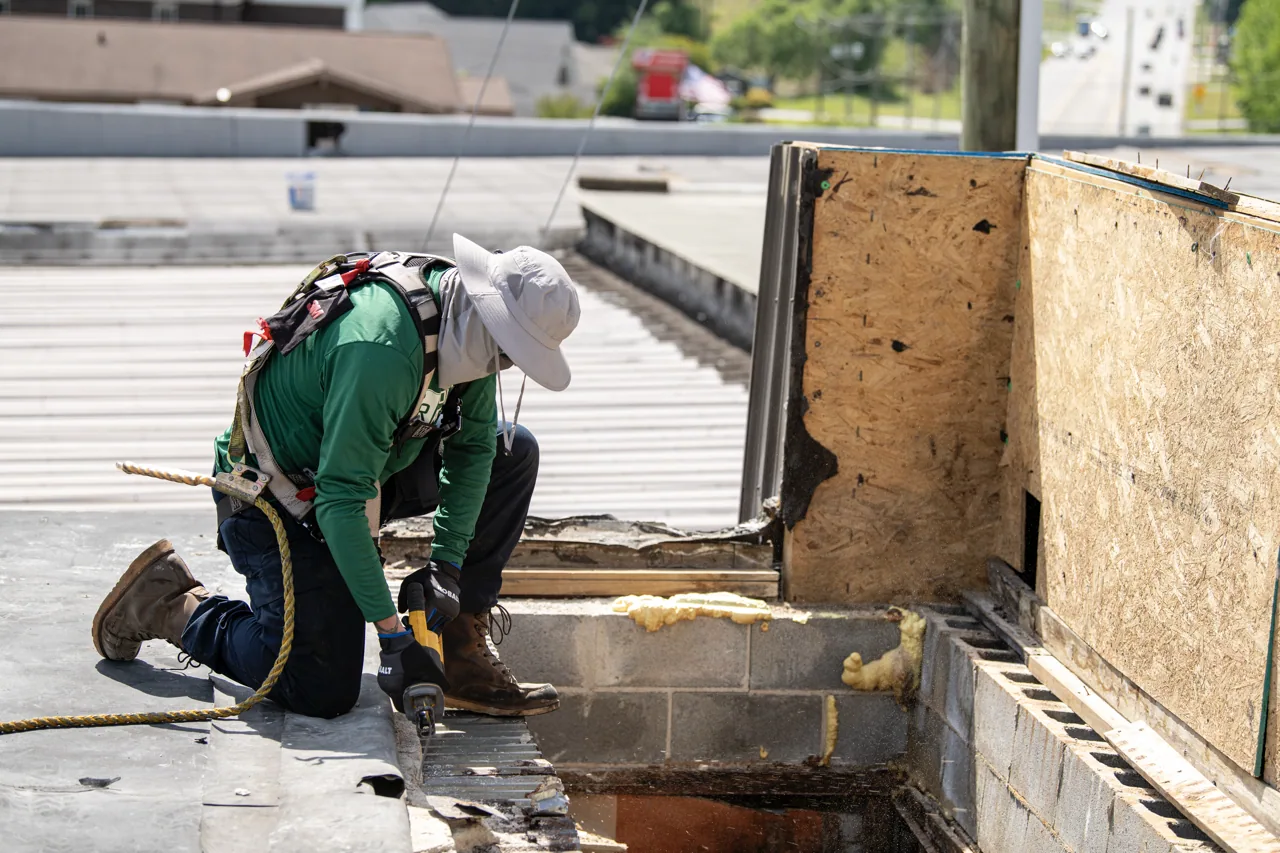
A core cut shows the stack in one round sample. We read the layers, measure thickness, check for moisture and photograph it. The sample goes in the findings sheet. It tells us whether a roof can take a new membrane, a recover or a full tear-off.
We also read the vapor control. A building with high interior humidity, such as a pool, a kitchen or a cold storage area, puts moisture into the insulation from below. If the core shows moisture at the bottom of the stack and a dry top, the water came from inside. No amount of membrane repair will fix that, and we say so in the sheet.
Why Wet Board Matters
Insulation holds water like a sponge. Wet board loses its insulating value. It adds weight to the deck. It freezes and thaws, and each cycle breaks it down. It feeds blisters in the membrane above and rust in a steel deck below. It also hides, because the surface can look fine.
Prescott Valley gets about 15 inches of precipitation a year, mostly in the July to September monsoon, and the freeze line sits between late October and early May. Water that enters a roof in July can freeze in October and thaw in March. That is a lot of cycles. We find wet board with infrared or meter scans, confirm with core cuts and map the area. Wet board comes out. A new membrane over wet board only buries the problem.
The cost of waiting is easy to state. Wet board does not heal. It grows, because water spreads along the deck and into dry board. A small wet area found early is a patch of board. A large one found late is a tear-off. The moisture map gives the owner both numbers and the date the first became the second.
What Cover Board Adds
Cover board is a small cost for a large benefit. It sits between the insulation and the membrane, and it does three jobs.
It resists impact. Hail from pea-sized to half-inch stones has been recorded nearby, including the pea-sized hail of the July 20, 2026 storm. Soft foam insulation under a thin membrane can bruise. A firm cover board spreads the hit. It also protects the insulation from foot traffic and from heat during torch or hot work.
It gives the membrane a good base. Adhered systems bond better to a flat, firm board than to foam facers. It reduces fastener pull and blistering. And it helps fire ratings, where a system requires them. We pick the board type to suit the membrane and the deck, and we list the choice in the scope.
Not every roof needs cover board. A roof with a dense insulation board that already resists impact, a mechanically attached system with its own rules or a thin recover may not need one. We recommend it where hail, traffic or adhesion make it pay.
Tapered Systems and Drainage
Flat roofs are not flat. They need slope, and tapered insulation provides it. Boards cut with a built-in slope carry water toward drains and scuppers. Crickets, small tapered pieces behind curbs and walls, push water around obstacles.
Ponding is the sign that the slope is missing. A ponding line shows where water sits. If the deck has sagged, we cannot always fix it from above, but tapered insulation under a new membrane often can. Our drain and scupper work goes with it, because new slope is useless if the outlet is blocked. We lay out the taper on a plan, with high points, low points and drains marked, and we photograph the layout before the membrane goes down.
Thermal Swing and Fasteners
Daily temperature swings in Prescott average nearly 30 degrees. Insulation boards expand and shrink, and so does the membrane. Poor board joints, loose fasteners or a missing cover board show up as ridges, buckles or open seams over time.
We stagger board joints, fasten to the pattern the system requires and tape or seal where the system calls for it. We keep the insulation dry during install by closing the day's work with a tie-in and a temporary seal. A board left open to a monsoon cell soaks up water in minutes. The weather window shapes the schedule, and we watch the forecast.
Where It Comes Up
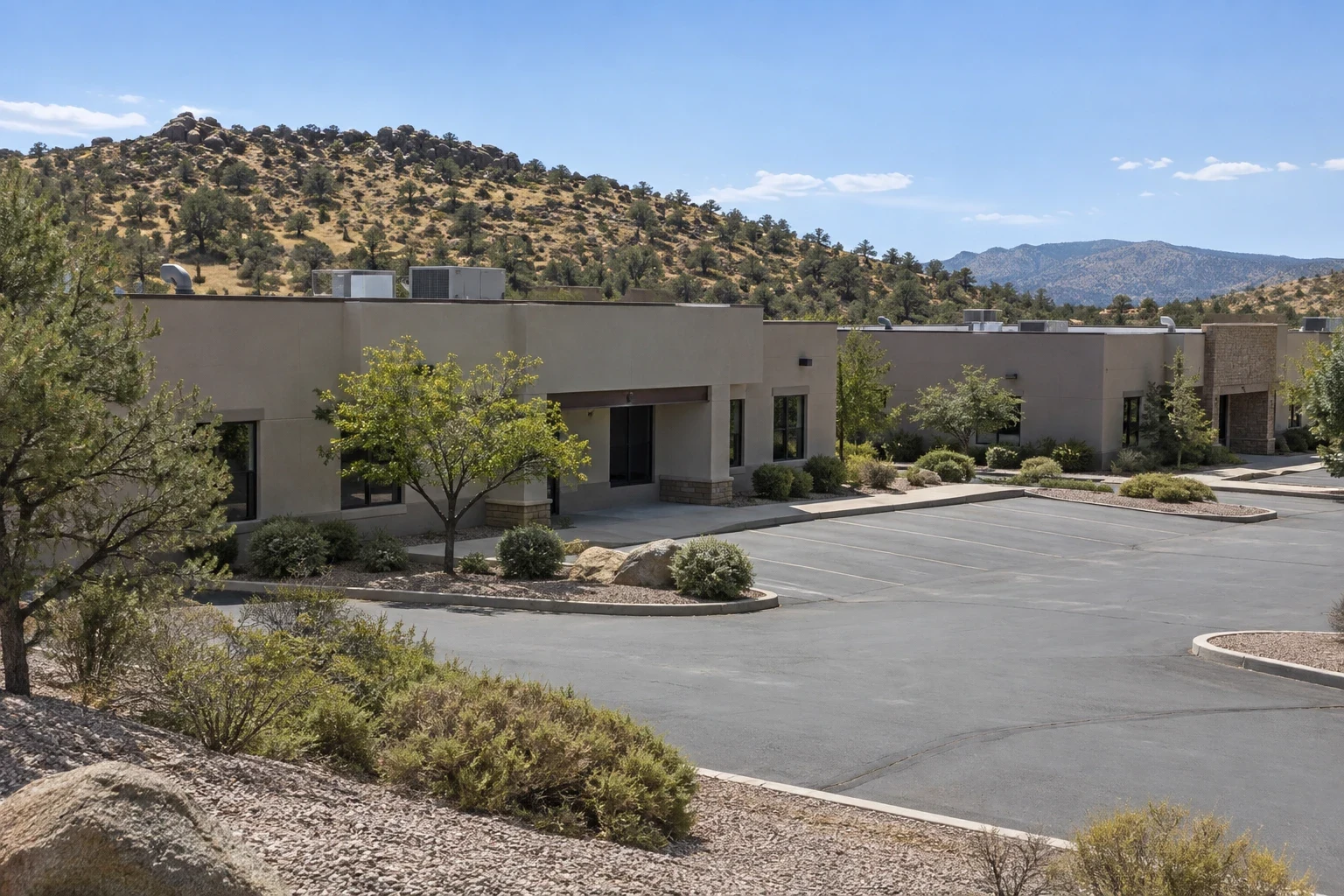
New buildings at Big Sky Business Park, on East Florentine Road, start with fresh insulation and a first-year chance to get the details right. The town markets business-park lots with utilities already in place, and the metal or single-ply roofs that go on such steel and tilt-up buildings benefit from a well-chosen cover board and a taper that is laid out before the membrane arrives.
Roofs on the east side near Fain Road, where manufacturers and distributors operate, are candidates for a roof recover when the board is dry, or a full replacement when it is wet. The test decides which one applies.
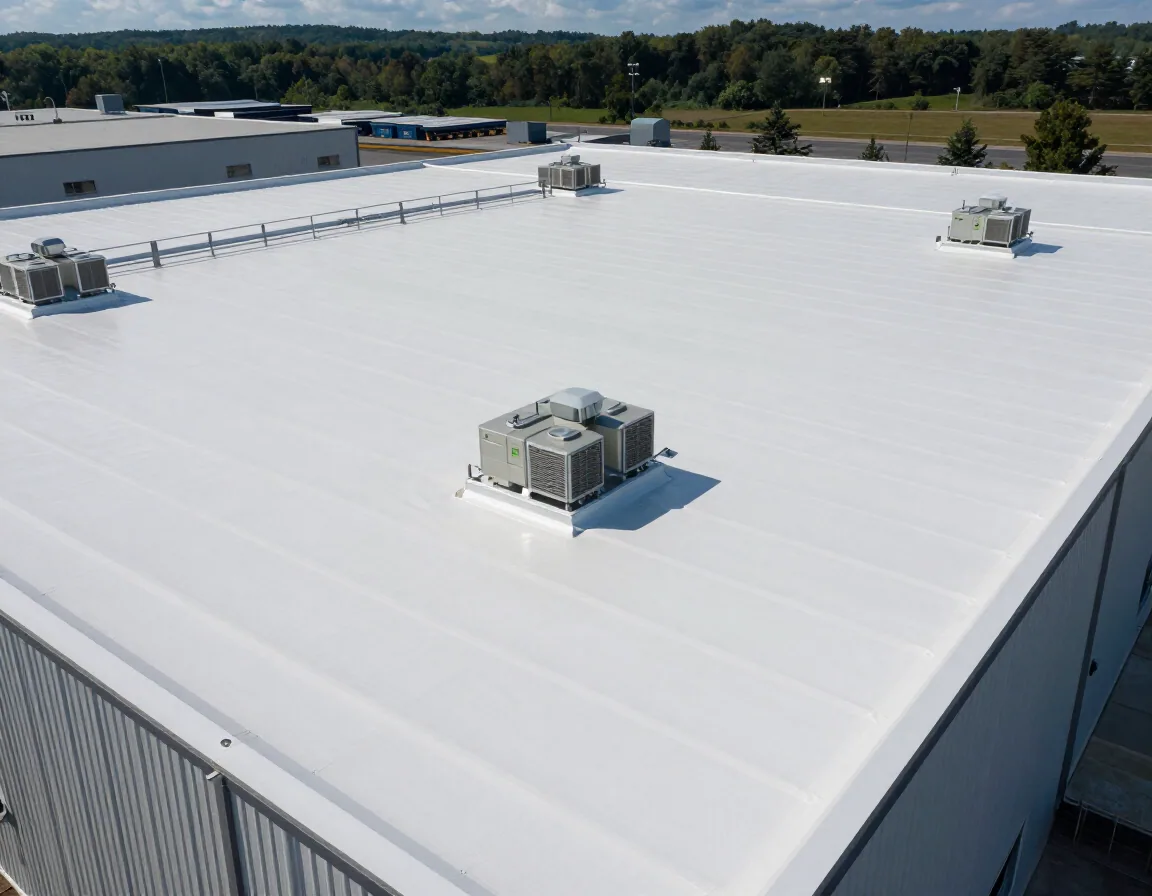
Where roofs carry a TPO membrane, a cover board under the sheet resists the bruising that hail can cause in soft foam. Where hail has already marked a roof, the hail damage repair record shows how many bruises reached the board, which decides how much must be replaced.
Cost follows area, thickness and the number of layers. Tear-off depth, disposal of wet board, tapered boards cut to a plan and the weather window all move the figure. We list each beside its item.
Commercial Roofing Questions
How do you find wet insulation?
With infrared or a meter scan, then confirm with core cuts. The scan maps the suspect area. The core shows the water in the board and the layers around it. We photograph both and mark the area on a roof plan.
Can wet insulation dry out in place?
Rarely. Water trapped under a membrane has nowhere to go. Wet board usually has to come out. We cut out the wet area, dry the deck and install new board before any new membrane goes down.
Is cover board required?
Not always, but it is often worth it. It protects foam from hail and foot traffic and gives the membrane a firm base. Some systems and fire ratings call for it. We list the choice in the scope with its cost.
What does tapered insulation cost compared with flat?
More, because each board is cut to a plan and the layout takes time. The cost buys drainage. If a roof ponds, the taper often pays back by ending the pond and saving the membrane.
Can I add insulation without replacing the roof?
Sometimes. A recover can add insulation and a new membrane over a dry, sound roof. We check the deck, the old layers and the load first. If the old roof is wet, it comes off.
Request a Walk-Through
Request a walk-through, and we will send a written findings sheet with core cut photos and a moisture map before any repair is priced.
Request a Roof Assessment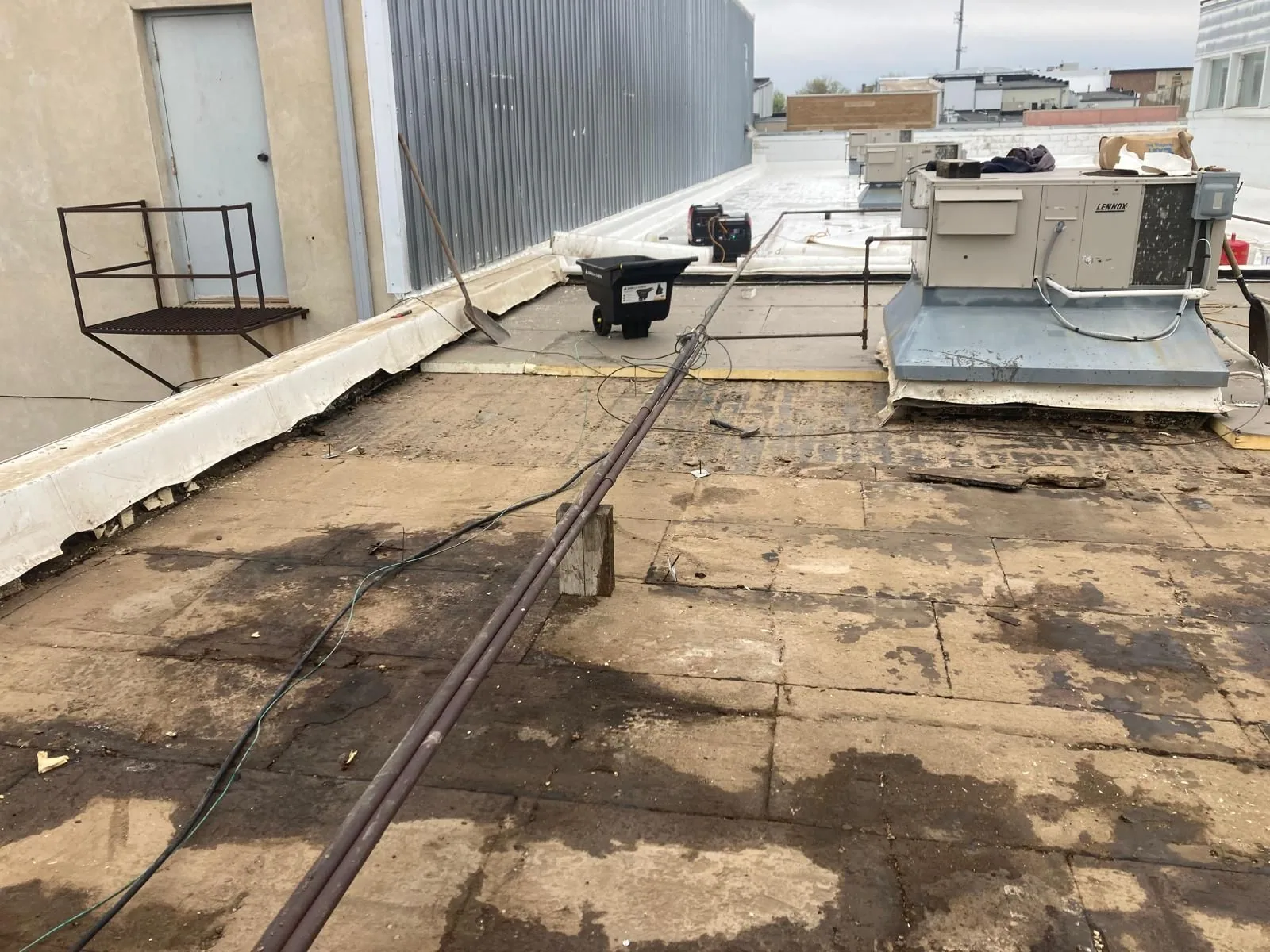
Commercial Roofing Questions
With infrared or a meter scan, then confirm with core cuts. The scan maps the suspect area. The core shows the water in the board and the layers around it. We photograph both and mark the area on a roof plan.
Rarely. Water trapped under a membrane has nowhere to go. Wet board usually has to come out. We cut out the wet area, dry the deck and install new board before any new membrane goes down.
Not always, but it is often worth it. It protects foam from hail and foot traffic and gives the membrane a firm base. Some systems and fire ratings call for it. We list the choice in the scope with its cost.
More, because each board is cut to a plan and the layout takes time. The cost buys drainage. If a roof ponds, the taper often pays back by ending the pond and saving the membrane.
Sometimes. A recover can add insulation and a new membrane over a dry, sound roof. We check the deck, the old layers and the load first. If the old roof is wet, it comes off.