Roof Drains and Scuppers in Prescott Valley, AZ
Roof drain, scupper and ponding correction in Prescott Valley, AZ: screens cleared, outlets tested and low spots fixed before the next monsoon cell arrives.
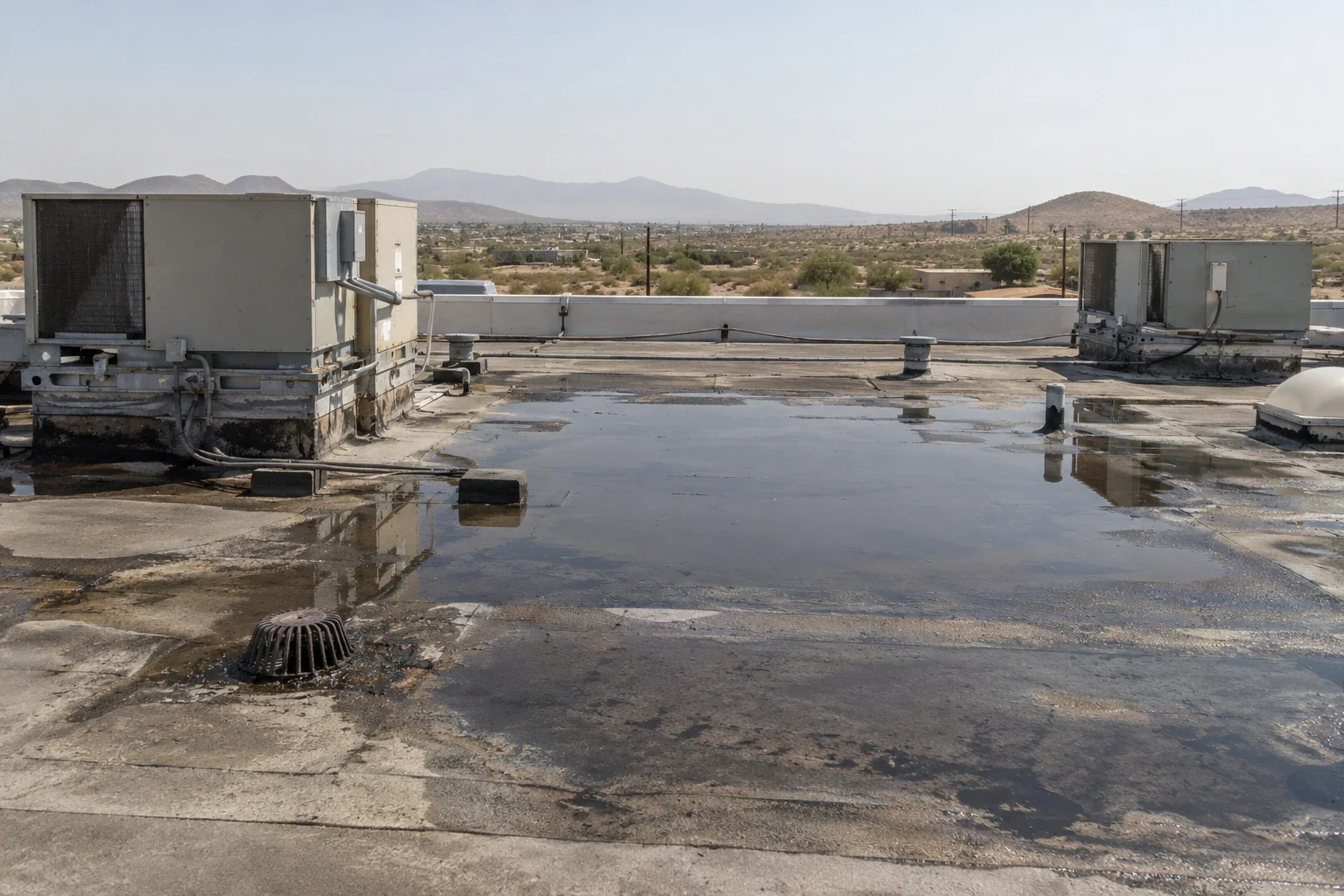
Look at the drain screen first. After a monsoon cell, we find it packed with gravel, leaves and pea-sized hail. That packed screen is the cheapest finding on the roof and the one that causes the most trouble. Water that cannot leave sits at the low spot, leaves a ponding line and works on the seams around it. Commercial Roofing Prescott Valley clears, repairs and corrects roof drainage for commercial buildings in Prescott Valley, AZ. We start at the outlets because everything else on the roof depends on them.
Here is what we check, what we fix and what we leave alone.
What We Find
Most drainage problems fall into a short list. We look for each one on every walk.
- Drain screens packed with gravel, leaves and hail.
- Scuppers set too high, so water stands an inch deep before it moves.
- Crushed or sagging drain lines under the deck.
- Drain bodies that have settled below the membrane.
- Ponding lines that show where the deck has dipped.
- Missing overflow scuppers on roofs with parapets.
A ponding line looks like a pale ring of dirt on the membrane. It marks the highest point the water reached. If the ring is wide and dark, water has stood there for days. Standing water is a weight load, and it ages the sheet faster. So we measure the pond, mark it with a photograph and record its depth.
Why Water Stays
Water stays for one of three reasons. The outlet is blocked. The outlet is too high. Or the roof surface slopes the wrong way. Each has a different fix, and we rule them out in that order.
A blocked outlet is a cleaning job. A high outlet is a small repair: we lower the scupper or add a sump. A wrong slope is the hard one. It can mean the deck has sagged, or the insulation was never tapered, or a rooftop unit sits in the path of the water. In that case, we add tapered insulation or a cricket to push water toward the drain.
A hose test names the cause. Water runs from the high point, is watched on its way and is photographed where it stops.
The hose test settles most arguments. We start at the high point, let water run and time how long it takes to reach the outlet. A path that takes more than a minute or two on a short run means the slope is shallow or the surface has dipped. We mark the stop point with chalk, photograph it and measure depth with a straightedge. That gives the owner a number to compare after the repair.
Ponding that follows the same line each time often traces to a structural deflection. Where we see it, we flag the deck for a structural review. After the pond is measured, ponding water repair starts with the cheapest cause and works toward the hardest.
What the Monsoon Tests
Prescott Valley is a 5,100-foot town where July and August carry most of a 15-inch year of precipitation. Short cells drop a lot of water in a few minutes, with gust fronts that blow debris across the roof first. The July 20, 2026 storm paired heavy rain with pea-sized hail and strong wind, and every drain screen in its path had to cope with the hail it dropped.
A roof that handled a quiet spring can fail in that kind of cell. The screens fill within minutes, and the overflow, if there is one, takes the rest. A roof with no overflow scupper turns a parapet into a bathtub. We check that every low-slope roof with a parapet has a way out above the primary drain, and we add one where it is missing.
What Freeze Does
Freezing mornings run from about October 21 through May 1. Daily temperature swings near 30 degrees work every joint on the roof. Water in a drain line freezes, expands and splits the pipe. Water at a scupper freezes into a plug and holds the next melt on the roof.
A winter walk catches this. We look for ice at outlets, split gutters and downspouts, and wet insulation near a drain body. A cracked line shows as a stain at the ceiling below it. We repair the line, seal the drain body to the membrane and restore the slope around it. Heat trace helps on lines that freeze every year.
Where We See It
The downtown Entertainment District pairs a 6,000-seat events center with restaurants, a multi-screen theater and retail, so large-span assembly and retail roofs sit side by side. On long spans like these, a drain failure shows up as a pond over a lobby or a seating area. The venue pulls an estimated 75,000 people a year, many of them from out of town, so a drain failure there can delay an event.
Along Glassford Hill Road, retail power centers add low-slope buildings with rooftop units, and every unit curb dams a little water. Wind coming off the hill that gives the road its name can push loose grit toward the screens, so those outlets get checked first. Big Sky Business Park, on East Florentine Road, advertises shovel-ready lots, and a new warehouse roof there starts life with fresh drains that still need a first-year walk. On any larger roof, one blocked scupper can pond a wide area.
What to Repair Now
Some drainage items cannot wait. Clean every screen. Replace missing strainers. Fix a scupper that stands water. Seal a drain body that leaks at the flange. Add an overflow where a parapet has none. These are small jobs, and they prevent the next flood from becoming a leak repair.
Other items can wait for the planned work window. Re-sloping a roof with tapered insulation is a larger job, best done with a new insulation and cover board layer. Adding drains to a roof that ponds is also a planned item. Edge drainage, including gutters and downspouts, ties into edge metal and gutter work. We rank each item and give the cost of waiting.
Commercial Roofing Questions
How often should drain screens be cleaned?
Twice a year at least, once before the July monsoon and once after the leaves fall. Add a check after any gust front or hail, since a single cell can fill every screen in minutes.
Is a pond on my roof a problem if it dries within a day?
A pond that clears within about a day is minor. A pond that stays for days leaves a ring, ages the membrane and adds weight. Measure the depth, photograph the ring and call if it returns after each storm.
What does an overflow scupper do?
It gives water a second exit set a few inches above the primary drain. If the drain clogs, water rises to the overflow and leaves the roof before it reaches the top of the parapet or the flashing.
Can ponding be fixed without a new roof?
Often, yes. A sump at the low spot, tapered insulation under a new membrane section, or a cricket behind equipment can move water to the drain. We confirm the cause with a hose test before we recommend anything.
Do roof drains need winter care?
Yes. Look for ice plugs at scuppers and split downspouts after a hard freeze. Heat trace on lines that freeze each year keeps a path open. Clear snow from drain areas first when you shovel.
Request a Walk-Through
Request a walk-through, and we will send a written findings sheet with photos of every drain, scupper and ponding line before any repair is priced.
Request a Roof Assessment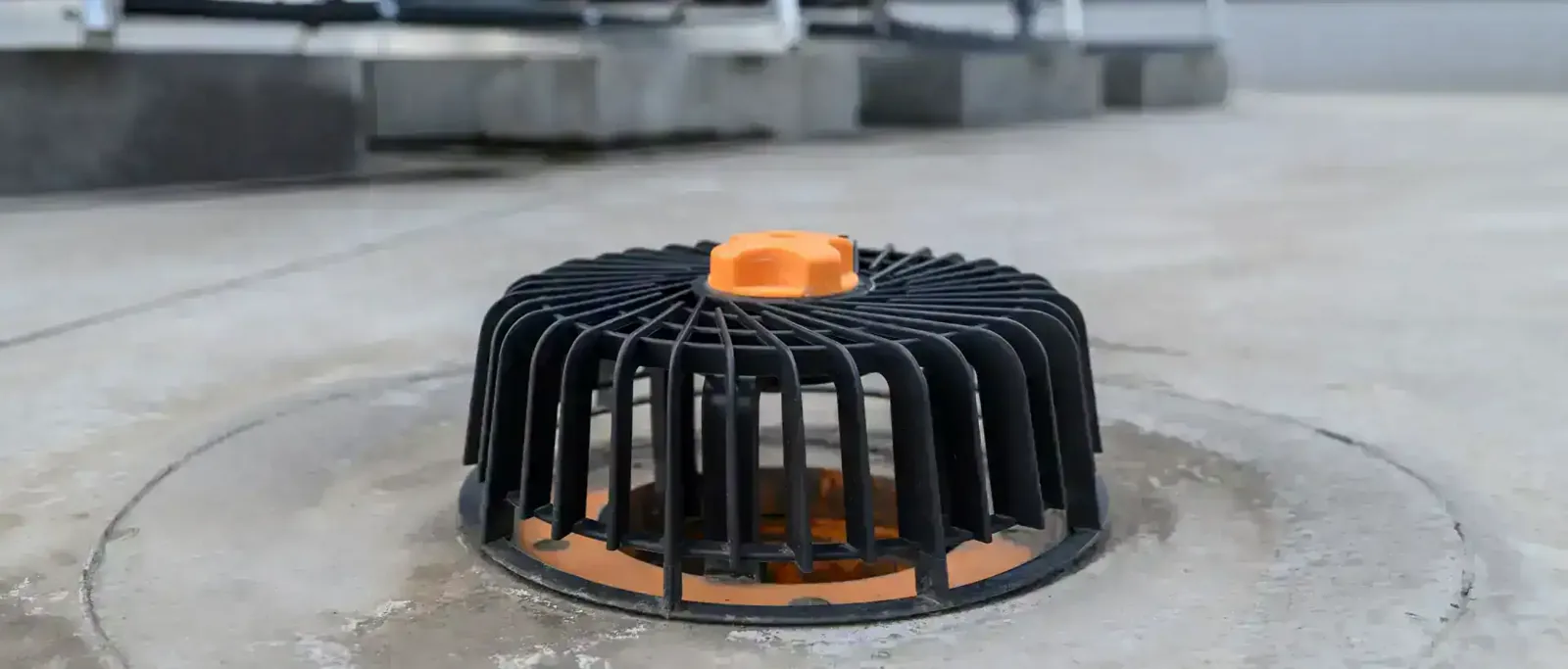
Commercial Roofing Questions
Twice a year at least, once before the July monsoon and once after the leaves fall. Add a check after any gust front or hail, since a single cell can fill every screen in minutes.
A pond that clears within about a day is minor. A pond that stays for days leaves a ring, ages the membrane and adds weight. Measure the depth, photograph the ring and call if it returns after each storm.
It gives water a second exit set a few inches above the primary drain. If the drain clogs, water rises to the overflow and leaves the roof before it reaches the top of the parapet or the flashing.
Often, yes. A sump at the low spot, tapered insulation under a new membrane section, or a cricket behind equipment can move water to the drain. We confirm the cause with a hose test before we recommend anything.
Yes. Look for ice plugs at scuppers and split downspouts after a hard freeze. Heat trace on lines that freeze each year keeps a path open. Clear snow from drain areas first when you shovel.