EPDM Roofing in Prescott Valley, AZ
EPDM rubber roofing in Prescott Valley, AZ: cold-weather flexibility, hail and snow performance, seam tape checks and when black or white rubber makes sense.
Press a fingernail into a cold rubber roof. It should give a little and spring back. That small test tells you a lot about EPDM. The sheet stays flexible when the thermometer drops, which is why it has a long record on cold-weather roofs. In Prescott Valley, AZ the morning can start below freezing and finish near seventy. The rubber takes that swing better than many stiffer sheets. We walk the roof, press the sheet, probe the seams and tell you what we found.
What EPDM is
EPDM is ethylene propylene diene monomer, a synthetic rubber. It comes in very wide sheets, so a roof can have few field seams. Seams are joined with tape or with splice adhesive. Flashings use pre-formed boots and rubber strips. The sheet is attached by adhesive, by fasteners or by ballast stone.
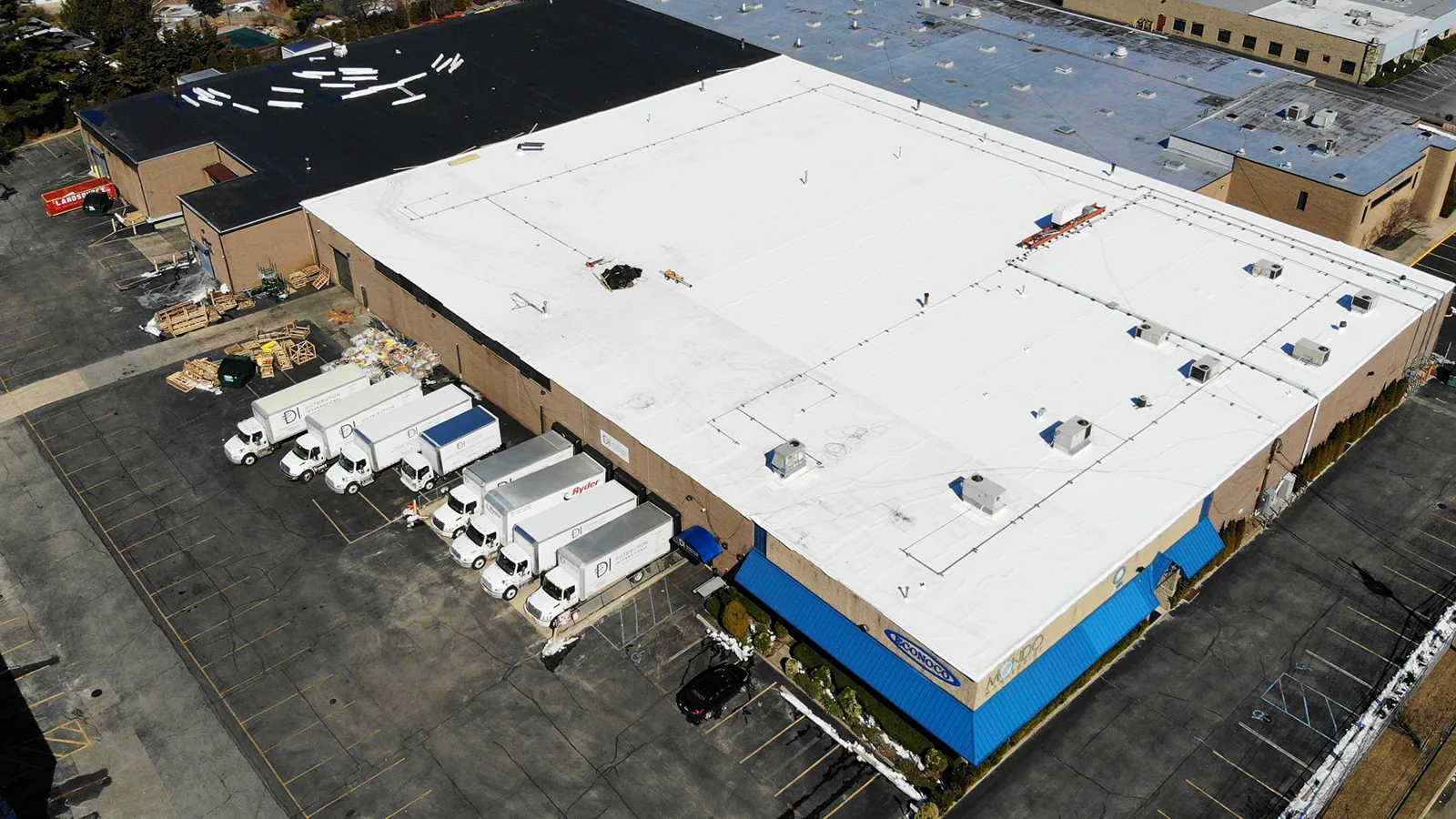
It is usually black. A white version exists and reflects sunlight. Black rubber absorbs heat, which can help melt snow in winter and cost more to cool in summer. At 5,100 feet, both effects are real. We weigh them for your building.
What we check at the seams
The sheet is tough. The seam is the weak link. Tape seams depend on clean surfaces and good pressure. We run a probe along every lap. A lap that lifts a hair on a cold morning tells us the bond is going. We look for fish-mouths, which are small openings at the edge of a lap that let water in. Fish-mouths form when a sheet shrinks or the tape loses grip. Pressing a small roller along the edge can close a new one. An old one needs a patch strip. We photograph each one with a location mark. The marks go on a roof plan, so a second visit finds the same spot in seconds.
Shrinkage deserves its own look. Rubber can pull back from walls and curbs over time and leave the flashing under tension. A flashing under tension tears at the corner first. We press on the corners and measure the gap behind the sheet. If the gap is growing, the finding goes at the top of the repair list.
Flashings get the same walk. Pre-formed boots crack with age. Rubber flashing strips shrink and pull away from walls. We press each corner and probe the termination bar.
Hail, ballast and bruises
Rubber shrugs off pea-sized hail better than many sheets. The July 20, 2026 storm, with heavy rain, strong wind and pea-sized hail, would rarely harm a sound EPDM roof. Larger stones can bruise it over soft insulation. After a storm, we walk the field and mark every dent.
Ballasted roofs add a different check. The stone layer shifts under wind. Gust fronts off a monsoon cell can push stone toward the edges and leave bare spots. Bare spots take sun and wear faster. We look at stone depth near the perimeter and near drains. Loose stone can also clog a drain screen and cause ponding.
What freeze and snow do
Prescott averages about ten inches of seasonal snow, and the freeze season lasts from late October to early May. Rubber stays supple in that cold, which helps seams and flashings keep their shape. Snow loads and ice dams are a different matter. An ice plug in a drain can push water back over the sheet. A heavy drift against a parapet can hold water against a flashing for days.
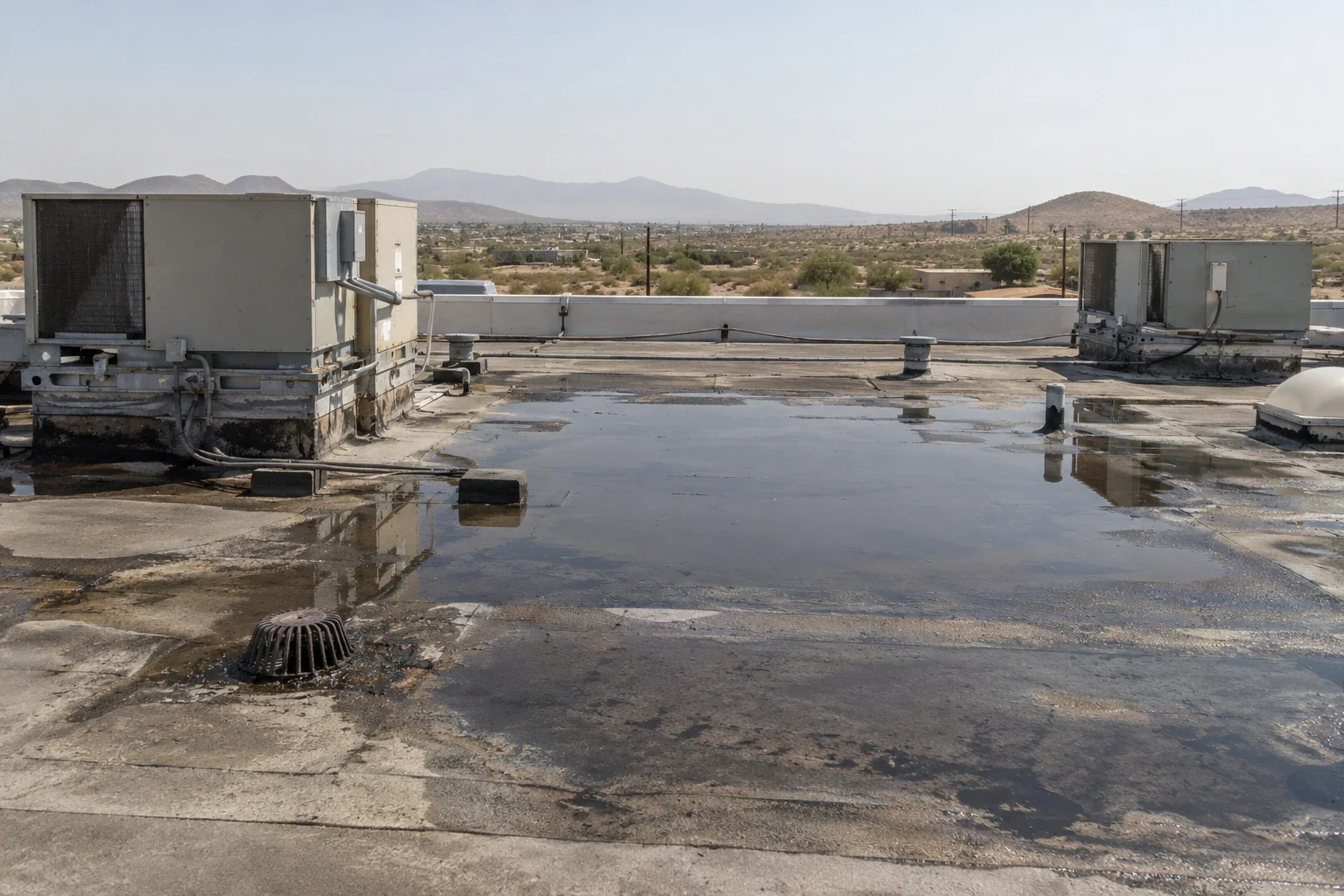
So we clear drain screens before the first freeze. We check that the roof drains freely. We look for a ponding line near each drain. A ponding line marks where the deck has sagged. Ponding on rubber is less harmful than on some sheets, but standing water still ages seams.
Where EPDM fits in town
Rubber suits plain low-slope roofs on schools, offices and small commercial buildings, where price per square foot matters and the details are simple. Humboldt Unified School District is one of the town's largest employers, and a school roof with few penetrations is a fair fit for it. Low-slope retail along SR 69 and Glassford Hill Road is a place to compare it against white TPO. In the Big Sky Business Park, a new light-industrial roof might take rubber for cost. We read each roof before we suggest anything. Along the SR 69 corridor, that comparison is made roof by roof.
Wide sheets matter on large roofs. A roof with few seams has fewer places to leak. That is a real saving on a big flat area. It is also why EPDM stays on the list next to newer sheets. When the roof is plain and the budget is firm, rubber often wins on cost. When the roof has many curbs and vents, a welded sheet may win on detail work.
What to repair now and what can wait
Repair now: open laps, shrunken flashings, cracked boots, punctures. Repair soon: worn walk paths, ballast gaps, hardened sealant. Watch: chalking, minor dirt, small scuffs. We rank the findings in those three tiers and price each one. When a rubber roof is sound but old, a coating restoration may add years. When the cores show wet insulation, a replacement is the fair answer, and a PVC or TPO sheet may follow.
What to ask for in writing
Get the sheet thickness, the attachment method, the seam type and the warranty terms on paper. Ask for the edge detail drawing. Get the ballast weight if the roof is ballasted. We put each item on the findings sheet with the photos. A facility director can then compare our repair price with a replacement price and see the same facts behind both.
Commercial Roofing Questions
Is black EPDM a problem in summer?
Black rubber absorbs heat, which raises cooling load on a building with air conditioning. At 5,100 feet the summers are milder than the low desert, but the effect still counts. We recommend white EPDM or a reflective coating when rooftop cooling runs hard from May to September, and we show the trade-off against winter.
How do you find a leak in a rubber roof?
Water travels under the sheet before it shows inside, so the leak is rarely where the stain is. We walk the roof, probe laps, check flashings and cut cores where insulation feels soft. We photograph each suspect spot. Most leaks turn out to be at a seam, a boot or a curb.
Can EPDM be patched?
Yes. Small punctures take a cured rubber patch with primer and tape. Larger damage takes a cut-out and a new piece with tape seams. The surface must be clean and dry, so we do cold-weather repairs on dry mornings. If frost is present, we wait until it burns off or warm the area gently first. We recommend recording each patch location on the roof plan.
How long does a rubber roof last?
It depends on the sheet, the install and the care. We cut cores, probe seams and read the surface, then tell you what remains. If the sheet is sound and the insulation is dry, repairs can add years. If it is not, we show the photos that say so.
Does ballast hurt the roof?
Ballast adds weight and hides the sheet, which makes inspection harder. It protects the rubber from sun and wind when placed well. We recommend checking stone depth after each monsoon season and moving stone back to bare spots. We photograph the roof before and after so the change is visible.
Request a walk-through
Ask us to walk the roof. You receive a written findings sheet with seam probes, flashing checks and photos before any EPDM repair or replacement is priced.
Request a Roof Assessment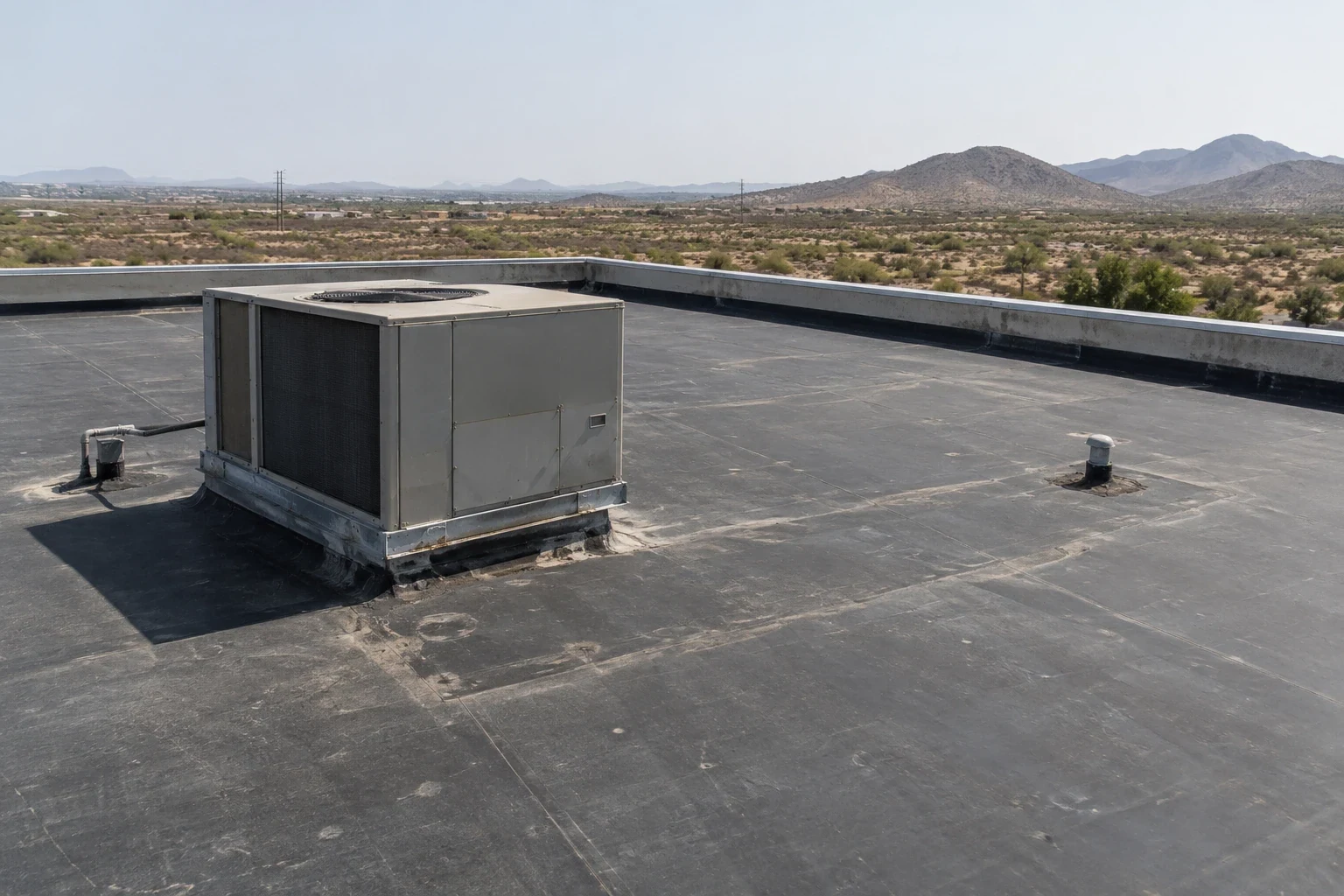
Commercial Roofing Questions
Black rubber absorbs heat, which raises cooling load on a building with air conditioning. At 5,100 feet the summers are milder than the low desert, but the effect still counts. We recommend white EPDM or a reflective coating when rooftop cooling runs hard from May to September, and we show the trade-off against winter.
Water travels under the sheet before it shows inside, so the leak is rarely where the stain is. We walk the roof, probe laps, check flashings and cut cores where insulation feels soft. We photograph each suspect spot. Most leaks turn out to be at a seam, a boot or a curb.
Yes. Small punctures take a cured rubber patch with primer and tape. Larger damage takes a cut-out and a new piece with tape seams. The surface must be clean and dry, so we do cold-weather repairs on dry mornings. If frost is present, we wait until it burns off or warm the area gently first. We recommend recording each patch location on the roof plan.
It depends on the sheet, the install and the care. We cut cores, probe seams and read the surface, then tell you what remains. If the sheet is sound and the insulation is dry, repairs can add years. If it is not, we show the photos that say so.
Ballast adds weight and hides the sheet, which makes inspection harder. It protects the rubber from sun and wind when placed well. We recommend checking stone depth after each monsoon season and moving stone back to bare spots. We photograph the roof before and after so the change is visible.