School Roofing in Prescott Valley, AZ
School roof inspection, repair and replacement in Prescott Valley, AZ, scheduled around the school year, with written photo findings first.
Walk the roof over the gym. The gym is often the widest span on a campus, and weight and wind work on a wide, flat surface all year. Ponding near the center, where the deck has dipped, and loose edge metal along the long walls are what to look for first. Across school roofs in Prescott Valley, AZ, our walk presses each seam, photographs each finding and delivers a written sheet ahead of any price.
From that sheet a district's facilities director can sort the work into this month and next summer.
Campus roofs, one by one
A campus is many roofs: classroom wings, a gym, a cafeteria, a library and covered walkways. Each has its own age and its own system.
Drains clog with leaves and gravel after monsoon storms. Flashings crack at walls and rooftop units. Seams open where the roof moves with the weather, and a daily temperature swing near 30 degrees pulls on all three.
Every roof goes onto a campus plan with a grade: sound, watch, repair or replace. Each grade comes with the photograph that earned it, so a parent or a board member can look at the picture and see why. The plan also marks which roofs share a wall with another roof, since joints between roofs leak often.
Covered walkways and breezeways are small roofs with big consequences. They drain onto paths where students walk, so a clogged gutter or a loose cap becomes a slip hazard in winter. Those get their own line on the plan.
Humboldt Unified and its neighbors
Humboldt Unified School District is among Prescott Valley's largest employers. A district that size manages many roofs, and each one competes for a limited summer budget. A leaking gym roof outranks a dry storage shed.
So we rank by risk. What sits below, who uses it and how long it can wait all count. The findings sheet shows the ranking with photographs, and a board or a finance office can read it without a roofing background.
Schools beyond the town follow the same pattern. Most of the Paulden area falls in the Chino Valley Unified School District, and the Skull Valley Elementary School District serves more than 800 people. In Chino Valley, Yavapai College operates a campus. Each of those buildings carries a roof with its own age.
Summer storms on empty campuses
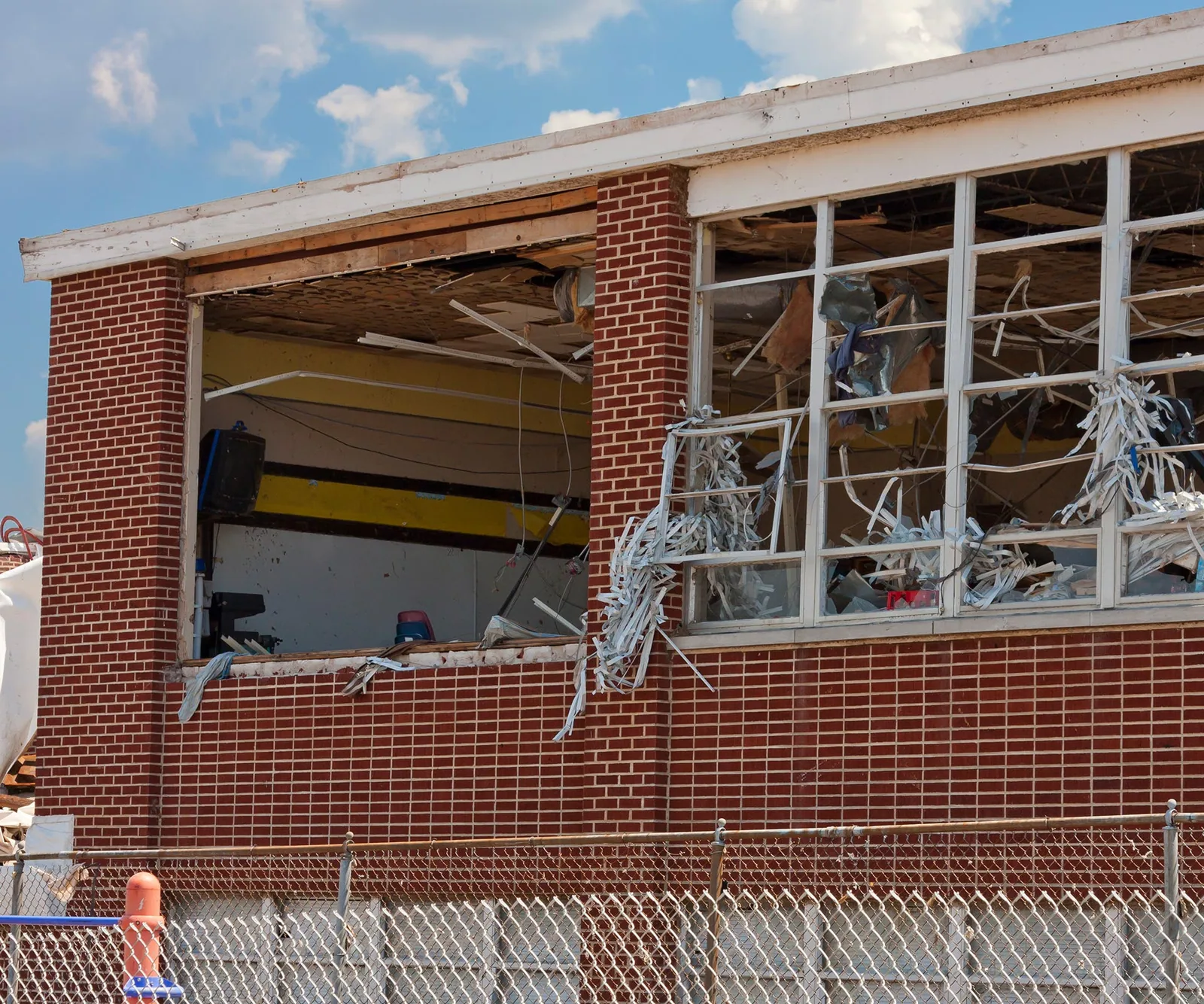
Monsoon cells arrive in July and August, when most schools stand quiet. Heavy rain, strong wind and pea-sized hail swept Prescott Valley on July 20, 2026, and signals and trees fell. A school roof takes that kind of storm with nobody on site to notice.
That is why campuses get walked before classes begin. We press the field for hail bruises, check drains for gravel and test edge metal for lift. Dated photographs from August give the district a baseline for the year. A bruise on a wide gym roof often sits where ponding has already softened the surface, so the center of the span gets extra attention, and any change shows against the August set when the October photographs come in.
If a storm does damage a roof, call at any hour. A crew covers the opening, stops the water and photographs the damage. A storm damage repair record, with before and after photographs, supports the claim.
Freeze and snow in the school year
The freeze season, roughly late October to May 1, covers most of the school year. A seam that admits water in October may be pried open by frost before the holidays.
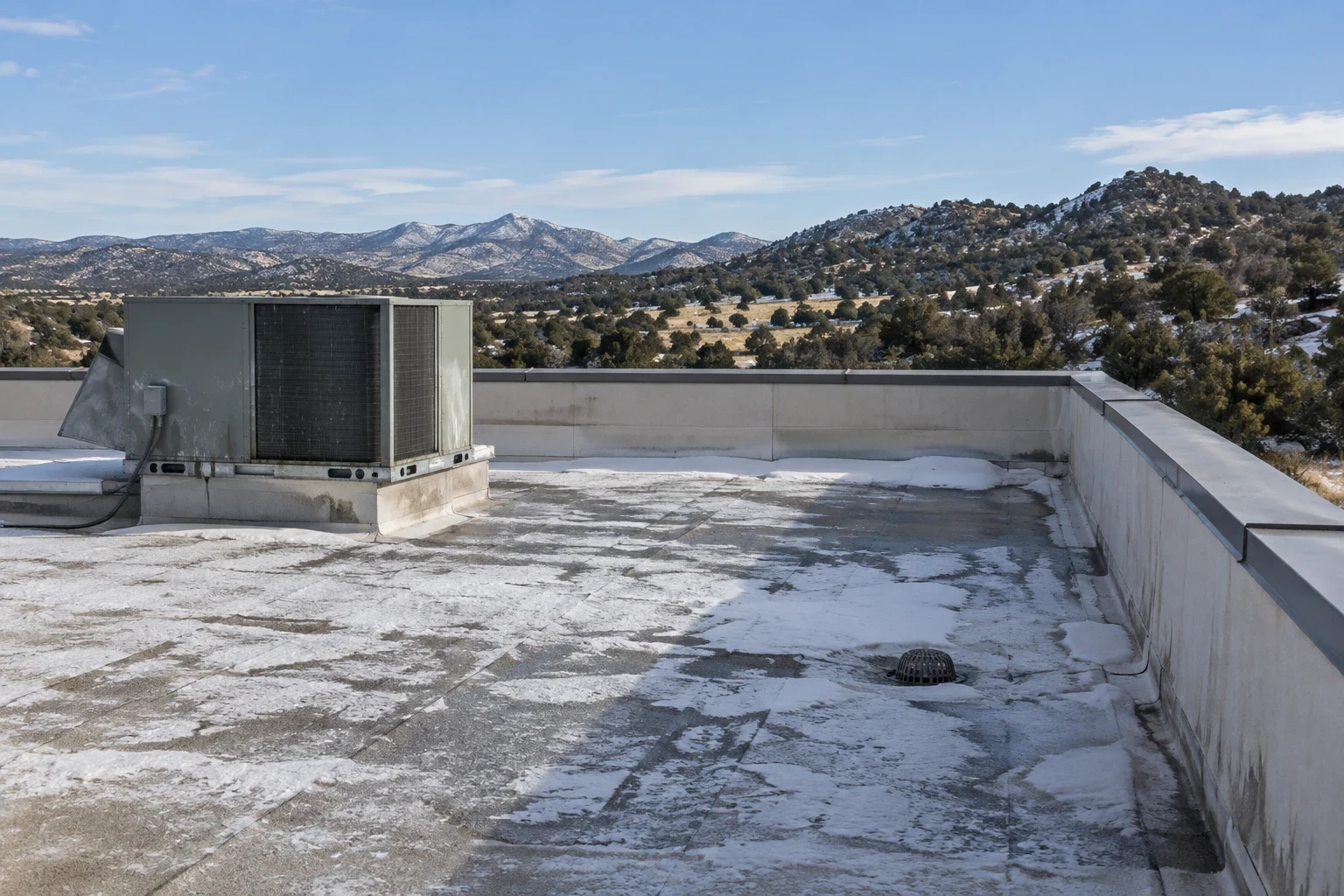
Snow adds to that. Prescott collects about 10 inches in a season, and the melt has to find a drain. A blocked drain over a classroom wing sends water the wrong way, so screens are cleared and flow tested ahead of the first freeze. Ice at the eaves is a snow and ice damage problem, and the sheet records it with a photograph.
Working around the calendar
Summer break is the main window, with students gone and the dry, mild conditions that adhesives and welds need. Late-season monsoon cells can still interrupt, so the schedule keeps a few spare days.
During the school year, work is limited to repairs, done after hours or on weekends when possible. Trucks and ladders stay out of drop-off lanes, material stages behind fences and the crew follows the district's rules for visitors and background checks.
Testing days matter. The crew asks for the testing calendar and keeps loud work away from it. Early dismissals and holidays help too, since an empty building lets work move faster. Children and traffic make this an occupied building reroofing job in the fullest sense, and the plan reflects it.
What to repair now and what can wait
Repair now: leaks over classrooms, open seams, failed flashing and blocked drains. Each one lets water in during the next storm.
What can wait: surface staining, chalking and small blisters, logged with photographs and prices. For wet insulation, an infrared moisture survey shows where without opening the roof. Colleges weigh the same choices on a different calendar, as college and university roofing shows.
A school also runs on a public building budget cycle, with approval steps. The sheet is written so a procurement officer can use it as a scope, with a location, a photograph and a price for each item. Planned items carry a target summer, so the district sees the sequence at a glance.
Commercial Roofing Questions
When should a school replace a roof?
Replacement fits cores that come back wet across a wide area or seams that are failing in many places. Repair fits isolated defects over dry insulation. Both prices come with core photographs. Plan the replacement for summer and book the bid in late winter. Lead times on materials run to weeks, and a late order can drag a job into monsoon season.
Can roof work happen during the school year?
Repairs can. A small repair needs a few hours, a ladder and a short plan, and it can often finish before the first bell. Large work should wait for summer. During the year the crew works after hours or on weekends, keeps staging behind fences and avoids drop-off lanes. It also pauses for fire drills and testing days, so give us the calendar.
How do we show a board the roof condition?
Use the findings sheet. It holds a campus plan, a grade for each roof, photographs and a price for each repair. It also shows how long each repair is expected to hold, so a board can compare a repair this year with a replacement in two. For a multi-year plan, the sheet lists each campus roof by year, so the worst roofs are funded first and the rest carried forward.
What does hail do to a school roof?
Stones recorded around here run from pea-sized to half-inch, and either can leave bruises in membrane and dents in vents; leaks may follow weeks later. After a storm the field gets pressed, soft spots get marked and each one is photographed with a date, which supports an insurance claim.
How do we keep students safe during roof work?
Crews, trucks and material stay away from student paths. The staging area is fenced, air intakes are covered and dust stays off playgrounds. A site lead meets with the principal before work starts and checks in each day. At the end of every shift the crew walks the grounds and collects fasteners and scraps, so nothing is left on a field or a walkway.
Request a walk-through
Ask for a walk-through of your school roofs. We send a written findings sheet with photos before we price any repair. You decide what to fix now and what can wait for summer.
Request a Roof Assessment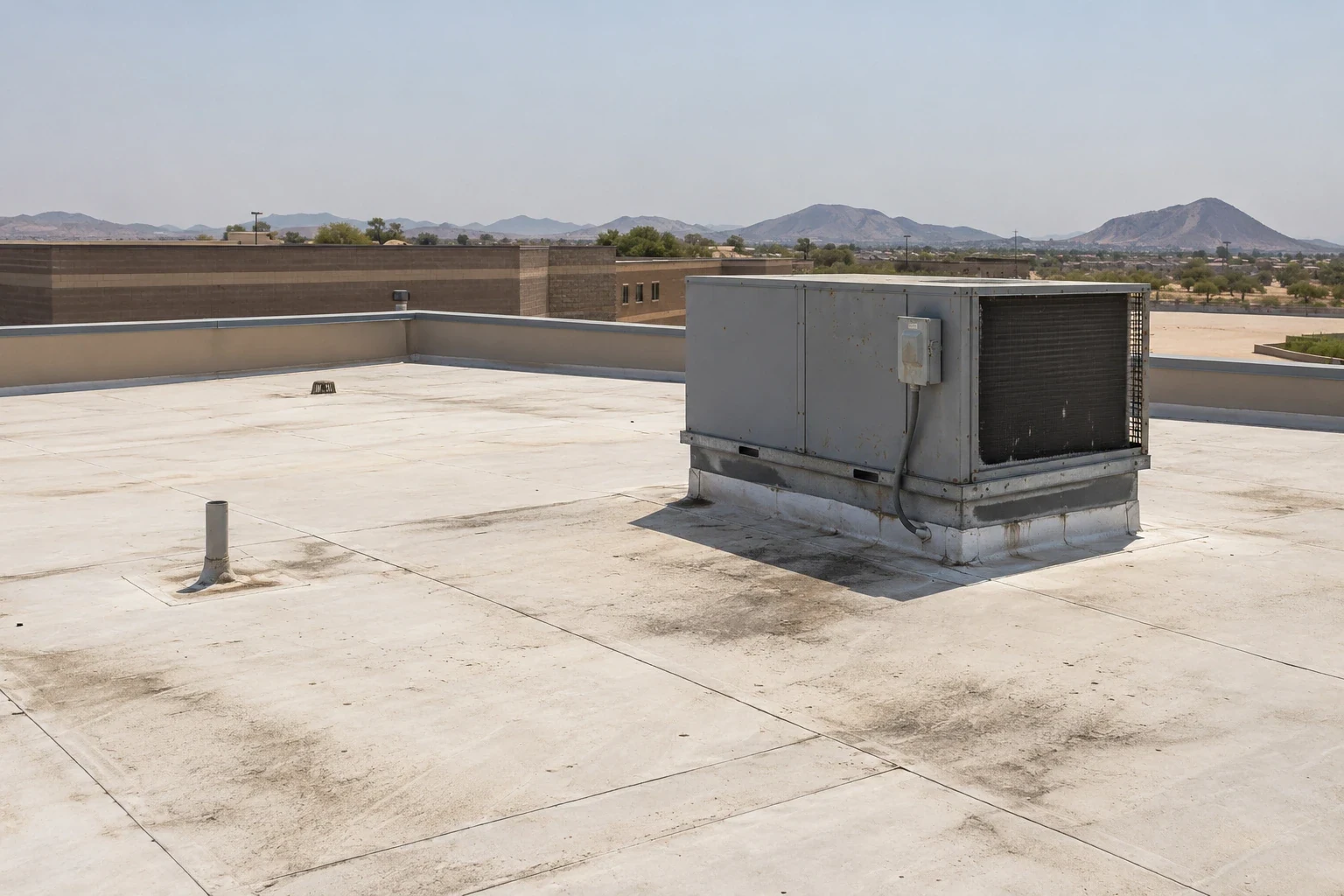
Commercial Roofing Questions
Replacement fits cores that come back wet across a wide area or seams that are failing in many places. Repair fits isolated defects over dry insulation. Both prices come with core photographs. Plan the replacement for summer and book the bid in late winter. Lead times on materials run to weeks, and a late order can drag a job into monsoon season.
Repairs can. A small repair needs a few hours, a ladder and a short plan, and it can often finish before the first bell. Large work should wait for summer. During the year the crew works after hours or on weekends, keeps staging behind fences and avoids drop-off lanes. It also pauses for fire drills and testing days, so give us the calendar.
Use the findings sheet. It holds a campus plan, a grade for each roof, photographs and a price for each repair. It also shows how long each repair is expected to hold, so a board can compare a repair this year with a replacement in two. For a multi-year plan, the sheet lists each campus roof by year, so the worst roofs are funded first and the rest carried forward.
Stones recorded around here run from pea-sized to half-inch, and either can leave bruises in membrane and dents in vents; leaks may follow weeks later. After a storm the field gets pressed, soft spots get marked and each one is photographed with a date, which supports an insurance claim.
Crews, trucks and material stay away from student paths. The staging area is fenced, air intakes are covered and dust stays off playgrounds. A site lead meets with the principal before work starts and checks in each day. At the end of every shift the crew walks the grounds and collects fasteners and scraps, so nothing is left on a field or a walkway.