Commercial Roof Leak Repair in Prescott Valley, AZ
Tracing and stopping active commercial roof leaks in Prescott Valley, AZ, with moisture mapping, water testing and photographed repairs.
A bucket under a ceiling tile tells you a leak exists. It does not tell you where the roof opened. Water travels along a deck flute, a pipe, a wall or a layer of insulation before it drops, and in Prescott Valley, AZ, the first monsoon hour after a dry spring turns every hidden path into a stain. We start the search at the stain, but we do not end there.
The method is simple and slow on purpose. We read the interior first: where the water shows, when it shows, and whether it follows rain or melting frost. Then we climb, look uphill from the stain and check every detail that could feed it. If the answer is not visible, we use moisture meters, infrared scanning or a controlled water test, one zone at a time. When we find the source, we repair it, photograph it and tell you what else on that roof looks vulnerable. For leaks that need a larger fix, the next step may be planned repair.
How We Trace a Path
Start with the timing. A leak that appears minutes into a downpour is usually near the drain, a penetration or an open seam close to the stain. A leak that shows up hours later, or only after a long soaking storm, has often traveled a long way through insulation. A leak that comes in winter on a warming afternoon points to ice or frost melting at an edge or a flashing.
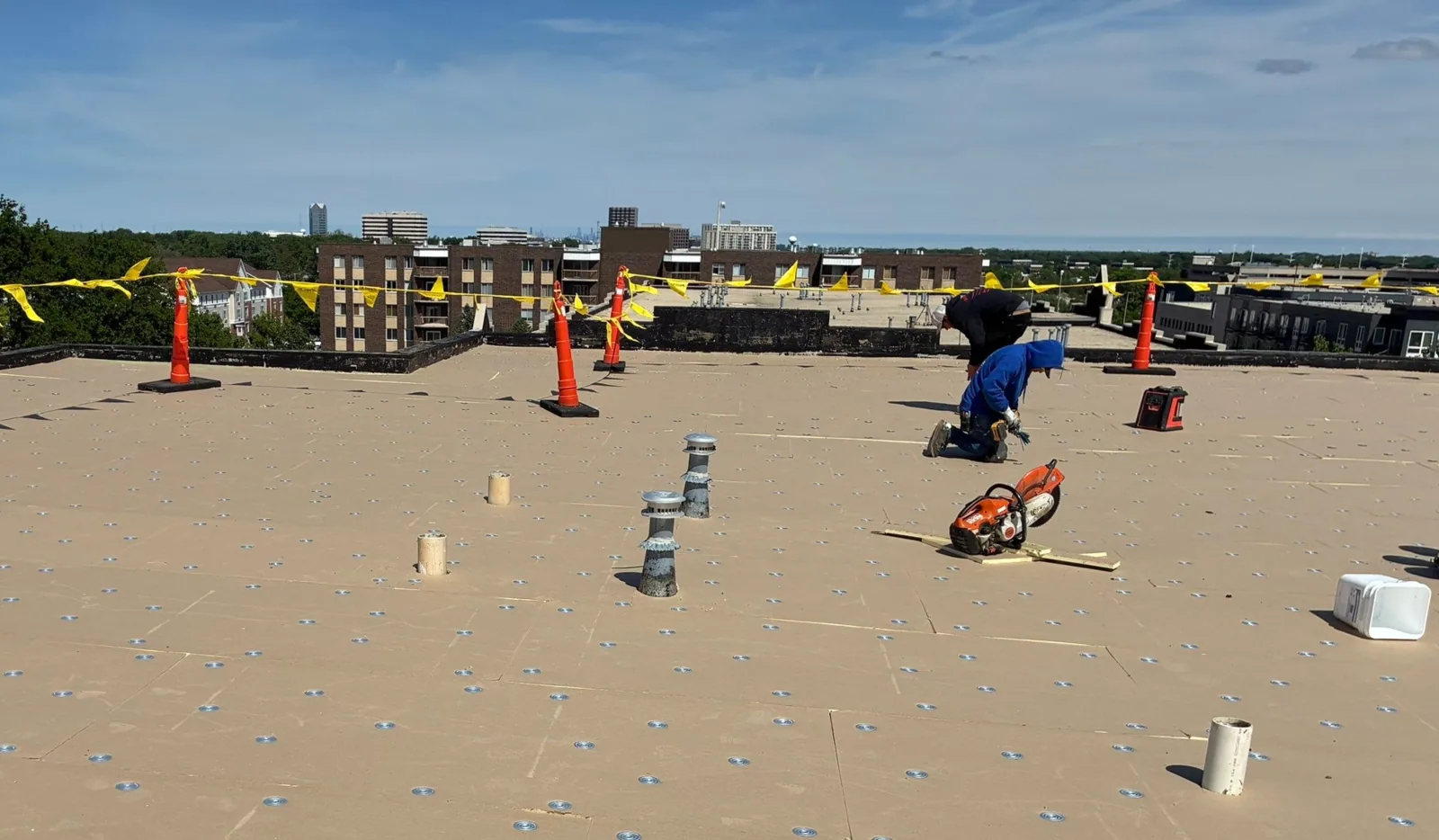
On the roof, we check the points where roofs fail most often: the base of each curb, the boots around pipes, the corners of parapets, the heads of walls and the drain bowls. We look for open laps, missing sealant, cracked boots, loose termination bars and ponding lines. A ponding line is a ring of dirt where water stood, and it often marks the place where a membrane has been working under standing water.
If the cause stays hidden, a water test isolates it. We dam or flood a small zone, hold it, and watch the interior. If nothing leaks, we move to the next zone. It takes patience, and it prevents the common mistake of patching the wrong place and calling it done.
How Monsoon Water Finds the Opening
Prescott Valley receives about 15 inches of precipitation in a year, and the heaviest months are July and August. After the dry months of spring, a roof that has been fine for ten months may be tested by two inches of rain in an hour. Drain screens that were packed with debris during the dry season suddenly matter. Seams that shrank in the cold of winter sit open until the heat of summer closes them. The July 20, 2026 storm that crossed town with heavy rain, strong gusts and pea-sized hail showed how quickly a cell can overwhelm an unprepared roof: traffic signals and trees came down and power failed for more than 130 APS customers.
Water also moves differently in the Prescott area when it freezes. Freezing mornings run from about late October into spring, and water that enters a seam at night can freeze, expand and widen the opening before noon. The result is a leak that gets worse each week even though it seldom rains. We check seams and edges closely for that pattern.
Stopping the Water Today
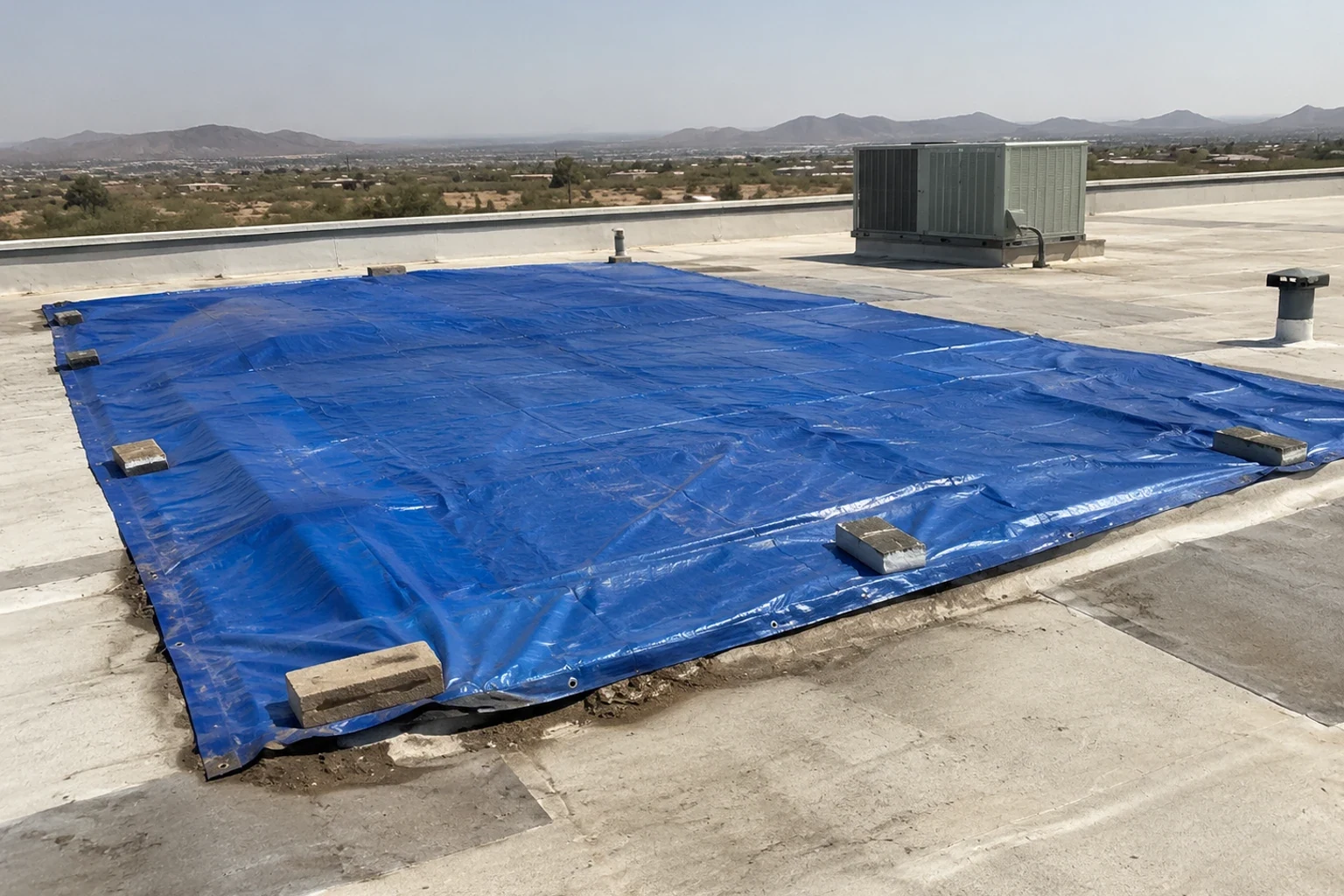
When a leak is active and the cause is clear, we can often stop it the same visit. Cracked sealant gets cut out and replaced. A lifted seam is cleaned and welded or adhered. A pipe boot is replaced. When the cause is not yet clear, we place a temporary dry-in over the likeliest zone, such as a patch, a tarp or a membrane strip, and return to finish the trace in dry conditions. That is the point where our emergency response overlaps with leak work, because an open leak over inventory or electrical gear cannot wait for a full diagnosis.
We also tell you what we cannot yet say. If a leak has wet the insulation, the surface repair stops new water but does not dry the old. A moisture scan shows how far the damage runs. For wide wet zones, our infrared moisture survey maps the insulation so cutting and replacement can be targeted.
Keeping a Leak Log
A leak log makes the next repair faster. Note the date, the room, how heavy the drip was and what the weather was doing. Take a photograph of the stain with a tape measure or a coin for scale. If the stain grows between visits, mark its edge with a pencil and a date. These notes tell us whether we are chasing a seam that opens in the cold, a drain that backs up in cloudbursts or a flashing that fails in wind.
We add our own findings to the same record: the moisture readings, the photographs of the opening we found and the repair we made. A clear log also helps when a tenant, a lender or an insurer asks what happened. It is plain paperwork, and it saves a second diagnosis when the same area leaks again.
If the same spot leaks twice after two repairs, the log is the evidence that the roof around it, not the patch, is the problem.
Leak Patterns by Building Type
Grocery and big-box stores along the State Route 69 corridor carry rooftop equipment, so curb flashing is a first stop when water shows inside. Restaurants in the Entertainment District add kitchen exhaust and grease, which can attack some membranes and clog drains. Downtown Prescott was rebuilt in brick after early fires, and on brick buildings the wall-to-roof junctions are where we look first.
In Dewey-Humboldt and Mayer, a smaller building with few penetrations gives the search fewer places to hide. The same rule holds there: find the path before you pick the patch.
Commercial Roofing Questions
Why does my ceiling leak in a place far from any roof opening?
Water runs along the top of the deck, down a pipe or through wet insulation before it falls. The drip point can be many feet from the opening. We trace upslope from the stain and check each detail along the path, then confirm with a moisture scan or a water test if the cause is not plain.
Do leaks get worse in winter?
They can. Freezing mornings from late October into spring let water freeze inside a seam or flashing and widen it. The leak then shows when the roof warms. We check seams, edges and drains for that damage and recommend a repair before the next freeze.
Can a leak be fixed while it is raining?
A temporary dry-in can, but a lasting repair needs a dry surface. Adhesives and welds will not bond to wet membrane. In a storm we tarp, strip or patch to hold the water out, then return after the roof dries to complete the permanent repair.
What if the leak comes back after a patch?
A repeated leak usually means the patch was in the wrong place or the surrounding membrane is failing. We check the area around the old repair, probe nearby seams and run a moisture scan. If the roof is failing more broadly, we say so and show you the cores.
Will insurance cover a roof leak?
Coverage turns on the cause and the policy. Storm damage is often covered, while wear and maintenance are often not. We document the cause, location and extent with photographs so you have clear evidence for any claim, and we keep a record of the date the leak was found.
Call With the Leak Location
Tell us where the water shows and when. We will come out, trace the path and give you a photographed findings sheet before any repair is priced.
Request a Roof Assessment
Commercial Roofing Questions
Water runs along the top of the deck, down a pipe or through wet insulation before it falls. The drip point can be many feet from the opening. We trace upslope from the stain and check each detail along the path, then confirm with a moisture scan or a water test if the cause is not plain.
They can. Freezing mornings from late October into spring let water freeze inside a seam or flashing and widen it. The leak then shows when the roof warms. We check seams, edges and drains for that damage and recommend a repair before the next freeze.
A temporary dry-in can, but a lasting repair needs a dry surface. Adhesives and welds will not bond to wet membrane. In a storm we tarp, strip or patch to hold the water out, then return after the roof dries to complete the permanent repair.
A repeated leak usually means the patch was in the wrong place or the surrounding membrane is failing. We check the area around the old repair, probe nearby seams and run a moisture scan. If the roof is failing more broadly, we say so and show you the cores.
Coverage turns on the cause and the policy. Storm damage is often covered, while wear and maintenance are often not. We document the cause, location and extent with photographs so you have clear evidence for any claim, and we keep a record of the date the leak was found.