Commercial Roofing in Dewey-Humboldt, AZ
Commercial roof inspection, flashing repair, drain work and replacement planning for Main Street and valley buildings in Dewey-Humboldt, AZ.
Look at the flashing where a wall meets the roof. If the sealant has pulled away from the masonry, water has a path. One detail like that tells an inspector much of what matters about the next few seasons. Humboldt's Main Street holds early twentieth-century buildings that sit under the last smelter smokestack, and Dewey-Humboldt, AZ lies at about 4,580 feet in the Agua Fria River Valley, roughly 15 miles east of Prescott.
Commercial roofs in the town get a walk that probes the seams and photographs each finding, and a written sheet arrives before any repair is priced. A building's age says little about the roof on top of it. That roof may have been redone twice since the walls went up. So we read the roof itself, not the date on the wall.
What a walk covers
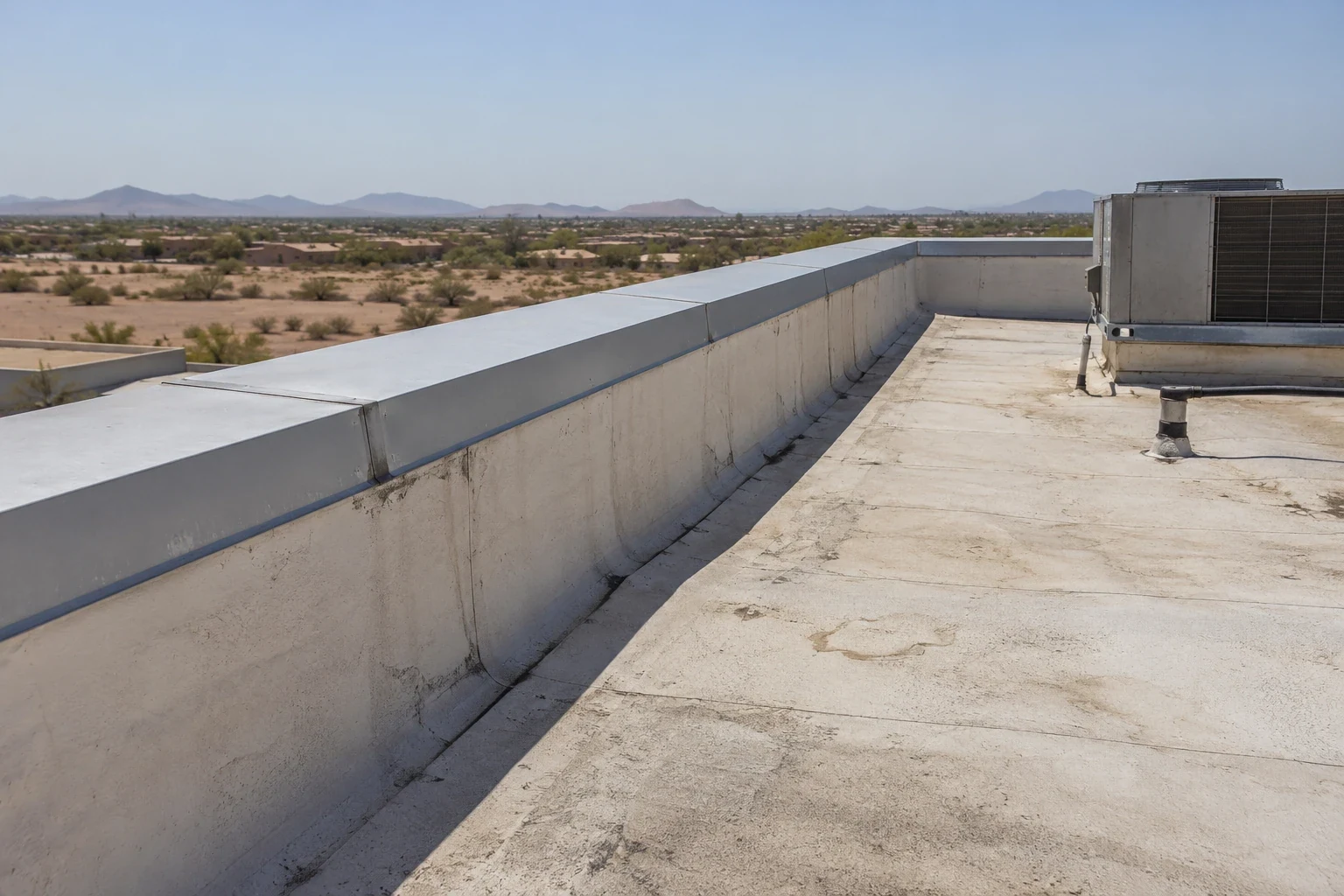
We start at the edges and work inward. Edge metal first, then flashings, then every seam in the field. We probe seams with a blunt tool to find ones that have lost their bond. We pull drain screens and count what is in them. We photograph each penetration, because pipes and vents are where most small leaks begin.
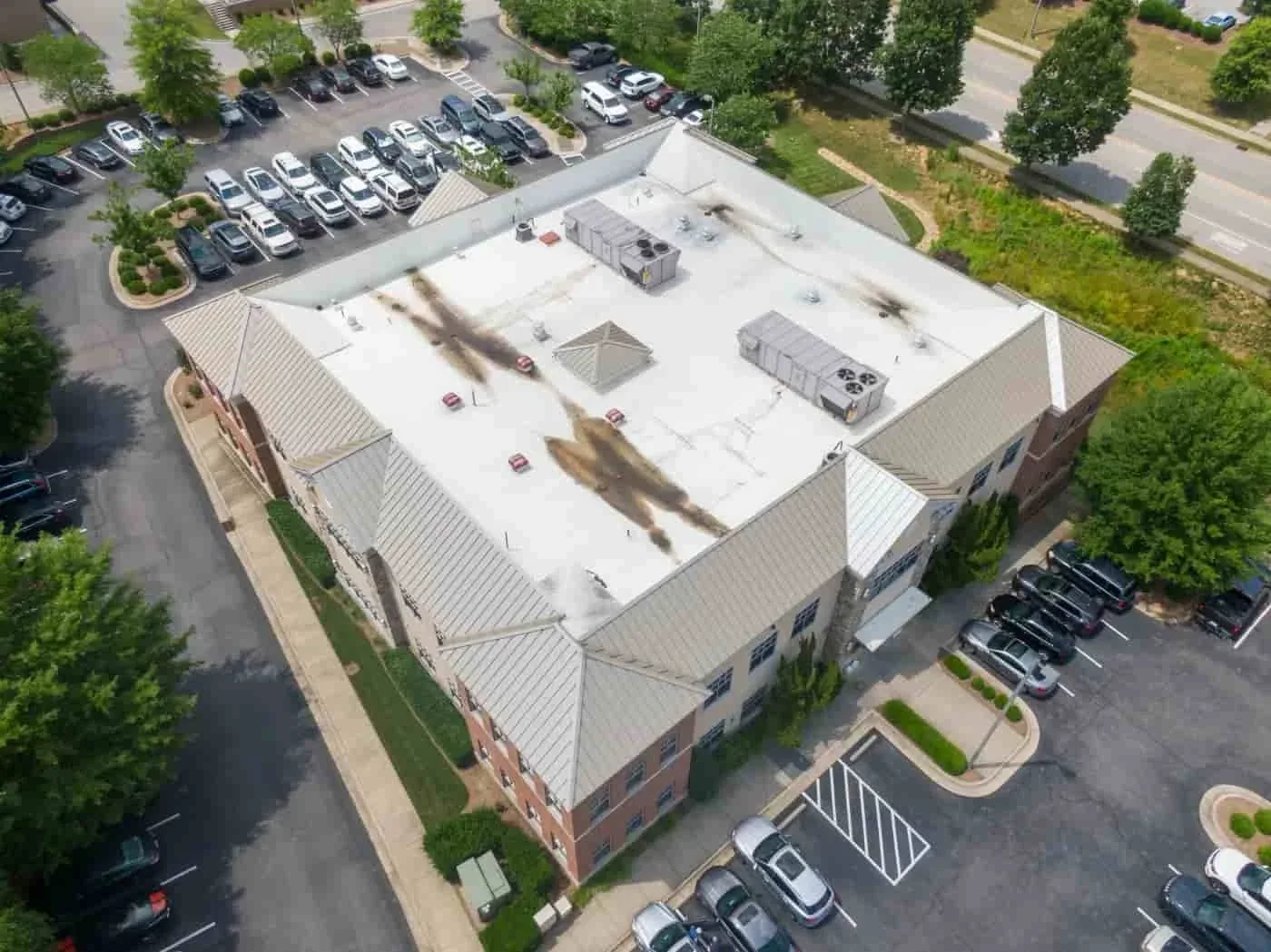
Then we look at the surface between the details. Blisters, split laps and soft spots all get a photo and a location mark. Each finding goes on the sheet with a ranking. The sheet lists what to fix now, what to fix this season and what to watch. Nothing is priced until you have read it. That order ties the repair list to evidence, because you see it first.
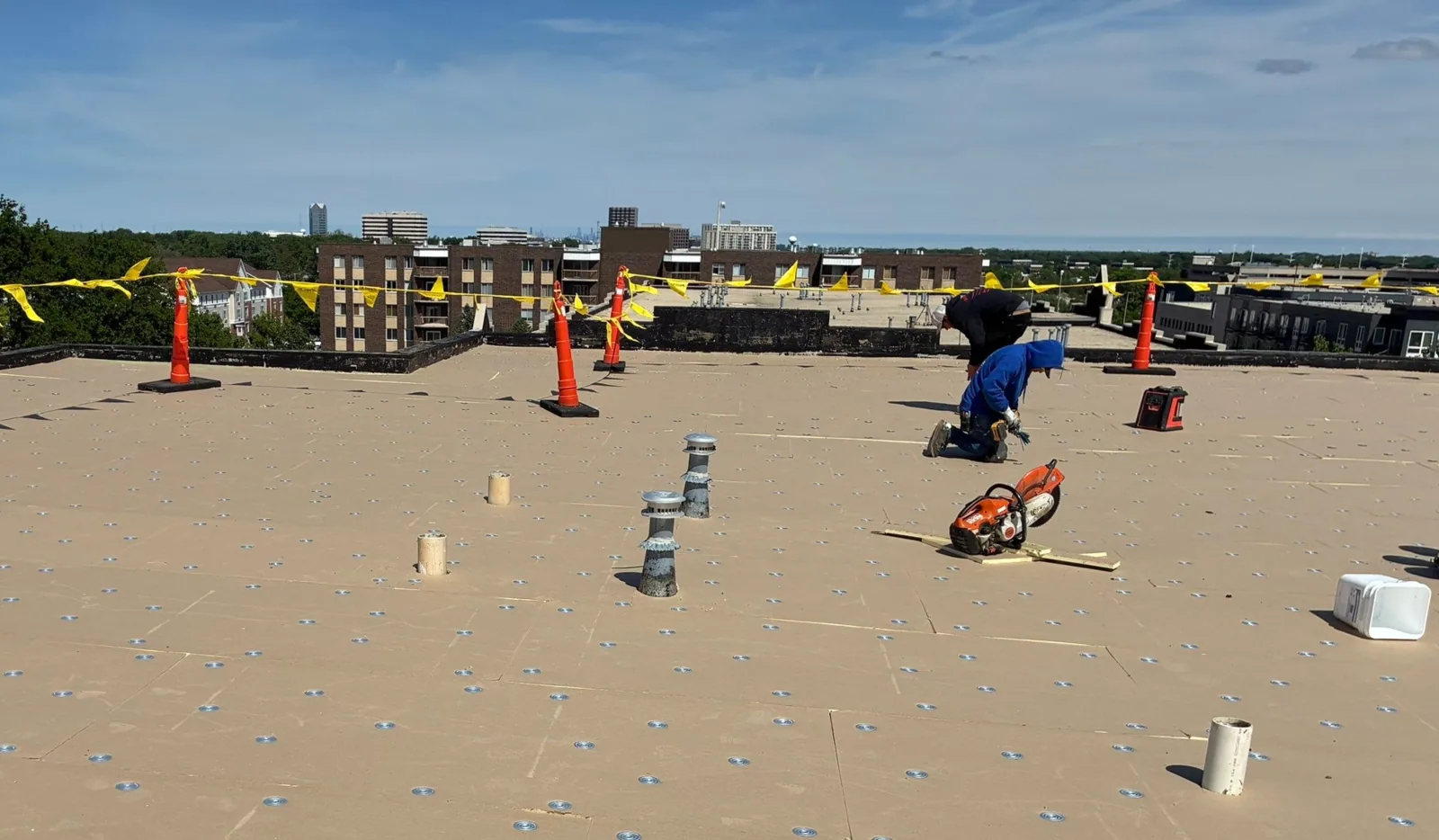
The walk also records what is on the roof that does not belong to it. Old cable, abandoned conduit and unused vent stacks collect debris and split flashings. If a line no longer serves anything, we note it for removal and cap the opening. Fewer penetrations means fewer places for water to enter, and that is a saving that lasts.
Weather in the Agua Fria valley
Dewey-Humboldt averages about 15.9 inches of precipitation a year, and August is the wettest month. Rain comes in short, hard cells. A National Weather Service statement for a storm over the town flagged gusts to 50 mph and half-inch hail. Gusts that strong lift loose edge metal. Half-inch hail can bruise an aging membrane without breaking it.
A bruise is a soft, round mark where the stone crushed the sheet against the insulation. It may not leak this year. It can crack after a winter of freezing mornings. Prescott, 15 miles west, records freezing temperatures from about October 21 to May 1, and daily swings there average nearly 30 degrees. We expect similar movement in the valley, and we treat seams and flashings as parts that work every day. After a storm, we look for bruises and cut a core where one runs deep. The core shows whether the damage reached the insulation.
Older buildings on Main Street
Humboldt's Main Street buildings date from the early twentieth century. The date tells us nothing about the roof they carry today. A building that old may have a flat roof behind a front parapet, or a pitched roof hidden by a false front. We find out on the roof.
Where a parapet exists, we check three places. The cap on top of it. The joint where the wall meets the roof. The scupper through it, which carries water out. A cap with open joints lets water into the wall. A joint with dry sealant lets water into the building. A scupper packed with leaves lets water stand against the wall. Each is cheap to fix early. Each is expensive after a winter of freezing.
Older walls also deserve care on a repair day. We plan fasteners, adhesives and staging so the work does not stress the masonry. A sound edge metal and coping detail is often the first repair on a building like this.
Small roofs follow the same rules
Some commercial roofs in town are modest in size. Small does not mean simple. A small roof has fewer drains, so one clogged drain matters more. It has less field area, so each penetration is a larger share of the risk. We give small roofs the same findings sheet as large ones, with the same photos and the same ranking.
Owners of small buildings often ask whether a coating or a patch will do. Sometimes it will. We cut a core and run a moisture scan first. If the insulation is dry, a repair or restoration may be enough. If it is wet, we mark the wet area and price the section that needs to come out. Either way, you see the boundary on a diagram before you spend.
What to fix now and what can wait
Fix now: open seams, failed flashing, loose edge metal, and any drain that does not clear. Those let water in this season. Fix this year: cracked sealant, worn pitch pockets, and bruises that run deep. Watch: surface wear, minor ponding that dries within a day or two, and small blisters that have not split.
The sheet carries a date and a ranking for each item. Next spring, we walk the same items and compare. If a watch item has grown, it moves up the list. A running record is the cheapest tool an owner has, and it lets a facility director explain a budget request in one page. Our repair work follows the ranking, not the other way round.
Reaching Dewey-Humboldt
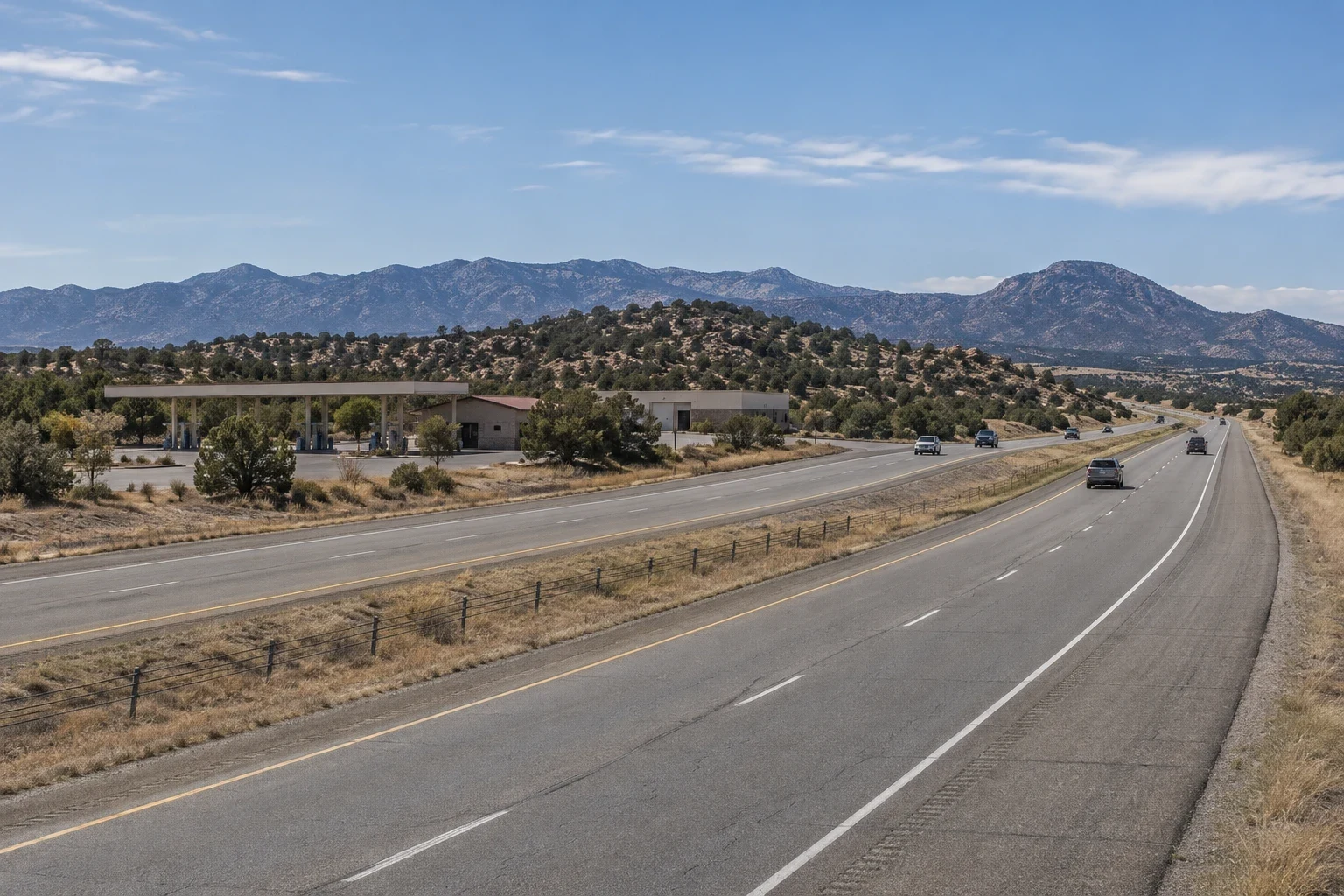
The town sits about 15 miles east of Prescott. From Prescott Valley, the trip runs along the State Route 69 corridor, which also leads to Mayer and on toward Interstate 17. A leak call starts with a visit that stops the water, and the inspection that follows writes the permanent scope. Drain clearing before the July to September monsoon is a routine visit, and the same trip can take in drains and scuppers across several buildings.
Access matters on a valley site. We ask where a ladder can stand, whether the roof has a hatch, and who holds the key. Tenants get notice before the crew goes up. Staging is placed so the sidewalk stays clear on a Main Street frontage, and loose debris is caught before it falls.
Commercial Roofing Questions
Does a historic Main Street building need a different roofer?
It needs a careful one. Age affects how we stage work and fasten new parts to the wall. The inspection and the findings sheet are the same, but the repair plan protects the masonry and any original details the owner wants to keep.
How soon after hail should the roof be checked?
Within a few weeks, before the next freezing morning. Bruises and cracks look minor from the ground. A walk and a core cut at the worst marks tell us whether the insulation took damage, and early photos help with any claim.
Can a leak over inventory be stopped the same day?
Often yes. We place a temporary repair to stop the water, photograph the damage and move the permanent scope to the findings sheet. Emergency calls are taken day and night, all week.
What records should I keep for a small commercial roof?
Keep the findings sheet, the photos, any warranty papers and a note of each repair with its date. That file lets the next inspector see what changed. It also supports an insurance claim if a storm causes damage.
Is coating an option for an older flat roof?
It can be, if the membrane is sound and the insulation is dry. We confirm with a moisture scan before pricing. A coating over wet insulation traps water, so the scan comes first.
Request a walk-through
Ask for a roof walk and tell us about the building and its age. We will deliver a written findings sheet with photos before any repair is priced.
Request a Roof Assessment
Commercial Roofing Questions
It needs a careful one. Age affects how we stage work and fasten new parts to the wall. The inspection and the findings sheet are the same, but the repair plan protects the masonry and any original details the owner wants to keep.
Within a few weeks, before the next freezing morning. Bruises and cracks look minor from the ground. A walk and a core cut at the worst marks tell us whether the insulation took damage, and early photos help with any claim.
Often yes. We place a temporary repair to stop the water, photograph the damage and move the permanent scope to the findings sheet. Emergency calls are taken day and night, all week.
Keep the findings sheet, the photos, any warranty papers and a note of each repair with its date. That file lets the next inspector see what changed. It also supports an insurance claim if a storm causes damage.
It can be, if the membrane is sound and the insulation is dry. We confirm with a moisture scan before pricing. A coating over wet insulation traps water, so the scan comes first.