PVC Roofing in Prescott Valley, AZ
PVC single-ply roofing in Prescott Valley, AZ for kitchens, clinics and plants: grease and chemical resistance, welded seams and cold-season care.
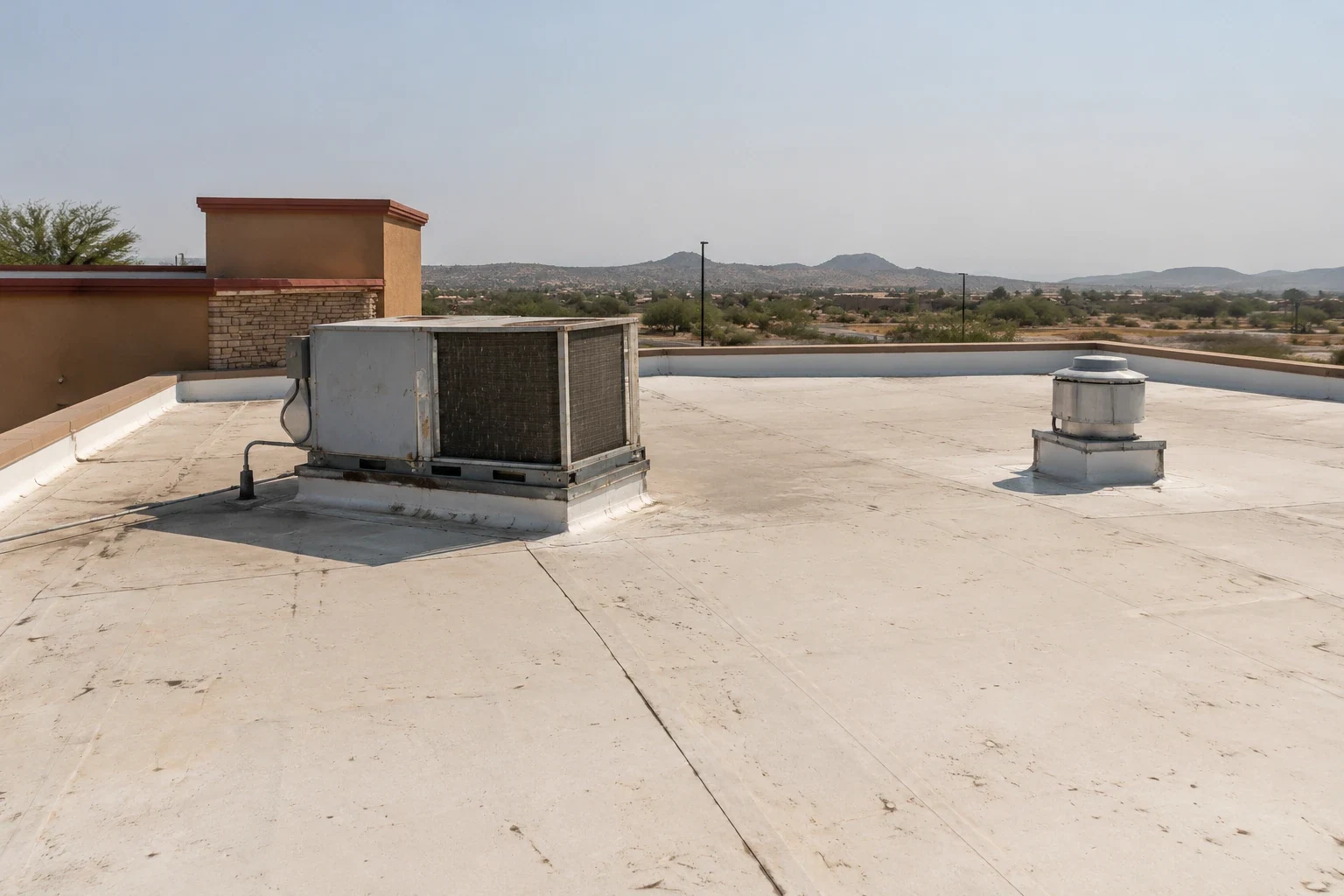
Find the kitchen exhaust fan on the roof. Look at the membrane around it. If the sheet is stained, swollen or soft near the fan, grease is working on it. That is the first reason owners in Prescott Valley, AZ choose PVC. The sheet resists fats, oils and many chemicals that attack other single-ply roofs. The second reason is the seam. PVC seams are welded with hot air into one continuous skin. We walk the roof, probe the seams and tell you what we found.
What PVC is
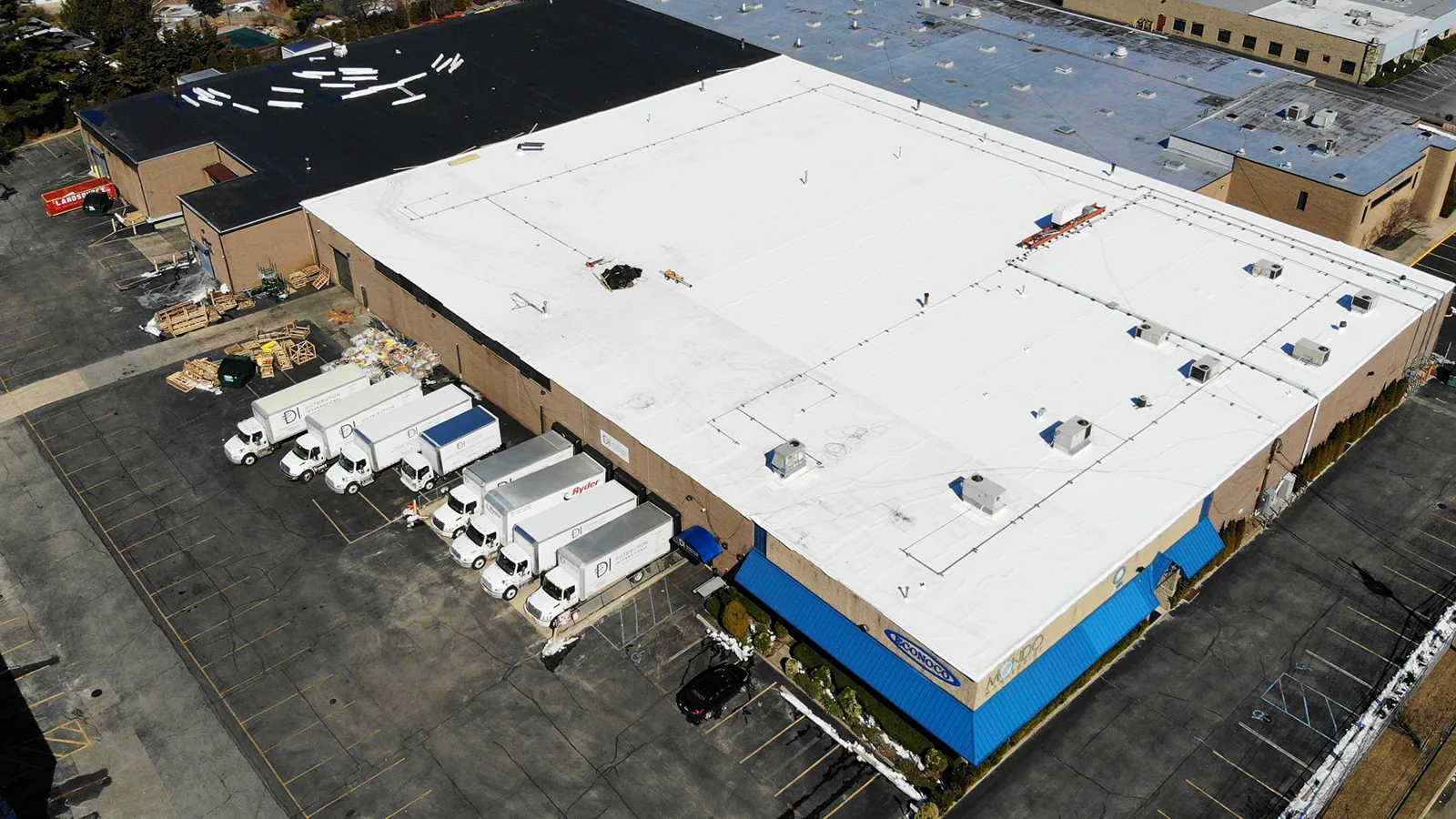
PVC is polyvinyl chloride sheet, reinforced with a polyester scrim. The rolls are wide and usually white or light gray. Seams are fused with hot air. Flashings are formed from the same material. Fasteners, adhesive or ballast hold it down.
PVC costs more than most single-ply sheets. In return it gives a tougher surface against grease, oils and many exhaust fumes. It also holds up well on roofs with heavy foot traffic. We show you the price difference and the building reason behind it. If the roof has no exhaust sources, a cheaper sheet such as TPO may be the better buy, and we say so. The money saved can go to drains, edge metal or insulation, which often matter more to the life of the roof than the choice between two white sheets.
Where grease and fumes reach the roof
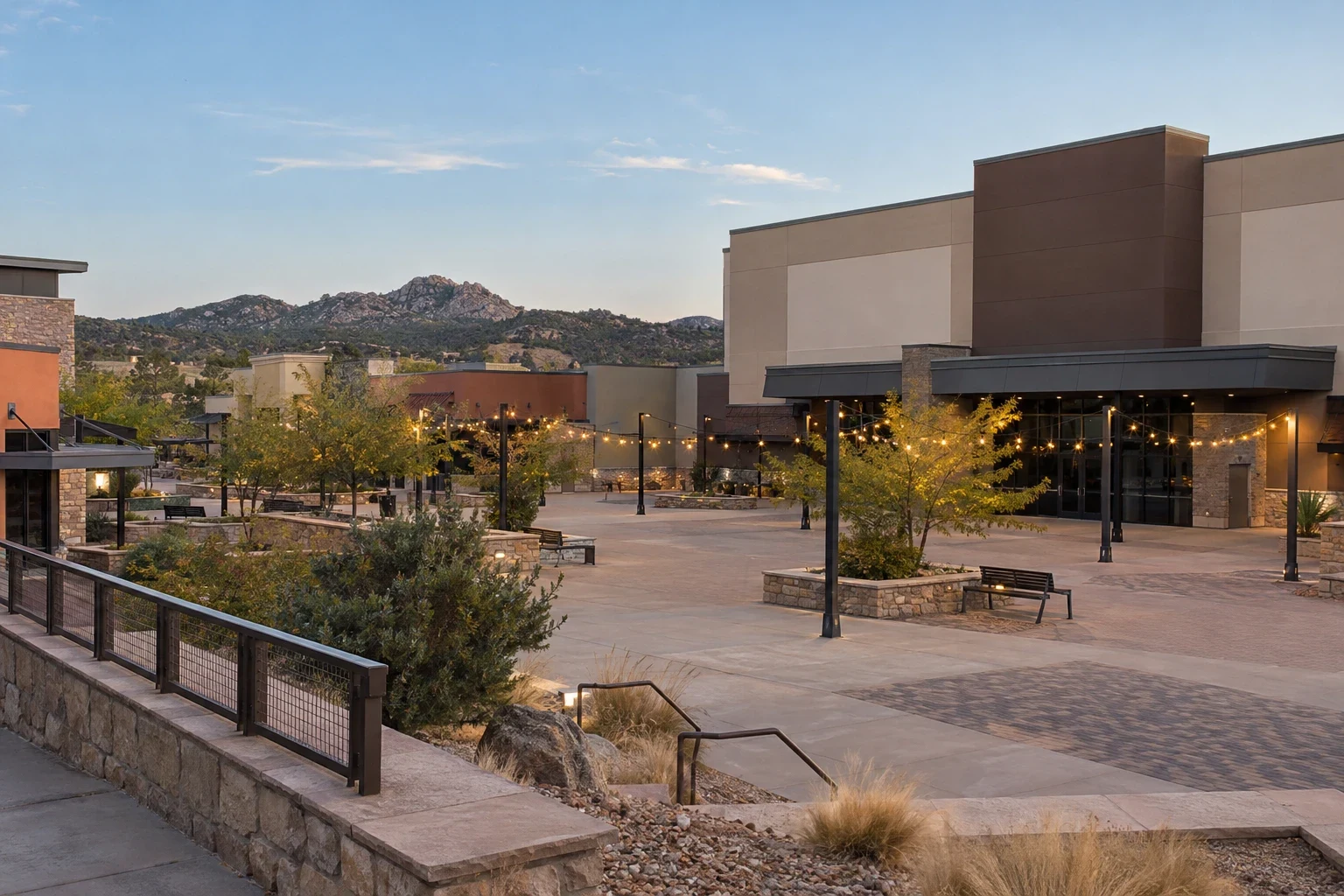
In the Entertainment District, restaurants sit beside a 6,000-seat events center and a theater, and every kitchen hood vents through the roof. Fats condense on the roof near the fan and run toward the nearest low spot. Over a year that film softens many membranes.
We map every exhaust discharge on the roof plan, and an Entertainment District roof is worth checking for staining after busy event weekends. We mark the stained areas. We check the grease trap on each fan, because a full trap spills onto the sheet. Where a roof is already stained, we cut out the damaged sheet and weld in a patch. A sealant smear does not hold on greasy material.
Plants, clinics and labs
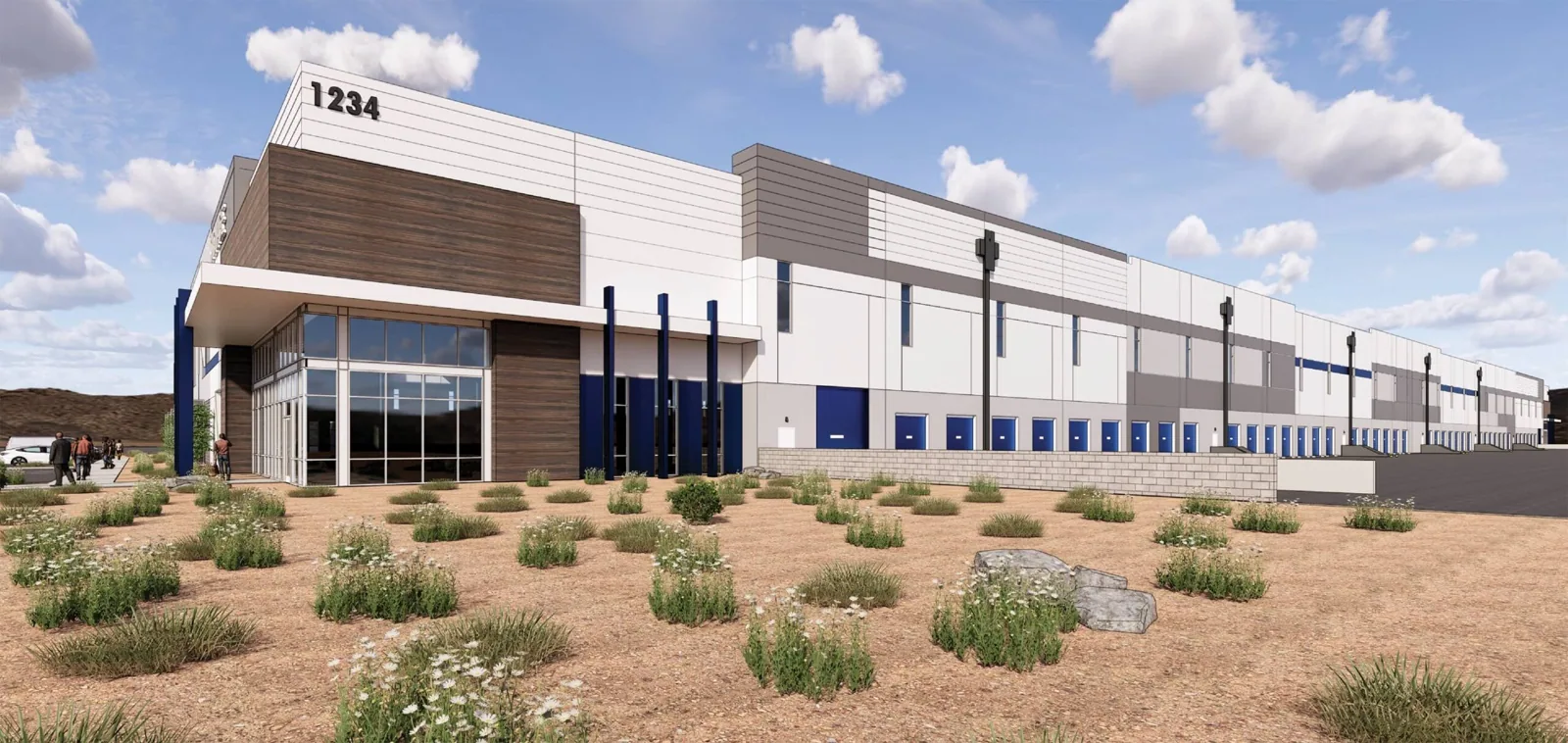
Manufacturers on the east side may vent process air through the roof. MI Windows and Doors, the Ace Hardware Retail Support Distribution Center and Superior Industries are among the east-side employers. What each plant emits is the facility team's knowledge, so we ask, and then we read the roof. Staining, chalking or soft spots tell us a lot. Medical buildings near the Yavapai Regional Medical Center East Campus run rooftop air handling too, and the roof around that equipment needs a sheet that stays intact.
A manufacturing plant roof can carry more penetrations than a retail roof. Each stack, vent and pipe is a weld detail. We count them on the first walk. A count of forty penetrations tells us the roof will take longer to flash than to cover, and the price reflects that. A restaurant roof may carry only four, but each one needs grease protection.
For a clinic roof, a low-odor PVC install avoids the smell of hot asphalt near air intakes.
What freeze and thermal swing do
The freeze season stretches from late October to early May, and the daily swing near thirty degrees tugs on every seam. A cold PVC sheet is stiffer than a warm one. It does not like to be bent hard in a freeze. So we install in the warmer months when we can, and we pre-form corner flashings indoors when we cannot. Pre-forming also helps in wind. Ridge-top gusts off Glassford Hill can make a long sheet hard to handle, so the crew works in smaller panels on windy days.
Monsoon cells in July and August bring hail and gust fronts. Pea-sized hail, like the July 20, 2026 storm, usually leaves a PVC sheet alone. After any hail event we walk the roof and look for bruises over soft insulation.
Snow matters too. Prescott gets about ten inches of seasonal snow. A heavy wet snow sits on the roof and melts into the drains. If the screens are packed, water backs up and finds the seams. We clear and photograph the drain screens before winter, and we check the scuppers again in spring.
How to check it yourself
You can learn a lot from the ground and the hatch. Look at the roof around the exhaust fans from the ladder. Is the sheet clean or glossy with grease? Check the drain screens after a storm. Look for loose edge metal. Take a photo of anything odd and send it to us. Include the date, and stand where you can see the roof edge in the frame. A photo with a date is worth more than a memory. A commercial roof inspection goes further, with seam probes and cores.
What to repair now and what can wait
Repair now: open seams, split flashings, grease-softened sheet, cracked boots. Repair soon: worn walk paths, sealant that has hardened. Watch: light staining on sound sheet, faded surface. The same discipline applies to a roof that is already KEE-modified PVC: we look at whether the plasticizer is holding, and we probe the seams the same way. We sort the findings that way and show the cost of each tier. Photos go with every line. If the sheet around a hood is soft, you will see it. If a seam is lifting, you will see the gap. The repair list matches the photos, one for one, so nobody has to take our word for it. When a roof is sound but tired, a coating restoration is an option. When wet insulation turns up in the cores, a replacement with a new vapor path may be the right call.
Commercial Roofing Questions
Is PVC worth the extra cost on a restaurant roof?
Usually yes near the kitchen exhaust, where grease attacks other sheets. We recommend PVC around the hoods and in the zones that drain from them, and we compare it with a cheaper sheet for the rest of the roof. The photos of stained roofs we find show why. You see the cost and the reason side by side.
Can PVC be installed in cold weather?
It can, with care. The deck must be dry and free of frost, and welds must be tested before work starts each day. We recommend saving large runs for the warmer months and doing small repairs in cold months. In a freeze we pre-form corners and flashings where it is warm.
How does PVC compare with TPO?
Both are welded single-ply sheets. PVC resists grease and chemicals better and usually costs more. TPO suits most dry roofs. We recommend PVC where exhaust reaches the sheet and TPO elsewhere, and we write the reason in the findings sheet.
What does a bad weld look like?
A good weld shows a small bead of melted material at the edge. A bad one shows gaps, burn marks or a lifted lip. We probe every seam with a thin tool, and we photograph any lift. A short weld and a cover strip fix most problems if they are caught early.
Can an old roof be recovered with PVC?
Often, when cores come back with dry insulation and a firm deck. Some older roofing materials react with PVC, so we add a separation layer. We recommend a core cut at several points, not one, so the whole roof is represented in the findings.
Request a walk-through
Ask us to walk the roof and the exhaust points. You receive a written findings sheet with seam probes, stain maps and photos before any PVC work is priced.
Request a Roof Assessment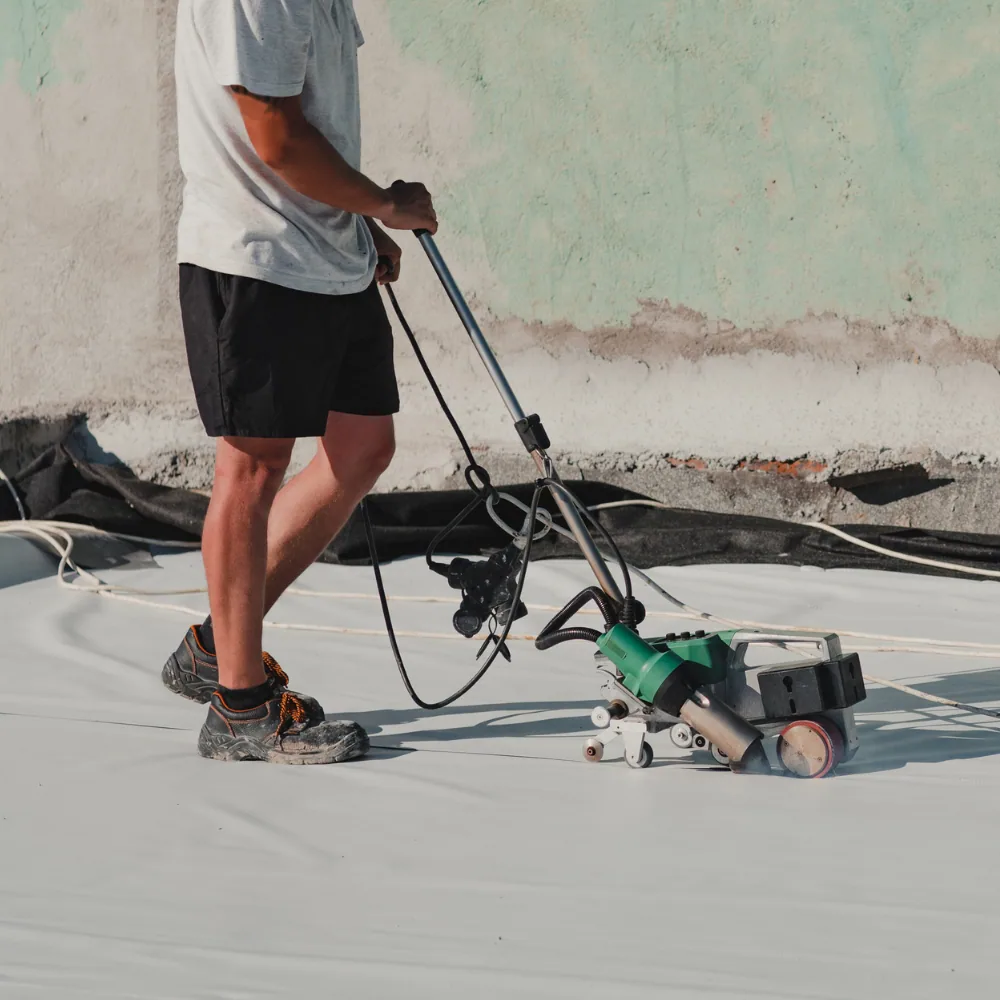
Commercial Roofing Questions
Usually yes near the kitchen exhaust, where grease attacks other sheets. We recommend PVC around the hoods and in the zones that drain from them, and we compare it with a cheaper sheet for the rest of the roof. The photos of stained roofs we find show why. You see the cost and the reason side by side.
It can, with care. The deck must be dry and free of frost, and welds must be tested before work starts each day. We recommend saving large runs for the warmer months and doing small repairs in cold months. In a freeze we pre-form corners and flashings where it is warm.
Both are welded single-ply sheets. PVC resists grease and chemicals better and usually costs more. TPO suits most dry roofs. We recommend PVC where exhaust reaches the sheet and TPO elsewhere, and we write the reason in the findings sheet.
A good weld shows a small bead of melted material at the edge. A bad one shows gaps, burn marks or a lifted lip. We probe every seam with a thin tool, and we photograph any lift. A short weld and a cover strip fix most problems if they are caught early.
Often, when cores come back with dry insulation and a firm deck. Some older roofing materials react with PVC, so we add a separation layer. We recommend a core cut at several points, not one, so the whole roof is represented in the findings.