Edge Metal, Coping and Gutters in Prescott Valley, AZ
Edge metal, coping and gutter repair in Prescott Valley, AZ: cleats, joints and fasteners checked and reset against gust fronts and freezing mornings.
Look at the coping cap from the ground. If one section sits a half inch off the wall, wind has already found it. That small gap is where a gust front starts to peel a roof. In Prescott Valley, AZ, edge metal is the first line against short, violent monsoon cells, and the first place we look after one. Commercial Roofing Prescott Valley repairs, resets and replaces edge metal, coping and gutters on commercial roofs, with a written sheet that shows what we found at every joint.
The edge is a small part of the roof. It decides what happens to the rest.
What Edge Metal Does
Edge metal covers the line where the roof meets the air. It holds the membrane down at the perimeter, sheds water away from the wall and keeps wind from getting under the sheet.
- Coping caps sit on top of parapet walls and keep water out of the wall.
- Drip edge and fascia cover the roof edge on buildings without parapets.
- Gutters and downspouts carry water off the edge to the ground.
- Gravel stops hold the edge of built-up and some modified bitumen roofs.
- Counterflashing covers the top of the base flashing at a wall.
Each piece depends on cleats, fasteners and sealant. If any of them fail, the piece moves. If it moves, the membrane under it loses its grip, and wind can lift it from there.
What Wind Does
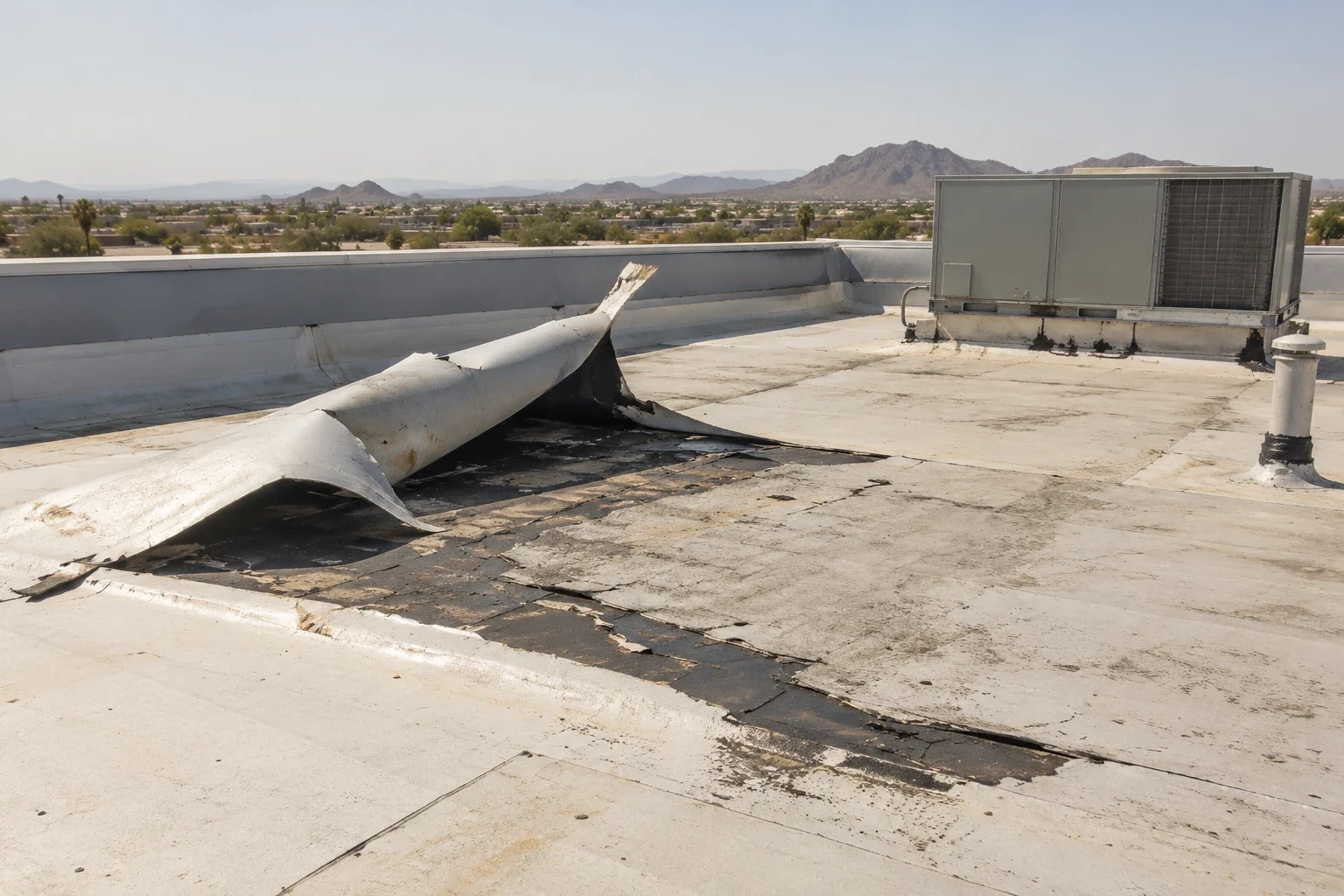
Wind starts at corners and edges. A gust front, the burst of cold air that races ahead of a monsoon cell, pushes up under any loose edge. Once the metal lifts, wind gets under the membrane. A fluttering membrane stretches, tears its seams and pulls its fasteners.
Prescott Valley sits near 5,100 feet, and Glassford Hill, a 6,177-foot former volcano, exposes nearby buildings to ridge-top wind. On May 6, 2025, a small tornado north of town was videoed ripping a few shingles off a roof. An NWS Flagstaff special weather statement once flagged a storm over Dewey-Humboldt with gusts to 50 mph and half-inch hail. The July 20, 2026 storm in Prescott Valley brought strong wind with heavy rain and pea-sized hail, and it knocked down traffic signals and trees. These are the loads edge metal must hold.
After any strong cell, our storm damage roof repair walk starts at the edges for this reason. A lifted corner found the day after costs a patch. The same corner found after a second cell costs a section of membrane.
What Freeze and Thaw Do
Daily temperature swings in Prescott average nearly 30 degrees. Metal expands in the afternoon and shrinks overnight. Over a season, joints work, sealant cracks and fasteners back out. Freezing mornings typically run from about October 21 through May 1, and water that gets into a joint freezes, expands and pries the metal away from the wall.
Gutters take a different hit. Ice builds in them, adds weight and pulls them off their brackets. Ice at a downspout holds the next melt on the roof. A split seam in a gutter leaks onto the wall below and stains the face. We look for each of these in a winter walk and again in spring.
How to Check It Yourself
You can spot most edge problems from the ground. Walk the building and look up. Check for coping sections that sit crooked or show a gap at a joint. Look for sealant that has cracked or pulled away. Look for fascia that bows outward, and gutters that sag or pull from the wall. Look for rust stains and water trails below the edge.
Then look at the ground. Granules, grit or fasteners on the ground below the edge mean something is moving. Water stains on the wall under a gutter mean a leak or an overflow. Photograph each one with a date. If you see any of them, request a walk, and we will check the roof side of the same edge.
Rust is a late sign. By the time a stain shows below a fastener, water has been working at it for a season. Early signs are smaller: a bright spot where a cap has rubbed, a hairline in sealant, a joint that no longer sits flush.
What We Repair
Repairs follow the finding. If the sealant has failed and the metal is sound, we clean the joint and reseal it. If the cleat has failed, we reset the metal on a new cleat. If the metal is bent or corroded, we replace the section. If the fasteners have backed out, we replace them with the right size and spacing.
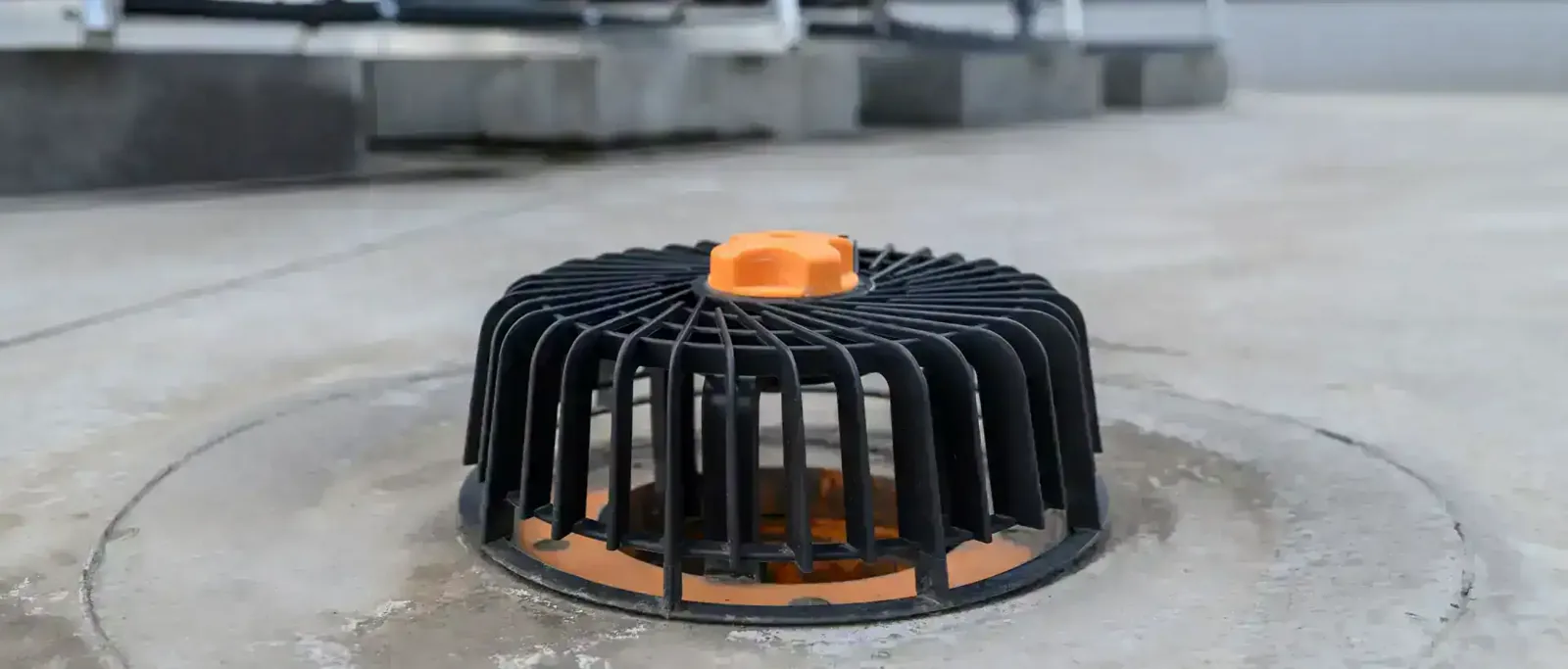
On a parapet, we check the wall cap, the counterflashing and the membrane turn-up as one assembly. A new cap over a failed turn-up still leaks. Our wind damage repair work starts here. On gutters, we clear, reslope and reseal, and we add brackets where ice has pulled them down. We check that downspouts discharge away from the foundation, and that they connect to the roof drains and scuppers that serve the roof.
Cost follows length, height and access. A short run at a low roof is a quick job from a ladder. A long parapet run needs a lift. Corners, returns and transitions take more time than straight runs, because they need custom pieces. We list each driver beside the item in the findings sheet.
Where We See It
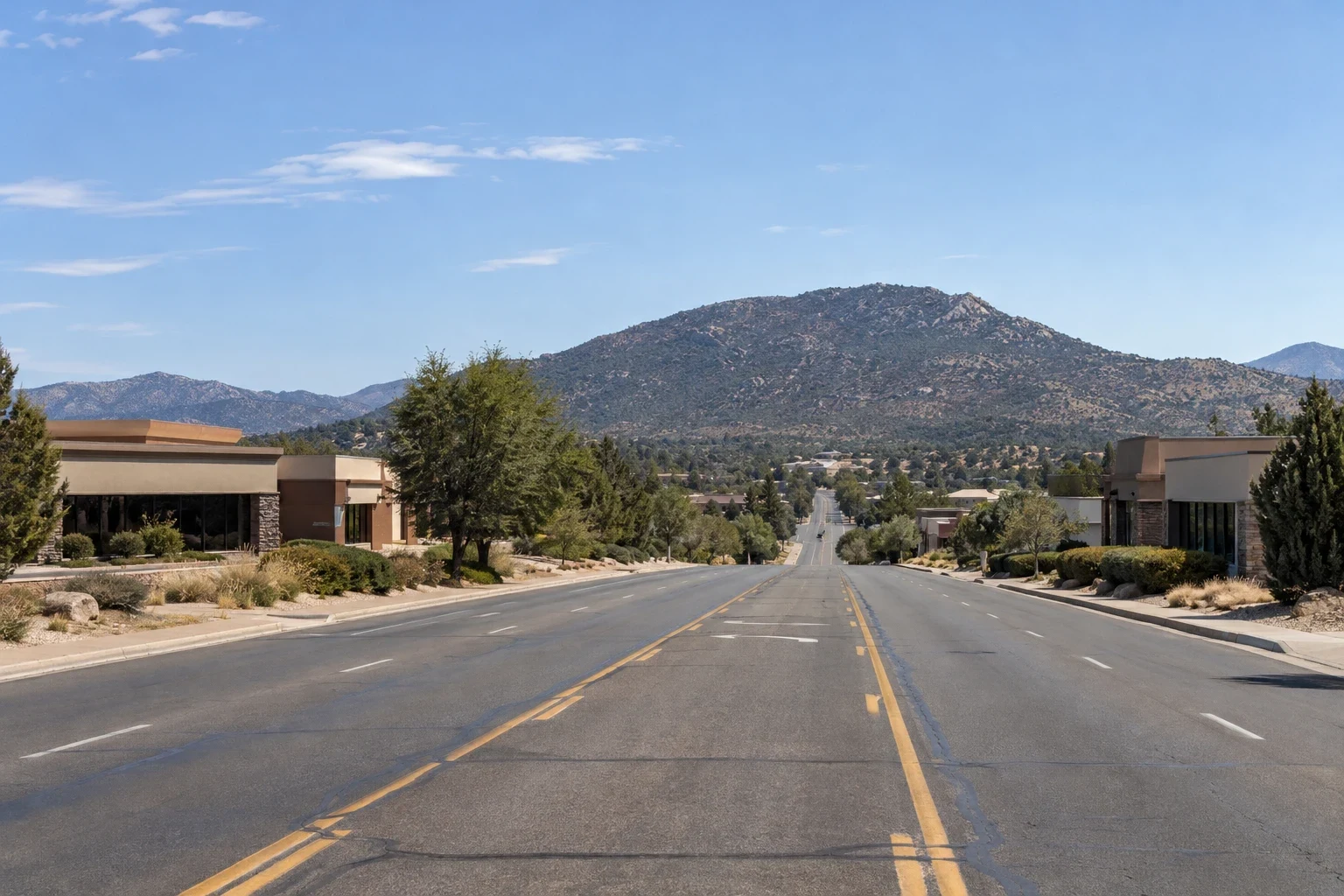
Retail rows have many edges. Glassford Hill Marketplace and The Crossroads are retail power centers with low-slope buildings and a row of inline shops, so the Glassford Hill Road corridor has long runs of coping and fascia to check after every strong cell. The SR 69 corridor, a six-lane road linking Prescott Valley to downtown Prescott and Interstate 17, carries big-box and grocery roofs, where Walmart, Fry's, Home Depot and Safeway are major employers.
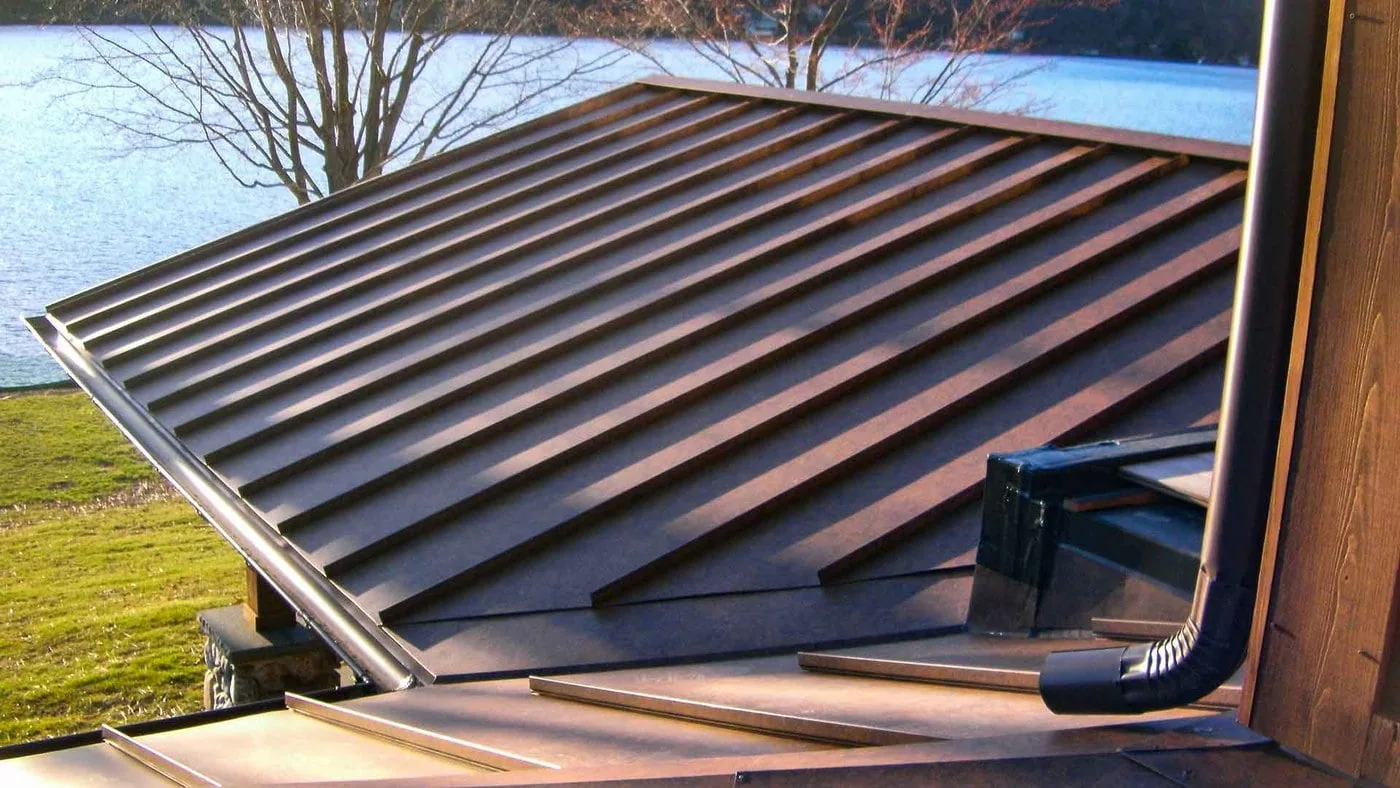
On the east side, Fain Road links SR 89A and SR 69, and manufacturers and distributors operate there. New industrial buildings at Big Sky Business Park tend toward metal or single-ply on tilt-up and steel buildings. Roofs like these may use a standing seam metal roof with its own trim and edge details, and each has to be checked against the maker's pattern.
Commercial Roofing Questions
How often should coping and edge metal be checked?
Twice a year at least, before the July monsoon and before freezing mornings begin around October 21. Add a check after any strong gust front. A loose joint can lift further in a single storm.
Can I fix a loose coping cap myself?
Do not step on a roof edge. From the ground, photograph the gap and request a walk. A loose cap often means a failed cleat or a bad turn-up behind it, and a surface patch hides the cause.
Why do gutters pull off the wall in winter?
Ice adds weight, and freeze-thaw loosens fasteners over a season. When a gutter sags, water backs up behind it. We reset brackets, reslope the run and clear the downspout so ice has a path out.
Is it worth replacing edge metal before the membrane?
If the metal has failed and the membrane is sound, yes. Failed edge metal ruins a good membrane. If both are near the end of life, we price them together, since the edge is cheaper to do while the roof is open.
Will new edge metal match the old?
We match profile, gauge and finish where we can. Metal comes in standard shapes, and a custom brake can form others. Color may differ slightly on an older building, and we show the sample before we order.
Request a Walk-Through
Request a walk-through, and we will send a written findings sheet with photos of every joint, cleat and gutter before any repair is priced.
Request a Roof Assessment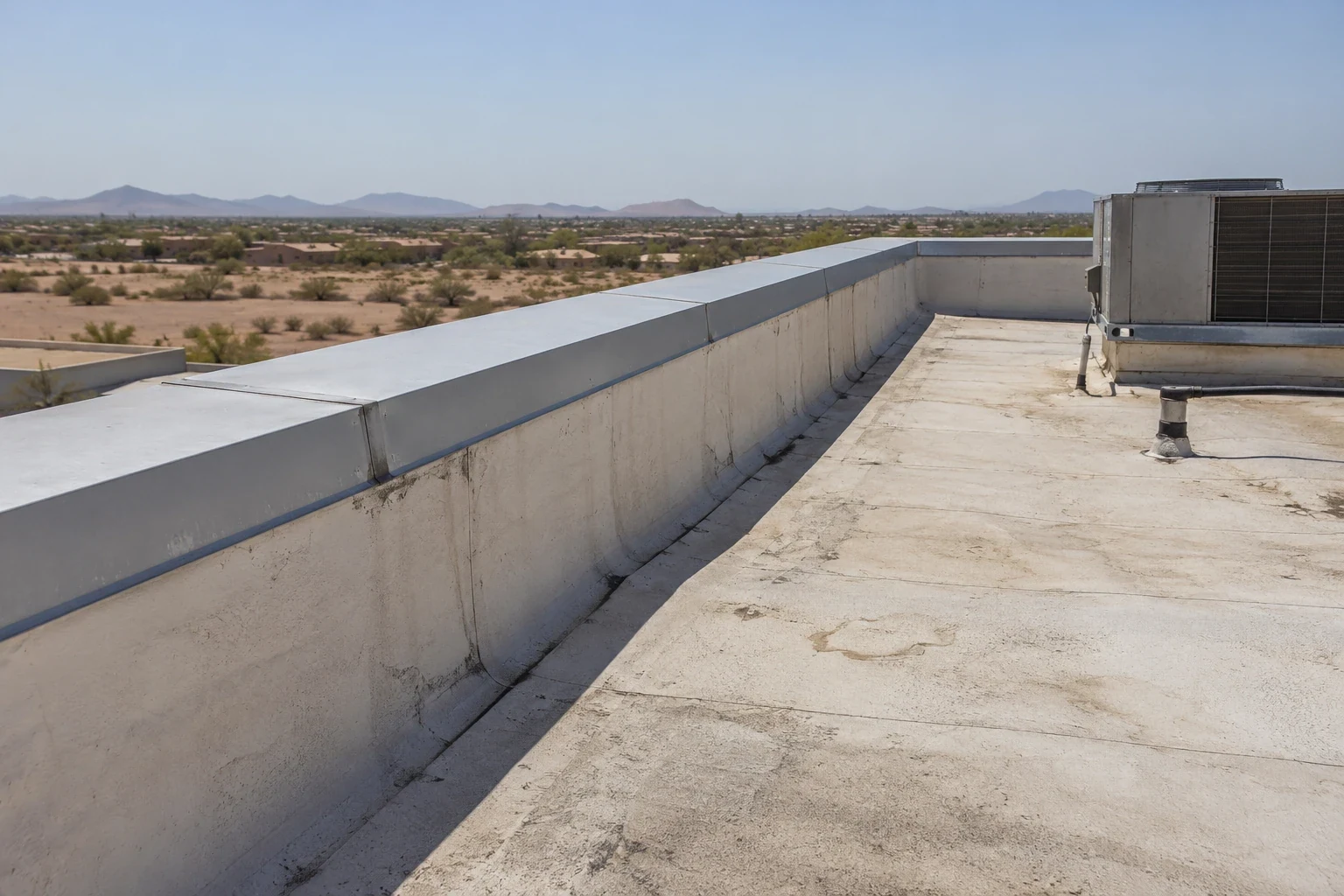
Commercial Roofing Questions
Twice a year at least, before the July monsoon and before freezing mornings begin around October 21. Add a check after any strong gust front. A loose joint can lift further in a single storm.
Do not step on a roof edge. From the ground, photograph the gap and request a walk. A loose cap often means a failed cleat or a bad turn-up behind it, and a surface patch hides the cause.
Ice adds weight, and freeze-thaw loosens fasteners over a season. When a gutter sags, water backs up behind it. We reset brackets, reslope the run and clear the downspout so ice has a path out.
If the metal has failed and the membrane is sound, yes. Failed edge metal ruins a good membrane. If both are near the end of life, we price them together, since the edge is cheaper to do while the roof is open.
We match profile, gauge and finish where we can. Metal comes in standard shapes, and a custom brake can form others. Color may differ slightly on an older building, and we show the sample before we order.