Standing Seam Metal Roofing in Prescott Valley, AZ
Standing seam metal roofing in Prescott Valley, AZ: snow shedding, clip movement, wind off Glassford Hill, hail dents and what we check each year.
Look at the clips under a standing seam panel, or at the line of the seam itself. If the seams run straight and the panels sit flat, the roof is moving the way it should. In Prescott Valley, AZ a metal roof lives with a thirty-degree daily swing, freezing mornings and snow that slides. Panels grow and shrink. Clips let them slide. When a clip binds, a panel buckles or a seam opens. So we walk the roof, check the trim, and report what we found before anyone talks about repairs.
What standing seam is
A standing seam roof has raised seams where panels interlock. Fasteners hide under the seam on clips that let the panel move. There are no exposed screw heads in the field. Panels are roll-formed from steel or aluminum coil, often on site, so one panel can run the full slope.
The system lives or dies on its details. The eave, the ridge, the penetrations and the transitions to other roofs carry the movement. A good panel with a bad detail still leaks. We read the details first.
Penetrations are the usual weak point. A pipe or vent through a seamed panel needs a curb or boot that lets the panel slide. A boot fixed hard to the panel tears as the metal moves. We press each boot, check the sealant and look for staining below it. A penetration flashing that allows movement lasts longer than one that does not.
Snow, ice and sliding loads
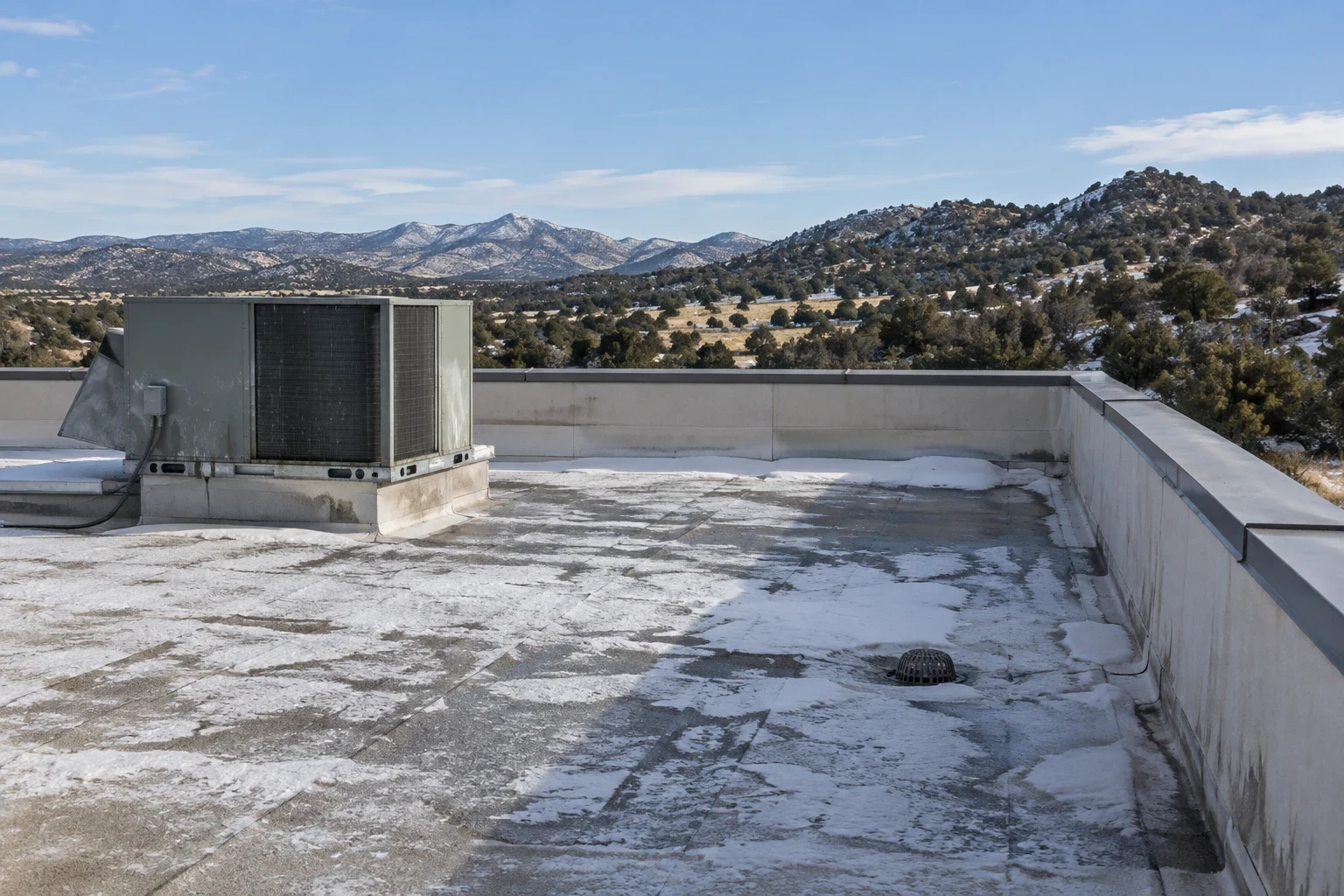
Prescott averages about ten inches of seasonal snow, and the cold season holds from late October into the first days of May. Snow slides off a smooth metal slope in a rush. It can strike gutters, rooftop units and anything below. Ice can form at the eave and push water under the panels.
We check three things. Are snow guards in place where people or cars pass below? Are the gutters and edge metal fastened tightly? Is there an ice path at the eave? A snow and ice repair often begins with a bent gutter or a torn eave trim. We photograph each.
Gutters need their own pass. Melt runs to the eave and refreezes overnight. Ice can pull a gutter off its hangers or fill it solid. We check hanger spacing, pitch and downspouts. A clear gutter before the first freeze prevents most winter eave damage. We also look at the screens and the heat trace, if there is any.
Wind off the hill and gust fronts
Glassford Hill rises 6,177 feet and exposes nearby buildings to ridge-top wind. Monsoon cells bring gust fronts too. Wind lifts a metal roof from the edges and corners first. Clip spacing and trim fastening decide whether it holds.
After a storm we walk the perimeter. We look for lifted trim, loose ridge caps and seams that have opened a hair. A seam probe tells us whether the lock is tight. We also look at the ridge and hip caps, since gusts lift them first and a lifted cap lets wind-driven rain under the panels. A wind damage repair that starts at the edges is usually small. One that starts mid-field means something else is wrong.
Hail and dents
Hail dents metal. Pea-sized stones, like those in the July 20, 2026 storm, leave small marks on light-gauge panels and rarely harm the seam. Larger stones dent more and can crack paint. A dent is often cosmetic. A crack in the finish is not, because bare metal can rust. Rust at a scratch spreads under the paint over several seasons. We touch up small scratches and recoat large ones. The record shows which dents are cosmetic and which have broken the finish.
After a storm we mark dents on a plan and photograph them. We check the paint at each. A hail damage record helps with an insurance review, because it shows the pattern and the date.
Where metal fits in town
Large industrial and distribution roofs on the east side are natural candidates. Manufacturers and distributors along Fain Road are the first place to weigh a metal panel. Big Sky Business Park, with its pad zoned for commercial use, could take a metal roof from day one. Aircraft hangars near an airfield like Prescott Regional Airport, a 760-acre field with three runways, are a natural place to weigh long metal spans. We confirm the framing can carry the load before we propose any of it. Retail roofs on SR 69 and Glassford Hill Road are low-slope, so a metal panel there often means a framed overlay or a canopy and parapet feature. The Entertainment District's large-span assembly roofs raise a different question: long spans over public assembly. We read the structure and the drainage first.
What to repair now and what can wait
Repair now: open seams, loose trim, torn eave metal, clips pulled from the deck, leaking penetrations. Repair soon: failing sealant, scratched paint down to bare metal. Watch: fading, small dents, light chalking. The sheet places each finding in a tier with its price. A worn finish can sometimes be refreshed with a silicone coating. A roof with a failed deck needs replacement.
What to ask for in writing
Get the panel gauge, the clip spacing, the finish and the warranty terms on paper. Get the snow guard layout if people walk below, and the expansion detail at the ridge, since that is where a binding panel shows first. All of it goes on the findings sheet next to the photographs. For an older roof, a metal roof retrofit may cost less than starting over.
Commercial Roofing Questions
Do metal roofs need snow guards in Prescott Valley?
Where people, cars or equipment sit below the eave, yes. Snow slides in a rush off smooth metal. We recommend guards above entrances, walkways and parking. We mark the layout on the roof plan and photograph the finished install. Guards cost far less than a damaged car or a hurt visitor.
Why does my metal roof make popping sounds?
Panels expand and contract with the thirty-degree daily swing. A clip that binds or a trim that pinches makes a pop as the panel finally moves. It is often harmless, but a pattern near one spot points to a binding detail. We walk the roof, find the spot and photograph it.
Does hail void a metal roof warranty?
It depends on the warranty terms, and many exclude cosmetic dents. We recommend reading the exclusions and keeping dated photos of any damage. We keep a record of each storm and the dents we find, which helps in a claim. The record lists the date, the panel locations, the dent size and the state of the paint, so an adjuster can see the pattern without a second visit.
Can standing seam go over an old flat roof?
On a low slope, a framing system is built over the old roof to give the metal pitch. We test the existing deck and structure first. If the old roof is wet, the wet areas come out. We show the core photos that decide it, along with the deck condition, the fastener pull-out readings where we take them and the added load the new framing puts on the structure.
How often should a metal roof be inspected?
Plan a walk once the monsoon ends and another ahead of the first freeze. Loose trim, clogged gutters and open sealant all show up on those two walks. Keep the yearly photographs together so each season can be set against the last.
Request a walk-through
Ask us to walk the roof. You receive a written findings sheet with seam probes, trim checks and photos before any standing seam repair or replacement is priced.
Request a Roof Assessment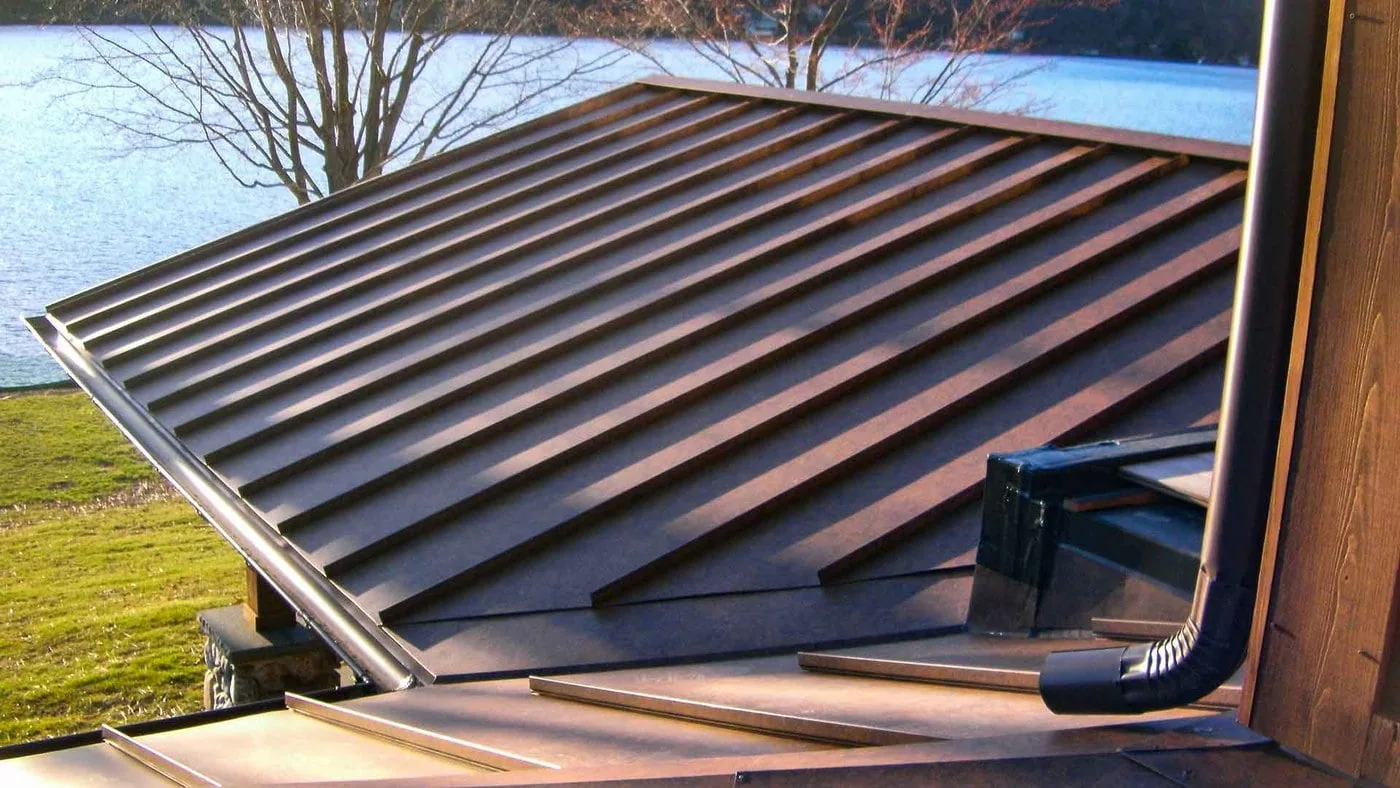
Commercial Roofing Questions
Where people, cars or equipment sit below the eave, yes. Snow slides in a rush off smooth metal. We recommend guards above entrances, walkways and parking. We mark the layout on the roof plan and photograph the finished install. Guards cost far less than a damaged car or a hurt visitor.
Panels expand and contract with the thirty-degree daily swing. A clip that binds or a trim that pinches makes a pop as the panel finally moves. It is often harmless, but a pattern near one spot points to a binding detail. We walk the roof, find the spot and photograph it.
It depends on the warranty terms, and many exclude cosmetic dents. We recommend reading the exclusions and keeping dated photos of any damage. We keep a record of each storm and the dents we find, which helps in a claim. The record lists the date, the panel locations, the dent size and the state of the paint, so an adjuster can see the pattern without a second visit.
On a low slope, a framing system is built over the old roof to give the metal pitch. We test the existing deck and structure first. If the old roof is wet, the wet areas come out. We show the core photos that decide it, along with the deck condition, the fastener pull-out readings where we take them and the added load the new framing puts on the structure.
Plan a walk once the monsoon ends and another ahead of the first freeze. Loose trim, clogged gutters and open sealant all show up on those two walks. Keep the yearly photographs together so each season can be set against the last.