Silicone Roof Coatings in Prescott Valley, AZ
Silicone roof coatings in Prescott Valley, AZ: ponding tolerance, monsoon-season timing, cold-cure limits, adhesion tests and film thickness checks.
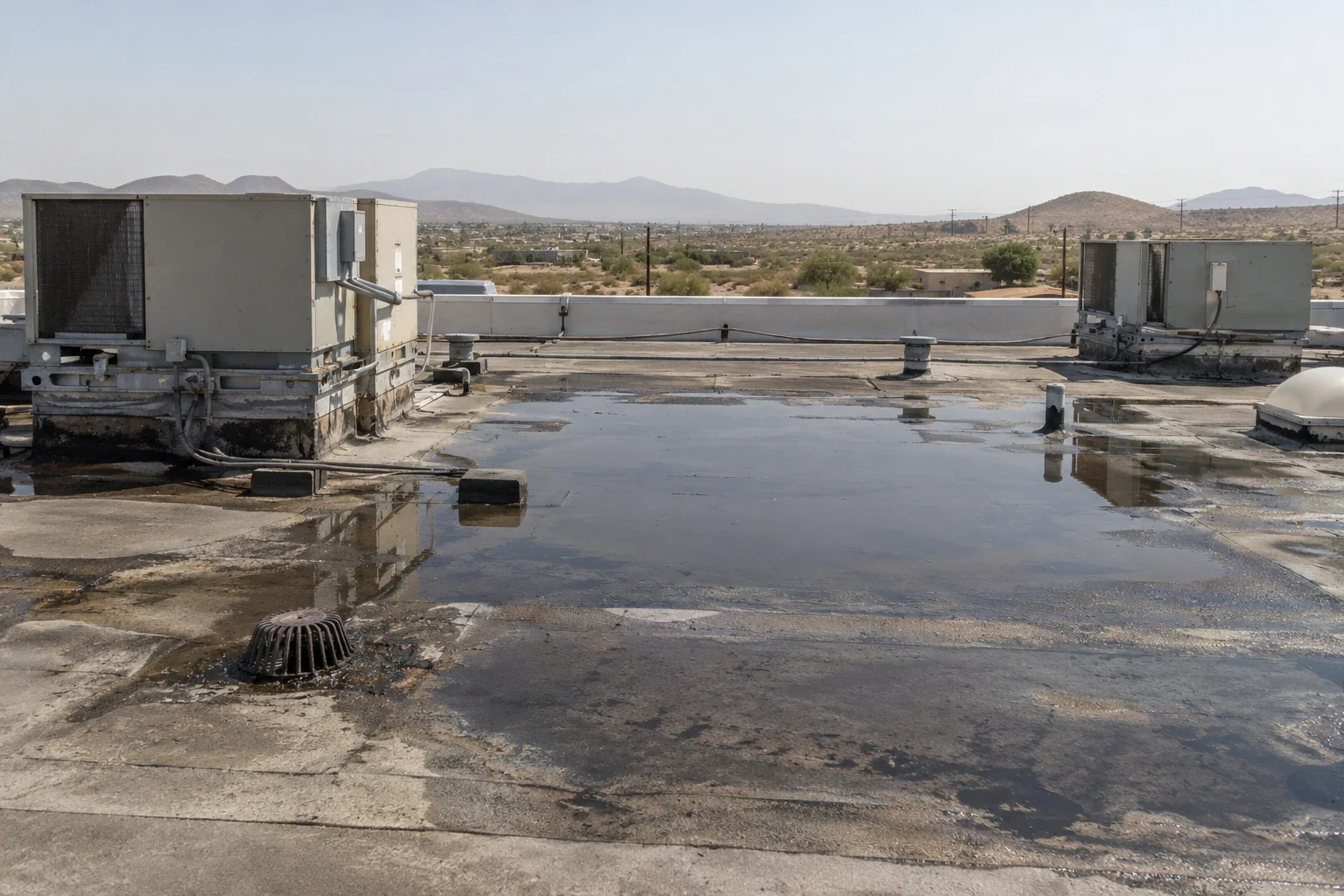
Find the ponding line. It is the pale ring on the roof where water stood after the last storm. On a roof in Prescott Valley, AZ, that ring is often the reason an owner picks silicone. Silicone tolerates standing water better than most coatings. It cures into a flexible rubber skin and keeps its shape through freezing mornings and a thirty-degree daily swing. But a coating only works on a roof that is still sound. So we start with cores and probes, then we talk about coating.
What a silicone coating is
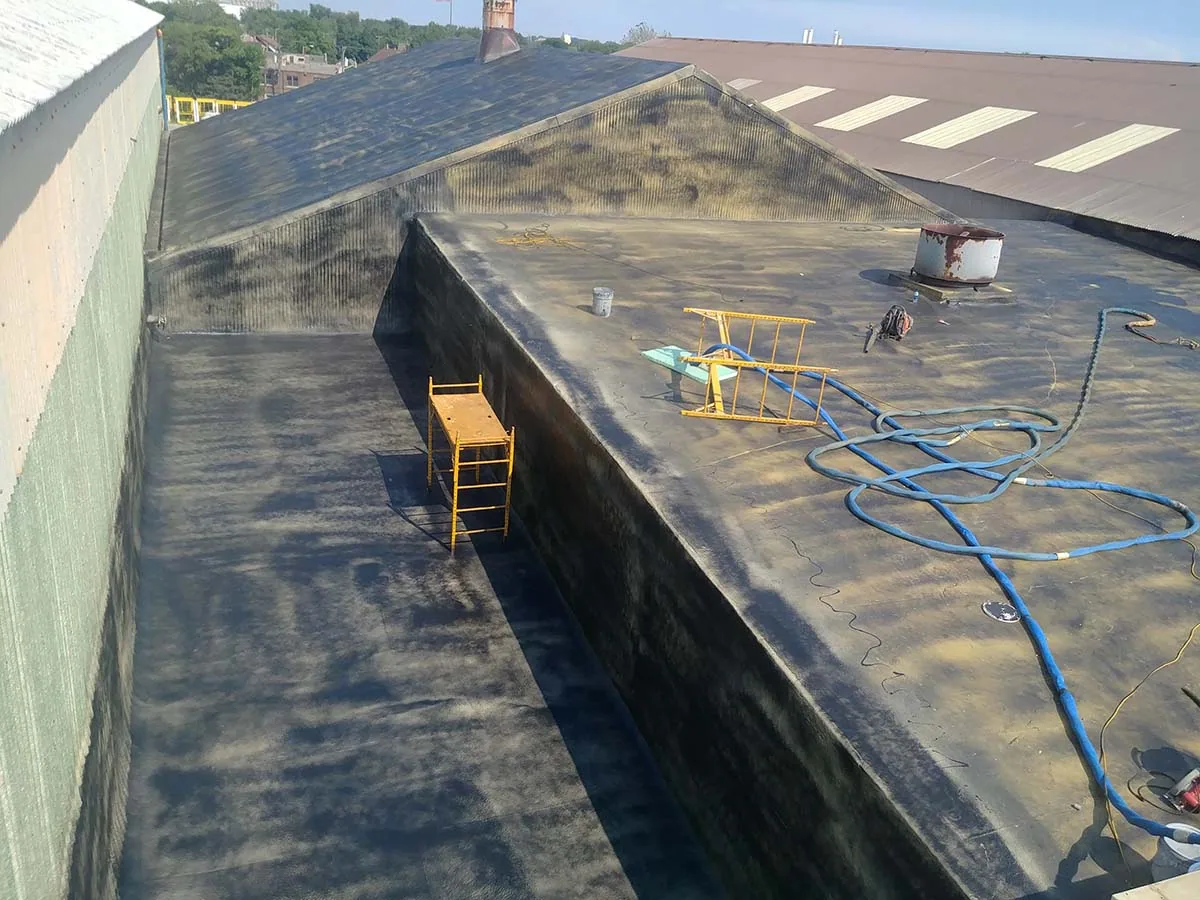
Silicone coating is a liquid-applied elastomer. It is rolled or sprayed over a cleaned roof in one or two coats. It cures into a continuous film that reflects sun and sheds water. Seams, fasteners and penetrations get fabric and mastic first.
It sticks to many surfaces, but not all. Some old asphalt bleeds through it. Some surfaces need a primer. We test a small patch for adhesion and pull it after cure. The test photo goes into the file before we coat the whole roof.
Preparation costs more than the coat on many roofs. We wash off dust and silt. We repair open seams and cracked flashings. We reinforce corners and curbs with fabric. We prime where the product calls for it. An owner should see the prep price as its own line, because a low bid that skips prep is a short-lived coat.
Why silicone suits ponding
Monsoon cells in July and August drop heavy rain on flat roofs. Most of the town's 15 inches of annual precipitation falls in that season. Where a deck has sagged, water stays. Some coatings soften or blister under standing water. Silicone does not. That is its main edge.
It does not cure a sagging deck. Standing water still adds weight and ages seams. We map each ponding line and measure its distance from a drain. Tapered insulation, a new drain or a cleared scupper may be the better fix. A ponding water repair often goes with the coat.
Edges matter on a ponded roof. Water that stands near a parapet seeps behind the flashing. We check each termination and the counterflashing. A flashing failure found before coating is cheap to fix. The same failure found after is a cut through new film.
What cold does to the cure
Silicone cures with moisture from the air, but it needs the right range of temperature. Frost arrives around late October and the cold season stretches to the start of May. A coat that goes on a cold, damp deck may cure slowly or poorly. A shower soon after application can ruin a fresh film.
So the best windows are late spring and early fall. We watch the overnight low and the forecast. In July and August, monsoon cells can build in an hour, so we apply in the morning and keep tarps ready. Weather holds appear in the schedule. Snow adds one more limit. Roughly ten inches of snow falls in Prescott in a season, and a roof carrying frost or melt cannot take a coat. We plan around it and do not push the season.
Dirt, hail and wear
Silicone is tacky when new. Dust and debris stick to it and dull the white. A yearly wash after monsoon season restores much of the reflectance. Hail bruises a coated roof the way it bruises any roof. A sound coat usually shrugs off hail like the pea-sized stones that fell on July 20, 2026.
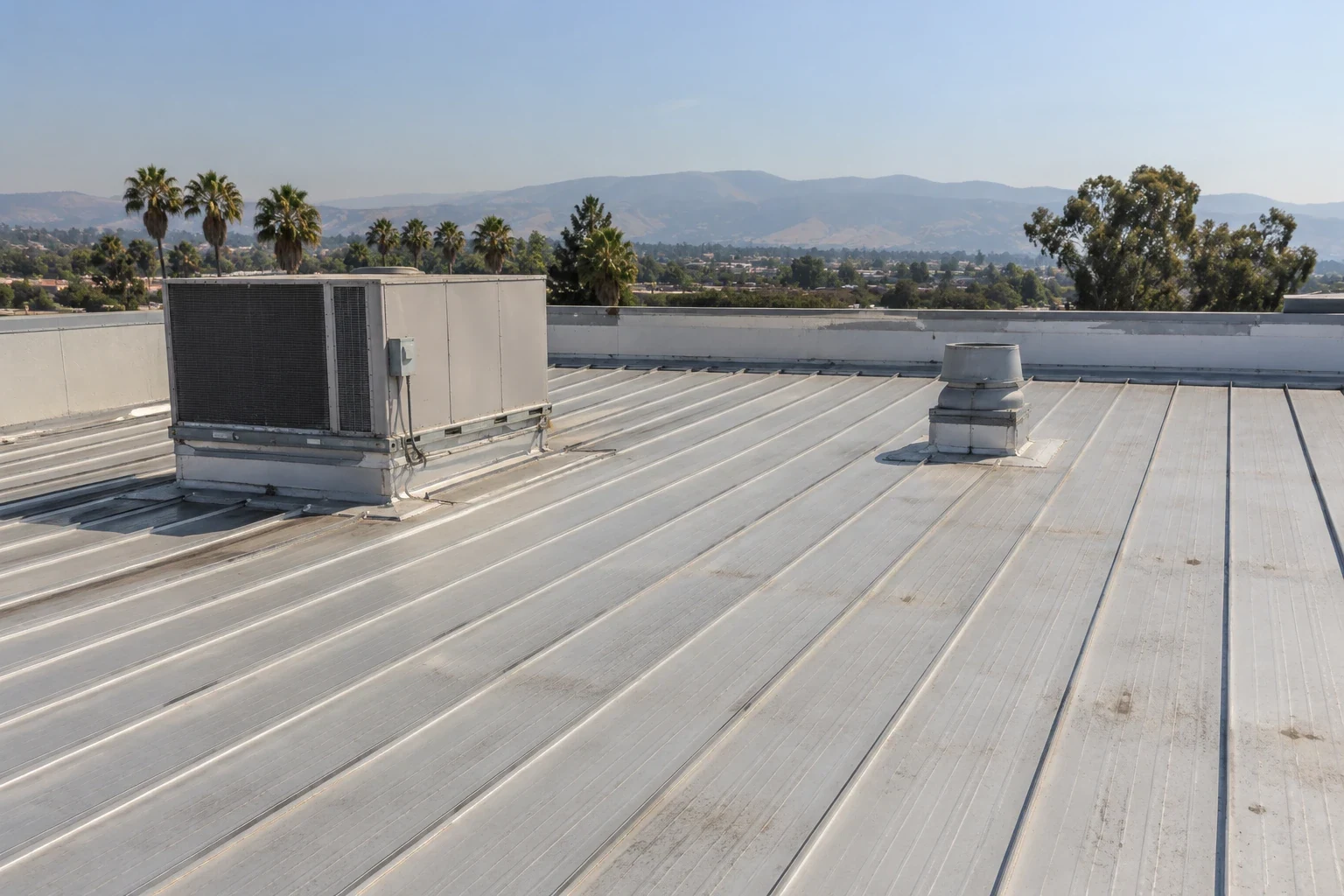
We measure film thickness at test spots every visit and photograph the readings. A reading near the minimum means a recoat is due. Silicone over silicone bonds well and needs little prep, which keeps later coats cheap. A spray foam roof and a retrofit metal roof both take a silicone topcoat, and we read the film the same way on each.
Where coatings fit in town
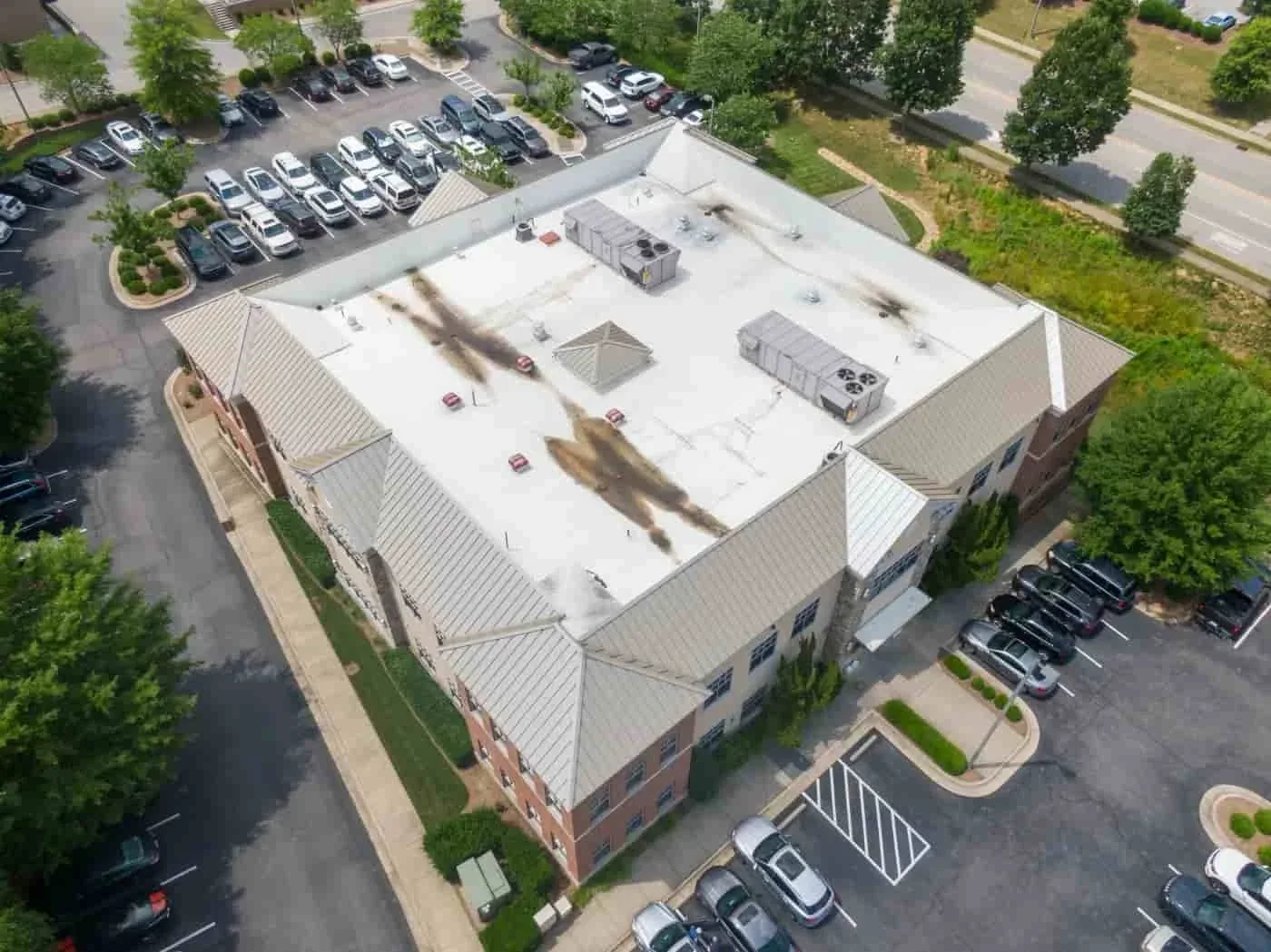
Roofs that are sound but tired are the best candidates. Look at retail roofs along the SR 69 corridor, where Walmart, Fry's, Home Depot and Safeway are big employers. Look at the plant roofs on Fain Road and the assembly roofs of the Entertainment District. A coating costs far less than a tear-off and keeps the building open. It only works if the cores come back dry. Ridge-top wind off Glassford Hill can lift loose edges, so we check the perimeter before and after, and tape or fasten any loose metal first.
What to repair now and what can wait
Repair now: open seams, split flashings, wet insulation, punctures. Repair soon: ponding near drains, pads worn through, cracked sealant. Watch: dirt, light chalking, small dents. Each tier is priced separately on the sheet, and a coating restoration follows the repairs. When wet insulation shows up across the roof, a replacement is the better path.
What to ask for in writing
Ask for the coating type, coat count, film thickness and warranty in writing, along with the adhesion test result. Everything lands on the findings sheet next to the photographs. A cheaper acrylic coating may suit a roof that drains well, and we price both.
Commercial Roofing Questions
Can silicone be applied over a wet roof?
No. The surface must be clean and dry, and the insulation below must be dry too. Coating over wet insulation traps the water. We cut cores and scan for moisture first, then coat only the dry areas. Wet areas come out. The core photos show which is which, and the moisture scan shows how far each wet area reaches, so the cut-out is sized to the problem and not to a guess.
How many coats does a silicone system need?
Two coats are typical, a base and a top, with fabric at seams and penetrations. The product and the roof set the total film thickness. A gauge reading at fixed test spots, photographed, gives the owner the number. The test spots stay the same each year, which makes the wear trend plain. A coat that thins faster on one slope tells us that slope takes more sun, more foot traffic or more standing water.
Will silicone survive our freezing mornings?
A cured film stays flexible in the cold, which is a strength. The risk is application in cold or damp weather. We recommend applying in late spring or early fall and watching the overnight low, since a coat that sees frost before it cures can cloud, soften or lift at the edges. We will not coat a frosted deck.
Can I recoat silicone later?
Yes. A clean silicone surface takes another silicone coat with light prep. Other coating types over silicone need special prep. We recommend choosing the system with the whole life in mind, and we record the product, the batch and the film thickness so the next coat matches. A mismatch between old and new coat shows up as peeling at the edge of the recoat, which is a poor way to learn the lesson.
Does coating stop an active leak?
Not by itself. We find the leak, repair it, then coat. Applying a coating over an unfound leak usually fails. We trace water with moisture scans and probes, and we photograph the entry point and mark it on the roof plan, so the repair and the coat that covers it stay tied together in the file. That link matters if the same spot leaks again, because the crew can pull the exact photo and compare.
Request a walk-through
Ask us to walk the roof. You receive a written findings sheet with cores, ponding lines, adhesion tests and photos before any silicone coating is priced.
Request a Roof Assessment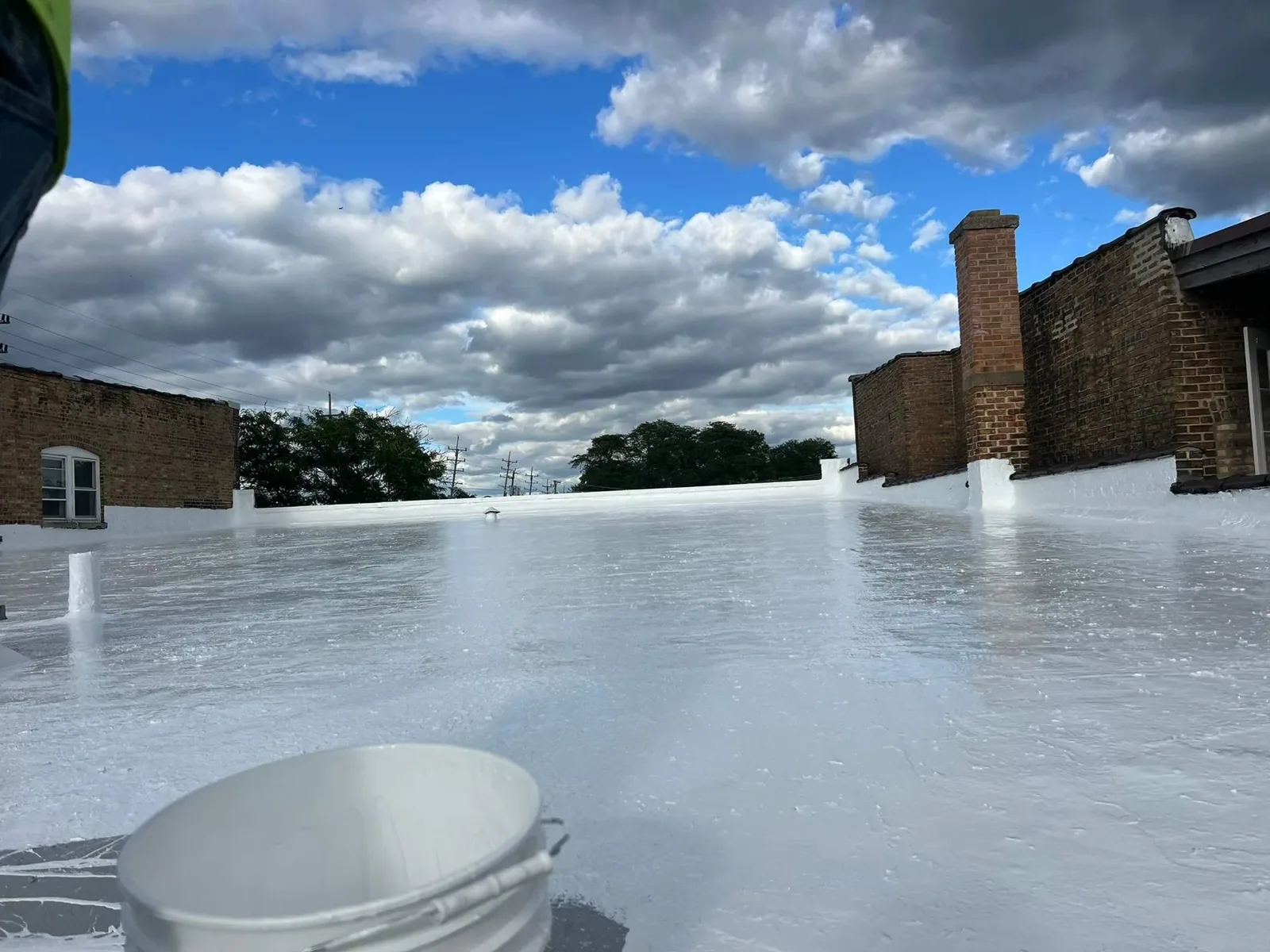
Commercial Roofing Questions
No. The surface must be clean and dry, and the insulation below must be dry too. Coating over wet insulation traps the water. We cut cores and scan for moisture first, then coat only the dry areas. Wet areas come out. The core photos show which is which, and the moisture scan shows how far each wet area reaches, so the cut-out is sized to the problem and not to a guess.
Two coats are typical, a base and a top, with fabric at seams and penetrations. The product and the roof set the total film thickness. A gauge reading at fixed test spots, photographed, gives the owner the number. The test spots stay the same each year, which makes the wear trend plain. A coat that thins faster on one slope tells us that slope takes more sun, more foot traffic or more standing water.
A cured film stays flexible in the cold, which is a strength. The risk is application in cold or damp weather. We recommend applying in late spring or early fall and watching the overnight low, since a coat that sees frost before it cures can cloud, soften or lift at the edges. We will not coat a frosted deck.
Yes. A clean silicone surface takes another silicone coat with light prep. Other coating types over silicone need special prep. We recommend choosing the system with the whole life in mind, and we record the product, the batch and the film thickness so the next coat matches. A mismatch between old and new coat shows up as peeling at the edge of the recoat, which is a poor way to learn the lesson.
Not by itself. We find the leak, repair it, then coat. Applying a coating over an unfound leak usually fails. We trace water with moisture scans and probes, and we photograph the entry point and mark it on the roof plan, so the repair and the coat that covers it stay tied together in the file. That link matters if the same spot leaks again, because the crew can pull the exact photo and compare.