Spray Foam Roofing in Prescott Valley, AZ
Spray polyurethane foam roofing in Prescott Valley, AZ: hail bruising, cold-weather spray limits, topcoat checks and how foam handles ponding lines.
Push a thumb into a foam roof at a spot you suspect. If the surface gives and the topcoat shows a hairline crack, water has a path. That is the first thing we check on a spray foam roof in Prescott Valley, AZ. Foam insulates and waterproofs in one layer. The topcoat protects the foam from sun. Hail, foot traffic and thermal swing attack the topcoat first. So we walk the roof, press the soft spots, and report what we found.
What spray foam is
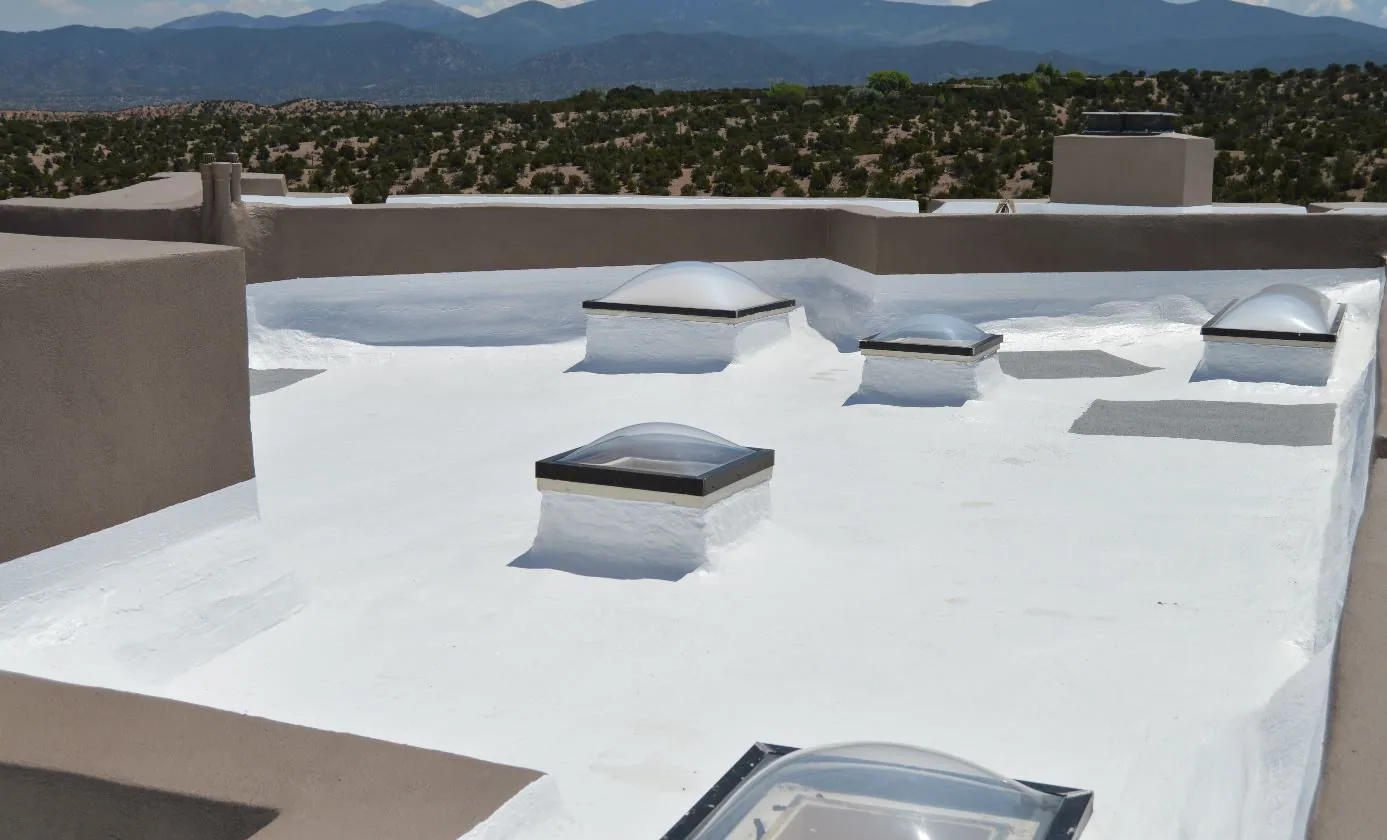
Spray polyurethane foam is two liquids mixed at the nozzle. They expand into a rigid, closed-cell foam that bonds to the deck. The foam fills low spots, wraps curbs and pipes, and leaves no seams. A coating goes over it to block sun and add a wear layer.
Foam adds insulation value and can build slope toward drains. It is also soft. A sharp tool or a big hailstone can dent it, and a dent that breaks the topcoat lets water in. The topcoat is the maintenance item, and we treat it that way.
Foam also changes how a roof breathes. Closed cells block most water vapor, which helps on a heated building and can trap moisture on a cold one. We check the interior side. If warm, damp air rises from below, the foam face stays cold and condensation can form. We look at ventilation and the underside of the deck before we recommend foam. That check prevents a problem that no topcoat can fix.
Why spray weather matters here
Foam needs the right deck temperature, dry surfaces and low wind. From late October to early May, mornings near Prescott Valley can sit below freezing. A cold or damp deck gives poor adhesion and uneven rise. Wind carries overspray onto cars and neighbors. Monsoon cells in July and August can rain on a fresh coat.
So the workable windows are late spring and early fall, on calm, dry mornings. We check deck temperature and humidity before each pass. We stop if conditions change. We say so in the schedule, because a weather hold is a cost the owner should see.
Overspray deserves its own plan. Foam mist drifts downwind and sticks to cars, glass and walls. We tent edges, move parked vehicles and watch wind speed at the roof. Ridge-top gusts off Glassford Hill can come up fast in the afternoon, so spraying usually starts early and ends before the wind builds. A short, calm morning is worth more than a long, gusty day.
Hail and the topcoat
The pea-sized hail of July 20, 2026 arrived with heavy rain and strong wind over Prescott Valley. Pea-sized stones scuff a good topcoat. Larger stones can dent the foam and crack the coat. Hail is the main threat to a foam roof here.
After a storm we press every dent and mark it on a roof plan. A dent with an intact topcoat can wait. A cracked dent needs a patch of foam and a new coat. A cluster of cracks tells us the topcoat is thin. We measure film thickness at test spots and photograph the readings. We also check the foam density with a small core where the roof allows. Soft, light foam dents easily and may signal a poor spray. Dense foam resists foot traffic and small hail far better. The core photo and the reading go into the file, so the next owner can see what lies beneath.
Ponding lines and slope
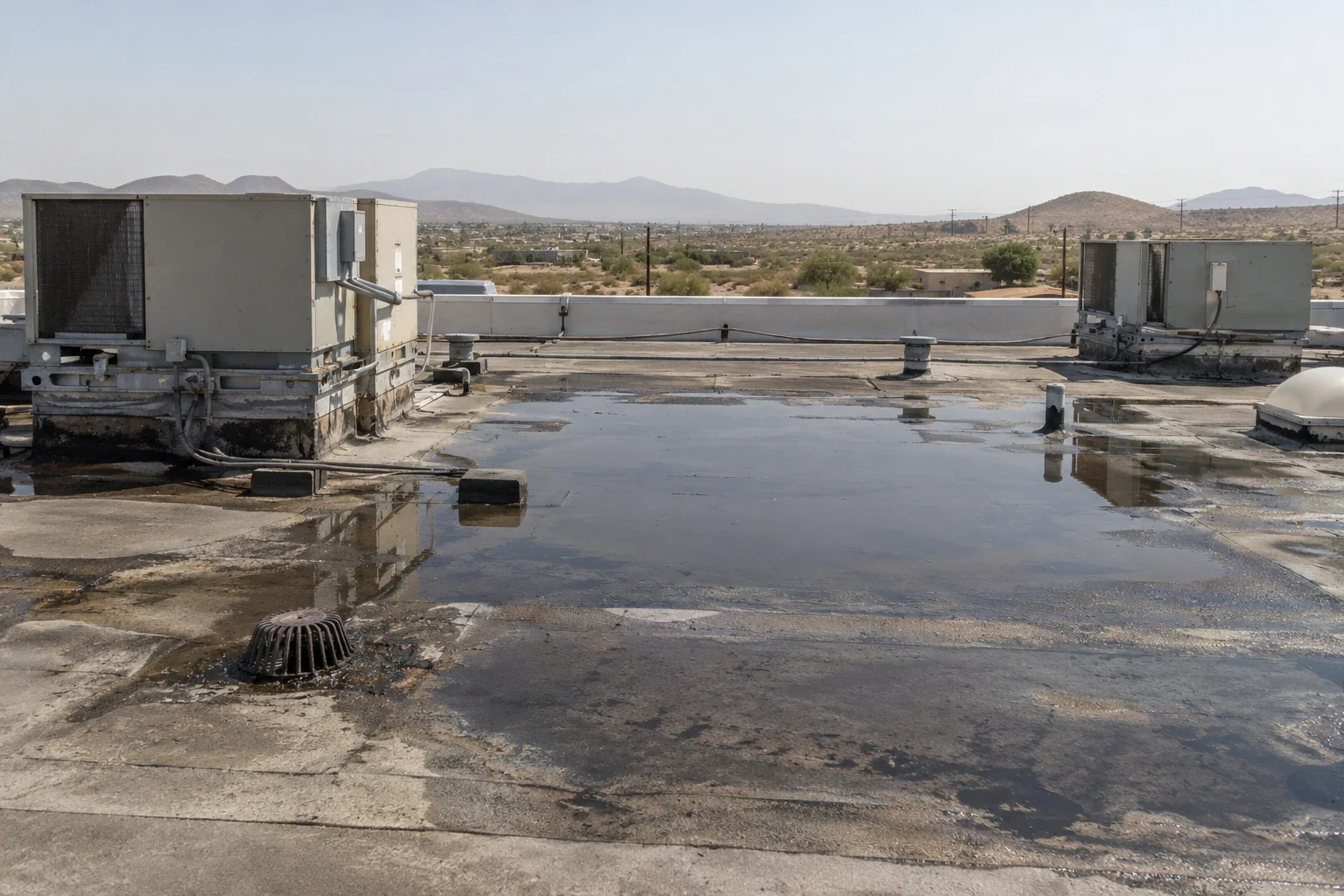
Foam can add slope. A ponding line, the stain where water stood, marks a low spot. Extra foam tapered toward a drain can fix it. That is one reason owners choose foam over a flat membrane on a sagging deck. Standing water still shortens a topcoat's life, so we outline each ponding line and note its distance to the nearest drain.
Snow adds melt. Prescott averages about ten inches a season. Melt that refreezes at a drain can back water onto the roof. We clear drain screens before the first freeze. A ponding water repair may add a drain or a taper.
Where foam fits in town
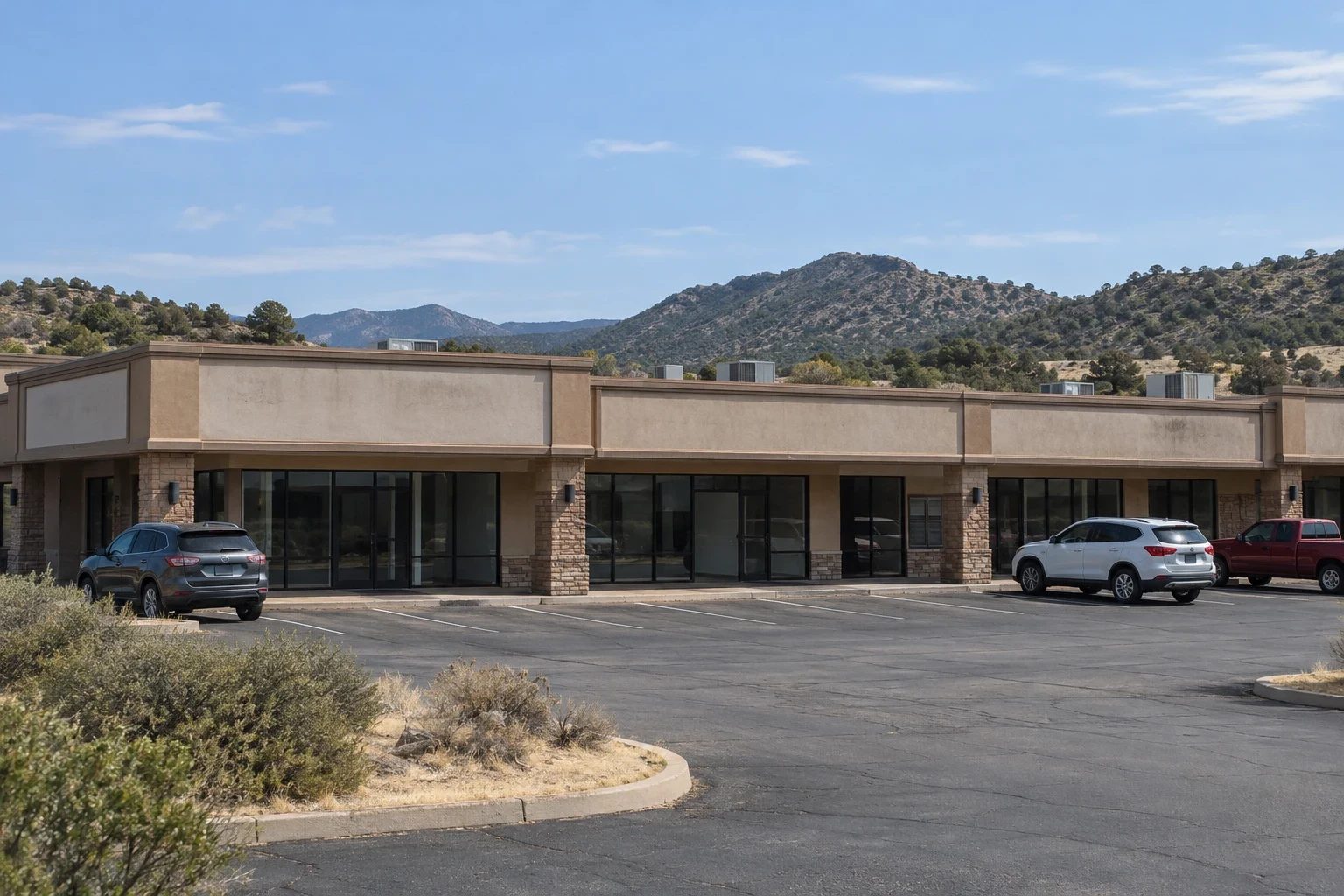
Roofs with many penetrations and odd shapes suit it. Think of low-slope retail with rows of rooftop units along SR 69 and the Glassford Hill Road corridor. Foam wraps each unit without a cut seam, which is why owners with crowded roofs look at it. Clinics near Yavapai Regional Medical Center East Campus need low-odor planning, because spray releases vapor while it cures. We coordinate with the building engineer and shut or cover intakes during the pass.
The Entertainment District's assembly roofs span long distances over public gatherings, so spray timing around events matters. A shopping center with many tenants needs a notice to each. The plan lists who is told and when.
What to repair now and what can wait
Repair now: cracked topcoat over foam, punctures, exposed foam, failed flashings. Repair soon: thin film at walk paths, ponding lines near drains. Watch: dirt, faded color, intact dents. Each tier is listed with its own price. A topcoat refresh is far cheaper than new foam, so timing matters. A yearly coating restoration check keeps the foam covered, and each recoat is dated on the plan so the next one is no surprise. When wear reaches the foam itself, the repair costs several times more, because foam has to be cut out, replaced and recoated in full.
What to ask for in writing
Get the foam thickness, the density, the topcoat type and film thickness, and the recoat interval on paper. Get the walk-path layout. We put each on the findings sheet beside the photos. A silicone topcoat and an acrylic topcoat carry different upkeep, and we show both.
Commercial Roofing Questions
Does hail ruin a spray foam roof?
Small hail rarely does. Large hail can dent the foam and crack the topcoat. A dent with an intact coat can be watched, and a cracked one needs patching. After any storm we recommend a walk with a pressed-dent map. The photos help an insurance review as well, because they show the date, the dent pattern and the state of the coat before any repair changes the roof. A storm damage repair then follows the map, not a guess.
Can foam be sprayed in winter?
Not when the deck is cold, damp or frosted. Adhesion and rise suffer. We recommend planning foam work for late spring through early fall, and saving topcoat patches for dry winter mornings. We check deck temperature and humidity before each pass and stop if the numbers drift.
How often does the topcoat need renewal?
It depends on sun, traffic and the product. We measure film thickness at test spots each visit and compare it with the last visit. When thickness nears the minimum, we recommend a recoat. That keeps the foam covered and avoids costly foam repair.
Can foam go over my old roof?
Often, if cores show dry insulation and the old roof is well attached. We cut cores at several points and probe seams. Wet areas come out first. Spraying over wet material traps water. The core photos show the decision.
Is foam safe near air intakes?
Vapors are released while foam cures. We cover or shut intakes during the pass with the building engineer's approval and schedule work for times when the building is least occupied. We recommend confirming the plan with your infection or safety staff before spraying near a clinic.
Request a walk-through
Ask us to walk the roof. You receive a written findings sheet with pressed-dent maps, film readings and photos before any foam work is priced.
Request a Roof Assessment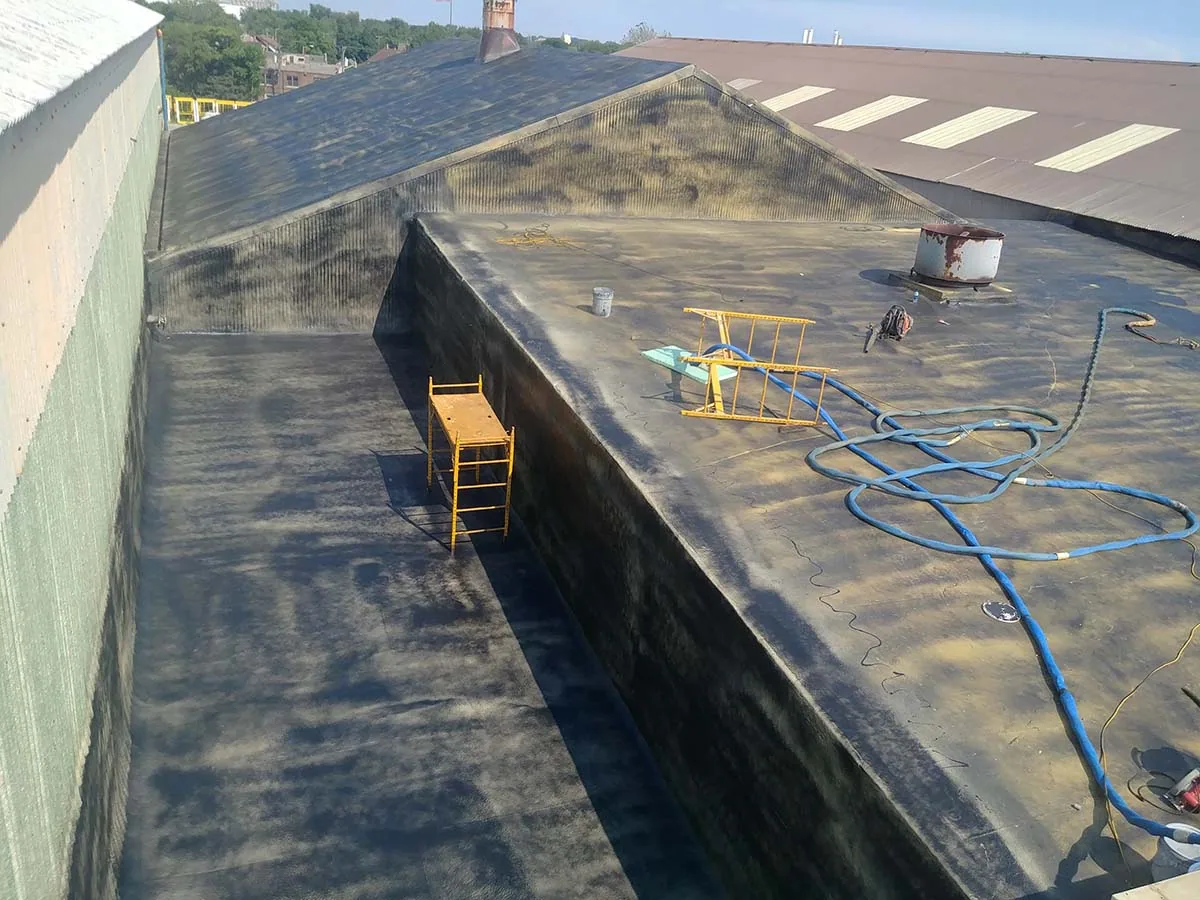
Commercial Roofing Questions
Small hail rarely does. Large hail can dent the foam and crack the topcoat. A dent with an intact coat can be watched, and a cracked one needs patching. After any storm we recommend a walk with a pressed-dent map. The photos help an insurance review as well, because they show the date, the dent pattern and the state of the coat before any repair changes the roof. A storm damage repair then follows the map, not a guess.
Not when the deck is cold, damp or frosted. Adhesion and rise suffer. We recommend planning foam work for late spring through early fall, and saving topcoat patches for dry winter mornings. We check deck temperature and humidity before each pass and stop if the numbers drift.
It depends on sun, traffic and the product. We measure film thickness at test spots each visit and compare it with the last visit. When thickness nears the minimum, we recommend a recoat. That keeps the foam covered and avoids costly foam repair.
Often, if cores show dry insulation and the old roof is well attached. We cut cores at several points and probe seams. Wet areas come out first. Spraying over wet material traps water. The core photos show the decision.
Vapors are released while foam cures. We cover or shut intakes during the pass with the building engineer's approval and schedule work for times when the building is least occupied. We recommend confirming the plan with your infection or safety staff before spraying near a clinic.