Snow and Ice Roof Damage Repair in Prescott Valley, AZ
Snow load and ice damage repair for Prescott Valley, AZ commercial roofs: frozen drains, split seams, damaged gutters and wet insulation, found after thaw.
Look at the drain on a cold morning. If it holds a ring of ice, meltwater from the afternoon has nowhere to go. It will refreeze overnight. Ice grows at the drain, then spreads across the low spot. That ring is where snow and ice damage usually starts. Prescott Valley, AZ sits near 5,100 feet. Freezing temperatures typically run from about October 21 through May 1. Prescott averages about 10.2 inches of snow a season. It is not a deep-snow market. It is a freeze-and-thaw market, and that does its own work on a roof.
The freeze and thaw cycle
Winter days here warm up and winter nights drop below freezing. Daily temperature swings in Prescott average nearly 30 degrees. Snow melts in the sun. Meltwater runs to the low points. At night it freezes again.
Each cycle moves the roof. Water in a seam freezes and pushes the lap open. Ice in a flashing gap widens it. Ice in a drain bowl cracks it. The sheet itself stiffens in the cold and contracts, which pulls on its attachments. A roof that took ten of these cycles in a month is under strain. We read the cycle in the damage, and we plan the repair around the next one.
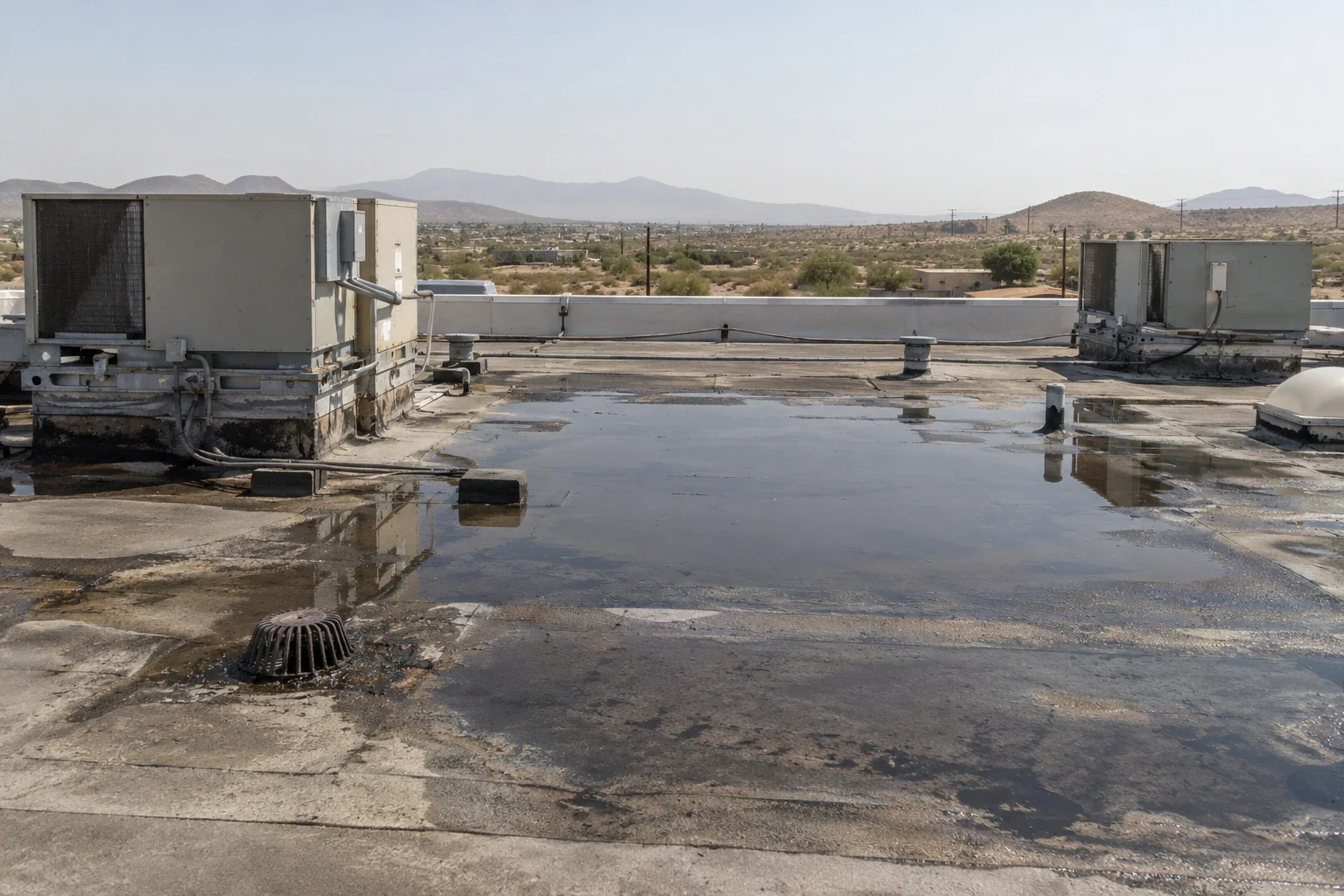
Standing ice is its own finding. A ponding line that shows in spring marks where water froze in place all winter. Ice that sat on a seam or a flashing pried at it for weeks. We start the spring walk at those lines.
What the snow weighs
Snow has weight, and wet snow has more. A roof built for local snow load carries a normal fall without trouble. The risk is a heavy, wet fall on a roof that has a weakness. A sagging deck. Blocked drains that hold meltwater. Rooftop equipment that adds load at one spot. Drifts behind parapets and equipment, where wind piles snow deeper.
After a heavy snow, we look for signs of strain. Doors that stick inside. Ceilings that sag. Cracks near columns. Deflection under equipment. Any of these calls for a structural review before anyone works on the roof. Safety comes first. We do not ask crews to walk a roof that may be overloaded, and we say so in the findings sheet.
Rooftop equipment on retail roofs along Glassford Hill Road and on buildings in Big Sky Business Park can hold drifts at each unit and each parapet. We note where snow tends to pile on the roof plan after each storm, so the drift map improves with each winter.
Roof plans help with one more thing. Add a sign at the hatch with the roof's rooftop load limits and the equipment weights. If an owner plans to add a unit, the structure is checked first. A new unit on a roof that already carries drifts can tip it past its limit.
Drains, scuppers and gutters
Meltwater has to leave. Drains and scuppers freeze first because they are low and exposed. A frozen outlet backs water onto the roof. It stands, freezes and adds weight. It also soaks the seams nearby.
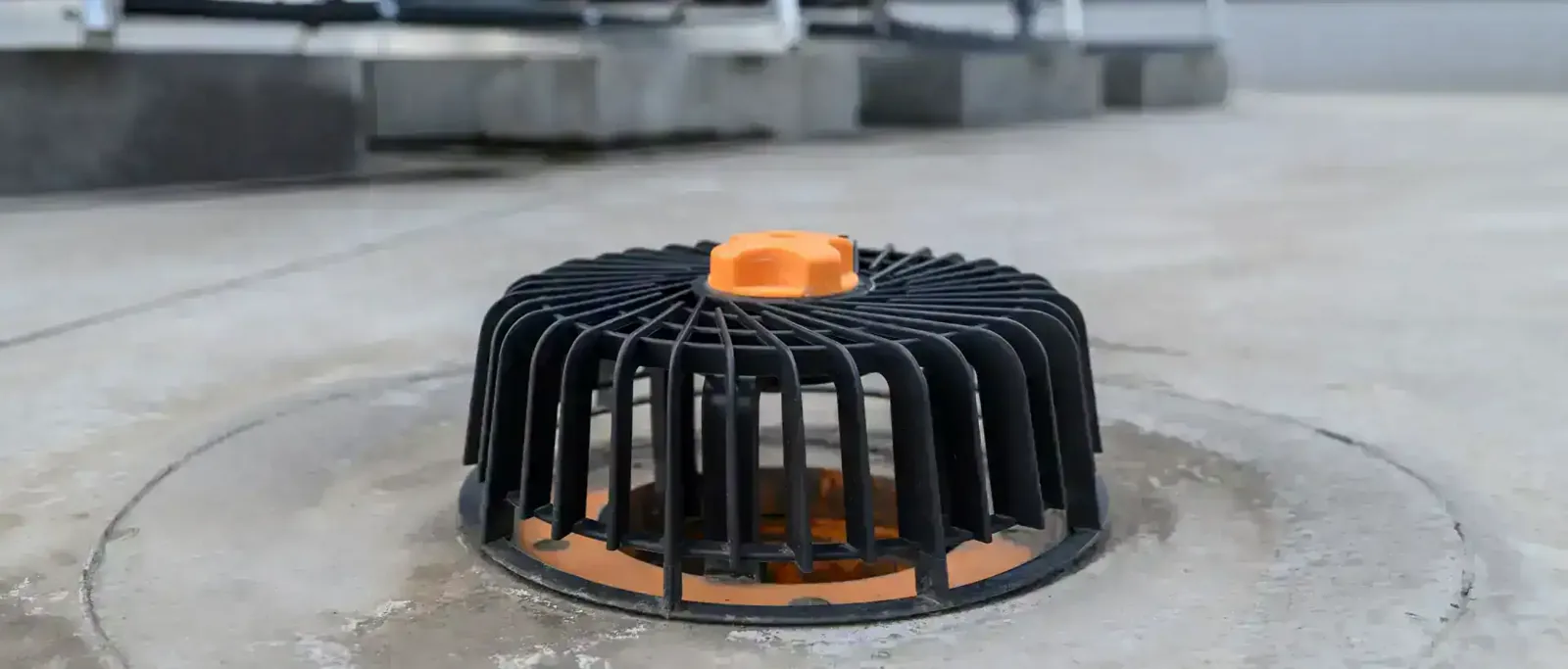
We check drains and scuppers before the first freeze and after the thaw. We clear debris. We look for cracked bowls, split clamps and bent screens. We check that overflow scuppers are open. On roofs with gutters, we look for sagging runs, split joints and loose straps. Ice can pull a gutter off its brackets. We reset the brackets and record the spacing. Edge metal and gutter repairs wait for a dry window, since sealant needs it.
What we find after the thaw
Thaw is the time to walk the roof. Snow hides damage. Ice holds cracks shut. When the roof is bare and dry, the marks show.
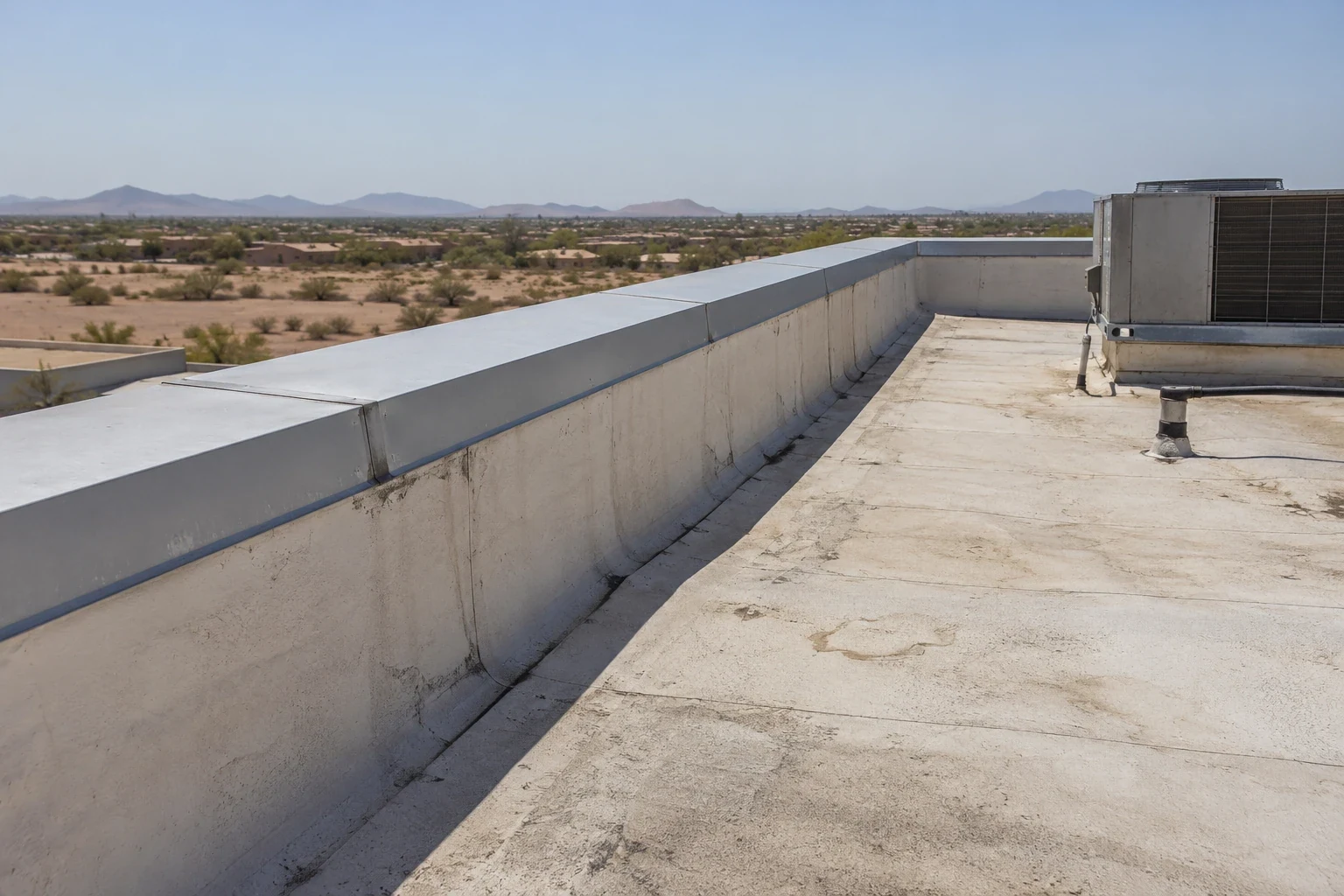
We look for open seams, lifted laps and split flashings. We look for cracks at the base of pipe boots. We look for ponding lines where water froze in place. We check the membrane near drains for surface cracking. We probe seams. A seam failure that began in January will show by March. We also scan for wet insulation. Water that entered through a frost crack sits in the board until it is found. An infrared moisture survey maps it.
Metal roofs have their own winter findings. Snow slides off panels in sheets and can tear gutters and trim. Fasteners loosen as panels contract. Sealant at laps splits in the cold. We walk the lines of a standing seam roof and check clips, trim and snow retention. On exposed-fastener roofs we check for backed-out screws. Each loose screw is a leak point for the spring.
Work on cold roofs
Cold weather limits repairs. Adhesives need a minimum temperature. Welds need dry surfaces. Sealants cure slowly. A repair made in the wrong conditions fails by spring.
We do emergency work in any weather. Temporary patches and tarps keep water out. Permanent repairs wait for a dry window above the product's minimum temperature, or we use products rated for cold. We say which in the schedule. Roofs are slick in frost, so we plan safe access and fall protection. Walking a roof coated in ice is how people get hurt, and we do not do it. We would rather wait a day.
One more point on timing. The best repair window is the shoulder weeks, when days are warm and nights have not yet frozen hard. We use that window in spring and in autumn to do the repairs that winter showed and to prepare for the next one. A roof repaired before the monsoon starts the season dry.
Roofs that need a winter plan
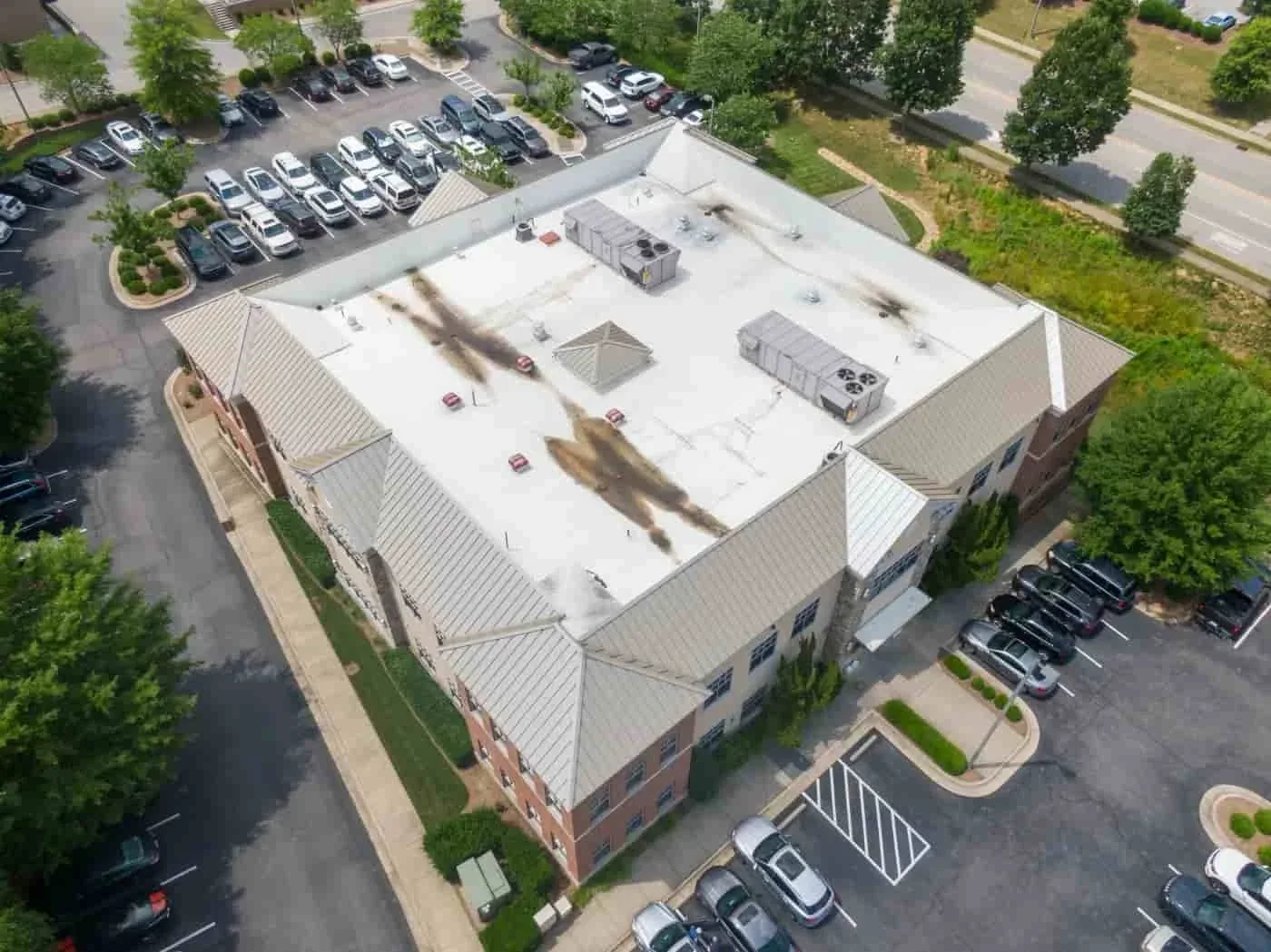
Any roof with rooftop equipment needs one. Units create drifts and block meltwater. Hospital and clinic roofs, such as those at Yavapai Regional Medical Center East Campus, cannot afford a winter leak. School roofs in Humboldt Unified School District sit empty over breaks, which is a good time to check them. Retail and event roofs in the Entertainment District serve crowds, so a frozen drain over an entrance is a safety issue as well as a roof issue.
A short winter plan helps. Clear drains before the first freeze. Mark the roof hatch. Set a snow trigger for when to call. Keep dated photos. With that in hand, the first call after a storm is calm.
Commercial Roofing Questions
How much snow can a commercial roof carry?
That depends on the design and the condition of the structure. Roofs are designed for a code snow load, and local snow here is modest. Problems come from drifts, blocked drains and weak spots. If you see sagging or sticking doors, call a structural professional.
Should staff shovel the roof?
No. Shoveling risks falls and membrane damage. If snow load is a concern, a trained crew should clear it with proper protection. Clear the drain areas from safe edges only, and never let staff work near open edges on a slick roof.
What is an ice dam on a commercial roof?
It is a ridge of ice at an edge or gutter that traps meltwater behind it. It is more common on sloped roofs with heated attics. On low-slope roofs, the usual problem is ice at drains and scuppers. We check both.
Can winter damage be repaired in cold weather?
Temporary repairs can. Permanent repairs need conditions the products allow. Some are rated for cold. Others need a dry day above a set temperature. We schedule permanent work for the right window and keep the building protected until then.
When should we inspect after winter?
After the last hard freeze and the thaw, usually in spring. Snow and ice hide damage until they melt. A walk then finds seams, flashings and drains that need work before the monsoon arrives.
Request a post-thaw walk-through
Ask for a roof walk after the thaw and we will check drains, seams and flashings. You get a written findings sheet with photos before any repair is priced.
Request a Roof Assessment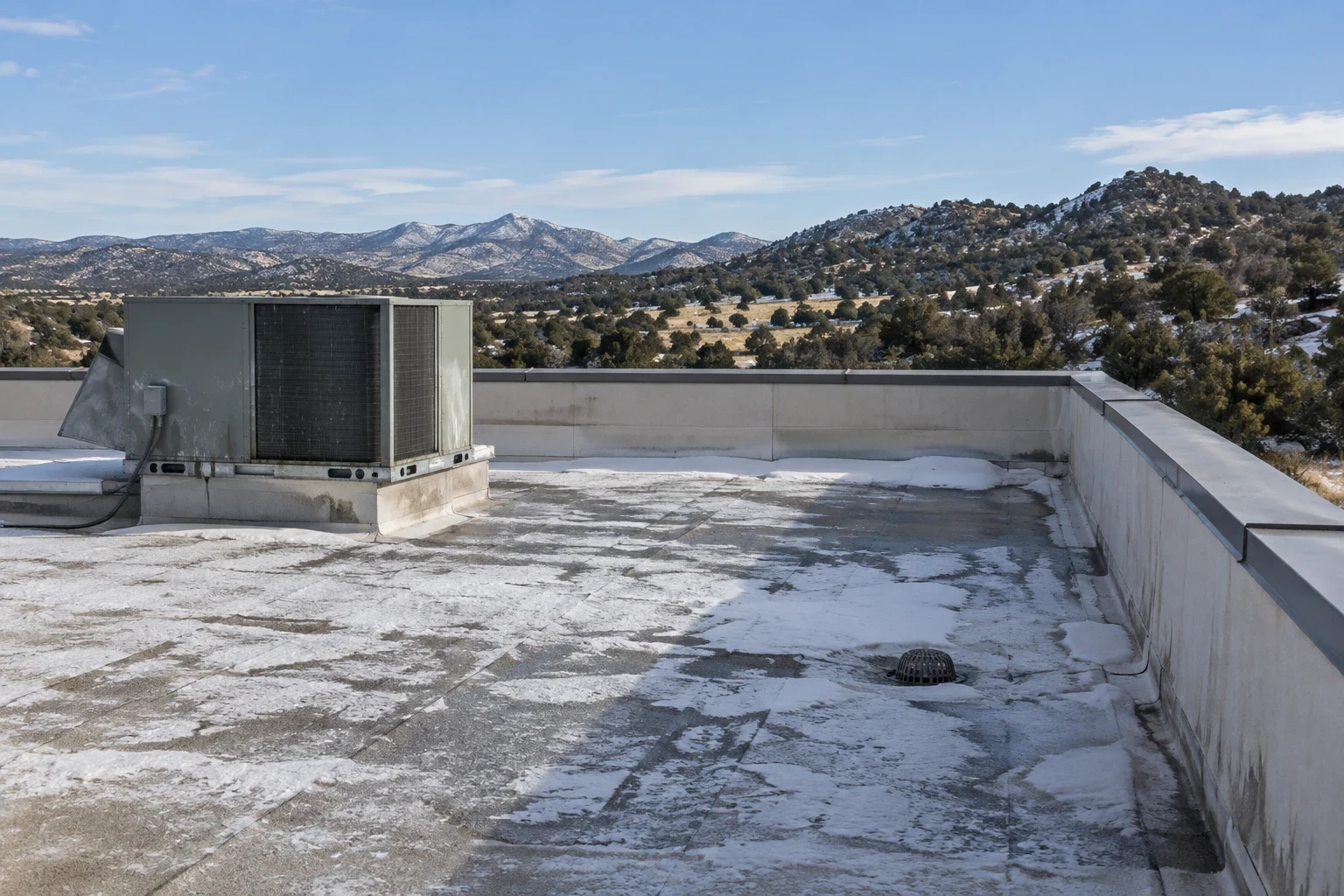
Commercial Roofing Questions
That depends on the design and the condition of the structure. Roofs are designed for a code snow load, and local snow here is modest. Problems come from drifts, blocked drains and weak spots. If you see sagging or sticking doors, call a structural professional.
No. Shoveling risks falls and membrane damage. If snow load is a concern, a trained crew should clear it with proper protection. Clear the drain areas from safe edges only, and never let staff work near open edges on a slick roof.
It is a ridge of ice at an edge or gutter that traps meltwater behind it. It is more common on sloped roofs with heated attics. On low-slope roofs, the usual problem is ice at drains and scuppers. We check both.
Temporary repairs can. Permanent repairs need conditions the products allow. Some are rated for cold. Others need a dry day above a set temperature. We schedule permanent work for the right window and keep the building protected until then.
After the last hard freeze and the thaw, usually in spring. Snow and ice hide damage until they melt. A walk then finds seams, flashings and drains that need work before the monsoon arrives.