Grocery Store Roofing in Prescott Valley, AZ
Roof inspection, repair and replacement for grocery stores in Prescott Valley, AZ, with written photo findings and refrigeration-aware planning.
Stand on a grocery roof and trace the refrigerant lines from the condensers to the edge. Each line crosses the membrane through a boot, and each boot is a seal that bakes under the heat of the units. In Prescott Valley, AZ, we photograph every curb and boot, probe the seams between them and write the findings before any repair is priced.
A leak over a cooler costs product, not only plaster. That changes which roof zone goes first.
What a grocery roof carries
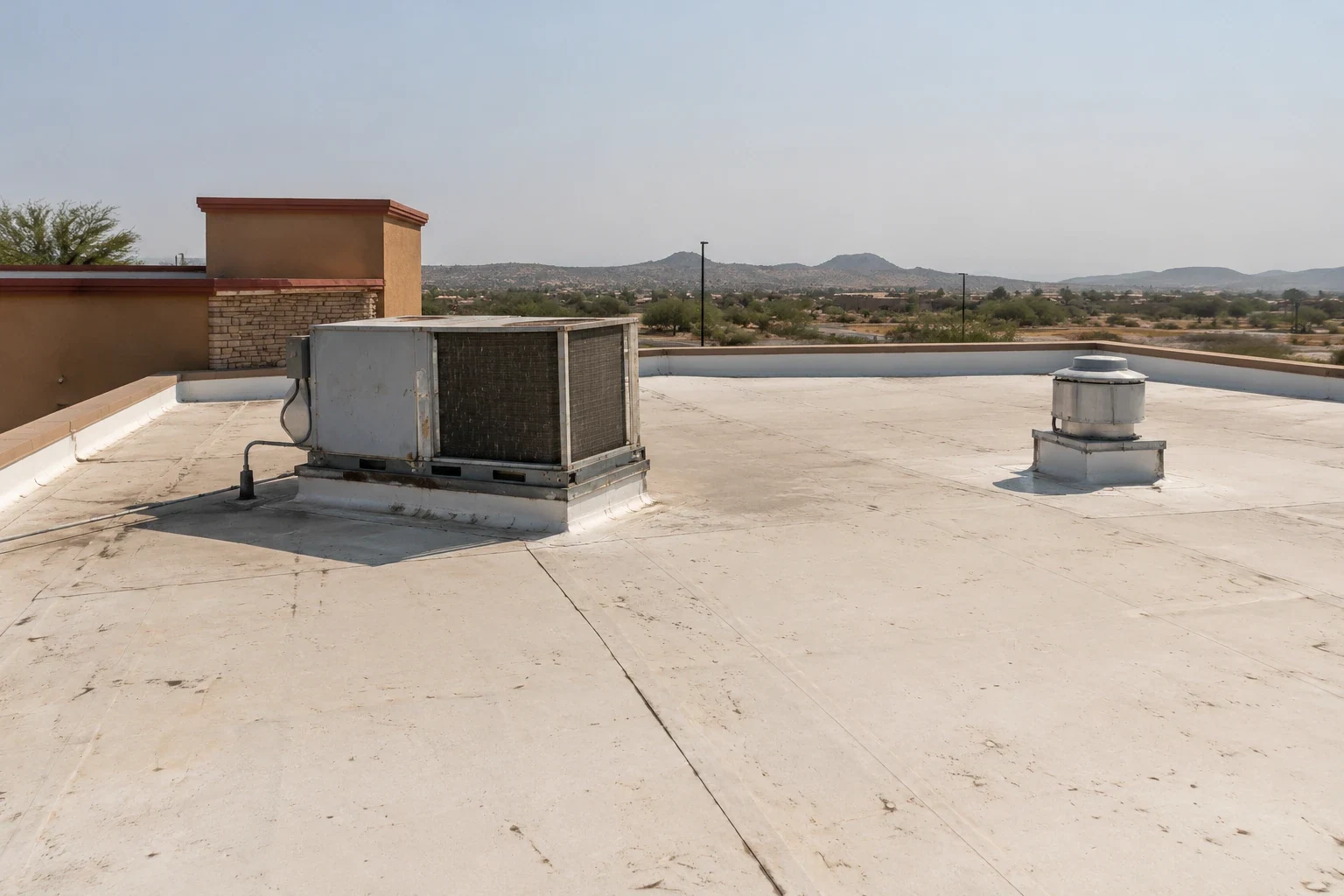
A grocery roof is crowded. Refrigeration condensers, rooftop air handlers, bakery and deli exhaust, plumbing vents and conduit all pierce the membrane. Each item is a hole someone has to flash.
Refrigeration adds extra work. Lines pass through the deck, and condensate drains run across the roof. A cracked drain line puts water where nobody looks, so we trace each line on the plan and mark where it crosses the membrane.
We also count curbs. A store that has swapped units over the years can carry patches on patches, and the count shows which ones look original.
Bakery and deli exhaust adds grease. Grease softens some membranes and holds dust against the surface. We press the area around each fan and mark soft spots, and a grease-resistant detail near the fan protects the rest of the field. A restaurant roof faces the same problem on a smaller scale.
Fry's, Safeway and the SR 69 stores
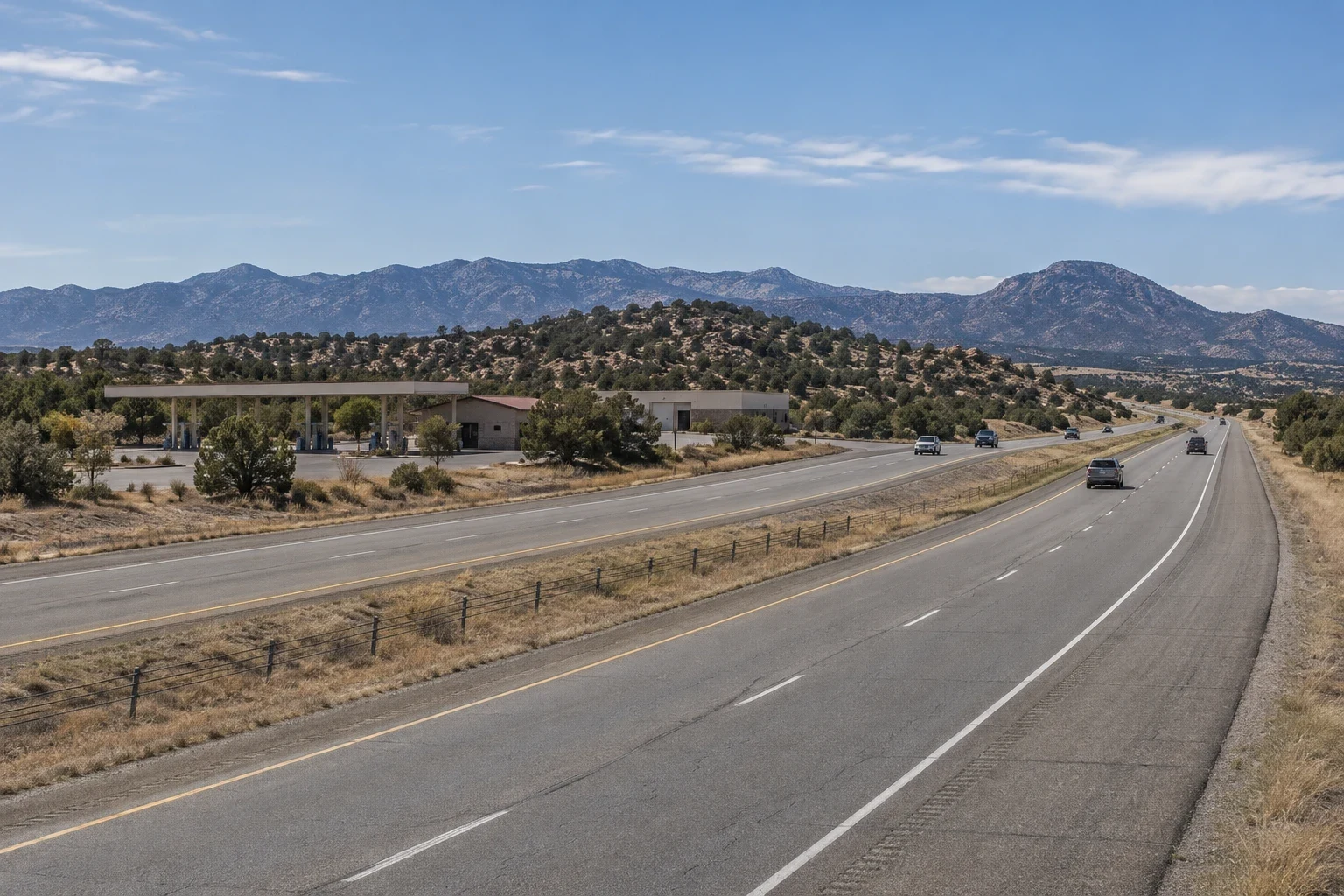
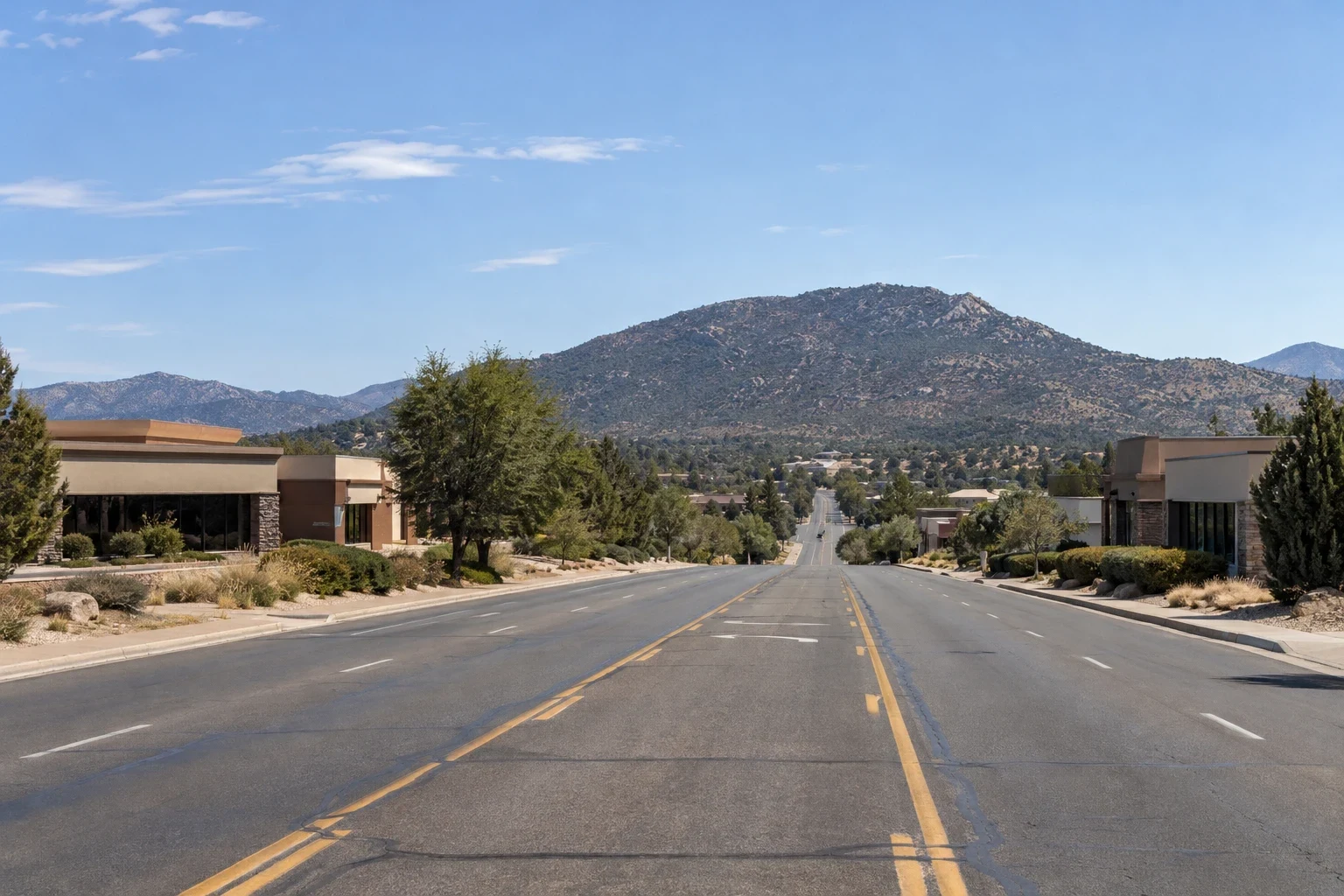
Fry's Food Store employs 232 people in Prescott Valley and Safeway 160. Walmart, with 380, and Home Depot, with 180, round out the big-box and grocery employers listed for the town. Those stores sit on the State Route 69 corridor, the six-lane road toward downtown Prescott and Interstate 17.
A store with long hours takes service traffic on its roof and delivery trucks at its docks, and both wear the membrane. Technicians use the same route on each visit. A walkway pad under that route spreads the load and keeps boots off the seams. Pads cost little, and we mark where they belong on the plan.
Retail centers along Glassford Hill Road share roofs among tenants, so a grocery in one of them lives with the curbs its neighbors add.
What a leak costs a store
A leak in a grocery store is not a stained tile. Water can fall on produce, packaged goods and open coolers, and wet product may have to be thrown out.
A leak can also stop a department. A bakery oven, a freezer door or a checkout lane may shut until the ceiling is dry. Customers notice that, and they notice a bucket in an aisle.
So we rank roof zones by what sits below. Coolers and food prep come first. Dry goods come last. The sheet shows the ranking with photographs.
Insurance matters too. A claim for product loss needs proof of the cause and the date, and dated photographs of the roof, the leak and the repair give the insurer a clear record.
Freezer cases deserve a second thought. Wet insulation above a cold space can turn to ice, and ice pushes on the membrane and the deck. A small leak there can grow into a structural repair by spring, so the sheet flags every roof zone that sits over a freezer.
Power, cooling and the storm
The July 20, 2026 monsoon storm left more than 130 APS customers without power and put signals and trees on the ground, with heavy rain and pea-sized hail along with it. A store that loses power loses cooling, and a roof leak on top of that makes a bad day worse. Walk the roof after any storm that takes out the grid, since a wet ceiling and a warm cooler arrive together.
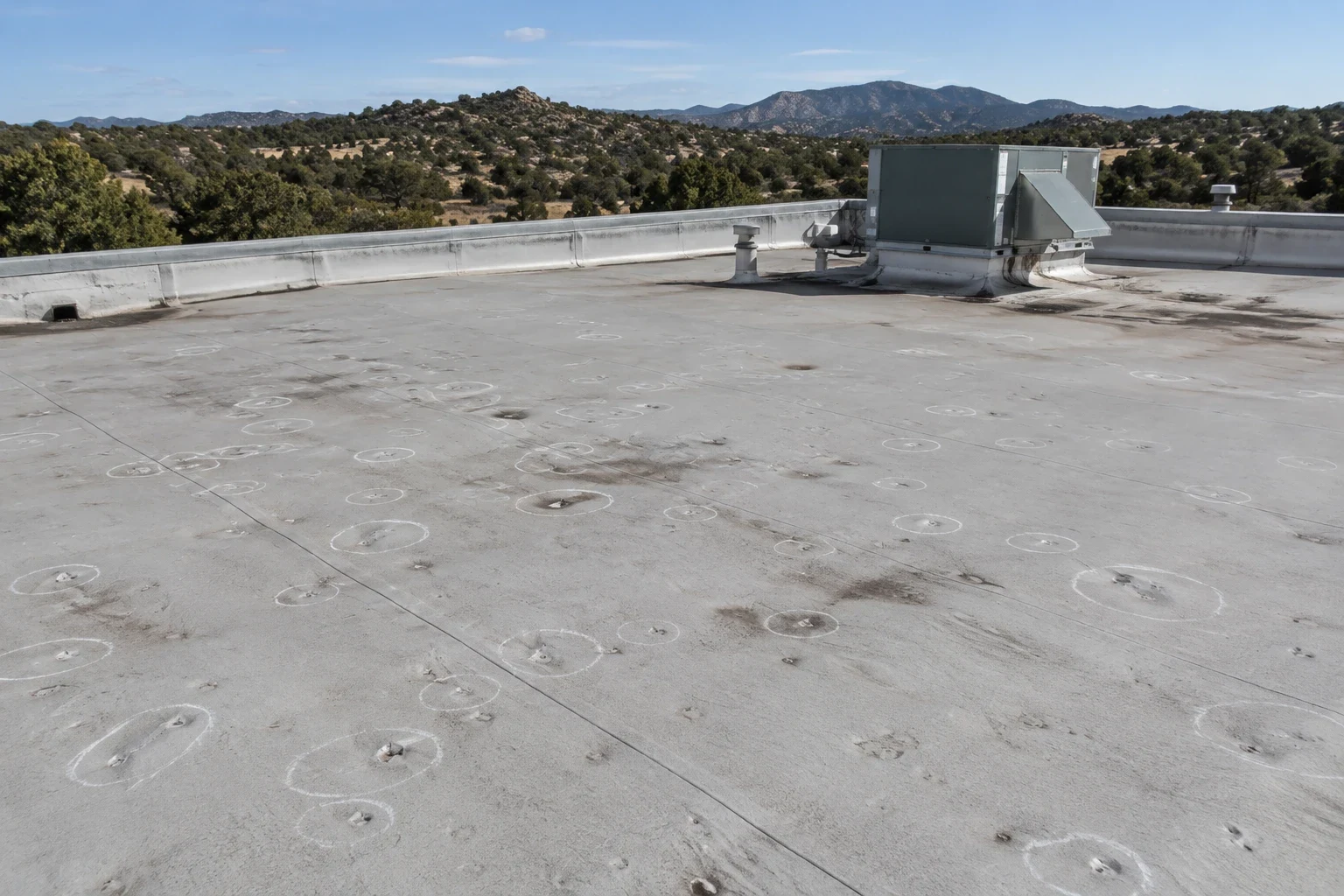
Hail bruises thin membranes. We press along the field, mark each soft spot and keep a record for a hail damage claim.
The freeze season runs from late October to the first of May, and a seam that takes on water in October can open by December. Laps get probed and sealant pressed each autumn. Snow in Prescott averages about 10 inches a season, and a blocked drain at the back of the store holds meltwater against the wall flashing, so screens are cleared and flow is tested before the first hard frost.
Working around shoppers and product
A grocery store opens early and closes late, and some run around the clock. Work is planned around hours, deliveries and busy days.
Air intakes and exhaust get covered. Hot work stays away from vents. Material stages away from the entry, and the crew closes each section before the shift ends. Short refrigeration shutoffs are agreed with the store manager and the refrigeration contractor, never assumed.
Docks stay open and trucks keep their lanes. The crew uses a separate gate and sweeps the lot after every shift so nothing blows into a cart corral or a parking stall. The manager gets the dates in writing with a reminder two days ahead. An occupied building reroofing plan sets the pattern, with tighter controls near food.
What to repair now and what can wait
Repair now: leaks over coolers and food prep, cracked pipe boots, failed curb flashing and blocked drains. Each one can put water on product this week.
What can wait: light staining, chalking and small blisters, each logged with a photograph and a price. For roofs of unknown moisture, an infrared moisture survey maps wet insulation while the roof stays closed. A big-box store with a grocery department follows the same sheet.
Lists stay separate, so nothing hides inside a lump sum. The first list is funded now, and the second is scheduled for the quiet months.
Commercial Roofing Questions
Can a grocery store stay open during a reroof?
Yes. The crew opens one section at a time, covers air intakes and exhaust, and keeps the entry and docks clear. Carts and customers stay away from the work zone behind fences and signs. Give us your busy days and the plan bends around them. Your manager approves each phase, and a short notice goes up at the staff entrance.
How do we protect food during roof work?
We protect the ceiling below the work zone, cover vents and keep dust off open product. Quiet hours and short refrigeration shutoffs are agreed in advance. Tell us which departments are most sensitive and they are protected first. Produce, bakery and dairy lead that list in most stores. The receiving area gets a look too, since a damp dock is a slip risk.
What should we do when a ceiling tile stains?
Photograph it, write the date and call. Do not paint over the stain. We work upstream from the mark to find the entry point, with a moisture scan if the source is unclear. The repair goes into the file with a photograph, so the next manager knows which stain came from which fix.
Does hail damage a grocery roof?
Recorded hail nearby spans pea-sized to half-inch stones, and it can bruise membrane and dent vents and condensers. A dented condenser fin tells us the hail was large enough to matter, so we check every unit on the roof. A bruise can wait weeks to leak, and a dated photograph taken soon after the storm protects a claim.
Who pays when the landlord owns the roof?
The lease decides. We mark each curb and section on the plan and note which tenant owns what. Dated photographs of the roof before and after rooftop work settle most disputes. Leases often pass roof costs through to tenants, and a clear record helps both sides agree on the bill.
Request a walk-through
Ask for a walk-through of your grocery store roof. We send a written findings sheet with photos before we price any repair. You decide what to fix now and what can wait.
Request a Roof Assessment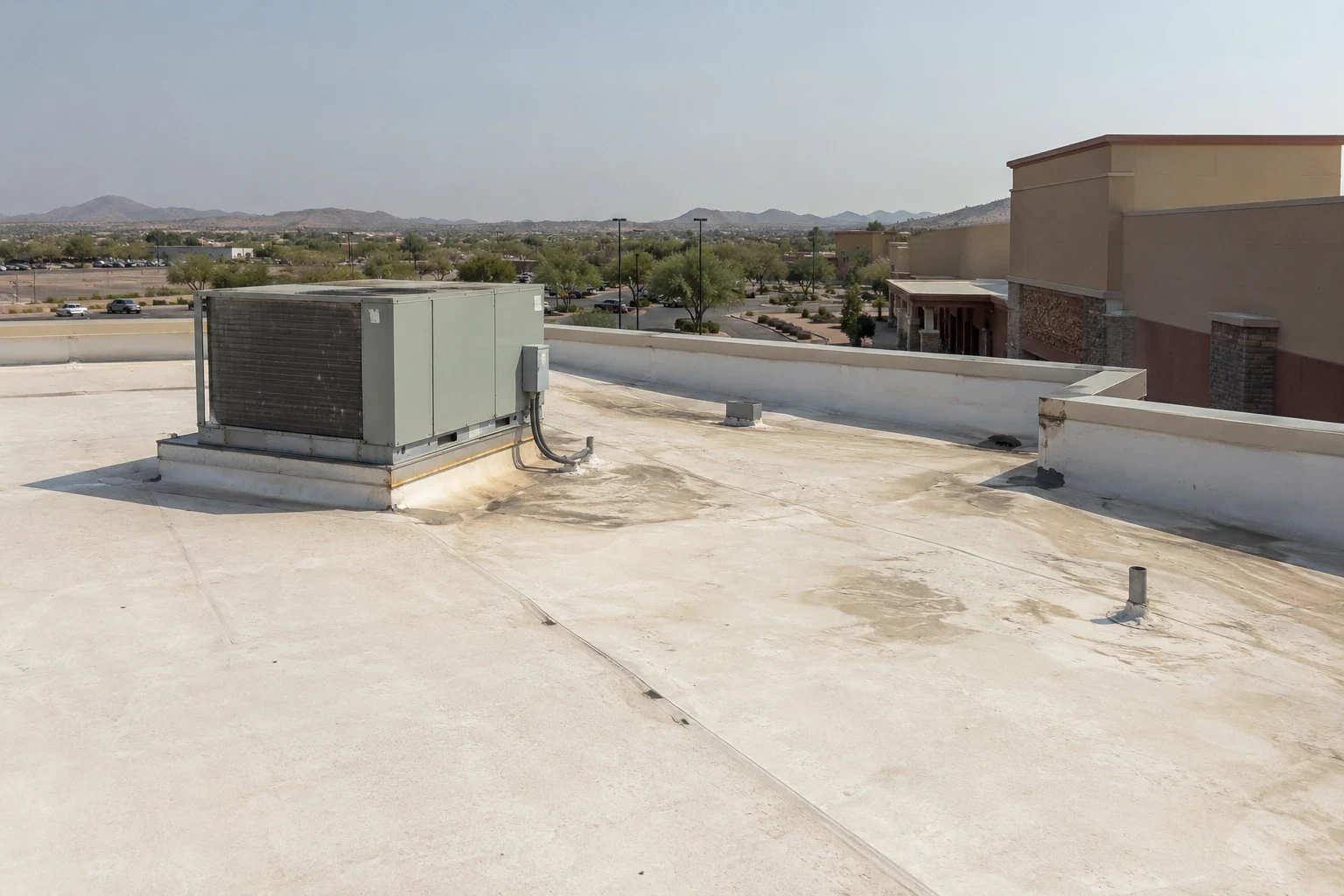
Commercial Roofing Questions
Yes. The crew opens one section at a time, covers air intakes and exhaust, and keeps the entry and docks clear. Carts and customers stay away from the work zone behind fences and signs. Give us your busy days and the plan bends around them. Your manager approves each phase, and a short notice goes up at the staff entrance.
We protect the ceiling below the work zone, cover vents and keep dust off open product. Quiet hours and short refrigeration shutoffs are agreed in advance. Tell us which departments are most sensitive and they are protected first. Produce, bakery and dairy lead that list in most stores. The receiving area gets a look too, since a damp dock is a slip risk.
Photograph it, write the date and call. Do not paint over the stain. We work upstream from the mark to find the entry point, with a moisture scan if the source is unclear. The repair goes into the file with a photograph, so the next manager knows which stain came from which fix.
Recorded hail nearby spans pea-sized to half-inch stones, and it can bruise membrane and dent vents and condensers. A dented condenser fin tells us the hail was large enough to matter, so we check every unit on the roof. A bruise can wait weeks to leak, and a dated photograph taken soon after the storm protects a claim.
The lease decides. We mark each curb and section on the plan and note which tenant owns what. Dated photographs of the roof before and after rooftop work settle most disputes. Leases often pass roof costs through to tenants, and a clear record helps both sides agree on the bill.