Fire Damage Roof Repair in Prescott Valley, AZ
Fire and smoke damage roof repair in Prescott Valley, AZ: deck checks, wet insulation, temporary protection and a photo record that supports the claim.
A blistered, glossy patch on a membrane means heat reached it. The sheet softened and flowed, then hardened again. Under that patch the insulation may be charred, and the deck may be weaker than it looks. Fire damage to a roof is not always where the flames were. Heat rises through the building and loads the roof from below. Firefighters add water from above. The roof in Prescott Valley, AZ then faces freezing mornings or a monsoon cell with its protection gone. The first job is to make it safe. The second is to find every part that was hurt.
Make it safe first
Nobody goes on a fire-damaged roof until someone checks the deck. A deck that looks flat may be burned through underneath. We ask for the fire department's release and the building's structural status. Then we inspect from below, from a lift or from the ground, before anyone walks the surface.
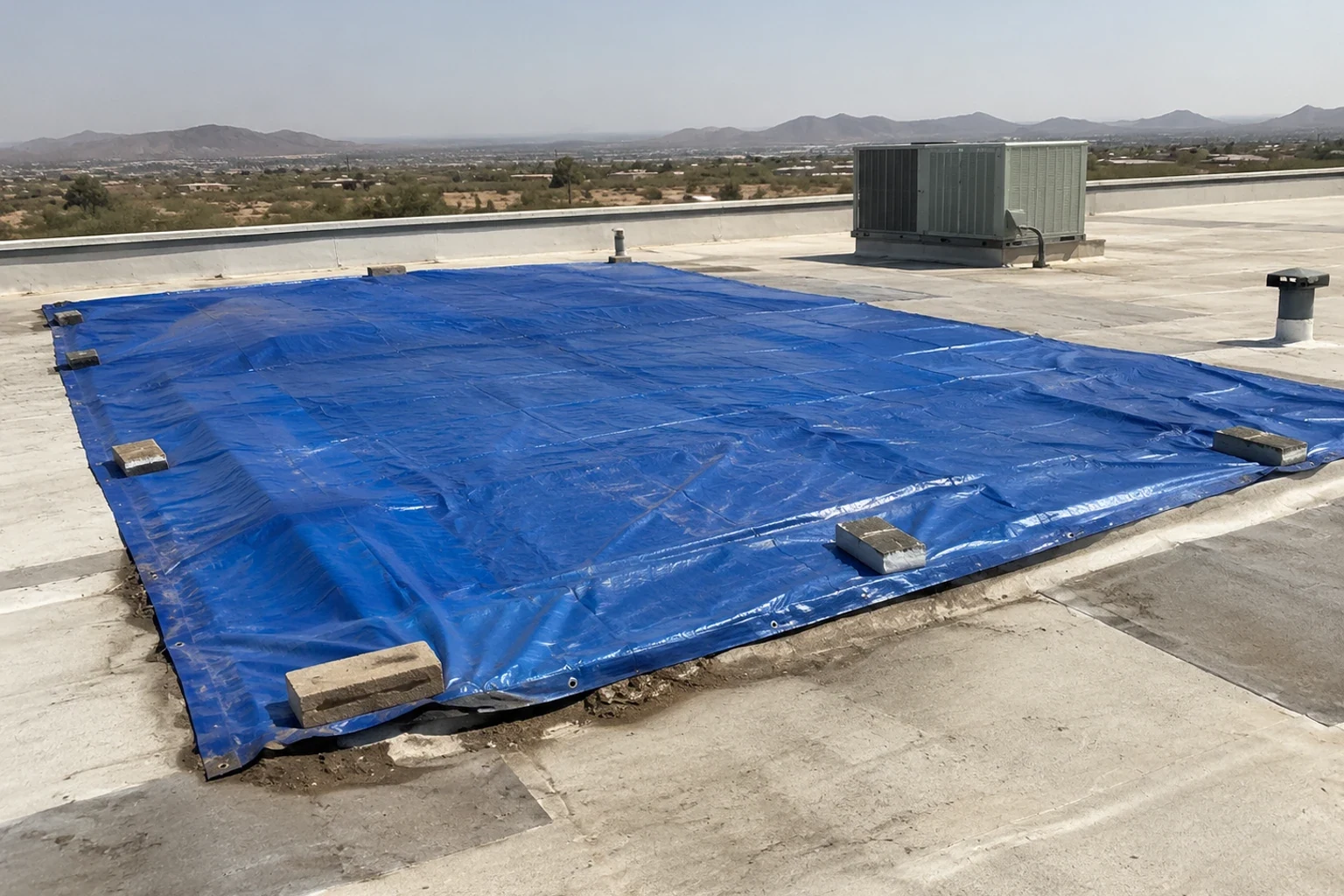
When the roof is cleared, we walk it in a plan. We stay on supported areas. We test the deck with care. We mark soft spots, holes and burned zones. Temporary protection goes on right away. Tarps, plywood and temporary membrane keep weather out. In freezing weather, the protection also stops water from icing inside the building.
The first call often comes after hours. Emergency roof repair puts temporary protection over the opening so weather stays out. The permanent repair is planned after the deck is cleared and the wet areas are mapped.
What heat does to a membrane
Every roof system reacts to heat in its own way. Thermoplastic sheets such as TPO and PVC soften and shrink. They may distort or pull away from flashings. EPDM may harden and crack. Modified bitumen can soften and slide. Built-up roofs can ignite at the asphalt. Metal panels warp and lose their coating. Foam insulation melts. Mineral wool and board stock char or shrink.
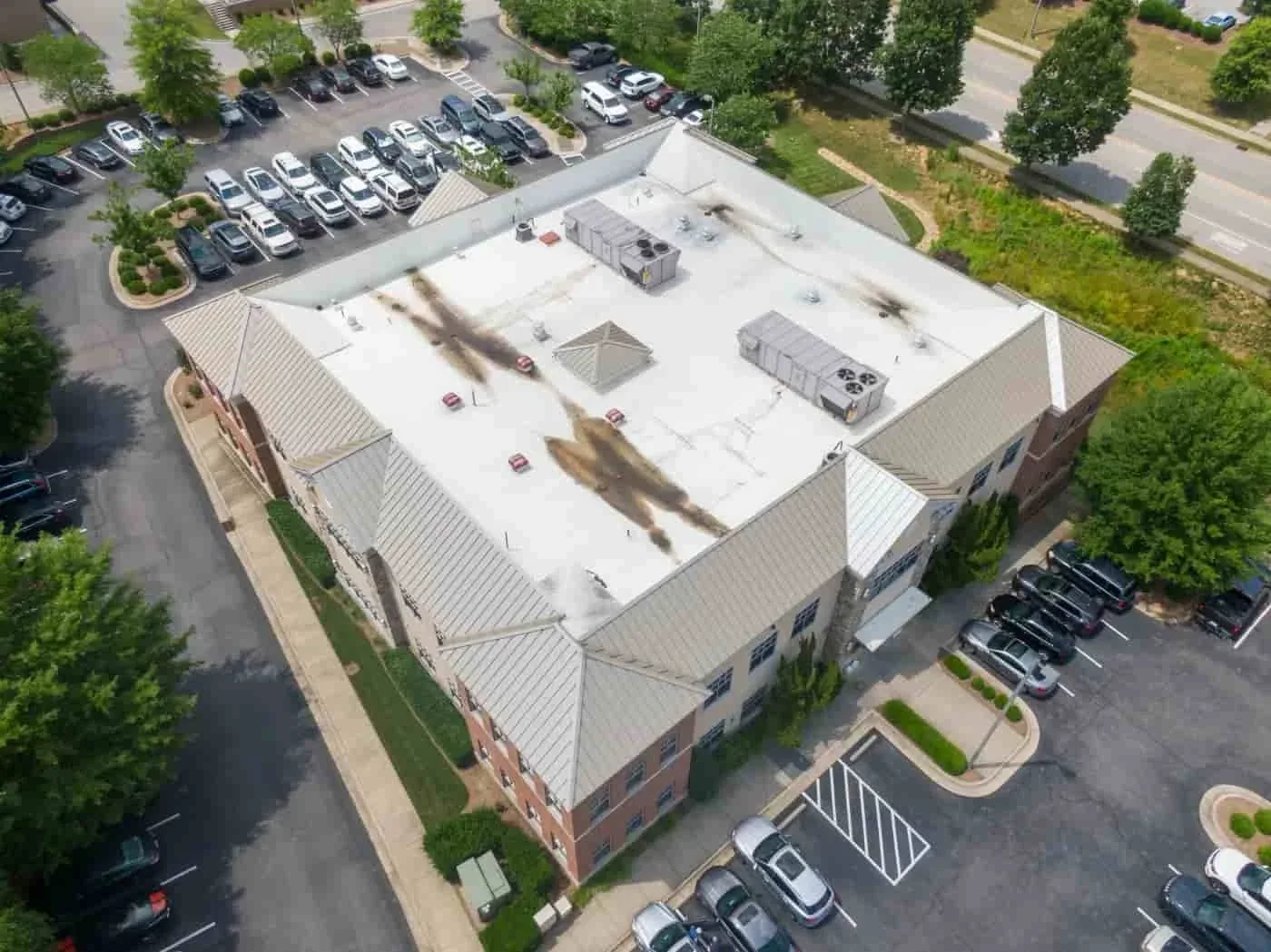
The mark on the surface shows only part of it. We check for shrinkage at walls. We check for sheet that has pulled loose from its attachment. We probe seams, because heat weakens welds and adhesives. We check coatings for blistering. A TPO roof that looks intact from a distance can be brittle at the edges.
Edges and details fail first in a fire. Flashings melt. Sealants burn off. Pipe boots collapse around their pipes. We rebuild these as part of the repair, and the flashing findings join the main scope. A roof that has been repaired in the field but left with burned flashings will leak at the first rain.
Water from the hose
Firefighting water goes into the building, onto the roof and into the insulation. Wet insulation does not dry on its own. It holds water against the deck and the membrane. Left alone, it rots the deck, rusts fasteners and grows mold.
We map the wet areas with an infrared moisture survey, then confirm with core cuts. We record each cut with a photo. Wet board comes out. Dry board stays. Then we recheck after several days, because water moves. A roof that tests dry on day one can show wet on day five. In the cold season, trapped water can freeze and expand, so speed matters.
Scope the repair
The repair scope depends on how far the damage runs. Minor damage means patching and replacing a few sections of sheet. Moderate damage means replacing a full area of membrane and insulation. Major damage means a structural repair and a new roof system.
The scope lists each area with a photo and a quantity. It separates fire damage from older wear, because the two are paid for differently. It names the product for each repair and the code items that apply. If the deck needs replacing, a structural professional reviews it before the roofing goes on. The scope is a document an insurer, a lender and a contractor can all follow. Our insurance claim documentation work builds the photo record and the itemized list together.
Where the damage is heavy, a commercial roof replacement may cost less than a patchwork of repairs. The findings sheet compares the two paths so the owner can see the numbers side by side. Punctures from falling debris get their own line, and the membrane puncture counts sit beside it.
Weather will not wait
A damaged roof does not get to pick its season. Fire in July means a monsoon cell may arrive before the permanent repair. Fire in December means freezing mornings, as freezing temperatures typically run from about October 21 through May 1 near Prescott. Each season brings its own risk to an open roof.
In monsoon season, temporary protection must hold against wind as well as rain. We tie down tarps to sound framing and weight edges. In winter, we keep protection dry and clear of snow load, since Prescott averages about 10 inches of snow in a season. Permanent work waits for stable conditions. Adhesives and welds need the right temperature. We say so in the schedule instead of rushing a bad repair.
Buildings with fire exposure
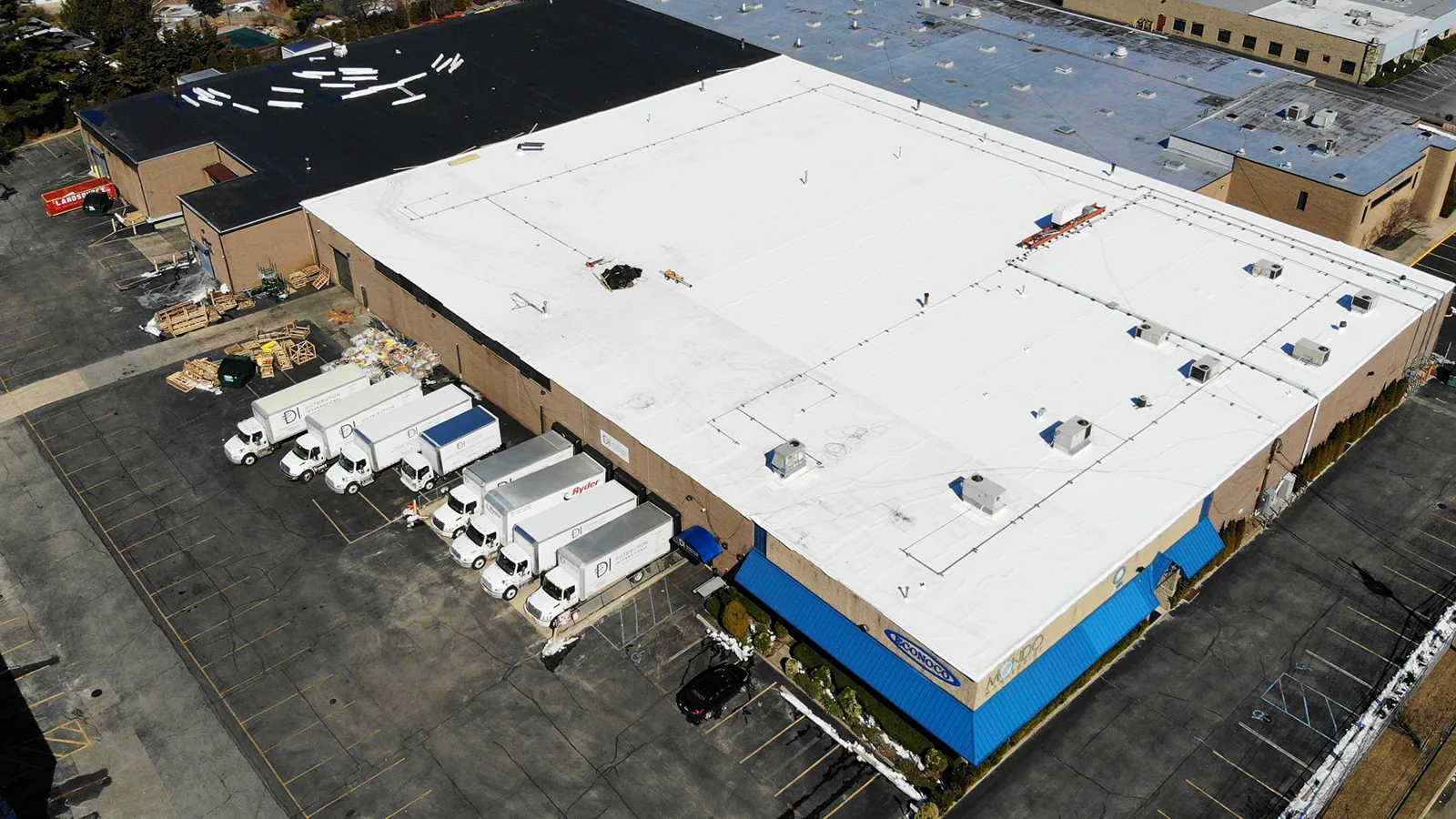
Every building type has its own fire profile. In industrial parks such as Big Sky Business Park, a manufacturing or distribution building may hold stored material under the roof, and the scope asks what is stored where. Restaurants in the retail corridors carry kitchen exhaust that can feed a roof fire. Hospitals and clinics carry medical gas lines and standby power. We learn what is under the roof before we plan the work.
For multi-tenant retail, a fire in one bay can send smoke and water into its neighbors. We check the roof over adjoining bays. Smoke leaves films on membranes and coatings, and it can hide small cracks. We clean and re-inspect before deciding what to keep.
What can wait
Some findings wait. Smoke staining on a sound membrane can wait. Cosmetic scorching on metal trim can wait. A dry, undamaged roof section far from the burned area can wait for a later maintenance visit.
What cannot wait is anything that lets water in or weakens the deck. Holes. Wet insulation. Burned flashing. Missing sheet. Those go first. The findings sheet lists each item in order, and the sheet comes before any repair is priced. You decide the sequence. For a roof near State Route 69 or another retail corridor, we also plan the work around tenant hours.
Keep every record. Photos, receipts, the fire report and the scope all matter. Store them with the roof file so the next owner can read the history.
Commercial Roofing Questions
Can a fire-damaged roof be saved, or does it need replacement?
It depends on how far heat reached and what is under the surface. Local damage can be cut out and replaced. Widespread softening, a weakened deck or wet insulation across large areas usually points to replacement. The findings sheet shows the extent so you can decide.
Who should I call first after a fire?
Call the fire department and your insurer first. Then call us for temporary protection and a documented roof walk. Do not send staff onto the roof. Keep dated photos of the roof from the ground and keep all receipts.
Will smoke damage on a membrane matter?
Soot is usually cleanable, but smoke can hide scorching and small cracks. We clean the surface and re-inspect before deciding. A smoked roof that tests sound can stay. One that tests brittle should be repaired.
How do you prove what the fire caused versus older wear?
With dated photos of each area, a map of the burned zone and notes on aging elsewhere. If you have earlier inspection photos, send them. They show the roof before the fire and make the fire scope clearer.
Should I wait for the insurer before temporary protection?
No. Protect the building at once and keep receipts. Insurers expect you to prevent further loss. Photograph the damage before protection goes on, and send those photos with the claim.
Request a documented roof walk after a fire
Ask for a walk-through and we will make the roof safe, photograph every finding and map the wet areas. You get a written findings sheet with photos before any repair is priced.
Request a Roof Assessment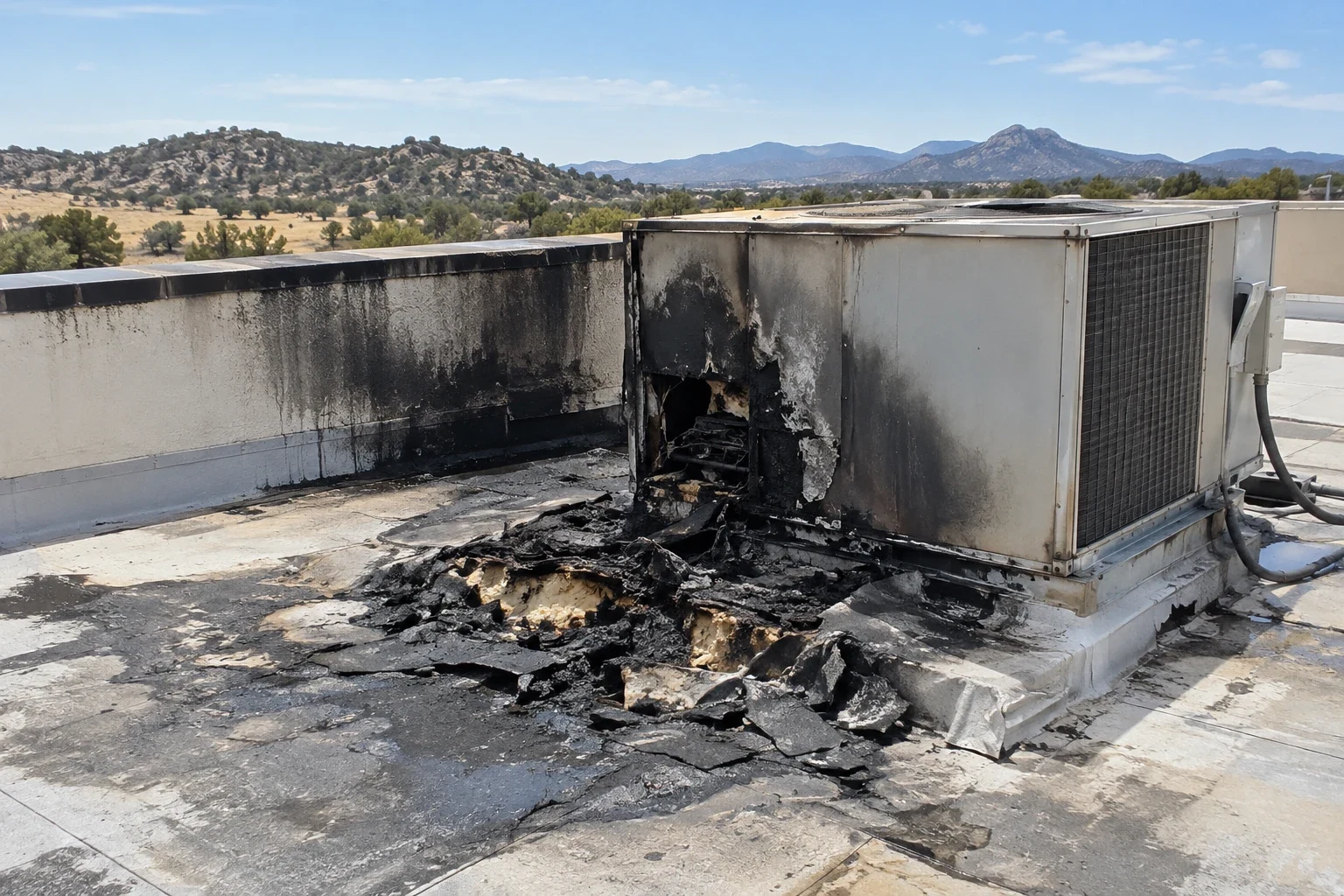
Commercial Roofing Questions
It depends on how far heat reached and what is under the surface. Local damage can be cut out and replaced. Widespread softening, a weakened deck or wet insulation across large areas usually points to replacement. The findings sheet shows the extent so you can decide.
Call the fire department and your insurer first. Then call us for temporary protection and a documented roof walk. Do not send staff onto the roof. Keep dated photos of the roof from the ground and keep all receipts.
Soot is usually cleanable, but smoke can hide scorching and small cracks. We clean the surface and re-inspect before deciding. A smoked roof that tests sound can stay. One that tests brittle should be repaired.
With dated photos of each area, a map of the burned zone and notes on aging elsewhere. If you have earlier inspection photos, send them. They show the roof before the fire and make the fire scope clearer.
No. Protect the building at once and keep receipts. Insurers expect you to prevent further loss. Photograph the damage before protection goes on, and send those photos with the claim.