Roof Condition Reports in Prescott Valley, AZ
Written roof condition reports in Prescott Valley, AZ: ranked findings, dated inspection photos and a repair-now and wait list, delivered before any pricing.
The report starts with one photo and one sentence. The photo shows a drain packed with debris. The sentence says what it means. Water cannot leave this roof. Everything after it is built the same way. A finding, a photo, a meaning and a next step. In Prescott Valley, AZ the report has a second job. It must separate what monsoon, hail and freeze did this year from what time did over many years. A report that cannot make that cut leaves the owner guessing.
What a report contains
Every report has the same parts. A cover page with the building, the roof area and the date. A roof plan with each finding marked. A summary of condition with one rating. A list of findings, each with a photo and a note. A ranked repair list. A watch list. A section on moisture, with scan images if we ran a survey.
The last page is the question sheet. It lists what the owner needs to decide and by when. A facility director can read the report in ten minutes and know what to do. A board member can read the summary page and the ranked list and follow the case. A lender can read the rating and the remaining-life range. The sheet comes before any repair is priced.
Limits are stated in the report. If part of the roof was not reachable, the report says so. If snow or ice covered an area, the report says which. If a core cut was not made, the report says what it would have shown. A report that names its gaps is more useful than one that hides them.
Photos carry the report
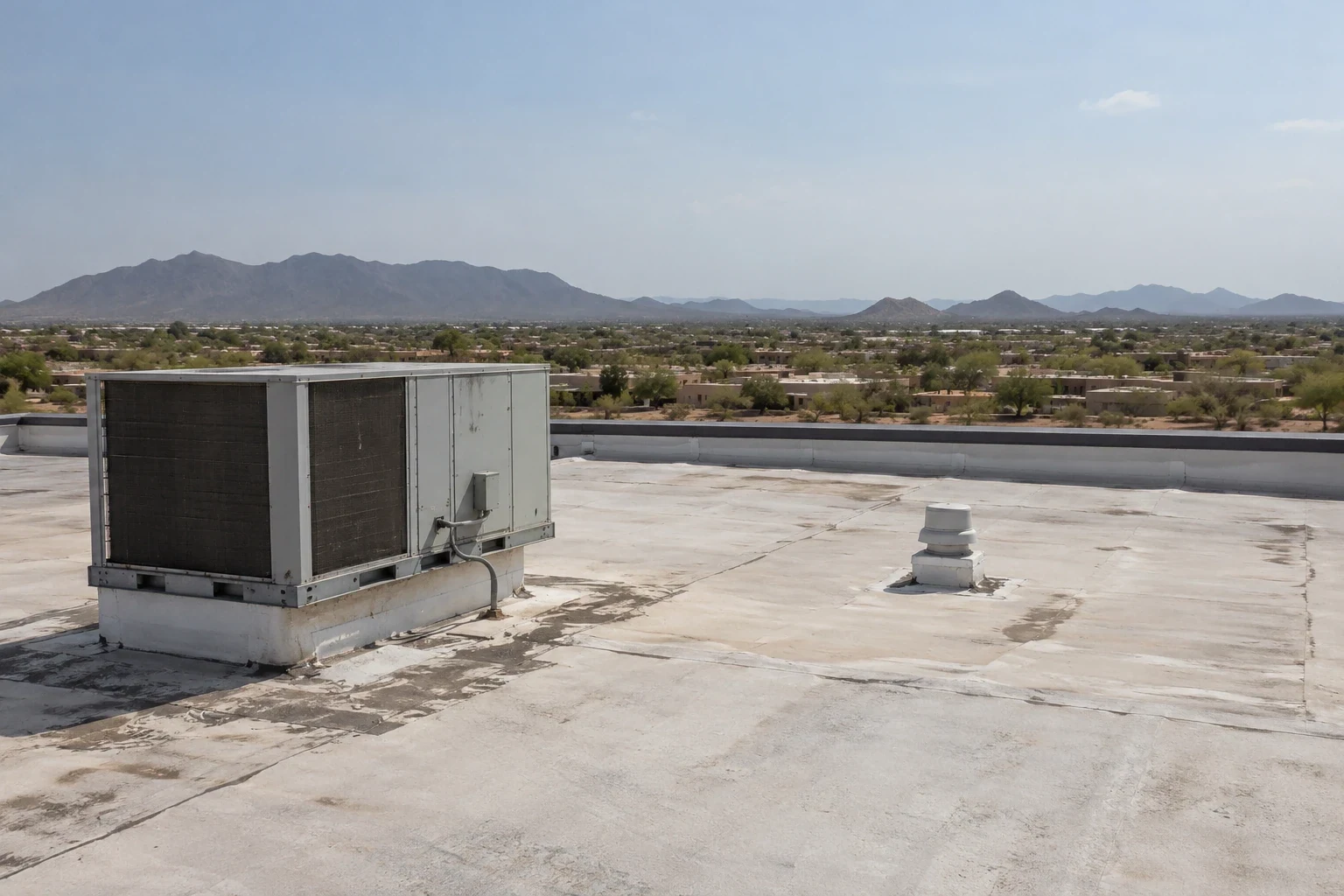
We take photos in a set order. Drains first. Then edges. Then walls and curbs. Then the field. Each photo is dated and keyed to the plan. We take wide shots and close shots. We put a scale in the frame when size matters.
Photos beat adjectives. A phrase like fair condition means little. A photo of a seam with a probe sliding under its edge means a lot. The photo set is the owner's proof. It supports a warranty claim, an insurance claim or a sale. We also use drone inspection to record large roofs from above, with the same frame each year so changes show.
Photo quality is checked before the report goes out. Each image is sharp, dated and keyed to a plan location. Blurred or unkeyed images are retaken or dropped. The owner should be able to find any photo's spot on the roof in under a minute.
How findings are ranked
Findings fall in three tiers. Fix now. Fix soon. Watch.
Fix now means water is entering or will on the next storm. An open seam in a low spot. A torn flashing. A frozen drain. A lifted edge. Fix soon means the item will fail within a season or two. A worn pipe boot. A thin coating. A bruised area. Watch means the item is sound but aging. We put a price on every item in the first two tiers, so the owner can budget. We set a date to recheck the third.
The same ranking works across roofs. If an owner has several buildings, the report for each roof feeds one ranked list. That list is the start of a capital plan.
Each tier carries a price range, not a single figure. The range reflects what we can see and what we cannot. When a core cut or moisture scan narrows the range, the report is revised. The owner sees both versions, so the change is visible.
Sort storm damage from wear
Monsoon cells bring rain, wind and hail from July through September at 5,100 feet, and frost holds from late October to the start of May. On July 20, 2026 a storm packed pea-sized hail, heavy rain and strong wind into one pass, and signals and trees went down.
After a storm, the report has to say what the storm did. We compare the roof to its earlier photos where they exist. We look at the direction of marks. Hail bruises face one way. Wind lifts start at edges. Wear shows everywhere. Storm damage shows in a pattern. The report lists each as its own group, with the evidence for the call.
Moisture is part of the report
A roof can look dry on top and be wet inside. We include moisture findings when the evidence calls for them. An infrared survey maps wet areas. Core cuts confirm them. Each cut gets a photo, a depth and a note on what was found.
The report outlines the wet area on the roof plan, gives its square footage and names the source: a leak, a condensation path or a past event. It prices the removal and replacement of wet board. It says what happens if the area is left. Wet insulation shortens roof life and raises energy use, and the report tells the owner by how much in plain terms, without invented numbers.
Who uses the report
Facility directors use it to plan work. Property managers use it for owners and tenants. Asset managers use it to rank buildings. Lenders and buyers use it to size risk. Insurers use it to separate damage from age. General contractors use it for scope. The same document serves each reader.
It also works with the rest of the file. Store the report in the roof register. Use it for due diligence surveys at a sale or refinance. Attach it to warranty claims. For retail and event roofs in the SR 69 corridor or the Entertainment District, the report can also list tenant-facing items, such as entrances and rooftop access points.
Different readers want different pages. A school district business office wants the ranked list and prices for budget season, which matters to a district such as Humboldt Unified School District, among the town's largest employers. A hospital facilities office, such as the one at Yavapai Regional Medical Center East Campus, wants the moisture section and the access notes first. A retail landlord at Glassford Hill Marketplace wants the tenant bays tied to the findings. We put a reader's guide on the cover so each one goes to the right page.
Commercial Roofing Questions
How long does a condition report take to produce?
The roof walk takes a few hours for a typical building. The written report follows within days, after we sort photos and check measurements. Large roofs and moisture surveys take longer. We give a delivery date before we start.
Is the report the same as a bid?
No. The report states what we found, ranks it and suggests next steps. It does not commit you to a repair. Prices for repairs come after the sheet is in your hands, and you can use the report to get other bids.
How often should a report be updated?
At least once a year, and after any major storm. Annual updates show trends. A post-storm update shows what changed. Keep the earlier reports so comparisons stay possible.
Can the report support an insurance claim?
Yes. Dated photos, marked plans and a clear list of storm findings are what adjusters look for. Send the report to your agent, and keep a copy in the roof file. We document the roof. The insurer decides coverage.
Do you report on roofs you did not install?
Yes. We assess any roof. We identify the system, record its condition and note what we cannot see. When records are thin, cores and a moisture scan supply what is missing.
Request a walk-through for a written report
Ask for a roof walk and we will photograph every finding and rank it. You get a written findings sheet with photos before any repair is priced.
Request a Roof Assessment
Commercial Roofing Questions
The roof walk takes a few hours for a typical building. The written report follows within days, after we sort photos and check measurements. Large roofs and moisture surveys take longer. We give a delivery date before we start.
No. The report states what we found, ranks it and suggests next steps. It does not commit you to a repair. Prices for repairs come after the sheet is in your hands, and you can use the report to get other bids.
At least once a year, and after any major storm. Annual updates show trends. A post-storm update shows what changed. Keep the earlier reports so comparisons stay possible.
Yes. Dated photos, marked plans and a clear list of storm findings are what adjusters look for. Send the report to your agent, and keep a copy in the roof file. We document the roof. The insurer decides coverage.
Yes. We assess any roof. We identify the system, record its condition and note what we cannot see. When records are thin, cores and a moisture scan supply what is missing.