Roofing for Multi-Location Retail and Restaurant Brands in Prescott Valley, AZ
Roof walks, kitchen exhaust checks and one report format for retail and restaurant brands with Prescott Valley, AZ stores, scheduled around trading hours.
Open the store's maintenance ticket list and filter for ceiling tiles. Three tickets in four years, all near the same corner, each closed with a patch. That pattern is the first finding. In Prescott Valley, AZ, we find the corner on the roof and match it to a drain, a curb or a seam, then photograph it and put the written sheet in your hands before pricing.
A regional facilities lead has many stores and one budget. A new store in this town is one more roof you did not choose. We help you treat it like the rest.
What we find on store and restaurant roofs
Prototype buildings repeat. The same curbs, the same drain layout, the same rooftop units. That helps us. We build a detail set once and apply it to each store, adjusting for local weather.
Store roofs show curb seals gone dry, drain screens packed with gravel and leaves, seams opened at walk routes and flashing pulled from parapets. Restaurants add one more item. Kitchen exhaust leaves grease on the membrane around each fan. Grease softens some roofing and traps dirt. It can also run to a drain and plug it.
We check the area around every exhaust fan for staining and soft spots. We check the walk route from the hatch to the unit. We check the curbs, the pipe boots and the drains. Each finding goes on a plan with a photo.
Grocery roofs add refrigeration. Condenser lines run across the roof and each one has a support. Supports can shift, and a shifted support tears the membrane under it. We walk every refrigeration run and check the pads. A leak over a cooler also fogs glass doors and damages stock, so these get priority.
Signs and pylons are the last item. A sign mounted on the roof edge adds load and a penetration. We check the fasteners and the flashing at each one.
Where chains sit in this town
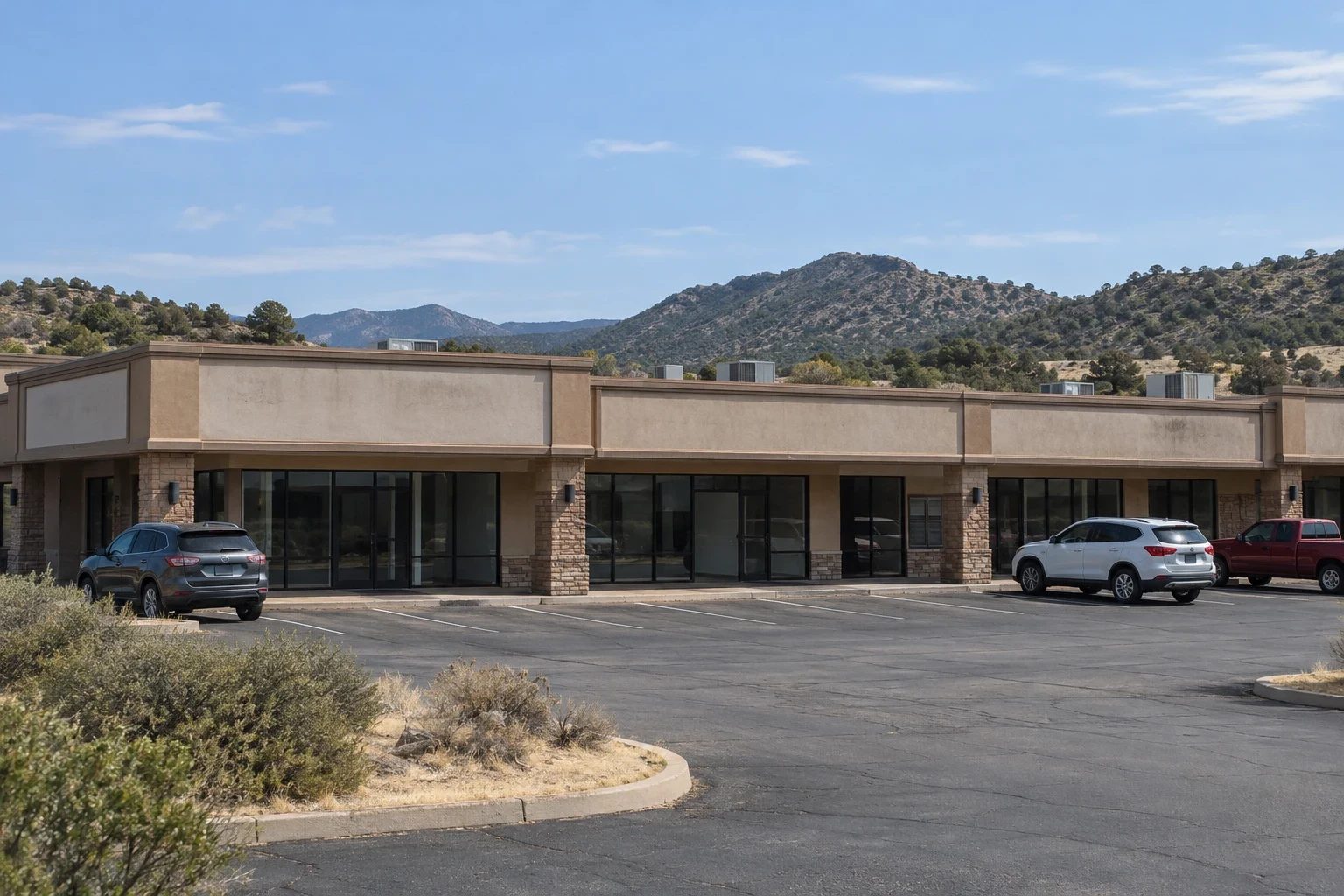
Two retail power centers carry most of the town's chain activity. Glassford Hill Marketplace now includes a veterinarian, a bank branch and an auto-parts store in low-slope buildings, while The Crossroads pairs a row of inline shops with fresh openings from national restaurant and apparel names.
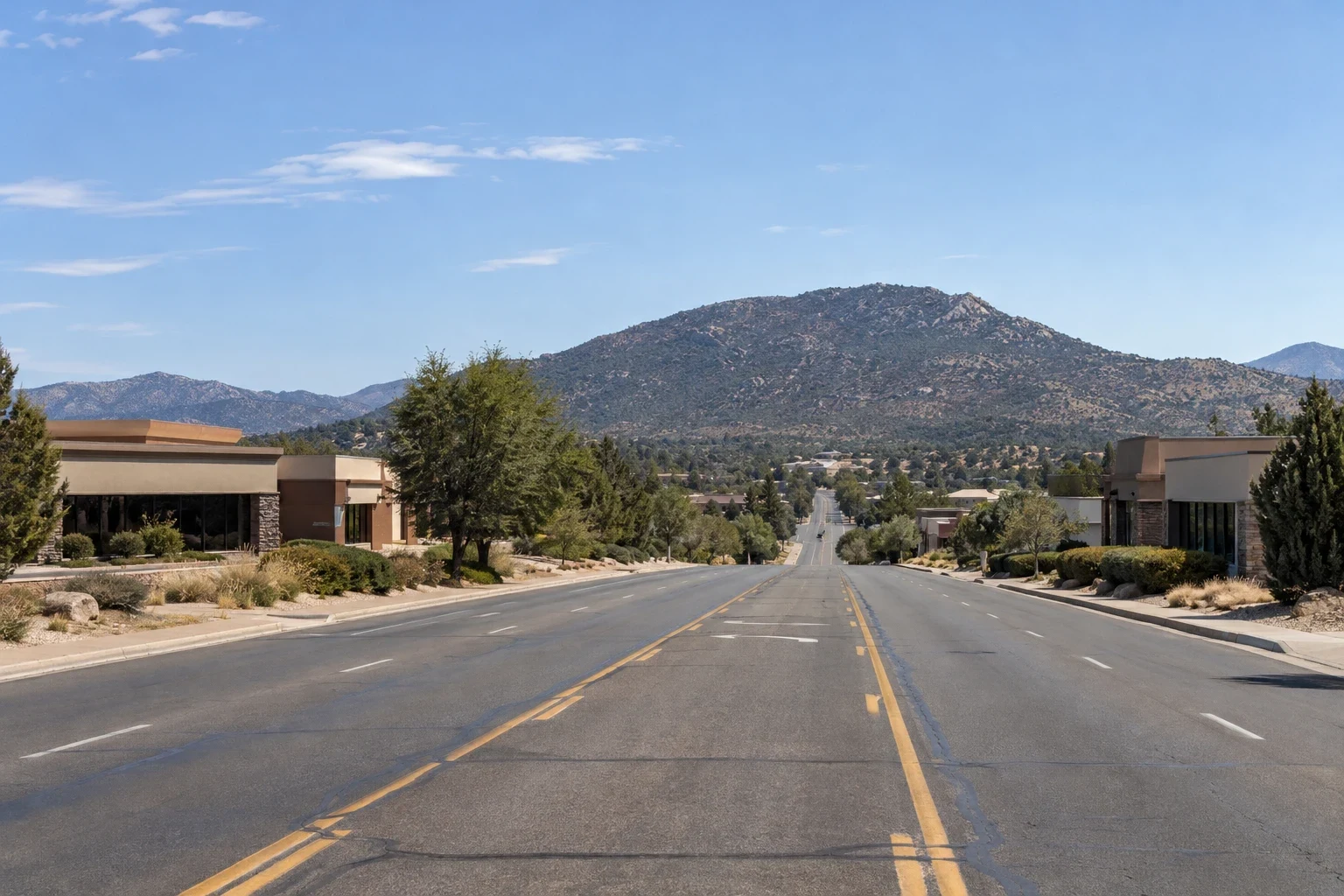
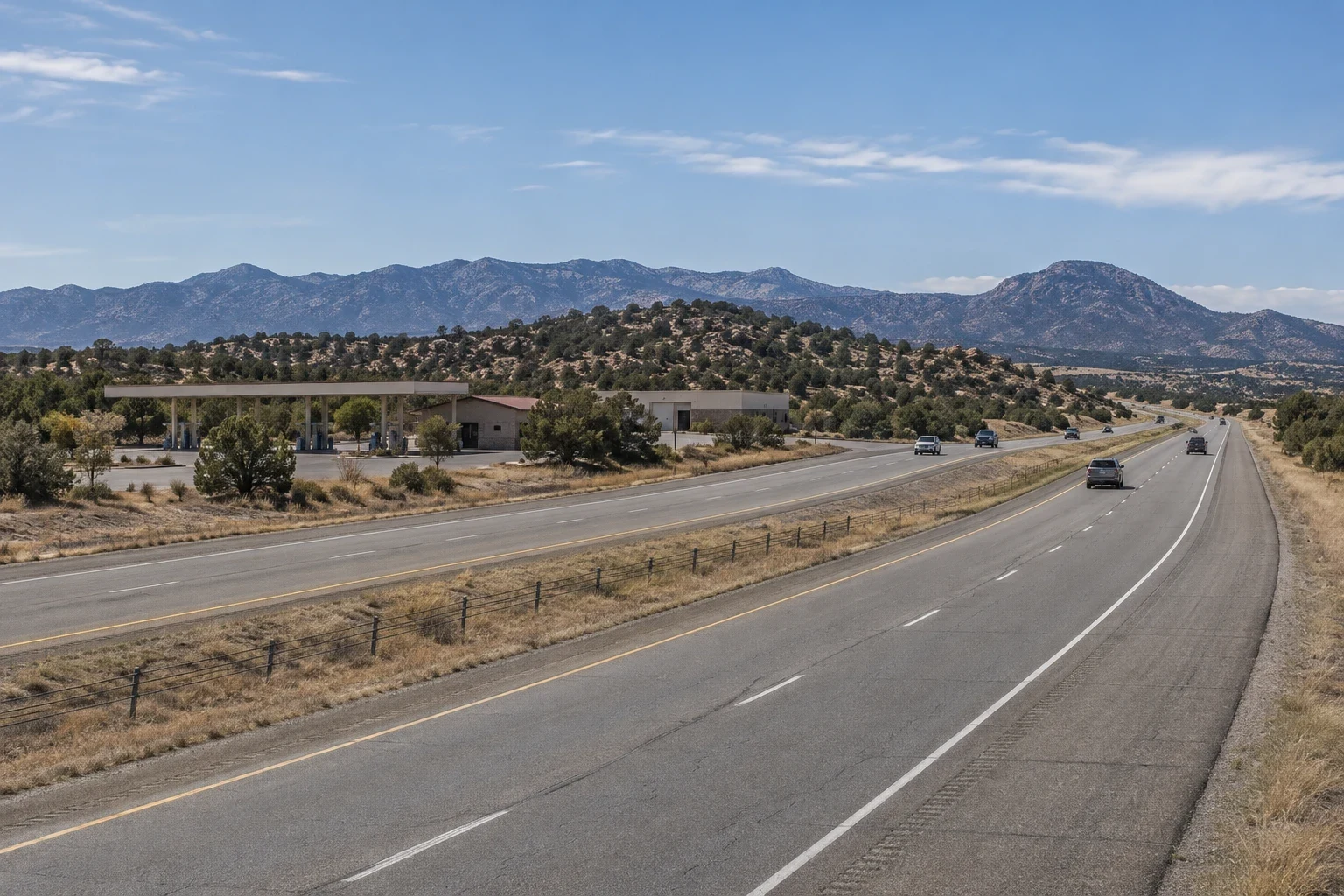
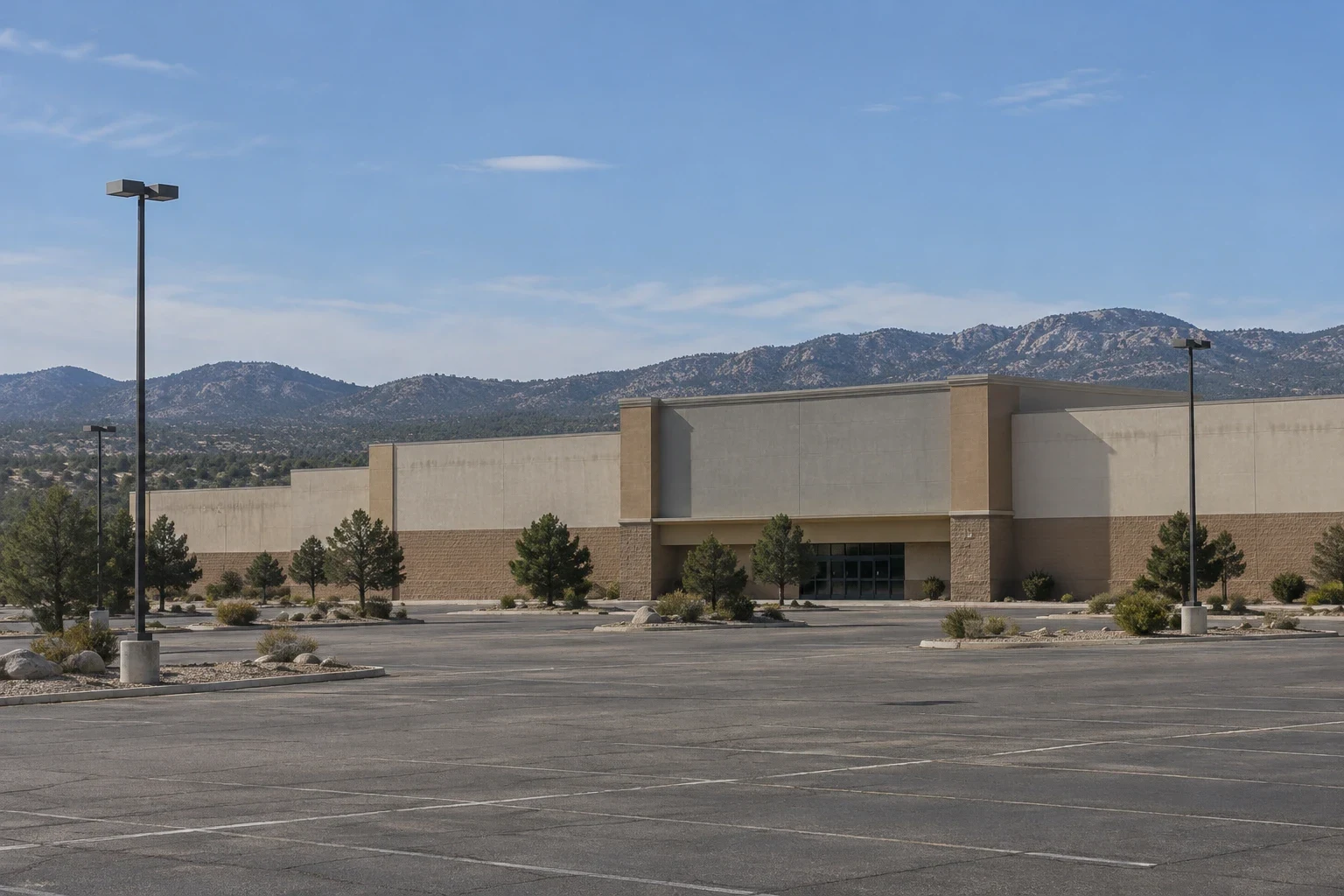
Safeway (160 employees), Home Depot (180), Fry's Food Store (232) and Walmart (380) are the big-box and grocery employers on record. They sit on the State Route 69 corridor, a six-lane road to downtown Prescott and Interstate 17. The downtown Entertainment District adds restaurants, a multi-screen theater and retail next to a 6,000-seat events center.
A store in the Glassford Hill Road corridor stands near Glassford Hill, whose 6,177-foot summit sends ridge-top wind across nearby buildings. A store on the State Route 69 corridor has a different exposure. We note each location on the sheet.
What monsoon and freeze do
Roughly 15 inches of precipitation arrive in Prescott Valley each year, with a peak in July and August, and a monsoon cell can mix rain, gusts and hail in minutes. Drains on a wide retail roof get tested hard. A screen packed with debris turns a shower into a pond over the sales floor.
Winter works on the details. Frost lingers from late October to early May, and daily swings reach nearly thirty degrees. A seam at the base of a curb opens a hair each cycle. By the third winter, the curb leaks.
Pea-sized hail and heavy rain came with the July 20, 2026 cell, and signals and trees went down. Hail bruises soft membranes, so after a hail event the surface is pressed and each bruise photographed. Stores get a dated record they can send to a risk manager.
Stores that share a roof
An inline store in a center shares its roof with neighbors. The landlord owns the structure. The tenant often pays a share through common area charges. When one tenant has a leak, the cause may sit in a neighbor's space or on a roof the landlord controls.
Photos settle this. We document the leak with moisture readings and pictures from above and below. The sheet shows where the water entered and whose area it crossed. A chain's real estate team can use it to question a charge. The roof side of that dispute is the same on any shopping center roof: a shared structure, shared drains and an owner who controls the repair.
Free-standing stores are simpler. A big box roof belongs to the owner. A restaurant pad site may be ground-leased. We read the lease clause and note who pays for what.
Working around trading hours
Work that touches the sales floor goes at night or before opening. Loud work over a dining room goes in the slow part of the day. Debris chutes stay away from entries and drive-thru lanes. For a restaurant, we agree on exhaust shutdowns with the kitchen so fans never stop during service.
Holiday weeks are off the table. We agree on blackout dates with the chain and place the work in the shoulder weeks. A monsoon cell in July or August can also hold a job, so we pad the schedule and dry in each section the same day.
At the end of each visit, we clean the roof and the lot. Screws and grit do not stay on the ground. A store manager gets a short note with what was done and what is next.
Store openings add one more date. A remodel, a reset or a grand opening each puts a freeze on roof work. We ask for the remodel calendar when we plan, so the walk and repair dates sit outside it. When the date moves, we move with it and re-send the plan.
What to ask for in writing
One findings sheet per store should hold photographs, a roof plan and a price per item. A detail set that applies to every store in the chain and the work sequence, with the dates the crew will be on site, round it out.
Ask for a program view. A multi-site roof program fixes a single inspection method and a single report format for every store. A regional lead can then compare a Prescott Valley store with one in another state. Stores in centers run by a property management company can share a copy of the sheet with the landlord. A hotel on a neighboring pad has its own questions, which hospitality groups face with guests in the rooms below.
Commercial Roofing Questions
Can one contract cover several stores?
Yes. A single scope can list each store as a line, with its own schedule, photos and price. Each store keeps its own file. That keeps pricing steady without forcing the same date on every store.
How fast can you stop a leak at a store?
Use the emergency line. Crews can usually cover the opening the same day, protect stock and fixtures, photograph the damage and trace the cause. The permanent repair waits until that cause is known.
Does a roof leak affect a food permit?
It can. Water over food prep or storage raises a health concern. We write the repair and the dry-in date in a note you can show an inspector.
What causes leaks around rooftop units?
Curb flashing that has opened from heat and vibration, or a unit that was replaced without resealing its base. Both are cheap to fix if found early and costly once water reaches a ceiling.
Should a chain recoat or replace an aging store roof?
A moisture scan decides. A dry base can take a coating, which saves cost and downtime. A wet base needs replacement. We price both so the choice rests on numbers.
Request a walk-through
Ask for a walk-through of your Prescott Valley store roofs. We will send a written findings sheet with photos before we price any repair, and we will plan the work around your trading hours.
Request a Roof Assessment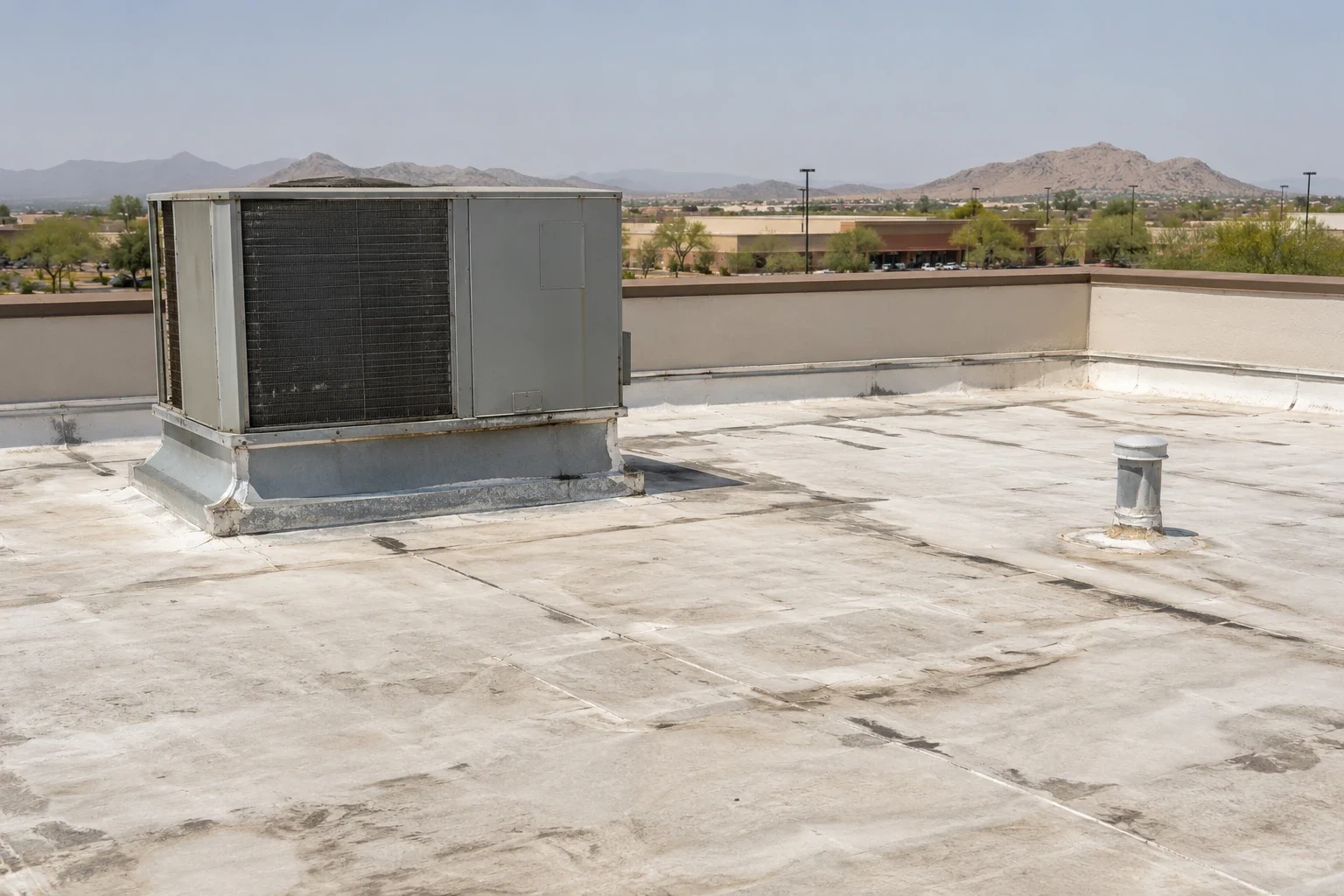
Commercial Roofing Questions
Yes. A single scope can list each store as a line, with its own schedule, photos and price. Each store keeps its own file. That keeps pricing steady without forcing the same date on every store.
Use the emergency line. Crews can usually cover the opening the same day, protect stock and fixtures, photograph the damage and trace the cause. The permanent repair waits until that cause is known.
It can. Water over food prep or storage raises a health concern. We write the repair and the dry-in date in a note you can show an inspector.
Curb flashing that has opened from heat and vibration, or a unit that was replaced without resealing its base. Both are cheap to fix if found early and costly once water reaches a ceiling.
A moisture scan decides. A dry base can take a coating, which saves cost and downtime. A wet base needs replacement. We price both so the choice rests on numbers.