Rooftop Equipment Curbs and Supports in Prescott Valley, AZ
Curb flashing, equipment supports and pipe supports on Prescott Valley, AZ commercial roofs, checked after monsoon cells and freezing mornings.
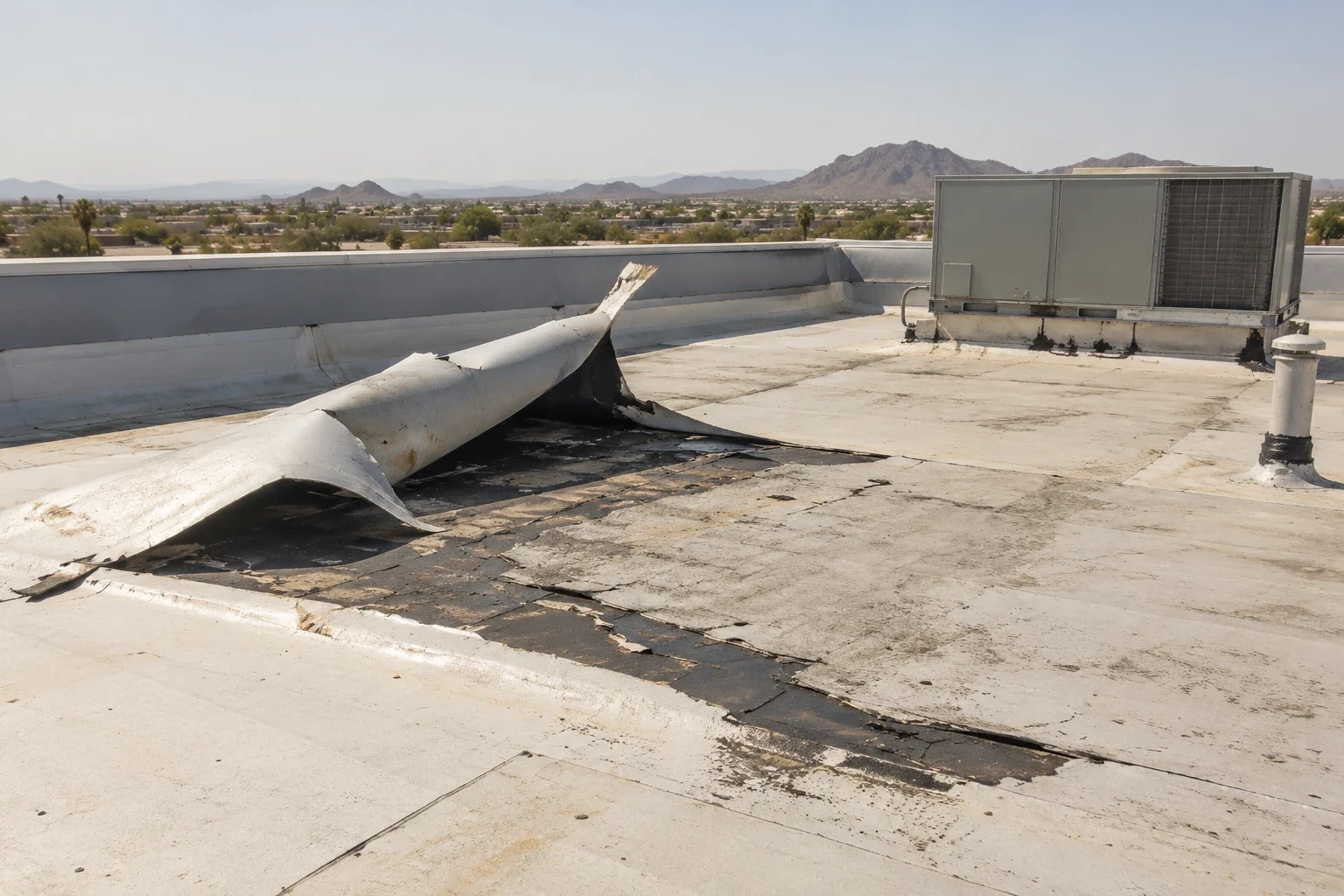
Look at the base of a rooftop unit. Check the corner where the curb flashing meets the membrane. On a Prescott Valley, AZ roof, that corner is where a hairline split opens first. A split corner is the front door for water. The unit above it is heavy and it hums all day, so the vibration keeps working the seam. Add a monsoon cell, a gust front and a cold morning, and the corner opens wider. We walk the roof, find these corners first and photograph each one. A curb is a small part of the roof, and it is a classic place for water to get in.
What we found at the curbs
Most curb trouble is plain. The base flashing has pulled away from the curb wall. The sealant at the top edge has dried and cracked. The counterflashing is loose. The curb itself has shifted a little when the unit was serviced. A mechanic sets a ladder or a tool on the flashing, and a small dent becomes a tear.
We probe the seams around every curb, one by one. We press on the corners. We check whether the membrane is still bonded to the curb wall or has bridged across the angle. Each finding gets an inspection photo with a location mark. When a curb is clean, we say so and move on. When it is not, the photo shows why.
Why curbs fail early
A curb is a hole in the roof with a box around it. The membrane has to turn up the wall, cross a corner and end under a cap. Every one of those steps is a place for stress. A roof near 5,100 feet gains and loses nearly thirty degrees in a day. The metal curb and the membrane move at different rates. The seam sits between them and takes the strain.
Freeze adds to it. Freezing mornings run from late October into spring. Water that sits in a gap expands and widens it. A monsoon cell in July then finds the gap already open. So the first sign is often not a stain. It is a gap you can slide a probe into.
Supports, pipes and gas lines
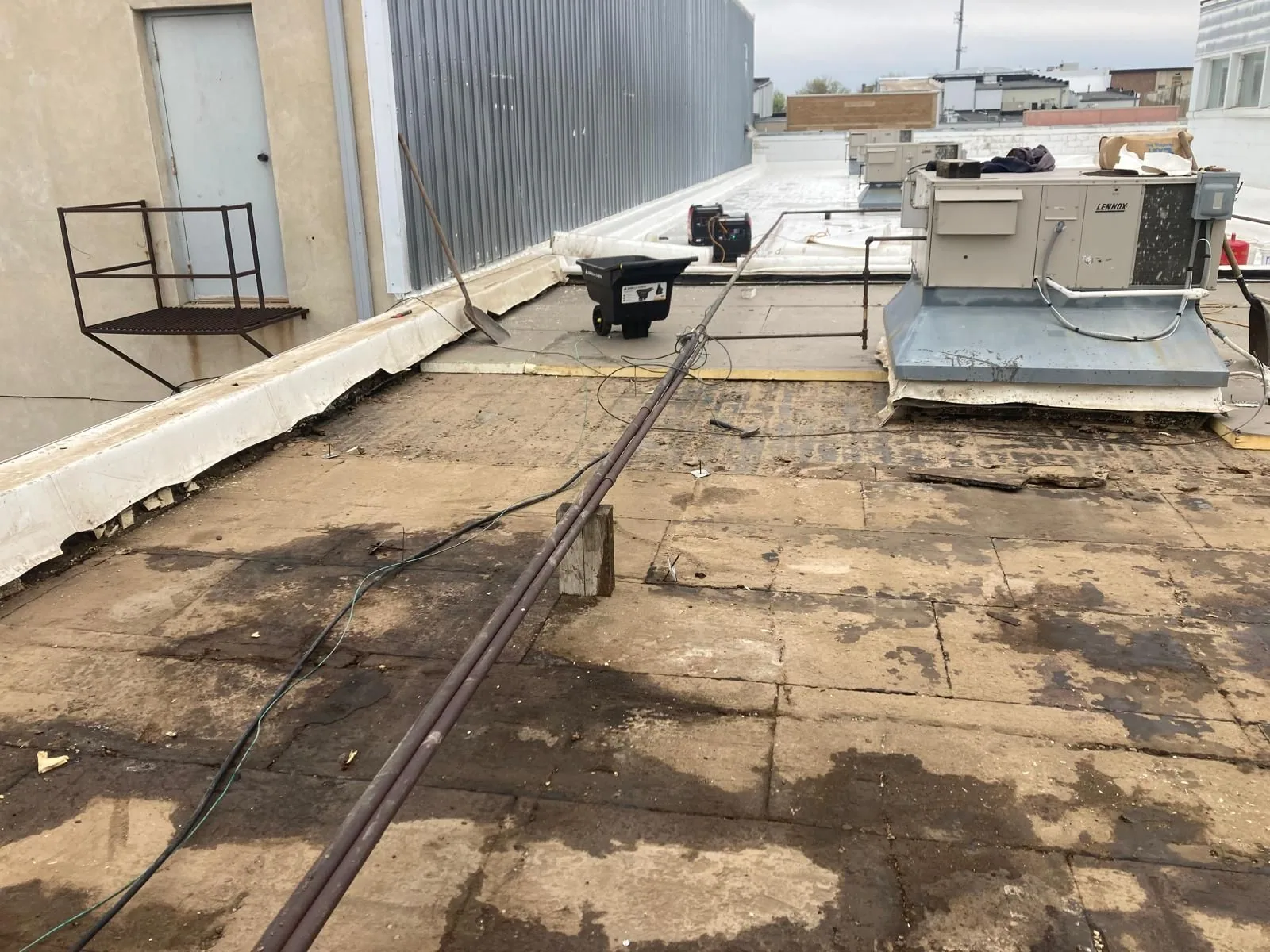
Curbs are only part of the story. Equipment supports, duct supports and pipe supports sit on the membrane too. Each foot, sleeper or pipe stand puts a point load on the roof. When the support sits directly on the sheet with no pad, it can wear through. When a pipe rides on a rigid block, thermal swing makes the pipe move and scrape.
We look at three things. Is there a protection pad under every support? Is the pipe free to slide, or is it pinned? Is the sealant at the penetration still soft? Where the answer is no, we write it down with a photo and a plain fix. A new pad costs little. A worn spot above a lobby ceiling costs a great deal.
Gas lines and conduit follow the same rule. A line that runs across the field on blocks should have a pad at every block. A conduit that rises through the roof needs a boot with a tight collar, and the collar is usually the first thing the sun ruins. Look for a collar that has split along its length or pulled away from the pipe. We find these during the same walk and add them to the findings sheet.
Where these curbs matter in town
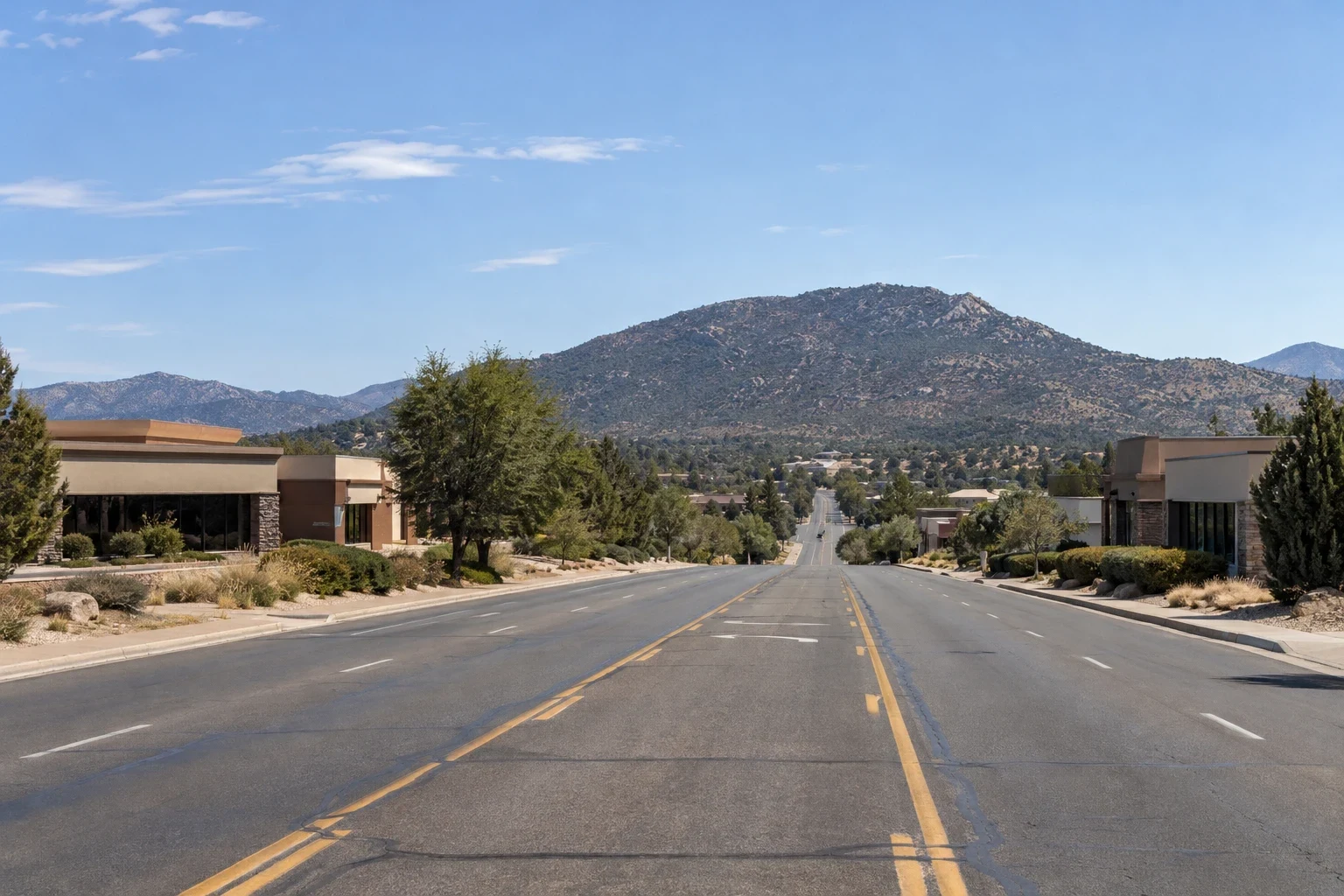
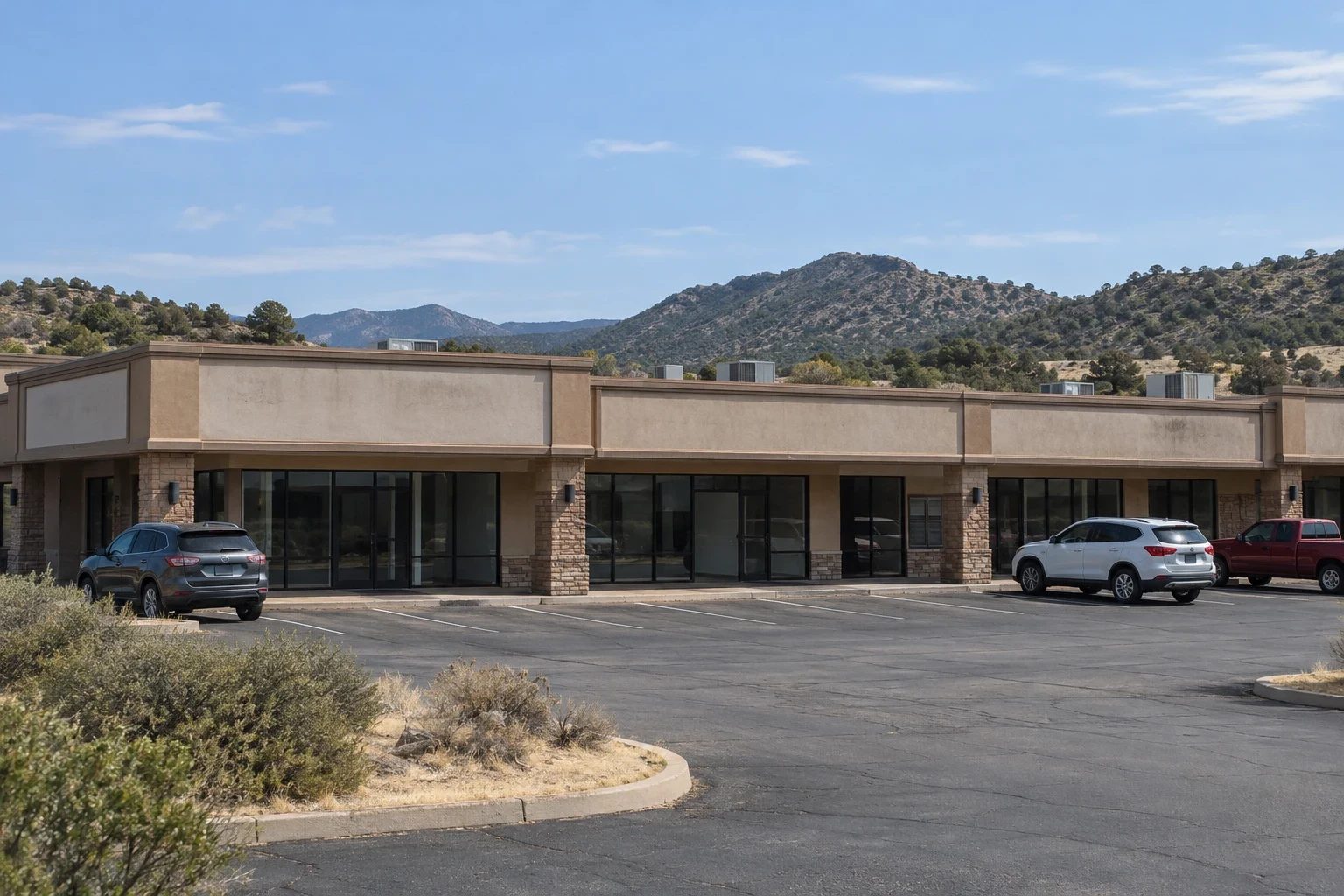
Retail along SR 69 and the Glassford Hill corridor puts rooftop units on low-slope buildings, and every unit, vent or hood adds a curb. The Entertainment District pairs a 6,000-seat events center with restaurants and a theater, so kitchen exhaust and air handling gather on its roofs. On the east side, along Fain Road, manufacturers and distributors need their equipment running, so we schedule curb work around plant operations. A Glassford Hill retail roof with ten units has ten curbs to check.
The same walk applies to a shopping center and to a plant. The count differs. The method does not. Tall equipment near the ridge-top wind on Glassford Hill also deserves a look at its tie-downs and screens, since a gust front can lift a loose panel and slap it against the membrane. A wind damage repair after a storm often starts at an equipment cover, so we check those first.
What to repair now
Fix an open corner before the next storm. Replace brittle sealant at the top edge. Re-seat loose counterflashing. Add pads under supports that sit bare on the sheet. These are small jobs and each one stops a leak path. If a curb is rotted or crushed, we recommend rebuilding it, and we flag whether the unit must be lifted. That lift is a scheduling item, so we name it early. The insulation under the curb gets a moisture check at the same time, because a wet curb base is a common surprise once the unit is out of the way. If a curb shows a pattern, such as repeated splits at the same corner, we look for the cause before we patch it again.
For roofs that need wider work, a planned commercial roof repair bundles the curbs with seams and flashings in one visit. If the curb base is the real problem, a flashing failure repair rebuilds the whole turn-up and cap rather than smearing sealant over it. Owners who plan to add equipment in the next two years can also ask us to coordinate with a solar-ready roofing layout so the new supports land on prepared locations.
What can wait
Some findings can sit for a season. A surface scuff on a pad is cosmetic. Faded paint on a curb cap is cosmetic. A hairline craze in old sealant at a low-risk spot can be watched. We mark these as watch items and set a date to look again. That keeps the budget tied to evidence. You spend on what leaks, and you track what might. The findings sheet separates the two so a facility director can show the owner why one line is funded and another is not.
Commercial Roofing Questions
Can a rooftop unit be replaced without redoing the curb?
Sometimes. If the existing curb is sound, level and the right size for the new unit, it can stay. We check the curb wall, the flashing and the seam at the corners before the lift. If the flashing is old, we recommend replacing it while the unit is off, because that is the cheapest moment to do it. We put the curb inspection in writing before the crane date is set.
Who is responsible when a mechanical contractor damages the roof?
Look at the lease and the service contract first. Whatever the answer, document the roof before and after any equipment work. We take dated photos of the curbs and the walk paths so damage can be traced to a date. That record settles most arguments and speeds up the repair.
Should the unit be raised higher on the curb?
A taller curb gives the flashing more height above standing water. That helps on a roof with a visible ponding line near the unit. The change has to match the unit and the ductwork, so a mechanical engineer should approve it. We recommend it when we see water reaching the base flashing in the photos.
How often should curbs be checked?
Check them after each monsoon season and again before the first freeze. Those two visits catch most trouble. After a hard storm, such as the July 2026 cell that brought hail and wind, a quick look at the corners is worth doing. Keep the photos in one file so you can compare year to year.
What does a bad pipe support look like?
Look for a pipe resting on bare membrane, a bright scuffed patch under a stand or a boot with a gap around the pipe. Thermal swing moves the pipe, and it rubs. We recommend a sliding pad or a raised stand with a protection sheet, and we show the spot in the photos.
Request a walk-through
Ask for a walk-through of the roof and the equipment. You get a written findings sheet with photos of every curb and support before any repair is priced. Then you decide what to fix now and what can wait.
Request a Roof Assessment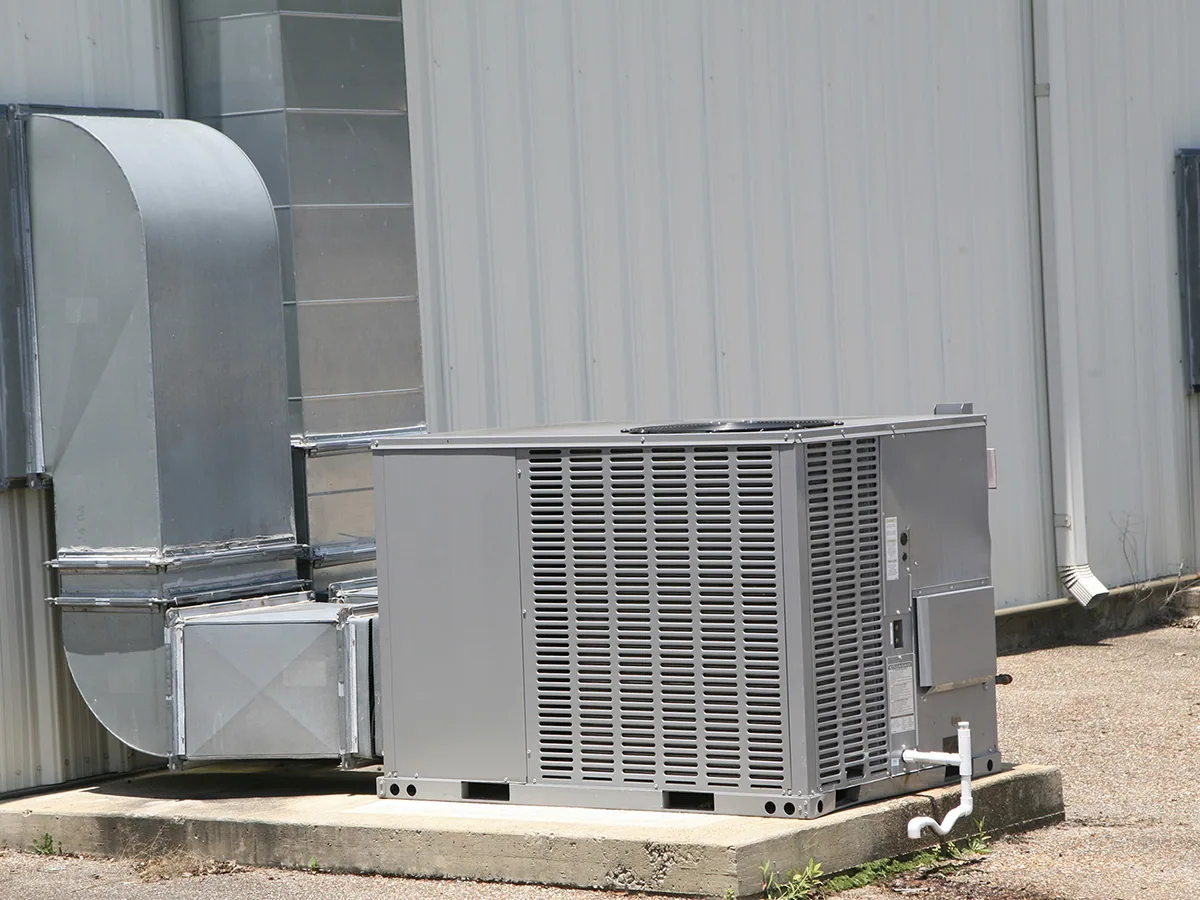
Commercial Roofing Questions
Sometimes. If the existing curb is sound, level and the right size for the new unit, it can stay. We check the curb wall, the flashing and the seam at the corners before the lift. If the flashing is old, we recommend replacing it while the unit is off, because that is the cheapest moment to do it. We put the curb inspection in writing before the crane date is set.
Look at the lease and the service contract first. Whatever the answer, document the roof before and after any equipment work. We take dated photos of the curbs and the walk paths so damage can be traced to a date. That record settles most arguments and speeds up the repair.
A taller curb gives the flashing more height above standing water. That helps on a roof with a visible ponding line near the unit. The change has to match the unit and the ductwork, so a mechanical engineer should approve it. We recommend it when we see water reaching the base flashing in the photos.
Check them after each monsoon season and again before the first freeze. Those two visits catch most trouble. After a hard storm, such as the July 2026 cell that brought hail and wind, a quick look at the corners is worth doing. Keep the photos in one file so you can compare year to year.
Look for a pipe resting on bare membrane, a bright scuffed patch under a stand or a boot with a gap around the pipe. Thermal swing moves the pipe, and it rubs. We recommend a sliding pad or a raised stand with a protection sheet, and we show the spot in the photos.