Solar-Ready Roofing in Prescott Valley, AZ
Prepare a Prescott Valley, AZ commercial roof for solar arrays: remaining life, mounting loads, wind and snow, and how to work around panels later.
Count the years left in the roof. That is the first question for any solar plan. An array may stay on a roof for a long time, and the roof under it has to outlast the panels or be replaced first. In Prescott Valley, AZ we walk the roof, cut cores and read the membrane before anyone talks about racking. A roof with eight good years left is a poor home for a long-term array. A roof with a fresh membrane and dry insulation is a good one. So we start with what we find.
Check the remaining life
Solar installers often arrive with a layout. We arrive with a roof report. It shows the membrane type, its age, the seams that are working and any wet insulation. If the roof will need replacing in five years, taking the panels off then costs real money. So the cheap move is to replace or restore the roof first, then mount the array.
A sound roof can also be prepared. We repair open seams and flashings, add walk pads and mark the zones that need extra protection. That work is small compared with a mid-life panel removal. We write it up with photos so the owner can compare paths.
The lender's view matters too. A solar lease or loan often runs for many years, and a lender wants to know the roof will not interrupt it. A dated roof report with core results and a remaining-life estimate answers that question before it is asked. It also protects the owner, because it shows the roof was sound on the day the array went on, which helps if a leak is later blamed on the mounts.
Wind, snow and the deck
Panels add weight and they catch wind. Ridge-top gusts off Glassford Hill, gust fronts from monsoon cells and a winter of about ten inches of seasonal snow nearby in Prescott all load a rooftop array. A structural engineer sets the real numbers. We contribute what we see on the roof: the deck type, any sag or ponding line, the condition of the attachment and whether the roof is fully adhered or ballasted.
A deck that has sagged will hold water under the racking. Water under racking is hard to find and hard to dry. So we flag sag before the array goes on, and we recommend tapered insulation or a drain fix where it helps.
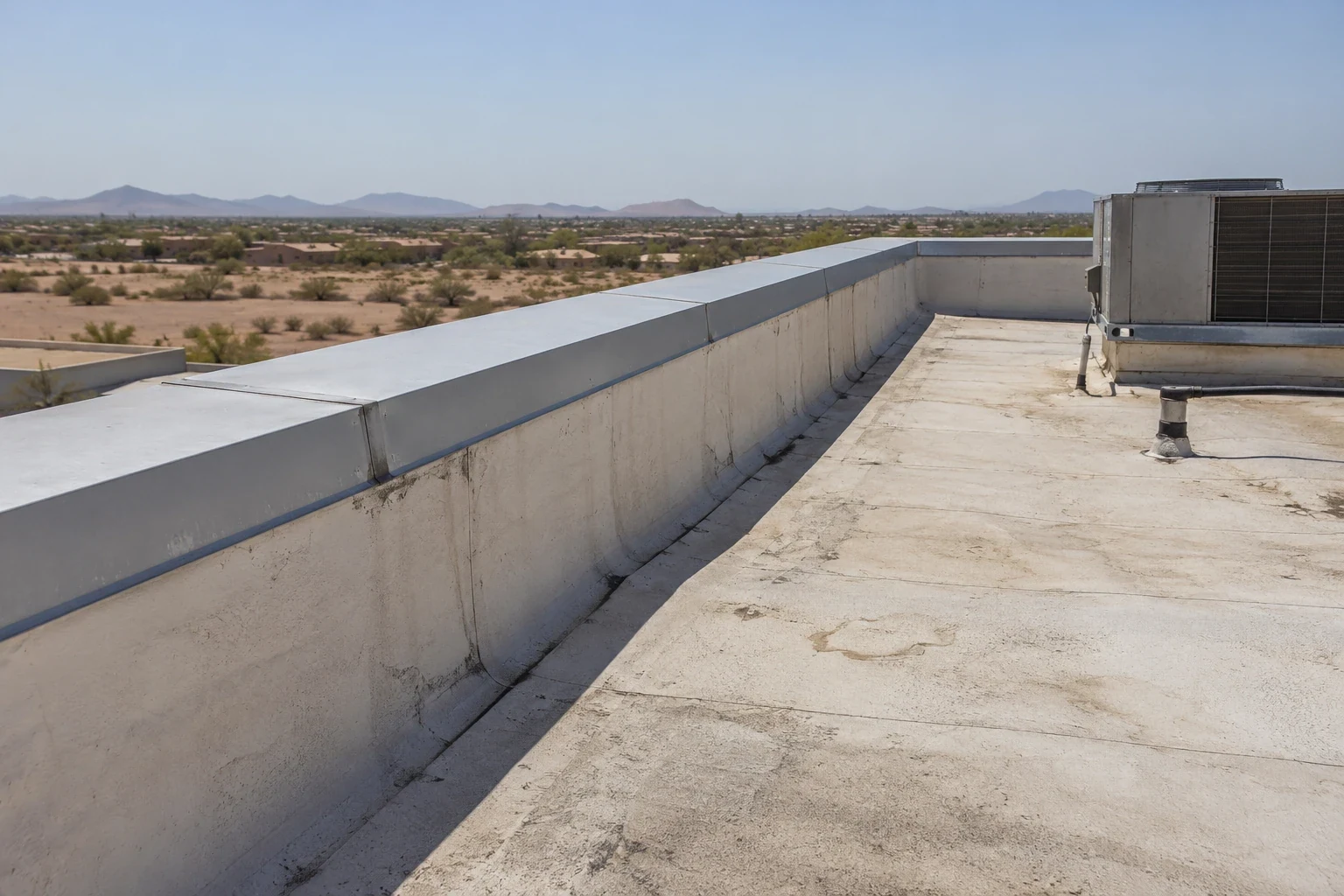
Edges get the same attention. Wind lifts at perimeters and corners, and an array placed too close to the edge feels the most uplift. We note the edge metal and the coping, check that it is tight and mark a setback line on the roof plan. A loose coping stone or a lifted edge cap is cheap to fix before panels go up and costly to reach afterward. The edge metal and coping belongs in the same visit.
How mounts meet the membrane
There are two basic ways to hold an array. Ballasted racking sits on the roof with weights and little or no penetration. Attached racking is fastened through the membrane into the deck, with a flashed footing at each point. Each has trade-offs. Ballast adds load and can pin water. Attachments add penetrations, and every penetration is a place a seam can fail.
We check the footing detail on every point. Is the flashing sealed? Is there a pad under every foot? Can the membrane move without tearing? Thermal swing near thirty degrees a day works those details hard, so we prefer flashings that allow movement. A curb or support flashed the right way will outlast one flashed fast.
Working around panels later
A roof with an array is still a roof. It needs inspection and repair. If the panels leave only a narrow gap, a technician cannot walk the seams or clear the drains. So we plan access before the panels go on. We leave clear lanes to every drain, scupper and curb. We mark the lanes with walk pads. We photograph the roof before the array and again after, so any later leak can be traced to a date.
When a leak does show up under an array, the crew may have to lift panels. That is a cost. Knowing it in advance helps. Our leak repair work starts from the dated photos so the search is short.
Where it fits in town
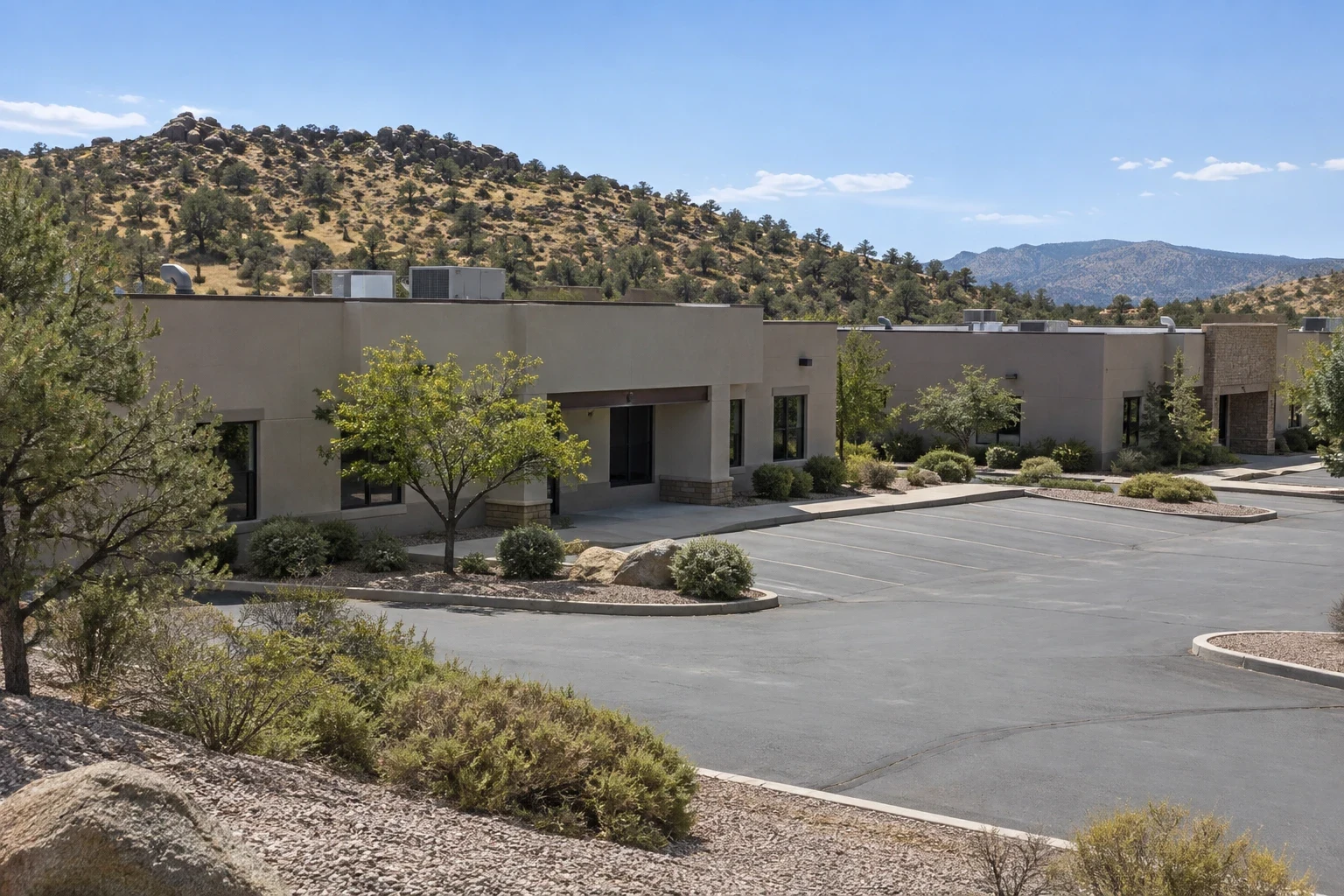
Large, flat roofs fit best. The distribution and manufacturing buildings along Fain Road deserve a survey for the same reason: array space depends on how many obstructions the roof carries. The retail power centers on SR 69 and Glassford Hill Road are low-slope, though rooftop units take array space. The Entertainment District's big assembly buildings have large spans. The Big Sky Business Park on East Florentine Road has a pad zoned for commercial use with power, water, sewer and gas available. A new building there can plan for panels from day one, and a roof laid with that in mind costs less to prepare than one retrofitted later. A Big Sky Business Park roof can be specified panel-ready from the start.
Existing buildings need the survey first. Whatever roof sits in the Entertainment District or on SR 69, the membrane, insulation and drains tell us what it can carry. A warehouse roof with a recent single-ply sheet and dry cores is a strong candidate. An older roof with wet insulation near the drains is not.
What to ask for in writing
Get the roof's remaining life, the warranty status and the access plan in one document. Ask the solar installer to confirm in writing that the roof warranty stays valid with the mounts. We put the roof side in the findings sheet. For a roof that needs work first, a commercial roof replacement before the array is often the lowest total cost. If the roof only needs light work, a recover may be enough.
Commercial Roofing Questions
Should we replace the roof before installing solar?
If the roof has less than the array's expected life left, we recommend replacing it first. Taking panels off and putting them back later costs labor and risks damage to the new roof. Our cores and seam probes tell you how much life is left, and the photos make the case to your owner or lender.
Does solar void a roof warranty?
It can, if the mounts are installed without the manufacturer's approval. Warranty terms vary. We recommend you get the manufacturer's written position before the installer starts, and we keep the roof's warranty file current so the question has a clean record behind it.
What about hail and snow on a rooftop array?
Pea-sized hail like the July 20, 2026 storm is usually harmless to the roof under panels, but larger hail can bruise the membrane in the gaps. Snow sliding off panels can strike the roof edge and gutters. We check both after a storm and photograph the findings.
Can an array sit on a roof with ponding?
We recommend fixing the ponding first. Standing water under racking is hard to inspect and ages the membrane faster. Tapered insulation, an added drain or a cleared scupper may solve it. We mark the ponding line in the photos so the fix is targeted.
How do we keep the roof inspectable under panels?
Plan clear lanes to every drain and curb before installation, and mark them with walk pads. Keep a dated photo set from before the array. Inspect after each monsoon season and again before the first freeze. We recommend a drone pass for areas a person cannot reach safely.
Request a walk-through
Ask us to walk the roof before you sign a solar contract. You receive a written findings sheet with photos, remaining life and an access plan before any repair or replacement is priced.
Request a Roof Assessment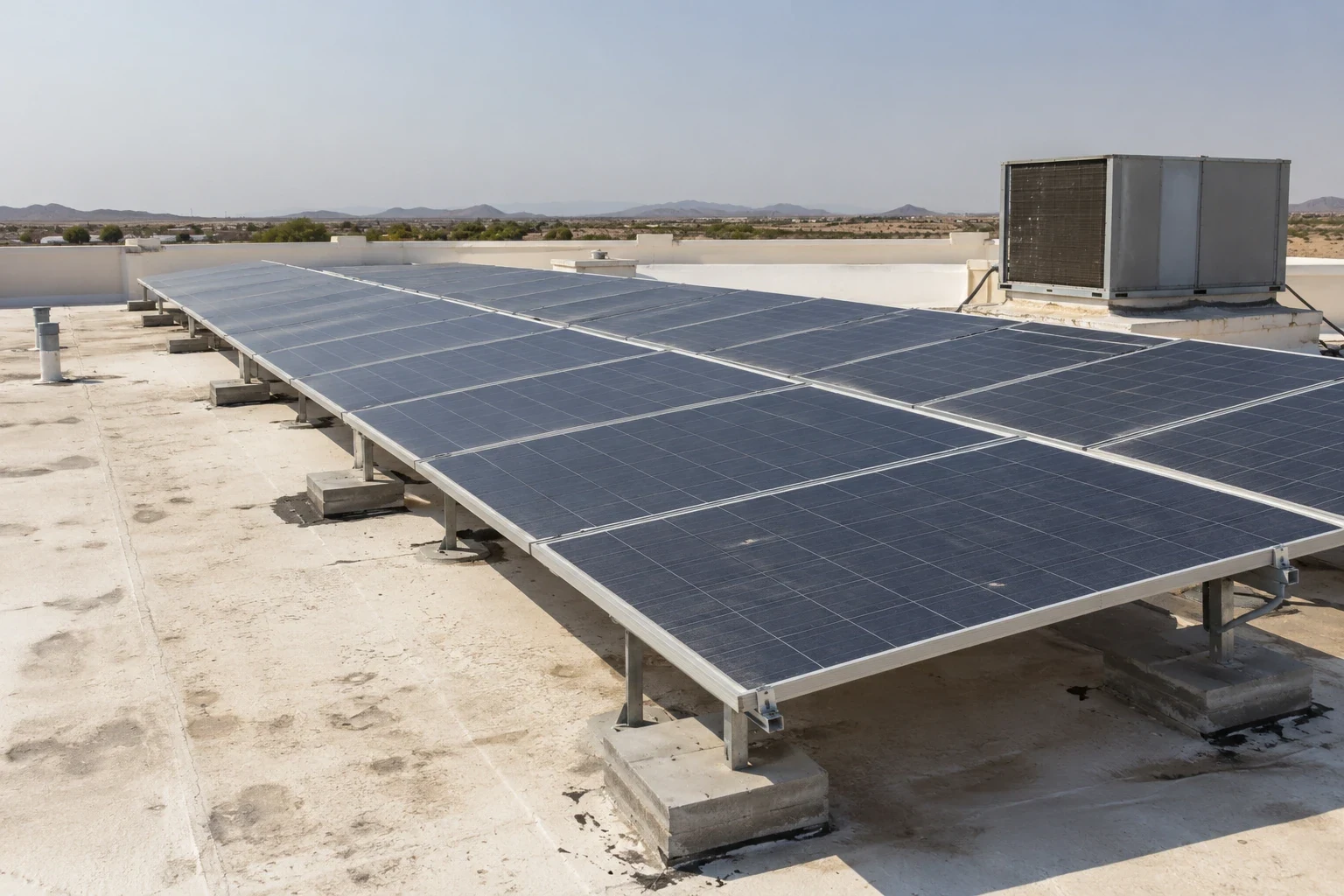
Commercial Roofing Questions
If the roof has less than the array's expected life left, we recommend replacing it first. Taking panels off and putting them back later costs labor and risks damage to the new roof. Our cores and seam probes tell you how much life is left, and the photos make the case to your owner or lender.
It can, if the mounts are installed without the manufacturer's approval. Warranty terms vary. We recommend you get the manufacturer's written position before the installer starts, and we keep the roof's warranty file current so the question has a clean record behind it.
Pea-sized hail like the July 20, 2026 storm is usually harmless to the roof under panels, but larger hail can bruise the membrane in the gaps. Snow sliding off panels can strike the roof edge and gutters. We check both after a storm and photograph the findings.
We recommend fixing the ponding first. Standing water under racking is hard to inspect and ages the membrane faster. Tapered insulation, an added drain or a cleared scupper may solve it. We mark the ponding line in the photos so the fix is targeted.
Plan clear lanes to every drain and curb before installation, and mark them with walk pads. Keep a dated photo set from before the array. Inspect after each monsoon season and again before the first freeze. We recommend a drone pass for areas a person cannot reach safely.