Commercial Roofing in Camp Verde, AZ
Commercial roof repair, coating and replacement in Camp Verde, AZ, where a 119-degree temperature range works membranes and seams hard.
Read the thermometer range before you read the roof. Recorded temperatures in Camp Verde, AZ run from 118 degrees down to minus 1. That is a spread of 119 degrees, and a roof feels every point of it. The town had 12,147 residents in 2020 and is split by Interstate 17, with freeway exits 285, 287 and 289 serving it. Buildings near those exits are walked seam by seam, and the owner reads a written sheet before any repair has a number.
What a 119-degree range does
A membrane that bakes at 118 and stiffens at minus 1 moves a great deal over its life. Every swing pulls on seams and flashings. Prescott Valley averages a daily swing near thirty degrees, and Camp Verde's recorded extremes are wider still. Wide swings find the weak lap first.
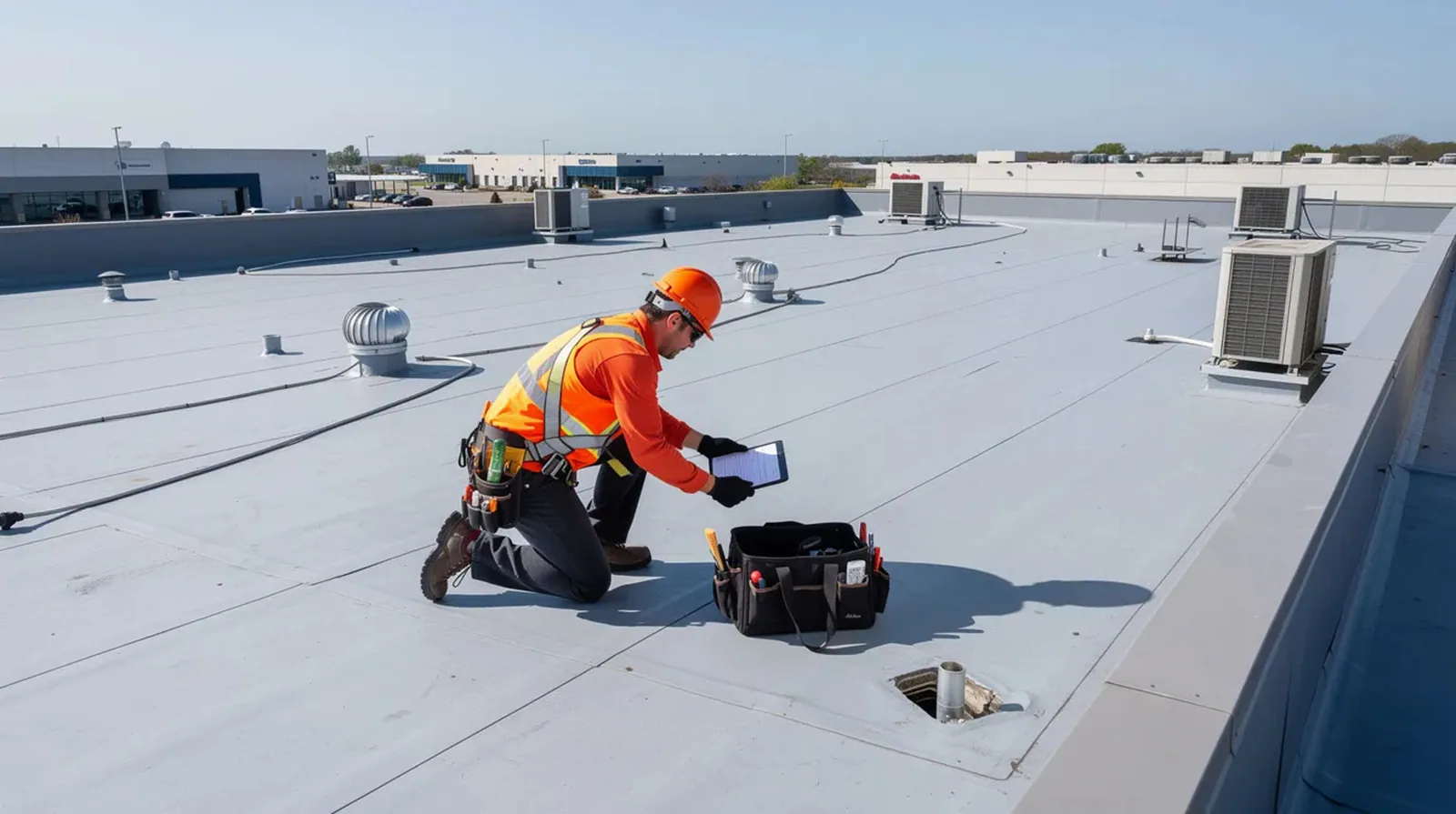
So every seam is probed on a first walk, and the corners at walls and curbs are pressed. Flashings that have shrunk away from a wall and sealant gone hard are the usual finds. Each finding gets a photograph and a mark on the roof plan, and a short repair now beats a patch after the first cold snap.
Hot decks and cold decks need different handling. A deck at midday in July is too hot for some adhesives and welds. A deck on a January morning may hold frost. Work is scheduled around both, which leaves late spring and early fall as the widest windows. The plan lists the hours the crew can work each day and the temperature limit for each product, and when a limit stops the job, the stop is logged with a photograph.
Records help here. A dated photo set from each season shows how the roof moves, and a lap that opens a hair more each winter is easy to see when last year's photograph sits beside this year's.
Roofs near a freeway exit
A building near a freeway exit could be a fuel stop, a restaurant, a hotel, a shop or an office, and the roof tells which. Kitchen exhaust leaves grease. Air handlers leave condensate. Truck traffic leaves dust and soot. Each one shows up on the membrane.
Every vent and fan goes on the plan, and the sheet around each is checked for staining or softness. Where grease reaches the roof, a sheet that resists it is priced. Where dust packs the drains, they are cleared and photographed. The cheapest fix is usually the one made first.
Traffic adds its own wear. Rooftop units need monthly filter changes and seasonal service, technicians use the same route each time and foot traffic wears a track in the membrane. Routes are marked, walk pads are priced as a small line, and each unit is checked for a sound curb with intact flashing, since a loose curb works the seam below it whenever the unit cycles.
Large visitor buildings
The Yavapai-Apache Nation operates the Cliff Castle Casino, a major gaming destination in town, and State Route 260 links Camp Verde with Payson to the east and Cottonwood to the west. Visitor traffic means buildings that keep long hours: lodging, food service, retail and entertainment.
Roofs over occupied, public-facing space need a plan that keeps guests out of the way. Lifts stand where they will not block an entrance. Loud work waits for quiet hours. Material stages at the back. A leak over a public room is both a safety matter and a scheduling matter, and a temporary dry-in goes on the same day while the permanent scope is written. Owners of lodging or food service nearby can use the same plan: zones, quiet hours and a written notice for staff and guests ahead of every phase of the work.
Options and cost drivers
Condition sorts the choices. A worn surface over sound, dry layers can often take a reflective coating, isolated failures call for repair and saturated insulation calls for replacement. Cost follows size, insulation condition and penetration count, and access matters too, since a building next to a busy exit may limit where a crane can stand.
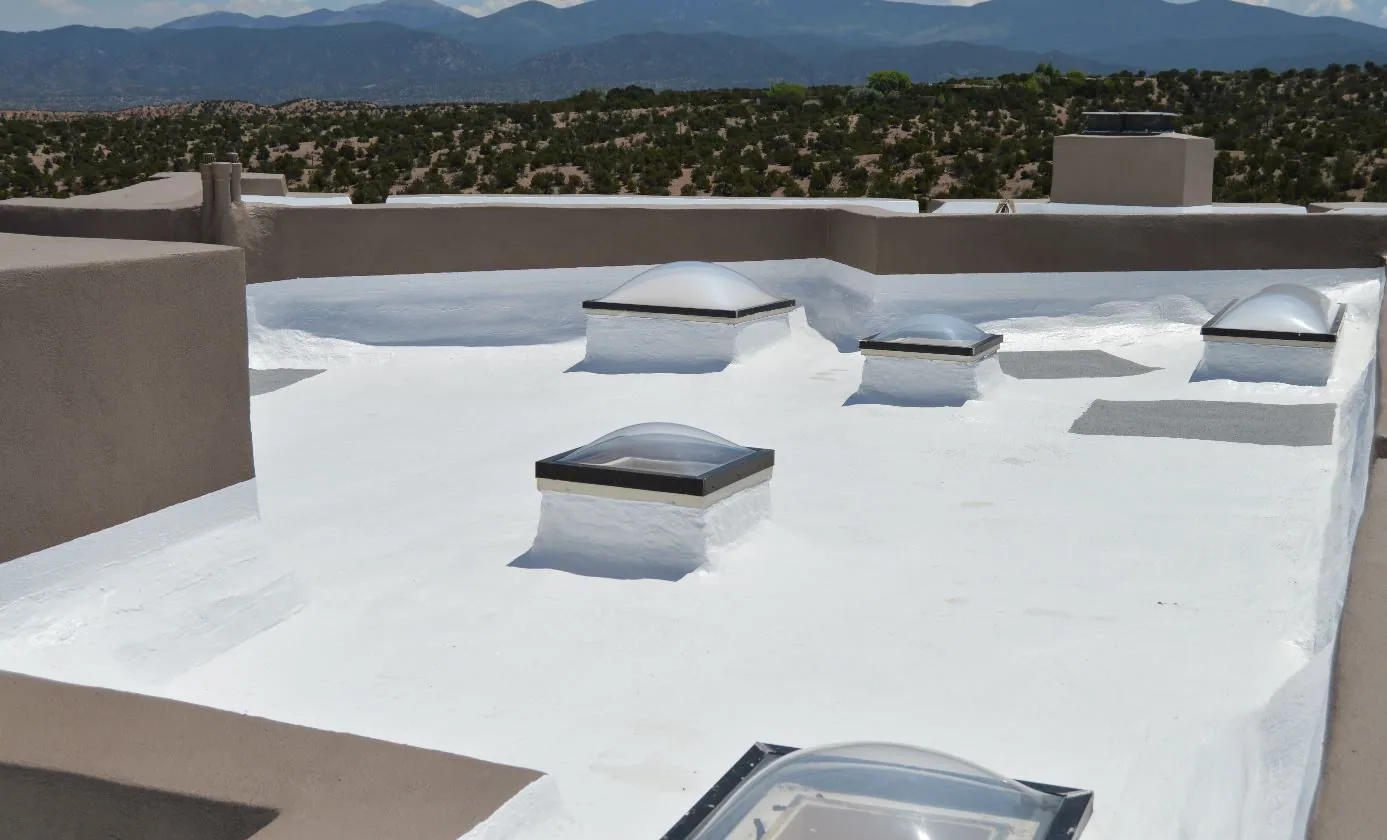
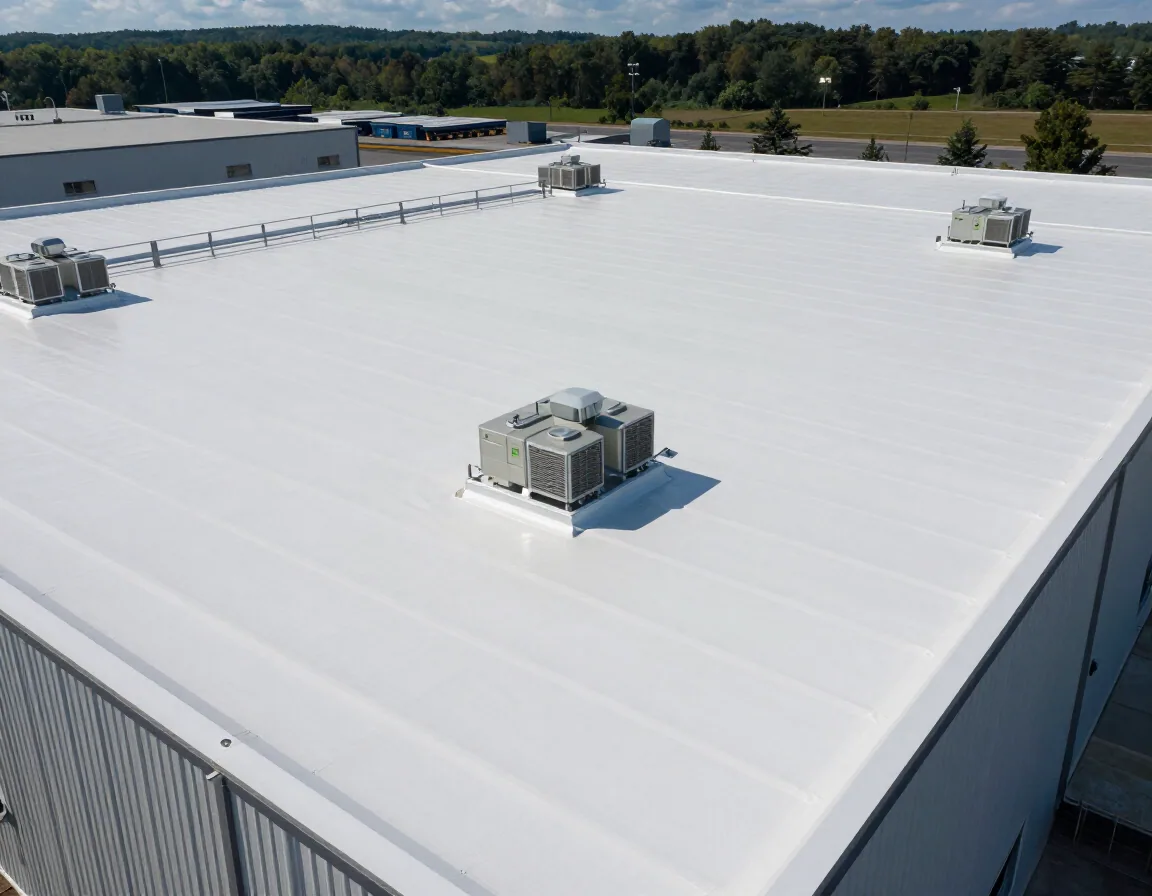
Coating costs well under a tear-off yet only suits a dry roof, so moisture work comes first. When the cores come back wet, replacement is priced next to the coating, so the owner sees both paths and the years each adds. A commercial roof replacement is the larger spend, and the sheet explains why it is the right one when the insulation is gone. A coating restoration remains the better value on a roof that tests dry.
Monsoon and frost in the valley
Monsoon cells reach the region from July to September. The July 20, 2026 cell over Prescott Valley dropped heavy rain, strong wind and pea-sized hail, and cells like it cross the Verde Valley as gust fronts. Once the sky clears, a walk logs bruises, lifted flashings and packed drains with dated photographs.
With a recorded low of minus 1, a deck in Camp Verde can see frost. Adhesives and coatings do not cure on frost, so work is planned for dry, mild days and weather holds go into the schedule where the owner can see them.
What to do first
Start the file with the roof plan, its age and what is known about past leaks. A commercial roof inspection sets the baseline. Lake Montezuma and Cottonwood lie on either side along the valley, so owners in more than one town can ask for a single trip. A leak in progress takes emergency roof repair ahead of everything, then the permanent scope.
Commercial Roofing Questions
Why does a wide temperature range matter for a roof?
Roofs expand and contract with temperature, and a range from 118 degrees to minus 1 asks a lot of every seam and flashing. Probing the laps after the first cold snap and again after the monsoon catches most trouble while it is still a short repair.
Can a roof near a freeway exit be repaired without closing the business?
Usually. Work moves in zones, each dried in before the crew leaves, with air intakes protected and truck staging planned so customers keep access. Staff get a notice a week ahead with the zone map attached, so everyone knows which entrance, parking row and dock door is affected on which day.
How do I know if a coating will work on my roof?
The core samples decide. Dry insulation and bonded seams leave the door open for coating, while water in the insulation closes it. Photographs of the samples go on the sheet, and samples from several points make the case.
What if grease or fumes reach my roof?
Each vent is mapped and the sheet nearby is checked. Grease softens many membranes, so a sheet that resists it goes near the exhaust, with a clean-out schedule for the fan. The stained area is photographed so you can see change year to year.
What does the written findings sheet include?
Every finding by location with a photograph, a rank and a price by tier, plus the drains, penetrations and equipment, so the next crew starts from a map. Keep it with the lease, the insurance file and the permit history, and a lender or a buyer finds the roof story in one place. The first visit usually produces the sheet within days, and a return walk a year later compares the same marks.
Request a walk-through
Ask for a roof walk in Camp Verde. Send the roof age and any leak history. You receive a written findings sheet with photos before any repair is priced.
Request a Roof Assessment
Commercial Roofing Questions
Roofs expand and contract with temperature, and a range from 118 degrees to minus 1 asks a lot of every seam and flashing. Probing the laps after the first cold snap and again after the monsoon catches most trouble while it is still a short repair.
Usually. Work moves in zones, each dried in before the crew leaves, with air intakes protected and truck staging planned so customers keep access. Staff get a notice a week ahead with the zone map attached, so everyone knows which entrance, parking row and dock door is affected on which day.
The core samples decide. Dry insulation and bonded seams leave the door open for coating, while water in the insulation closes it. Photographs of the samples go on the sheet, and samples from several points make the case.
Each vent is mapped and the sheet nearby is checked. Grease softens many membranes, so a sheet that resists it goes near the exhaust, with a clean-out schedule for the fan. The stained area is photographed so you can see change year to year.
Every finding by location with a photograph, a rank and a price by tier, plus the drains, penetrations and equipment, so the next crew starts from a map. Keep it with the lease, the insurance file and the permit history, and a lender or a buyer finds the roof story in one place. The first visit usually produces the sheet within days, and a return walk a year later compares the same marks.