Commercial Roofing in Lake Montezuma, AZ
Commercial roof inspection, repair, coating and replacement in Lake Montezuma, AZ, with a written findings sheet and photos before any repair is priced.
Check the roof edge nearest the interstate. In Lake Montezuma, AZ, wind off Interstate 17 and the long sun of a low valley land on the same few details. The community had 5,111 residents in 2020 and 2,422 housing units at about 3,445 feet, along I-17 roughly 8 miles north of Camp Verde. A place that size needs small commercial buildings close to home, and their roofs are modest. Each gets a walk, a probe of every seam and a photograph of every finding, and nothing is priced until the written sheet has been read.
Buildings that serve a housing community
A community of more than two thousand homes supports the shops, offices and service buildings that sit near it. Tenants come and go in a small plaza, and every change can bring a new rooftop unit, vent or curb. A roof that once had two penetrations may have nine.
The first pass counts them. Each opening gets a number on the plan and a photograph, and the flashing is pressed for softness. Cuts made for a new tenant are the likeliest to leak, because they were made once, in a hurry, with whatever sealant was on the truck. Old curbs left behind by a former tenant get capped or removed, since an unused opening is only a place for water to enter.
The plan also marks which section of roof belongs to which space. When a lease says who pays for what, the map settles the question fast.
In a small plaza the roof may belong to the landlord while the equipment belongs to the tenants. A dated photograph of each curb before and after a tenant's work, kept in one file, shows who touched what and when. That record is cheap to keep and it turns an argument into a look at a picture.
Mild winters, hot summers
Mean daily highs run from 57 degrees in January to 97 in July. That spread favors sun over frost as the main source of wear. A dark sheet bakes through the summer, sealants chalk and thin coatings wear through at the edges of foot paths.
Air conditioning runs hard through July, and the equipment that runs it is the busiest thing on the roof. Condensate lines drip onto the membrane when they are not piped to a drain. A drip in the same place all summer leaves a stain, then a soft spot, then a leak. Each unit is checked for where its condensate goes.
Curb sealant takes the heat from two sides, the sun above and the warm metal below. It dries and splits first, and it is the cheapest part of the roof to renew. A bead cut out and replaced in spring will not be the leak in August.
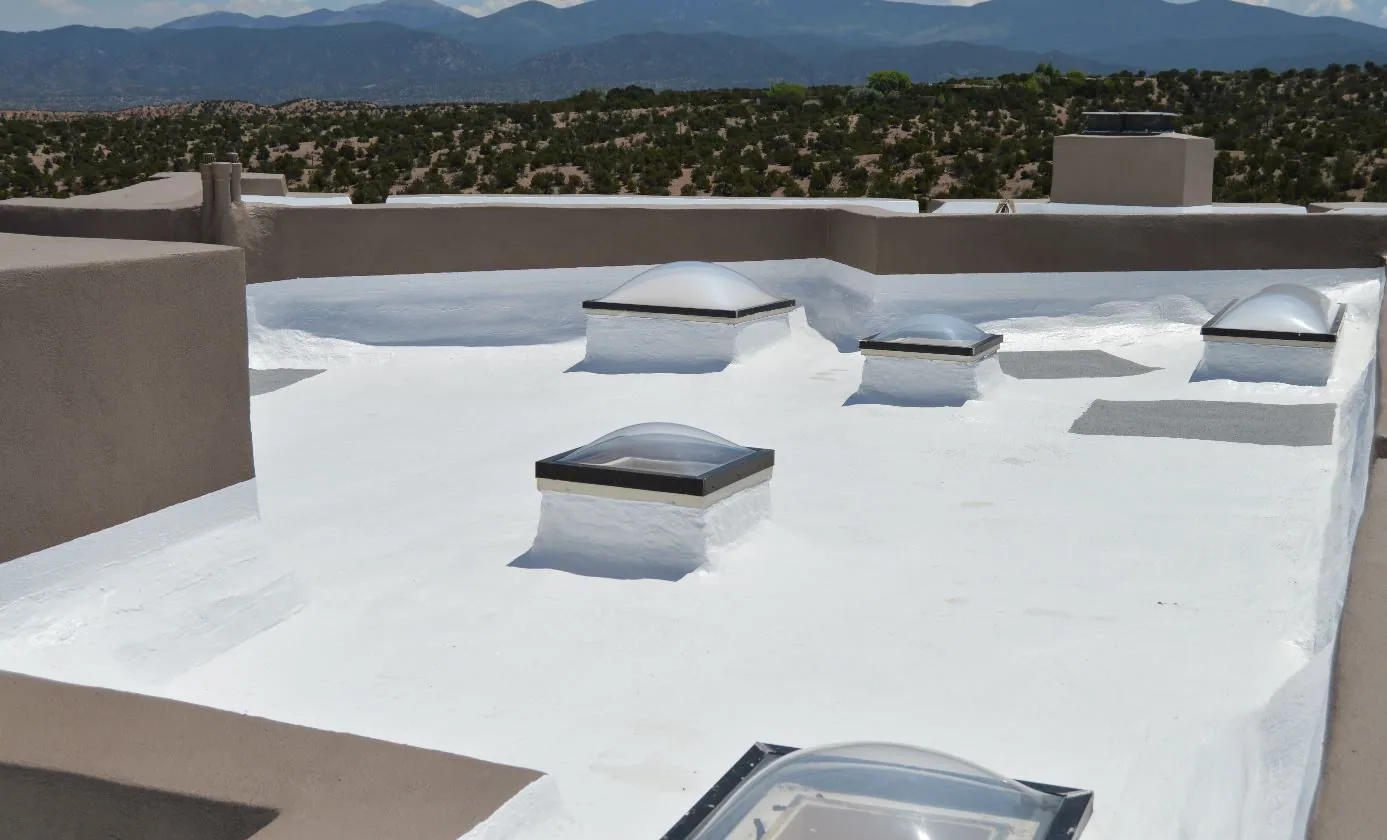
A sound but weathered roof can sometimes take a reflective coating restoration, which lowers the surface temperature and covers small cracks. It needs a dry roof, so cores and a moisture scan come first. If the insulation is wet, the coating waits and the wet section is priced for removal.
Rain that comes in bursts
The area collects about 15.6 inches of precipitation a year, and much of it falls in the July to September monsoon. Prescott Valley's July 20, 2026 storm, with its heavy rain and pea-sized hail, shows how fast a cell can change the day. On a low, flat roof, the question is whether the drains can pass what falls in ten minutes.
Ponding lines show the answer after the fact. A pale ring on the sheet marks where water stood long enough to leave grit behind. Each ring is measured against the nearest drain. A low spot far from an outlet may need a new drain or a section of tapered insulation, and the fix is priced beside the cost of leaving it alone.
Screens are cleared before the season and checked after the first big cell, with a photograph each time. Leaves, grit and hail pile up fast around an open lot.
Edges, dust and the freeway
A building near a freeway ramp sees truck traffic, and trucks stir dust that settles on roofs and packs drains. Wind off the interstate pushes on edges first, so coping, edge metal and cleats get a tug test. A cap that rattles is a cap that is working loose.
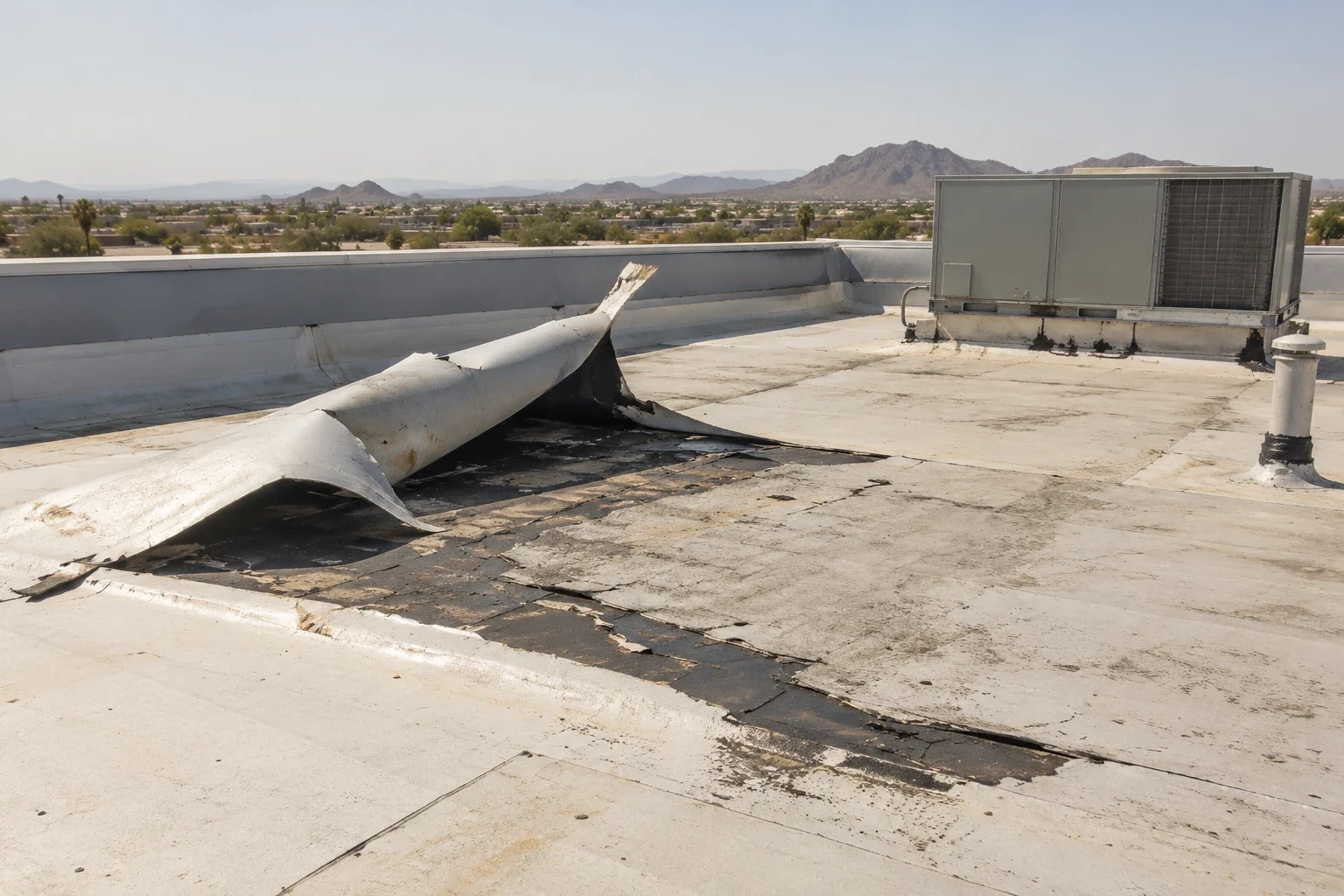
Gravel stops on built-up roofs, and drip edges on single-ply roofs, deserve the same look. A wind damage repair stays small when the edge is reset before the next gust, and it grows into a peeled sheet when the edge is left.
Walk routes matter where service techs visit often. A pad under the path from the ladder to the unit costs little and keeps boots off seams. A sign-in log at the roof hatch costs nothing, and it lets a puncture be matched to a visit, so the repair bill can follow the party that caused it.
Scheduling a small plaza
Work moves section by section, and each section is closed before the crew leaves. Loud steps wait for hours when shops are quiet. Material stages at the back, away from the front walk, and a lift stands where it will not block a customer entrance. A short written notice for tenants lists the dates, the hours and a contact.
Crews arrive by Interstate 17, so the travel time is part of the quote. Camp Verde lies a short drive south, and Cornville and Cottonwood sit in the same stretch of the valley, which lets one trip cover owners in more than one place. A live leak goes to emergency roof repair first, with the permanent scope written once the cause is clear.
What to send first
The roof plan, the age of the roof if known and any leak history make the first file, along with any photographs the owner already holds. A commercial roof inspection follows, and the written findings sheet ranks what to fix now, what to fix soon and what to watch.
Commercial Roofing Questions
What does a plaza roof need after a tenant moves out?
A check of the curb the tenant leaves behind. Unused units, capped pipes and old vents are openings with no job. Each is capped properly or removed, and the sheet records the date and the method.
How can I tell a condensate drip from a leak?
A condensate drip follows the air conditioner's run time and stains the sheet in one spot all summer. A leak follows rain. The roof is walked during a dry hot week to see where the drain lines end, and a moisture scan separates the two.
Does a mild winter mean fewer roof problems?
It means different ones. Sun and heat age sealants and coatings faster than frost does, so those get the closer look. Seams still move with the daily swing, and a monsoon cell still tests every drain.
Can a shop stay open during roof work?
A shop can keep trading. Work moves a section at a time and each section is sealed before the day ends, with the entrance left clear. Tenants get a written notice with dates and hours, and loud steps wait for quiet times.
How soon can a crew reach a building along the interstate?
Emergency calls are taken day and night. Travel comes by way of Interstate 17, and an arrival estimate is given when the call is booked.
Request a walk-through
Ask for a roof walk in Lake Montezuma. Send the roof age and any leak history. You receive a written findings sheet with photos before any repair is priced.
Request a Roof Assessment
Commercial Roofing Questions
A check of the curb the tenant leaves behind. Unused units, capped pipes and old vents are openings with no job. Each is capped properly or removed, and the sheet records the date and the method.
A condensate drip follows the air conditioner's run time and stains the sheet in one spot all summer. A leak follows rain. The roof is walked during a dry hot week to see where the drain lines end, and a moisture scan separates the two.
It means different ones. Sun and heat age sealants and coatings faster than frost does, so those get the closer look. Seams still move with the daily swing, and a monsoon cell still tests every drain.
A shop can keep trading. Work moves a section at a time and each section is sealed before the day ends, with the entrance left clear. Tenants get a written notice with dates and hours, and loud steps wait for quiet times.
Emergency calls are taken day and night. Travel comes by way of Interstate 17, and an arrival estimate is given when the call is booked.