Commercial Roofing in Cornville, AZ
Commercial roof inspection, repair and replacement in Cornville, AZ along State Route 89A, with seam probes, drain checks and a written findings sheet first.
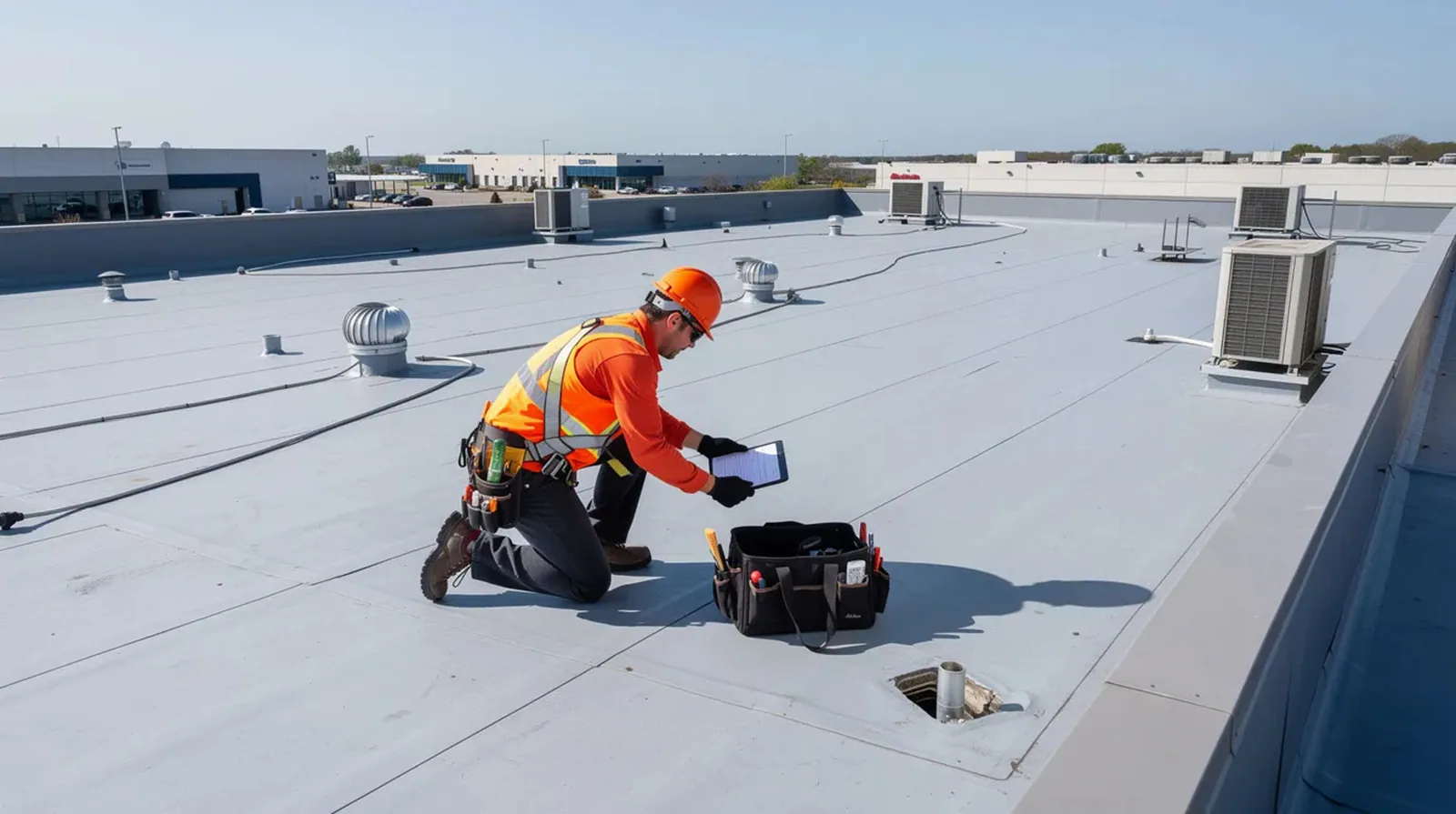
Start with the drain on the low corner. In Cornville, AZ that corner tells you whether the roof is keeping up with the weather. State Route 89A runs through the community, which had 3,362 residents and 1,698 housing units in 2020, at about 3,455 feet. It is a small place along a busy road, and its commercial roofs are small too. The walk covers each seam and each opening, and nothing gets a price until the written sheet is in your hands.
Small roofs, few details
A community on a state route serves travelers and locals alike. Its commercial buildings could be shops, offices, service buildings or storage, and the roof tells us which kind of wear to expect. Small roofs have fewer drains, so one clog matters more. They have fewer curbs, so one failed flashing matters more.
On a small roof every inch can be checked. Every seam is probed, every corner pressed and every penetration photographed. The findings sheet then covers the whole roof, not a sample.
A single scupper that fills with leaves and silt can hold a pond against the parapet. Ponded water finds the flashing, the flashing leaks and the owner sees a stain. Each outlet is cleared and photographed before the crew leaves, and a follow-up photograph after the next rain shows where the water went. That second picture is the proof the fix worked.
Why small roofs fail at the details
On a large roof the field is most of the story. On a small one the details are. A rooftop unit, a vent stack and a parapet account for most of the openings. If the curb flashing splits, the whole roof leaks. If the parapet cap lifts, water runs behind the wall.
Hot sun and cool nights move these details every day. Prescott Valley swings nearly thirty degrees between day and night, and similar swings work small roofs across the region. Sealant goes hard, boots go brittle and metal pulls free of its fasteners. Each is a short repair when found early.
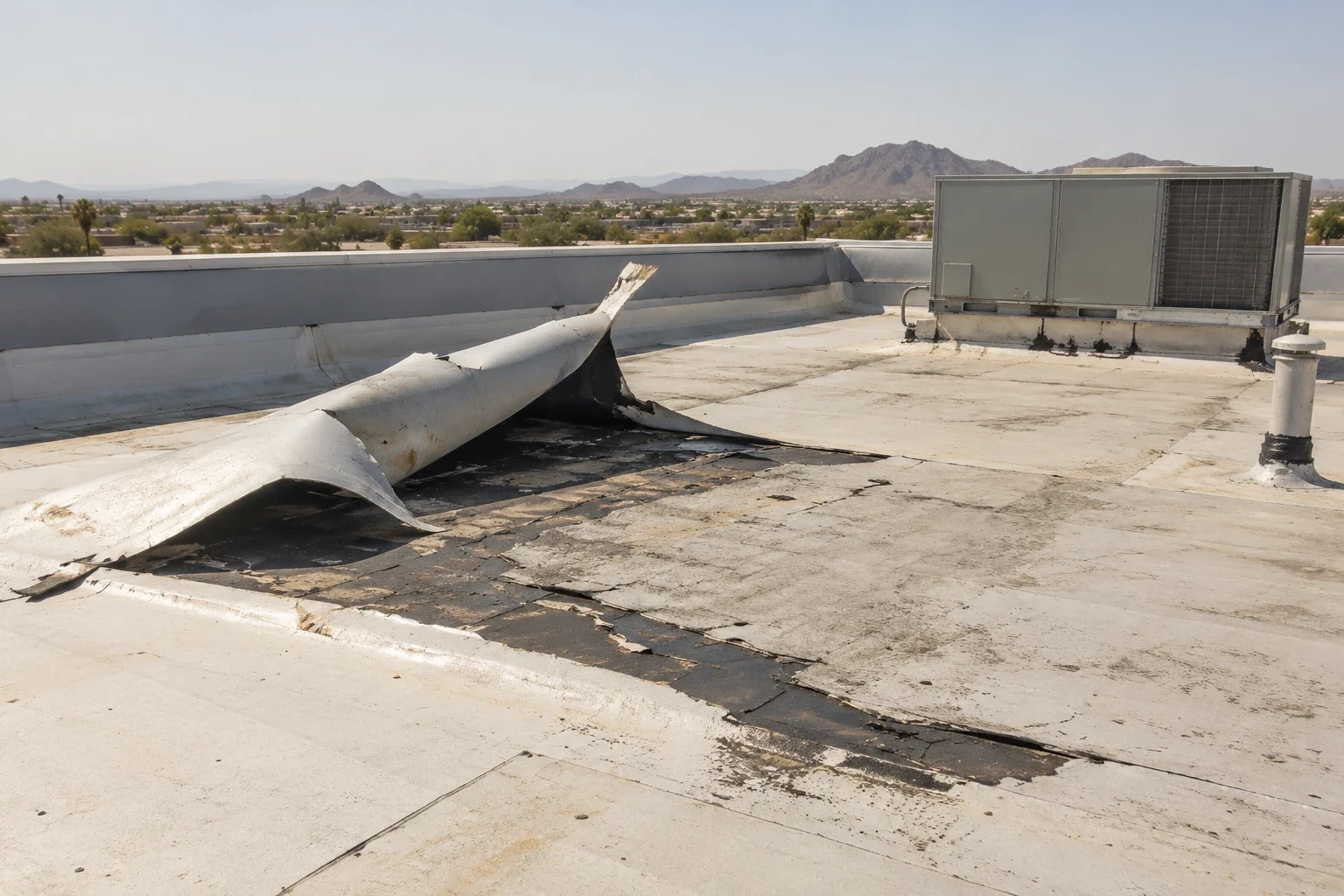
Edges get a pass of their own. Wind lifts a roof from the perimeter, and on a small roof the perimeter is most of the roof. Coping, edge metal and the fastening pattern all get checked. A loose cap that rattles in a gust is giving a warning. Re-seating it takes minutes, while replacing the membrane torn out behind it takes days, and a wind damage repair stays small when the cap is fixed first.
Along the highway
The Verde Santa Fe golf community and the Arizona Game and Fish Page Springs hatchery are among Cornville's larger sites. A roof near either kind of destination carries visitors' attention. A stain in a ceiling is noticed fast, so repairs are timed for quiet hours and the lot is kept open.
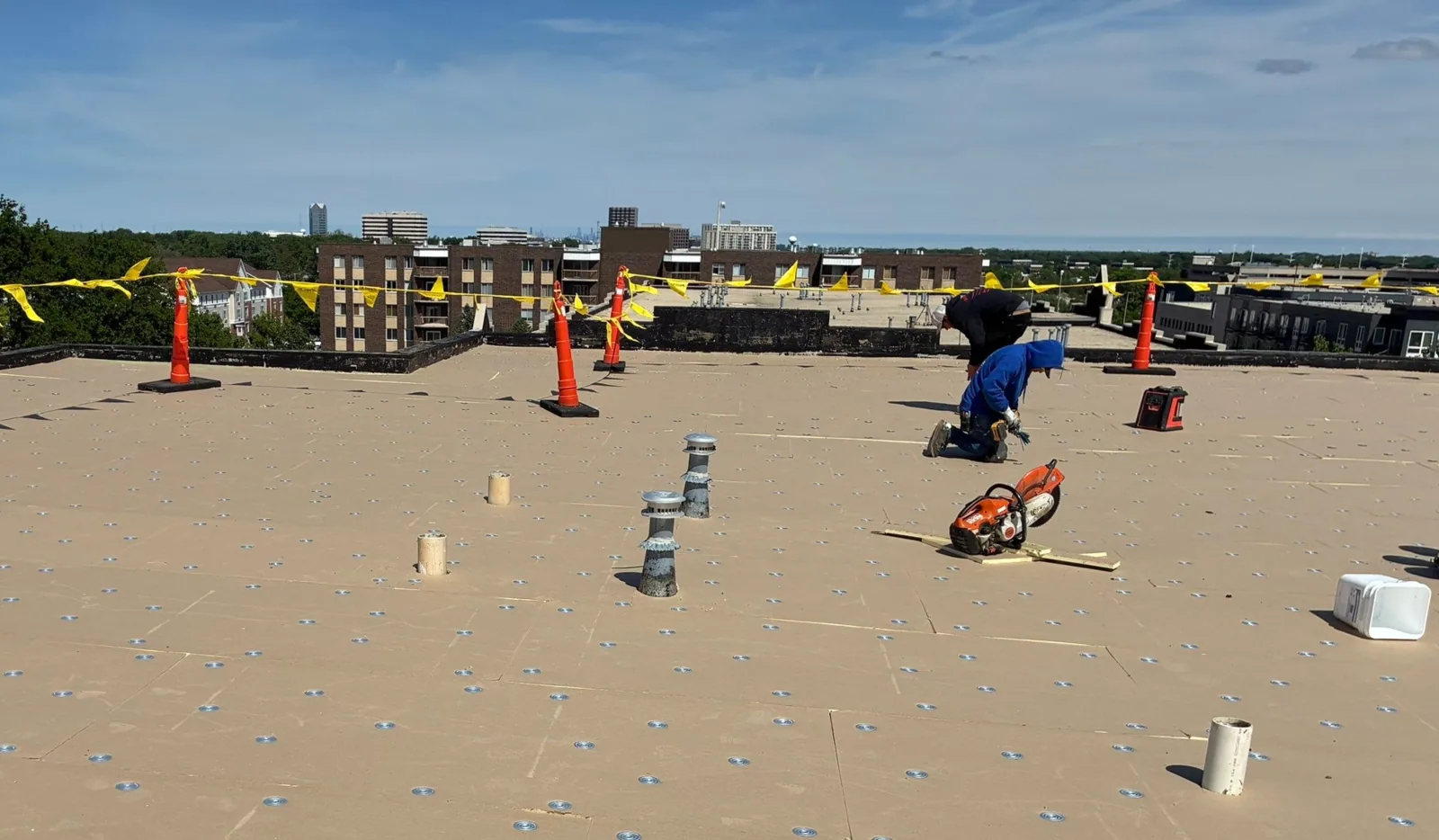
Access along a state route needs a plan too. A truck pulling in off the highway needs somewhere to stage, and a lift needs level ground. The first visit walks the lot, notes overhead lines and writes down where material will sit, so no one is surprised on the day. Neighbors and tenants hear about the work ahead of time, and the entrance stays usable from the first morning to the last.
Storms and heat
Monsoon storms reach the whole region from July to September. Prescott Valley's July 20, 2026 storm paired heavy rain with strong wind and pea-sized hail, a reminder of how fast the weather turns. At Cornville's lower elevation the hotter days age a membrane faster, and the cells still pack drains with leaves. Because the elevation is lower than Prescott Valley's, frost matters less here than sun, and the checks lean toward sealants, coatings and seam shrinkage.
Hail leaves quiet damage: small dents over soft insulation that may not leak this year but weaken the sheet. Every dent is pressed, marked on a plan and looked at again in six months. A hail damage record also supports an insurance review.
Following a storm, expect a check for lifted flashings, bruises and packed drains, with dated photographs. A small roof can be checked in an hour, and the record is worth keeping for a later claim or a sale.
Options and cost drivers
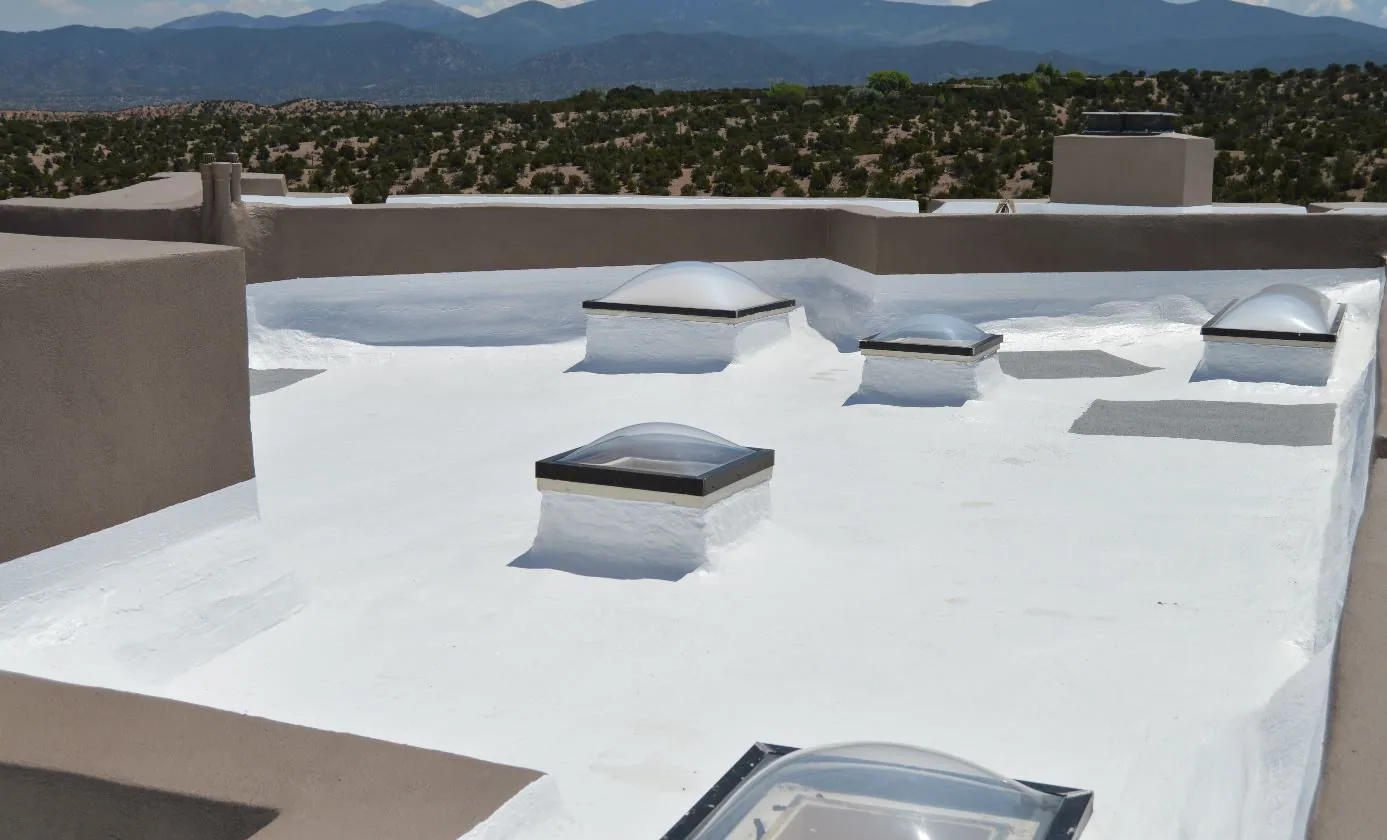
A reflective coating can restore a sound roof with a worn surface. A few bad details call for repair, and wet insulation calls for replacement. On a small roof, mobilization is a large share of the price, so grouping repairs into one visit saves money. A small job fits in a dry week in spring or fall, with a tarp staged in case a cell builds.
Records add value to a small building. One file with the findings sheet, the photographs, the repair list and the invoice shows a buyer or a lender that the roof was handled with care, and it shortens the next owner's survey. A buyer reading that file sees the roof's history in a few minutes, with each finding tied to a photograph and a date. A planned commercial roof repair bundles drains, seams and flashings into a single visit, while a coating restoration needs a dry roof and a core first.
What to do first
The roof plan, its age and any leak history make the starting file. A commercial roof inspection and a written findings sheet follow. Roofs in Cottonwood and Village of Oak Creek share the same stretch of the valley, so owners with more than one building can ask for a single trip. A live leak goes to emergency roof repair before anything else, and the permanent scope waits for the cause.
Commercial Roofing Questions
Is a small commercial roof worth coating?
Often yes, if the insulation is dry and the seams are bonded. A coating costs far less than replacement and adds years. A core and a moisture scan come first, and repairs and coating are best done in one visit, since mobilization is a large share of a small job.
What is the most common leak on a small roof?
A failed flashing at a curb, a vent or a parapet. With few openings, each one carries the roof. Every one is pressed and photographed on the walk, and a short repair at the right spot often stops a leak that looked like a roof failure.
Can a small business stay open during roof work?
Yes. The crew works in sections, dries in each before leaving and keeps the entrance clear. Tell customers and staff a week ahead, with the dates and the entrance plan, so a visitor is not surprised by a ladder at the door. The scope names quiet hours and delivery times.
How do I know if the insulation is wet?
A moisture scan and a few core cuts tell us. Wet insulation feels spongy and shows dark on a scan, and the cores are photographed. Wet in one corner means that area is cut out. Wet everywhere means replacement is priced. The scan shape usually runs downhill from the leak, so the cut-out is sized to the real problem.
What does the findings sheet look like?
Each finding is listed by place with its photograph and rank, alongside the drains, penetrations and equipment. Keep it with your lease and insurance papers so the roof story sits in one place. A return visit walks the same marks, so you can see which findings were fixed, which held and which grew.
Request a walk-through
Ask for a roof walk in Cornville. Send the roof age and any leak history. You receive a written findings sheet with photos before any repair is priced.
Request a Roof Assessment
Commercial Roofing Questions
Often yes, if the insulation is dry and the seams are bonded. A coating costs far less than replacement and adds years. A core and a moisture scan come first, and repairs and coating are best done in one visit, since mobilization is a large share of a small job.
A failed flashing at a curb, a vent or a parapet. With few openings, each one carries the roof. Every one is pressed and photographed on the walk, and a short repair at the right spot often stops a leak that looked like a roof failure.
Yes. The crew works in sections, dries in each before leaving and keeps the entrance clear. Tell customers and staff a week ahead, with the dates and the entrance plan, so a visitor is not surprised by a ladder at the door. The scope names quiet hours and delivery times.
A moisture scan and a few core cuts tell us. Wet insulation feels spongy and shows dark on a scan, and the cores are photographed. Wet in one corner means that area is cut out. Wet everywhere means replacement is priced. The scan shape usually runs downhill from the leak, so the cut-out is sized to the real problem.
Each finding is listed by place with its photograph and rank, alongside the drains, penetrations and equipment. Keep it with your lease and insurance papers so the roof story sits in one place. A return visit walks the same marks, so you can see which findings were fixed, which held and which grew.