Carlisle SynTec Roofing Systems in Prescott Valley, AZ
Seam probes, flashing checks and repairs for Carlisle SynTec single-ply roofs in Prescott Valley, AZ, with a written findings sheet before any repair is priced.
Press a screwdriver handle along a seam. Do it slowly. A sound seam feels firm and uniform. A weak one gives, or lifts, or shows a thin line of daylight. That is the first test on a Carlisle SynTec roof in Prescott Valley, AZ. The maker supplies single-ply membranes, such as TPO and EPDM, along with the flashings, adhesives and accessories that finish them.
We install, repair and maintain single-ply systems. We walk the roof, probe each seam and photograph what we find. You receive a plain findings sheet before anyone prices a repair.
Know the sheet
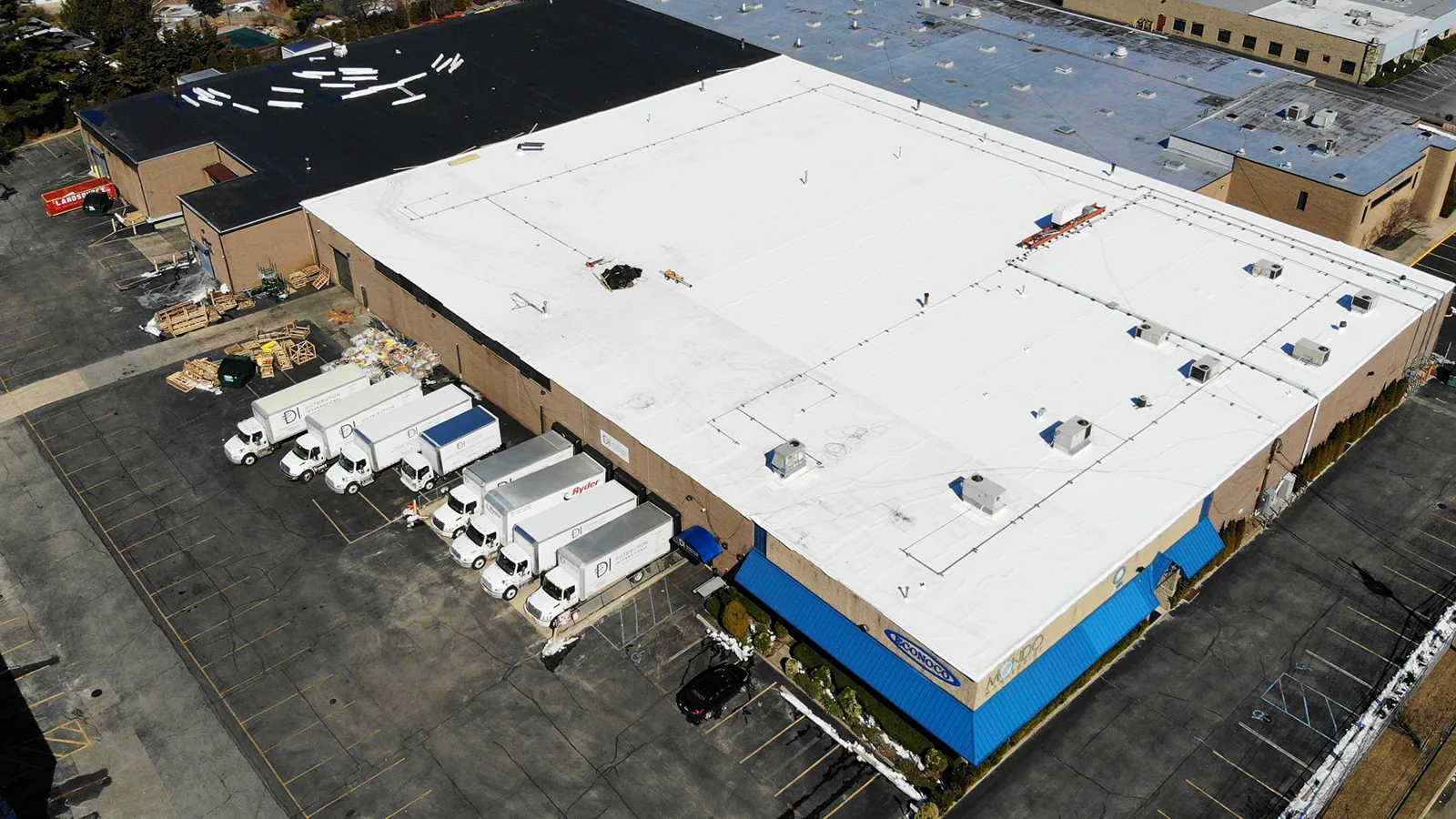
Two sheet types appear most often. TPO is a white thermoplastic. Its seams are welded with hot air. EPDM is cured rubber. Its seams are taped or glued.
They fail differently. A welded TPO seam can open where the weld was thin. A taped EPDM seam can creep as the tape ages. EPDM flashings can shrink back from a curb. Attachment matters too. A sheet can be fully adhered, mechanically fastened or ballasted. Fastened sheets flutter in wind, and the plates can back out. We name the sheet and the attachment on the first page of the findings sheet. Fasteners and plates get their own check. We press each plate along a sample row. A plate that spins or sits proud tells us the fastener has backed out. In a gust front, that plate becomes the place where the sheet lifts first.
Why seams open in winter
Prescott Valley sits near 5,100 feet. In nearby Prescott, daily temperature swings average almost 30 degrees. Freezing mornings run from about October 21 through May 1.
Picture a seam as a hinge that opens and closes every day. Over a winter, that is a lot of cycles. A tight seam survives. A loose one opens a hair more each time. Cold makes the sheet stiff, so it pulls harder on the weak spot. We find these early. We mark each one with a number on the roof plan and take a photo. Fixing a lifted seam in October is a small job. Fixing the leak it causes in January is not. Flashings follow the same rule. Walls, curbs and pipes carry the sheet up and over a change in plane, and the termination at the top holds it. Sealant there dries and cracks over a few seasons. We cut out failed sealant and replace it. Then we check that the top edge is fastened and the bar is tight.
What retail roofs show
Retail power centers like Glassford Hill Marketplace and The Crossroads hold low-slope buildings in rows. Inline shops share a roof line, and tenants change. Each change can add a rooftop unit, a vent or a new curb.
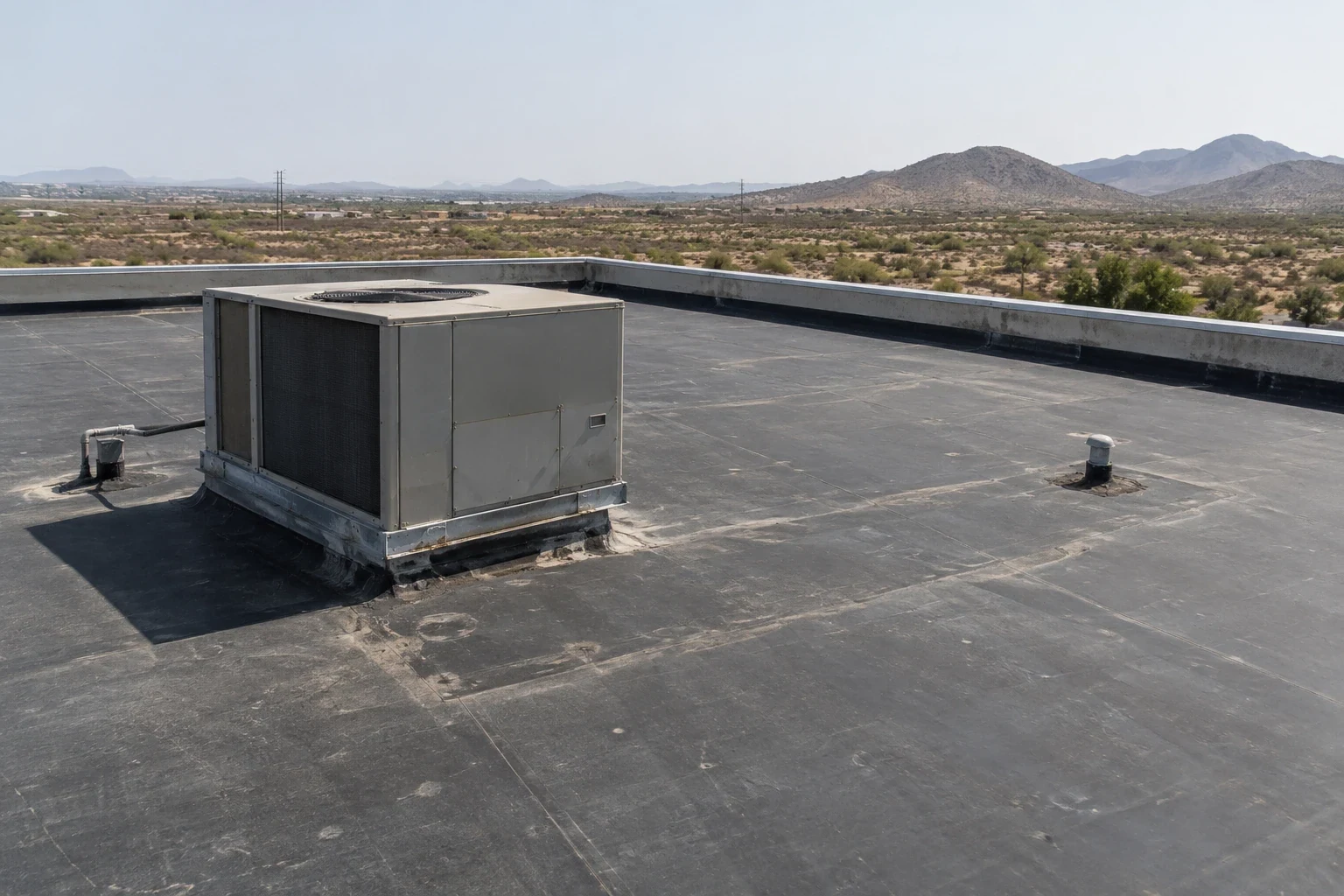
We look at the new work first. A curb set without proper flashing is the detail to watch for. So is a cut in the sheet that was patched with the wrong material. We trace each penetration and probe its flashing. A Glassford Hill Road property manager can use the sheet to sort repairs by tenant space. That helps when a lease says who pays for what. Rooftop units need care. Technicians walk the same paths every month. We look for scuffs, soft spots and worn patches along those paths and suggest walk pads where traffic is steady. Pads cost little. A punctured sheet costs more, and a repeat puncture in the same place is a sign the route needs protection, and the findings sheet says where to put the pad.
After a monsoon cell
Short, violent cells cross the valley in July and August. A storm on July 20, 2026 brought heavy rain, strong wind and pea-sized hail and downed signals and trees. On May 6, 2025, a small tornado north of Prescott Valley ripped shingles off a roof in a video.
Neither event proves damage to your roof. A walk does. We clear the drain screens, check edge metal and look for bruises, punctures and lifted flashings. Then we write them down. If a mark looks deep, we cut a small core. The core shows whether the damage reaches the insulation. That answer decides whether you need a repair or a claim. If you plan to file, the dated photos and the core results become your record. We document the roof as it stands, with locations and measurements, and we leave any coverage question to you and your insurer. A roof that was walked and photographed last spring makes a claim easier to support, because the before picture exists.
How we repair a seam
On a welded sheet, we clean the area and prepare the surface. Then we weld a cover strip or a patch. On a taped or glued sheet, we remove aged tape or adhesive and rebuild the splice. Flashings get new terminations where the old ones pulled back.
We photograph each repair before and after. Repairs on an older sheet take care. Weathered TPO can chalk, and a patch will not bond to chalk. We scrub the area, rinse it, let it dry and test a small weld first. If the test fails, we change the prep, not the patch. We mark it on the plan. If the same seam opens again, we stop patching. A repeat failure points to a cause under the sheet: ponding, movement or wet insulation. An infrared moisture survey maps the wet areas. Then we can price a real fix.
What stays in the file
The file holds the sheet type, the attachment and the repair history. It holds dated photos and any warranty papers you have. Some warranties limit repairs to approved materials, so we note what we used.
Owners with several sites can compare roofs on one scale. A Versico roof next to a Carlisle SynTec roof reads in the same fields. That makes it easier to see which building needs money first. A GAF roof in the same portfolio is recorded the same way. The file also lists open items and their cost, so the budget year is clear. Owners near State Route 69 and on the east side can use one list for every building.
Commercial Roofing Questions
Is TPO or EPDM better for a Prescott Valley roof?
White TPO gives welded seams and a reflective surface. EPDM has a long record on simple roofs. We compare installed cost, expected service and repair path for your building and put the numbers side by side.
How do you test a seam without damaging it?
We run a probe along the edge and feel for gaps, lifted spots and soft areas. A sound seam resists. We photograph weak spots and mark them on the plan. Cutting a test sample is a last step.
Can an older sheet be patched?
Yes, if the surface is clean and the patch material is compatible. Old sheets may need a primer or extra cleaning. We test adhesion on a small area before we commit to the method.
What does a core cut show?
It shows the layers: sheet, insulation, deck. We see whether the insulation is wet or crushed. The cut is patched the same day and logged on the findings sheet.
What should I send to schedule a walk?
Send the building address, the roof plan if you have one and any past reports. If tenants share the roof, tell us about equipment schedules. We deliver a findings sheet with photos before pricing.
Request a walk-through
Ask for a roof walk and we will probe the seams, photograph the findings and hand you a written sheet before any repair is priced.
Request a Roof Assessment
Commercial Roofing Questions
White TPO gives welded seams and a reflective surface. EPDM has a long record on simple roofs. We compare installed cost, expected service and repair path for your building and put the numbers side by side.
We run a probe along the edge and feel for gaps, lifted spots and soft areas. A sound seam resists. We photograph weak spots and mark them on the plan. Cutting a test sample is a last step.
Yes, if the surface is clean and the patch material is compatible. Old sheets may need a primer or extra cleaning. We test adhesion on a small area before we commit to the method.
It shows the layers: sheet, insulation, deck. We see whether the insulation is wet or crushed. The cut is patched the same day and logged on the findings sheet.
Send the building address, the roof plan if you have one and any past reports. If tenants share the roof, tell us about equipment schedules. We deliver a findings sheet with photos before pricing.