GAF Commercial Roofing Systems in Prescott Valley, AZ
How we inspect, repair and maintain GAF commercial low-slope roof systems in Prescott Valley, AZ, with seam probes, core cuts and a written findings sheet.
Read the markings before anything else. On a Prescott Valley roof, a stenciled name, a lot number or a label on a curb tells us which maker built the system. That tells us how the seams were made, what repair materials fit and which details to probe first. GAF is a manufacturer of commercial low-slope roofing. Its range covers single-ply membranes, asphalt-based multi-ply and modified bitumen systems, plus the insulation and accessories that go under and around them.
We install, repair and maintain these systems. We do not start with a sales pitch. We start with the roof. We walk it, probe it and write down what we find. Then you decide what to do next. The sheet we hand back has four parts: a roof plan with numbered locations, a photo for each finding, a short note on why it matters and a ranking. The ranking has three groups. Repair now. Repair this season. Watch. A layered roof with a liquid-applied flashing detail may also relate to a Soprema system, and the sheet names it when we can tell. Naming each material avoids a mismatched repair later.
Two families of roof
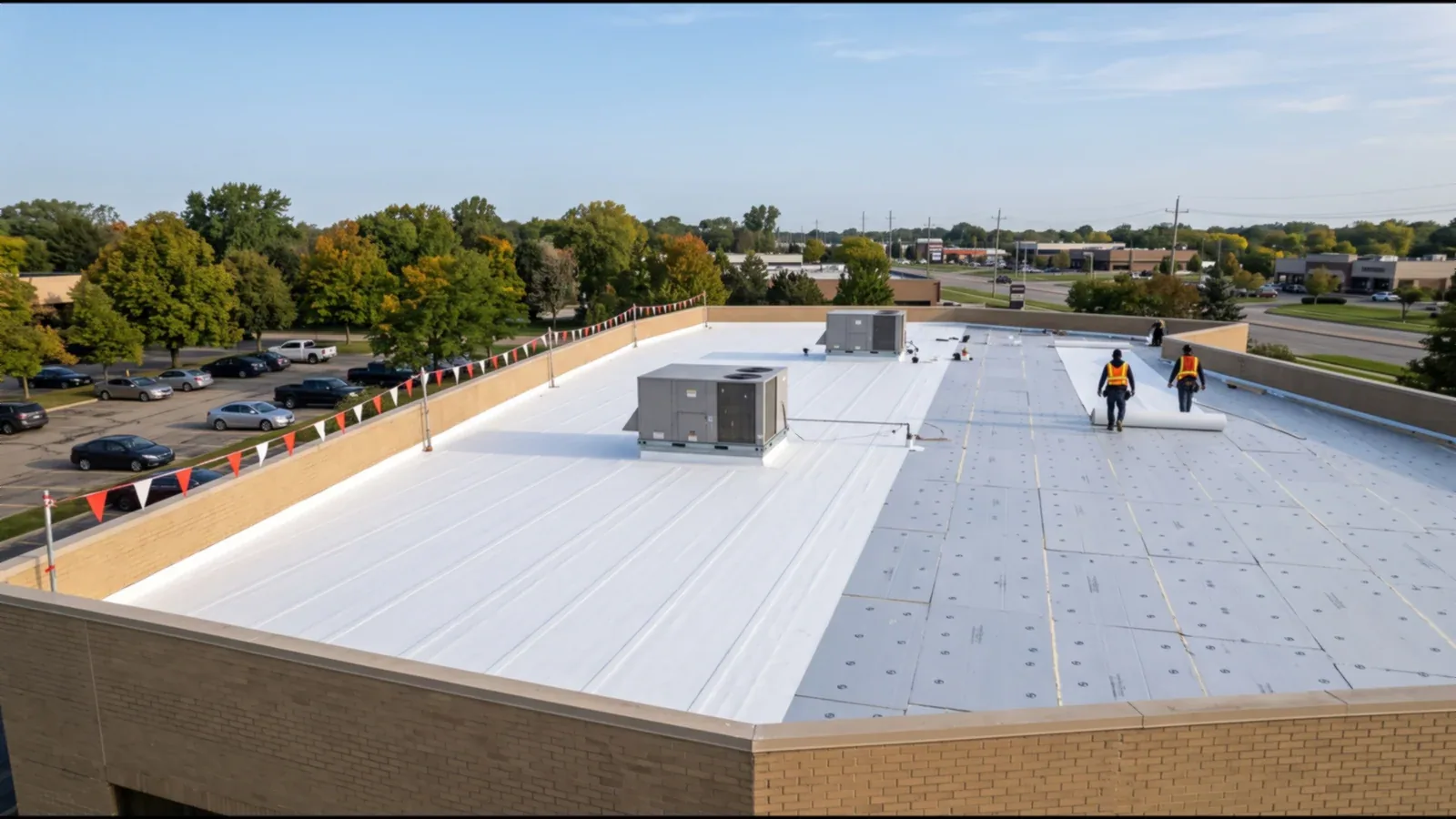
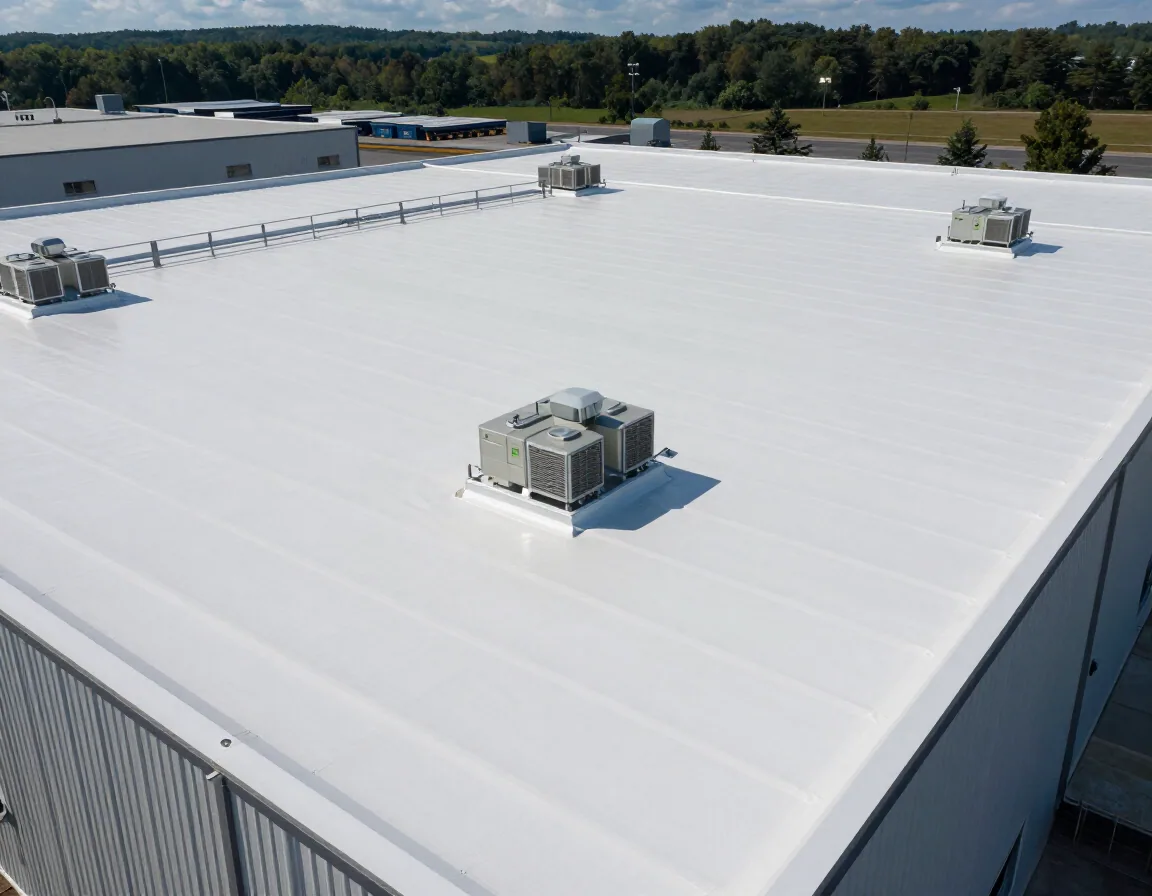
A GAF-type roof usually belongs to one of two families. The first is single-ply. A sheet of polymer is welded or adhered over insulation. The second is layered asphalt. Reinforced sheets are built up in plies, or applied as modified bitumen with a protective cap.
The family matters. Welded seams fail one way. Lapped and torched seams fail another. Our first job is to name the family and the attachment method. Then we know what a good seam should feel like under a probe. A buyer of a retail building near Glassford Hill Road or a warehouse on the east side needs that answer before any repair is priced. Mixed roofs do turn up. A building may carry a single-ply field with a layered patch at one corner, left from an old repair. We map those boundaries. A seam probe that works on one side may mislead on the other, and the plan should say where one material ends and the next begins.
What thermal swing does
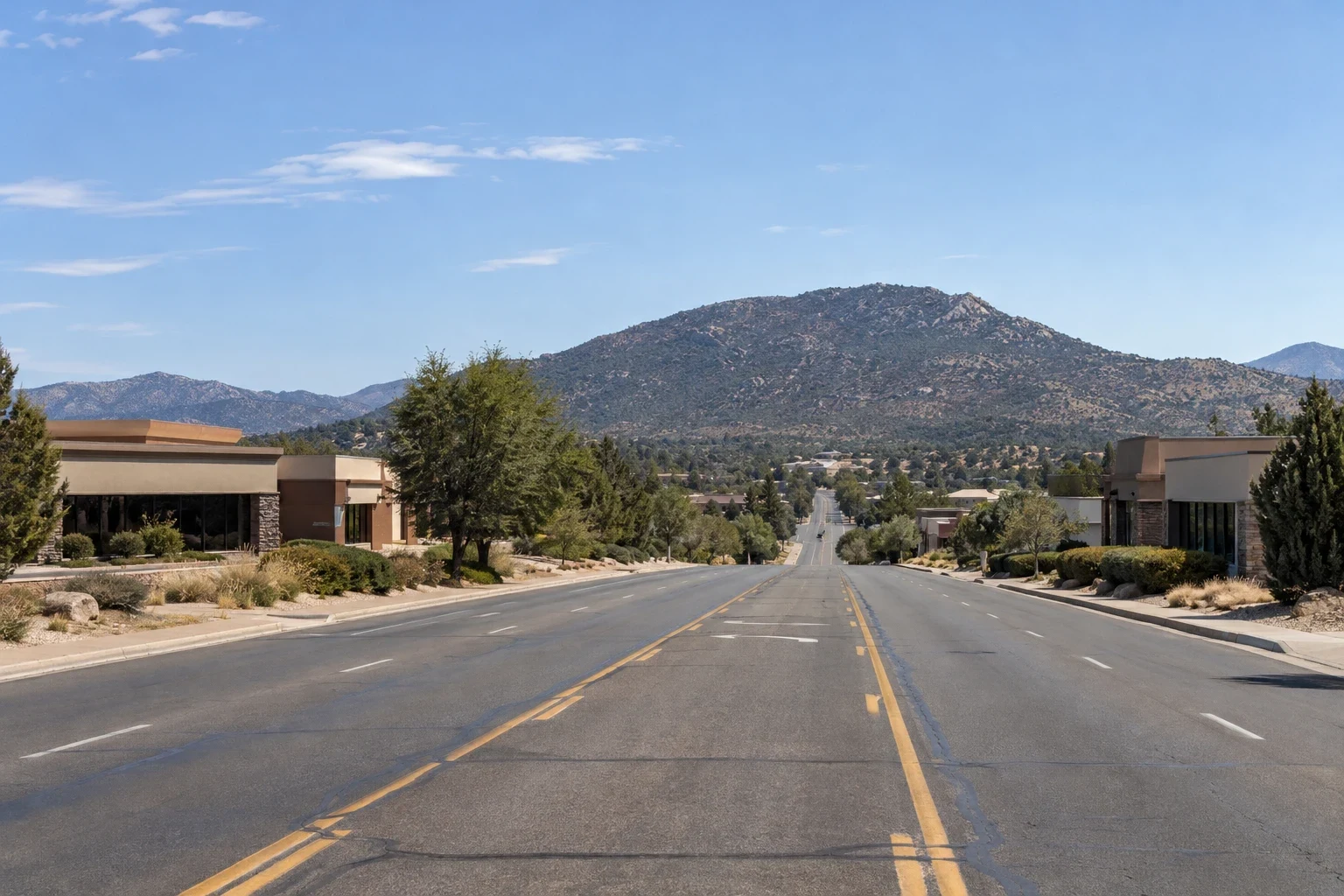
Prescott Valley sits near 5,100 feet. In nearby Prescott the daily swing averages nearly 30 degrees, which is a lot of movement for a roof.
Every swing tugs at laps and flashings. A single-ply sheet expands in the afternoon and shrinks overnight. A layered roof does the same, but the plies resist it differently. Over a winter, with freezing mornings from about late October to May 1, a loose seam opens a hair more each cycle. We find the early ones with a seam probe. Each gets a photo and a number on the plan. Small gaps are cheap to fix. Open laps in February are not. Metal edges move too. A coping cap or drip edge slides a little each day and loosens its fasteners. We check the cleats and sealant joints, because water follows any gap that the metal opens. The fix is usually a fastener, a bead of sealant or a new cleat. It takes minutes when found early.
What monsoon cells leave behind
Monsoon cells arrive fast here. The July 20, 2026 storm over Prescott Valley mixed a downpour, strong wind and pea-sized hail while traffic signals and trees came down. Gust fronts like that lift edges and pack drains.
After a cell, we check the drain screens first. They are often full of gravel, leaves and hail. We check the edge metal next. Wind finds a loose cleat fast. Then we look for bruises in the membrane or the cap sheet. Pea-sized hail rarely bruises a sound roof, but a worn surface can show marks. A core cut tells us whether a mark reaches the layers below. A storm in the area is context. It does not prove damage to any one deck.
How we repair a roof we did not build
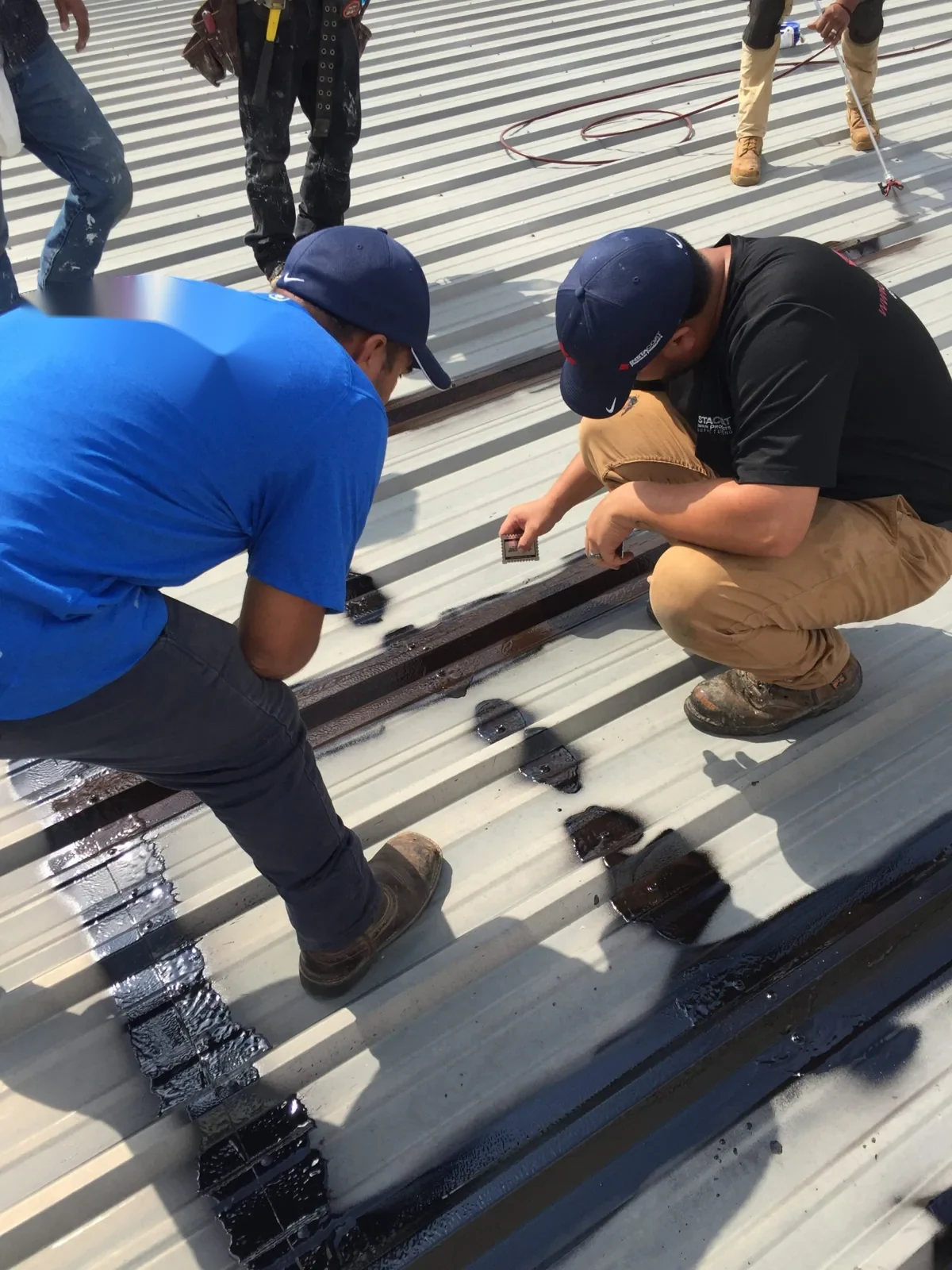
Most roofs were put down by someone else. We start with identification. A small core cut shows the layers. The stencil and the surface tell us the rest.
Next we test adhesion in a small area. Old sheets need cleaning, and some need primer. Then we make the repair and photograph it. Each item goes on the findings sheet with a location. If the roof is near the end of its service, the sheet says so. A patch that buys one season is worth knowing about. Owners who see that number can plan the replacement and avoid emergency spending. We also say what a repair will not fix. A patch does not restore a worn membrane, and it does not dry wet insulation. When the core cut shows wet board, the findings sheet marks the area and gives a boundary. The owner can then weigh a larger repair against a replacement with real numbers.
What goes in the warranty file
A warranty is a contract. It has conditions about repairs, inspections and who may do the work. We keep a file with the system type, the install date if known, each inspection and each repair.
We note the materials used for each repair. That record helps when a claim comes up. It also helps when a lender or a board asks what the roof is worth. For owners with several buildings, the files feed a warranty management record. They also support capital planning, where the weakest roofs rise to the top of the list. The first page of the file shows the next review date for each roof. A board can read that page in a minute and know what is coming.
Choosing the next system
Match the system to the building. Tilt-up and steel buildings in a park like Big Sky Business Park often suit a single-ply or metal roof. A roof with heavy foot traffic from equipment service may suit a layered system with a cover board. A roof over a public assembly space, such as the Prescott Valley Event Center in the Entertainment District, needs a plan that limits downtime.
We compare installed cost, expected service and repair path. We put the numbers side by side. A portfolio that holds a Carlisle SynTec roof next to a GAF roof gets one scale and one report format.
Commercial Roofing Questions
Can you repair a GAF roof without voiding the warranty?
Often, but the terms decide. Some warranties require approved materials or applicators. We read the paperwork first, match the repair to the terms and record every step in the file.
How do you find a roof's maker if the paperwork is gone?
We read the stencils and labels, then take a small core cut. The layers and the surface usually tell us what we need. We note the finding on the sheet and choose a compatible repair material.
Does pea-sized hail damage a commercial roof?
Rarely on a sound roof. A worn surface, a thin membrane or soft board can show bruises. Marks get a look after a storm, and a small core comes out where one looks deep.
What should be done before the monsoon starts?
Clear the drain screens and scuppers, check the edge metal and probe the seams near walls. A short walk in June costs far less than a storm-week emergency.
What does the first call need from a facility director?
Send the building addresses, any known roof types, past reports and warranty papers. We schedule a walk and deliver a findings sheet with photos before any repair is priced.
Request a walk-through
Ask for a roof walk. You get a written findings sheet with photos before any repair is priced, and you choose what to fix now and what can wait.
Request a Roof Assessment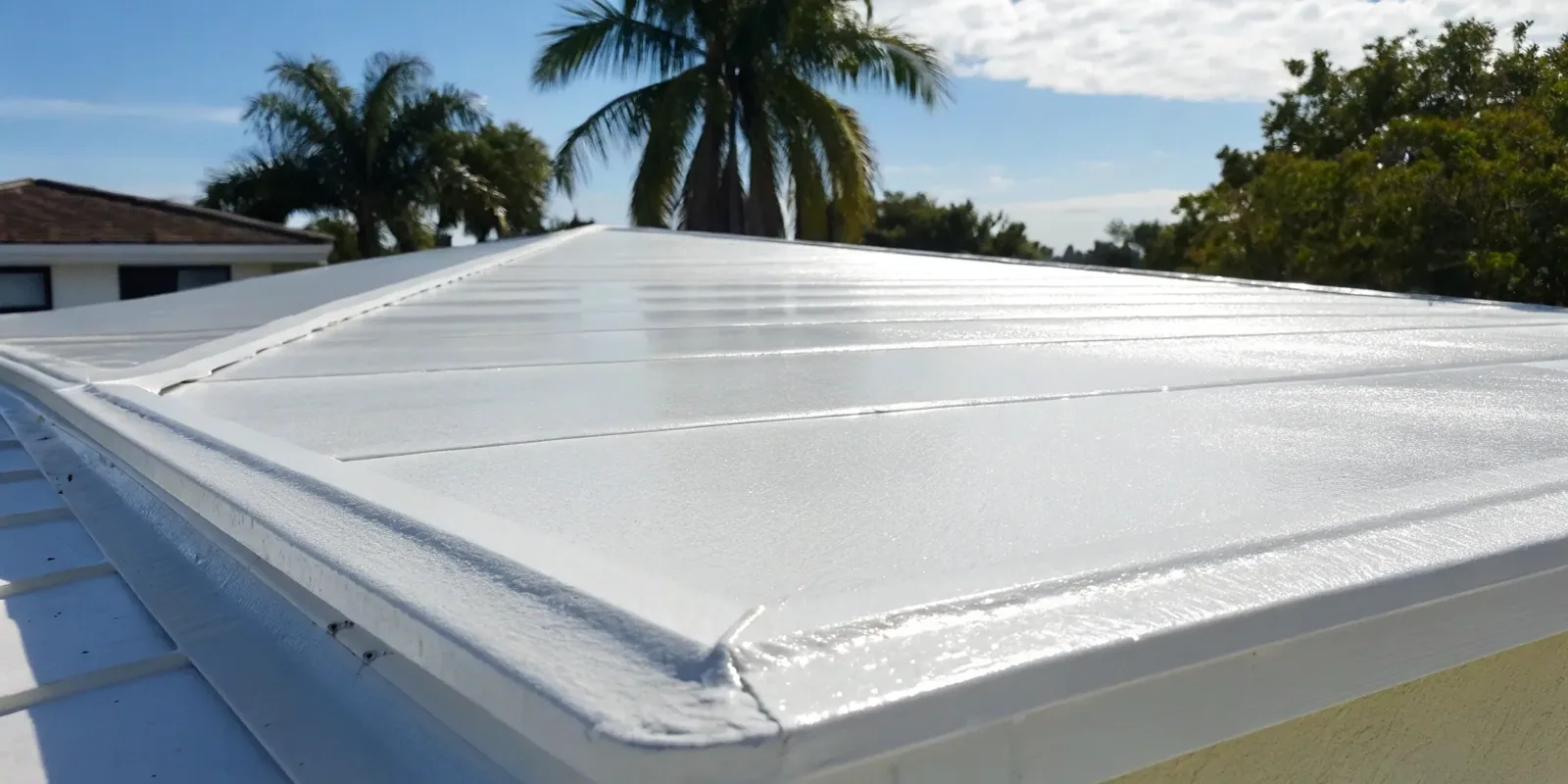
Commercial Roofing Questions
Often, but the terms decide. Some warranties require approved materials or applicators. We read the paperwork first, match the repair to the terms and record every step in the file.
We read the stencils and labels, then take a small core cut. The layers and the surface usually tell us what we need. We note the finding on the sheet and choose a compatible repair material.
Rarely on a sound roof. A worn surface, a thin membrane or soft board can show bruises. Marks get a look after a storm, and a small core comes out where one looks deep.
Clear the drain screens and scuppers, check the edge metal and probe the seams near walls. A short walk in June costs far less than a storm-week emergency.
Send the building addresses, any known roof types, past reports and warranty papers. We schedule a walk and deliver a findings sheet with photos before any repair is priced.