Soprema Roofing Systems in Prescott Valley, AZ
Inspection and repair of Soprema modified bitumen and liquid-applied roof systems in Prescott Valley, AZ, including parapet flashings and masonry transitions.
Kneel at the parapet base. Look at the line where the roof meets the wall. That joint tells you more than the open field. Soprema makes modified bitumen membranes, liquid-applied membranes and flashing resins, and insulation. Those products are chosen for details: the wall bases, curbs and pipe clusters that a plain sheet covers poorly. In Prescott Valley, AZ, details are where freeze and thermal swing strike first.
We install, repair and maintain these systems. We walk the roof, probe the laps and flashings and photograph what we find. A written sheet reaches you ahead of any repair price. The sheet lists each detail by location, with a photo and a short note on what it means. It then ranks the work: repair now, repair this season or watch. A Versico single-ply roof elsewhere in your portfolio gets the same format.
How a layered roof is built
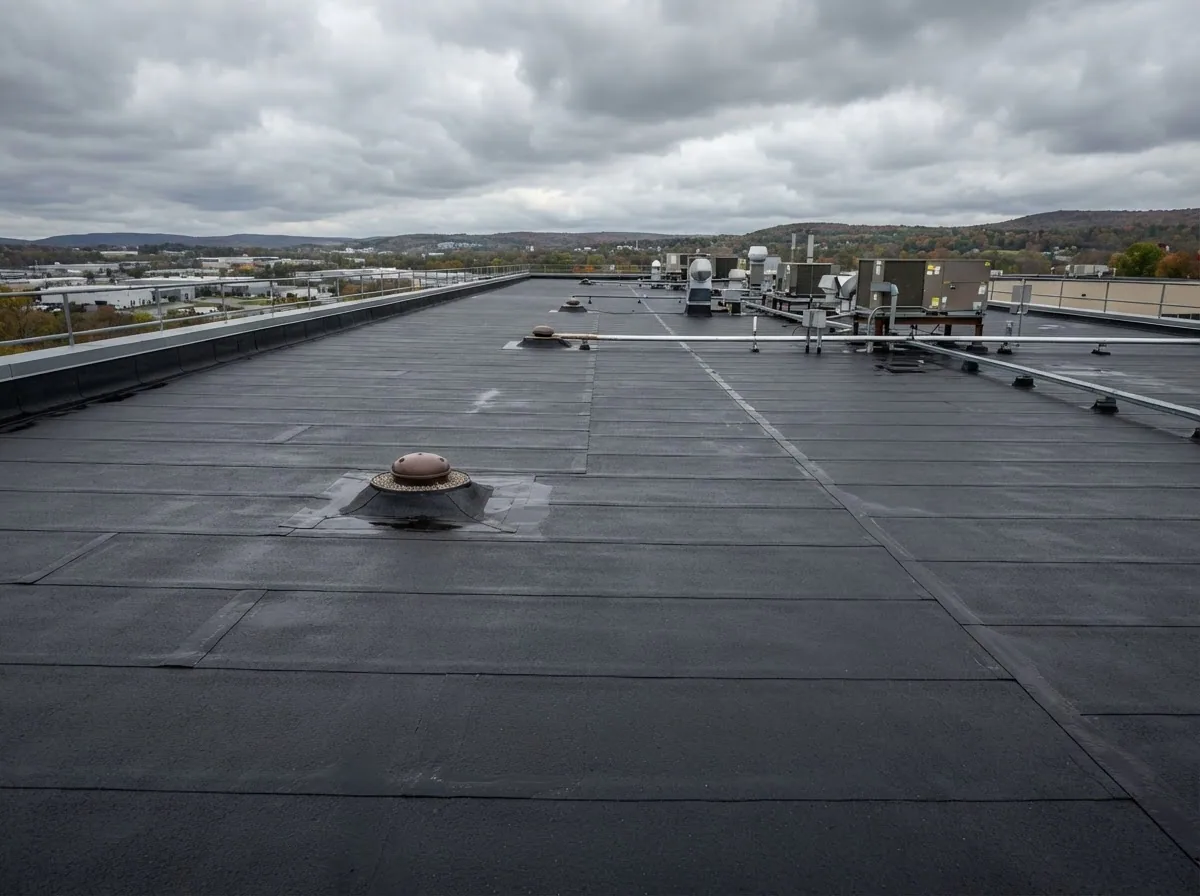
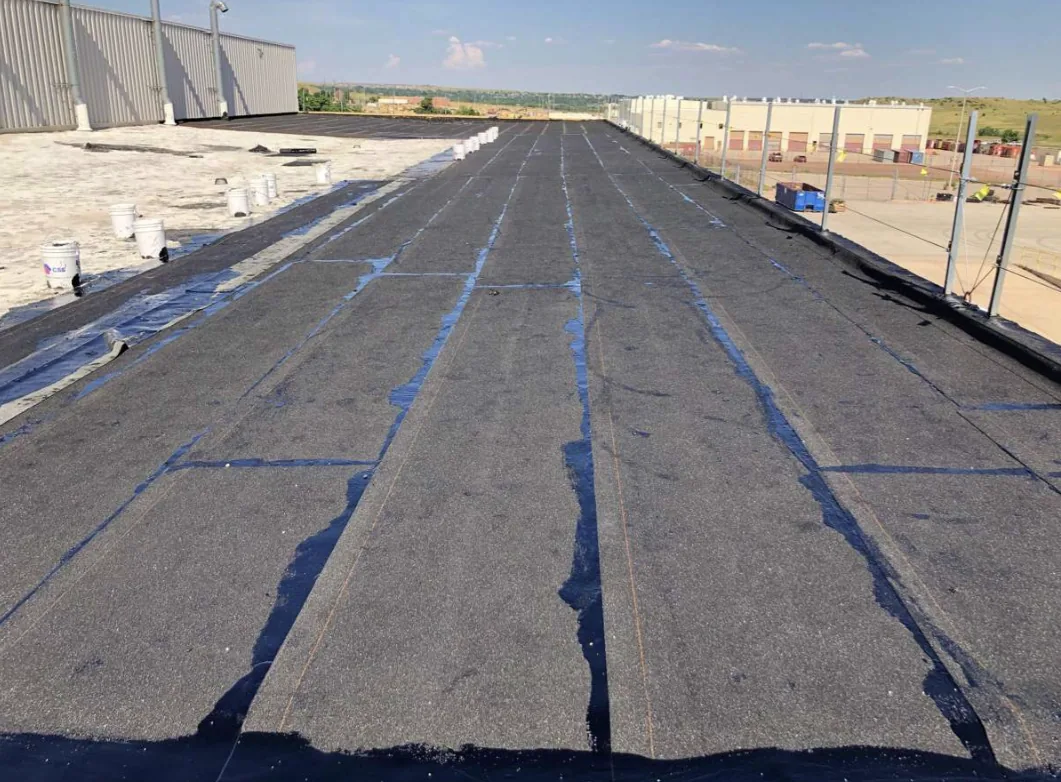
A modified bitumen roof uses asphalt reinforced with polymer. It comes in rolls. Plies are applied over insulation or a base sheet. A cap sheet on top carries a granulated surface that shields the asphalt from sun.
Plies can be torched, heat-welded, mopped or self-adhered. Each method has its own site rules. Several plies give redundancy. They also take foot traffic well. Weak points are the laps, the end seams and the cap surface. We look for bare reinforcement, cracks and loose granules. Then we probe each lap and note where one gives. Torch work needs special care near combustible material, and many owners restrict it. We ask early. If open flame is not allowed, we offer a self-adhered or cold-applied method, and we price the difference. Fire watch time after torch work is a cost, and the scope shows it as a line.
Where liquid flashing helps
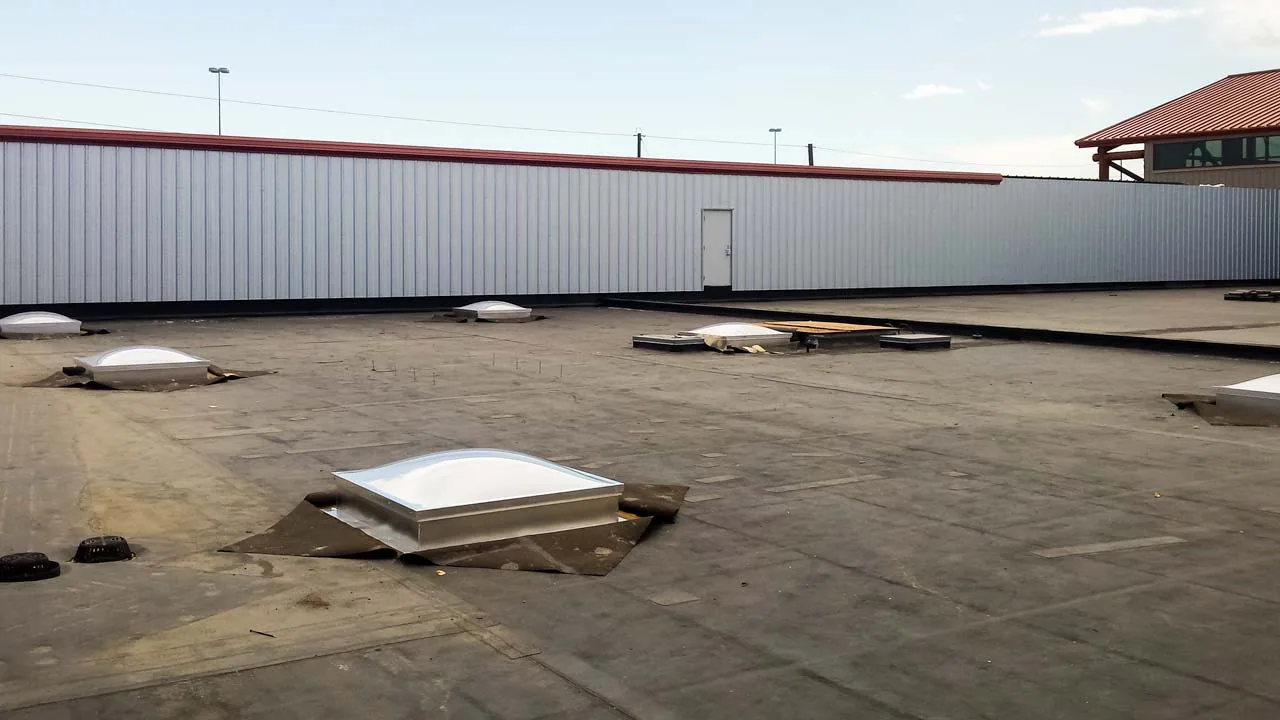
A liquid-applied flashing resin is troweled or poured around a detail. It cures into a continuous boot. Fabric is often embedded in it for strength. It suits curbs with odd shapes, pipe clusters, drain bodies and old equipment supports.
For a roof that is sound in the field but failing at the details, this can be the best value. The resin bonds to the substrate and needs no fasteners. We price it by item and mark each one on the plan. A penetration flashing line on the sheet tells you how many details are in play. The substrate must be clean and dry. Resin will not bond to a damp surface, so we test first. Cure time matters. A liquid flashing needs a dry window of several hours, and a monsoon cell in July or August can end that window quickly. We schedule resin work for dry mornings in spring and fall, and we carry primer and covers when the sky is uncertain. A flashing that cures in a day lasts. One rained on at hour two does not.
Brick, parapets and old walls
Downtown Prescott was rebuilt in brick after early 20th-century fires and includes the Whiskey Row historic district. Many roofs there sit on historic masonry. Fort Whipple's Building 107 in Prescott is a four-story hospital with a hipped roof, finished in 1939.
Masonry parapets and old walls raise the same questions. Mortar joints crack. Copings loosen. Water gets behind the flashing and into the wall. We check the top of every parapet and the termination at its face. Then we look at the Prescott building's drains, because an old roof often has few. Owners of historic buildings should confirm which approvals apply before work is scheduled. The Veterans Affairs campus at Fort Whipple holds 23 buildings finished by 1908, with concrete-block officers' quarters on granite foundations. Those facts show how old masonry and old roofs coexist in the area. They do not tell us what any one roof carries. The walk does. We record the roof, the walls and the drains, and the owner takes the record to whoever must approve the work.
What freeze does to laps
Around Prescott, mornings turn freezing from late October until May, and the daily temperature swing averages almost 30 degrees. Prescott's average snowfall is 10.2 inches a season.
Water gets into a lap and freezes. It expands. The lap opens a little more. Next thaw, more water enters. Asphalt also stiffens in the cold and cracks at stress points. We find the early laps and end seams in fall, before the first freeze. We reseal what we can and mark the rest for a repair this season. A lap sealed in October does not become a leak in January. Snow adds weight and, later, meltwater. Prescott's average snowfall is modest, but a single storm can leave a drift behind a parapet. Drifts sit against walls and block drains. We note where drifts form and clear the drain beside them. A clear drain turns a thaw into runoff and not a pond, and the roof stays lighter.
After a monsoon cell
Short, violent cells cross the area in July and August. Prescott has also flooded repeatedly, in 2004 and 2018. On July 20, 2026, pea-sized hail and wind swept Prescott Valley.
After a cell we check drain screens first. Gravel and hail pack them fast. We look for ponding lines, bruised cap sheet and torn flashing. Pea-sized hail rarely harms a sound roof, but worn granules show marks. Where a mark runs deep, a core cut settles it. The core shows whether damage reaches the plies below. One storm in the region proves nothing about a single roof. Prescott's 1983 deluge of 14.5 inches in under 48 hours shows what water can do in this area when it arrives in a rush. A roof with clear drains and tight flashings handles a hard rain better than one with a blocked scupper, and the dated photos show which kind you have.
What stays in the file
The file holds the assembly, ply count if known, cap condition, repair history, dated photos and warranty papers. It lists every penetration by location, with the date it was last checked. For a mixed portfolio, a GAF roof and a Soprema roof read in the same fields. A board can see which details are next in line. The file also carries a review date and the open items, each priced as a range. Owners near Glassford Hill Road or downtown get one list, with the roof of least remaining service at the top. That order tells the board where the next dollar goes.
Commercial Roofing Questions
Can liquid flashing go over an old flashing?
Sometimes, if the old material is clean, dry and compatible. We test a small area first. If the test fails, the old flashing comes out.
Is torch application allowed everywhere?
No. Some owners and buildings restrict open flame. We offer heat-welded, adhesive or self-adhered methods where they are required.
How do I know a cap sheet has aged out?
Look for bare reinforcement, widespread granule loss, cracks and open laps. We record each on the plan and photograph it.
What is different about a roof on a masonry building?
The parapet, coping and wall face need their own check. Water that gets behind the flashing can damage the wall as well as the roof.
What should I send to start?
Send the building address, any known roof details, past reports and warranty papers. Our findings sheet, with photos, comes first. A note on any torch restrictions at the building helps set the method before anyone arrives.
Request a walk-through
Ask for a roof walk. We will check every detail, photograph each finding and hand you a written sheet before any repair is priced.
Request a Roof Assessment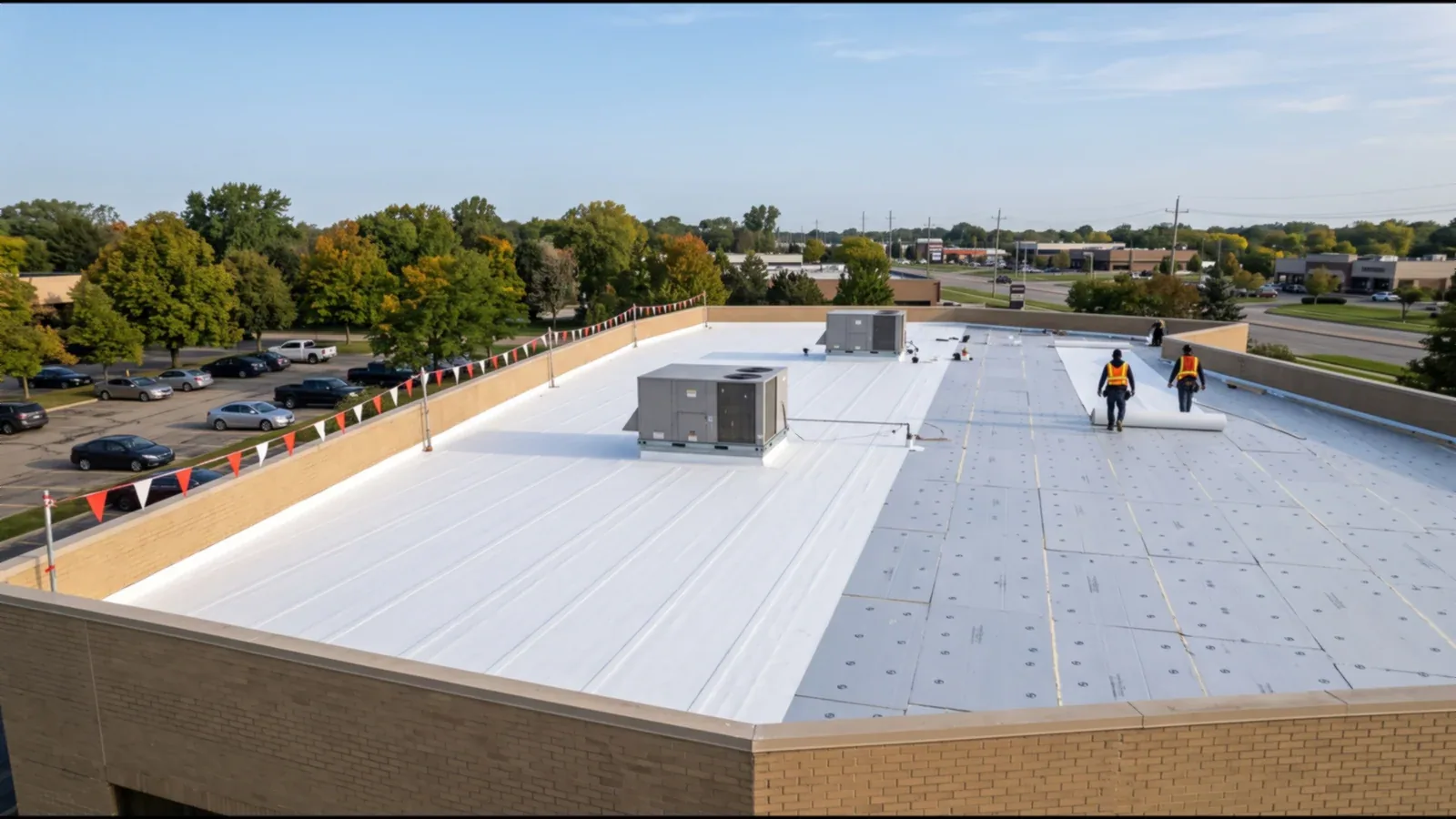
Commercial Roofing Questions
Sometimes, if the old material is clean, dry and compatible. We test a small area first. If the test fails, the old flashing comes out.
No. Some owners and buildings restrict open flame. We offer heat-welded, adhesive or self-adhered methods where they are required.
Look for bare reinforcement, widespread granule loss, cracks and open laps. We record each on the plan and photograph it.
The parapet, coping and wall face need their own check. Water that gets behind the flashing can damage the wall as well as the roof.
Send the building address, any known roof details, past reports and warranty papers. Our findings sheet, with photos, comes first. A note on any torch restrictions at the building helps set the method before anyone arrives.