Versico Roofing Systems in Prescott Valley, AZ
Inspection, seam probes and repairs for Versico single-ply roofs on retail and commercial buildings in Prescott Valley, AZ, with a written findings sheet.
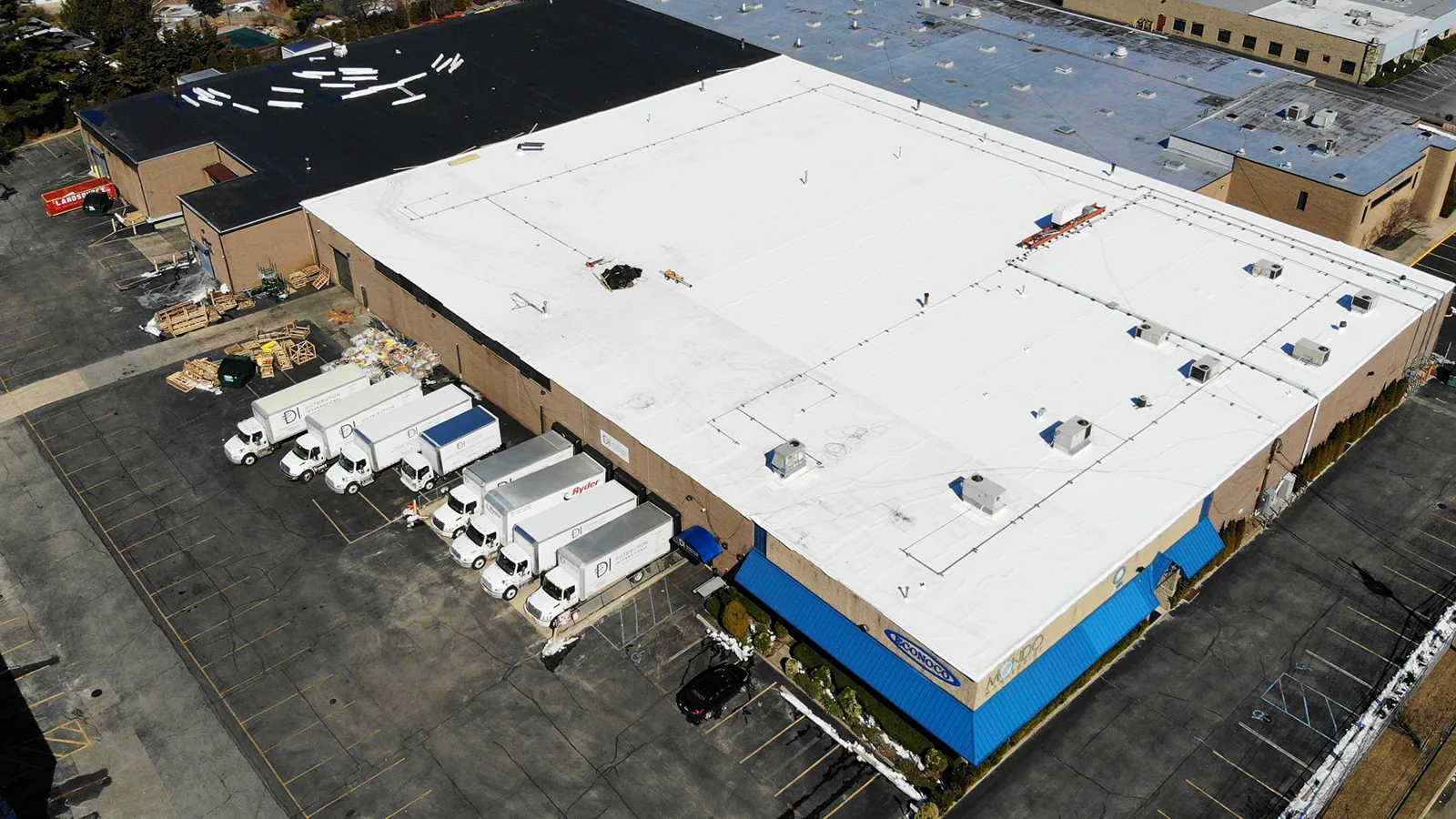
Count the rooftop units. Then count the cuts in the sheet around them. On a retail roof in Prescott Valley, AZ, each unit means a curb, a flashing and a place where water can get in. Versico makes single-ply roofing, including membranes and the accessories that finish them. Systems of that type sit on many of the low-slope buildings in the town's retail and business districts.
Single-ply systems are our work to install, repair and maintain. The walk probes the seams and photographs the findings, and a written sheet arrives before any repair has a price. The sheet ranks each item as repair now, repair this season or watch. Roofs near State Route 69, in Big Sky Business Park and across the east side all get the same format, so a manager with buildings in several places reads one list.
What retail roofs show
Glassford Hill Marketplace, a retail power center, now has a bank branch, an auto-parts store and a veterinarian, all in low-slope buildings. The Crossroads pairs a row of inline shops with newer national chain openings. Each opening can mean new equipment on the roof.
We look at the newest work first. A curb set without good flashing is a common find. So is a cut in the sheet patched with the wrong material. We probe each flashing and trace each penetration. For property managers along the Glassford Hill Road corridor, the sheet sorts repairs by tenant space. A lease dispute over who pays is easier to settle with that map. Tenant turnover is the quiet driver here. A space changes hands, a new unit goes up and an old one comes down. Each change leaves a hole or a patch. We map every patch on the plan. A cluster of patches in one area points to a drainage or slope problem that more patches will not cure, and the sheet says so.
Know the sheet
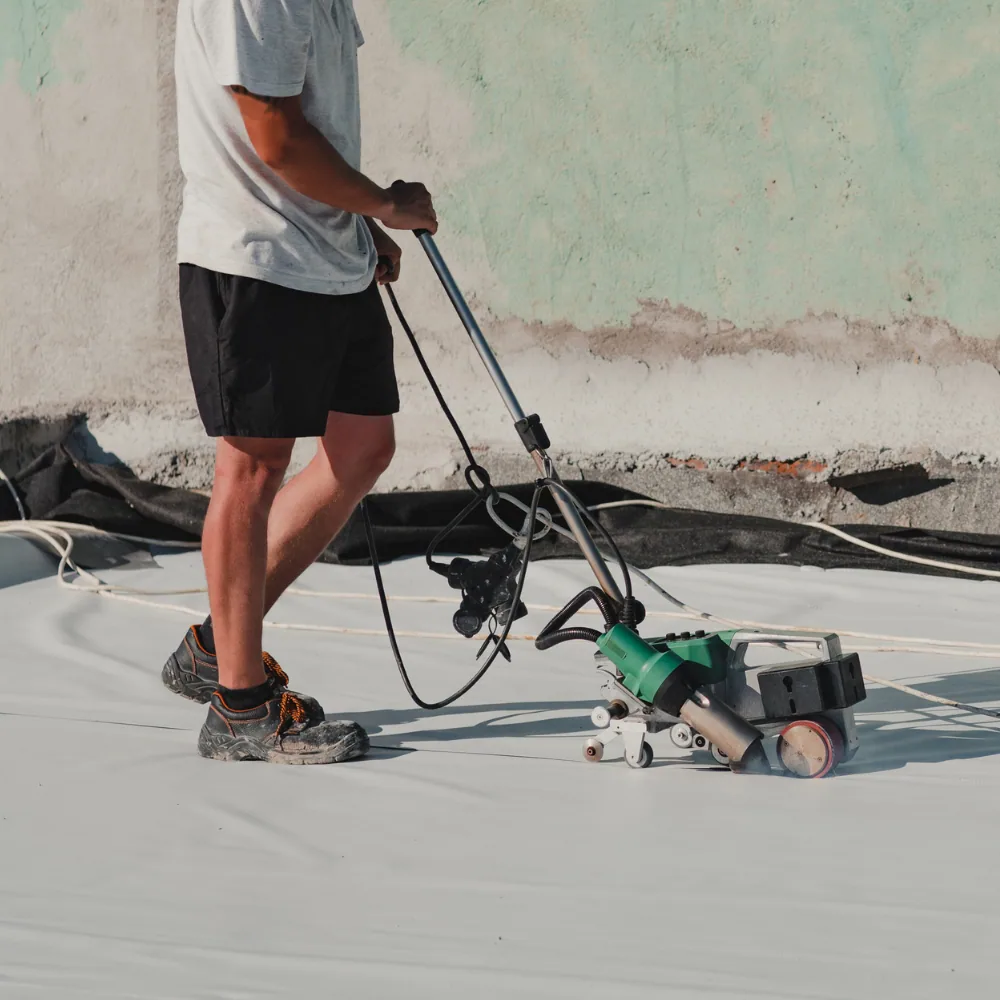
Single-ply options include TPO, EPDM and PVC. TPO and PVC weld at the seams. EPDM uses tape or adhesive. Attachment may be full adhesive, fasteners or ballast. Each choice changes how the roof acts in wind.
On the first walk we name the sheet and the attachment. We press fastener plates along a sample row. A plate that turns freely or stands proud means the fastener is backing out. After a gust front, that plate is where the sheet lifts first. We mark each one on the plan and write down how many we checked. Ballasted roofs need their own check. Stone can shift in wind and pile at one edge, leaving the sheet bare and the other side overloaded. We note where stone has moved and whether the edge has the right depth. Fully adhered sheets get a tap test. A hollow sound or a bubble under the thumb marks a bond that has let go.
What gust fronts do
Monsoon cells cross the valley in July and August, and the July 20, 2026 cell showed how they hit: a downpour, strong wind, pea-sized hail and signals and trees on the ground. A gust front pushes hard on a roof edge.
Edges are where we look first. We check the metal cap, the cleats and the sealant joints. We press along the termination bar at every wall. Loose metal lets wind get under the sheet. Then the sheet flutters, and the fasteners work. A short walk before July costs far less than a repair after a storm. Weather news is background. Only a walk shows what the deck took. We also check flashing laps near walls, where wind-driven rain gets behind a loose edge. Dust and gravel from the lot collect there. We clear them and look for the water line. A dated photo of a clean drain before July is worth having if a claim comes up later.
What thermal swing does
Day-to-night swings near Prescott run close to 30 degrees, and frost holds from late October until early May at Prescott Valley's 5,100 feet.
Seams, flashings and sealants all move with that swing. Sealant dries and cracks first. It is the cheapest part of the roof and often the first to fail. Failed sealant gets cut out and renewed. Then we check that the top edge of each flashing is fastened and the bar is tight. A small fix in October stops a winter leak. Metal edge needs the same view. Caps and drip edges creep a little each day and loosen their fasteners, so cleats and sealant joints get checked and anything that moved is reset. It is a short job, and it keeps wind from getting under the sheet when the first gust front arrives.
What a repair looks like
A welded sheet gets a cleaned surface and a welded patch or cover strip, and a taped sheet gets a rebuilt splice. We test adhesion on an older sheet before we commit to the method.
We photograph each repair before and after. We mark it on the plan. Seams that open twice stop getting patches. A repeat failure points to something under the sheet. A moisture survey maps wet insulation without opening the roof. Then we can price a real fix, and the owner sees the boundary of the problem. Costs follow the same drivers across a portfolio: roof area, number of penetrations, seam length, insulation condition and access for lifts and trucks. We write each driver into the scope. A manager comparing two buildings can see why one costs more, and a board can see where the money goes first, without a long meeting.
What stays in the file
The file holds the sheet type, the attachment, the repair history, a log of who went on the roof and dated photos. It holds warranty papers if you have them. We note the material used for each repair, because some warranties limit who may repair the roof and with what.
For owners with several sites, a Carlisle SynTec roof and a Versico roof read in the same fields. The file also lists open items with a cost range, so the budget year is clear. A Holcim Elevate roof elsewhere in the portfolio goes in the same way. The first page shows the next review date and the roofs with the least remaining service.
Commercial Roofing Questions
Who should be allowed on a retail roof?
Only people with a reason and a sign-in. We suggest walk pads along service routes and a short log of each visit. When a leak shows up, the log narrows the search.
Should a new rooftop unit trigger a roof check?
Yes, before and after the install. We photograph the curb, the flashing and the sheet around it. A later leak can then be traced to a dated condition.
How can I tell if a sheet is sound enough to keep?
We probe seams, check flashings, look for blisters and ponding and take moisture readings. A sound sheet over dry insulation can often be cleaned, repaired and kept in service.
Can hail damage a single-ply roof?
Large stones can. Pea-sized hail rarely harms a sound sheet. After a storm the surface is checked for marks, and a core is cut wherever one looks deep.
What should a property manager send to start?
Send the roof plan, a list of rooftop equipment, past reports and any warranty papers. A findings sheet with photographs comes before any repair is priced.
Request a walk-through
Ask for a roof walk. We will probe the seams, photograph every finding and hand you a written sheet before any repair is priced.
Request a Roof Assessment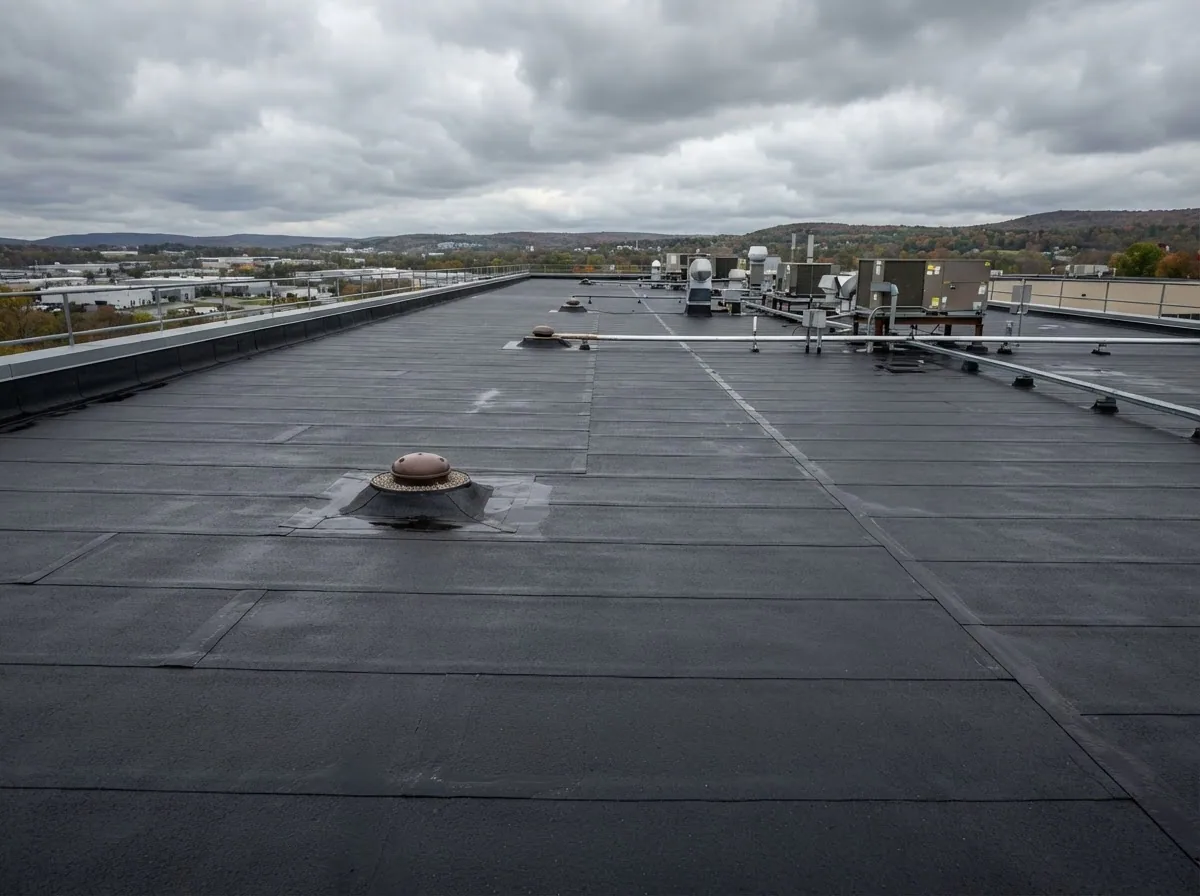
Commercial Roofing Questions
Only people with a reason and a sign-in. We suggest walk pads along service routes and a short log of each visit. When a leak shows up, the log narrows the search.
Yes, before and after the install. We photograph the curb, the flashing and the sheet around it. A later leak can then be traced to a dated condition.
We probe seams, check flashings, look for blisters and ponding and take moisture readings. A sound sheet over dry insulation can often be cleaned, repaired and kept in service.
Large stones can. Pea-sized hail rarely harms a sound sheet. After a storm the surface is checked for marks, and a core is cut wherever one looks deep.
Send the roof plan, a list of rooftop equipment, past reports and any warranty papers. A findings sheet with photographs comes before any repair is priced.