Commercial Roofing in Clarkdale, AZ
Commercial roof inspection, repair and replacement in Clarkdale, AZ for older town buildings and heavy industrial roofs, with a written findings sheet first.
Dust is the first finding on an industrial roof. Look at the drain screens and the low spots, and you can read what the air carries. Clarkdale, AZ was founded in 1912 as a smelter town for the Jerome copper mine, and a cement plant built in 1959 is its only major industry. That makes two kinds of roof work: older town buildings and heavy industrial roofs. Both get a walk, a seam probe and a photograph of every finding, and the written sheet arrives before any repair is priced.
What industrial dust does to a roof
Fine dust packs drain screens, settles in low spots and holds moisture against the membrane. Near a cement operation it can build a crust that hides defects. It also dulls any reflective surface and adds weight to ponded areas.
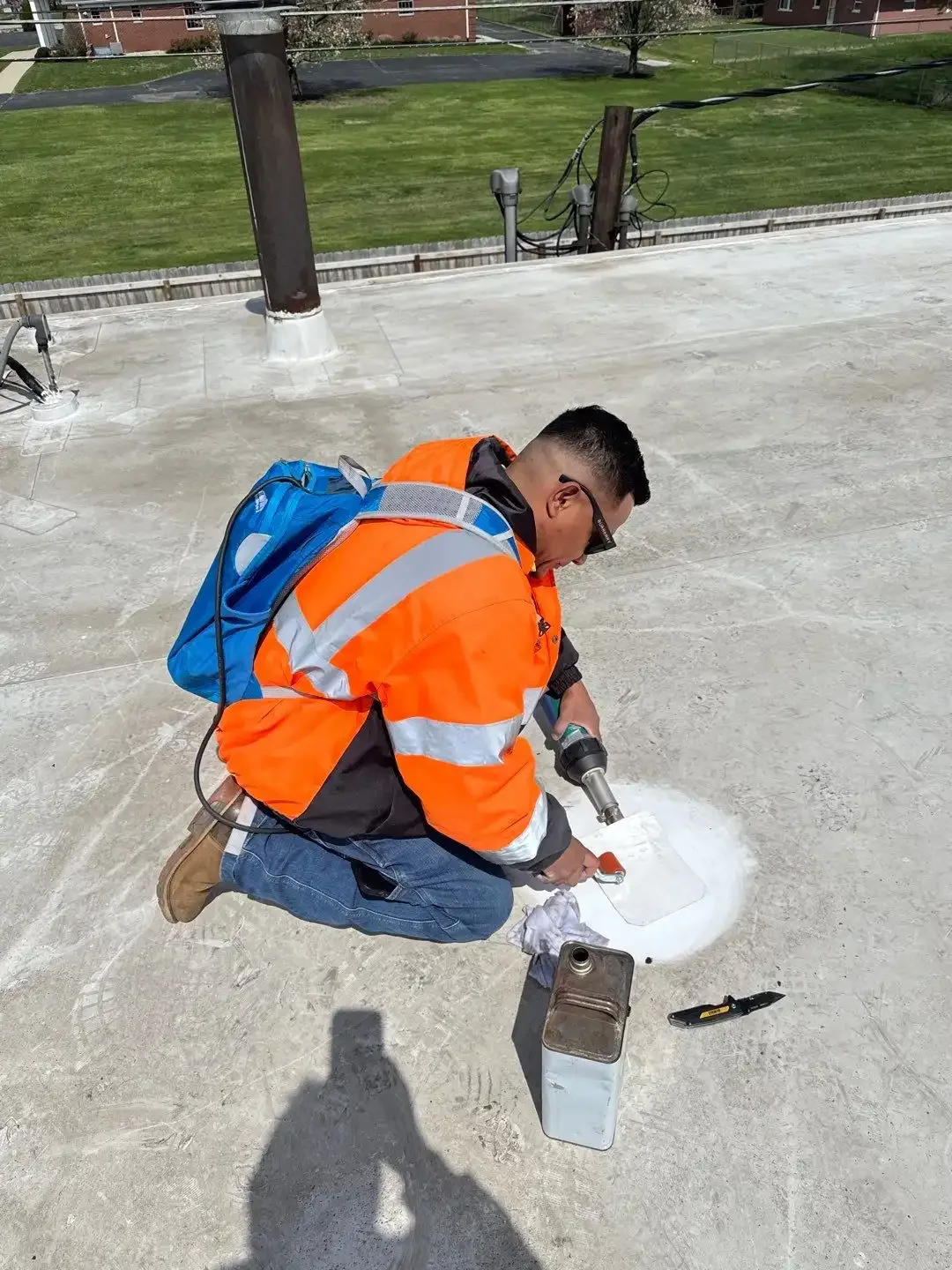
The checks are the same for any heavy-industry roof, whatever the plant. Clear and photograph the drains. Wash a test patch so the surface can be read. Probe the seams. Check the flashing at stacks and vents, then the edge metal. A packed scupper after a monsoon cell is the cheapest finding to fix and the costliest to ignore.
Dust is a dead load, and wet dust is heavier. Water that ponds over dust adds more. We note any low area where silt has built up and check the deck beneath it for sag. A string line shows whether the deck is moving. That finding goes high on the list, because a sagging deck keeps ponding no matter how often the drain is cleared. Where silt has built up, the sheet also notes how often screens need cleaning, so the owner can set a cleaning interval that matches the dust.
Buildings from the smelter years
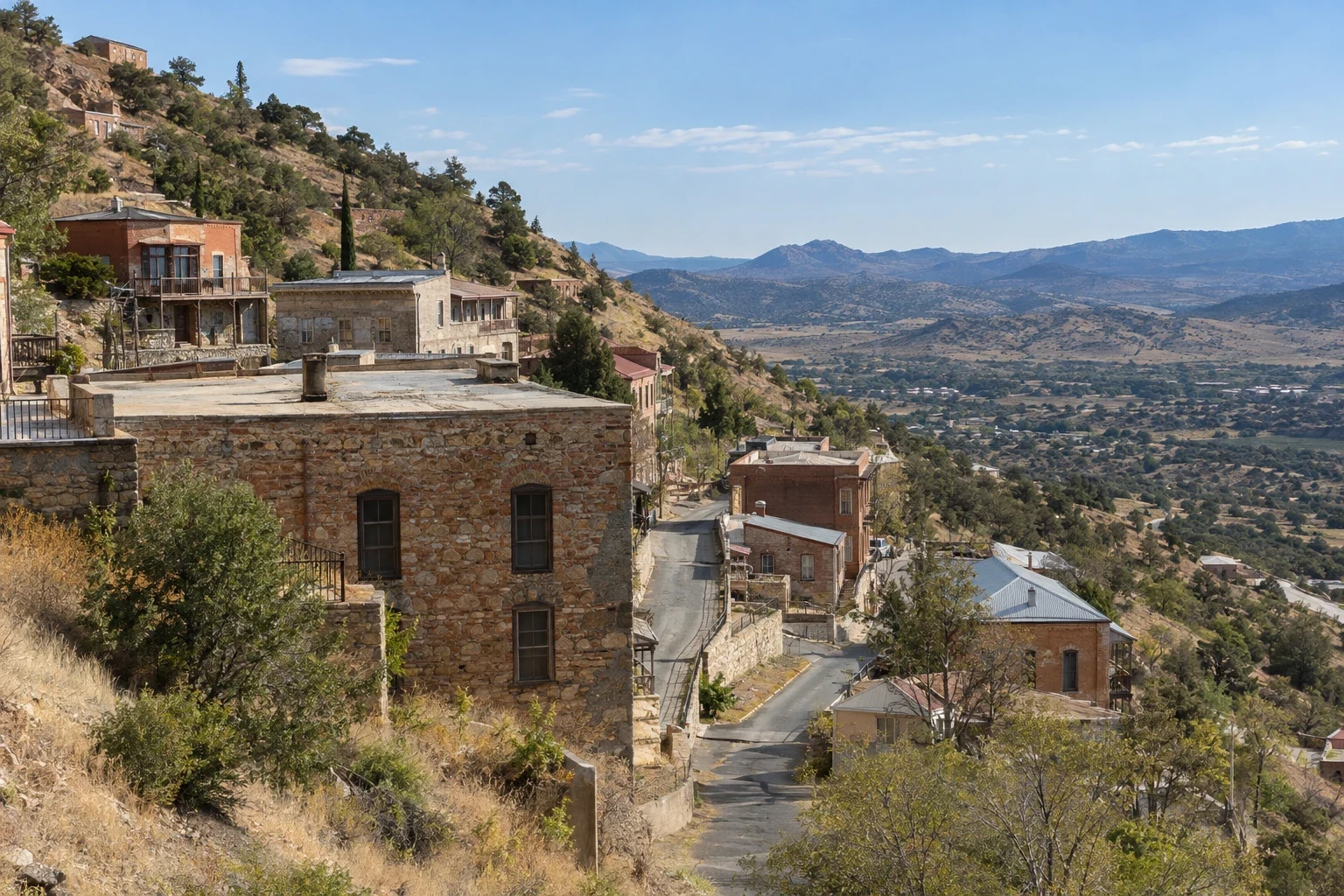
A town founded in 1912 has older buildings, but age alone never names a roof. Some were re-roofed. Some were not. A core settles it. The core shows the layers, the state of the insulation and the deck beneath, and a photograph of it goes on the sheet.
Older roofs can carry more layers than newer ones. Each layer adds weight and can hide moisture. A built-up roof shows its plies in the core, while a newer single-ply roof shows a sheet over insulation. The sheet records whichever it finds.
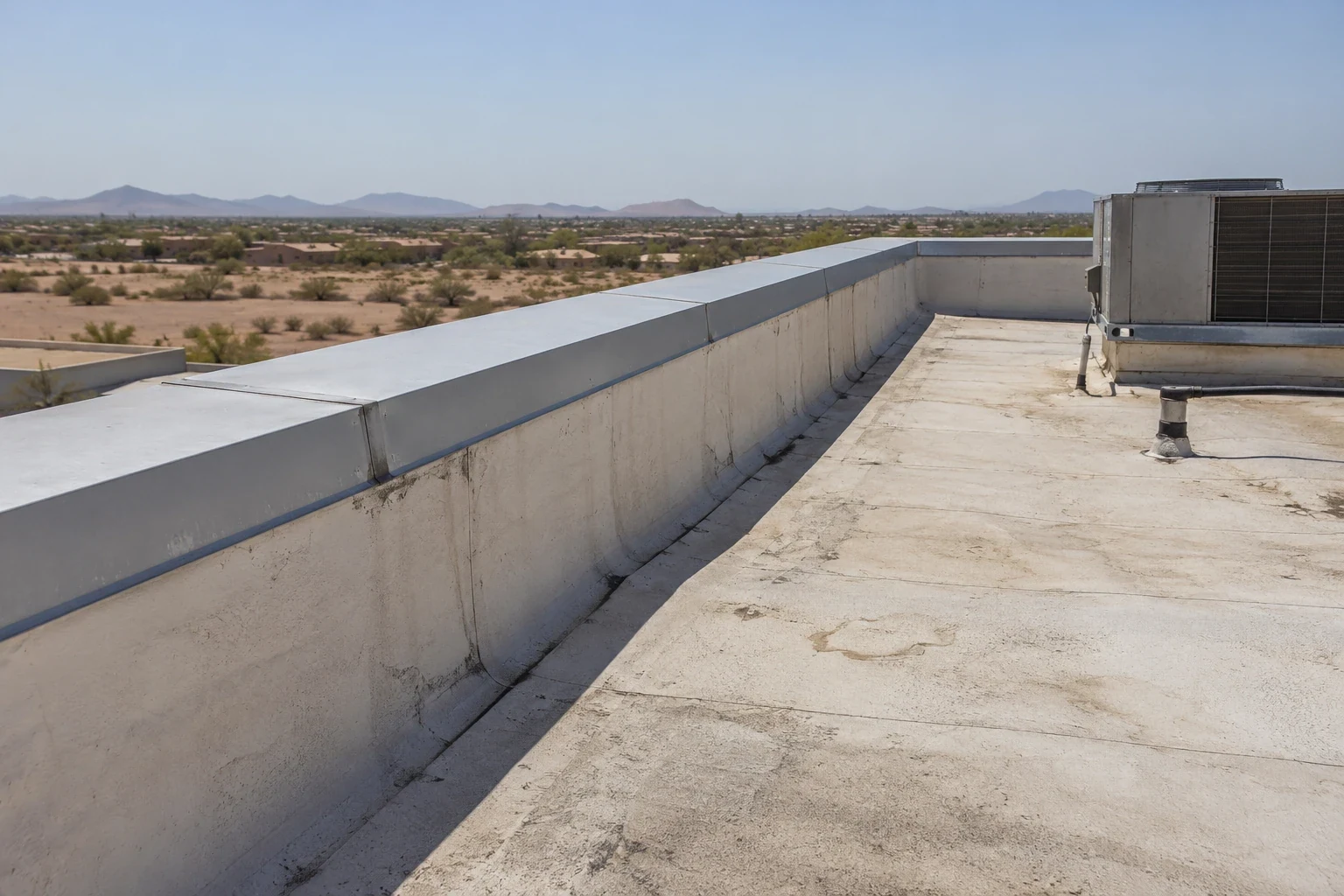
Masonry edges and parapets get a slow look. Water slips behind a failed coping or a cracked cap and works into the wall. The termination bar, the counterflashing and the cap joints are checked in turn. A small repair at a parapet saves a larger repair inside the wall, and the photographs show the joint before and after.
Visitor traffic on Historic Route 89A
Historic Route 89A passes through town, and the Verde Canyon Railroad is a visitor draw. Small commercial buildings that serve visitors keep doors open on weekends, which shapes when a crew can work. Loud tear-off waits for a quiet weekday, and a lift sits where it will not block a customer entrance.
A shop with a front parapet and a flat roof behind it is a common shape in older towns. The weak point is usually where the roof meets that wall. Sealant dries, the cap loosens and meltwater or monsoon rain finds the gap. An edge metal and coping pass fixes most of it. Owners with several small buildings can have one visit cover them all.
Heat and short, hard rain
Clarkdale averages about 12.75 inches of precipitation a year, with August the wettest month, and snow is rare. Sun and summer heat do more of the aging here than frost does. A dark membrane bakes, sealants chalk and thin coatings wear through.
The monsoon still counts. A cell packs drains with silt and leaves in minutes, and silt is the one thing a cement town has plenty of. Drain screens are cleared before July and again after the first big cell, and each gets a before and after photograph.
Prescott Valley's own July 20, 2026 storm, with its heavy rain, strong wind and pea-sized hail, is a reminder of how fast conditions change across the region. After any storm, a walk marks bruises, lifted flashings and clogged drains, and the photographs carry the date.
Options and cost drivers
Condition sorts the choices: a worn but dry roof can be coated, bad details call for repair and soaked insulation calls for replacement. Size, insulation condition and penetration count set the price, and on an industrial roof, process vents and stacks raise the count, since each is a detail to flash.
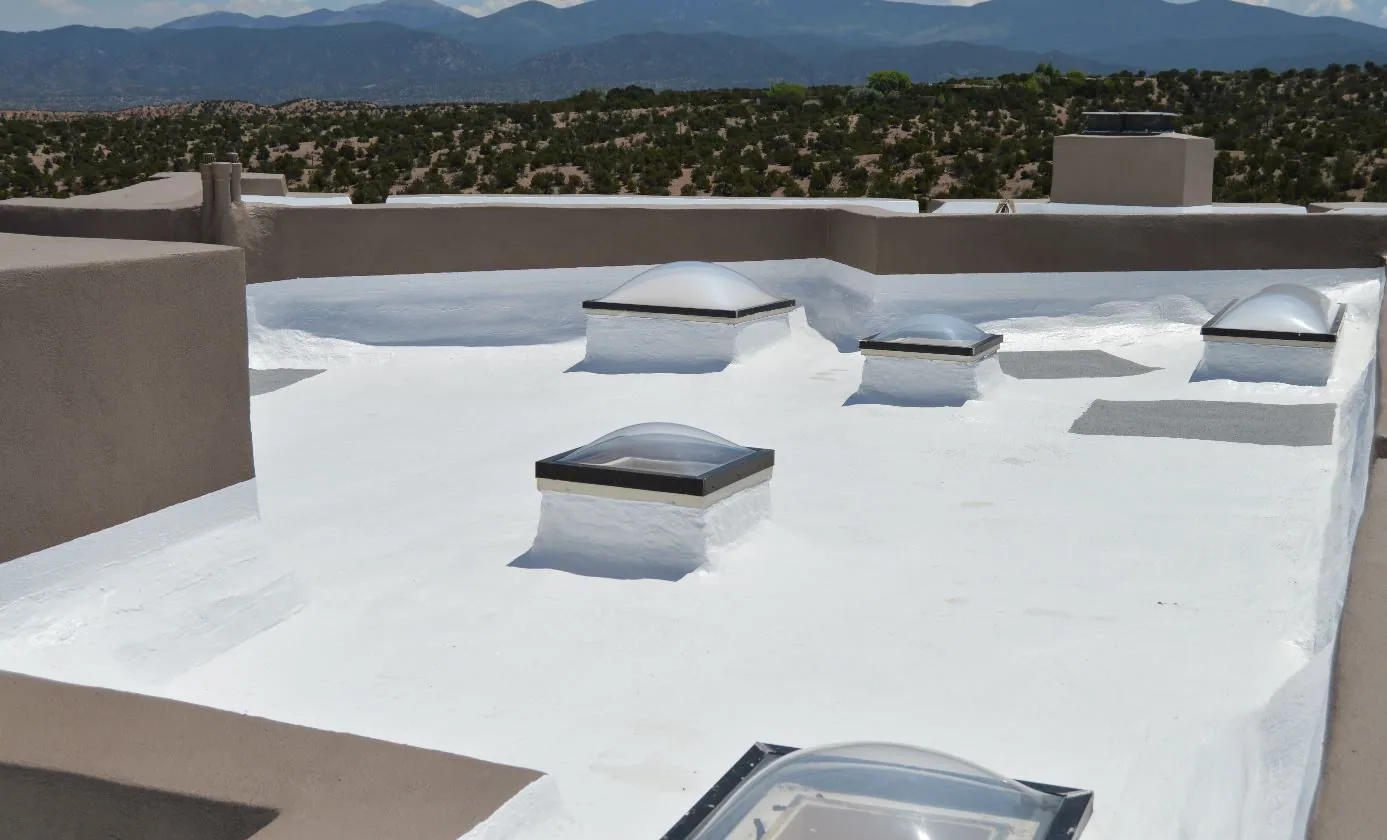
Coating restoration runs well under the cost of a tear-off, but only a dry roof qualifies. Cores and a moisture scan come first, because coating over wet insulation fails.
Timing follows the owner. A plant may have planned outages when crews can lift equipment and work near vents. A downtown shop has slow seasons. A town office has a budget year. The quiet weeks go into the schedule first, and the monsoon window and the first hard freeze set the outer limits.
Lifts need a plan of their own. A crane has to stand somewhere, and in an older town the streets can be narrow and the lots small. The staging area is walked on the first visit, overhead lines and parking are noted and the lift plan is written before a price goes out.
What to do first
Send the roof plan, the roof age if known and any leak history. A walk and a written findings sheet follow. Roofs in Jerome and Cottonwood sit in the same part of the Verde Valley, so owners with buildings in more than one town can ask for one schedule. A roof that leaks now gets emergency roof repair first, and the permanent scope follows.
Commercial Roofing Questions
How does dust change a roof inspection?
Dust hides seams, packs drains and holds moisture. A test patch is washed first so the surface can be read. Clearing the drains before the walk helps, and photographing them both ways shows how fast the dust returns.
Can an old multi-layer roof be recovered?
Sometimes. Cores count the layers and test the insulation. If it is dry and the deck is sound, a recover can work. If water sits in the layers, the wet material comes out. Cores at several points make the case, and the photographs show it.
Do stacks and vents change the roof plan?
Yes. Each penetration is a detail to flash and a place where a seam can fail. They are counted on the first walk and photographed one by one. Where a vent discharges onto the roof, the sheet near it is checked for staining or softness.
What if my roof leaks during a storm?
The crew stops the water first with a temporary repair and documents the entry point with photographs. Then the permanent fix is priced. Keep the photographs with the building records, since they show date, location and condition before any repair changed the roof. A puncture repair or a patch follows the map.
How soon do I get the written findings?
After the walk. The sheet carries photographs and ranked repairs, and it arrives before any repair is priced. Read it with your maintenance staff so the repair-now, repair-soon and watch tiers match what they see on the ground. If staff know of a leak the sheet missed, it is added and that spot is walked again.
Request a walk-through
Ask for a roof walk in Clarkdale. Send the roof age and any leak history. You receive a written findings sheet with photos before any repair is priced.
Request a Roof Assessment
Commercial Roofing Questions
Dust hides seams, packs drains and holds moisture. A test patch is washed first so the surface can be read. Clearing the drains before the walk helps, and photographing them both ways shows how fast the dust returns.
Sometimes. Cores count the layers and test the insulation. If it is dry and the deck is sound, a recover can work. If water sits in the layers, the wet material comes out. Cores at several points make the case, and the photographs show it.
Yes. Each penetration is a detail to flash and a place where a seam can fail. They are counted on the first walk and photographed one by one. Where a vent discharges onto the roof, the sheet near it is checked for staining or softness.
The crew stops the water first with a temporary repair and documents the entry point with photographs. Then the permanent fix is priced. Keep the photographs with the building records, since they show date, location and condition before any repair changed the roof. A puncture repair or a patch follows the map.
After the walk. The sheet carries photographs and ranked repairs, and it arrives before any repair is priced. Read it with your maintenance staff so the repair-now, repair-soon and watch tiers match what they see on the ground. If staff know of a leak the sheet missed, it is added and that spot is walked again.