Commercial Roofing in Verde Village, AZ
Commercial roof inspection, repair, coating and replacement in Verde Village, AZ, a retirement community where roof age and low-slope details drive the plan.
Look at the sealant at the base of every vent on a clinic or small-shop roof. In Verde Village, AZ, that sealant has been baking for years. The community had 12,019 residents and 5,045 housing units in 2020, sits at about 3,271 feet and is described as a retirement and bedroom community for Cottonwood. It was developed in 1970 as a retirement community, so much of the housing is about 50 years old. Commercial roofs that serve a town like that start with a walk and a probe along every seam, and the written sheet arrives before a price does.
Buildings that serve retirees
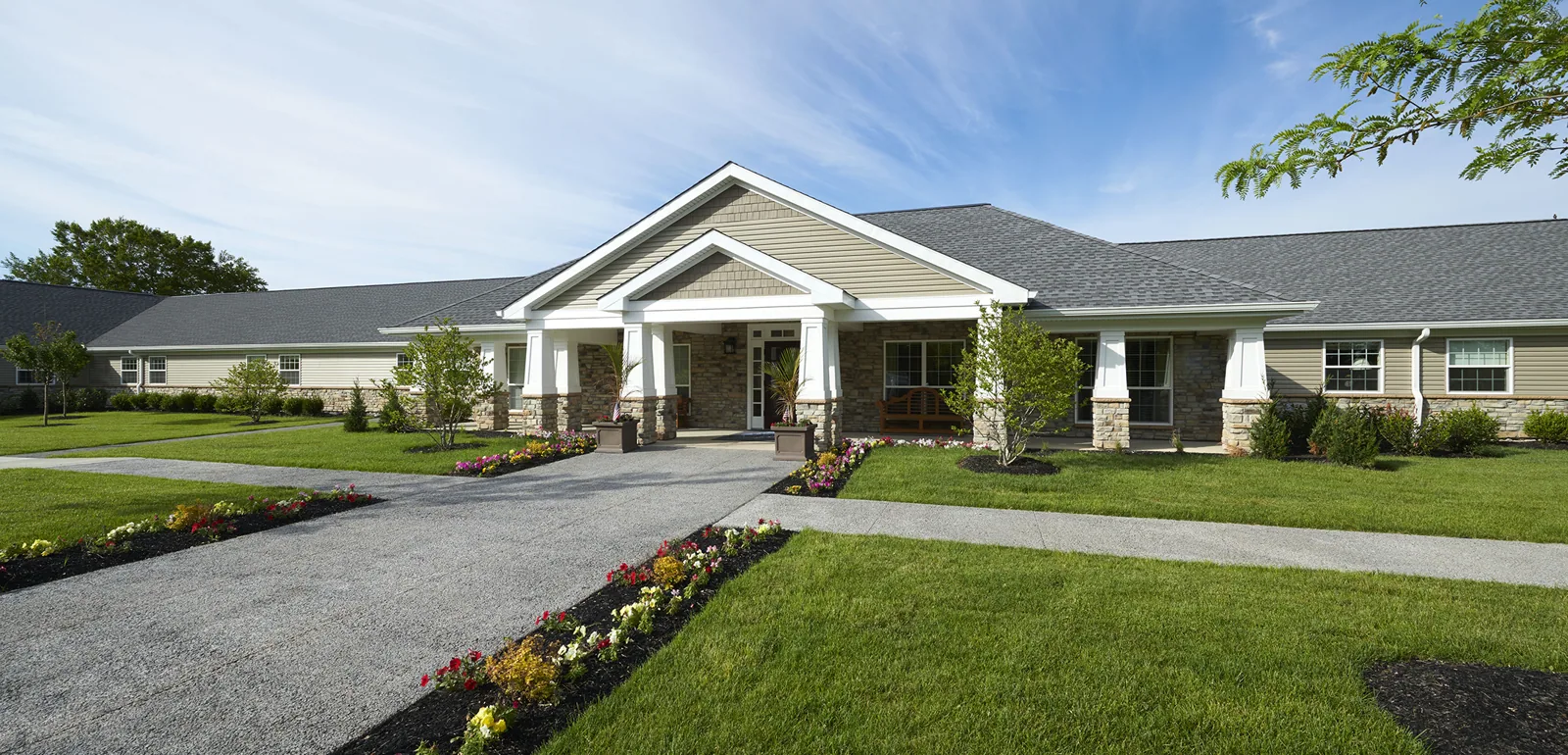
A retirement community leans on medical offices, pharmacies, small clinics, food service and everyday retail. Those buildings share a few roof traits. Rooftop units run most of the year. Exhaust and plumbing vents pierce the sheet in many places. Patients and customers use the same entrances a lift would want.
Work near patients follows its own rules. Air intakes get covered, hot work stays clear of vents, and loud steps wait for quiet hours. Access routes are agreed with the office manager in advance. A senior living roof adds notice rules for residents that are worth borrowing even for a small clinic.
Quiet matters for a reason beyond comfort. A resident startled by noise overhead is a complaint, and a resident anxious about a leak is a bigger one. A schedule posted at the door, with a phone number on it, heads off both. Pharmacies and clinics also keep supplies that cannot get wet, so the interior plan names what must be covered before the crew opens a section.
Fifty-year-old homes, unknown roofs
Housing that is about 50 years old tells us about the neighborhood and nothing about any commercial roof. A building that serves the community could be older than its roof or newer than its walls. A core answers it: the layers, the insulation and the deck come out in a small plug, and a photograph goes in the file.
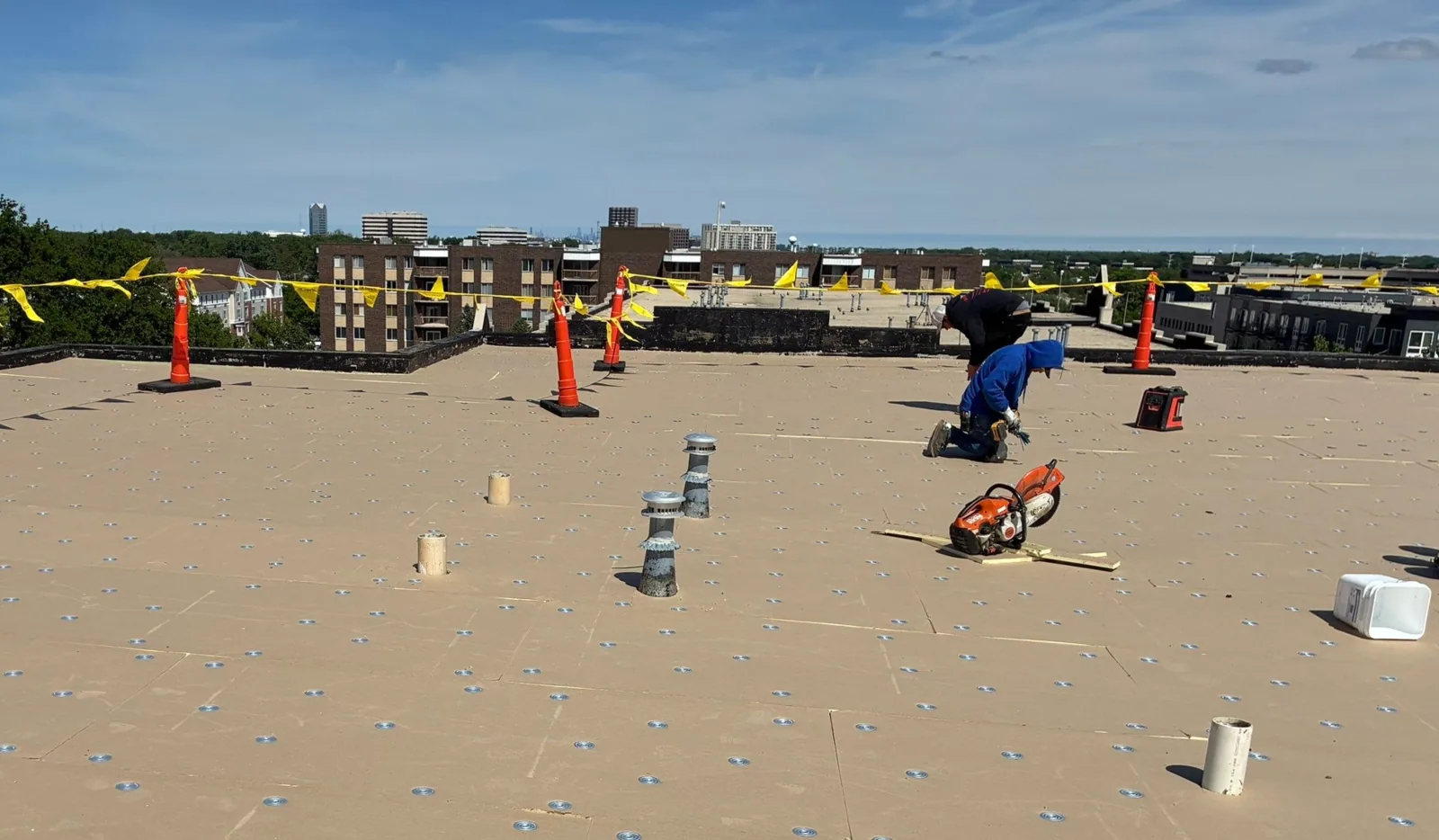
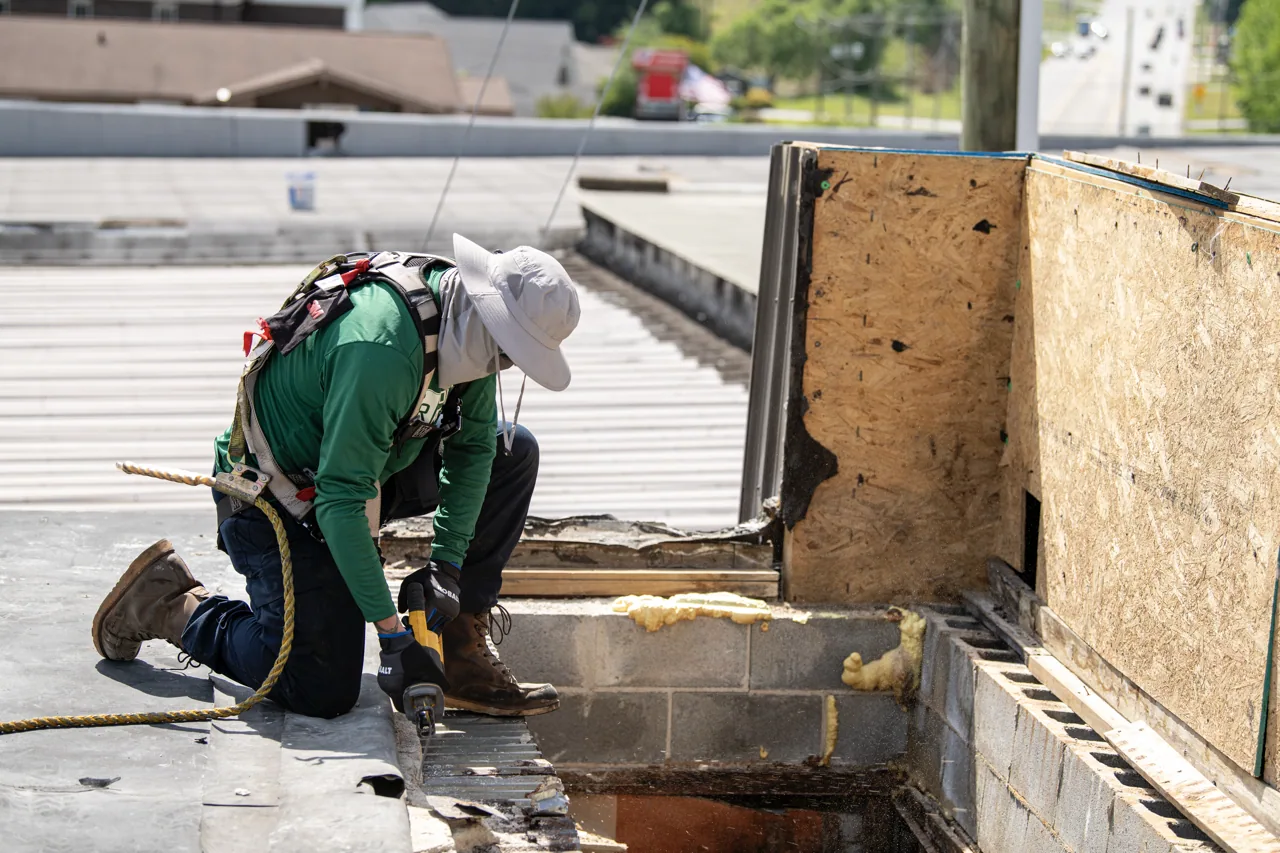
Where a roof is old, the checks lean on aging details. Dried sealant, brittle pipe boots, edge metal that has worked loose and flashings pulled from walls all turn up. Where a roof has been recovered once, the layer count matters, since a deck can carry only so many. A moisture scan finds wet insulation between layers and draws the wet boundary, so the owner sees how large the problem is before spending.
That boundary changes the decision. A small wet corner is a section repair. A wet field is a replacement. Owners deserve to see the shape of it on a diagram, with the core photographs beside it.
Heat on a low valley floor
At about 3,271 feet the valley runs warm. Cottonwood, the neighboring city, averages July highs near 101 degrees, and the sun does more of the aging here than frost does. A dark sheet loses plasticizer. A coating thins. A lap draws back from a wall.
Air conditioners sit on most roofs, and their condensate has to go somewhere. A line that ends on the membrane drips in one spot all summer and leaves a stain, then a soft place. Lines are traced to their ends and piped to a drain where needed. Walk pads go under the routes technicians use, since boots on a hot, soft sheet scuff it quickly.
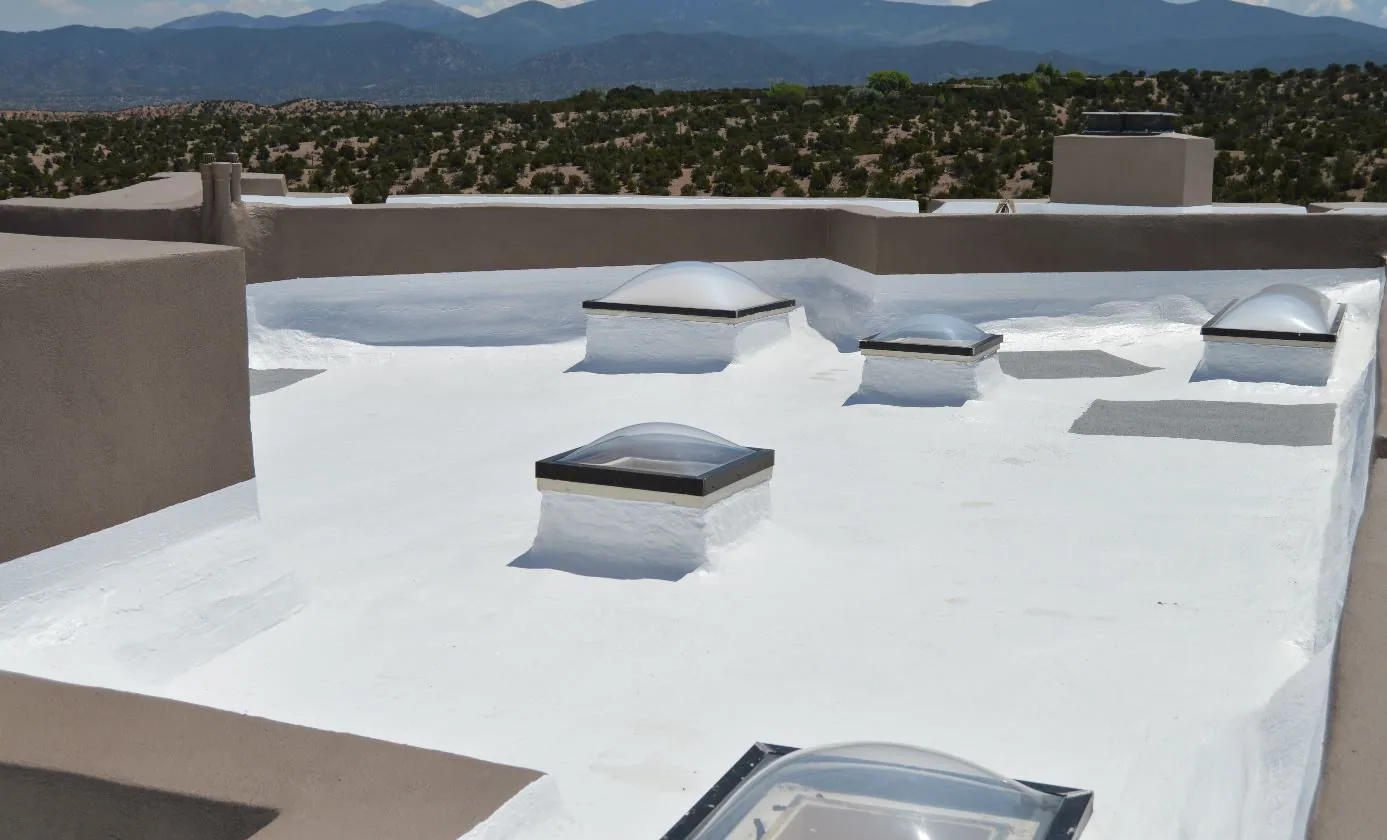
Surface temperature drives a choice here. A reflective coating over a dry, sound roof cools the sheet and covers small cracks, and a coating restoration costs a fraction of a tear-off, though it only works when cores come back dry.
Monsoon cells and drain screens
The monsoon season runs from July to September, and cells reach the Verde Valley as gust fronts and cloudbursts. Pea-sized hail fell on Prescott Valley on July 20, 2026, a reminder of how little warning a cell gives. A screen packed with leaves turns a heavy shower into a pond on a low-slope roof.
Outlets are cleared before July and checked after the first big cell. Each screen is photographed before and after, and the dated pictures answer a later question about whether the roof was kept up. Roofs with no screens get them, since a screen is the cheapest protection a drain has. After a storm, edge metal gets a tug test and flashings are pressed, because wind-driven rain finds a loose edge first. Any bruise left by hail is marked and photographed, so a claim, if one follows, rests on a dated record.
Options and cost drivers
The choices are few. A worn surface over a sound, dry roof can be coated. A handful of failed details can be repaired. Soaked insulation means replacement. Cost follows area, insulation condition and penetration count, and access matters when a clinic entrance is the only place a lift can stand.
A planned commercial roof repair bundles drains, seams and flashings into one visit, which keeps mobilization from eating a small budget. A recover fits only a dry roof with a sound deck, and a core confirms it before anyone orders material.
Records help every choice. One file with the sheet, the photographs and the repair list shows a lender, a buyer or an insurer that the roof has been looked after. It also shortens the next survey, because the marks are already on the plan.
Reaching Verde Village
The community sits beside Cottonwood, so owners with buildings in both can ask for one trip. Cottonwood and Clarkdale lie close by, and an active leak jumps the queue for emergency roof repair. The roof plan, the approximate age and any leak history start the file, and the sheet sorts findings into now, soon and watch. Each tier carries photographs, a location on the plan and a price range, so a board or an owner can approve the first tier at once and plan the others for later seasons.
Commercial Roofing Questions
Does a roof over a clinic need special handling?
Yes. Air intakes are covered, hot work stays away from vents and loud steps wait for quiet hours. The office manager approves the schedule, and a posted notice tells patients what to expect. The same habits protect a pharmacy or a small care office.
How old is a roof in a fifty-year-old town?
Housing age says nothing about a commercial roof. Cores and a moisture scan reveal the layers and the condition. Some roofs have been replaced once or twice, and some are original. The sheet records what is found.
Why do condensate lines matter?
Air conditioners run most of the year, and a line that ends on the membrane drips in one spot all summer. That spot becomes a stain, then a soft place, then a leak. Lines are traced and piped to drains.
Should an owner coat or repair a tired roof?
Cores decide. A dry roof with bonded seams can be coated at a fraction of replacement cost. A roof with wet insulation cannot. The sheet shows both prices side by side with the core photographs.
When is the best season for roof work in the valley?
Spring and fall give mild, dry windows. Summer work begins at first light, while the deck is still cool enough to weld and coat, and monsoon afternoons are avoided. Winter mornings can leave frost on a deck, so adhesives wait for a dry surface.
Request a walk-through
Ask for a roof walk in Verde Village. Send the roof age and any leak history. You receive a written findings sheet with photos before any repair is priced.
Request a Roof Assessment
Commercial Roofing Questions
Yes. Air intakes are covered, hot work stays away from vents and loud steps wait for quiet hours. The office manager approves the schedule, and a posted notice tells patients what to expect. The same habits protect a pharmacy or a small care office.
Housing age says nothing about a commercial roof. Cores and a moisture scan reveal the layers and the condition. Some roofs have been replaced once or twice, and some are original. The sheet records what is found.
Air conditioners run most of the year, and a line that ends on the membrane drips in one spot all summer. That spot becomes a stain, then a soft place, then a leak. Lines are traced and piped to drains.
Cores decide. A dry roof with bonded seams can be coated at a fraction of replacement cost. A roof with wet insulation cannot. The sheet shows both prices side by side with the core photographs.
Spring and fall give mild, dry windows. Summer work begins at first light, while the deck is still cool enough to weld and coat, and monsoon afternoons are avoided. Winter mornings can leave frost on a deck, so adhesives wait for a dry surface.