Sika Sarnafil Roofing Systems in Prescott Valley, AZ
Seam probes, flashing checks and repairs for Sika Sarnafil PVC-based roofs on restaurants and retail in Prescott Valley, AZ, with written findings and photos.
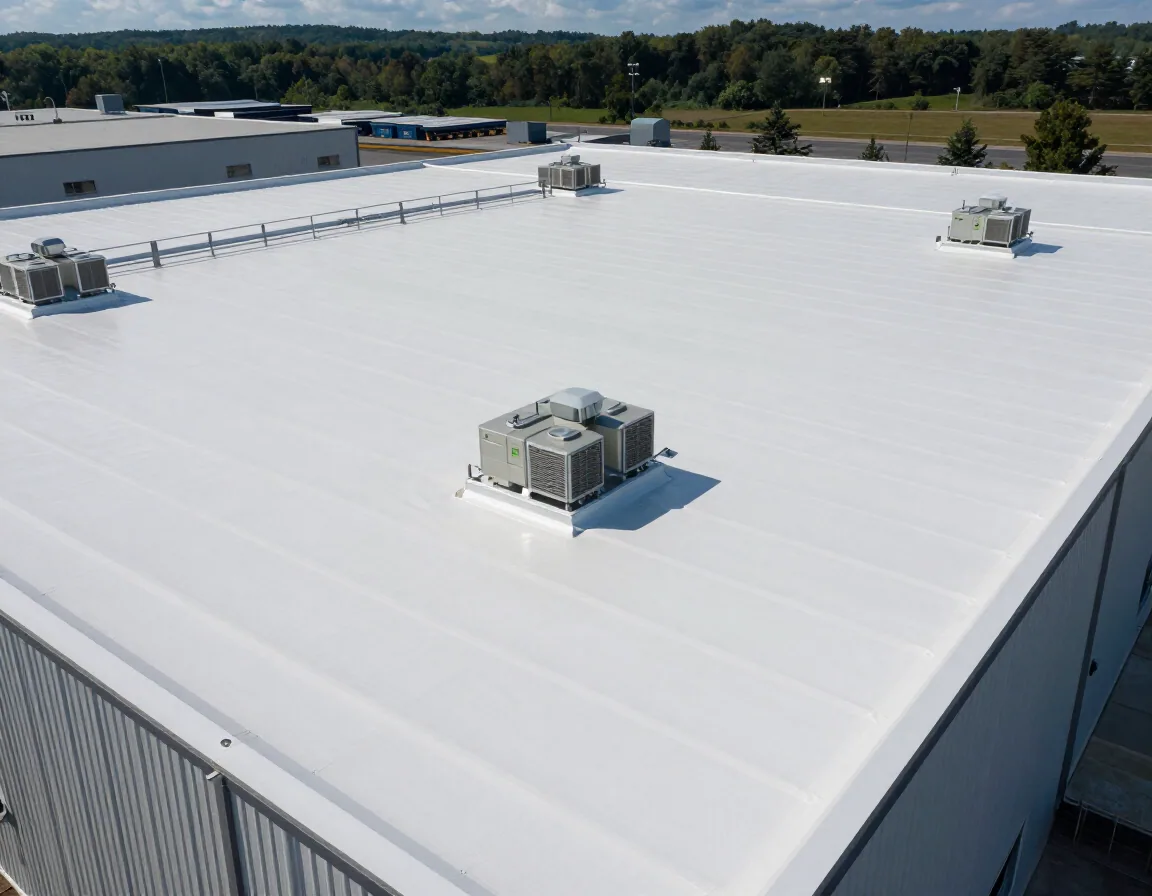
Look at the grease. Near a restaurant exhaust fan, the roof surface turns dark and slick. Some membranes soften under that film. PVC-based sheets resist it. Sika Sarnafil makes thermoplastic roofing of that type, with welded seams and matching flashings. In Prescott Valley, AZ, that matters for kitchens, food service and any roof with exhaust or oils.
We install, repair and maintain thermoplastic systems. We walk the roof, probe the welds and photograph what we find. You receive a written sheet before any repair is priced. The sheet lists the sheet type, the seam method and the exposure. It then ranks each finding as repair now, repair this season or watch.
Why PVC suits some roofs
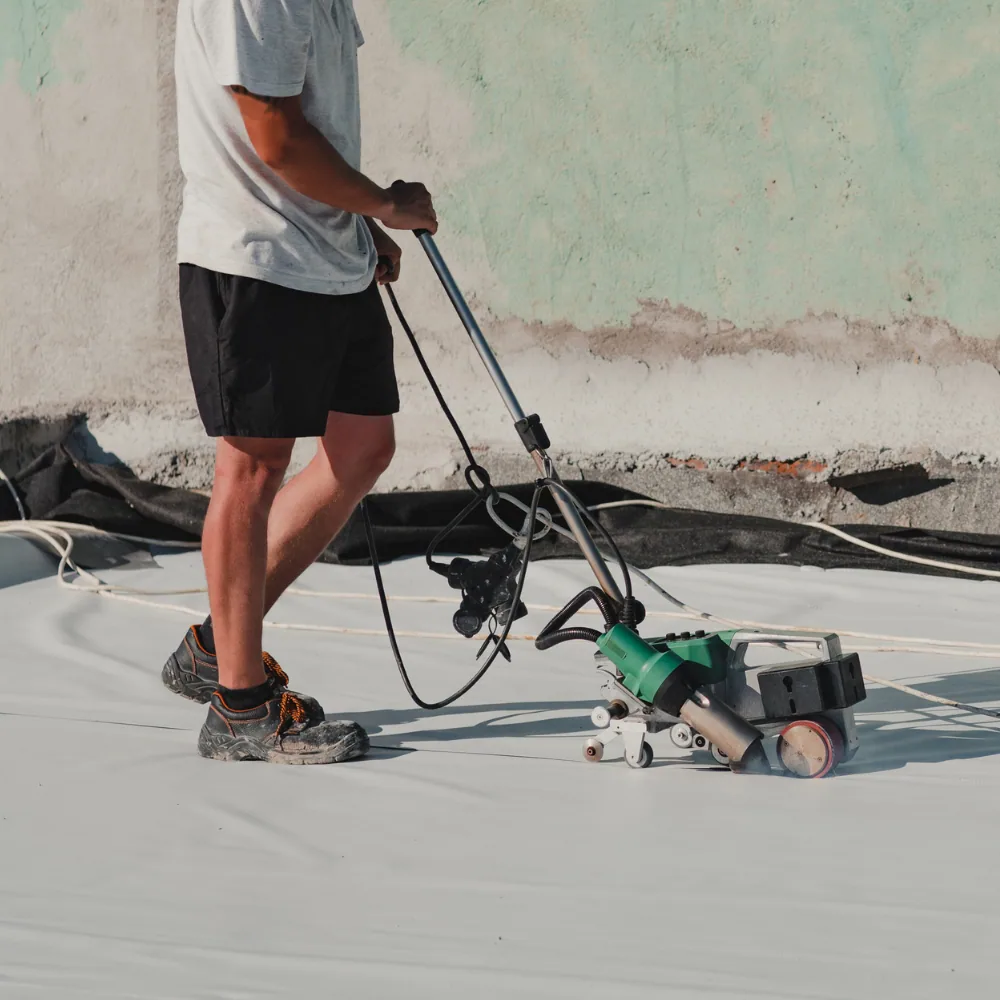
A PVC sheet keeps its flexibility through plasticizers in the compound. Its seams are welded with hot air, so they fuse into one layer. It sheds many contaminants that soften other sheets, such as fats, oils and some vapors.
That has a cost. PVC usually costs more than other single-ply sheets. It pays back where the building gives the sheet something to resist. A roof with no exhaust and no chemicals may not need it. White TPO may do the same work for less. We say so when it is true, and the choice also affects a commercial roof replacement budget. The comparison puts installed cost, expected service and repair path side by side, so the extra cost of PVC can be read against the years it is expected to protect. If the building has a kitchen, a food process or a fume source, the numbers usually favor PVC. If it has none, they often do not.
What restaurant roofs show
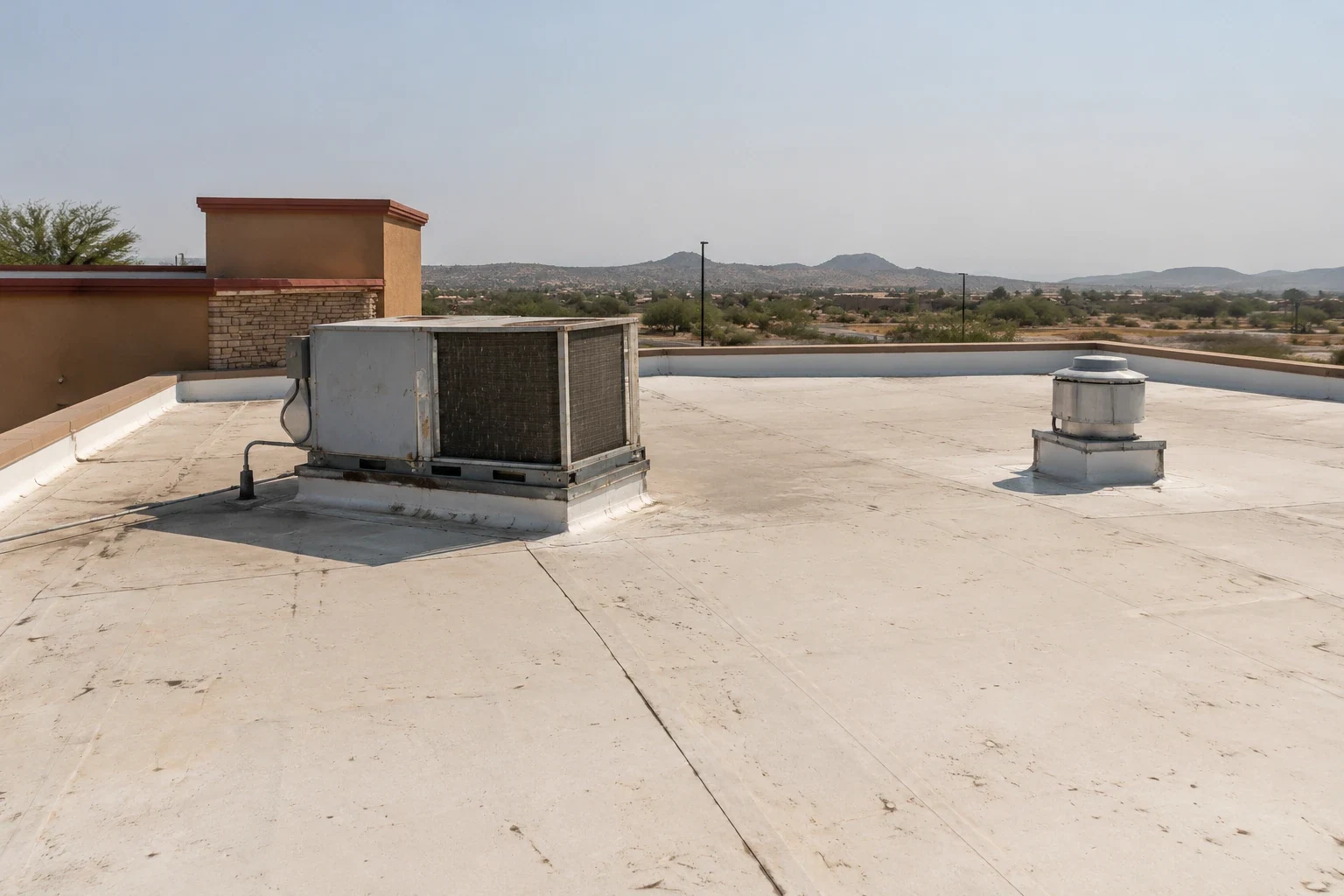
The Crossroads, a retail power center in Prescott Valley, includes recent openings from national restaurant and apparel chains. The downtown Entertainment District adds restaurants beside a multi-screen theater and retail. Kitchens vent through rooftop fans, and grease settles around them.
We look at the roof near each fan. We check the grease trap, the curb flashing and the membrane for soft spots and swelling. Then we trace the drains downstream. Grease and debris can clog a screen. A clogged scupper after a monsoon cell turns a rain into standing water. Our restaurant roofing plan includes a cleaning interval for the roof as well as the kitchen. Fan housings, grease containers and exhaust ducts can all drip. A catch pan that overflows onto the sheet is a classic culprit. We photograph it and tell the tenant what to change. The fix is a pan, a cleaning schedule or a short duct repair.
What freeze does to a PVC sheet
Frost comes to the Prescott area around late October and stays into early May, and daily swings average almost 30 degrees at 5,100 feet. Cold makes any sheet stiff.
As plasticizers migrate over the years, PVC loses flexibility. A stiff sheet draws away from walls and curbs and can crack at edges. We look for shrinkage at every termination. A taut edge or a visible gap is a sign. When we see early pull-back, we price a detail retrofit before winter. A small fix in October prevents a leak in the first thaw. We also check the flashing laps at every wall. These are the places where the sheet changes direction, and shrinkage shows first there. A retrofit strip, welded over the old termination and fastened at the top edge, closes the gap. It is a short job. It needs a dry day and a clean surface.
What monsoon cells do
July and August are the wet months. The July 20, 2026 storm combined heavy rain, strong wind and pea-sized hail, and signals and trees fell. A video from May 6, 2025 shows a small tornado north of town tearing shingles from a roof.
Weather reports are context. Only a walk shows what your deck took. After a cell, we clear drain screens and probe welds near walls. We check edge metal and look for punctures. A PVC sheet is tough, but it can puncture under wind-blown debris or from a dropped tool. We mark each puncture and patch it by welding. The photo goes in the file. Wind-blown gravel from a neighboring lot, a branch or a loose cap can scratch or cut a sheet. We look for those marks along the upwind edges first. A small puncture is a quick weld. A long scrape needs a cover strip. The sheet shows the size and the location, so you can see the pattern.
How we repair a welded seam
The area is cleaned and the surface prepped. Then we hot-air weld a cover strip or patch. A weld needs a clean, dry sheet. Older PVC may need extra prep, and we test the weld on a small area first.
Each repair is located on the plan. We photograph it before and after. A seam that reopens gets no second patch. When a failure repeats, ponding, movement or wet insulation is usually behind it, and an infrared moisture survey outlines the wet areas without opening the roof. Then the real fix can be priced. A second look at drains and scuppers often explains a repeat failure too. Water that sits at a seam for days will find it. Clearing the path is a cheap step that makes every other repair last longer.
What stays in the file
The file records sheet type, seam method, attachment and repair history, plus dated photos and any warranty papers. Where a warranty limits repairs to approved materials, the material used is noted.
A portfolio reads on one scale. A Duro-Last roof and a Sika Sarnafil roof read in the same fields, and a Versico roof joins them on the same page. For retail along Glassford Hill Road or SR 69, the file also lists rooftop equipment and the date of the last walk. Each entry carries a review date and the open items, priced as ranges. That list lets a property manager show a lender or an owner what has been done and what is coming, and it puts the roof on the same schedule as the rest of the building.
Commercial Roofing Questions
Does PVC hold up better than TPO near a kitchen?
Where grease or oils reach the roof, yes. PVC resists them better. Where no exhaust or chemicals are present, a white TPO sheet can give similar reflectance for less. We recommend by the exposure.
How are welded seams repaired?
We clean the area, prepare the surface and hot-air weld a cover strip or patch. We test the weld on a small area first, then photograph the repair and log its location.
Can PVC go over an old roof?
Sometimes, if the old layers are dry and sound. A moisture survey and a core cut confirm it. Wet insulation under a new sheet shortens its life.
How does shrinkage show up at a wall?
The sheet pulls back from the base of the wall or curb. You see a taut edge or a gap. We catch it on the photo set and price a detail retrofit.
What should a facility director send to schedule a walk?
The building address, a list of rooftop equipment and any kitchen exhaust, along with past reports and warranty papers, start the process. Photos and findings come first, then pricing. A site photo of each exhaust fan and its grease container also speeds the first walk.
Request a walk-through
Ask for a roof walk. We will probe the welds, photograph every finding and hand you a written sheet before any repair is priced.
Request a Roof Assessment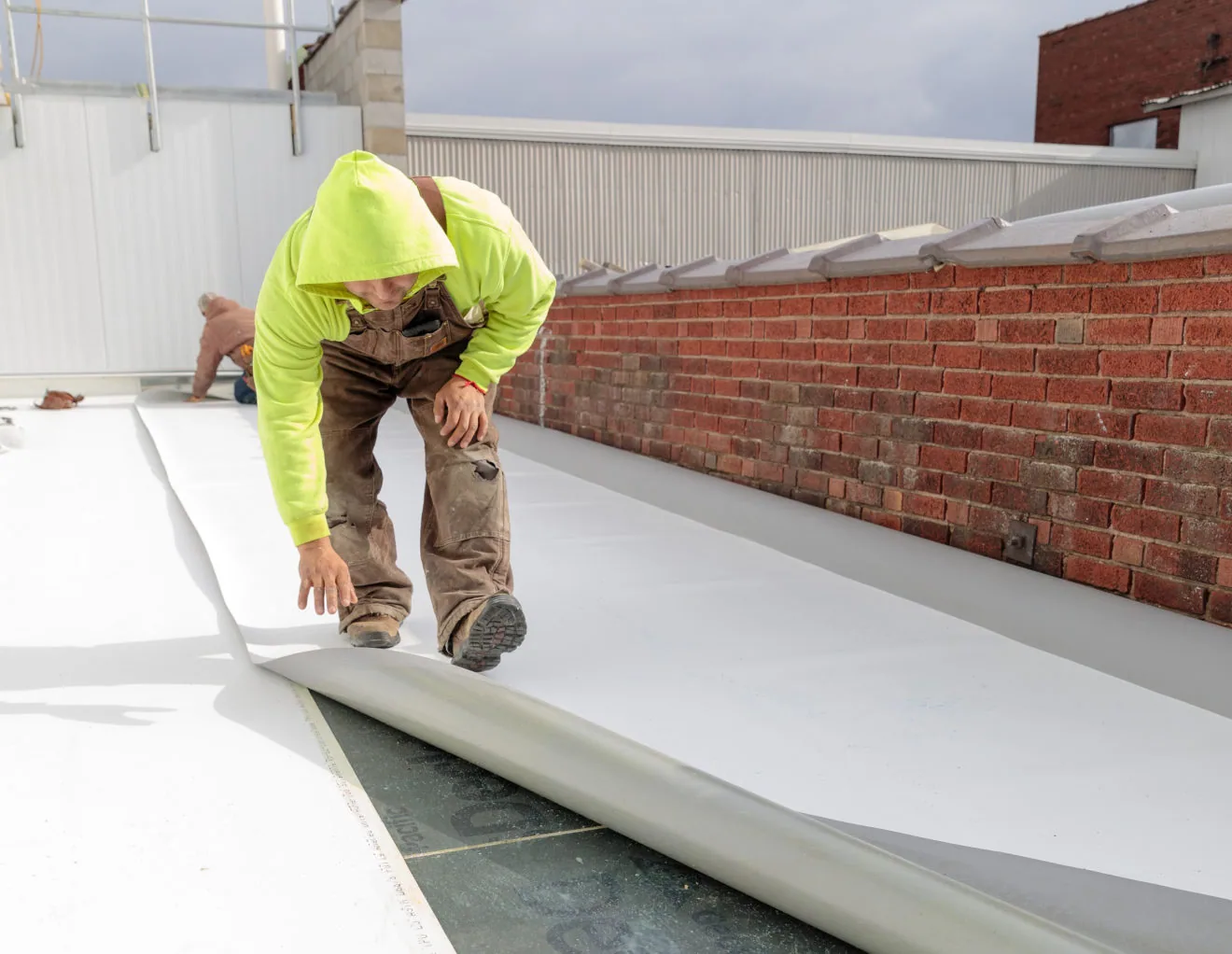
Commercial Roofing Questions
Where grease or oils reach the roof, yes. PVC resists them better. Where no exhaust or chemicals are present, a white TPO sheet can give similar reflectance for less. We recommend by the exposure.
We clean the area, prepare the surface and hot-air weld a cover strip or patch. We test the weld on a small area first, then photograph the repair and log its location.
Sometimes, if the old layers are dry and sound. A moisture survey and a core cut confirm it. Wet insulation under a new sheet shortens its life.
The sheet pulls back from the base of the wall or curb. You see a taut edge or a gap. We catch it on the photo set and price a detail retrofit.
The building address, a list of rooftop equipment and any kitchen exhaust, along with past reports and warranty papers, start the process. Photos and findings come first, then pricing. A site photo of each exhaust fan and its grease container also speeds the first walk.