Commercial Roofing in Kirkland, AZ
Commercial roof inspection, repair and replacement in Kirkland, AZ, a small community near the Weaver Mountains, with a written findings sheet before pricing.
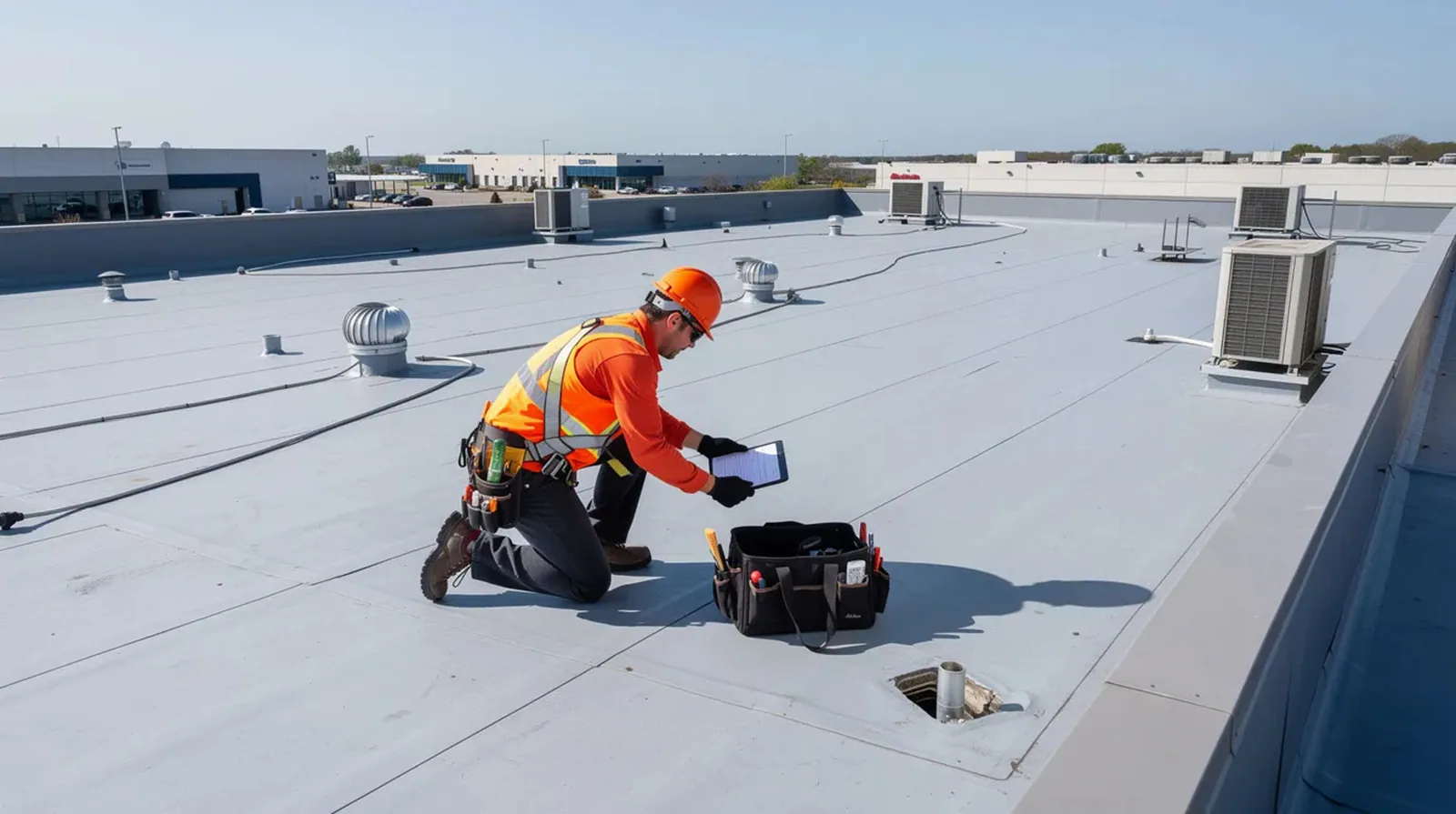
Find the nearest hill and ask what wind does around it. Kirkland, AZ is an unincorporated community near the Weaver Mountains, southwest of Prescott, at about 3,931 feet, and the BNSF Railway Phoenix Subdivision runs through it. Yavapai County Route 15 runs east and west from Hillside to State Route 89 at Wilhoit, and Route 10 runs north toward Prescott. A roof near a mountain face meets wind that bends around the slope, and a roof near a rail line meets vibration and dust. Both get seams probed one by one and findings photographed, and nothing is priced until the written sheet is in hand.
Wind near the mountains
Wind speeds up where air is forced over and around high ground. A building near a range can see gusts from odd directions, and edges and corners take the uplift. A loose coping or a lifted edge cap is the first sign.
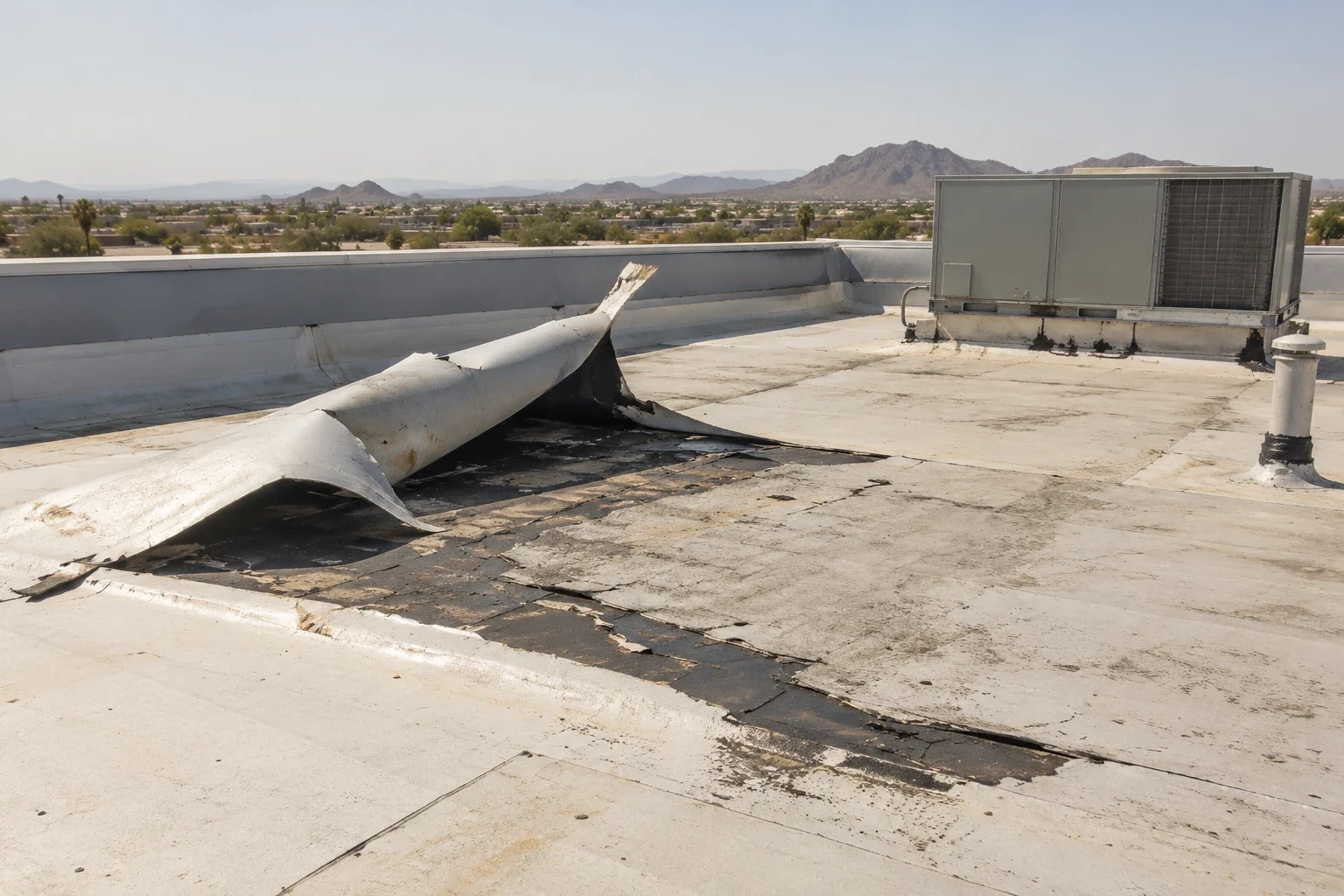
The perimeter gets checked first. Edge metal is pressed, fastening is tested and gaps are photographed. A wind damage repair that starts at the edge is small, and one that starts mid-field is not.
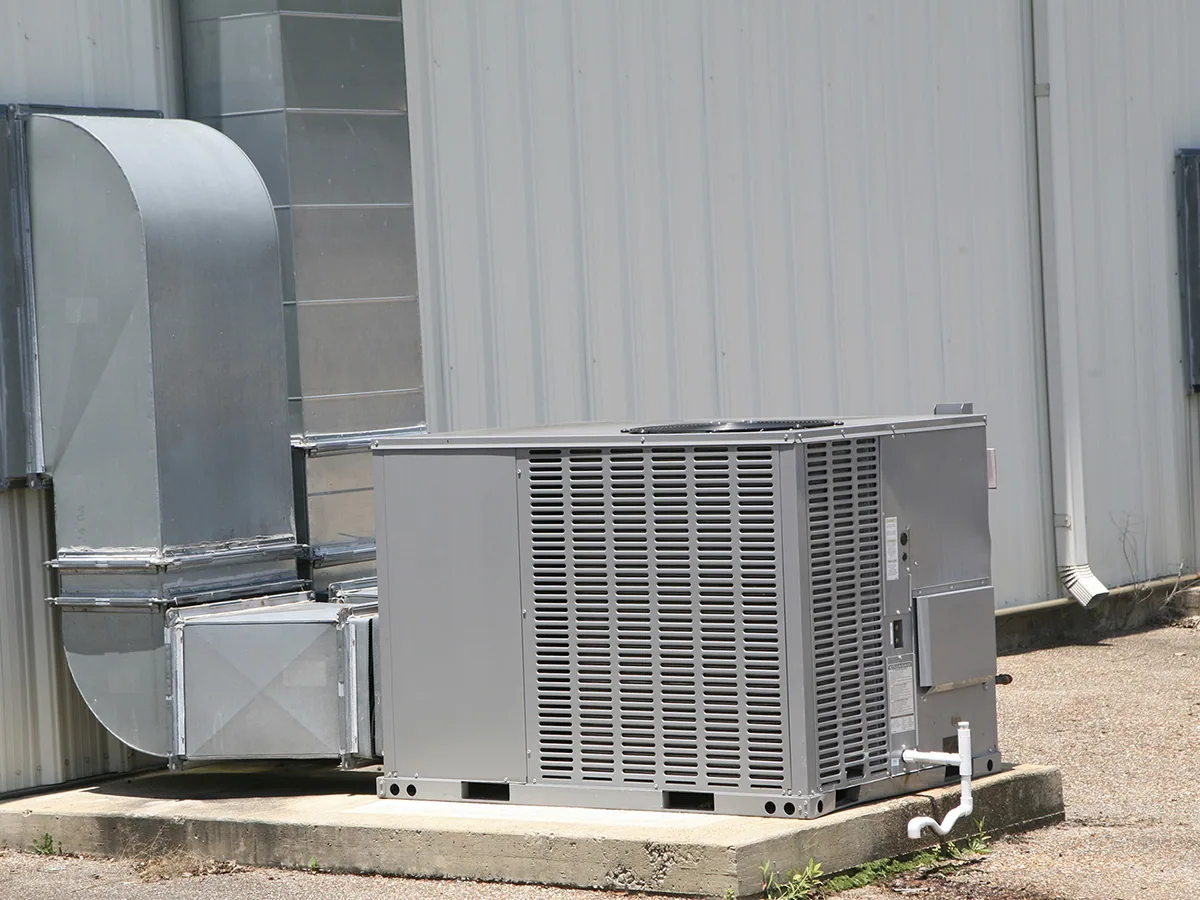
Rooftop equipment faces the same wind. Covers, screens and ductwork can lift and slap the membrane. Tie-downs and panel latches are checked on each unit, and the curb corners are pressed. A unit curb that rocks in a gust works the seam below it, and snug fasteners with fresh sealant cost little.
Roofs near a rail line
A railway brings vibration, dust and diesel soot. Which buildings sit near the track is something confirmed on site. On a roof close to one, soot darkens a reflective surface, dust packs drains, and vibration works fasteners loose and shakes sealant out of laps.
The walk clears and photographs drains, checks fastener pull-out on metal panels and probes laps on membrane roofs. A lap that lifts near a building edge often traces to vibration, and a short repair with a note in the file solves it. If the same lap lifts twice, the sheet looks below it for movement, wet insulation or a soft deck, since a third patch only hides the cause.
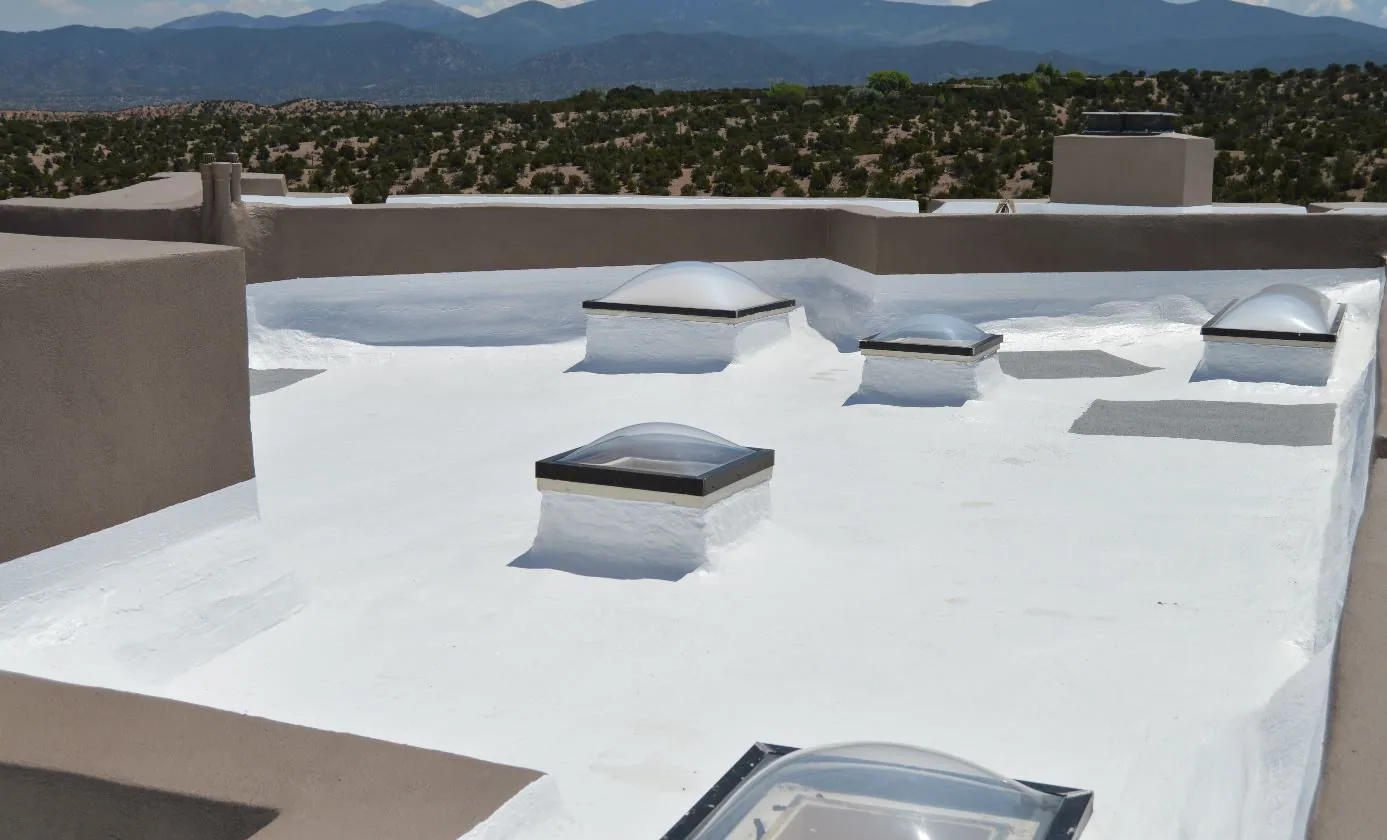
Soot and dust change the surface. A coating that was white at installation turns gray, and a gray roof runs hotter. Photographs are taken at the same spots each visit, so the change shows. A wash after the monsoon restores much of the color. Where a coating has thinned, film thickness is measured at fixed test spots and the recoat is planned from the numbers, not from the calendar.
A lower, warmer site
At 3,931 feet, Kirkland sits well below Prescott Valley's 5,100 feet. Frost matters less and sun matters more. Sealants chalk, coatings thin and dark sheets shrink back from walls. A flashing under tension tears at a corner first, so the corners get pressed on every visit and any gap is measured and written down.
Heat also hurts equipment curbs. Metal expands faster than the roof beside it, so fasteners work loose over a summer. Each section of edge metal gets a tug, loose ones are marked and missing fasteners are counted. Resetting fasteners and resealing joints is routine work, and it costs a fraction of what a peeled sheet costs after a gust.
Walk pads go along the routes technicians use, since boots on a sun-softened sheet scuff it quickly. The pad costs little, and a puncture over a ceiling costs a great deal more.
Getting to the building
County roads set the approach. A truck that cannot turn, a gate that sticks or a crossing that holds traffic changes how material arrives. The first visit walks the approach, notes where a lift can stand and writes the delivery plan before any price goes out.
A small crew that travels books the first clear stretch of weather and groups repairs into a single trip. Spring and fall give the widest windows. Monsoon cells run from July to September, so the roof is dried in section by section and a tarp stays staged. If a cell builds, the crew stands down and the hold goes in the log with a photograph and a date.
Options and cost drivers
Reflective coating can restore a sound roof whose surface has worn. Bad details mean repair, and soaked insulation means replacement. In a small community, travel and mobilization form a big slice of the price, so grouping repairs saves money.
A coating restoration costs well under a tear-off but needs a dry roof. A metal roof retrofit is another path for exposed-fastener panels. Cores and a moisture scan come before either recommendation. On a larger building such as a warehouse, the field is wide and the drains are few, so a single clog matters. On a small shop, the details carry the roof.
Storms and records
Monsoon storms reach the whole region between July and September. The storm that crossed Prescott Valley on July 20, 2026 carried heavy rain, strong wind and pea-sized hail, proof of how little notice a cell gives. Hail bruises, lifted flashings and packed drains found after a storm go on the plan with dated photographs.
A dent over soft insulation may not leak this year, but it weakens the sheet. Dents are pressed, mapped on a plan and checked again in six months. A hail record also supports an insurance review, since it shows the date and the pattern before any repair changed the roof.
What to do first
The roof plan, the roof's age and any leak history start the file. Skull Valley and Prescott lie in either direction by road, which lets an owner with several buildings book a single trip. A commercial roof inspection sets the baseline, and a live leak goes to emergency roof repair first.
Commercial Roofing Questions
How do I know if wind is lifting my roof edge?
Look for a rattling cap, a gap at the coping or a ripple in the membrane near the edge. After a gust, check from the ground. A professional edge check each year and after any major wind is worth having, with this year's photographs compared against last year's, so a cap that moves a little more each season is caught before a gust takes it.
Does vibration really loosen a roof?
It can work screws out of metal panels and shake sealant from laps over time. Fasteners and laps are probed on a walk and any pattern is noted. A check each spring and fall helps, and larger screws with fresh sealant are the usual fix.
Should exposed-fastener metal be retrofitted?
A retrofit earns a price when the old roof is dry and the framing can take the load. A moisture scan and cores settle both points before any number goes out, and the sheet sets the retrofit beside the cost of replacement.
Does a remote location change the price?
A little. Travel time and delivery trips add cost. Grouping repairs into one visit and writing the delivery plan before pricing keeps it down, and the quote shows the travel as its own line.
What will the written sheet show me?
Findings sit on the roof plan with a photograph and a rank, and the drains, penetrations and equipment are listed beside them. It arrives before any price. Keep it with the building papers, and the next walk compares the same marks so you can see what changed.
Request a walk-through
Ask for a roof walk in Kirkland. Send the roof age and any leak history. You receive a written findings sheet with photos before any repair is priced.
Request a Roof Assessment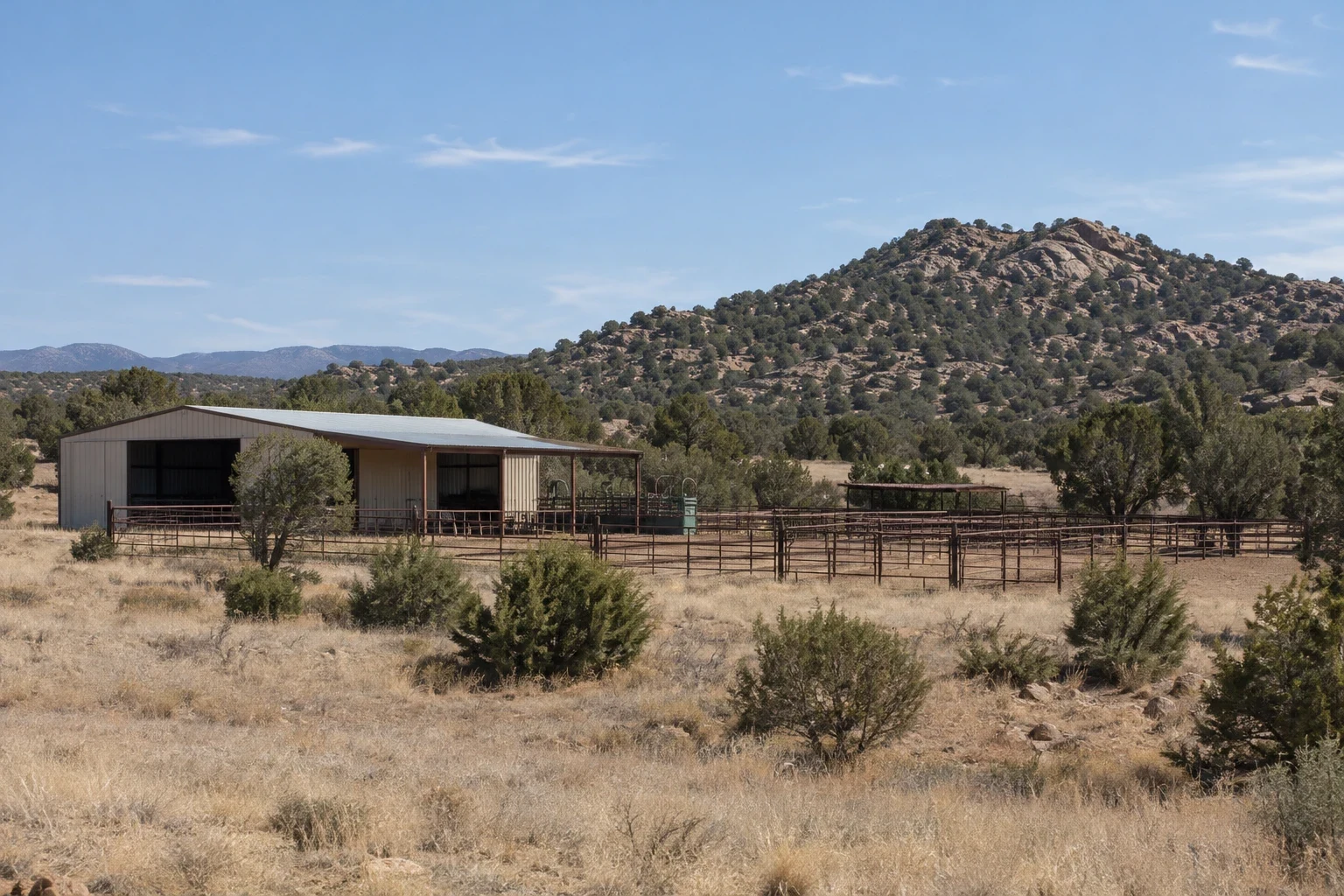
Commercial Roofing Questions
Look for a rattling cap, a gap at the coping or a ripple in the membrane near the edge. After a gust, check from the ground. A professional edge check each year and after any major wind is worth having, with this year's photographs compared against last year's, so a cap that moves a little more each season is caught before a gust takes it.
It can work screws out of metal panels and shake sealant from laps over time. Fasteners and laps are probed on a walk and any pattern is noted. A check each spring and fall helps, and larger screws with fresh sealant are the usual fix.
A retrofit earns a price when the old roof is dry and the framing can take the load. A moisture scan and cores settle both points before any number goes out, and the sheet sets the retrofit beside the cost of replacement.
A little. Travel time and delivery trips add cost. Grouping repairs into one visit and writing the delivery plan before pricing keeps it down, and the quote shows the travel as its own line.
Findings sit on the roof plan with a photograph and a rank, and the drains, penetrations and equipment are listed beside them. It arrives before any price. Keep it with the building papers, and the next walk compares the same marks so you can see what changed.