Commercial Roofing in Skull Valley, AZ
Commercial roof inspection, repair and replacement in Skull Valley, AZ for small public, church and commercial buildings, with a written findings sheet first.
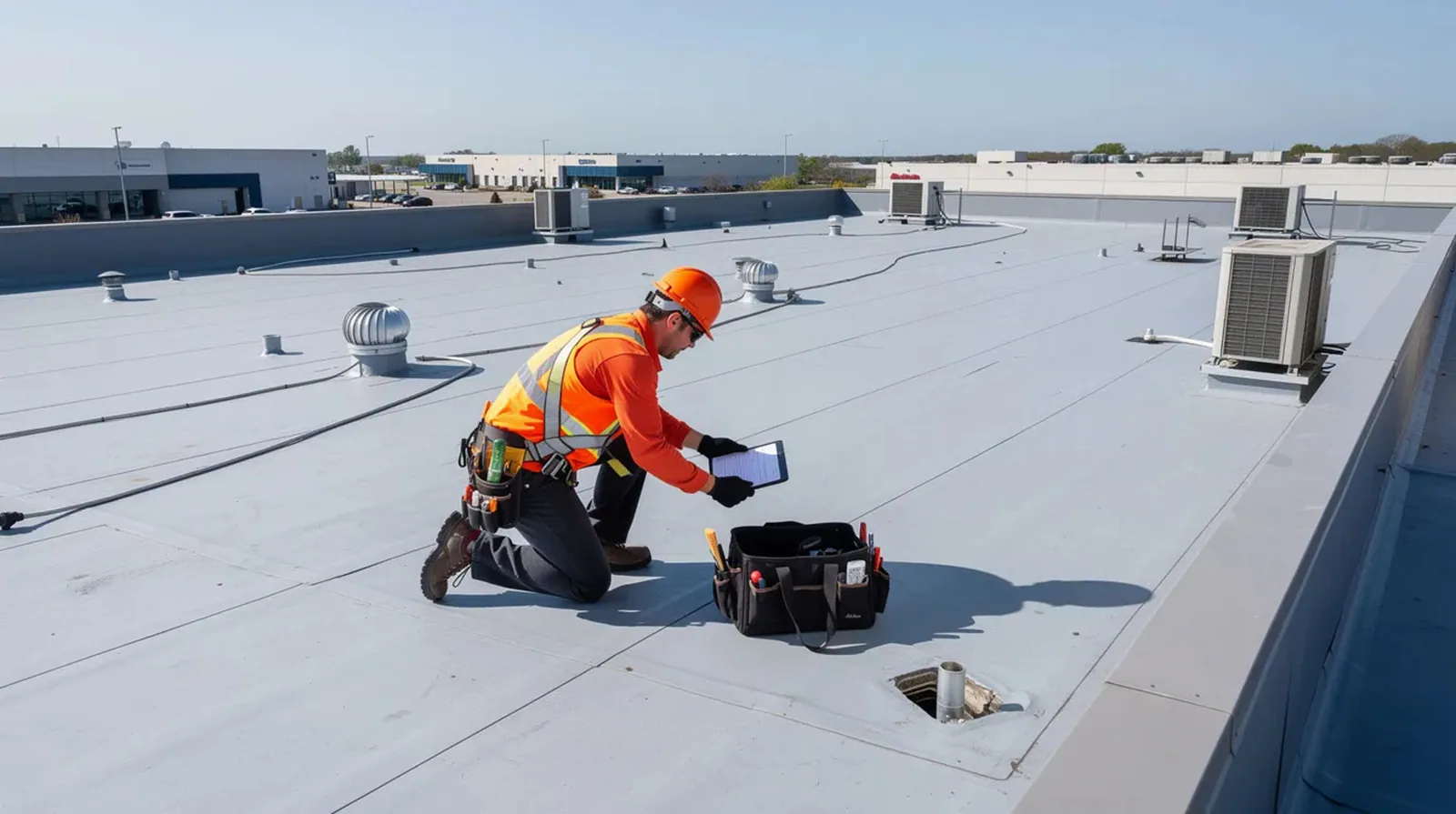
Count the buildings the community actually uses. Skull Valley, AZ is an unincorporated town about 17 miles west of Prescott at 4,265 feet, and among its public buildings are the Skull Valley Historical Society museum and a Bible church. The Skull Valley Elementary School District serves more than 800 people. Those are small institutional roofs, the kind that serve a community on a tight budget and a long calendar. Each gets a walk, a probe along every seam and a photograph of every finding, and the written sheet reaches the board before any price does.
Small institutional roofs
A museum, a church hall or a community building tends to have a modest roof, a handful of penetrations and a small staff in charge. Repairs for a building like that may come from donations, grants or a small budget, and a surprise repair bill can be a hardship.
So the aim is a clear plan, not a big one. The sheet ranks each finding as repair now, repair soon or watch, and it prices each tier. A board can fund the first tier this year and plan the second for next. Photographs make the case when the board meets.
Records help a small organization over the years. Board members change. A roof file that holds the photographs, the sheet and the invoices means the next treasurer does not start from zero. Dated photographs show how the roof has aged, and when a grant application asks for the condition of the building, the file answers it.
A museum holds objects that cannot get wet, and a church hall holds chairs, instruments and records. The sheet names which rooms sit under which roof section, so a repair over a collection or a storage room moves to the top of the list. A temporary cover can go on the same day while the permanent work waits for a grant or a vote.
Older buildings and their details
A historical society museum may sit in an older building, and the owner knows more about it than a stranger can guess. Older buildings can have steep roofs, shingles, tile, metal or a flat section behind a parapet. Low-slope and metal systems are our work. For steep or historic roofs, the right specialist leads, and the sheet says so.
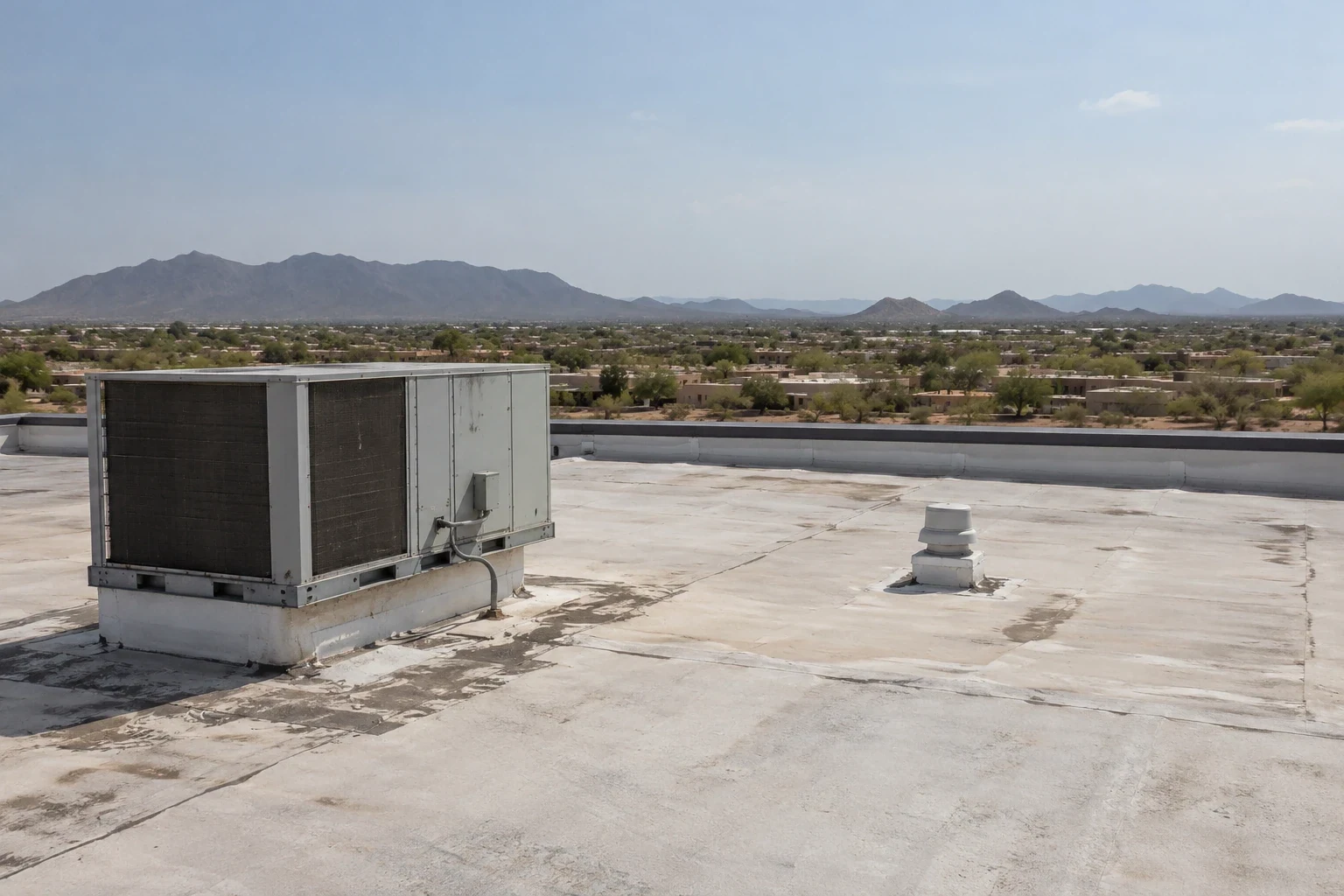
Where the roof is low-slope or metal, the details older buildings often have get checked: shallow drains, soft parapets, rusted flashing and layers of old patches. Each one gets a photograph and a mark.
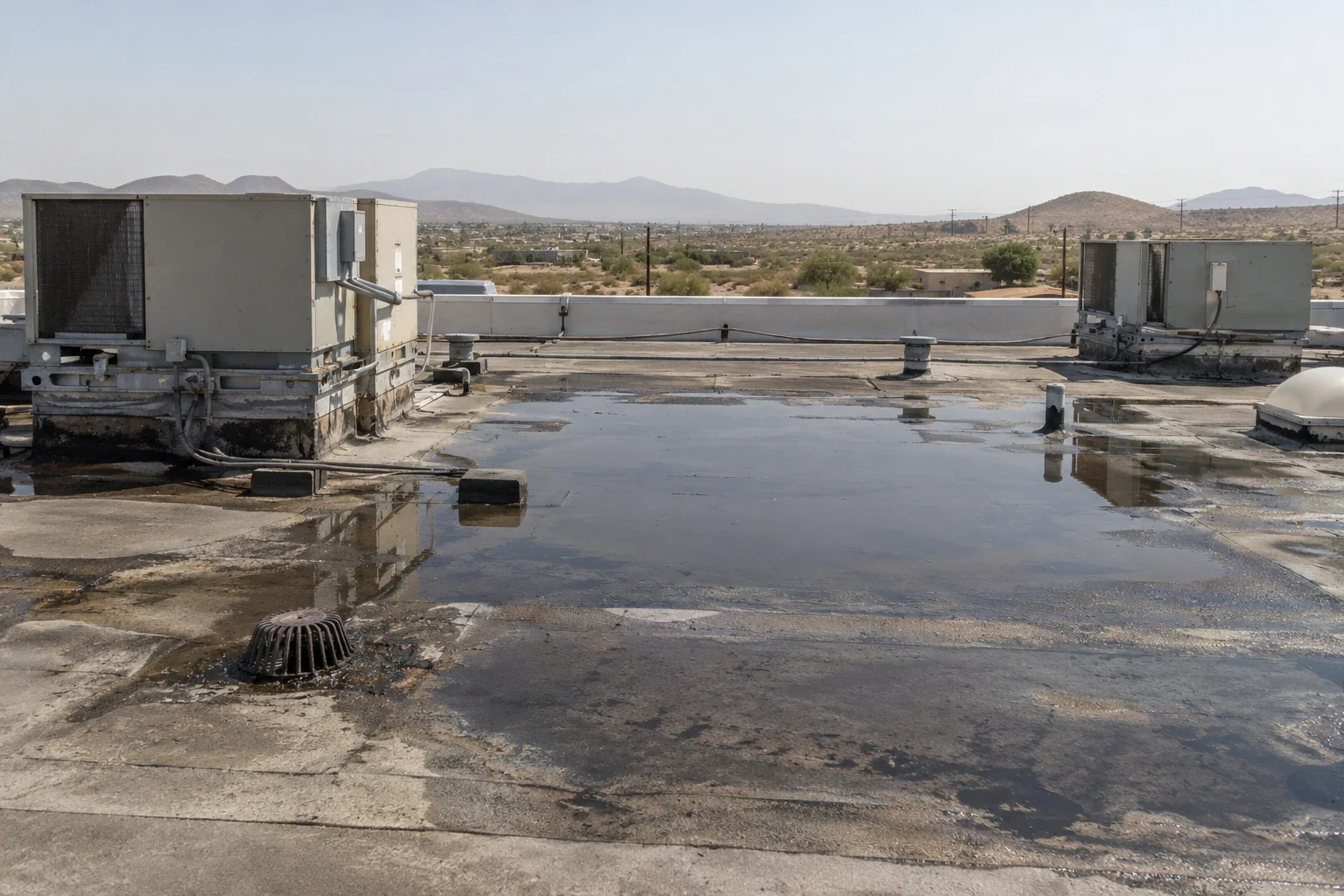
Shallow drains clog first. A drain that sits in a settled sump holds water after a storm and leaves a ponding line. The drain is cleared, the pond photographed and its distance from the outlet measured. A ponding water repair may be as simple as a new drain bowl or a short taper. Soft parapets and cracked caps let water behind the wall, so those joints are pressed and photographed too.
A school district and a church hall
An elementary school district adds roofs with their own calendar. Classrooms need dry ceilings by the first day, and work that lands in a summer break must finish before the break ends. A church hall has a calendar of its own, with services and events that set the quiet hours.
A church roof often combines a steep section with a low-slope hall, and the two age differently. Each is priced on its own line, so a congregation can replace the worse roof first.
A drone roof inspection can reach a steep or fragile section without anyone walking on it, and it records the whole surface in the same frame each year so changes show.
Options and cost drivers
Condition sorts the choices. Where the surface is worn and the layers beneath are dry, a coating may do. Where a few details have failed, repair is the answer. Where insulation is soaked, the roof needs replacing. For a small building, travel and mobilization take a big slice of the price, and one visit that covers every repair saves the most. Skull Valley is out of the way, and the crew's drive time goes in the quote as its own line.
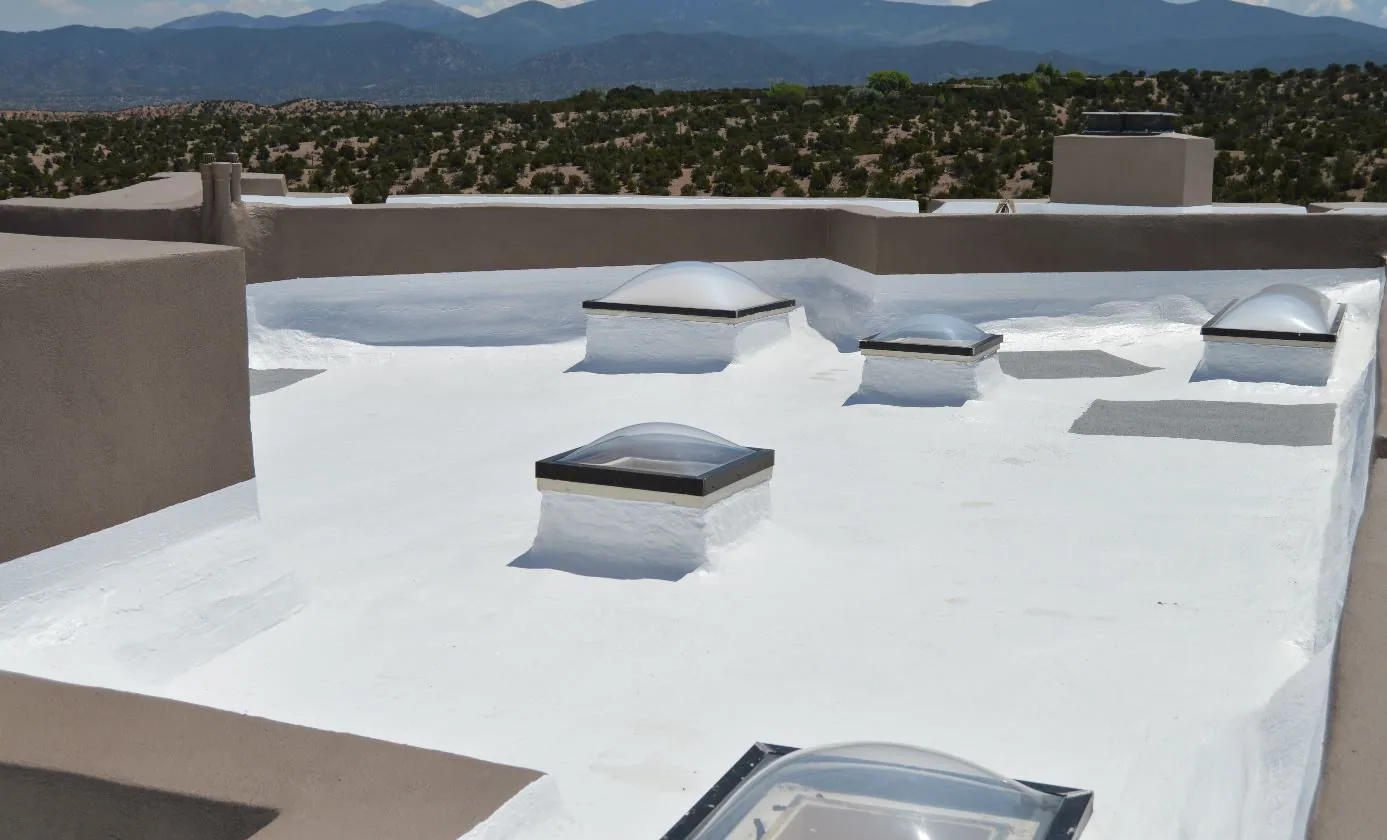
A coating restoration can stretch a tired roof by years at a fraction of replacement. It needs a dry roof, so a core and a moisture scan come first. The core also shows how many layers lie below and whether the deck is sound, which decides whether the coat will bond and last.
Access is a quiet cost. A small building may have a single ladder, a tight lot or a neighbor's fence close to the wall. The first visit walks the access, notes the staging spot and writes the plan before any price is given.
Weather for a small crew
Spring and fall give the widest windows, with monsoon cells running July to September and frost on a deck some cold mornings later in the year. The first clear stretch gets booked, a tarp stays staged for a cell that builds, and any weather pause is recorded with a date and a picture, so the board sees what happened and why.
A dent in soft insulation may stay dry this year and still weaken the sheet for the next. Dents get pressed, mapped on the plan and revisited in six months, and the dated record helps a board decide and an insurer review. Wind matters on an open rural lot as well, so each length of edge metal, coping and cap is pulled by hand to see whether it moves.
What to send first
Whatever the board has on hand (photographs, a sketch, a repair history) is enough to open the file. Prescott and Kirkland lie on either side by road, which lets owners in more than one place share a trip. An active leak takes the emergency roof repair line, and the permanent scope follows. A commercial roof inspection sets the baseline.
Commercial Roofing Questions
Can a small board afford a full roof inspection?
Usually the walk is the smallest part of the budget, and it saves money by ranking repairs. Fund the repair-now tier first and plan the rest. The photographs help a board explain the decision to members and donors, and the sheet is kept simple for that purpose.
What if the roof is steep or historic?
Low-slope and metal systems are our work. For steep, tile, slate or shingle roofs, a specialist should lead, and a preservation review may apply. Identify the roof type first. If a steep roof turns up, the sheet says so and suggests who to call.
How do I know whether to repair or replace?
The cost of the repairs on the sheet is compared with the roof's remaining condition. Dry insulation with isolated defects favors repair, while widespread water makes patches a delay. The photographs show which case you have.
Is a drive out to the valley part of the price?
Somewhat. Drive time and delivery trips cost money, so repairs are batched into one visit and the delivery plan is drafted ahead of the quote. The quote carries travel as its own line, which lets the board see exactly what it is.
What do we get after the walk?
A written findings sheet with photographs, each finding placed on the roof plan and ranked by tier. Keep it with the building's insurance papers and share it at the next board meeting. If the board wants a second opinion on any line, the photographs let another roofer judge the same evidence.
Request a walk-through
Ask for a roof walk in Skull Valley. Send the roof age and any leak history. You receive a written findings sheet with photos before any repair is priced.
Request a Roof Assessment
Commercial Roofing Questions
Usually the walk is the smallest part of the budget, and it saves money by ranking repairs. Fund the repair-now tier first and plan the rest. The photographs help a board explain the decision to members and donors, and the sheet is kept simple for that purpose.
Low-slope and metal systems are our work. For steep, tile, slate or shingle roofs, a specialist should lead, and a preservation review may apply. Identify the roof type first. If a steep roof turns up, the sheet says so and suggests who to call.
The cost of the repairs on the sheet is compared with the roof's remaining condition. Dry insulation with isolated defects favors repair, while widespread water makes patches a delay. The photographs show which case you have.
Somewhat. Drive time and delivery trips cost money, so repairs are batched into one visit and the delivery plan is drafted ahead of the quote. The quote carries travel as its own line, which lets the board see exactly what it is.
A written findings sheet with photographs, each finding placed on the roof plan and ranked by tier. Keep it with the building's insurance papers and share it at the next board meeting. If the board wants a second opinion on any line, the photographs let another roofer judge the same evidence.